标签: Jamaica

牙买加

  • CARPHA urges caution even as hantavirus infection risk low in the Caribbean

    CARPHA urges caution even as hantavirus infection risk low in the Caribbean

    A cluster of hantavirus cases linked to a central Atlantic cruise ship has prompted regional health authorities in the Caribbean to issue guidance for port and maritime surveillance, even as officials confirm the overall risk of widespread infection across the region remains low. The outbreak, which has already resulted in one death, has centered on the MV Hondius, a cruise vessel that made a stop on the remote Atlantic island of Tristan da Cunha in mid-April, and has drawn coordinated monitoring from global and regional health bodies.

    Dr. Lisa Indar, executive director of the Trinidad-based Caribbean Public Health Agency (CARPHA), broke down the contextual factors that keep regional risk muted. Unlike outbreaks in other parts of the world, hantavirus in the Americas is primarily spread by wild field rodents rather than urban rat populations, which naturally limits transmission opportunities. While the pathogen can spread between humans, she noted that such cases are extremely uncommon, with only the Andes strain found in South America carrying a limited potential for person-to-person spread through prolonged, close contact with infected, symptomatic people.

    As of the most recent updates, the United Kingdom government has confirmed three of its citizens are linked to the outbreak: two have received confirmed hantavirus diagnoses. One of those patients is now in stable condition in the Netherlands after being evacuated from the vessel earlier this week, while the second remains in intensive care in South Africa following evacuation last month. A third British national on Tristan da Cunha is currently classified as a suspected case. In total, five confirmed cases have been recorded in the outbreak, including one fatality among the cruise’s passengers.

    St. Kitts and Nevis officials have also confirmed one of their citizens was aboard the MV Hondius, but have stressed that no confirmed or suspected hantavirus cases have been detected within the country’s borders to date.

    Hantavirus is a potentially severe zoonotic disease that jumps to humans from infected rodents, most often through contact with contaminated rodent urine, feces, or saliva. The most common route of infection is inhalation of airborne particles that have been contaminated with rodent excrement from nesting materials. The Andes strain, present in parts of South America, is the only variant with documented person-to-person transmission capacity.

    The global public health alert process for the outbreak began on May 2, when the United Kingdom’s International Health Regulations (2005) Focal Point notified the World Health Organization of the respiratory illness cluster affecting passengers and crew of the cruise ship. At that time, one critically ill patient had already received a laboratory-confirmed hantavirus diagnosis. CARPHA received an alert about the emerging situation one day later through its dedicated public health monitoring and information platform.

    Given that the Caribbean is the world’s top cruise tourism destination, accounting for roughly 44% of all global cruise traffic and welcoming an estimated 16.3 million cruise passengers annually, CARPHA is urging all its member states to maintain ongoing vigilance against potential imported cases. The agency is advising national authorities to review and reinforce public health protocols and vessel surveillance systems, particularly at ports of entry where international cruise vessels dock.

    CARPHA says it remains committed to supporting safe tourism across the Caribbean through enhanced public health surveillance infrastructure. Two of the agency’s key systems, the Tourism and Health Information System and the Caribbean Vessel Surveillance System (CVSS), are designed to deliver early warnings for public health threats tied to tourism accommodation and maritime travel. Dr. Indar explained that these platforms streamline timely information sharing, improve national decision-making, and allow national health authorities to roll out rapid, targeted responses to emerging threats.

    To date, the advanced CVSS has already delivered strong results in detecting syndromic (symptom-based) suspected cases before vessels arrive at Caribbean ports. The system has a track record of sharing more than 96% of all cruise ship public health alerts with member states within 24 hours of detection. CARPHA says it will continue close monitoring of the outbreak in partnership with regional and international stakeholders, and will issue new updates to member states and the public as the situation evolves.


  • Super David: super late, super great

    Super David: super late, super great

    For Thoroughbred racing prospects, early debuts and flashy two-year-old form are often the first marker of future stardom. But three-year-old gelding Super David is proving that great talent can arrive late, and when it does, it can leave the entire industry rethinking expectations.

    Making his first career start only on April 26, 2026, Super David turned in a performance that was far from disgrace, crossing the line in third place over four furlongs (800 meters). He finished just one and a half lengths behind the race winners Wall To Wall and Nebraska, a solid result for a horse making his first trip to the track. But just six days later, in his second start on May 2, Super David delivered a performance no one saw coming, securing his first career win in a native-bred three-year-old event over six and a half furlongs (1300 meters) with a level of dominance that has connections already dreaming of bigger trophies down the line.

    Bred by Patton Proud out of the Storm Craft mare Storm Girl, Super David is both owned and trained by David Powell, with jockey Robert Halledeen in the irons for his breakout win. From the moment the starting gates flew open, Halledeen sent Super David straight to the lead, and what followed was nothing short of a solo exhibition. The quick-striding gelding extended his lead with every step, putting multiple lengths between himself and the chasing pack at every split, before crossing the finish line with ease well clear of the rest of the field. His final clocking stopped at 1 minute 20.2 seconds, with opening splits of 23.4 seconds for the first quarter, 48.1 seconds for the half, and 1:13.4 for the six furlong mark—an exceptionally fast time for a first-time winner, and an unprecedentedly sharp effort for a horse making just his second career start.

    Even his trainer Powell, who has watched the gelding develop from birth, said he was caught off guard by the scale of the win. “I expected Super David to run a good race with a good chance of winning, but the way he ran, the way he dominated was revealing,” Powell told reporters after the race.

    Many fans and analysts have questioned why a talent like Super David only made his racing debut at age three, when most top prospects start competing as two-year-olds. The answer, Powell explained, comes down to both his training philosophy and an early setback that pushed back the gelding’s debut. “As a trainer, I don’t like to race my horses at two, I prefer to wait until they actually reach the full age of three,” Powell said. “Super David was foaled on April 16, plus he had an injury, and it was then I decided to geld him.”

    Following his dominant win, speculation immediately turned to The Kingston, the final major prep race for the 2000 Guineas scheduled for May 9. But Powell quickly ruled out a start in that race, saying a quick turnaround would be too much for the young colt just days after his May 2 win. Instead, Powell laid out a more measured path to the Guineas, confirming Super David will likely get one prep outing ahead of the 2000 Guineas set to run in June.

  • Attorney happy client acquitted of gun charges

    Attorney happy client acquitted of gun charges

    A Jamaican man has walked free from the Home Circuit Court after a judge cleared him of serious weapons charges, capping a years-long legal process that fell apart when prosecutors failed to produce credible, consistent evidence against him.

    Roge Stubbs was found not guilty on two counts — possession of a prohibited weapon and unlawful possession of ammunition — this Wednesday, with co-accused Jahmala Vernon also acquitted in the same ruling. Defense attorney Shannan Clarke, who represented Stubbs, shared her relief at the outcome in an interview with Jamaica Observer Friday morning, emphasizing that her client had always maintained his innocence throughout the entire proceedings.

    “I am happy that he’s free. He has maintained his innocence from the inception. I am glad that he can now move on with his life,” Clarke told the outlet.

    The case dates back to Christmas Day 2022, when police operating in the Kingston Western division pulled over a car carrying five men just after 2:30 a.m. Prosecutors alleged that one of the vehicle’s occupants tossed a gun out of the car window during the stop, leading to all five men being arrested and charged in connection with the weapon.

    By 2023, three of the five co-accused had already been released from the case after the Crown chose not to present any evidence to support charges against them. That left only Stubbs and Vernon to face trial, which got underway on May 6 this year. From the start of the proceedings, the prosecution’s case was plagued by critical gaps that undermined its narrative.

    Key witnesses from the Jamaica Constabulary Force were unable to provide consistent, clear testimony on two core details of the allegation: which part of the vehicle the gun was supposedly thrown from, and whether any of the five occupants was actually observed holding the weapon before the stop. Compounding that evidential failure, DNA testing carried out on the recovered firearm returned no matches to any of the accused men. With no solid evidence to connect either Stubbs or Vernon to the weapon, the prosecution’s entire case collapsed, leading the court to enter acquittals for both men.

    Vernon was represented in court by King’s Counsel Tom Tavares Finson, a prominent Jamaican defense attorney.

  • Appeal denied

    Appeal denied

    Two men serving life sentences for a deadly 2011 home invasion in Westmoreland, Jamaica, have seen their final attempt to overturn their convictions rejected after the island’s Court of Appeal refused permission to introduce previously undisclosed police evidence that they claimed would prove their innocence.

    Carvel Hines and Bruce Lamey were found guilty by a seven-member jury at the Westmoreland Circuit Court in February 2017 on charges of murder and wounding with intent. The crimes dated back to January 27, 2011, when the pair allegedly forced entry into the home of 72-year-old Bernice Clarke and her 67-year-old husband Clement in Clark’s Town. Prosecutors argued the attack was carried out that night shortly after 8 p.m., leaving Bernice dead and Clement wounded by gunfire. He survived only by playing dead after the shooting.

    In March 2017, the court handed down dual sentences: 18 years of hard labor for the wounding conviction, and a life term for the murder conviction, with a requirement that each man serve a minimum of 33 years behind bars before becoming eligible for parole. All sentences were ordered to run concurrently. An initial application for leave to appeal was turned down in 2018, and the pair launched a second bid that included a motion to admit the new evidence from the 2011 police station log.

    The appeal panel, made up of three senior judges, heard the application across two hearings in December 2023 and May 2024, and issued a final ruling rejecting the motion. In their ruling, the judges issued an unqualified apology to both the convicted men and other parties for the multi-year delay in delivering their decision.

    The sole eyewitness to the crime was Clement Clarke, who survived the attack. He told the trial that he heard a loud impact on his front door, went to investigate, and found Hines — a man he already knew — standing inside his hallway, armed with a gun. Clarke grabbed a machete to defend himself, but Hines shot him, forcing him to drop the weapon. As he retreated to his bedroom, Hines continued firing and followed him inside, then shot Bernice Clarke. Lamey, who Clarke also knew by sight, joined Hines in the bedroom and also opened fire on the 72-year-old, according to the eyewitness testimony. Clarke fell on top of his wife and pretended to be dead until the two men left the property, then called police for help. He was treated for his wounds at a local hospital, but Bernice Clarke died from her injuries.

    At the original trial, both Hines and Lamey denied any involvement in the attack and claimed they were not present at the scene. Hines argued he was with his partner in St Ann on the night of the murder, while Lamey stated he was a father of three and would never commit such a violent crime.

    The fresh evidence the pair sought to introduce was a single line entry from the Bethel Town Police Station diary, written the day after the murder by a detective corporal, that noted the killing was believed to be a reprisal attack. Attorneys for the men argued that the prosecution’s failure to disclose this diary entry before and during the trial violated its legal duty to share potentially exculpatory evidence. They contended the entry undermined the credibility of Clement Clarke’s identification of the two men as the attackers, and would have opened new avenues of investigation for the defense that could have changed the trial’s outcome.

    Prosecutors pushed back against these claims, noting that the defense never requested access to the police station diary before or during the 2017 trial, and that the document was available for the defense to obtain if they had sought it out. The Crown also argued that the line about a reprisal motive was purely speculative, not factual, and would not have impacted the jury’s assessment of Clarke’s identification of the defendants.

    In their ruling dismissing the application, the appeal judges agreed with the prosecution’s assessment. They noted that the diary entry was not a record of direct sensory observation by the officer, but merely a note of an unsubstantiated belief about the motive, meaning it could not qualify as credible factual evidence. Even if it had been introduced at trial, the panel ruled, the entry would not have changed the jury’s guilty verdict. The court added that the core information from the entry was already brought to the jury’s attention as part of the defense’s original case, so it could not qualify as new material that meets the legal standard for admission on appeal. For these reasons, the application to admit the fresh evidence was refused.

  • Rubio says had ‘very good meeting’ with Pope Leo

    Rubio says had ‘very good meeting’ with Pope Leo

    VATICAN CITY, ROME — Amid already heightened tensions sparked by former U.S. President Donald Trump’s public rebuke of Pope Leo XIV’s anti-war stance, U.S. Secretary of State Marco Rubio announced Friday that his closed-door discussions with the pontiff yielded a constructive, productive exchange. Speaking to assembled reporters on the grounds of the Vatican immediately after the hour-long meeting, Rubio characterized the encounter as a “very good meeting” that laid clear ground for mutual understanding between the U.S. government and the Holy See.

  • The houses are here, says Fitz-Henley

    The houses are here, says Fitz-Henley

    A heated exchange during Friday’s Senate debate on Jamaica’s landmark National Reconstruction and Resilience Authority (NaRRA) Bill has brought clarity to the status of promised post-hurricane housing for displaced Jamaicans. As proceedings adjourned for the midday break, Opposition Senator Dr. Floyd Morris, the party’s spokesperson for housing and sustainable living and a visually impaired legislator, pressed the government for concrete answers about the 5,000 promised containerized homes for victims of Hurricane Melisa. Using local Jamaican vernacular to emphasize his urgency, Morris stated: “I want to know, weh di house dem deh. Where are the houses for the people that you have promised […] I look down at the wharf and I caw find dem.”

    Within moments, Government Senator Abka Fitz-Henley delivered an official response, disclosing that 924 prefabricated modular and containerized homes have already arrived on the island, with hundreds more en route. Fitz-Henley explained that Prime Minister Dr. Andrew Holness, who holds direct ministerial responsibility for the national housing portfolio, convened a cross-agency coordination meeting with the National Housing Trust, the Office of Disaster Preparedness and Emergency Management, and the Social Housing Programme just one day prior on Thursday. At that meeting, Holness confirmed that the full order of 5,000 units has been finalized: 924 are already cleared at Jamaican ports, a further 700 are currently in transit, and an additional 700 will be shipped in the coming weeks.

    Fitz-Henley reaffirmed the administration’s commitment to delivering on its promise to support Jamaicans displaced by the destructive impact of Hurricane Melisa. He went on to draw a contrast with past housing initiatives, alleging that the previous administration’s Operation Pride programme was marred by systemic corruption that saw hundreds of millions of dollars in public taxpayer funds stolen, resulting in the arrest of a People’s National Party (PNP) activist. He emphasized that under Prime Minister Holness’ leadership, the current government prioritizes full accountability and transparency in all public spending. The modular housing relief programme, he noted, operates under strict, independent regulatory oversight to eliminate mismanagement and graft, addressing any concerns about the integrity of the initiative. By closing out the exchange, Fitz-Henley reminded Morris that his question had received an immediate, official answer just minutes after it was raised during debate.

  • Big battle ahead!

    Big battle ahead!

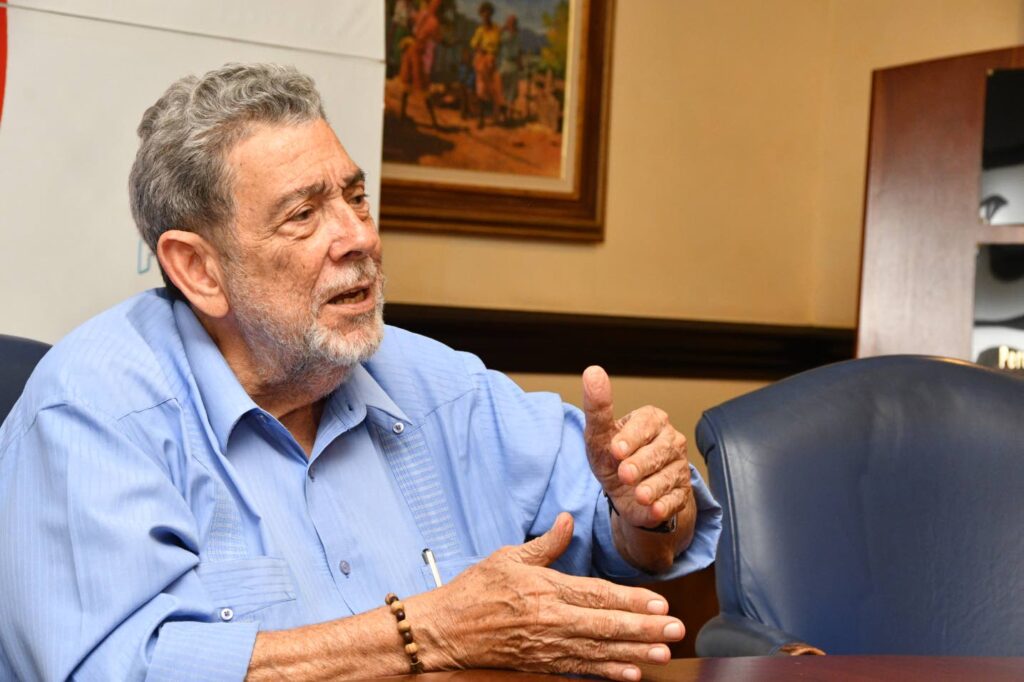
    The global movement pushing for reparations for the transatlantic slave trade and centuries of colonial exploitation is entering a historic new phase, with Caribbean advocates launching their most coordinated, cross-international campaign to date, according to senior Caribbean political figure Dr. Ralph Gonsalves. The former prime minister of St. Vincent and the Grenadines, who now serves as opposition leader in his home country and senior advisor to the global Repair Campaign, laid out the movement’s year-long action plan during a speaking engagement at the Jamaica Observer Press Club this Wednesday, outlining a strategy that expands regional advocacy into major global diplomatic, legal, and academic institutions.

    For decades, Caribbean nations have led calls for reparatory justice from Britain and other Western European powers that built their economies through the forced enslavement of millions of Africans and the systemic exploitation of Caribbean colonies. What began as regional advocacy has gained rapid international traction in recent years, with new partnerships and institutional backing turning a scattered movement into a cohesive global push.

    Gonsalves emphasized that the moment has come for disparate advocacy groups and international institutions to align their efforts to build unstoppable momentum. In remarks that framed the movement as a convergence of multiple streams of work, he noted, “I want to see all these tributaries be conjoined into a mighty river towards reparatory justice. So that is CRC, the Caricom entities, they are the authoritative bodies. But other entities have to feed into them and work with them, and engineer the canals for the streams to come and build the bridges.”

    The movement is already building on a landmark diplomatic win achieved earlier this year: a UN General Assembly resolution adopted on March 25, co-sponsored by Ghana, Caricom, and a bloc of African nations, that formally designated the transatlantic slave trade and racialized chattel slavery “the gravest crime against humanity” and explicitly called for global action to deliver reparatory justice. That resolution opened the door for a series of high-profile engagements planned across the rest of the year.

    The next major milestone is scheduled for June, when Ghana will host an international conference bringing together the African Union, civil society groups, and other global stakeholders to map out the long-term strategic direction of the movement. Following that gathering, the Caribbean Community (Caricom) Reparation Commission (CRC) is set to advance an unprecedented academic and outreach partnership with the University of London, designed to engage British political, economic, religious, and social elites directly on the issue. Gonsalves confirmed that planning for the high-level London gathering is already underway, with the Repair Campaign working alongside the CRC to finalize logistics.

    In July, regional leaders will gather for the Caricom Heads of Government meeting in St. Lucia, where the Caricom Prime Ministerial Subcommittee on Reparations will present a full progress update and request new strategic guidance from regional heads. September will bring two key global opportunities: first, the 25th anniversary of the landmark Durban Conference Against Racism in South Africa, which produced the Durban Declaration and Programme of Action — the foundational international document that first formally recognized slavery and the transatlantic slave trade as crimes against humanity, and which remains a core legal pillar of modern reparation advocacy. Later that month, Caribbean leaders will bring the issue back to the UN General Assembly, where they will leverage months of diplomatic progress to push for deeper global institutional commitment to reparatory justice.

    The most politically contentious moment of the year is expected to come in November, when the Commonwealth Heads of Government Meeting (CHOGM) convenes in Antigua. Gonsalves framed the summit as a critical “staging post” where English-speaking Caricom nations will directly confront Britain over the issue of reparations. He warned that British officials and their key allies — including Canada, Australia, and New Zealand — are already pushing to block reparations from being added to the official CHOGM agenda, setting the stage for a high-stakes diplomatic battle in the months leading up to the summit.

    Notably, Gonsalves pointed out that King Charles III, head of the Commonwealth, has already publicly stated that the issue merits open discussion, making any attempt to sidelined the topic untenable. “The head of the Commonwealth, [King] Charles [III], already said that the time has come for this issue to be discussed and ventilated, so you can’t keep it off the agenda,” he added.

    The Repair Campaign, which launched in 2022 founded by Irish businessman Denis O’Brien, works in formal partnership with the Caricom Reparation Commission to support research, public outreach, and advocacy efforts across Caribbean nations affected by centuries of slavery and colonial exploitation. Today, key global institutions including the United Nations, the African Union, and UNESCO have all grown their involvement in the push for reparatory justice, marking a major shift from the movement’s early days as a regional cause.

  • Sweden charges teen for promoting violent acts online in sadistic online network

    Sweden charges teen for promoting violent acts online in sadistic online network

    In a long-awaited transparency move decades in the making, the U.S. Pentagon has opened the vault on more than 160 previously classified documents detailing public and official sightings of Unidentified Anomalous Phenomena (UAP, the Defense Department’s official term for what are commonly known as UFOs), spanning more than 75 years of reported encounters. The publication of the files, announced Friday by Defense Secretary Pete Hegseth, fulfills a transparency directive issued by President Donald Trump earlier this year.

    Hegseth emphasized in an official statement that decades of secrecy around these records had sparked widespread, well-founded public curiosity, and that the administration was committed to giving the American public direct access to the unredacted original files. The records, hosted on the Defense Department’s public website, include entries stretching all the way back to the late 1940s – the era when modern UFO lore first entered mainstream American culture. Among the earliest documents is a 1947 compilation of multiple “flying disc” sightings, followed a year later by a top-secret Air Force intelligence memo detailing reports of “unidentified aircraft” and “flying saucers.” More contemporary entries include a 2023 incident in which three separate teams of federal law enforcement special agents independently submitted reports of glowing orange orbs in the sky that launched smaller red objects.

    The declassification push traces back to February 2024, when President Trump ordered all federal agencies to begin the process of sorting through and releasing all government-held records related to UFOs and potential extraterrestrial activity, citing overwhelming public demand for greater government openness around the topic. Alongside issuing the order, the Republican president drew controversy by accusing his Democratic predecessor, former President Barack Obama, of improperly disclosing classified information during a viral podcast interview. In that conversation with host Brian Tyler Cohen, Obama addressed persistent speculation surrounding Area 51 – the highly classified Nevada military base that has been the center of UFO conspiracy theories for decades – noting, “They’re real, but I haven’t seen them, and they’re not being kept in… Area 51.” When pressed by reporters, Trump argued Obama had broken classification protocols with his comments, while adding that he personally remained undecided on the question of extraterrestrial life: “I don’t know if they are real or not.”

    To date, no formal evidence of intelligent extraterrestrial life has been presented by the U.S. government. Public and official interest in UAP has surged in recent years, however, driven by a steady stream of declassified military footage of unexplained aerial encounters and growing national security concerns that some unidentified objects could be advanced surveillance or weapons technology developed by U.S. geopolitical adversaries. In a major update published just months ago in March 2024, the Pentagon confirmed that it has yet to find any conclusive evidence linking reported UAP sightings to extraterrestrial technology. The vast majority of unexplained encounters, officials found, can be traced back to ordinary human activity, including weather balloons, commercial and military aircraft, reconnaissance drones, orbital satellites, and atmospheric anomalies.

  • US fire on Iran tankers sparks reprisals as deal hangs in balance

    US fire on Iran tankers sparks reprisals as deal hangs in balance

    On Friday, a U.S. fighter jet carried out precision strikes that disabled two Iran-flagged oil tankers in the Gulf of Oman, an action Washington framed as enforcement of an ongoing port blockade. The targeted attack immediately triggered Iranian retaliatory strikes and sent shockwaves through a tenuous regional ceasefire, arriving at a critical moment when Tehran was actively reviewing a new U.S. diplomatic proposal to end the 10-week-old Middle East conflict.

    The confrontation unfolded in a strategically vital waterway that acts as the primary gateway to the Strait of Hormuz, the chokepoint through which roughly a fifth of global oil supplies pass daily. U.S. Central Command confirmed that an F/A-18 Super Hornet used precision munitions to disable the two vessels, stating the action was intended to stop the ships from reaching Iranian territorial waters. In the immediate aftermath, an anonymous senior Iranian military official told local media outlets that the country’s naval forces had launched proportional retaliatory strikes against what it labeled “American terrorism and ceasefire violation,” adding that active clashes had ceased following the exchange.

    This latest flare-up came less than 24 hours after smaller-scale skirmishes in the strait, a waterway that a top adviser to Iran’s Supreme Leader has compared to holding “an atomic bomb” due to its outsized geopolitical importance. U.S. Secretary of State Marco Rubio, speaking to reporters during a diplomatic stop in Rome, repeated longstanding U.S. policy that Iranian control of the critical oil transit route is “unacceptable.” Rubio also confirmed that Washington was awaiting Tehran’s formal response to its latest peace proposal, shared via Pakistani intermediaries, and expressed cautious hope that the proposal would receive serious consideration from Iranian leadership.

    The proposal put forward by the U.S. would extend the current fragile Gulf ceasefire to create space for comprehensive negotiations aimed at reaching a permanent end to the conflict. The conflict began 10 weeks ago when U.S. and Israeli forces launched joint strikes against Iranian military and nuclear targets across Iran. Iranian Foreign Ministry spokesman Esmaeil Baqaei told Iran’s official ISNA news agency on Friday that the U.S. proposal remains “under review” by Iranian authorities, with no final decision yet issued.

    In the hours following the tanker strikes, Iranian officials ramped up diplomatic pushback against the U.S. action. Iran’s United Nations Ambassador Amir Saeed Irvani sent an official letter to U.N. Secretary-General and the Security Council accusing Washington of a deliberate violation of the existing ceasefire that undermines all ongoing diplomatic efforts to de-escalate. Iranian Foreign Minister Sayed Abbas Araghchi, in a phone call with his Turkish counterpart, voiced deep skepticism about the U.S.’s commitment to a diplomatic resolution of the conflict, according to Iran’s Tasnim news agency.

    Parallel diplomatic efforts were underway in Washington Friday, where Qatari Prime Minister Sheikh Mohammed bin Abdulrahman Al Thani held talks with U.S. Vice President JD Vance focused on supporting the Pakistani-brokered peace initiative. Qatar has found itself drawn into the conflict already: Iran has repeatedly targeted Qatari sites throughout the war, in retaliation for Qatar hosting a large forward-deployed U.S. air base on its territory.

    In a separate development that adds further uncertainty to global energy markets, satellite imagery analyzed by global monitoring firm Orbital EOS shows a growing oil slick spreading off the west coast of Iran’s Kharg Island, the country’s primary oil export terminal. The slick currently covers more than 20 square miles (52 square kilometers), though the exact cause of the spill remains unconfirmed as of Friday. Kharg Island is the linchpin of Iran’s oil export industry, which forms the backbone of the country’s already severely battered economy, and sits just north of the Strait of Hormuz in the Gulf.

    The current crisis traces back to the outbreak of war on February 28, when Iran responded to the U.S.-Israeli strikes by effectively closing the Strait of Hormuz to commercial shipping. That closure sent global oil markets into turmoil and pushed crude prices sharply higher, prompting the U.S. to impose a full blockade of Iranian ports in response. Earlier last week, former President Donald Trump, whose administration launched the current military campaign, announced a large-scale U.S. naval operation to reopen the strait, only to reverse course just two days later and pivot back to diplomatic negotiations. The reversal came after Saudi Arabia, a key regional U.S. ally, publicly refused to grant U.S. forces access to Saudi bases and airspace for the planned operation. Senior Saudi sources told AFP Friday that Riyadh made the call because it believed the military operation would only escalate regional tensions and would not succeed in achieving its stated goals.

    Beyond the Gulf, the separate parallel ceasefire between Israel and Iran-backed Hezbollah in Lebanon is also crumbling under mounting pressure. Friday saw Hezbollah launch two waves of attacks against Israeli military targets: first a salvo of missiles targeting an Israeli military base south of the coastal city of Nahariya, followed hours later by a swarm of attack drones targeting a second base in northern Israel. The group said the attacks were retaliation for a recent Israeli strike on Beirut’s southern suburbs and ongoing daily Israeli strikes across southern Lebanon.

    Israel has continued its airstrikes against Hezbollah positions despite the formal ceasefire, and on Wednesday carried out its first attack on Beirut’s southern suburbs in a month, stating the strike killed a senior Hezbollah commander. Lebanon’s Ministry of Public Health reported Friday that 11 people were killed in Israeli strikes across southern Lebanon that day: 10 civilians, including two children and three women, plus one civil defense volunteer.

    The new round of violence on the Lebanon front comes just days before Lebanon and Israel are scheduled to hold the first round of direct peace negotiations in Washington next week, a meeting that Hezbollah has issued repeated and vehement statements opposing. The two countries have remained officially in a state of war since 1948, making any diplomatic breakthrough a historic shift for the region.

  • SCHOOLYARD BRAWLS

    SCHOOLYARD BRAWLS

    A wave of growing student indiscipline that has shaken Jamaica’s education system in recent weeks has reached St Elizabeth Technical High School (STETHS), triggering an immediate campus closure for most students on Thursday and leaving families uncertain about when regular classes will resume.

    The shutdown came after a day of escalating violent incidents at the Santa Cruz-based institution on Wednesday, according to unofficial sources familiar with the situation. Multiple physical altercations broke out across the campus, one of which reportedly involved a bladed weapon, leaving one student injured. The escalating chaos forced school administrators to call on local law enforcement to intervene to restore order mid-morning.

    Following the initial confrontation, additional fights flared up across the school grounds—some even unfolding directly in front of senior school leaders, sources confirmed to the Jamaica Observer. In a formal advisory sent to parents and guardians Wednesday, STETHS Principal Keith Wellington announced the suspension of classes, noting the move was implemented to safeguard the well-being of every student and staff member on campus, and to give administrators time to restore order and implement new disciplinary measures. When reached for comment by the Observer Thursday evening, Wellington declined to share further details, stating he would not address the situation publicly until his internal handling of the crisis was complete.

    Only students scheduled to sit external examinations were permitted to access the campus after the shutdown. Deputy Superintendent Owen Brown, operations head of the Jamaica Constabulary Force’s St Elizabeth Division, confirmed that police worked alongside school leaders and responding parents to bring the unrest under control. No students were taken into custody following the incident, Brown confirmed, adding that the situation was resolved through on-site coordination between law enforcement, school officials, and family members.

    Brown emphasized that STETHS is one of many local institutions participating in the police’s School Resources Officer (SRO) Programme, which places dedicated law enforcement officers on campus to prevent violence and mediate student conflicts. “One core goal of the SRO initiative is to teach students to work through their disagreements through dialogue rather than physical confrontation,” Brown explained. “We help them understand how to resolve conflicts amicably, instead of turning to violence.”

    The senior police official reaffirmed the force’s commitment to tackling school violence across the parish, extending beyond Wednesday’s incident at STETHS. “We have promised to work with every school in St Elizabeth, not just STETHS, to help foster orderly, safe learning environments for all students,” he said.

    Brown also called on parents to take a leading role in teaching conflict resolution skills to young people, noting that family socialization lays the foundation for how children behave in public spaces. “The home is the first and most important place children learn how to interact with others. We are urging parents to be more intentional about teaching basic social skills, especially how to handle disagreement,” he said. “A difference of opinion doesn’t have to end in a fight. If adults model healthy conflict resolution for children, they will carry those skills into their school and community interactions.”

    Wednesday’s shutdown is just the latest in a string of deadly and disruptive violent incidents at Jamaican schools since the start of 2024. At least two students have been killed in conflicts with peers this year, with multiple other assaults, fights, and bullying cases reported across the island. In March, 16-year-old Devonie Shearer was fatally killed during a dispute at Ocho Rios High School in St Ann; a 17-year-old classmate has been arrested and charged in connection with his death. Just last month, 13-year-old Seaforth High School student Kland Doyle was fatally stabbed during a confrontation with a peer in Morant Bay, St Thomas, resulting in the arrest of three other schoolboys. Also last month, Jamaica College drew widespread public criticism after a video showing one student being beaten by two classmates went viral on social media—the second high-profile incident of violence at the institution in as many months.