标签: Jamaica

牙买加

  • Keywee tackles the vicious cycle of ‘9 to 5’

    Keywee tackles the vicious cycle of ‘9 to 5’

    Rising Jamaican dancehall creative Keywee has tapped into universal working-class frustration with his latest infectious release, 9 to 5 — a track that pulls back the curtain on the exhausting, repetitive grind that defines traditional full-time employment for millions around the world.

    In discussing the creative inspiration behind the single, Keywee explained that the concept grew directly from observing the inherent contradictions of modern conventional work. In his view, the existing employment system is structured to trap working people in an unforgiving loop: the more hours and effort they put into their jobs, the more taxes they are required to pay, leaving them with less take-home pay even as household costs and bills continue to climb steadily. For many ambitious people chasing personal and financial dreams, this endless cycle acts as an unexpected dream killer, turning daily work into a soul-draining routine rather than a path to progress. The track’s core refrain — “9 to 5 ah kill we, ah beat we / man affi work so hard to make ends meet” — distills this widespread exhaustion into a memorable, relatable hook that resonates with listeners across demographic lines.

    Far from landing with a thud, the single has already generated a groundswell of positive organic engagement on social media. Keywee confirmed that user-generated videos featuring the track have racked up thousands of likes and shares across platforms, with TikTok users in particular quickly embracing the song’s catchy beat and on-the-nose lyrics. This outpouring of fan enthusiasm has moved up the timeline for the project’s next step: Keywee and his team are now fast-tracking plans to film an official music video for 9 to 5 to capitalize on its growing momentum.

    9 to 5 is featured as part of the new Jamtor riddim compilation, a collective project that also includes contributions from a roster of fellow dancehall talent: Semojrah Naki (a collaborative duo made up of Nature Ellis and Keywee himself), Empress Leh Leh, Planky Don, Izrel Di Cotton Pikka, and Kae Music.

    This latest release marks another milestone in Keywee’s steady decade-plus career building his brand and refining his craft. He dropped his debut single, Blessings a Pour, back in 2010, and spent the next nine years honing his signature raw, hard-hitting dancehall sound that often centers themes of love, women, and everyday life. In 2019, he locked in a production and management deal with Canadian-based independent label Seven Gate Record, which has supported his output in the years since. Some of his most well-received previous tracks include 2020’s Melanin Pop and Clean Like Skeleton, as well as 2021’s Nuh Use to Gyal, all of which have helped grow his global fanbase ahead of 9 to 5’s breakout success.

  • All ‘Hansle’ on deck

    All ‘Hansle’ on deck

    At 35, Tokyo 2020 Olympic gold medalist and one of Jamaica’s most decorated sprint hurdlers Hansle Parchment is not ready to step aside for the sport’s rising generation, even after a underwhelming 2025 campaign that marked one of the most challenging seasons of his professional career. The veteran athlete is confident he still has the competitive edge to go head-to-head with Jamaica’s deep pool of established and emerging 110m hurdles talent, and is targeting a career resurgence in the 2026 season.

    Parchment kicked off his 2026 campaign earlier than he has in half a decade, making his seasonal debut in the 200m at March’s Velocity Fest hosted at Kingston’s National Stadium, where he clocked 21.81 seconds to finish sixth. This opening marks his earliest seasonal start since March 2020, and only the third time in the past 10 years he has launched his campaign with a race outside his signature 110m hurdles. Though he has yet to compete in his primary event this year, Parchment says his training progression is already outpacing where he stood at this point in 2025, setting the stage for a stronger overall season.

    “I feel like this year is a better year for me compared to last year in terms of preparation,” Parchment shared in an interview with the Jamaica Observer. “I feel like I’m a bit ahead of where I was last year. I’m really looking forward to making this season one of my best.”

    The 2025 season was a quiet one for Parchment, who had been a consistent fixture at global championships for nearly a decade. Fresh off a silver medal finish at the 2023 World Athletics Championships in Budapest, he hit a career rough patch: he finished sixth at Jamaica’s National Senior Championships in June 2025, failing to qualify for the September World Athletics Championships in Tokyo. This break marked the first time since 2019 that Parchment missed out on a major global championship, ending a streak that included his historic Olympic gold in 2021, a final appearance at the 2022 Eugene World Championships, and an eighth-place finish at the 2024 Paris Olympics. Across nine 110m hurdles races in 2025, his fastest time of 13.24 seconds, clocked at the Gyulai Istvan Memorial in Hungary last August, was his slowest seasonal best since 2019, and tied for the third-slowest of his entire professional career.

    While Parchment sat out the 2025 World Championships, Jamaica’s next generation of hurdlers stepped up to claim the spotlight: Orlando Bennett took silver, Tyler Mason earned bronze, and 21-year-old Demario Prince advanced to the semi-finals just months after running 13.12 seconds — a time that cemented his place as the seventh-fastest 110m hurdler in Jamaican history. The talented field also includes Olympic bronze medalist Rasheed Broadbell, who missed 2025 competition due to injury but is set to return this season, targeting an improvement on his personal best of 12.94 seconds.

    As the seasoned veteran of this deep competitive field, Parchment has no plans to quietly fade into retirement. Instead, he intends to push for new personal bests and test the up-and-coming athletes every step of the way. “I know what the goals are and what I’m trying to achieve,” he said. “Even though I’m older now, I’m trying to push myself just how I pushed myself years ago. I’m trying to aim for personal bests, personal records, and challenge the youngsters, let them know that I’m still here. The numbers and my age might look like a lot, but I’m young in spirit, young in mind and I’m raring to go. So I want to put up a very good challenge and make it exciting.”

    Beyond competition, Parchment sees his role this season as more than just a contender: he wants to continue serving as a mentor to Jamaica’s new wave of hurdlers, cementing a legacy that lifts the entire national program. “It’s always one of my goals to bring the youngsters in to continue the tradition, because I’m almost on my way out,” he explained. “So I want to leave a great legacy for other people to join in and build up Jamaica even further.”

    Parchment’s legacy in Jamaican hurdling is already secure: he is widely regarded as the country’s most successful sprint hurdler in history, with multiple Olympic and World Championships medals to his name. His personal best of 12.94 seconds makes him Jamaica’s second-fastest all-time in the event, and the 15th-fastest hurdler in world history.

    While 2026 does not host a full traditional World Championships or Olympic Games, two high-profile competitions are on the calendar: the Commonwealth Games in July and the newly launched World Athletics Ultimate Championships in September, an event that brings together the top 16 ranked athletes in each discipline. Parchment is approaching the season with the same championship-level focus he brings to any Olympic or Worlds year, and remains motivated to add more honors to his already impressive collection.

    “My aim is to run a healthy season — chase times, of course, trying to see how close I am or if I can beat my personal best time. There’s the national record. There’s so much to gun for,” he said. “They have the ultimate championship this year, which is basically top 16 in the world, so that’s something to look forward to as well. There’s a lot of things going on this year. It’s no different than a championship year, at least I don’t approach it any differently.”

  • Man accused of fatally stabbing woman over ‘ice’ killed by cops

    Man accused of fatally stabbing woman over ‘ice’ killed by cops

    KINGSTON, Jamaica — What began as a trivial disagreement over a block of ice devolved into a double fatal tragedy on the streets of downtown Kingston this Wednesday, leaving one woman dead at the hands of her accused attacker, who was himself shot and killed by police hours later.

    Local law enforcement has identified the suspect as 35-year-old Davar Dacres, who went by the street name “Davy” and maintained a residence on King Street in central Kingston. His alleged victim was 50-year-old Katherine Wallace, widely known as “Kathy” from the nearby Fleet Street neighborhood. Surveillance camera footage from the area captured the entire stabbing incident, according to initial police reports.

    Authorities have reconstructed the timeline of the confrontation: shortly after 5:20 p.m., Dacres and Wallace were both drinking at a small, unlicensed corner bar near Love Lane, where the argument over ice first broke out. What started as a verbal shouting match quickly escalated into a violent physical clash, during which Dacres pulled a 6-inch ratchet knife and stabbed Wallace multiple times in her chest and upper torso. Bystanders rushed the injured woman to the nearest public hospital, but medical teams were unable to save her, and she was pronounced dead less than an hour after arrival.

    By 11:25 p.m. the same evening, law enforcement had tracked Dacres to Hanover Street, just a 10-minute walk from the scene of the stabbing, and moved to intercept him. Police accounts confirm that Dacres, still carrying the same ratchet knife used in the attack, charged at responding officers when they ordered him to surrender and drop the weapon. After repeated warnings went unheeded, officers opened fire, striking Dacres multiple times. He was transported to the same hospital where Wallace had been pronounced dead, and he also succumbed to his injuries before emergency treatment could begin.

    Superintendent Mischka Forbes, head of the Kingston Central Police Division, told reporters that the incident underscores a worrying shift in violent crime patterns across central Kingston this year. So far in 2025, this killing marks the third homicide recorded in the division, and the second to involve a knife as the murder weapon.

    Forbes voiced growing concern over the changing face of violence in the area. “What we are seeing is a reduction in gang-related conflicts and a rise in domestic and interpersonal disputes since 2025,” she explained. While long-standing gang violence has dropped thanks to targeted enforcement operations, petty disagreements that turn deadly now account for a growing share of homicides, a trend police say they are working to counter.

    In response to the uptick in knife-related violence, the Kingston Central Police Division has ramped up “Operation Blade”, a aggressive zero-tolerance initiative focused on rooting out illegal possession and use of offensive weapons across the district. “We will continue this operation alongside our community engagement efforts in partnership with key stakeholders aimed at promoting conflict resolution and discouraging violence,” Forbes said. The division is working with local churches, community groups, and mediation nonprofits to host public workshops on de-escalation and peaceful dispute resolution.

    Forbes is urging all local residents to avoid resorting to violence when disagreements arise, and to reach out to trained community mediators or police to resolve conflicts before they turn deadly. In line with standard protocol for police-involved fatalities, the Independent Commission of Investigations (Indecom) and the Inspectorate and Professional Standards Oversight Bureau (IPROB) have launched independent probes into the shooting of Dacres to determine whether the use of force complied with national policing guidelines.

  • 20 changes for NaRRA

    20 changes for NaRRA

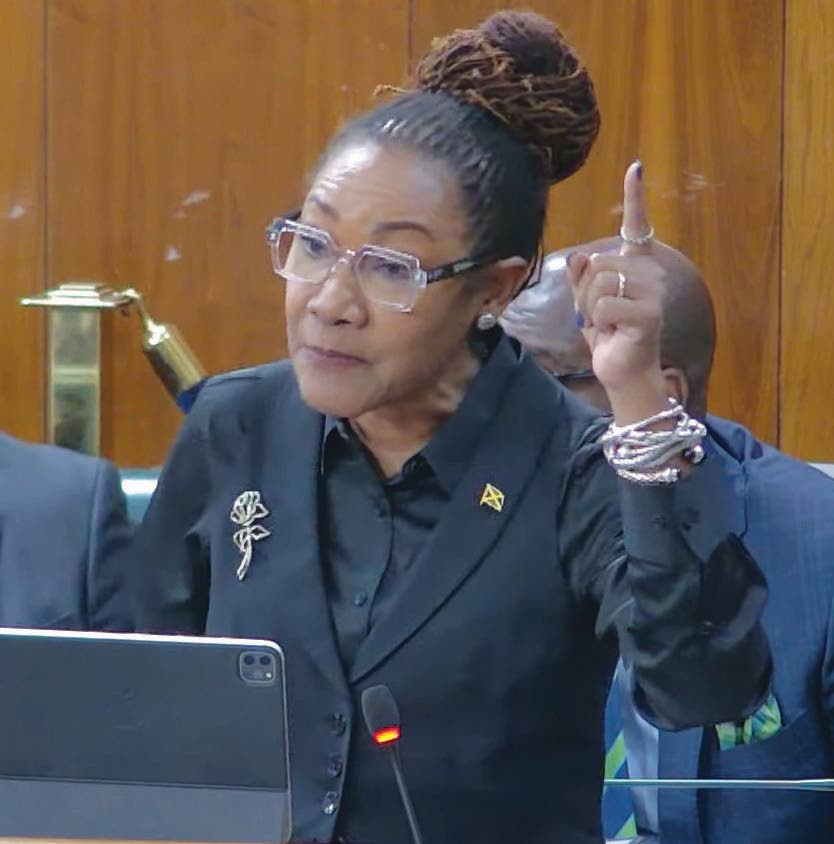
    After a marathon legislative sitting that extended into the early hours of Wednesday, Jamaica’s House of Representatives passed 20 amendments to the National Reconstruction and Resilience Authority (NaRRA) Bill, a landmark piece of legislation created to guide recovery from Hurricane Melissa — the most powerful storm to make landfall in the country’s recorded history. The bill formalizes NaRRA as a centralized coordinating body for post-disaster reconstruction and long-term climate resilience projects, with a core mandate to speed up public and private investment critical to reversing the hurricane’s economic damage and strengthening the nation’s ability to withstand future extreme weather events.

    The most high-profile of the approved amendments updates consultation requirements for communities impacted by reconstruction projects. The change came in direct response to sustained concerns raised by civil society organizations and opposition lawmakers, who criticized the original bill for failing to explicitly outline NaRRA’s obligation to engage affected populations. Under the revised Clause 17, NaRRA is now legally required to hold consultations with any people who are currently, or may in the future be, impacted by projects the authority oversees.

    However, the final approved version was significantly narrowed from an earlier draft that won cross-stakeholder support. That initial iteration explicitly named vulnerable groups — including women, people with disabilities, the elderly, children, youth, local communities, and non-governmental organizations — that must be included in consultations, and required mandatory feedback meetings every six months. Opposition Leader Mark Golding slammed the truncated final language, arguing that the removal of specific group protections leaves the rule vague and toothless.

    “The original draft outlined a far more comprehensive obligation. This shortened version only says the authority must hold consultations during project development and monitoring, but it gives no detail on which stakeholders must be included,” Golding told parliament during debate.

    Government leaders pushed back against the criticism, defending the broad, open wording as a deliberate choice to avoid limiting participation rather than an effort to weaken accountability. Leader of Government Business Floyd Green argued that explicitly listing specific demographic or organizational groups would inadvertently narrow the scope of eligible stakeholders and create unnecessary bureaucratic delays that would slow reconstruction.

    “This wording gives NaRRA far broader flexibility for consultation, because it includes every potential affected group without requiring an explicit, limited list. This is a far better approach that allows for wider engagement under the new framework,” Green explained. Prime Minister Dr. Andrew Holness echoed this position, emphasizing that the administration’s policy has always centered on inclusive community engagement, and the generalized wording actually creates a wider scope for participation than a rigid list of categories that could miss marginalized groups.

    While the government made concessions on consultation and reporting rules, it rejected all opposition attempts to revise the bill’s most controversial governance provisions. The biggest point of contention centered on Clause 7, which the legislature left unchanged despite opposition calls to create an independent governing board to oversee NaRRA and hold its chief executive officer (CEO) accountable for operational and financial decisions. Golding argued that given NaRRA will manage billions of dollars in public spending, much of it borrowed from international creditors with interest, an independent oversight board is non-negotiable, especially in Jamaica’s current environment of low public trust in government institutions.

    The government rejected the proposal, noting that NaRRA was intentionally structured as a streamlined executive agency focused on rapid reconstruction, rather than a traditional board-governed public body. Holness argued that adding a board would introduce unnecessary layers of bureaucracy that would slow critical decision-making during an urgent national recovery effort. “This entity has a very specific, time-bound task to execute. A board would bring discretionary policy interpretation and day-to-day management debates that are unnecessary here — our mandate is clear, we just need to deliver results quickly,” the prime minister said.

    Several other contentious clauses also remained unamended after debate. Clause 5, which grants the prime minister sole power to appoint NaRRA’s CEO via written instrument, stayed intact despite opposition concerns over excessive concentration of executive power. Clause 6, which allows the authority and its CEO to delegate functions to “any person” with only ministerial approval, also survived unchanged, even after ruling party MP Marlene Malahoo Forte (St James West Central) raised concerns that the open wording lacked safeguards for competence and transparency.

    “All I am saying is that the phrase ‘any person’ needs a qualifier. These are technical, specialized functions, so we need to ensure the person given authority is duly competent to carry them out,” Malahoo Forte noted during committee discussions. The government also retained the bill’s broad powers to expedite project approvals: Clauses 21 through 24, which let NaRRA issue directives to approval agencies and allow the responsible minister to issue “step-in orders” that override bureaucratic delays, went untouched. Clause 25, which empowers Cabinet to label projects worth $15 million USD or more as “strategic investment projects” across sectors from tourism and agriculture to healthcare, housing, and mining, also remained unchanged.

    Among the more broadly supported amendments was a revision to auditing rules. The original bill let the CEO appoint NaRRA’s auditor with only cabinet secretary approval; the revised amendment moves the appointment power fully to the cabinet secretary, subject to final sign-off by the entire Cabinet. Lawmakers also approved an amendment requiring the CEO to submit progress reports to the responsible minister every six months, with copies tabled publicly in both houses of parliament. Another update expands NaRRA’s public project register to include private-sector strategic investment projects alongside government-led reconstruction efforts, and requires the register to name each project’s promoter, increasing public transparency over who is leading development work under the law. A final new amendment exempts approved projects from certain public investment management requirements under Jamaica’s Financial Administration and Audit Act, a change expected to cut red tape and speed up the approval process for critical recovery work.

  • Antiguans voting for a new government

    Antiguans voting for a new government

    Residents across Antigua and Barbuda have turned out to 190 polling stations nationwide on Thursday for a snap general election, called nearly two years ahead of its constitutionally mandated schedule by sitting Prime Minister Gaston Browne. Polling got underway at 6:00 a.m. local time, with voting scheduled to wrap up 12 hours later at 6:00 p.m. the same day.

    According to the Antigua and Barbuda Electoral Commission (ABEC), a total of 63,330 eligible voters are registered to select representatives for 17 contested parliamentary seats – marking an increase of nearly 3,000 eligible voters from the previous election cycle. The electoral body has publicly committed to running a fully transparent, smoothly coordinated voting process for all participants.

    To address common last-minute administrative issues, ABEC announced that eligible voters needing to replace expired voter identification cards will be able to obtain a temporary Special Identification Card at on-site constituency registration units open throughout election day, from 6:00 a.m. to 6:00 p.m. ABEC Public Relations Officer Elisa Graham urged all qualified residents to exercise their democratic right to vote, while noting that no voter will be permitted to cast a ballot without valid official identification. Voters applying for the temporary special ID are required to bring one passport-sized photograph to complete their application on site.

    The election is being overseen by independent international observer delegations from three major regional and global bodies: the Caribbean Community (Caricom), the Organization of American States (OAS), and the Commonwealth. These observers will monitor the voting process to assess its compliance with international democratic standards.

    Prime Minister Browne, who leads the incumbent Antigua and Barbuda Labour Party (ABLP), is campaigning to secure an unprecedented fourth consecutive term in office – a milestone no other prime minister in the nation’s history has achieved. Framing his party’s platform as a “renaissance in changing times,” Browne urged voters to stick with the incumbent administration, warning against supporting an opposition that he claims is unprepared to govern. “On election day, do not take a risk on a leader and a team that’s just not ready. Let’s keep Antigua and Barbuda in strong and safe hands,” Browne said.

    The ABLP’s hold on power is being challenged by the nation’s main opposition bloc, the United Progressive Party (UPP), led by first-time election candidate Jamale Pringle. Pringle has campaigned on widespread discontent with the current administration, arguing that Antiguans and Barbudans have endured too many hardships under Browne’s government. “No longer will the people be subjected to the whims and fancy of a political party or a candidate or political person,” Pringle said. He pledged that a UPP government would implement inclusive policies that benefit all citizens, free of partisan political interference.

    For this election cycle, the incumbent ABLP is fielding candidates in all 17 parliamentary seats. The UPP is running candidates for the 16 seats located on Antigua, while its political affiliate, the Barbuda People’s Movement (BPM), contests the single seat allocated to the island of Barbuda. Three independent candidates are also running for office across multiple constituencies.

    The 2026 snap election comes three years after the 2023 general election, where the ABLP secured a narrow majority, winning 9 of the 17 available seats. The UPP won the majority of the remaining seats, with one seat going to an independent candidate. All eyes are now on the final vote count, which will determine whether Browne makes history as the first prime minister to win four consecutive terms, or if the opposition UPP will unseat the incumbent after three terms in power.

  • JC clamps down on bullying, violence

    JC clamps down on bullying, violence

    Following a string of high-profile bullying and assault incidents that sparked public scrutiny, the all-boys Jamaica College (JC) has announced a comprehensive multi-pronged strategy to boost student safety and address growing community concerns over campus violence.

    In an official media statement released Wednesday, school leadership framed the new measures as an extension of its longstanding mission to nurture student growth and uphold institutional excellence. The reforms build on decades of work to maintain a structured, supportive learning environment for the school’s student body, located on Old Hope Road in St Andrew.

    JC has dominated Jamaican education headlines in recent weeks for a mix of extraordinary athletic and academic achievement, and troubling campus violence. In March 2026, the school claimed the Mortimer Geddes Trophy as the top boys’ institution at the Inter-secondary Schools Sports Association/GraceKennedy Boys’ and Girls’ Athletics Championships. Just days later, it ended a 39-year title drought by winning the 2026 TVJ Schools’ Challenge Quiz championship, marking a historic double win for the institution.

    But the wave of celebration was quickly overshadowed by reports of violent incidents on campus. On March 24, one student was hospitalized with injuries following an assault, leading to the arrest of a second student on assault charges. Shortly after, a graphic video showing two JC students attacking a fellow classmate went viral across social media, prompting widespread public outcry. That incident also resulted in one student being arrested and charged.

    “Jamaica College has consistently invested in programmes that support discipline, mentorship, and the overall development of our young men. While these efforts continue to have a positive impact, we recognise that even isolated incidents must be addressed decisively,” Principal Wayne Robinson said in the statement.

    Robinson explained that the new reform package is designed to strengthen existing successful safety frameworks, while adding new layers of support and accountability to ensure every student feels secure on campus. The centerpiece of the reforms is a major overhaul of campus security and surveillance systems. The school will launch a full external security audit led by independent specialists to map out campus vulnerabilities and design an updated safety protocol. Upgrades will include expanded closed-circuit camera monitoring, increased on-campus security presence, and new early alert mechanisms to both prevent incidents and speed up response when issues arise.

    Beyond security upgrades, the school is rolling out a mandatory school-wide Values and Behavioural Development Programme, integrated across all grade levels to reinforce the institution’s focus on character building. Officials noted the programme will be structured to avoid disruption for students preparing for external examinations, while still delivering targeted support for all year groups.

    To strengthen community buy-in, JC will also expand parent engagement through a formal partnership with national parent advocacy organizations. The new structured engagement programme will improve cross-year communication, clarify shared accountability, and build stronger partnerships between families and school leadership.

    Internal support systems are also getting a boost: the offices of the Dean of Discipline and Dean of Student Affairs will receive additional resources, existing mentorship and rehabilitation programmes will be expanded, and new peer counselling initiatives will be launched to enable early intervention for at-risk students and reinforce positive behaviour norms. The school will also bring in external specialists in adolescent behaviour and violence prevention to train staff and lead targeted student interventions, ensuring all strategies are rooted in the latest evidence-based practices.

    Robinson emphasized that the reforms are not a one-time response to recent negative headlines, but part of the school’s ongoing commitment to continuous improvement, building on its longstanding investments in discipline, mentorship, and whole-student development. “These actions further strengthen a culture of accountability, respect, and positive behaviour, ensuring the school continues to provide a safe and supportive environment for all students,” he said.

    JC Board Chairman Lance Hylton echoed that sentiment, noting the institution has long prioritized proactive student development initiatives that have benefited generations of students. “These additional measures reflect our commitment to strengthening our systems even further and ensuring that Jamaica College remains a safe, disciplined, and nurturing environment,” Hylton said.

    Moving forward, school administrators say they will maintain open lines of communication with all stakeholders, including parents, Jamaica’s Ministry of Education, and the general public, providing regular updates through both traditional and digital media platforms. As an initial outreach step, the school will release a short public video featuring school leadership, faculty, and student representatives outlining the new safety measures and ongoing reform efforts.

  • Chaka Demus & Pliers hit platinum in New Zealand with She Don’t Let Nobody

    Chaka Demus & Pliers hit platinum in New Zealand with She Don’t Let Nobody

    Three decades ago, in a late-night recording session at Kingston’s iconic Aquarius Recording Studio in Half Way Tree, Jamaican reggae artist Pliers teamed up with collaborator Chaka Demus to cut a track that neither could have predicted would resonate across generations and continents. That track, *She Don’t Let Nobody*, just added a major new milestone to its decades-long legacy: last week, it earned platinum certification from music regulators in New Zealand, marking another global accolade for the track that already holds a silver certification from the United Kingdom.

    In a recent conversation with *Observer Online*, Pliers opened up about the unexpected and enduring success of the 1993 recording. “I tried to lay down the track the best way I possibly could,” he said. “I never really expected it would get that big.”

    Unlike many of the duo’s original hits, *She Don’t Let Nobody* is a reimagined cover of a 1981 track from legendary American soul singer-songwriter Curtis Mayfield. Mayfield’s original version climbed to number 15 on Billboard’s R&B Singles chart and served as the lead single for his 1982 studio album *Love is the Place*. For Pliers, covering the track was a personal project decades in the making.

    “Growing up, that song always stuck with me, I loved it,” Pliers recalled. When the duo signed a deal with Island Records, he immediately brought the idea of recording a reggae-infused take to Sly Dunbar, the track’s lead producer. The idea quickly got the green light, and the finished track was co-produced by Dunbar, his frequent production partner Robbie Shakespeare, Lloyd “Gitsy” Willis, and Island Records’ Trish Farrell. At the time, Chaka Demus & Pliers were signed to Mango Records, Island Records’ reggae-focused subsidiary.

    Between 1993 and 1997, Chaka Demus & Pliers notched seven charting hits on the UK Singles Chart, and *She Don’t Let Nobody* was one of their most successful. The track peaked at number four on the UK chart, and also earned top 20 placements across Europe and Oceania: it hit number nine in Ireland, 17 in the Netherlands, 20 in New Zealand, and 19 in France. That initial chart success laid the groundwork for the track’s ongoing popularity, which led to the new platinum certification three decades after its release.

    For the duo, the long-running success of the track did more than just boost record sales — it cemented their status as a globally relevant reggae act. “It impacted our lives in a very positive way,” Pliers said. “We toured the world and it is a song that is included in our catalogue that the fans love. Those were good times.”

  • Snappaz gets reprieve

    Snappaz gets reprieve

    In Montego Bay, St James, a long-running dispute over an unpermitted local restaurant has taken a positive turn for both the business owner and municipal authorities, bringing relief to a community-reliant establishment that employs dozens of local workers. Milton Russell, the sole owner and operator of the well-known Snappaz Restaurant, is no longer facing the imminent threat of demolishing the business he spent years building, after the St James Municipal Corporation (SJMC) pledged to collaborate with him and other Whitehouse community residents to bring informal developments into compliance with local regulations.

    The conflict stretches back to February of this year, when a Jamaican court issued an order requiring Russell to demolish his restaurant. At that time, the business owner responded by directing his legal counsel to file an appeal against the ruling, a decision that has now been vindicated by the municipal corporation’s new approach. In an interview with the Jamaica Observer, Russell shared that the ordered demolition would have left him with nothing. He has lived on the same plot of land in Whitehouse for more than 35 years, and the restaurant was developed as an unplanned extension of his residence, far exceeding his initial expectations for success. As the 100% independent owner with no business partners, every asset he owns is invested in the restaurant, meaning full demolition would have resulted in total personal financial ruin.

    The turning point came after recent closed-door discussions between Russell and SJMC representatives, which yielded a compromise that addresses the core safety concerns that triggered the original demolition order. Per a public statement from the SJMC, the agreement requires Russell to complete minor targeted adjustments to his building in the near term that will eliminate the risk the structure was said to pose to air traffic at the nearby Sangster International Airport. The key concern from authorities surrounded the height of the roof section directly above Russell’s personal bedroom, a modification Russell says he is fully willing to make, as long as requirements stay limited to that specific adjustment.

    While Russell notes he has not yet received formal written guidance outlining his next steps from local government officials, he has expressed willingness to complete all reasonable corrective work to bring his property into compliance. He told the Observer that the broader issue of the restaurant operating without a formal construction permit has long been on his radar, and he initiated the regularization process back in 2022 by commissioning and submitting official floor plans to the municipality. Though he does not have standard official documentation like a submission receipt to prove the 2022 filing, he says he trusts the commitments made by SJMC Mayor Leintford Vernon, with whom he has negotiated for months, noting the mayor has kept every promise he has made during their discussions.

    Vernon addressed broader concerns about the municipality’s enforcement actions in an April 21 press release, pushing back against claims that SJMC was specifically targeting low-income residents of the informal Whitehouse community. The mayor clarified that over the past 12 months, the corporation has issued cease-and-desist notices to unpermitted developers across hundreds of St James communities, applying enforcement evenly across all income groups and both informal and formal neighborhoods. He noted that unpermitted construction and expansion has been found in affluent, established communities including Bogue Village, Rosevale, Rhyne Park, Westgate Hills, and Cornwall Courts, where residents often complete major home extensions and alterations without securing the legally required approvals.

    Vernon further explained that Snappaz Restaurant was granted a reprieve from full demolition specifically because of its substantial positive impact on the local St James economy and community. The popular eatery has seating for nearly 300 guests and currently employs 47 local workers, making it one of the largest private employers in the area. Now that the immediate threat of full demolition has been lifted, Russell says he is relieved to put the legal dispute behind him and refocus on his work as a community-focused business owner.

    “I’m very happy to put it behind me. I will continue to do the good work that I’ve been doing, helping the community a lot,” Russell told the Observer. “Snappaz is not just about Milton Russell, it’s about providing jobs, it’s about helping the community and being a responsible business.”

  • World Singer J drops sexy ‘Into You’ single for the ladies

    World Singer J drops sexy ‘Into You’ single for the ladies

    KINGSTON, Jamaica — Decades into his professional recording career, Jamaican music stalwart World Singer J has crafted one of the most compelling releases of his career with his latest single, *Into You* — a silky, groove-driven romantic track that has quickly become a fan favorite across the Caribbean and global streaming markets.

    Blending the rhythmic punch of traditional Jamaican dancehall with the warm, infectious melodies of Afrobeats, the new release dropped via the Control Tower Squad label, packing memorable lyrics and delivered with raw, authentic passion. The track’s smooth, intimate tone shines through in its core refrain, where Singer J croons, “I pour into you, my baby, this love I have for you, it’s not crazy, I pour into you…” — a line that has quickly become a viral favorite with listeners.

    In a recent interview about the project, Singer J opened up about the creative vision behind the track, noting that producer Boko B pushed him to experiment outside his usual sonic comfort zone. “The song was designed to be short and spicy,” he explained. “Producer Boko B wanted me to do a different kind of song — dancehall but with an Afro crossover energy to it, and this song is straight fire.”

    The track’s lyrics came together through a collaborative writing process with Craig, one half of the iconic Jamaican duo Voicemail. Singer J recalled the easy, organic energy of the writing session: “Craig Voicemail loved the beat and we wrote it together, that’s how we created the vibration of the song. A great vocalist and two inspired people coming together made for such a great vibe, and it came out exceptional.”

    Since its release alongside an official music video more than a month ago, *Into You* has seen steadily growing momentum, racking up spins on regional radio, climbing streaming charts, and gaining widespread traction across social media platforms. Singer J says the outpouring of fan support has exceeded his expectations, noting that timeless music does not need a specific seasonal window to resonate. “The fans really love this song. Great music like this doesn’t carry a special time, the momentum just start build, the whole vibe will really take off right now, especially with the energy and the vocals for the ladies. This is just our time musically,” he shared.

    The hit single is also expected to appear on Singer J’s upcoming extended play (EP), which is scheduled to drop before the end of the year. For long-time fans of the artist, the new hit adds another milestone to a decades-long career in reggae and dancehall.

    A native of Kingston’s iconic Waterhouse neighborhood, World Singer J carries deep roots in Jamaican music as the nephew of legendary singer-songwriter Bob Andy. He first stepped into the recording studio in 1991, but his first commercial release, *Hot Gal*, dropped nearly a decade later in 2000. Just one year after his commercial debut, Singer J became a household name across Jamaica when his 2001 single *Buss Your Gun*, featured on Black Shadow Records’ iconic Buzz Riddim, topped regional music charts.

    In the years following his breakthrough, Singer J has built an extensive catalog of commercially successful tracks, including fan favorites *Can’t Stop Me Now*, *Where Would I Be Without You Lord?*, *Everything Me Do*, *Mi Put Jah First*, *Anything Can Happen*, and the massive hit *Wave Yu Hand*, a collaboration with iconic dancehall artist Elephant Man.

  • Airbnbs to start paying GCT

    Airbnbs to start paying GCT

    In an overnight parliamentary sitting that stretched into the early hours of Wednesday, Jamaica’s House of Representatives has approved a suite of new tax measures, one of which mandates that short-term rental properties — including platforms like Airbnb — will begin paying General Consumption Tax (GCT) starting April 1, 2027.

    The official confirmation of the policy came during debate over the 2026 General Consumption Tax Amendment of Schedules Order, when Opposition finance spokesperson Julian Robinson pressed the government for clarity on whether the tourism accommodation tax revisions would extend to peer-to-peer short-term rental properties. Finance Minister Fayval Williams explicitly confirmed that these unregulated short-term listings would be formally added to the tax regime under the new rules.

    Robinson noted during the parliamentary exchange that the change creates an entirely new taxable category, as prior to this amendment, short-term rental operators had fallen outside of Jamaica’s tax collection framework entirely. The new GCT requirement for short-term rentals is just one component of a wider government revenue reform package, which also includes higher excise taxes on alcohol, tobacco, and sugar-sweetened beverages, alongside adjustments to tourism sector regulations and motor vehicle concession rules.

    Williams defended the full package of reforms, framing the changes as a necessary response to mounting fiscal pressures in the wake of Hurricane Melissa, which pushed up government emergency and recovery spending. She emphasized that the measures are not arbitrary policy changes, but a coordinated part of the administration’s broader fiscal strategy to stabilize public finances while protecting funding for core public services. Williams added that the approved changes give formal legislative and operational force to revenue proposals that were first announced during earlier national budget debates.

    However, the government’s confirmation of the short-term rental tax quickly drew fierce criticism from the Opposition, which accuses the administration of ramming through the policy without meaningful public consultation or advance notice to the thousands of property owners who operate in the sector. In a media statement released Wednesday afternoon, Opposition tourism and industry linkage spokesperson Andrea Purkiss denounced the approval process, characterizing the government’s actions as pushing the measure through “like a thief in the night”.

    Purkiss argued that the overnight rush to pass the rule displays blatant disregard for thousands of ordinary Jamaicans who depend on short-term rental income to cover basic household costs and support their livelihoods. She noted that the sector has experienced explosive growth over the past seven years, expanding from just 59,500 annual guests in 2017 to more than 800,000 guests in 2024, generating over JMD $32 billion in total income for local property owners. For many Jamaican households, Purkiss added, short-term rental earnings are a critical supplementary or primary source of income.

    She is now calling on the government to open the policy up to full public scrutiny, conduct a comprehensive sector-wide impact assessment, and answer for the lack of transparency before the tax is scheduled to go into effect in 2027.