
On a warm Sunday gathering centered on celebrating maternal bonds, the Jamaica Pegasus Hotel played host to the annual Shades of Her Mother’s Day Brunch, an event that brought multiple generations of local families together to honor the women who shape their lives. Among the dozens of intimate moments captured across the venue, one particularly tender scene stood out, preserved in a photograph by photographer Garfield Robinson. In the frame, 7-year-old Aden Parchment wraps his arms tightly around both his grandmother, Ruby Smith, and his mother, Yvonne Thomas, pressing a gentle kiss to Thomas’ cheek as the three hold one another close. The brunch, designed to create space for families to connect and express gratitude, drew hundreds of attendees this year, with many participants noting that multi-generational celebrations like this have grown increasingly meaningful post-pandemic, as communities prioritize in-person time with loved ones. Organizers of the event shared that they launched the Shades of Her brunch five years ago to center Black maternal joy and create an accessible, welcoming space for families across Jamaica to mark the holiday together, a mission that has resonated deeply with local communities year after year.
标签: Jamaica
牙买加
-
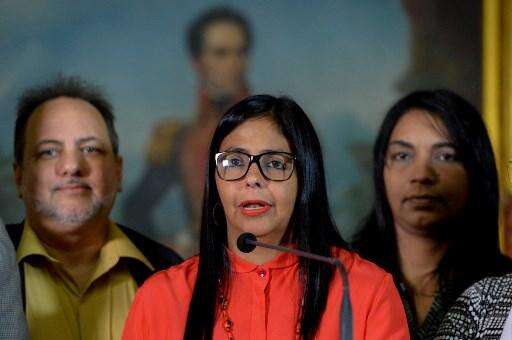
Venezuela has ‘never considered’ becoming 51st US state: acting president
THE HAGUE, Netherlands — In a clear and firm statement to reporters following a International Court of Justice hearing on Monday, Venezuelan Acting President Delcy Rodriguez rejected any suggestion that her nation would consider becoming the 51st U.S. state, an idea recently floated by former U.S. President Donald Trump after the capture of ousted former Venezuelan leader Nicolas Maduro.
Rodriguez emphasized that Venezuelan national identity is rooted in a deep commitment to sovereignty. “That would never have been considered, because if there is one thing we Venezuelan men and women have, it is that we love our independence process, we love our heroes and heroines of independence,” she stated outside the UN’s highest judicial body.
The speculation over Venezuelan statehood traces back to comments Trump has made repeatedly since Maduro’s capture by U.S. forces on January 3. Following the seizure, Trump has openly claimed Washington holds effective control over the oil-rich Caribbean nation, and multiple sources confirmed he told Fox News on Monday he was “seriously” weighing the prospect of admitting Venezuela as an American state. This is not the first time Trump has raised the idea: back in March, he posted on his Truth Social platform, “Good things are happening to Venezuela lately! I wonder what this magic is all about? STATEHOOD, #51, ANYONE?”
Despite the outright rejection of statehood, Rodriguez underscored that her interim administration remains committed to a framework of diplomatic cooperation with the United States. Since Rodriguez took power after Maduro’s ousting, relations between Washington and Caracas have warmed significantly, even as the U.S. has maintained intense pressure on her government to open up Venezuela’s massive untapped fossil fuel reserves to American companies.
Trump has repeatedly publicly praised Rodriguez’s policy shifts, which have included sweeping regulatory reforms that opened Venezuela’s lucrative mining and petroleum sectors to foreign investment, with U.S. firms positioned as the primary beneficiaries. A former vice president under Maduro, Rodriguez has also overseen a high-profile amnesty law that freed hundreds of political prisoners, though human rights groups note that roughly 500 opposition figures remain in detention.
Monday’s hearing at the International Court of Justice marked Rodriguez’s first trip outside the Caribbean region since she assumed the acting presidency. The proceedings center on a centuries-old border dispute with neighboring Guyana over a resource-rich territory that has gained new urgency after major oil reserves were discovered in the area in recent years.
In March of this year, the United States and Venezuela formally re-established full diplomatic relations, a tie that had been severed by Maduro seven years earlier. Even as bilateral relations improve, Venezuela’s fragmented opposition has ramped up calls for free and transparent national elections to resolve the country’s ongoing political transition.
-

Band man Carlos Malcolm dies
Carlos Malcolm, the world-renowned Panamanian-born trombonist and foundational figure in 1960s Jamaican ska music, passed away on April 6 at his residence in Palm Bay, Florida, at the age of 91. His death was officially confirmed by his son, Leighton Malcolm.
Malcolm built his enduring legacy as the founder and leader of the iconic group Afro Jamaican Rhythms, an ensemble that rose to prominence during the global breakout of Jamaican ska in the early 1960s. One of the band’s most recognizable tracks, *Bonanza Ska*, drew its creative inspiration from the hit American western television series *Bonanza*, blending mainstream U.S. pop culture with the emerging Caribbean sound that would reshape global music. The collective’s early roster read as a who’s who of Jamaican music talent, featuring legendary percussionist Larry McDonald, influential vocalist Joe Higgs, drummer Winston “Sparrow” Martin, and bassist Boris Gardiner.
Long before he made his mark on the global music industry, Malcolm cut his teeth in Jamaican media. Following his time at Kingston’s Calabar High School – where he counted among his classmates future Jamaican Prime Minister P.J. Patterson, Marcus Garvey Jr., and prominent journalists John Maxwell and Wilmot “Motty” Perkins – Malcolm pursued work in journalism. He covered Jamaica’s burgeoning music scene for *West Indian Review*, and held positions at Radio Jamaica and the newly launched Jamaica Broadcasting Corporation.
Malcolm’s first major professional music opportunity came in 1957, when he earned a spot performing with the Jamaica All Star Jazz Orchestra alongside other iconic trombonists Don Drummond and Rico Rodriquez. His career also intersected with major global pop culture history: he contributed his musical talents to *Dr No*, the very first James Bond feature film, which premiered in 1962. Starring Sean Connery, the landmark movie was filmed primarily on location in Kingston, and its soundtrack spotlighted work from a host of top Jamaican musicians, including Malcolm himself.
Over the course of his decades-long career, Malcolm received numerous high honors in recognition of his contributions to Jamaican music. He was awarded the Prime Minister’s Lifetime Achievement Award in 2000, and picked up a second lifetime achievement honor from the Jamaica Reggae Industry Association in January 2017. Later that same year, the Jamaican government bestowed upon him the title of Officer Class in the Order of Distinction, the country’s highest award for contributions to national development. 2017 also saw the release of Malcolm’s authoritative book, *A Personal History of Post-war Jamaican Music: New Orleans Jazz, Blues to Reggae*, which chronicled his decades of experience in and first-person observations of the evolution of Jamaican popular music.
Malcolm is survived by Valerie, his wife of 54 years, three children, six grandchildren, and two great-grandchildren.
-
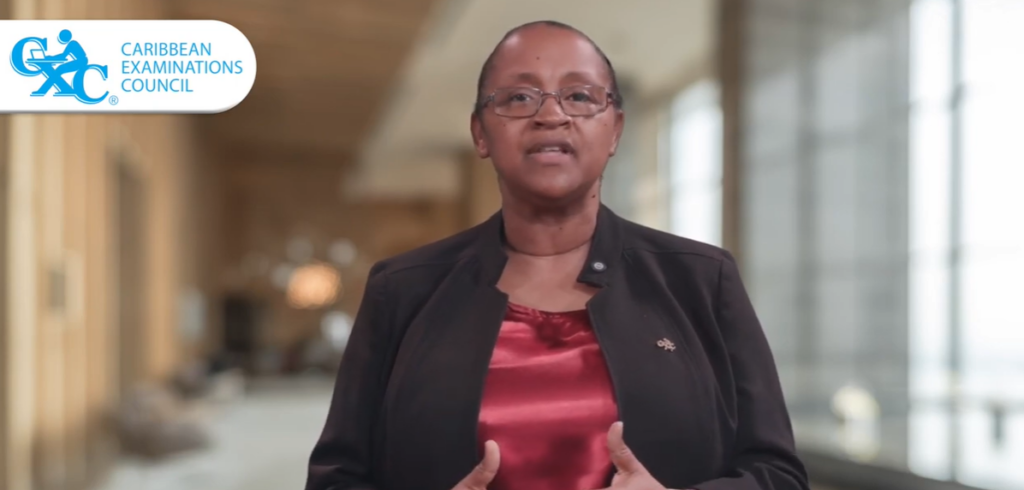
CXC reaffirms stance on responsible use of AI in school-based assessments
BRIDGETOWN, Barbados — As artificial intelligence reshapes learning and academic evaluation across the globe, the Caribbean Examinations Council (CXC) has unveiled a balanced, fairness-focused approach to integrating AI into school-based assessments (SBAs), centering human oversight and academic integrity while acknowledging the digital tools’ legitimate educational value. In a public video address published to CXC’s official website and social media platforms this Monday, Dr. Nicole Manning, the council’s director of operations, opened a transparent dialogue about both the transformative opportunities and pressing challenges that generative AI tools bring to student coursework and regional assessment systems, delivering clear reassurance to both learners and educators adapting to this rapidly evolving digital shift.
A core point of concern among educators and students across the Caribbean has centered on the reliability of commercial AI detection software, a tool many institutions have turned to in a bid to curb academic dishonesty. Addressing these widespread worries in line with CXC’s newly updated Standards and Guidelines for the Use of AI in Assessments, Manning emphasized that AI detection will never serve as the final, standalone basis for judgment on a student’s submitted work.
“The teacher-student relationship, forged over months of one-on-one observation, draft reviews, ongoing conversations, and targeted guidance, remains the heart of how we moderate and grade school-based assessments,” Dr. Manning explained. “AI checkers are just one source of input, not the final verdict on a student’s work. Human expertise and intervention will be embedded at every stage of the process to guarantee every candidate is treated fairly,” she added.
The council has laid out clear, permissive guidelines for legitimate AI use by students: tools can be leveraged to build understanding of complex concepts, brainstorm project ideas, clarify confusing terminology, and develop structural outlines for assessments. A key requirement applies across all use cases: any student who incorporates AI into their work in any capacity must disclose this use, cite the tool as a source, and submit a required disclosure form alongside an originality report with their final SBA. For students who complete their work without any AI assistance, no additional documentation is required.
CXC classifies the submission of work generated entirely or predominantly by AI without proper disclosure as academic dishonesty. Cases of this nature will be processed through the council’s existing established irregularities protocols, which include collaborative review involving the candidate, their classroom teacher, and school principal to resolve the matter fairly.
Manning also recognized the heavy adjustment burden that AI integration has placed on the Caribbean’s teaching community, and pledged ongoing institutional support from CXC, including targeted resources and specialized training to help teachers navigate the AI landscape with confidence and consistent application of the new guidelines. “You are not alone in this transition,” she stated. “We encourage you to have open, honest conversations with your students about how to use AI responsibly, guide them on what uses are permitted and what are not, and help them understand that academic integrity is a value that extends far beyond the assessment room.”
Addressing students directly, Dr. Manning urged learners to approach their work with intentional integrity, framing ethical decision-making as a personal choice rather than a matter of evading detection. “Integrity is not about whether a machine can detect what you did. It is about who you choose to be,” she said.
-

Queen Ifrica paints portrait with Mom Like Me
Veteran Jamaican reggae artist Queen Ifrica has launched her latest heartfelt single, *Mom Like Me*, through independent label Nuh Rush Records, marking another key milestone ahead of her highly anticipated upcoming full-length album *Breath of Life*. The track is the second of three pre-album lead singles, following the breakout global success of her earlier 2025 release *Lanton (Lantern)*, which has continued to build momentum across international radio airwaves and digital streaming platforms months after its debut.
Data from radio tracking services confirms *Lanton* has earned spins at 193 different stations across 39 countries, with particularly robust uptake across reggae-focused radio circuits in Europe, North America, and the United Kingdom. Multiple UK-based roots reggae and community radio outlets have thrown consistent support behind the track, cementing Queen Ifrica’s enduring status as a fan-favorite artist in curated, message-driven music spaces that prioritize lyrical depth and cultural resonance.
With *Mom Like Me*, Queen Ifrica shifts her creative focus from the social themes explored in *Lanton* to the intimate, universal realm of family bonds. The song centers the quiet, unshakable strength of maternal love, weaving narratives that resonate with mothers from every background, socioeconomic class, and culture around the world. While the single’s release was timed to coincide with the global celebration of Mother’s Day, the track pushes beyond generic celebratory tropes to deliver raw, grounded lyrical imagery that reflects the real-world challenges and enduring commitments that define motherhood for millions. The artist leans into the thematic visual framework first established for *Lanton* — which centers on the idea of divine light and steady guidance — and refashions it to fit this more personal narrative: it frames mothers as unwavering beacons of warmth and security, who remain steadfast through even the hardest of times. This core idea is crystallized in the track’s key lyric, which finds the narrator declaring, “loving my children is all I know to do.”
Beyond the new single drop, Queen Ifrica is gearing up for her first major international performance of 2026, scheduled for May 25 at London’s iconic City Splash Festival, one of the UK’s largest and most respected annual reggae and Caribbean music gatherings. She will share the stage with an all-star lineup of legendary and contemporary talent, including Beres Hammond, Gyptian, and The Congos, a booking that further underscores her long-standing, prominent standing within the UK’s thriving reggae scene.
The upcoming *Breath of Life* album, slated for a global summer release, will be preceded by one more lead single following *Mom Like Me*. The album’s title track marks a reunion between Queen Ifrica and Grammy Award-winning artist and producer Stephen Marley, who previously collaborated with her on the widely acclaimed cover of *Four Women* for Marley’s 2024 Nina Simone tribute project *Celebrating Nina — A Reggae Tribute to Nina Simone*. Distributed globally via iconic reggae label Tuff Gong International, *Mom Like Me* is available for streaming and download on all major digital music platforms now.
-

Curacao World Cup preparations rocked as coach resigns
WILLEMSTAD, Curaçao – In a stunning development just weeks before their first ever World Cup appearance, the Curaçao Football Federation (FFK) confirmed Monday that head coach Fred Rutten has stepped down from his role, ending a three-month tenure in charge of the historic underdog side. As the smallest nation by population to ever qualify for the global football showpiece, Curaçao’s World Cup journey has already been marked by unexpected turnover: the 63-year-old Dutch coach was brought on in February only after legendary predecessor Dick Advocaat departed the post for personal reasons.
In an official statement shared to the federation’s Instagram page, FFK confirmed that Rutten resigned following what it described as “constructive discussions” with federation leadership, though no specific cause for the exit was released to the public. In comments included in the statement, Rutten framed his departure as a choice to preserve team stability in the lead-up to the tournament.
“There must not be a climate that harms healthy professional relationships within the team or staff,” Rutten said. “That is why stepping down is the right decision. Time is pressing and Curaçao must move forward. I regret how things unfolded, but I wish everyone the best.”
Rutten’s short time in charge brought underwhelming results in pre-tournament preparation. In March friendly fixtures against two other World Cup-bound sides, Curaçao suffered heavy defeats: a 5-1 rout at the hands of Australia followed by a 2-0 loss to China. With just four weeks remaining until their opening World Cup match, the federation has not yet named a replacement for Rutten.
Curaçao, a small former Dutch Caribbean colony, faces a grueling test in Group E, where it will go up against European giants Germany, South American contender Ecuador, and African side Ivory Coast. FFK said it would finalize its plan for a new head coach by the end of Monday, adding that its immediate priority is preserving a calm environment around the squad as it continues preparations for the tournament. A press conference scheduled for Tuesday will provide further details on the circumstances surrounding Rutten’s sudden departure, the federation added.
-

SALISES ready to reveal Jamaica’s AI Readiness Score
Next Tuesday will mark a key milestone for Jamaica’s artificial intelligence strategy, as the Sir Arthur Lewis Institute of Social and Economic Studies (SALISES) hosts the official launch and public presentation of its landmark national Public AI Readiness Study. Titled *Jamaica: Opportunities, Gaps, and Priorities*, the event will convene a diverse cross-section of stakeholders — from government policymakers and industry executives to education leaders, civil society representatives, tech professionals, media and international development partners — to kickstart a national dialogue on inclusive development, data-driven planning, and national resilience in the fast-evolving AI era.
At the heart of the presentation is the long-awaited reveal of Jamaica’s first-ever Public AI Readiness Score, a custom national benchmark designed to quantify how prepared the Jamaican public is to understand, trust, access, deploy, and draw tangible benefits from both general and generative artificial intelligence. This benchmark is crafted to address the most pressing open questions surrounding Jamaica’s AI transition: Is the nation as a whole positioned to capitalize on the AI revolution? Which demographic and industry groups are already prepared to leverage the technology? Which communities and sectors risk being left behind in the shift? And what urgent actions must government, business, education institutions, and civil society take now to close gaps and build inclusive AI capacity?
Professor Lloyd Waller, SALISES director and co-lead researcher on the study, emphasized that the work aligns with the institute’s decades-long mission to generate actionable research to drive national and regional development. “Artificial intelligence is not simply a technology issue, it is a development issue,” Waller explained. “It will reshape how Jamaicans learn, work, conduct business, access critical public services, protect their personal data, and participate in national civic life. This study gives Jamaica the empirical foundation it needs to map our current position, identify who needs additional support, and ensure AI evolves as a tool for broader inclusion, higher productivity, stronger national resilience, and transformative national growth.”
Co-leading the research alongside Waller is Dr. Stephen Johnson, a research fellow based at SALISES’ Mona Campus at The University of the West Indies. Johnson noted that the readiness score is far more than a single metric: it converts aggregated public data on AI knowledge, attitudes, trust, concerns, access, usage patterns, and training needs into a clear signal for national strategic planning. “The readiness score is not just a number, it tells a story about Jamaica’s preparedness for one of the most important technological transitions of our time,” Johnson said. “It highlights where the public already has strong foundations, where critical gaps remain, and what types of targeted interventions are needed to ensure AI delivers benefits to the broad majority of Jamaicans, rather than just a small subset.”
The comprehensive study goes beyond surface-level analysis to examine a wide range of public experiences with AI: from general public knowledge of the technology and overall attitudes toward its adoption, to current usage rates, levels of trust, existing concerns, prior training exposure, access barriers, risk awareness, and capacity to benefit from AI tools. It also explores AI’s projected impacts across nearly every sector of Jamaican life, including employment, education, business productivity, public service delivery, misinformation risks, privacy protection, social inclusion, governance, and long-term national development.
Johnson stressed that the timing of the study’s release could not be more urgent, as AI has already begun integrating into every corner of Jamaican society. “AI is already reshaping Jamaica. It is entering classrooms, workplaces, government services, media systems, businesses, customer service platforms, research, tourism, health care, agriculture, and everyday life,” he noted. “The question is no longer whether AI will affect Jamaica — it already is. The more urgent question is whether Jamaica is prepared to use AI deliberately, safely, and inclusively.”
Framed around two core pillars, the report positions AI as a broad social and economic transformation challenge rather than a narrow technical issue. Its first core theme, development studies, centers the impact of AI on people, labor markets, public institutions, education systems, communities, and pathways to inclusive national growth. Its second core theme, data, provides actionable empirical evidence to help stakeholders move beyond ungrounded speculation, establishing a national baseline to guide planning for AI literacy expansion, digital inclusion, regulatory governance, workforce upskilling, public sector modernization, and responsible innovation.
Attendees of the launch event will leave with a clear breakdown of the study’s key findings, a full explanation of what the national AI readiness score means for Jamaica, an overview of how AI is expected to impact different sectors and population groups, and a roadmap of next steps for citizens, institutions, businesses, and policymakers to advance a fair and productive AI transition across the country.
-
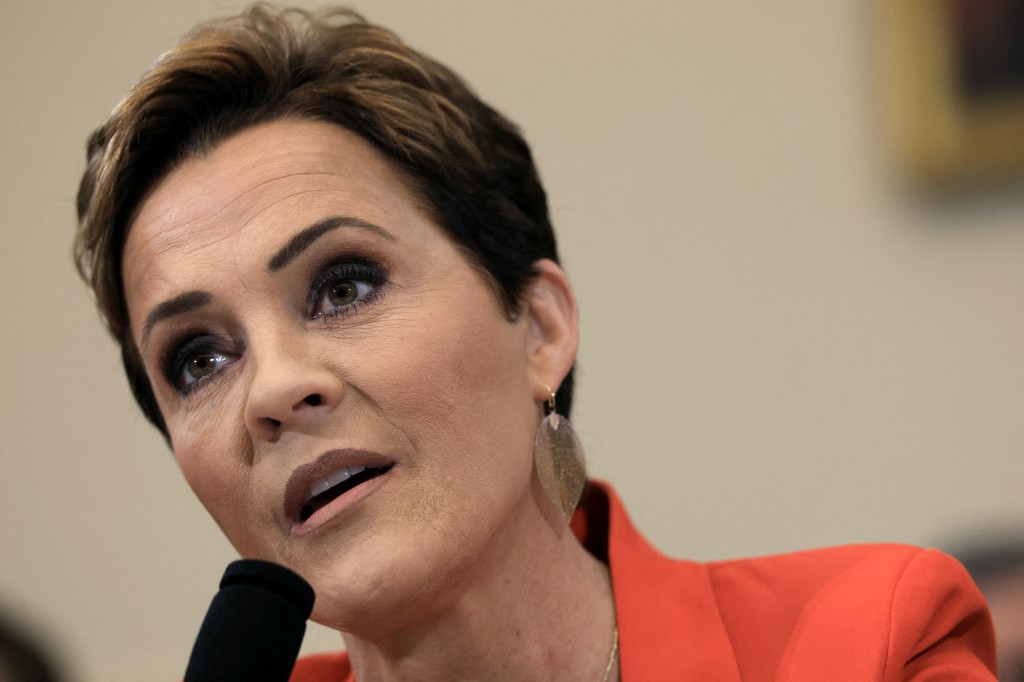
Trump nominates Kari Lake as next US ambassador to Jamaica
Former Arizona television news anchor and long-time Donald Trump ally Kari Lake has been selected by the 47th U.S. president to serve as the next American ambassador to the Caribbean nation of Jamaica, multiple administration sources confirm.
If Lake’s nomination receives the required confirmation from the U.S. Senate, she will step into a post that has been vacant since January 2025, when the tenure of previous ambassador Nick Perry concluded.
Lake first rose to national prominence as one of the most high-profile backers of Trump’s unsubstantiated claims that he was wrongfully defeated in the 2020 presidential election by then-candidate Joe Biden. She carried that loyalist reputation into her own 2022 bid for Arizona governor, a race that ended in a narrow defeat to Democratic opponent Katie Hobbs.
Earlier this year, in March 2025, Lake joined the Trump administration in a domestic advisory role, taking a position as a special advisor to the U.S. Agency for Global Media, the federal body that oversees U.S. government-run international media outlets. Her nomination to the Jamaica ambassadorship marks the highest-profile political appointment of her career to date.
-
Parliament must lead changes to boost voter turnout, says EOJ
Jamaica’s top electoral body has pushed back against a high-profile call from the country’s Chief Justice to implement sweeping reforms to reverse decades of declining voter participation, saying it lacks the legal authority to enact such changes on its own.
Chief Justice Bryan Sykes first laid out his challenge to the Electoral Commission of Jamaica (ECJ) during the body’s Long Service Awards ceremony on April 29. In his remarks, Sykes argued that the electoral body can no longer prioritize only protecting the integrity and fairness of Jamaica’s elections. With voter turnout hitting historic lows in recent cycles, he said rising voter apathy poses an equal threat to the country’s democratic foundations.
Sykes called on the ECJ to embrace evolutionary change rather than sticking to outdated processes, noting that democracy is a dynamic, living system that either adapts and grows or risks gradual decline. Among the actionable reforms he proposed were expanding access to voting by bringing ballot access to non-traditional sites including nursing homes, hospitals, and correctional facilities. His call came against a stark backdrop of plummeting participation: official ECJ data for the 2025 general election shows that just 39.5% of the country’s 2,077,799 registered voters cast ballots, equaling just 819,749 total votes. While that marks a small uptick from the 38% turnout recorded in the 2020 general election, youth participation is even lower: only 21% of voters under the age of 30 participated in the 2025 poll.
In an interview with the Jamaica Observer on Wednesday, Glasspole Brown, Director of Elections for the Electoral Office of Jamaica (EOJ), acknowledged that falling voter turnout is a serious concern shared by the commission. But he made clear that the EOJ operates within strict legal boundaries set by the Representation of the People Act, the legislation that governs all Jamaican election processes, which leaves it no room to unilaterally implement the reforms Sykes proposed.
Brown explained that many of the accessibility-focused changes suggested by the chief justice are explicitly not permitted under the current text of the act. Any adjustments to voting rules, whether through amending the legislation or altering the national constitution, fall exclusively under the purview of Jamaica’s Parliament, not the electoral commission. “If the Act, or legislators, takes a decision, that’s the way we’re going to go. Certainly, it’s for us to do whatever the Act requires us to do. We’re so dictated by whatever is in the Act,” Brown said.
The EOJ director did note that the commission has already undertaken limited, mandate-aligned initiatives to boost long-term voter engagement. These include in-school voter education programs designed to teach young students about the importance of democratic participation, as well as student election simulation programs run at secondary and post-secondary institutions to build familiarity with the voting process. But he reaffirmed that broader, systemic changes to expand access can only move forward after parliamentary review and approval.
-

Police identify men fatally shot in Manchester
MANCHESTER, Jamaica — Law enforcement authorities have released the identities of two teenage males killed in a reported shootout with police last Friday in the Mandeville area of Jamaica’s Manchester parish. The deceased have been named as 18-year-old Dantae Edward Carter, who maintained residency in both Manchester’s Hanbury district and Brighton district in neighboring St Elizabeth, and 19-year-old Dave Raymond, a longtime resident of Manchester’s Manningfield district. The encounter that unfolded across busy streets of the town unfolded with chaotic, high-stakes drama that disrupted daily life for local residents and bystanders. Following the confrontation, investigators confirmed they had recovered two illegal firearms at the scene of the incident. The violence unfolded as a police pursuit of a Toyota Axio vehicle that began on Newleigh Road, with the chase stretching several blocks through the town’s commercial and residential corridors before ending near the Willowgate plaza on Manchester Road. As officers engaged with the vehicle’s occupants, nearby civilians scattered frantically to find safe shelter from the crossfire. Amid the exchange of gunfire, one bystander suffered a minor grazing wound from a stray bullet, according to initial reports from the scene. The incident remains under ongoing investigation by Jamaican law enforcement as they work to piece together the full sequence of events that led to the fatal confrontation.