标签: Haiti

海地

  • Justice : No embezzlement at the Ministry of Culture, concludes the ULCC

    Justice : No embezzlement at the Ministry of Culture, concludes the ULCC

    In a significant development for Haiti’s governance transparency, the Unit for Combating Corruption (ULCC) has officially exonerated the Ministry of Culture and Communication following a comprehensive investigation into alleged financial misconduct. The probe, initiated in response to public allegations from the “Je Klere” Foundation (FJKL), specifically examined claims of irregular disbursements through debit cards to senior officials within both the Ministry and the Institute for the Safeguarding of National Heritage (ISPAN). These allegations were connected to funds allocated for the Project for the Development, Restoration, and Protection of Heritage Sites.

    Culture Minister Patrick Delatour publicly acknowledged the ULCC’s findings, which conclusively determined that none of the Foundation’s accusations could be substantiated. The exhaustive audit instead resulted in the formulation of administrative and institutional recommendations aimed at strengthening financial protocols.

    Minister Delatour, while welcoming the vindication, emphasized the critical responsibility of media and civil society in responsibly handling such sensitive information. He urged balanced and professional reporting on the ULCC’s conclusions to prevent misinformation that could potentially undermine social cohesion and destabilize governmental institutions. This case represents a notable test of Haiti’s anti-corruption mechanisms and their capacity to address serious public allegations against government bodies.


  • Internet : New Sunrise Airways App

    Internet : New Sunrise Airways App

    Haiti’s premier carrier Sunrise Airways has unveiled a comprehensive digital transformation strategy this December, significantly enhancing passenger experience through technological innovation and expanded route connectivity. The airline’s newly launched mobile application represents a cornerstone of this initiative, offering travelers seamless booking capabilities, itinerary management, and real-time flight notifications.

    The smartphone application, available for both iOS and Android platforms, provides travelers with unprecedented control over their journey. Passengers can now book flights, perform digital check-ins on eligible routes, and receive instant updates regarding schedule changes or operational adjustments. This digital advancement positions Sunrise Airways competitively within the Caribbean aviation market.

    Concurrently, the airline introduced ‘Refund Protect’ – a flexible travel insurance option that guarantees full reimbursement for tickets under unforeseen circumstances. This customer-centric approach addresses growing demand for travel flexibility in the post-pandemic era.

    Network expansion continues with the newly operational route connecting Cap-Haitien to Fort Lauderdale-Hollywood International Airport, launched December 15th. This strategic addition strengthens connections between Haiti’s northern region and South Florida, catering to both business and leisure travelers.

    Established in 2012, Sunrise Airways has evolved into a significant regional connector with 11 operational bases and over 250 employees. The carrier has transported more than 1.7 million passengers across nearly 20 destinations spanning from Florida through the Caribbean basin. Recent expansion includes Eastern Caribbean services to Antigua, Saint Kitts, Dominica, Saint Lucia, Grenada, and Saint Vincent, with additional routes planned for 2026.

    Travelers may access these services through the airline’s official website (www.sunriseairways.net) or via the newly launched mobile application.

  • Cooperation : Haiti and Mexico celebrate 195 years of diplomatic relations

    Cooperation : Haiti and Mexico celebrate 195 years of diplomatic relations

    PORT-AU-PRINCE, Haiti – In a significant demonstration of international camaraderie, Haiti and Mexico commemorated 195 years of uninterrupted diplomatic relations during an official ceremony held December 16, 2025, at the Montana Hotel in Port-au-Prince.

    The event, characterized by both solemn reflection and warm conviviality, assembled high-ranking officials from both nations. Prime Minister Alix Didier Fils-Aimé led the Haitian delegation alongside Presidential Transition Advisor Leslie Voltaire and Foreign Affairs Minister Jean-Victor Harvel Jean-Baptiste. The Mexican contingent was headed by Ambassador José de Jesús Cisneros Chávez, with Haitian Ambassador to Mexico Hubert Labbé also in attendance alongside numerous diplomatic corps representatives.

    The ceremony featured the inauguration of a historical exhibition showcasing archival photographs and documents chronicling nearly two centuries of bilateral cooperation. Prime Minister Fils-Aimé personally participated in the ribbon-cutting ceremony that unveiled this visual narrative of international friendship.

    During the proceedings, Haitian officials reaffirmed their government’s unwavering commitment to strengthening bilateral ties with Mexico across multiple strategic sectors. The partnership prioritizes collaborative initiatives in healthcare, education, national defense, security enhancement, and agricultural development – all oriented toward sustainable development and mutual prosperity.

    Presidential Advisor Voltaire delivered an address highlighting the exemplary nature of Haitian-Mexican relations, noting their foundation in shared historical struggles for freedom and independence. He referenced Haiti’s early support for Latin American independence movements as one of history’s first instances of South-South cooperation.

    Voltaire further emphasized Mexico’s substantial contributions to Haitian development through educational scholarship programs, cultural exchanges, and technical cooperation projects. He characterized Mexico as an indispensable strategic partner in Haiti’s ongoing reconstruction and sustainable development efforts, underscoring the relationship’s evolution from historical solidarity to contemporary partnership.

  • Economy : Strategic priorities of the Ministry of Commerce and Industry (video)

    Economy : Strategic priorities of the Ministry of Commerce and Industry (video)

    In a significant development for Haiti’s economic landscape, Commerce and Industry Minister James Monazard unveiled an ambitious portfolio of strategic priorities during the 31st edition of Tuesdays of the Nation on December 16, 2025. The presentation, hosted at the Prime Minister’s Office, detailed comprehensive programs, reforms, and structural projects designed to stimulate national economic growth.

    The ministry’s forward-looking agenda includes the implementation of a digital Professional Identity Card (CIP) application platform, representing a significant step toward modernizing Haiti’s professional documentation system. Minister Monazard provided particularly encouraging updates regarding the HOPE/HELP legislation renewal, indicating that the process is nearing completion with only one final procedural step remaining within the U.S. Congressional framework. The unanimous endorsement by a Congressional Commission signals strong bilateral support, with implementation expected imminently barring unexpected complications.

    Entrepreneurship development features prominently in the ministry’s strategy, with both the Youth Entrepreneurship Support Program (PAPEJ) and Women’s Entrepreneurship Support Project (PAEF) demonstrating measurable progress. Financial backing has already been secured for two of the ministry’s fourteen active initiatives during the initial quarter of the 2025-2026 fiscal year. The PAEF initiative has successfully launched its second cohort, while PAPEJ continues to advance according to established benchmarks.

    The Integrated Business Development Program (PIDE) constitutes another cornerstone of the economic strategy, focusing support on local and regional ventures across critical sectors including agro-industry, manufacturing, and biotechnology. Special emphasis is being placed on revitalizing traditional industries such as sewing and shoemaking through targeted strengthening initiatives.

    A distinctive regional development approach is being implemented with particular concentration on the Great North and Great South regions, where the majority of program beneficiaries will be selected. This geographical focus aligns with Minister Monazard’s vision of decentralizing economic activity and promoting balanced regional development throughout Haiti.

  • FLASH : Citizens of 34 countries affected by total or partial restrictions on entering the USA

    FLASH : Citizens of 34 countries affected by total or partial restrictions on entering the USA

    In a significant expansion of immigration restrictions, the Trump administration has enacted sweeping travel limitations affecting citizens from 34 countries through executive action. The updated policy, implemented on December 16, 2025, introduces a comprehensive framework of entry prohibitions targeting specific nations based on security assessments and diplomatic considerations.

    The revised travel ban now imposes complete entry restrictions on nationals from 19 countries, including seven newly added nations: Burkina Faso, Laos, Mali, Niger, Sierra Leone, South Sudan, and Syria. This expansion builds upon existing restrictions initially implemented in June 2025, which previously targeted 12 countries including Afghanistan, Myanmar, Chad, the Republic of Congo, Equatorial Guinea, Eritrea, Haiti, Iran, Libya, Somalia, Sudan, and Yemen.

    Additionally, the executive order establishes partial travel restrictions for citizens of 15 countries: Angola, Antigua and Barbuda, Benin, Ivory Coast, Dominica, Gabon, Gambia, Malawi, Mauritania, Nigeria, Senegal, Tanzania, Tonga, Zambia, and Zimbabwe. These partial restrictions vary in scope and application based on visa categories and specific circumstances.

    Notably, the policy also prohibits entry to individuals holding travel documentation issued or endorsed by the Palestinian Authority, reflecting broader diplomatic considerations in the administration’s immigration framework.

    The expanded restrictions represent the most comprehensive travel ban implemented during President Trump’s administration, significantly altering entry protocols for affected nationals and generating substantial implications for international travel, diplomatic relations, and global mobility patterns. The policy continues to prioritize national security concerns while reshaping America’s immigration landscape through executive authority.

  • Dominican Rep. : Export volume to Haiti will exceed US$1 billion (2025)

    Dominican Rep. : Export volume to Haiti will exceed US$1 billion (2025)

    The Dominican Republic’s export economy with Haiti is poised to break the $1 billion barrier in 2025, according to the latest trade data released by the General Directorate of Customs (DGA). Between January and October 2025, bilateral trade reached $982.9 million, dominated by $977.13 million in Dominican exports to Haiti with only $5.77 million in return imports.

    This substantial trade flow represents a remarkable 30.09% increase compared to the same period in 2024, highlighting one of the Caribbean’s most dynamic economic relationships despite regional challenges. The trade ecosystem involves 1,212 exporters from 20 Dominican provinces trading 1,821 different product categories, demonstrating significant diversification in commercial exchange.

    The export structure reveals that 70.07% of shipments operate under the national regime, followed by free trade zones (22.67%), temporary admission (3.80%), and re-export mechanisms (3.45%). Dominant export categories include unalloyed iron or steel bars (11.01%), hydraulic cements including colored variants (9.43%), and wheat or mixed grain flour (6.27%), positioning the Dominican Republic as a critical supplier of industrial, construction, and food production inputs to Haiti.

    Free trade zone exports show particular concentration in textiles, with knitted t-shirts and undershirts accounting for 35.09% of shipments, followed by other cotton fabrics (29.26%) and textile yarns and ropes (5.24%).

    Conversely, imports from Haiti have experienced a dramatic 56.81% decline, reflecting diminished production capacity likely attributable to ongoing political instability and security challenges within Haiti. This growing trade imbalance underscores the asymmetric nature of the economic relationship between the two neighboring nations.

  • Politic : 3rd meeting of the OAS Group of Friends of Haiti

    Politic : 3rd meeting of the OAS Group of Friends of Haiti

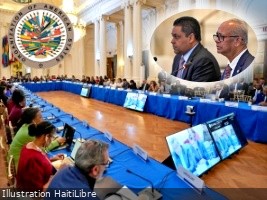
    Washington D.C. witnessed a significant diplomatic gathering on December 11, 2025, as the Organization of American States convened the third meeting of its Group of Friends of Haiti. The session featured Laurent Saint-Cyr, President pro tempore and Coordinator of Haiti’s Transition Council, as special guest, marking a pivotal moment in international support for the Caribbean nation.

    The assembly conducted a comprehensive review of recent developments following OAS Secretary General Albert Ramdin’s fact-finding mission to Haiti. Delegates examined progress on the established roadmap while strengthening coordination mechanisms between the OAS, United Nations, CARICOM, and Haitian transitional authorities. Participants unanimously emphasized the critical importance of Haitian-led processes encompassing security initiatives, governance frameworks for 2026, and preparations for credible electoral proceedings.

    President Saint-Cyr acknowledged the OAS’s steadfast solidarity while declaring the joint roadmap had entered a decisive implementation phase. He identified security restoration as the nation’s paramount priority, stressing the urgent need to transform international commitments into concrete actions. “The magnitude of needs demands expanded, immediate, and sustained engagement,” Saint-Cyr asserted, calling upon the entire diplomatic group to intensify support measures.

    The transitional leader specifically highlighted the essential deployment of the Gang Repression Force (FRG) as imperative for ensuring successful elections. Both OAS and Inter-American Development Bank representatives reaffirmed their commitment to supporting Haiti’s National Identification Office in modernizing electoral registers and enhancing technical capacities for free, inclusive voting processes. Additional priorities included developing modern prison infrastructure and reintegrating children forcibly recruited by armed groups.

    Secretary General Ramdin pledged continued close collaboration with Haitian authorities and international partners, particularly focusing on security enhancement, governance strengthening, and national identity card issuance—fundamental prerequisites for democratic elections. “Our collective efforts remain dedicated to achieving the peace, stability, and democratic renewal that the Haitian people rightfully deserve,” Ramdin affirmed.

    Concluding the meeting, Saint-Cyr reiterated the Transitional Council’s determination to restore security, execute the roadmap, organize elections, and protect vulnerable populations while acknowledging that “Haiti cannot overcome challenges of this magnitude without international partnership.”

  • FLASH : Detailed Baccalaureate Exam Schedule Dec. 2025

    FLASH : Detailed Baccalaureate Exam Schedule Dec. 2025

    Haiti’s education sector has commenced a significant academic undertaking with the initiation of the December 2025 Baccalaureate retake examinations. Starting Monday, December 15, 2025, approximately 44,460 candidates who previously failed their NSA and Philosophy components are participating in this critical testing period.

    The Ministry of National Education has released comprehensive examination schedules covering multiple academic streams. The testing framework encompasses four primary series within the S4 Baccalaureate program: Life and Earth Sciences (SVT), Mathematical and Physical Sciences (SMP), Economic and Social Sciences (SES), and Literature and Arts (LLA). Additionally, specialized Philosophy series (Philo A, Philo C, Philo D) are undergoing their respective examinations.

    The examination structure follows an intensive four-day format from Monday through Thursday, with morning sessions commencing at 8:30 AM and afternoon sessions beginning at 1:00 PM. Each academic series features distinct subject combinations with varying coefficients reflecting their academic weight. Core subjects including Philosophy, Chemistry, History and Geography, and specialized discipline-specific examinations are administered according to meticulously planned timelines.

    Subject coefficients demonstrate the relative importance of each examination, ranging from 100 to 400 points. The scheduling accounts for diverse linguistic requirements with English, Spanish, and Creole language examinations integrated throughout the testing period. Science-focused streams emphasize technical subjects including Physics, Mathematics, and Biology, while humanities-oriented series prioritize Social Sciences, Arts, and Literature components.

    This organized retake opportunity represents a crucial mechanism for educational advancement, allowing thousands of students to pursue academic certification and future opportunities through standardized assessment protocols.

  • FLASH : Terrorist attack plot

    FLASH : Terrorist attack plot

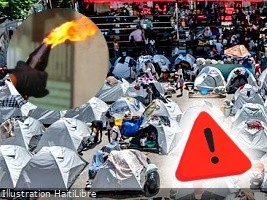
    Haitian authorities are on maximum alert following intelligence reports revealing an imminent terrorist plot against vulnerable populations in the capital. According to the Haitian National Police (PNH), extremist elements are preparing coordinated attacks using high-yield explosives and incendiary devices against internally displaced persons (IDP) camps in Port-au-Prince, with Bois-Verna district identified as a primary target.

    The intelligence division of PNH uncovered that the planned assault aims to generate widespread panic among civilians and undermine public confidence in national law enforcement capabilities. This calculated strategy seeks to destabilize security efforts and create chaos within the already fragile humanitarian infrastructure.

    In response to this critical threat, Haitian security forces have initiated comprehensive countermeasures. The police have deployed additional resources and implemented enhanced protective protocols around all IDP settlements. Surveillance operations have been intensified, with particular focus on intercepting potential attackers before they can execute their plans.

    The national police force has issued an official statement reaffirming its unwavering dedication to protecting civilian lives and property. “Our operational units remain fully engaged in combating armed criminal elements threatening national stability,” the statement read. “We are determined to maintain security for all Haitian citizens and restore lasting peace to our communities.”

    This security crisis develops amid ongoing nationwide efforts to combat gang violence that has displaced approximately 150,000 people throughout Haiti. The IDP camps, often overcrowded and under-resourced, represent particularly sensitive targets for groups seeking to amplify terror through attacks on humanitarian spaces.

    International observers have expressed grave concern over the escalating tactics employed by armed factions in Haiti. The attempted targeting of displaced populations marks a dangerous evolution in the conflict dynamics, indicating a willingness to violate fundamental humanitarian principles for political objectives.

    The police have urged residents to remain vigilant and report any suspicious activities to authorities immediately, while assuring that all necessary measures are being taken to neutralize the threat.

  • Gonaïves : Mission to evaluate the work of the Drinking Water Supply System

    Gonaïves : Mission to evaluate the work of the Drinking Water Supply System

    In a significant move to address critical infrastructure delays, Haiti’s National Directorate of Drinking Water and Sanitation (DINEPA) has conducted a comprehensive evaluation mission of the Gonaïves Drinking Water Supply System rehabilitation project. Led by Director General Engineer Théophile Ostinvil, the inspection comes as part of the Grand-Nord Program—a major initiative funded by the Inter-American Development Bank (IDB) focusing on drinking water, sanitation, and hygiene improvements.

    The high-level delegation pursued dual objectives: assessing substantial construction delays that have pushed the project’s completion timeline to April 2026, and evaluating the performance of the Results-Based Technical Assistance program responsible for operational strengthening at the Gonaïves Technical Operations Center. The supervising firm TECINA received formal notice regarding these delays during the mission.

    This proactive governance approach aligns with DINEPA’s three strategic priorities: ensuring good sector governance, achieving financial autonomy through operational structures, and maximizing development within the drinking water and sanitation sector. The mission included technical meetings with both the Technical Assistance team and TECINA representatives to discuss project advancements and address field implementation challenges.

    Strategic decisions were made to enforce contractual commitments, particularly concerning the April 2026 amendment expiration. Director Ostinvil and his technical team conducted multiple site visits to evaluate rehabilitation progress, network expansion efforts, and the condition of hydraulic installations undergoing modernization.

    The intensified oversight demonstrates DINEPA’s renewed commitment to modernizing water infrastructure in Haiti’s strategic Grand-Nord region, particularly in densely populated Gonaïves where reliable drinking water access remains a pressing public need.