标签: Dominican Republic

多米尼加共和国

  • Viahr Foundation and Real Madrid Foundation partner to promote mental health

    Viahr Foundation and Real Madrid Foundation partner to promote mental health

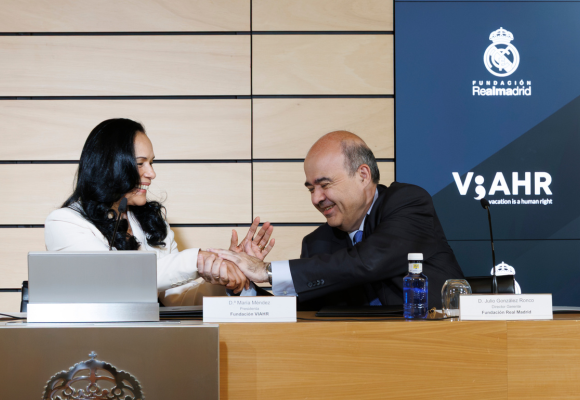
    In a landmark move that places mental wellness at the center of athletic and academic growth, two global non-profits, the Viahr Foundation and Real Madrid Foundation, have formalized a new strategic alliance based in Santo Domingo. The partnership is built around a core mission: to establish mental health, emotional balance, and intentional recovery as non-negotiable pillars of personal development across both sports and education sectors.

    Against a growing global backdrop of rising burnout rates among high-performance athletes and overstretched students, the collaboration targets a critical gap in existing training and education frameworks. Under the terms of the agreement, the two organizations will co-develop evidence-based, practical resources designed to proactively prevent burnout in both high-competition athletic settings and rigorous academic environments. Rather than framing success as a product of constant overwork, the partnership seeks to cultivate a far more sustainable approach to achieving long-term personal and professional goals.

    A key highlight of the planned initiatives is the development of a specialized module focused on mental health literacy and emotional regulation that will be integrated into the existing “Train Your Mind” program. Complementing this digital resource, the organizations will also host in-person interactive workshops grounded in the PAUSA® Method, a structured framework designed to help individuals build intentional pauses and stress management practices into their daily routines.

    Leaders from both organizations emphasize that the long-term goal of the alliance is to drive a systemic shift in performance culture. By embedding emotional well-being directly into sports training and personal development curricula, the partnership aims to foster a more human-centered model of success that prioritizes the whole person, not just competitive or academic outcomes.
  • President Abinader signs book of condolences following death of Qatar’s former emir

    President Abinader signs book of condolences following death of Qatar’s former emir

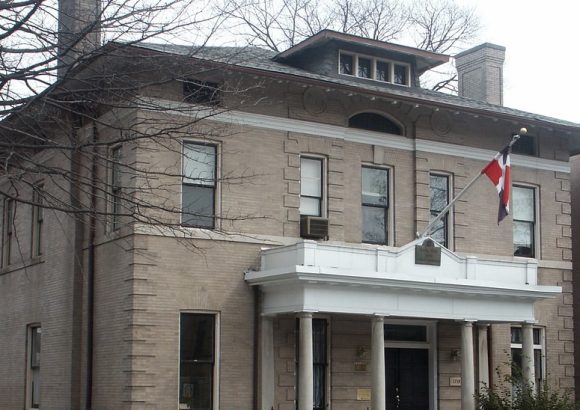
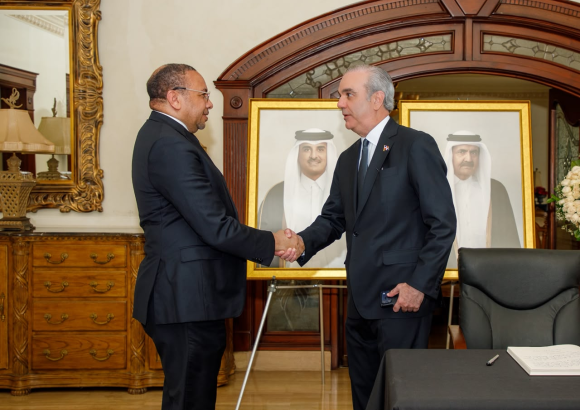
    On Wednesday, Dominican Republic President Luis Abinader traveled to the Qatari ambassador’s official residence in Santo Domingo to honor the passing of former Qatari ruler Sheikh Hamad Bin Khalifa Al Thani, who died on July 12 at the age of 74.

    Accompanied by Dominican Foreign Minister Roberto Álvarez, Abinader was greeted on site by Yaser Awad Al-Abdulla, Qatar’s ambassador to the Dominican Republic. During the visit, the president extended the profound sympathy of both the Dominican government and the country’s broader population to the State of Qatar, the Qatari royal household, and all Qatari citizens.

    In his formal written condolence message, Abinader highlighted the transformative leadership and enduring legacy that the late Emir Father left on Qatar’s national history and sustained development. He also reaffirmed the Dominican Republic’s solidarity with current Qatari ruler Sheikh Tamim bin Hamad Al Thani — Sheikh Hamad’s son — and the Qatari people as they navigate the period of national mourning.

    This diplomatic gesture serves as a clear reflection of the robust bilateral diplomatic relations and collaborative partnership that the Dominican Republic and Qatar have built over time. As a public tribute to the late former emir, the Qatari national flag has been lowered to half-mast at the ambassador’s residence in the Dominican capital.

    Sheikh Hamad Bin Khalifa Al Thani first took the throne of Qatar in 1995, and oversaw nearly two decades of the country’s rapid economic and social transformation before making the unprecedented decision to voluntarily abdicate power in 2013, handing leadership to his son, the current emir.

  • Asonahores announces 2026 Tourism Trade Show in Punta Cana

    Asonahores announces 2026 Tourism Trade Show in Punta Cana

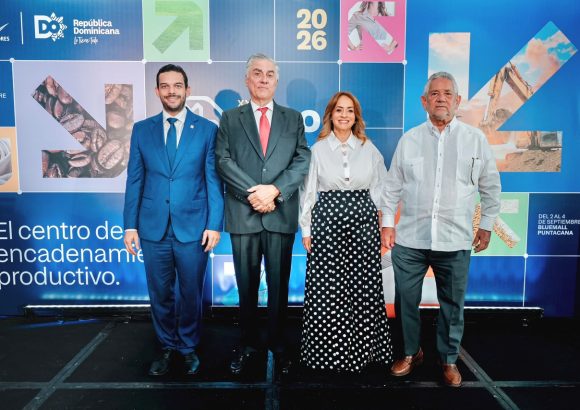
    The Dominican Republic Hotel and Tourism Association (Asonahores) has officially locked in dates and a venue for its highly anticipated 38th annual tourism industry trade show, scheduling the 2026 event to run from September 2 to 4 at BlueMall Punta Cana. When the doors open, the exhibition will welcome more than 300 participating vendors, with exhibitors traveling to the event from both across the Dominican Republic and international markets.

    Widely recognized as the Dominican Republic’s flagship business gathering for the tourism sector, the 2026 trade show will highlight products and services from a diverse cross-section of related industries. Attendees and participating vendors will explore offerings spanning food and beverage, hospitality technology, financial services for tourism businesses, commercial furniture, commercial-grade kitchen equipment, and sustainable energy solutions tailored to the sector. This broad showcase underscores the far-reaching economic ripple effects that the $10-billion-plus Dominican tourism industry generates across the entire national economy.

    In comments on the upcoming event, Asonahores President Juan Bancalari emphasized that the trade show fills a critical role in the country’s tourism ecosystem: it acts as a centralized networking platform that connects established businesses, emerging entrepreneurs, local producers, and global suppliers to one of the Dominican Republic’s most dynamic and rapidly expanding economic sectors. Beyond deal-making, Bancalari noted that the event also actively fosters innovation that drives long-term, inclusive economic development across the country.

    Early demand for exhibition space has outpaced expectations, with event organizers confirming that more than 70% of all available booth space has already been reserved by interested vendors. This strong early uptake is a clear indicator of robust private sector confidence in both the event and the continuing growth trajectory of the Dominican Republic’s tourism industry.

    Beyond the core exhibition floor, the 2026 trade show will feature a packed slate of complementary programming and amenities. A longstanding fan favorite, the UNABAR Cup National Barista Competition, will return again this year, showcasing the skills of the country’s top coffee and beverage professionals. Organizers have also upgraded the event’s business lounge, creating a dedicated, refined space for high-level B2B meetings between industry leaders, and expanded digital media coverage to boost brand visibility for every participating exhibitor.

    Sustainability remains a core priority for the 2026 event, with organizers rolling out new initiatives to cut the exhibition’s environmental footprint—most notably a shift to fully digital event materials to eliminate unnecessary paper waste. The show will also continue its longstanding commitment to supporting local creative economies by featuring the work of Dominican artisans throughout the venue.

    The 2026 Asonahores Trade Show has secured backing from key public and private sector partners. The country’s Ministry of Tourism (Mitur) is an official supporter of the event, with major corporate sponsorship coming from leading Dominican financial institutions and energy firms including Banco BHD, Banco Popular Dominicano, Banreservas, and CEPM, alongside other prominent domestic companies.

  • Fatal Autovía del Este crash involving truck claims at least one life

    Fatal Autovía del Este crash involving truck claims at least one life

    A devastating highway incident unfolded on Tuesday along Spain’s Autovía del Este, when a collision between multiple vehicles claimed at least one life and left several other people wounded, early preliminary law enforcement reports confirm.

    Among the vehicles involved in the crash was a large heavy-duty truck carrying a load of construction materials. As of the latest updates, traffic safety officials have not yet released a definitive count of how many vehicles were impacted by the collision, nor have they shared identifying details of the deceased or injured victims to allow time for next-of-kin notification.

    Immediately after the collision was reported, emergency response teams including fire crews, paramedics and law enforcement officers rushed to the crash site located along the major eastern highway. First responders prioritized extracting trapped passengers and providing urgent on-site medical care before transporting injured parties to adjacent area hospitals for further treatment. Concurrent with rescue efforts, highway maintenance teams worked methodically to clear wreckage from the roadway to restore normal traffic flow as quickly as possible.

    Regional law enforcement officials have formally opened a full investigation to determine the root cause of the crash, with preliminary work focusing on factors including road conditions at the time of the incident, driver error, and potential mechanical failures of any of the involved vehicles. No further updates on the investigation’s progress or the condition of injured victims have been released as of Wednesday morning.

  • Experts urge stronger building safety to reduce earthquake risk in the Dominican Republic

    Experts urge stronger building safety to reduce earthquake risk in the Dominican Republic

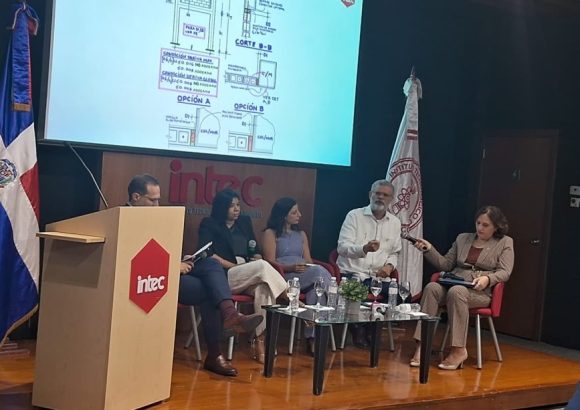
    In a collaborative gathering focused on addressing critical natural hazard risks, leading professionals across structural engineering, disaster risk management, and the insurance sector have laid out a clear call for upgraded building safety regulations and expanded earthquake readiness across the Dominican Republic. The call to action came during the public forum titled “Seismic Vulnerability and Structural Safety in the Dominican Republic,” hosted by the Technological Institute of Santo Domingo (INTEC) with logistical and financial backing from global risk advisory firm MARSH and leading insurance provider MAPFRE.

    The multi-stakeholder event created a shared space for academic researchers, insurance industry leaders, and infrastructure planning specialists to collectively assess the Dominican Republic’s exposure to seismic activity and outline actionable steps to boost the ability of buildings and critical public infrastructure to withstand major earthquakes. Unlike many niche academic events, this forum brought together cross-sector expertise that bridges research, practice, and risk financing, ensuring that proposed solutions address every stage of disaster preparedness from planning to recovery.

    Two leading experts from INTEC, researcher Luis Abbott and geotechnical specialist Dr. Claudia Germoso, used their presentations to underline the urgent need for three core interventions: widespread mandatory assessments of existing structures to map current vulnerability, the mandatory adoption of earthquake-resistant design principles for all new construction, and consistent enforcement of current building code requirements to cut down on preventable damage and protect civilian lives when seismic events occur. They noted that many existing structures across the country were built without modern seismic safety considerations, leaving large populations exposed to unnecessary risk.

    By the close of the forum, all participating stakeholders reached a unified consensus that proactive prevention measures, continuous investment in scientific research, expanded technical training for construction professionals, and investment in purpose-built resilient infrastructure are non-negotiable components of any strategy to improve the country’s ability to respond to and recover from future earthquakes. The event itself is part of a years-long initiative from INTEC to advance evidence-based disaster risk reduction and sustainable development across the Caribbean nation, through a combination of academic research, public education, and cross-institutional partnerships between academia, private industry, and public sector bodies.

  • University of Texas geologists begin study of Dominican Republic’s hydrocarbon potential

    University of Texas geologists begin study of Dominican Republic’s hydrocarbon potential

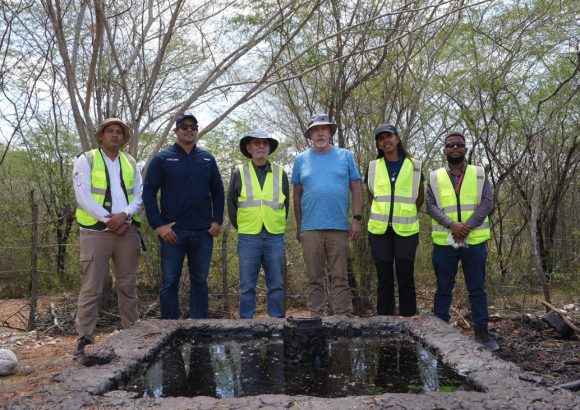
    A collaborative geological research initiative between the Dominican Republic and the United States has launched a series of on-site field investigations in the Dominican’s southwestern Azua province, focused on unlocking the Caribbean nation’s untapped hydrocarbon resource potential. The project, a formal cooperative venture between the Dominican government and the Bureau of Economic Geology (BEG) at the University of Texas at Austin (UT Austin), brings together leading academic geoscientists and local energy sector specialists to conduct a holistic assessment of the country’s onshore and offshore sedimentary basins.

    Leading the joint expedition are UT Austin geologist Mark Shuster and Dominican energy expert Emilio Núñez. Over the course of their fieldwork, the team has prioritized access to some of the region’s most geologically significant sites, including distinct geological formations across the province and the large Cementos Santo Domingo quarry. At these locations, researchers are conducting detailed studies of the basin’s rock structures, gathering a diverse set of geological samples for laboratory analysis, and measuring key properties that are critical to identifying viable energy reserves. These properties include rock porosity, which determines how much oil or gas a rock formation can hold, and overall mineral composition, which helps contextualize the area’s geological formation history.

    A core focus of the current fieldwork is a set of vintage exploration wells located in the Maleno area. Originally drilled in the late 1930s, these wells have long drawn the attention of geologists and energy investors due to naturally occurring crude oil seeps detected at the site, which signal the possible presence of larger commercial-scale hydrocarbon reserves underground. The current research team is conducting the most detailed modern assessment of these wells to date, updating decades-old data with modern geological measurement techniques.

    All on-site operations are being guided by local geologists from the Dominican Ministry of Energy and Mines (MEM) and technical staff from the country’s National Geological Institute (IGN). During the expedition, the international and local teams have reviewed the full body of data from past exploration efforts in the region, cross-referencing historical findings with new on-site observations to build a more complete picture of Azua province’s complex geological history.

    When completed, the comprehensive assessment is expected to deliver significant long-term benefits for the Dominican Republic. The research will expand and update the country’s national geological database, filling critical gaps in existing knowledge about domestic energy resource potential. By providing accurate, up-to-date geological data, the project will also lay the groundwork for future private and public energy exploration projects, attract targeted international investment in the Dominican energy sector, and support evidence-based policy planning for the country’s energy future.

  • Court authorizes enforcement of U.S. ruling requiring JCE to pay over US$906,000

    Court authorizes enforcement of U.S. ruling requiring JCE to pay over US$906,000

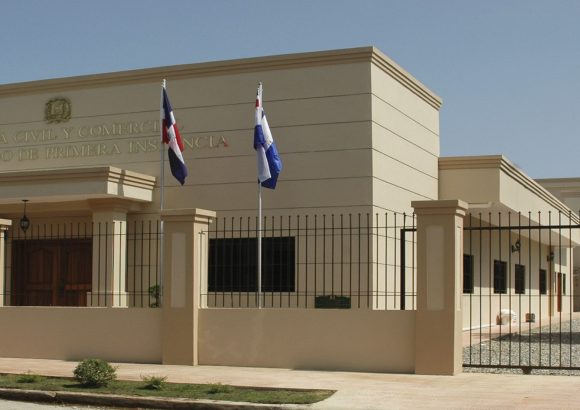
    In a landmark legal ruling out of Santo Domingo, the Third Chamber of the Civil and Commercial Court of First Instance of the National District has cleared the way for a U.S. court judgment to be enforced domestically against the Dominican Republic’s Central Electoral Board (JCE). The ruling orders the JCE to turn over more than $906,000 in damages to U.S.-based firm Latin Events, LLC, compensation for unpaid logistical work the company completed for the electoral body.

    The original judgment at the center of the case came from the U.S. District Court for the Southern District of New York. That court initially awarded Latin Events $838,337.50 for the completed services, and the addition of pre-judgment and post-judgment interest pushed the total owed past the $906,000 mark. Dominican judicial officials reviewed the foreign ruling thoroughly and confirmed that it meets all of the legal criteria for recognition and enforcement laid out in Dominican national law.

    Court records outline the origins of the dispute, which date back to August 2023, when the JCE contracted Latin Events to supply logistical support for institutional events hosted outside of the Dominican Republic. According to the firm’s legal claims, it fully met all requirements laid out in the contract, but the JCE never issued payment for the work. Left with no other remedy, Latin Events moved forward with a lawsuit in the U.S. court system.

    In its assessment of the case, the Dominican court found the U.S. judgment to be a final, binding legal ruling. All required documentation had been properly apostilled for international use and translated per legal standards, and the court confirmed that upholding the ruling would not conflict with Dominican public policy. Judicial documents also note that the JCE received official notification of the U.S. court proceedings at the board’s New York office, but chose not to enter an appearance or mount a defense in the case.

    Following the Dominican court’s decision, Julio Cury, the lead attorney representing Latin Events, highlighted the broader implications of the ruling. Cury emphasized that the judgment confirms Dominican public institutions are not exempt from accountability for contractual agreements they enter into on foreign soil. He also issued a clear warning: if the JCE declines to comply with the payment order voluntarily, Latin Events is prepared to move forward with aggressive enforcement measures, including court-ordered asset seizure and additional legal claims to recover further damages.

  • Education Ministry receives torch for Santo Domingo 2026 Games

    Education Ministry receives torch for Santo Domingo 2026 Games

    The countdown to the 25th edition of the Central American and Caribbean Games, scheduled to open in Santo Domingo in 2026, has passed a major milestone as the event’s iconic “Flame of Values” torch was officially received by Dominican Republic’s Education Minister Luis Miguel De Camps. In a ceremony marked by widespread participation from education stakeholders, De Camps framed the torch as far more than a ceremonial precursor to the regional sporting competition, positioning it as a living symbol of the core principles that anchor the Dominican national education system.

    The reception event, held at the Education Ministry, brought together a cross-section of the country’s education community, including Alberto Rodríguez, director of the National Institute of Physical Education (INEFI), senior education ministry officials, local teachers, and hundreds of secondary and university student representatives. During his remarks at the gathering, De Camps emphasized that the flame embodies a suite of foundational values that both sports and education seek to instill: discipline, mutual respect, personal integrity, relentless perseverance, collaborative teamwork, and unwavering fair play.

    Student leaders who took part in the ceremony echoed this sentiment, welcoming the flame to the education sector and highlighting its broader meaning as a unifying force that connects nations across the Central American and Caribbean region. They noted that the flame also represents a shared commitment to athletic excellence and responsible citizenship, reinforcing the well-documented role that organized sports play in fostering holistic character development for young people.

    The journey of the “Flame of Values” began months ago far from the Dominican Republic: the torch was first lit on April 11 at the historic archaeological site of Teotihuacan, Mexico, a location steeped in regional cultural history that nods to the shared heritage of participating nations. After traveling to the Dominican Republic, the national torch relay was officially launched on May 6 by Dominican President Luis Abinader, under the official name “Wiche García Saleta Route: The Flame of Values”.

    The multi-month relay, which travels across the Dominican Republic accompanied by Colí, the official mascot of the 2026 Games, is set to conclude on July 24, 2026. On that day, the final torchbearer will light the Games’ cauldron during the official opening ceremony in Santo Domingo, marking the official start of 11 days of competition that will bring together more than 6,000 elite athletes from 37 countries and territories across the region.

  • Dominican Republic promotes free zones during U.S. trade and investment roadshow

    Dominican Republic promotes free zones during U.S. trade and investment roadshow

    A cross-country investment promotion initiative led by the Dominican Republic’s Embassy in the United States, in partnership with ProDominicana, Banco Popular Dominicano, and a coalition of public and private sector entities, has successfully wrapped up the DR Trade & Investment Road Show 2026. This three-city outreach mission was designed from the ground up to drive new U.S. capital inflows into the Dominican Republic’s fast-growing industrial parks and free trade zones, aligning with the country’s broader economic development goals.

    Running from July 7 to 10, the roadshow traveled to three strategic U.S. economic hubs: Houston, Texas; Columbus, Ohio; and Raleigh, North Carolina. The event drew more than 110 attendees, consisting primarily of C-suite executives and senior business leaders from leading U.S. companies spanning high-growth sectors that the Dominican Republic has prioritized for expansion. These sectors include advanced technology, manufacturing, energy production, healthcare, supply chain logistics, aerospace engineering, and financial services.

    Notable corporate participants in the roadshow included global industry giants such as Google, Lenovo, Lockheed Martin, First Solar, Cheniere Energy, Excelerate Energy, and Sempra. Leading U.S. financial institutions also joined the initiative, with representatives from PNC Bank, KeyCorp, and Fifth Third Bank in attendance to explore potential collaborative opportunities in the Dominican market.

    During the event, the official Dominican delegation laid out a detailed overview of untapped investment opportunities across the country’s top industrial and free trade zones. Key sites highlighted included the Las Américas Industrial Park, Punta Cana Industrial Park, Santiago Industrial Park, Nigua Industrial Park, Savanna Industrial Park, and the Itabo Industrial Park (PIISA), each offering unique geographic, regulatory, and infrastructure advantages for foreign investors.

    The initiative also received formal support from state and local government officials across the three host U.S. states. These public sector representatives participated in roundtable discussions and bilateral meetings, laying a solid foundation for future cross-border cooperation agreements, reciprocal trade missions, and structured business referral programs that will connect U.S. firms with Dominican commercial partners long after the roadshow concluded.

    More broadly, the 2026 DR Trade & Investment Roadshow is a core component of the Dominican government’s long-term economic strategy. By actively courting foreign direct investment, the country aims to strengthen its already robust free trade zone sector, expand co-production capacity under the Dominican Republic-Central America-United States Free Trade Agreement (CAFTA-DR), help diversify regional supply chains that have faced persistent disruption in recent years, and solidify its position as a cost-competitive, strategically located manufacturing hub serving the large U.S. market.

  • Cuba registers 504 athletes for Santo Domingo 2026 Games

    Cuba registers 504 athletes for Santo Domingo 2026 Games

    As preparations ramp up for the XXV Central American and Caribbean Games set to take place in Santo Domingo in 2026, Cuba has formally submitted its largest national delegation in recent Games history, locking in 504 athletes across 42 competitive sports to compete next year. The island nation’s roster will be spread across 356 of the 497 total medal events on the Games’ official program, marking an ambitious showing against a backdrop of persistent domestic economic challenges.

    According to José Antonio Miranda Carrera, director general of high performance at Cuba’s National Institute of Sports (Inder), the size and scope of the 2026 delegation underscores the country’s long-standing dedication to regional athletic excellence. Despite facing ongoing economic constraints that have impacted sports training and logistics, Cuba remains committed to retaining its position among the top three performing nations in the Games’ overall medal standings, a goal Miranda says the entire delegation is focused on achieving.

    Minor adjustments to the final roster left Cuba just two spots short of filling its full 506 allocated athlete quota, with late changes to entry numbers in the canoeing and diving disciplines forcing the small cut. Even with this adjustment, the 2026 delegation still outpaces the 494 athletes Cuba sent to the 2023 Central American and Caribbean Games hosted in San Salvador, representing a small but notable expansion of the nation’s competitive presence.

    Cuba’s competitive targets for the 2026 Games extend beyond a top-three ranking: officials have set a goal of claiming roughly 70 gold medals, and the event will also serve as a critical qualification pathway for the 2027 Pan American Games in Lima. A total of 19 sports at the Santo Domingo Games will award qualification spots for the upcoming Pan American event, making early, strong performances critical for Cuban athletes aiming to compete in Lima in two years.

    To acclimate to local time zones, venue conditions and the Dominican Republic’s climate, a number of Cuban athletic squads have already arrived and begun training on the ground. Among these early arrivals are athletes from women’s volleyball, judo, shooting, weightlifting, and triathlon, who have been setting up training camps ahead of competition. The nation’s men’s and women’s water polo teams are scheduled to join the pre-Games training group on July 19, completing the bulk of the delegation’s arrival for preparation.

    Looking back at recent regional competition, Cuba secured third place in the overall 2023 San Salvador Games medal table, finishing behind hosts Mexico and Colombia. But across the entire history of the Central American and Caribbean Games, Cuba holds an unrivaled record as the most successful competing nation, leading the all-time overall medal standings by a significant margin. This historic legacy of excellence is a core driver of the 2026 delegation’s high ambitions, officials say.