标签: Dominican Republic

多米尼加共和国

  • Trump orders total blockade of sanctioned oil tankers linked to Venezuela

    Trump orders total blockade of sanctioned oil tankers linked to Venezuela

    In a dramatic intensification of pressure on Caracas, former U.S. President Donald Trump has declared a comprehensive naval blockade prohibiting all sanctioned oil tankers from entering or departing Venezuelan waters. This decisive action represents the most aggressive measure to date in Washington’s campaign against the administration of Venezuelan President Nicolás Maduro.

    Through an official communication on Truth Social, Trump asserted that substantial U.S. military assets have encircled Venezuela within Caribbean territories. He leveled serious accusations against the Maduro government, claiming it utilizes national petroleum resources to bankroll narco-terrorism operations, human trafficking networks, kidnapping schemes, and various illicit enterprises. The former president framed this maritime blockade as essential to halt prohibited crude exports and recover assets allegedly expropriated from United States interests.

    This blockade significantly expands ongoing U.S. naval operations in international Caribbean waters, previously justified as counter-narcotics initiatives targeting regional drug trafficking organizations. Although White House officials haven’t quantified the expected impact on tanker movements, energy analysts anticipate substantial disruptions to Venezuelan petroleum exports with potential ramifications for global oil markets.

    The escalation follows intensified activities by U.S. Southern Command, which has interdicted over thirty vessels since August accused of narcotics transportation and sanctions evasion. Most notably, American forces recently captured the sanctioned Skipper tanker—a vessel long associated with Venezuela’s so-called “shadow fleet”—while it transported crude near Venezuela’s coastline. The apprehended ship was escorted to a U.S. port where legal proceedings to confiscate its cargo are underway.

  • Punta Cana International Airport set for busiest year ever in 2025

    Punta Cana International Airport set for busiest year ever in 2025

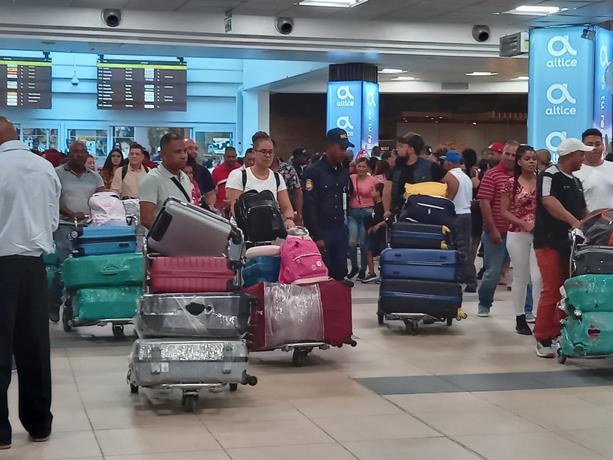
    PUNTA CANA – Aviation authorities at Punta Cana International Airport (PUJ) project that 2025 will become the most active period in the facility’s operational history, with unprecedented levels of passenger movement and flight activities anticipated.

    Giovanni Rainieri, Director of Airside Operations, indicated that December 2025 is expected to be the peak month, concentrating the highest volume of daily passenger and flight operations. Data shared with N Digital reveals that over one million passengers holding confirmed tickets are projected to transit through the terminal by December 31, 2025, cementing PUJ’s status as the Dominican Republic’s primary aviation gateway.

    A new single-day passenger record is forecast for December 29, with approximately 51,000 travelers expected across 155 flights—surpassing the previous milestone of 50,000 passengers. During the week spanning December 24 to December 31, airport officials anticipate processing around 300,000 passengers, including 245,000 international arrivals. Simultaneously, weekly flight operations are predicted to reach an all-time high of 850 inbound and outbound movements, exceeding the prior record of 786.

    Average daily passenger traffic is projected to rise significantly in the latter half of December, exceeding 40,000 travelers per day—a notable increase from the 30,000 daily passengers recorded in the first two weeks of the month. This substantial surge has necessitated expanded staffing and enhanced security protocols.

    To accommodate the increased operational load, multiple national agencies have amplified their presence at the airport. These include the National Drug Control Directorate (DNCD), the General Directorate of Migration, the Specialized Airport and Civil Aviation Security Corps (CESAC), and the Dominican Institute of Civil Aviation (IDAC).

  • Israeli Embassy recognizes Dominican institutions for security cooperation

    Israeli Embassy recognizes Dominican institutions for security cooperation

    SANTO DOMINGO – In a significant diplomatic gesture, the Israeli Embassy in the Dominican Republic hosted a formal awards ceremony this Tuesday to honor multiple Dominican security institutions for their outstanding collaboration in protection operations. The event, organized by the embassy’s Security Division, brought together representatives from various branches of the Dominican security apparatus that have demonstrated exceptional commitment to safeguarding Israeli diplomatic interests.

    Israeli Ambassador Raslan Abu Rukun addressed attendees, emphasizing the critical nature of international security partnerships amid growing global security challenges. “The professionalism and unwavering dedication of Dominican authorities have been instrumental in maintaining the security of our diplomatic mission,” Ambassador Rukun stated, expressing profound appreciation for the collaborative efforts.

    The Embassy’s Head of Security provided additional context, noting that the coordinated response mechanisms and rapid intervention capabilities of Dominican institutions have created an effective protective shield against potential threats. This security partnership, he emphasized, transcends routine protocol and represents a deeper mutual commitment to protecting lives and maintaining stability.

    Distinguished units receiving recognition included the Ministry of Defense, National Intelligence Directorate, National Police, National Drug Control Directorate, Dominican Army, CESAC, and several specialized tactical units. The ceremony highlighted specific instances of successful cooperation that have enhanced security protocols for the diplomatic mission.

    The Israeli Embassy formally reaffirmed its commitment to expanding security coordination with the Dominican Republic, noting that such cooperation not only ensures physical protection but also strengthens the foundational bonds between the two nations. This bilateral security arrangement represents a model of international partnership that benefits both countries’ strategic interests while fostering greater diplomatic trust and operational synergy.

  • Dominican Republic launches SciELO RD, its first national open-access scientific journal collection

    Dominican Republic launches SciELO RD, its first national open-access scientific journal collection

    SANTO DOMINGO – In a transformative move for its academic landscape, the Dominican Republic has officially inaugurated SciELO RD (SciELO República Dominicana), marking the establishment of the nation’s premier open-access scientific journal collection within the global SciELO network. This strategic initiative, unveiled through a collaborative effort between the Salomé Ureña Higher Institute for Teacher Training (ISFODOSU) and the Association of University Rectors (ADRU), is poised to dramatically enhance the international reach and accessibility of Dominican scholarly work.

    The newly launched portal represents a significant infrastructural investment in the country’s research capabilities. By integrating with the prestigious SciELO platform, Dominican journals gain entry into an ecosystem renowned for its rigorous peer-review standards and commitment to open data, effectively positioning local research alongside contributions from nations with more mature scientific infrastructures.

    Nurys del Carmen González, Rector of ISFODOSU, emphasized her institution’s pivotal role as the project’s technological and financial backbone, providing essential servers, specialized personnel, and sustained funding. This development aligns with broader institutional advancements, including increased investment in scientific productivity, the professionalization of academic publishing, and the strengthening of research collectives.

    ADRU President Odile Camilo characterized SciELO RD as a foundational policy instrument designed for long-term national research enhancement. Citing evidence from countries with established SciELO collections, Camilo pointed to measurable gains in editorial quality, global visibility, and research culture development. She advocated for stable governance, sustainable financing, and the formal recognition of SciELO-indexed publications in faculty evaluation systems and higher education policies.

    Vladimir Figueroa, ISFODOSU Research Director, detailed the portal’s operational framework during the presentation, hailing it as a watershed moment for open science and the global dissemination of knowledge originating from the Dominican Republic. This launch formally integrates the nation into a regional network dedicated to promoting editorial excellence and the unimpeded international flow of academic research.

  • Dominican Republic pushed out its $3M Startup

    Dominican Republic pushed out its $3M Startup

    The recent announcement of HEVA’s $3 million pre-seed funding round reveals a troubling pattern within the Dominican Republic’s innovation ecosystem rather than celebrating another diaspora success story. Dominican-American founder Héctor Alex Terrero’s AI-native healthcare platform secured substantial venture backing only after relocating operations from Santo Domingo to the United States, despite two years of effort to build within his home country.

    HEVA represents precisely the type of venture-scale startup that Dominican institutions rhetorically support—operating at the intersection of AI, healthcare, and cross-border services that align with the nation’s promoted identity as a medical tourism hub. Yet when Terrero attempted to establish his previous fintech venture Moneda and later HEVA from within the Dominican Republic, he encountered systemic barriers rather than substantive support.

    The funding consortium that ultimately backed HEVA—including Collide Capital, Flybridge, Benchstrength, and Techstars—operates within jurisdictions equipped with modern venture infrastructure: robust investor protection frameworks, banking systems accommodating cross-border transactions, and regulatory environments that recognize technology startups as legitimate asset classes rather than novelties.

    This case study exposes fundamental weaknesses in the Dominican innovation economy:

    1. Structural deficiencies in venture capital infrastructure, including inadequate investor protections and misalignment between public policy and venture risk profiles
    2. Regulatory friction that penalizes modern corporate structures like Delaware C-corps and international banking arrangements
    3. Cultural confusion between traditional small businesses optimized for stability and venture-backed startups designed for exponential growth
    4. Predatory local investment terms offering small capital in exchange for disproportionate equity and control
    5. Disconnect between institutional rhetoric and actionable support mechanisms, with panels and networking events substituting for substantive ecosystem development

    The consequences extend beyond individual startups. The Dominican Republic loses high-skill employment opportunities in engineering, product development, and operations; forfeits regulatory learning that could inform future policy decisions; and diminishes investor confidence in local tech talent and jurisdiction viability.

    Parallel research from Successment Venture Labs examining risk modeling deficiencies reveals broader systemic issues. Outdated credit scoring mechanisms prioritize formal paperwork over behavioral data, excluding approximately half the workforce operating in informal sectors despite demonstrating reliability. This risk-aversion mentality permeates both investment decisions and institutional support frameworks.

    The solution requires moving beyond branding exercises to address technical foundations: modern investor protection laws, distinct legal and tax regimes for venture-backed startups, banking reforms accommodating cross-border capital flows, and domestic investment vehicles structured for appropriate risk-return profiles rather than control-seeking arrangements.

    Until these structural reforms occur, the Dominican Republic will continue exporting its most promising ventures while celebrating their diaspora successes—a pattern that benefits LinkedIn narratives more than domestic economic development.

  • Dominican government doubles nationwide distribution of flu and essential medicines

    Dominican government doubles nationwide distribution of flu and essential medicines

    The Dominican government has activated a comprehensive emergency response protocol to address increased influenza virus circulation during seasonal temperature changes. Through its Essential Medicines Program and Central Logistics Support (Promese/CAL), the nation is implementing strategic measures to double the distribution of influenza treatments and essential medications across all regions.

    Official reports confirm that Promese/CAL’s central warehouses currently maintain adequate inventory levels to meet nationwide demand for influenza therapeutics. The medical reserve includes a substantial buffer stock exceeding 5.5 million units of critical medications, including vitamin C supplements and amoxicillin antibiotics, ensuring consistent supply chain continuity.

    In preparation for the peak respiratory illness season, the institution conducted a complete inventory audit during November, followed by the execution of a phased national distribution strategy throughout December. This systematic approach has successfully restored regular replenishment cycles following a temporary administrative hiatus.

    The government has additionally initiated a strategic procurement procedure to prevent medication shortages through February, allocating RD$73.7 million for the acquisition of 80 categories of essential pharmaceuticals. This investment secures over 230,000 units of cold and influenza medications, including analgesics like acetaminophen and ibuprofen, along with cod liver oil supplements.

    These coordinated actions demonstrate the administration’s strengthened commitment to ensuring equitable access to affordable, high-quality medical treatments for all citizens. The enhanced distribution framework significantly bolsters public health protections during periods of elevated seasonal illness transmission.

  • Dominican Republic to regularize land titles of national monuments and cultural heritage sites

    Dominican Republic to regularize land titles of national monuments and cultural heritage sites

    Santo Domingo has witnessed a landmark institutional collaboration between cultural authorities and land regularization experts to secure the nation’s historical patrimony. The Dominican Ministry of Culture and the State Land Titling Technical Unit (UTECT) have formally established a three-year cooperative framework dedicated to the legal regularization of state-owned cultural properties.

    This strategic partnership, ceremonially endorsed by Culture Minister Roberto Ángel Salcedo and UTECT Executive Director Duarte Méndez Peña, directly addresses the critical need for establishing definitive legal ownership over lands containing national monuments, archaeological zones, and heritage structures. The initiative operates under the legal provisions of Law 108-05 on Real Estate Registration, forming a core component of President Luis Abinader’s broader vision for institutional strengthening and cultural preservation.

    The operational mechanics of the agreement designate clear responsibilities for each institution. UTECT will deploy its technical expertise, providing comprehensive cadastral and registry support. This involves conducting precise land surveys, executing field investigations, and managing the intricate legal procedures required for title regularization. Concurrently, the Ministry of Culture will undertake the crucial role of furnishing all necessary documentation, actively participating in field operations to identify pertinent properties, and assuming financial responsibility for all associated costs.

    A significant outcome of this alliance is the formation of a joint monitoring committee, tasked with overseeing the agreement’s implementation throughout its validity period. Officials from both institutions have emphasized that this endeavor transcends mere administrative procedure; it is a vital measure for ensuring permanent legal protection, reinforcing territorial sovereignty, and safeguarding the Dominican Republic’s tangible and intangible cultural heritage for future generations.

  • Dominican merchants criticize new Solid Waste Law 98-25 over business fees

    Dominican merchants criticize new Solid Waste Law 98-25 over business fees

    SANTO DOMINGO – A contentious new environmental law has sparked significant backlash from the Dominican Republic’s business community, with merchant federations warning of disproportionate economic impacts on smaller enterprises. Law No. 98-25, which modifies the country’s Comprehensive Management and Co-processing of Solid Waste framework, was unexpectedly promulgated by President Luis Abinader this week, immediately drawing criticism from commercial representatives.

    Iván García, President of the Dominican Federation of Merchants (FDC), emerged as the foremost critic of the legislation, characterizing its implementation as abrupt and ill-considered. The core contention centers on the law’s uniform fee structure that imposes identical financial obligations on businesses regardless of scale or revenue. “This legislation creates an absurd scenario where a corporation declaring over RD$10 billion pays precisely the same as an enterprise selling RD$100 million,” García stated, emphasizing the regressive nature of the fee system.

    The legislation, confirmed by Executive Branch legal advisor Antoliano Peralta Romero, represents the Dominican government’s ambitious attempt to modernize waste management protocols and advance environmental sustainability objectives. The updated legal framework significantly expands the regulatory purview of the Ministry of Environment and Natural Resources while introducing stricter controls on waste disposal operations and landfill management.

    Key environmental provisions include progressive measures targeting pollution reduction, particularly through phased prohibitions on single-use plastics and foam containers commencing in 2026. Exemptions will apply only to products incorporating certified biodegradable additives, reflecting the government’s commitment to transitioning toward a circular economy model.

    While acknowledging the environmental merits of the legislation, business advocates argue that the current formulation fails to account for fundamental economic realities. Merchant groups contend that without structural revisions incorporating graduated fees based on enterprise size and capacity, the law could inadvertently stifle commercial activity and place undue burdens on small and medium-sized businesses—the backbone of the Dominican economy.

    The unfolding situation presents a complex policy challenge pitting environmental imperatives against economic equity concerns, with stakeholders urging dialogue to develop more nuanced implementation frameworks.

  • 17 individuals convicted in Operation Discovery 2.0 fraud scheme targeting elderly Americans

    17 individuals convicted in Operation Discovery 2.0 fraud scheme targeting elderly Americans

    In a significant victory against transnational organized crime, Dominican authorities have secured convictions against 17 individuals and two corporate entities for operating an elaborate cyber fraud scheme that systematically targeted elderly American retirees. The verdict concludes Operation Discovery 2.0, an extensive multinational investigation initiated in 2023 that exposed a sophisticated network specializing in identity theft, large-scale fraud, and international money laundering.

    The judicial outcome, delivered by the First Court following a two-year investigation led by the General Directorate of Prosecution and Santiago Prosecutor’s Office, resulted in substantial prison terms ranging from four to seven years for primary offenders. The court additionally ordered the compulsory dissolution of two front companies instrumental to the operation and mandated comprehensive asset forfeiture, transferring all confiscated illicit proceeds to the Dominican State.

    According to Prosecutor Warlyn Alberto Tavares Reyes, the criminal enterprise operated through clandestine call centers masquerading as legitimate service providers. Utilizing advanced technological infrastructure, the network executed coordinated cyber fraud campaigns that specifically targeted vulnerable elderly populations in the United States, systematically draining victims’ lifetime savings.

    The investigation exemplified international law enforcement collaboration, with Dominican authorities working closely with the U.S. Federal Bureau of Investigation (FBI) and the Special Division for Transnational Crime Investigation (DEDIDET). Investigators compiled an extensive evidentiary portfolio exceeding 450 items, including judicially authorized wiretap recordings, documentary evidence, electronic devices, and critical witness testimonies that substantiated charges of criminal conspiracy, aggravated fraud, identity theft, and money laundering. This cooperation facilitated the extradition and prosecution of additional suspects located in United States territory.

    The judicial dissolution targeted two corporations central to the criminal infrastructure: Agnes Travel SRL and Urtarte’s Paradise Call Center SRL. Law enforcement seizures included approximately RD$2 million and US$84,000 in cash, multiple vehicles, firearms, sophisticated electronic equipment, jewelry, and real estate properties acquired with illicit funds.

    Miguel Ángel Camilo Pérez (alias Camilo/Milo), identified as a principal network leader, received the maximum sentence of seven years imprisonment. Other key figures including Freddy William Urtarte (Metra), Juan Armando Vásquez Ramírez (Peligro), and several co-conspirators were sentenced to four-year prison terms, while multiple secondary defendants received suspended sentences of equivalent duration.

  • Frost hits Valle Nuevo for second day as temperatures drop below zero

    Frost hits Valle Nuevo for second day as temperatures drop below zero

    The Dominican Republic’s elevated regions are experiencing an extraordinary meteorological event as a severe cold spell grips the mountainous zone of Constanza. For two consecutive days, the Las Pirámides sector within Valle Nuevo has recorded sub-zero temperatures, marking the beginning of what forecasters predict could be an extended period of exceptionally cold conditions potentially lasting through mid-2026.

    Meteorological expert Jean Suriel documented the dramatic temperature plunge, with readings dropping to 0.2°C on Monday followed by a concerning descent to -0.5°C in Tuesday’s early hours. The situation was further exacerbated by wind chill factors driving the perceived temperature down to approximately -2°C. These extreme conditions have triggered two distinct cryospheric phenomena: the freezing of moisture on vegetation creating widespread frost, and the formation of hoarfrost from frozen fog—a rare occurrence typically reserved for high-altitude environments with severe cold exposure.

    The meteorological explanation points to a convergence of two significant weather systems. The unusual cold pattern originates from the advancement of frontal system number 14 across the northern Caribbean basin, which has merged with an invading polar air mass. This combination is being propelled by cold Atlantic winds that are channeling Arctic air deep into the Caribbean nation. The geographical configuration of the Dominican Republic’s highland areas, particularly those exceeding 2,000 meters in elevation, makes them exceptionally vulnerable to these intensified cold air incursions, creating microclimates that mirror temperate zone winter conditions rather than typical Caribbean weather patterns.