标签: Dominican Republic

多米尼加共和国

  • Tourist bus crash in La Romana leaves two dead, multiple injured

    Tourist bus crash in La Romana leaves two dead, multiple injured

    LA ROMANA, DOMINICAN REPUBLIC – A catastrophic traffic accident involving a tourist bus has resulted in two fatalities and left at least nineteen individuals injured. The incident occurred at the perilous stretch of road known as La Curva de Cumayasa, located within the municipality of Villa Hermosa.

    Official reports from authorities have confirmed that both deceased individuals were foreign nationals. Ivelisse Mercedes Méndez, a representative from the Villa Hermosa Municipal Hospital, provided details on the casualties, noting that one tourist was pronounced dead upon arrival at the medical center. A second victim, reportedly a Canadian citizen, succumbed to injuries at the crash site.

    Medical personnel at the hospital received ten patients directly from the accident. Nine of these individuals were successfully treated and stabilized, while one was declared dead on arrival. Dr. Miguel Quezada, Director of the Villa Hermosa Municipal Hospital, confirmed the immediate activation of comprehensive emergency protocols to manage the sudden influx of casualties.

    The emergency response was orchestrated by the National Emergency and Security System 911, which mobilized a significant contingent of twelve ambulances. This fleet included nine units from the Directorate of Emergency Services for Outpatient Care and three from Comipol. The operation was further supported by personnel from the National Police, the Villa Hermosa Fire Department, the Ministry of Public Works and Communications, and the General Directorate of Traffic Safety and Land Transportation.

    Authorities have stated that the situation remains under active evaluation as investigations into the cause of the accident continue. The 911 System has reaffirmed its dedication to ensuring rapid and coordinated emergency responses, while also issuing a public appeal for drivers to yield to emergency vehicles to facilitate timely life-saving assistance.


  • Civil Defense confirms escape of crocodile near Cabarete Beach

    Civil Defense confirms escape of crocodile near Cabarete Beach

    Authorities in Puerto Plata’s Sabaneta de Yásica district are actively searching for an escaped juvenile American crocodile following weekend flooding that enabled the reptile to breach its enclosure. The incident occurred in the Islabón community where heavy rains caused significant flooding throughout the region.

    According to Whascar García, Director of Civil Defense, the crocodile originated from a private exotic animal ranch that conducts tourist excursions. Rising floodwaters compromised the animal’s containment facility, allowing it to escape toward coastal areas. Multiple sightings have placed the crocodile in waters adjacent to the popular Cabarete Beach, raising concerns among local authorities.

    Emergency services have issued advisories urging both residents and tourists to exercise extreme caution near bodies of water. Officials specifically warn against approaching rivers, lagoons, or ponds in the affected zones and strictly prohibit attempts to capture or feed the animal. Parents have been advised to maintain close supervision of children and pets while the search operation continues.

    The coordinated search effort spans Sabaneta de Yásica and surrounding areas near Cabarete, with emergency crews working to safely recover the animal and return it to its designated habitat. Authorities request that any crocodile sightings be immediately reported to local emergency services to facilitate capture operations.

  • Accountability: Luis Abinader reveals that 53% of new formal jobs in the Dominican Republic are held by women

    Accountability: Luis Abinader reveals that 53% of new formal jobs in the Dominican Republic are held by women

    SANTO DOMINGO – In a landmark address before the National Congress commemorating the nation’s 182nd Independence Anniversary, President Luis Abinader unveiled exceptional employment figures for 2025. Official data from the National Continuous Labor Force Survey (ENCFT) reveals the creation of 133,915 new jobs throughout the year, elevating the country’s total employed population to 5,139,951. Notably, the national open unemployment rate remains anchored at a historic low of 5.0%.

    President Abinader championed decent employment as the cornerstone transformative social policy of his administration. He emphasized the government’s unwavering priority to generate formal, well-compensated job opportunities, stating that each new position represents ‘peace of mind for a home’ rather than a mere statistic.

    A pivotal achievement highlighted in the report is a decisive reduction in labor informality, which dropped to a record low of 54.2%. This formalization is evidenced by several key indicators: the integration of 74,000 new workers into the Integrated Labor Registry System (SIRLA), a 3.15% year-on-year expansion in active Social Security contributors reaching 2,426,350, and a significant stride in gender equity with women securing 53% of all new formal jobs.

    The government credits this success to a synergistic strategy developed in concert with the private sector, focusing on high-growth areas such as nearshoring, logistics, advanced free zones, agro-industrial modernization, and sustainable tourism. This was supported by over 140 formalization and inspection operations. Initiatives like the ‘RD-Trabaja’ program and its ‘Tu Empleo Está Aquí’ platform further bolstered these efforts, successfully registering 12,648 individuals, with a particular focus on youth and women.

    Concluding his address, President Abinader affirmed that this robust job expansion has been paralleled by a consistent rise in workers’ real income, signaling the consolidation of a more resilient and socially equitable economy.

  • Puerto Rico records second consecutive week of influenza cases below epidemic threshold

    Puerto Rico records second consecutive week of influenza cases below epidemic threshold

    Puerto Rico’s public health landscape shows significant improvement as health authorities confirm influenza cases have remained below the epidemic threshold for the second consecutive week. During epidemiological week 6 (February 8-14, 2026), the island documented 2,070 new influenza infections, bringing the seasonal total to 52,713 cases in the 2025-2026 season.

    Health Chief Víctor M. Ramos Otero celebrated the milestone, stating this trend represents a crucial step toward officially declaring an end to the epidemic. ‘If we continue this trend into the fourth week, we will meet the other epidemiological criteria,’ Ramos Otero announced in an official statement.

    The substantial vaccination campaign appears to be driving this positive development, with 426,008 doses administered this season—representing 76,332 more inoculations than the same period last year. This increased participation reflects strengthened public health strategies and community engagement efforts.

    Despite overall improvement, authorities reported concerning data points: 47.8% of cases occurred in the pediatric population (ages 0-19), while the hospitalization rate held steady at 4.2%. The season has accumulated 162 confirmed influenza fatalities, including 12 new deaths reported in the latest weekly data. Additionally, 23 school outbreaks were identified during week 6, primarily concentrated in the Bayamón (8), Arecibo (4), and Mayagüez (3) regions.

    The Health Department’s community-focused approach has included 103 outreach events across municipalities, bringing vaccines directly to vulnerable populations. New vaccination initiatives are scheduled for March 2-6 across various island regions.

    Health officials continue emphasizing preventive measures including frequent handwashing, respiratory etiquette, mask-wearing when symptomatic, and avoiding close contact with infected individuals.

  • Abinader on power outages: “They are unacceptable. They concern us and we are addressing them.”

    Abinader on power outages: “They are unacceptable. They concern us and we are addressing them.”

    Dominican President Luis Abinader delivered a stark assessment of the nation’s ongoing electricity crisis during his sixth accountability address, acknowledging that systemic power failures have presented a formidable challenge for successive governments, including his current administration. The president confronted the issue head-on, characterizing recent blackouts as “unacceptable” while outlining corrective measures underway.

    Substantial capital investments are being channeled into modernizing the national grid, with international engineering firms contracted to enhance system security and operational stability. This strategic move aims to fortify an increasingly complex and diversified power infrastructure that has repeatedly failed to meet national demand.

    The most recent nationwide outage occurred Monday morning, triggering widespread disruption across transportation networks including the Santo Domingo Metro and cable car systems. The cascading failure paralyzed daily life for millions of citizens, highlighting the grid’s critical vulnerabilities.

    Energy Minister Joel Santos provided technical clarification, noting the incident stemmed from an equipment explosion rather than human error. “This was a breakdown caused by an explosion,” Santos stated, emphasizing the need to investigate both the root cause and the failure’s propagation mechanism through the grid.

    The National Interconnected Electric System (SENI) Failure Committee has scheduled a crucial working session for March 11 to present preliminary findings and implement corresponding corrective measures. This development follows a similar November outage that similarly crippled public transportation services, then attributed to unauthorized personnel intervention at the San Pedro de Macorís substation.

  • Rare earth elements could become a major source of non-tax revenue, says Luis Abinader

    Rare earth elements could become a major source of non-tax revenue, says Luis Abinader

    The Dominican Republic’s mining industry has reached an unprecedented milestone, achieving record-breaking export revenues while making significant strides in rare earth element exploration that could transform the nation’s economic landscape.

    President Luis Abinader announced during his accountability address that the mining sector generated over US$2.6 billion in exports—representing a remarkable 52% increase compared to the previous year. This performance solidifies mining as one of the country’s primary generators of foreign exchange and a cornerstone of its economic development strategy.

    Concurrently, exploratory efforts for rare earth elements—a group of 17 minerals critical for manufacturing advanced technologies including smartphones, semiconductors, space industry components, and military applications—are yielding increasingly optimistic results. Initial findings have confirmed gross deposits exceeding 150 million tons, with international laboratories verifying exceptional purity levels and extraction feasibility that rank among the world’s most promising reserves.

    The President revealed that formal mineral resource determination will be finalized this year, with reserve certification scheduled for completion by the first quarter of 2025. This timeline will pave the way for subsequent exploitation and refining phases, potentially establishing the Dominican Republic as a significant global player in the strategic rare earth market.

    Beyond their technological significance, these mineral resources could become the nation’s primary non-tax revenue source, creating a substantial strategic income stream. The mining sector’s success has already attracted substantial foreign investment, with US$556 million flowing into mining operations between January and September, while the energy sector received over US$1.01 billion during the same period. Combined, these sectors accounted for approximately 40% of total foreign direct investment, demonstrating strong international confidence in the country’s resource development capabilities.

  • 75% of Dominican households are overcrowded

    75% of Dominican households are overcrowded

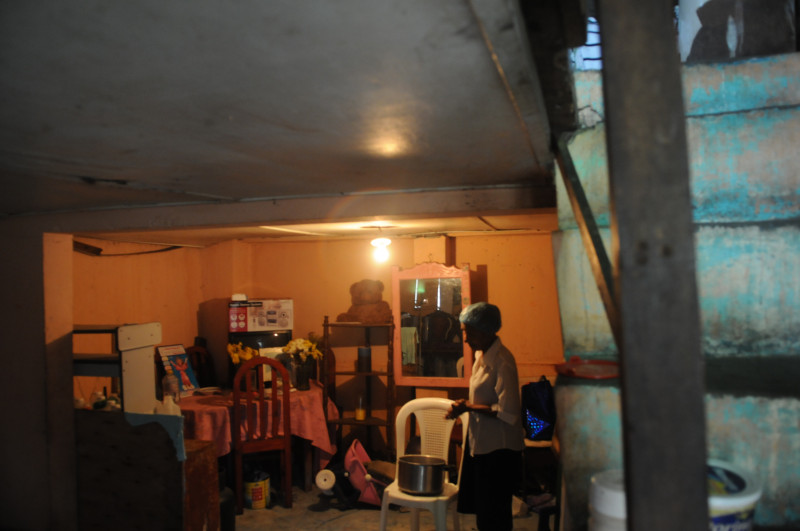
    A comprehensive analysis of the 2022 National Population and Housing Census by Habitat for Humanity Dominican Republic (HFHDR) has uncovered a severe housing crisis, with three-quarters of households across the nation experiencing critical overcrowding conditions. The findings reveal that approximately 75% of Dominican families lack the minimum spatial requirements necessary for adequate human development and dignified living.

    The organization’s Monitoring, Evaluation, Accountability and Learning (MEAL) team conducted detailed research indicating that overcrowding extends beyond mere square footage limitations. The crisis fundamentally impedes families’ abilities to maintain functional areas for essential activities including sleeping, food preparation, and personal hygiene.

    Regional disparities present particularly alarming patterns, with northern provinces demonstrating significantly worse conditions than the national average. Hermanas Mirabal province records the most severe overcrowding at 86%, followed closely by Santiago Rodríguez and Sánchez Ramírez at 85%. Dajabón and Monseñor Nouel complete the most affected regions with 84% and 83% respectively.

    Cesarina Fabián, National Director of HFHDR, emphasized the profound implications: “Living in constrained conditions directly compromises health standards, personal privacy, and family coexistence dynamics. When residential spaces cannot accommodate their inhabitants, individual development becomes severely restricted.”

    The organization has implemented strategic interventions including structural assessments, room expansions, and layout optimizations to address the crisis. To date, these initiatives have successfully transformed living conditions for over 57,000 Dominican families, eliminating overcrowding while significantly enhancing health outcomes and overall wellbeing.

    HFHDR additionally highlights the critical importance of tenure security, ensuring that home improvements don’t inadvertently cause displacement through increased property values. Legal ownership verification remains essential to guaranteeing permanent benefits for families receiving housing interventions.

    As a global nonprofit organization, Habitat for Humanity maintains its commitment to ensuring decent living conditions worldwide. In the Dominican Republic specifically, the organization continues to combat overcrowding through comprehensive housing solutions and community transformation initiatives.

  • The renovated vendors’ plaza on Sosúa beach will be ready in March

    The renovated vendors’ plaza on Sosúa beach will be ready in March

    The Dominican government has announced the scheduled completion of the initial phase of the Sosúa Beach vendors’ plaza renovation in Puerto Plata by mid-March. This development marks a significant milestone in the comprehensive coastal recovery initiative originally launched in 2021.

    Tourism Minister David Collado revealed the project represents a substantial investment of 500 million Dominican pesos (approximately $8.5 million USD) aimed at boosting both tourism and commercial operations in the region. The minister made these statements during his address at the forty-fifth Anato 2026 Tourism Showcase in Bogotá, Colombia.

    Minister Collado emphasized the transformative nature of the project, stating: “Between March 15 and 20, we are delivering a renewed Sosúa beach where we are systematically eliminating prostitution and protecting our children and adolescents from exploitation. This initiative sends an unequivocal message to international visitors that the Dominican Republic will not welcome tourists seeking such activities.”

    In parallel developments, the Tourism Ministry is channeling approximately $400,000 into sponsorship packages for water sports tournaments focused on wave and wind activities in the nearby Cabarete area. Minister Collado further indicated that similar reorganization plans are prepared for Playa Encuentro’s surrounding zone, though legal complications have temporarily halted progress on that particular project.

  • The Dominican Republic has recorded 31 cases of dengue so far in 2026.

    The Dominican Republic has recorded 31 cases of dengue so far in 2026.

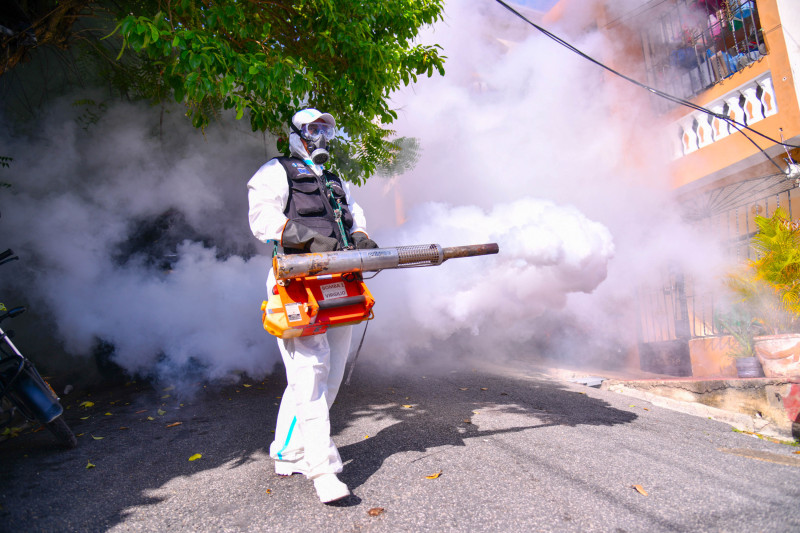
    Santo Domingo’s Ministry of Public Health has released its sixth epidemiological bulletin for 2026, revealing a controlled dengue situation with 31 confirmed cases and zero fatalities recorded during the initial weeks of the year. Health authorities characterize the dengue transmission as remaining “within successful and safe zones of the endemic channel,” indicating minimal viral circulation with just one confirmed case reported this week.

    The epidemiological landscape presents a more complex picture regarding other diseases. Leptospirosis cases demonstrate a low-to-moderate incidence pattern with a concerning upward trajectory, showing 2, 4, 5, and 6 cases in recent reporting periods.

    Influenza A (H3N2) continues to exhibit persistent and widespread circulation across most epidemiological weeks, maintaining prolonged transmission patterns that began in the final four months of 2025. This sustained activity contrasts sharply with the more defined, shorter peaks observed for influenza subtypes A(H1N1)pdm09 and Influenza B.

    The report highlights a challenging scenario of simultaneous co-circulation involving H3N2, respiratory syncytial virus (which typically surges in the latter half of the year), SARS-CoV-2, and other respiratory pathogens, creating sustained multiple transmission dynamics.

    In response, health officials have intensified epidemiological and virological surveillance measures while expanding diagnostic and hospital capabilities. The ministry has prioritized influenza vaccination for vulnerable groups and enhanced health system resilience to reduce transmission and prevent severe outcomes.

    The bulletin also notes concerning mortality statistics, including 10 maternal deaths (70% occurring among Haitian nationals) and 38 infant deaths cumulatively. Health facilities reported numerous case notifications including twelve instances of upper respiratory tract febrile disease, twelve hemorrhagic febrile cases, ten viral parotitis, nine eruptive febrile cases, eight lower respiratory tract febrile diseases, seven meningitis cases, five acute diarrheal diseases, three conjunctivitis cases, three febrile disease instances, and three chickenpox occurrences.

  • Government outlines achievements in health, sees there is a revolution

    Government outlines achievements in health, sees there is a revolution

    In a landmark address to the National Congress, President Luis Abinader showcased the Dominican Republic’s transformative achievements in national healthcare, marking a new era of medical excellence and accessibility. The government’s comprehensive strategy has yielded significant improvements across key health indicators, including substantial reductions in maternal and infant mortality rates as well as dengue fever incidence.

    The cornerstone of this healthcare revolution is an unprecedented infrastructure investment exceeding RD$2.659 billion, resulting in the delivery of 30 state-of-the-art medical facilities throughout 2025. This extensive network includes newly constructed hospitals, modernized primary care centers, and advanced diagnostic complexes. Among the flagship projects is the nation’s largest regional hospital in San Francisco de Macorís, a cutting-edge surgical clinic within the Ciudad Sanitaria complex, and a fully equipped modern hospital in Dajabón.

    Technological advancement represents another critical dimension of this transformation, with over RD$3.778 billion allocated to cutting-edge medical equipment. The public healthcare network now features comprehensive diagnostic capabilities including CT scanners, advanced mammography units with revolutionary three-dimensional digital tomosynthesis technology—a first in the public sector—along with sophisticated imaging systems, neonatal incubators, and patient monitoring equipment.

    An additional RD$632 million investment equipped 92 health centers with modern technology, significantly enhancing diagnostic capacity nationwide. This infrastructure expansion has dramatically increased healthcare delivery, with 7,781,502 consultations provided in 2025—an increase of 619,000 since 2019. Laboratory analyses reached 28,383,336 procedures, while diagnostic imaging nearly doubled from 2.45 million to 4.34 million studies.

    The government’s National Health Insurance (SeNaSa) program has achieved remarkable enrollment success, providing extensive coverage including subsidized high-cost medications for vulnerable populations. Complementing these efforts, the Home Care Program conducted approximately 600,000 visits to serve the needs of medically vulnerable citizens, demonstrating the administration’s commitment to comprehensive, accessible healthcare for all Dominicans.