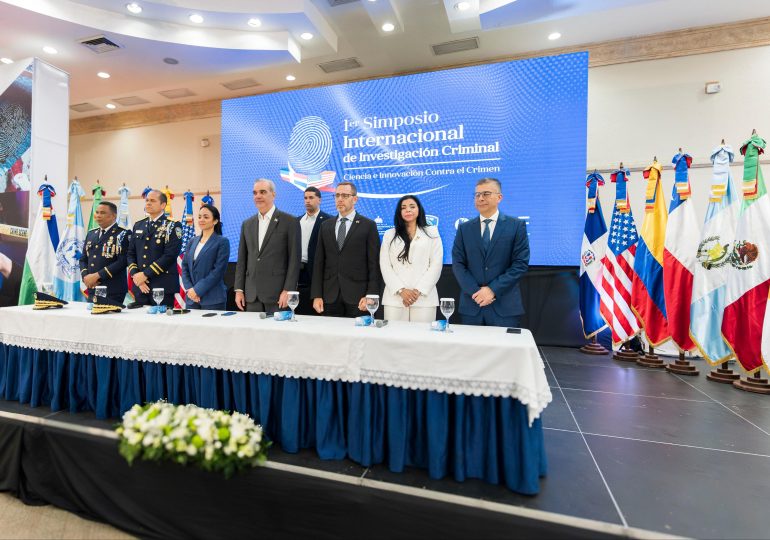
Santo Domingo has become the epicenter for a groundbreaking international security initiative as France and the Dominican Republic formally established the Regional Academy for Combating Organized Crime. The strategic facility will operate from the headquarters of the National Directorate for Drug Control (DNCD), serving as a centralized training hub for Caribbean security forces.
This ambitious project represents the evolution of a decade-long partnership between the two nations through the Support Program for the Fight Against Organized Crime in the Caribbean Region (ALCORCA). Spearheaded by the French Embassy and DNCD, the program has historically focused on enhancing the capabilities of anti-drug personnel throughout the Caribbean basin.
The collaboration entered a new operational phase following high-level discussions between DNCD President Vice Admiral José Manuel Cabrera Ulloa and French Ambassador Sonia Barbry. The meeting, which included representatives from France’s Directorate of Security and Defense Cooperation, finalized the architectural and operational framework for the academy.
Central to the initiative is the construction of a state-of-the-art educational complex that will host specialized training courses, advanced seminars, and a comprehensive regional documentation center focused on narcotics intelligence. In a significant expansion of the original concept, French authorities have proposed internationalizing the initiative by inviting participation from other European nations and allied countries committed to addressing transnational organized crime networks.
This development substantially reinforces the Dominican Republic’s operational capabilities against drug trafficking, aligning perfectly with the security policy agenda championed by President Luis Abinader. The academy positions the Dominican Republic as a regional leader in security coordination and represents a sophisticated approach to collective security challenges in the Caribbean region.