标签: Cuba

古巴

  • The foreign exchange market in Cuba is undergoing transformation

    The foreign exchange market in Cuba is undergoing transformation

    The Central Bank of Cuba has initiated a comprehensive transformation of its foreign exchange market with the implementation of a three-segment exchange rate system effective December 18, 2025. Under the leadership of President Juana Lilia Delgado Portal, the monetary authority has designed this gradual approach to address longstanding economic distortions while avoiding severe macroeconomic shocks.

    The new structure establishes two fixed exchange rates—Segment I operating at 1:24 and Segment II at 1:120—alongside a third segment featuring a daily floating rate determined by market forces. This multi-tiered system aims to bridge the gap between official rates and the real value reflecting Cuba’s foreign currency shortage while protecting essential transactions from sharp devaluation.

    Central Bank officials emphasized that immediate unification without transition could trigger excessive inflation and further erosion of the Cuban peso’s purchasing power. The strategy instead focuses on gradual correction of accumulated imbalances through controlled mechanisms that connect state and non-state economic actors in production, export, and marketing operations.

    The floating rate segment specifically targets increased foreign currency inflows by offering competitive prices to exporters and remittance senders. This approach intends to discourage informal market activities while creating incentives for export sector development and higher wage payments to skilled workers.

    Complementing these measures, the government will strengthen MLC accounts and guarantee operability of foreign currency transactions for non-state enterprises. The reforms form part of broader macroeconomic stabilization efforts aligned with Cuba’s socialist development objectives, prioritizing reduced inflation, currency convertibility, and economic growth.

    The Central Bank will publish daily exchange rates on its official website, with full regulatory details appearing in the Official Gazette. Additional information regarding implementation mechanisms will be released in coming days.

  • The point at which the chain of history was reassembled

    The point at which the chain of history was reassembled

    Beneath the overcast skies of December 1956, a pivotal moment in Cuban history unfolded within a remote clearing known as Cinco Palmas. Following the devastating ambush at Alegría de Pío and subsequent days of scattered retreat through Oriente’s sugarcane fields, Fidel Castro arrived not with a formidable army but with what would become the foundational core of revolutionary perseverance.

    At midnight, amidst Mongo Pérez’s palm-studded cane field, the sound of approaching footsteps signaled a long-awaited reunion. The Castro brothers—Fidel and Raúl—embraced with restrained emotion, their meeting charged with both the anguish of recent days and the ferocity of survival. From this historic encounter emerged a brief yet monumental exchange that would define their revolutionary trajectory.

    ‘How many rifles do you have?’ Fidel inquired. Raúl’s response came: ‘Five.’ With characteristic determination, Fidel declared, ‘And I have two, seven! Now we will win the war!’

    This statement represented far more than blind optimism—it constituted a strategic assessment that with this nucleus of moral fortitude, tactical intelligence, and mountainous terrain, achieving victory remained entirely possible. It embodied Fidel’s most crucial lesson: never surrender, even when confronting extreme adversity.

    The subsequent days validated this conviction as expeditionaries including Efigenio Ameijeiras and Ramiro Valdés joined the original group, soon followed by local campesinos who collectively formed the embryonic Rebel Army. By December 25, this strengthened contingent—now better armed and fortified with unwavering resolve—commenced its definitive advance into the Sierra Maestra.

    This moment exemplified the Cuban Revolution’s extraordinary capacity for regeneration. Cinco Palmas thus transcended its geographical significance to become the foundational moment of an enduring principle: victory awaits not perfect conditions but emerges through collective determination and unwavering will.

  • Cuba strengthens programs on agriculture

    Cuba strengthens programs on agriculture

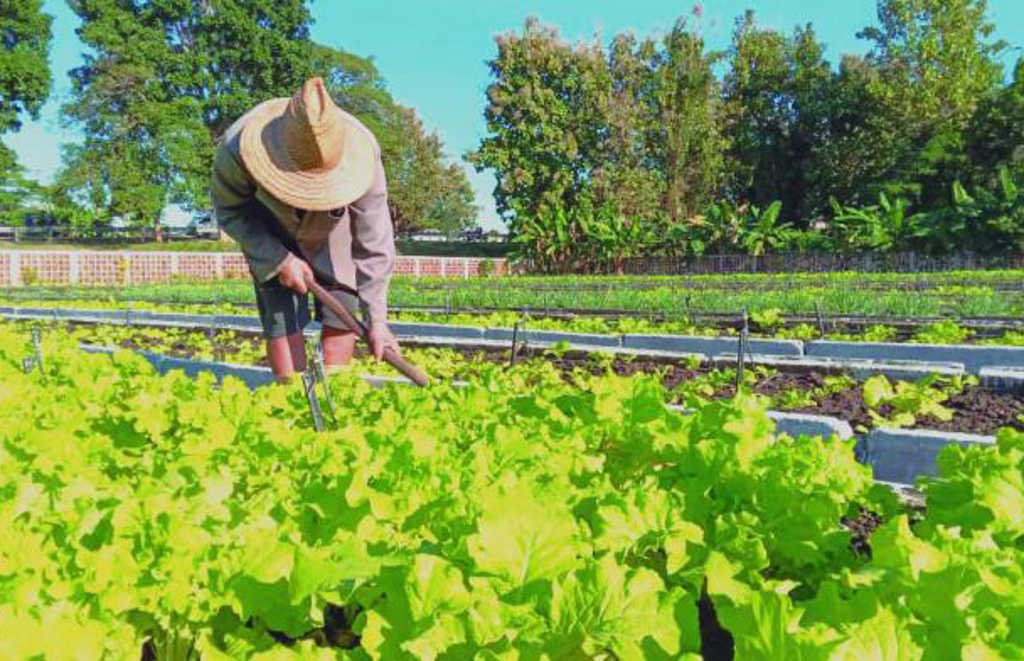
    Havana witnessed a significant gathering of agricultural experts, community representatives, and academic professionals this Wednesday for a specialized workshop on tropical agriculture development. The event, organized by the Alejandro de Humboldt Institute of Fundamental Research in Tropical Agriculture (INIFAT) in partnership with the International Committee for the Development of Peoples (CISP), focused on preserving and leveraging Cuba’s rich agricultural heritage.

    The workshop formed part of the broader initiative ‘Conservation and dissemination of scientific knowledge and results of basic research in tropical agriculture.’ Participants discussed strategies for enhancing the scientific and historical collections maintained by INIFAT, particularly those housed in the institution’s archives and library in Santiago de Las Vegas.

    A key component of the project involves the integration of renewable energy solutions through the ‘Green Line, Renewable Energy Communities and Food Security’ project in Pinar del Río, funded by the Italian Agency for Development Cooperation (AICS). This energy aspect complements the broader objectives of sustainable agricultural development.

    The diverse attendance included not only INIFAT managers and specialists but also officials from the Agro-Forestry Business Group (GAF) and students from the Information Sciences program at the University of Havana’s Faculty of Communication.

    Central to the discussions was the announcement of several progressive programs designed to modernize Cuban agriculture. These initiatives include the comprehensive digitization of Cuba’s agricultural documentary heritage, improvements to material conditions in agricultural research facilities, enhanced training programs to strengthen staff capabilities, and the development of new information services to support academic and scientific applications.

  • Honduras sees no end in sight to the post-election crisis

    Honduras sees no end in sight to the post-election crisis

    Honduras faces a deepening electoral crisis after the National Electoral Council (CNE) decisively rejected a comprehensive recount of all presidential ballots. The contentious decision emerged from a majority vote that dismissed appeals from two major political parties seeking to examine 19,167 disputed votes.

    The tripartite CNE, composed of representatives from Honduras’ dominant political forces—the right-wing National Party (PN), the right-wing Liberal Party (PL), and the left-wing ruling Liberty and Refoundation Party (Libre)—reached an impasse during its latest plenary session. PL magistrates Ana Hall and Cossette López formally challenged the recount motion presented by Libre council member Marlon Ochoa, who cited substantial evidence of voting record irregularities.

    According to suspended preliminary results from the electoral authority, PN candidate Nasry Asfura—known for his alignment with former U.S. President Donald Trump—maintains a narrow lead with 40.54% of the vote. Trailing closely behind is Salvador Nasralla of the PL party with 39.19%. Both Nasralla and Libre have jointly accused the National Party of attempting electoral fraud and have demanded a nationwide recount.

    The electoral process has been paralyzed for several days amid these allegations. Most notably, Libre candidate Rixi Moncada, who led pre-election polls before the November 30 vote, now sits in third position with just 19.29% of counted ballots, adding further controversy to the unresolved electoral outcome.

  • ICAP condemns U.S. naval blockade against Venezuela

    ICAP condemns U.S. naval blockade against Venezuela

    Cuba’s Institute of International Relations (ICAP) has issued a forceful condemnation of recent US measures against Venezuela, characterizing them as an unlawful application of what they term the ‘Trump Corollary’ to the Monroe Doctrine. The institute asserts that this policy shift has been formally embedded within US foreign policy documentation, including the National Security Strategy for the Americas.

    In an official statement, the Cuban institution dismissed Washington’s justifications regarding counter-narcotics operations and anti-terrorism efforts as mere ‘facade’ arguments. ICAP maintains these pretexts conceal illegitimate intentions that pose significant threats to both regional stability and global peace. The organization further denounced the naval blockade maneuver as a form of ‘hybrid warfare’ that deliberately escalates tensions toward potential military confrontation.

    The underlying objectives, according to ICAP, include the appropriation of Venezuela’s substantial natural resources and the application of coercive pressure against a sovereign nation. The statement reaffirms Cuba’s ‘unwavering solidarity’ with President Nicolas Maduro’s administration and the Venezuelan people, while issuing an urgent appeal to international stakeholders.

    ICAP specifically calls upon social movements, parliamentary bodies, national governments, and global organizations to unanimously reject what they characterize as a ‘rude imperial act’. The institute advocates for widespread mobilization to defend national sovereignty, maintain peace, and uphold the fundamental principles enshrined in the United Nations Charter. The statement concludes with emphatic declarations: ‘No naval blockade! No to imperialist looting! Hands off Venezuela!’

  • Lula advocates for dialogue as Venezuela-US tensions escalate

    Lula advocates for dialogue as Venezuela-US tensions escalate

    President Luiz Inácio Lula da Silva of Brazil has undertaken a discreet diplomatic initiative to mediate between the United States and Venezuela, advocating for peaceful negotiations over military confrontation. During a cabinet meeting, Lula disclosed details of his recent telephone discussion with former U.S. President Donald Trump, where he emphasized that diplomatic engagement represents a more effective and economically viable approach than armed conflict.

    While Venezuela was not explicitly named during the conversation, Brazilian government officials confirmed that the Venezuela situation was a central topic in both Lula’s discussion with Trump and his earlier December communication with Venezuelan President Nicolás Maduro. The Brazilian leader expressed serious concerns about Washington’s escalating military and economic pressure on Caracas and offered Brazil’s confidential assistance in facilitating a negotiated resolution to the ongoing crisis.

    Brazil’s conciliatory stance emerges in sharp contrast to the current reality in Venezuela, where international sanctions and blockades have significantly intensified. These measures have profoundly impacted Venezuela’s oil exports, which constitute the nation’s primary revenue source. The United States maintains unilateral control over Venezuelan oil operations, implementing restrictions that limit Caracas’ access to global markets and reinforce what Venezuelan authorities characterize as deliberate economic strangulation.

    The Maduro administration condemns these measures as exacerbating Venezuela’s severe social and economic crisis, warning that the blockade intensifies resource scarcity and hampers the country’s ability to import essential goods including food, medicines, and other critical supplies necessary for civilian welfare.

  • New flu variant detected in more than 30 countries

    New flu variant detected in more than 30 countries

    The World Health Organization (WHO) has issued a new alert regarding the accelerated transmission of a novel influenza subclade known as K. This variant, while not currently included in Northern Hemisphere vaccine formulations, demonstrates a concerning pattern of early seasonal proliferation. Initial epidemiological data, however, reaffirm that existing vaccines maintain their critical role in mitigating severe disease outcomes and substantially lowering hospitalization risks. The global health body has identified an unusually premature onset of the flu season in Northern regions, with Subclade K appearing as a dominant driver. Since its initial detection in Australia and New Zealand during August, thirty nations have confirmed cases, indicating widespread international circulation. Surveillance data from the Pan American Health Organization (PAHO) corroborate a steady uptick in detections across the United States and Canada. Conversely, South American countries have not yet reported significant local transmission of this specific subvariant. European and Asian nations are experiencing particularly rapid dissemination rates, where Subclade K now constitutes a substantial proportion of analyzed influenza A(H3N2) viruses. In response to these developments, the WHO continues to emphasize that vaccination remains the most effective intervention for preventing the most severe clinical manifestations of the illness.

  • Vandalism leaves two Angolan provinces without power

    Vandalism leaves two Angolan provinces without power

    A calculated act of sabotage has severely disrupted Angola’s national power infrastructure, triggering extensive blackouts and multimillion-dollar losses. The incident, confirmed by the Ministry of Energy and Water, targeted critical high-voltage transmission lines.

    Unidentified assailants systematically dismantled five essential electricity transmission towers, causing the complete collapse of the structures. This targeted attack severed the 220 kV Cambambe-Ndala Cachibo and Gabela-Alto Chingo power corridors, which are vital arteries for the country’s electricity distribution network.

    The immediate consequence was a widespread power outage, crippling operations for residents, commercial enterprises, and public service institutions across affected regions. The physical damage alone is valued at over 400 million kwanzas (approximately $438,000), representing a significant blow to the nation’s infrastructure assets.

    This event is not isolated. According to the National Electricity Distribution Company (ENDE), vandalism against electrical installations has become a severe and costly national issue. The utility company revealed that destructive acts throughout this year have resulted in cumulative losses exceeding an astonishing $50 million. These repeated attacks not only inflict direct financial damage on the state-owned enterprise but also create substantial economic losses for businesses forced to halt operations and cause major public inconvenience.

    In response to the crisis, ENDE has mobilized emergency technical teams to the sites. The company has issued a public assurance that crews are working around the clock to assess the damage, secure the areas, and restore power to all affected customers at the earliest possible opportunity. Authorities are expected to launch an investigation to apprehend those responsible for the sabotage.

  • NATO prepares for confrontation with Russia, Moscow alleges

    NATO prepares for confrontation with Russia, Moscow alleges

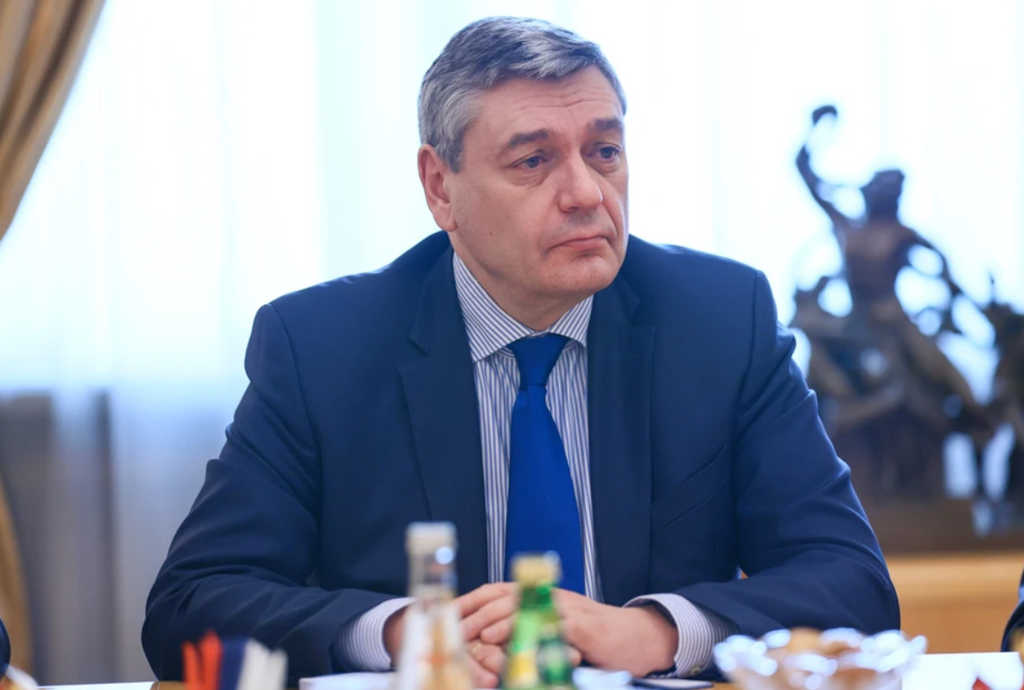
    Russian Defense Minister Andrei Belousov has issued stark warnings about NATO’s escalating military posture, characterizing the alliance’s actions as direct preparations for potential armed confrontation with Russia. Speaking during high-level meetings with NATO leadership, Belousov revealed that the alliance’s military budget has reached a staggering $1.6 trillion, with member states progressively increasing defense spending to approach five percent of their national GDP.

    Belousov emphasized that these developments clearly indicate NATO’s systematic preparation for military engagement with Russia, specifically timed for the 2030s. He noted that alliance officials have repeatedly and openly acknowledged these strategic plans, making no secret of their intentions.

    The Russian Defense Minister further criticized European policies and what he termed the ‘Kyiv regime’ for creating conditions that would prolong military operations in Ukraine through 2026. He accused European leaders and Ukrainian authorities of deliberately avoiding conflict resolution while intentionally protracting hostilities to weaken Russia’s strategic position.

    Additionally, Belousov condemned NATO’s accelerated deployment of alliance forces on its eastern flank, referencing plans for establishing a ‘military Schengen zone’ to facilitate troop movements. He warned that NATO continues to strengthen its coalition capabilities while actively preparing for the deployment of medium-range missiles and updating its nuclear arsenal, representing a significant escalation in military preparedness.

  • Cuba rejects US naval blockade of Venezuela

    Cuba rejects US naval blockade of Venezuela

    Cuban leadership has issued a forceful condemnation of the United States’ announced naval blockade against Venezuela, characterizing the move as a severe violation of international law and an escalation of hostilities against the Bolivarian government.

    President Miguel Diaz-Canel utilized social media platform X to deliver Cuba’s official position, stating unequivocally, “We strongly reject the naval blockade of Venezuela by the US government.” The Cuban head of state further emphasized Havana’s “firm support for President Nicolas Maduro, the Bolivarian and Chavista Revolution, and its Popular-Military Union.”

    The diplomatic offensive continued with Foreign Minister Bruno Rodriguez Parrilla echoing the president’s sentiments on the same platform. Rodriguez expressed Cuba’s “full support for the statement published by the Venezuelan government,” which formally challenges and denounces the US measure. The foreign minister provided legal context to Cuba’s opposition, labeling the blockade “a grave violation of international law and an escalation of aggression against the Bolivarian government.”

    Rodriguez concluded with a reaffirmation of Cuba’s diplomatic stance, proclaiming “our full and unwavering support for the constitutional President Nicolas Maduro, the Bolivarian and Chavista Revolution, and its Popular-Military Union.” The coordinated messaging from both Cuba’s executive and diplomatic branches signals a unified front in opposition to US policy toward Venezuela and represents the latest development in ongoing tensions between Washington and the Caracas-Havana alliance.