标签: Barbados

巴巴多斯

  • Currency and Oneale lead Wildey to back-to-back titles

    Currency and Oneale lead Wildey to back-to-back titles

    In a thrilling display of resilience and skill, Wildey Cricket Club emerged victorious against Superb Blend Gladiola, securing a 51-run win to retain their title in the 2025 Barbados Cricket Association (BCA) Elite/Division 1 Super Cup Championship. The match, held at the iconic Kensington Oval on Sunday, showcased Wildey’s ability to overcome early setbacks and deliver a dominant performance.

  • Campbell, Hope hit tons, but India poised for series sweep

    Campbell, Hope hit tons, but India poised for series sweep

    India stands on the cusp of a series-clinching victory over the West Indies after a dramatic fourth day in the second Test match on Monday. Despite valiant centuries from John Campbell and Shai Hope, the West Indies suffered a catastrophic middle-order collapse, ultimately being bowled out for 390. This left India with a modest target of 121 runs for victory, which they began confidently, ending the day at 63 for one. With just 58 runs needed on the final day, India is poised to secure a 2-0 series win. The West Indies, resuming at 173 for two, had high hopes after Campbell notched his maiden Test century and Hope ended an eight-year drought with his third. However, their efforts were undone by a stunning collapse from 271 for three to 311 for nine in just 11 overs. India’s bowlers, led by Jasprit Bumrah (3-44) and Kuldeep Yadav (3-104), capitalized on the Windies’ fragility. Despite a late 79-run partnership for the tenth wicket, the West Indies could not recover. India’s openers, Yashasvi Jaiswal and Sai Sudharson, along with KL Rahul, have set the stage for a decisive final day.

  • The CARICOM governance paradox: Building free movement in a region without privacy

    The CARICOM governance paradox: Building free movement in a region without privacy

    The recent announcement by CARICOM granting citizens of Barbados, Belize, Dominica, and St Vincent and the Grenadines the right to live and work freely across each other’s borders signifies a pivotal moment in the Caribbean’s long-standing vision of regional integration. However, this progressive step is overshadowed by significant structural challenges, particularly in the realms of data protection, privacy oversight, and the inconsistent definition of a ‘CARICOM citizen’ across member states.

  • Citizenship by investment schemes come under opposition scrutiny

    Citizenship by investment schemes come under opposition scrutiny

    Opposition Leader Ralph Thorne has raised significant concerns over Barbados potentially becoming a gateway for individuals acquiring CARICOM passports through Citizenship by Investment (CBI) programs. Speaking on Monday, Thorne urged immediate scrutiny of the Free Movement of Nationals Bill and related citizenship laws, which aim to facilitate regional integration with St Vincent and the Grenadines, Dominica, and Belize. He warned that the legislation could allow individuals from outside the region to enter and remain in Barbados indefinitely once they obtain citizenship from another CARICOM member state. Thorne highlighted the risks of such a scheme, emphasizing that it could undermine the integrity and value of Barbadian citizenship. He questioned the government’s haste in pushing the Free Movement Bill separately from other related legislation, which is currently under public consultation. Thorne cautioned that this arrangement might open a ‘back door’ for individuals with no cultural or historical ties to the region, potentially leading to the devaluation of Barbados’ national identity and pride. He called for a thorough examination of the motives behind the legislation, suggesting that it could be driven by financial interests rather than regional unity.

  • Mottley rejects opposition claims as House backs free movement plan

    Mottley rejects opposition claims as House backs free movement plan

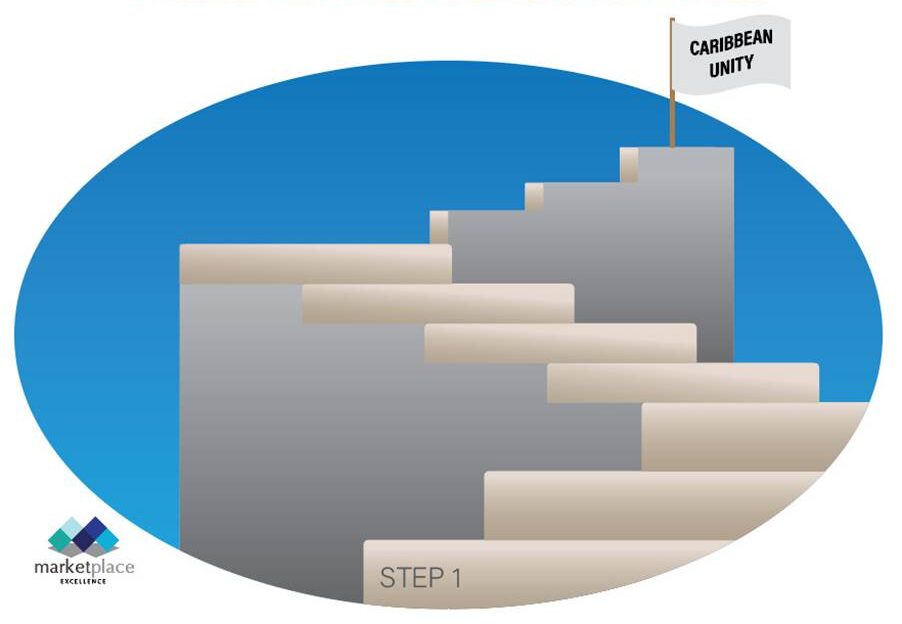
    Prime Minister Mia Mottley has staunchly defended her government’s regional free movement initiative, emphasizing its critical role in ensuring Barbados’ long-term stability and fostering Caribbean unity. Speaking during a rare Monday session in the House of Assembly, Mottley dismissed opposition claims that the policy is a covert strategy to influence future elections, labeling such accusations as “embarrassing and lazy.”

    Mottley clarified that the Caribbean Community (Free Movement of Nationals) Bill is not about electoral gains but about addressing Barbados’ demographic challenges, including a declining population and a widening skills gap. She highlighted alarming statistics, noting a near 50% drop in births over the past two decades and an ageing population that threatens economic growth and social security systems.

    The Prime Minister underscored the importance of migration and managed labor mobility as solutions to these challenges. She assured Barbadians that the policy would not compromise access to healthcare, jobs, or national security. Regional nationals, she explained, would only have access to emergency and primary healthcare and would not burden public resources. Mottley also emphasized that incoming workers would contribute to national insurance and taxes, with CARICOM social security arrangements ensuring benefits follow workers wherever they go.

    Addressing concerns about worker exploitation, Mottley highlighted increased inspection capacities within the Labor Ministry and collaboration with contractors and unions to enforce fair labor practices. She also reassured the public that robust national security checks remain in place, with individuals screened through regional and international systems before entering Barbados.

    Mottley expressed disappointment that the initiative, which she described as a “seminal moment” in Caribbean integration, had become mired in partisan controversy. She urged unity, reminding lawmakers of Barbados’ historical commitment to regional cooperation, from CARIFTA to the CARICOM Single Market and Economy.

    On workforce needs, Mottley pointed to critical shortages in sectors like healthcare, engineering, and renewable energy. She cited the Queen Elizabeth Hospital as an example, where hundreds of positions remain unfilled due to a lack of qualified personnel. Mottley reiterated that the policy is not about replacing Barbadians but filling essential gaps to ensure the country’s systems function effectively.

    Concluding her address, Mottley appealed for calm and collective resolve, urging the public not to succumb to fear or xenophobia. She pledged that her administration would safeguard Barbadians’ quality of life while ensuring the nation remains stable, secure, and prosperous for future generations.

  • St Lucy folk say ‘nuisance’ roads now a danger

    St Lucy folk say ‘nuisance’ roads now a danger

    Residents in St Lucy, particularly in areas like River Bay, Hope Road, and Crab Hill, are voicing their frustration over the dire state of their roads, which they describe as nearly impassable due to years of neglect and ongoing water main replacement projects. The combination of deep potholes, loose gravel, and eroding road edges has turned daily commutes into hazardous journeys, with many comparing the experience to a ‘daily test of endurance.’ Drivers are forced to navigate a precarious path, often zigzagging to avoid damage to their vehicles. The situation worsens after heavy rains, when water-filled potholes disguise their depth, making travel even more treacherous. Limited street lighting in some areas further compounds the problem, especially at night. Long-time resident Mark Toppin described the roads as ‘beyond ridiculous,’ highlighting the safety risks posed by crumbling infrastructure. Residents are now calling for urgent action from authorities, emphasizing that the issue is not merely an inconvenience but a pressing public safety concern. They urge the government to prioritize long-term road maintenance or, at the very least, provide temporary fixes to ensure safer travel. The plight of St Lucy mirrors broader struggles across Barbados, where many smaller communities continue to wait for road repairs while major highways and urban areas receive attention. For the people of St Lucy, the deteriorating roads are disrupting daily life, affecting vehicle maintenance, and posing significant safety risks, making immediate action imperative.

  • Symmonds casts moves to deepen CARICOM integration as historic milestone

    Symmonds casts moves to deepen CARICOM integration as historic milestone

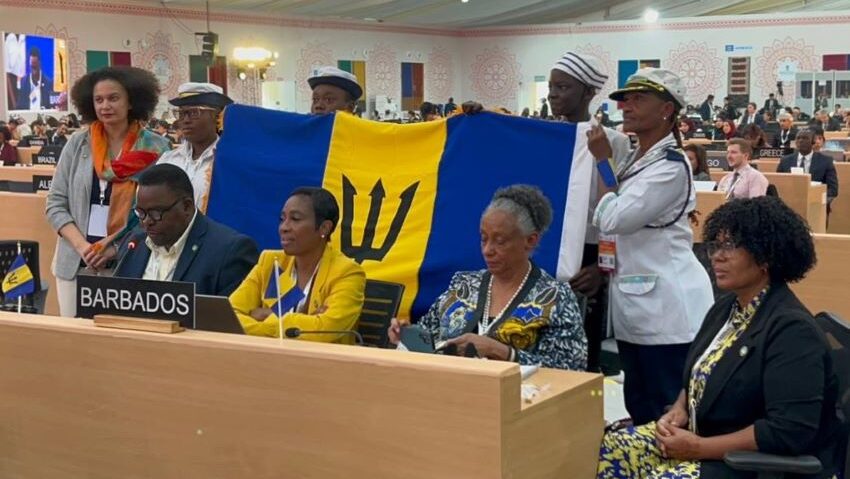
    Barbados has embarked on a transformative journey towards enhancing regional integration and mobility within the Caribbean. The nation’s Foreign Minister, Kerrie Symmonds, announced groundbreaking legislation that grants Barbadians the right to live and work in several CARICOM member states without the need for permits. This historic move, encapsulated in the Caribbean Community (Free Movement of Nationals) Bill, is being hailed as a monumental step for both current and future generations of Barbadians. Symmonds likened the initiative to the freedoms enjoyed by citizens of the United States, emphasizing its potential to unlock new opportunities for personal and professional growth. The legislation extends long-established rights within Barbados—such as the freedom to choose where to live and work—to countries including Saint Vincent and the Grenadines, Dominica, and Belize. Under this new framework, Barbadians will no longer require work permits to practice their professions in these territories. Symmonds underscored the bill’s significance by referencing the visionary aspirations of past Caribbean leaders, including Eric Williams, Forbes Burnham, Michael Manley, and Sir Grantley Adams, who championed regional integration and the dream of a unified Caribbean federation. While acknowledging the progress made, Symmonds also reflected on the delays in achieving full regional mobility, stating, ‘The shame is not that we have come this far. The shame is that we have not got further.’ This legislation marks a pivotal moment in the Caribbean’s ongoing quest for deeper unity and collaboration.

  • Abrahams dismisses fears of migrant influx under free movement deal

    Abrahams dismisses fears of migrant influx under free movement deal

    Barbados’ Minister of Home Affairs, Wilfred Abrahams, has addressed concerns regarding potential mass migration under the newly enacted free movement agreement among four CARICOM member states. Speaking during the introduction of the Caribbean Community (Free Movement of Nationals) Bill in the House of Assembly, Abrahams emphasized that the anticipated surge in migrants has not materialized. He clarified that the legislation aims to formalize and refine existing arrangements, addressing legal and procedural gaps to ensure seamless movement between Barbados, Belize, St Vincent and the Grenadines, and Dominica. Abrahams underscored the long-standing reality of regional mobility, citing examples such as the University of the West Indies, the Caribbean Court of Justice, and West Indies cricket as testaments to regional integration. He also praised the contributions of past and present leaders, including Grantley Adams, Errol Barrow, and Prime Minister Mia Mottley, in advancing regionalism. However, Abrahams criticized a former Democratic Labour Party administration for its 2008 policy of deporting non-nationals, which he claimed negatively impacted Bridgetown’s vibrancy. Addressing Barbados’ demographic challenges, the minister highlighted a “population crisis” marked by declining birth rates and an ageing population, which poses significant social and economic planning challenges. He dismissed fears that free movement would displace Barbadians from jobs, noting that the predicted influx of migrants has not occurred.

  • Charles F. Broome school closure leaves parents seeking answers

    Charles F. Broome school closure leaves parents seeking answers

    Parents of students at Charles F. Broome Memorial Primary School were left bewildered by the abrupt closure of the institution on Monday, with officials providing no immediate explanation for the decision. Communication with families was delayed until after a scheduled meeting with teachers, leaving many in the dark about the circumstances. In an evening email, parents were informed that the school would remain closed on Tuesday to facilitate discussions between Ministry of Educational Transformation officials and the teaching staff. Earlier in the day, Principal Paula Toppin had issued a notice advising parents and guardians to collect their children “as soon as possible” due to “unforeseen circumstances.”

    When Barbados TODAY visited the Government Hill school, parents expressed frustration over the lack of transparency. Many had received the email or seen the alert in a WhatsApp chat but were given no further details. “We received a notice via email and some of us have class chats, so that notice came probably after 11 a.m. No reason was given; we were just told to collect the kids,” one parent shared. “We would like to know what is the reason. After all, it’s our kids. Up to now, I still don’t know what is happening. This is the first time the school has closed for the term, and we would like some answers.”

    The Ministry of Educational Transformation had pledged to release a statement clarifying the closure, but as of the time of publication, no such communication had been issued. Julian Pierre, head of the Barbados Union of Teachers’ health and safety committee, stated that the union would comment on the matter at a later date, further heightening the uncertainty surrounding the situation.

  • Education official urges proactive school safety management

    Education official urges proactive school safety management

    Barbados’ Deputy Chief Education Officer, Julia Beckles, emphasized the critical role of proactive health and safety committees in schools during a recent awareness-building session at the Erdiston Teachers’ Training College. Addressing over 130 educators, Beckles highlighted the importance of resolving health and safety issues at the school level before escalating them to the Ministry of Education or unions. This call to action follows last year’s disruptions, where teachers staged walkouts over environmental and safety concerns, leading to temporary school closures and ministry intervention. Beckles stressed that while all schools have established health and safety committees as mandated by law, not all are functioning optimally. She urged schools to foster a culture of collaboration, ensuring that issues like rodent infestations and improper waste disposal are addressed internally through education and preventative measures. Beckles also underscored the ministry’s commitment to supporting these committees as part of Barbados’ broader education transformation efforts, aiming to modernize school environments with a focus on health and safety. The session coincided with Caribbean Safety Week, providing an opportune moment to renew efforts in creating safer school environments. Beckles encouraged participants to re-energize their teams and conduct regular, proactive assessments of school environments. The workshop also outlined key guidelines for workplace safety policies, including the establishment of safety committees, risk assessments, and employee consultation processes.