标签: Bahamas

巴哈马

  • Young double amputee back on streets as mystery infection spreads

    Young double amputee back on streets as mystery infection spreads

    It has been 12 months since the public rallied behind 22-year-old Ezekiel Miller, whose lifelong battle with a persistent infection has cost him both legs and two fingers. Today, he still pushes his manual wheelchair for an hour each day through the streets of Freeport, Grand Bahama, asking passers-by for small donations to cover his basic living costs. His story has reemerged in the public eye after a video shared to Facebook on Wednesday reignited public concern, showing Miller seated in his chair, wearing black knitted gloves to cover open sores on his hands, his amputated lower legs visible beneath his black shorts. The person who filmed the video confirmed that Miller receives government disability assistance, but emphasized that the support falls far short of what he needs to get by, and called on the community to step forward to improve his quality of life.

    In an interview with The Tribune on Thursday, Miller explained that years of pushing a manual wheelchair have left his body worn and strained. Last year, a Florida resident following his story partnered with local business owner Eddie Whan to gift him a donated motorised wheelchair, but the device has since broken down and is in need of repairs that Miller cannot afford. “I just need some help,” Miller said. “I don’t feel like pushing this wheelchair 24/7, messing up my hands. I’ve already been through so much.” He is currently in urgent need of a new functional motorised wheelchair to regain his mobility without constant physical strain.

    Miller’s life was upended forever at age 14, when he stepped on a rusty nail that sparked a persistent, unidentifiable infection that has slowly spread through his body. He lost his first leg at 14, his second at 19, and two more fingers earlier this year, leaving him with eight functioning fingers. Though he currently experiences no constant physical pain, the infection continues to progress, and another finger is so deteriorated that his mother is planning for another amputation. “I mean, the legs are already gone, so now it’s moving through my hands,” Miller said, his voice heavy with resignation. When asked if he hopes for further surgery or prosthetic limbs to restore function, he seemed drained of hope, adding: “They can’t even get rid of the infection in me anyway. It’s definitely still hard for me. I basically can’t do too much.”

    Last year, Miller traveled to the United States to see specialists in search of answers and treatment, but even top clinicians were unable to identify the root cause of his persistent infection. They only recommended minor additional surgery to remove a small section of remaining leg tissue, a procedure that has not stopped the infection’s spread. The condition has left him unable to hold steady employment, but the 22-year-old still considers himself a hard worker committed to earning what he can, describing himself as a “hustler.”

    Each day, he pushes himself more than a mile from his home in Caravel Beach to downtown Freeport and surrounding neighborhoods, seeking small donations from people he meets. Local Grand Bahama community members have continued to show up for him, with many stopping to contribute cash for his daily food and needs, and Whan provides him with a regular monthly stipend to help. After last year’s outpouring of support, a bank account was set up to hold donations from supporters around the world, but Miller says fraudsters hacked the account and stole most of the funds. The Tribune has not yet been able to independently confirm this claim, but Miller said the theft left him devastated, and forced him back onto the streets to beg for support to survive.

    For most of his life, Miller has been confined to a wheelchair, and his daily reality stands in stark contrast to the lives of most people his age, who get to enjoy travel, social connection and the freedom of young adulthood. Miller admitted that staying positive is a constant struggle. “When I’m by myself, I get down sometimes,” he said, explaining that he tries to hide his sadness from others. “Certain things I can’t do, I just can’t do. I just sit down and patiently wait for someone to help me, to be honest with you.” Right now, he says he is just doing his best to get by each day, and he is asking anyone who can donate a working motorised wheelchair or contribute financial support to reach out to him directly at 242 827-1213. Any assistance, he says, would be life-changing.

  • Family seeks answers after elderly father is shot dead

    Family seeks answers after elderly father is shot dead

    A senseless, unprovoked shooting has robbed a close-knit family of their beloved patriarch, a 71-year-old hardworking construction worker who spent decades raising six children alone and keeping to himself in his adopted home of The Bahamas.

    St Gerard Nord, a Haitian national with permanent residency in The Bahamas, died in a local hospital on Friday, two days after an unknown gunman ambushed him as he sat in his parked vehicle outside his Wilson Tract residence, preparing to leave for the day. Nord had only celebrated his 71st birthday four months prior, and was quietly looking forward to retiring in his home country of Haiti after a lifetime of work.

    The devastating news has left his relatives, most of whom live abroad, reeling with grief and confusion, as they struggle to reconcile why anyone would target a man they describe as gentle, hardworking, and entirely unconnected to trouble.

    Lynda Nord Seide, Nord’s daughter, who lives outside of The Bahamas, recalled speaking to her father just hours before the attack, when the pair laughed, joked, and caught up on life as they usually did during their twice-weekly calls. When her sister called her at work the next morning with the shocking news, Seide said the blow was overwhelming. “I felt like everything just left my body. I felt like my soul literally just left my body, and it’s just been a blur and a roller coaster of emotion for the past week,” she told local outlet The Tribune.

    According to initial police accounts, a purple vehicle pulled onto the street near Nord’s home last Wednesday. A gunman exited the vehicle, opened fire on Nord, and immediately fled the scene. Relatives confirmed that Nord suffered a gunshot wound to the head. Bystanders told investigators they had seen a vehicle matching that description parked near the home with multiple men inside in the moments leading up to the attack, a detail that has deepened the family’s confusion.

    Nord’s life was defined by quiet responsibility. When Seide was just seven years old, his wife died, leaving him to raise all six of their children alone as a single father. He worked tirelessly in construction to provide for his family, never sought conflict, and had no known ties to criminal groups or gang activity, his relatives said. The family has confirmed that while Nord did mention a minor conflict with an acquaintance that began last year, he never expressed fear for his safety, and the family has no insight into whether that dispute was connected to his killing.

    For Tasha Oliver Milfrise, Nord’s niece and goddaughter who also lives overseas, the violence is incomprehensible. She had just visited The Bahamas two weeks before the shooting for her own father’s funeral, and got to see her godfather during that trip. “I just don’t understand. How can someone just take a 71-year-old life?” she said. “My godfather never bothered anyone.”

    Seide described her father as the unshakable pillar of the family, and said he was incredibly proud that all six of his children had built lives abroad. Beyond his work and his dedication to his kids, Nord lived a quiet, unassuming life: he kept to himself, avoided conflict, and was planning the next chapter of his life back in Haiti after decades of working in The Bahamas. Right now, the family’s only request is answers and justice for a man who never harmed anyone.

  • Robbery voice notes can be played at trial

    Robbery voice notes can be played at trial

    A Bahamas Supreme Court justice has cleared a critical hurdle in the high-profile $1.4 million Odyssey Aviation robbery conspiracy case, ruling that five widely circulated viral voice recordings can be presented as evidence during the upcoming trial, and rejecting a defense bid to dismiss the entire prosecution against former police officer turned defense lawyer Bjorn Ferguson.

    Justice Dale Fitzpatrick, in his detailed ruling, framed the recordings as “probative, seminal evidence” that speaks directly to the core questions of the case: who participated in the captured discussions and what agreements were reached. He concluded that the significant evidentiary value of the recordings far outweighs any potential unfair prejudice to Ferguson, who stands at the center of the conspiracy allegations.

    According to prosecution claims, the recordings capture conversations between Ferguson, former head of the Bahamas Criminal Investigations Department (CID) Michael Johnson, and the late deceased gang leader Michael Fox Jr. In these conversations, the three men allegedly discuss a corrupt deal to sabotage the official investigation into the 2024 robbery, in exchange for payments sourced directly from the stolen $1.4 million.

    Ferguson had launched a broad legal challenge to the recordings, arguing that they were never properly authenticated, could have been manipulated or entirely fabricated, and were inadmissible secondary copies with no verifiable original source. He further claimed that without the recordings, there was no admissible evidence linking him to the conspiracy, and that moving forward with the prosecution would amount to an abuse of judicial process.

    However, Justice Fitzpatrick ruled that the conflicting claims around the recordings’ authenticity and origin are factual questions that a jury must resolve during trial, rather than grounds to dismiss the case before it begins. “The Voice Recordings are admissible given their significant probative value and the lack of demonstrated prejudice to the Applicant,” he wrote in his ruling.

    The verdict paves the way for the trial, which is scheduled to commence in November 2026, to move forward as planned.

    Ferguson, who was working as a private defense attorney at the time the alleged offenses occurred, faces one count of conspiracy to commit bribery. Both he and Johnson additionally face charges of being accessories after the fact to conspiracy to commit theft. Johnson, the former chief superintendent and head of CID, also faces separate charges of theft and receiving stolen property. Deangelo Rolle, a former CID sergeant, is charged with receiving stolen property and abetting theft.

    The case traces back to the brazen daylight robbery of roughly $1.4 million from an ICS Security armored transport vehicle, which was parked outside the Odyssey Aviation terminal near Nassau’s Lynden Pindling International Airport in 2024. Prosecutors allege that Fox masterminded the heist, and that Ferguson and Johnson later negotiated a bribe deal to undermine any criminal prosecution of Fox in exchange for a cut of the stolen funds.

    The five voice recordings at the center of the legal dispute were first publicly released during a July 2024 live stream on Facebook by social media personality Sylvens Metayer, before spreading rapidly across Facebook and WhatsApp. Their viral release prompted the official police investigation that led to the current charges.

    Ferguson challenged both the chain of custody for the recordings and the prosecution’s ability to prove the voices and conversations captured were genuine. His defense expert, cybersecurity and digital forensics specialist Dr. Raymond Wells, noted that neither prosecution expert reports nor police documentation included analysis of metadata or cryptographic hash values for the recordings – two key tools for verifying a digital file’s origin and detecting any tampering. Without this data, Wells argued, authentication was impossible, and “alteration, manipulation, contamination and/or digital forgery cannot be excluded.”

    For the prosecution, forensic speech analyst Dr. Christine Kirchhubel was given the five disputed recordings alongside confirmed voice samples from Ferguson, Johnson and Fox for comparison. She found the disputed recordings were unsuitable for formal forensic comparison and could not definitively confirm any of the three men’s voices matched those on the tape. One recording was also too low quality to determine if it had been generated using artificial intelligence.

    Even so, Kirchhubel found “very strong support for the view” that four of the five recordings were not AI-generated, and “strong support for the view” that the same unidentified man served as the primary speaker across all five recordings. Justice Fitzpatrick noted that Kirchhubel’s final conclusion held that the files were likely authentic recordings of real conversations featuring one main male participant.

    The justice stressed that neither expert has yet been qualified to testify at trial, subjected to cross-examination, or had their conclusions formally entered into the court record. Their conflicting findings, he ruled, will be presented to the jury, which will have the authority to accept or reject either expert’s analysis when determining if the recordings capture genuine conversations between the accused.

    The prosecution also bolstered its case for admissibility with a statement from Johnson, made during a police interview after officers played the recordings for him. Johnson admitted he participated in one of the five recordings, and identified Fox as the other speaker. He told investigators the conversation revolved around “him turning himself in.” Justice Fitzpatrick said this admission confirms that at least one of the recordings is authentic, and aligns with Kirchhubel’s findings that the recordings were not AI-generated and featured one primary male speaker. Johnson has denied involvement in the other four recordings.

    Multiple lay witnesses also provided voice identifications for the recordings. Mitzi Jones, Fox’s mother, told investigators she recognized the voices of her son, Johnson, and Ferguson on the recordings, basing her identification on her longstanding personal relationship with all three men. Two senior police superintendents, Antonio Levarity and Terrico Sweeting, also told investigators they recognized the voices of the three men based on their years of professional interaction with them.

    Ferguson had argued these lay identifications should be thrown out because the prosecution’s expert was unable to definitively match the voices to known samples. Justice Fitzpatrick rejected this argument, noting that expert forensic voice comparison and lay identification based on personal familiarity rely on entirely different legal and methodological foundations, and are not mutually exclusive. “Expert voice analysis and lay voice recognition based on familiarity are not mutually exclusive,” he wrote. “They can and often do co-exist.”

    The justice also rejected Ferguson’s argument that the Bahamas Evidence Act bars admission of the recording copies because police never seized the original files directly from an alleged participant. He noted that while the files obtained from the original Facebook live stream and subsequent social media circulation are secondary evidence, court rules allow admission of copies when original files are not reasonably obtainable. The weight given to the evidence will ultimately be a decision for the jury, he ruled.

    Justice Fitzpatrick pointed out that as digital social media becomes a more common source of evidence in criminal cases, courts routinely encounter audio, video, and documents obtained second-hand from online platforms circulated by unknown third parties. He found no existing statutory ban that would prevent the recordings from being admitted.

    He further added that Ferguson had failed to prove that admitting the recordings would cause unfair prejudice. The defense will still have full opportunity to call Dr. Wells and other defense witnesses, cross-examine prosecution experts and lay identification witnesses, and present evidence disputing the prosecution’s voice identification claims. The jury will also receive formal instructions warning them of the inherent risks of identification evidence, particularly voice identification, and any weaknesses in the prosecution’s case.

    Beyond the voice recordings, Ferguson also challenged evidence seized during a January 2024 search warrant executed at Fox’s family home, where police seized two iPads, two laptops, nine mobile phones, and four drones that were subsequently sent to the U.S. FBI for forensic analysis. While court documents confirm that data has been extracted from two of the seized phones, prosecutors have not yet identified any evidence from these extractions that is relevant to the charges against Ferguson, Johnson or Rolle.

    Justice Fitzpatrick noted that the voice recordings at the center of the case were obtained from Facebook and WhatsApp well before the search warrant, before any charges were filed, and long before the FBI completed its analysis of the seized phones. He also added that the court could not identify any legal standing for Ferguson to challenge a search of a home in which he had no legal ownership or right of occupancy, for items that do not belong to him.

    Finally, the justice rejected Ferguson’s challenge to the Voluntary Bill of Indictment (VBI) laying out the charges against him, finding no defects in its wording that would invalidate the prosecution. He noted that the indictment clearly outlines the charges and the basic facts of the alleged offenses, and that any argument over the sufficiency of the prosecution’s evidence would be more appropriately raised as a no-case submission after the prosecution has presented all of its evidence at trial.

    Justice Fitzpatrick concluded that prosecutors had already presented sufficient evidence of speaker identification and Ferguson’s alleged involvement to go before a jury. “There is no basis to quash the VBI,” he ruled. In the final order, all of Ferguson’s pre-trial challenges were denied and dismissed.


  • Chinese ambassador donates $20,000 to Parks Authority

    Chinese ambassador donates $20,000 to Parks Authority

    In a bilateral engagement aimed at strengthening community-focused cooperation between China and The Bahamas, Chinese Ambassador Yan Jiarong has contributed $20,000 to the Bahamas Public Parks and Public Beaches Authority. The donation ceremony took place Wednesday during the ambassador’s official visit to the authority’s dual headquarters located on Gladstone Road and Fire Trail Road West.

    Before the formal handover, Ambassador Yan held in-depth talks with the authority’s executive leadership team and Board of Directors. The closed-door discussion centered on issues of shared interest, touching on potential areas of future collaboration related to public space preservation and cross-national cultural exchanges centered around Bahamian natural public assets. Following the meeting, both sides held a public press briefing to communicate the purpose and details of the donation to local media. At the close of the briefing, Ambassador Yan and Executive Chairman Jamahl Strachan formally completed the gift exchange.

    The seven-figure contribution (in Bahamian currency terms) is earmarked specifically to advance the authority’s core mandate: the ongoing upkeep, expansion, and improvement of public parks and beach spaces scattered across the entire archipelago of The Bahamas. These public spaces serve as critical recreational and cultural hubs for local residents, and form a core pillar of the country’s $3 billion a year tourism industry, which attracts millions of international visitors annually.

  • Gofundme launched for boy bitten by dogs over 100 times

    Gofundme launched for boy bitten by dogs over 100 times

    A brutal dog attack on a young American child vacationing in the Bahamas has resulted in a one-year prison sentence for the Bimini-based canine owner, according to court proceedings. Harrington Rolle, 34, accepted full culpability for multiple offenses connected to the July 28 incident that left 9-year-old Beau Brattain of Florida covered in more than 100 bite wounds, requiring emergency medical intervention and multiple major surgeries.

    Acting Chief Magistrate Ancella Evans handed down the combined sentences after reviewing graphic evidence of the attack, including photographs of Brattain’s severe injuries that the magistrate described as deeply disturbing. Rolle pled guilty to three separate charges: negligently inflicting grievous bodily harm, keeping a dangerous dog that caused harm to another person, and allowing a dangerous dog to roam freely in a public area. All three sentences will run concurrently, resulting in a total 12-month custodial term.

    The attack unfolded around 10 a.m. on a public Bimini beach, where Brattain was collecting sand during a family holiday. Rolle’s six dogs escaped from their unsecured enclosure and assaulted the child, biting repeatedly across his face, head, arms and legs. The attack was only halted when an anonymous passerby stepped in to chase the pack away, potentially saving the young boy’s life.

    Emergency first responders transported Brattain to a local Bimini clinic, but the severity of his injuries required an emergency airlift to Jackson Memorial Hospital in Florida for advanced care. Prosecutors confirmed the child has already undergone two surgeries, one of which lasted a full 10 hours, to address life-threatening damage. Court documentation noted large portions of tissue were torn away from Brattain’s arm during the assault.

    During sentencing, Rolle appeared visibly distressed and took full responsibility for the incident. He told the court he had confined the six dogs in a storage shed, but acknowledged the lock on the structure was faulty and failed to keep the animals contained. When asked how he would have responded if the child had died from his injuries, Rolle admitted he had no defense and acknowledged his negligence was entirely at fault.

    In the wake of the attack, Brattain’s family launched a crowdfunding campaign on GoFundMe to cover the overwhelming costs associated with the child’s care, including immediate medical bills, ongoing rehabilitation, travel for treatment, and other related recovery expenses. The family set an initial goal of $350,000, and by the time local media confirmed the sentencing on Thursday, more than $240,000 had already been raised from public donations.

    Brattain’s family said in a statement that their sole focus for the coming weeks and months will be supporting the child through his recovery. “Alongside the overwhelming emotional toll, they are now facing significant medical expenses, travel costs and rehabilitation needs related to this tragic incident,” the statement read, adding that Brattain faces what the family describes as a “long and difficult road to recovery.” The case was prosecuted by Sergeant Vernon Pyfrom.

  • ‘Go to the beach’ says BGC CEO amid power crisis

    ‘Go to the beach’ says BGC CEO amid power crisis

    Widespread, prolonged power outages have plagued New Providence for weeks, leaving many residents without electricity for days at a time – and leaders of the Bahamas’ key energy providers say consumers should prepare for continued disruptions through the end of summer, driven by unforeseen record-high temperatures and decades-old infrastructure. Senior energy officials laid out the challenges facing the country’s power grid during a press conference hosted by the Office of the Prime Minister, outlining the multiple overlapping factors that have sparked the recent crisis.

    Anthony Christie, chief operating officer of Bahamas Power and Light (BPL), told reporters that the utility cannot promise fewer outages over the coming weeks. After two to three months of above-average temperatures that have already pushed the grid beyond its planned capacity, meteorological forecasts call for even hotter conditions in August and September, which will send demand for air conditioning even higher.

    While BPL conducts annual planning for peak summer energy demand, Christie said current temperatures and consumption levels were well outside projections. “Based on abnormal conditions, we’re seeing higher loads, higher temperatures and more frequent failures on equipment,” he explained. “So that’s now straining a lot of our resources that we did not really anticipate would be needed at this level.”

    When pressed on whether BPL had failed to adequately prepare for summer demand, Christie rejected that claim, emphasizing the current crisis stems from entirely unforeseen conditions. Utility crews are working around the clock to reinforce grid infrastructure, reduce outage durations and minimize disruption for households, but Christie stressed that 100% uninterrupted power is not a realistic outcome. “They don’t want the light to never go off, but that’s not reality,” he said. “The light will go off. The power will go off. There will be an issue, a challenge that has to be addressed. But again, we’re trying to shorten the outages and lessen the impact.”

    BPL Executive Chair Christina Alston echoed that defense of the utility’s preparation work, noting that no mechanical or electrical system delivers flawless, constant operation. “Saying that the system is going to be on 100 percent of the time, that is a very unrealistic goal,” she said. “No system is 100 percent, 100 percent of the time. Your car doesn’t work 100 percent, 100 percent of the time. Nothing mechanical or electrical works 100 percent, 100 percent of the time. But what we have done is systematically gone through and mitigated where we could see problems occurring.”

    Alston described the Bahamas’ power network as one of the most complex in the Caribbean, and urged residential consumers to give providers flexibility by cutting back on unnecessary energy use through the remaining hot months. Officials clarified that this call is not asking residents to give up air conditioning or other home comforts – only to use energy mindfully.

    Dareo McKenzie, chief executive officer of Bahamas Grid Company (BGC), which now manages New Providence’s transmission and distribution network under the government’s ongoing energy reform agenda, acknowledged public frustration but offered a lighthearted perspective on temporary outages: “Sometimes it may not be a bad thing. I go out and sit on the beach and enjoy what this beautiful island has to offer.” He quickly added that this personal take does not override the provider’s core commitment to consumers: “But to each his own, and it does not override our sacred responsibility to the consumers, which is to provide safe, reliable, and resilient service.”

    McKenzie noted that New Providence’s grid faces consistent pressure from two daily peak demand periods, leaving the system almost no time to recover. BPL has already asked government agencies to cut energy consumption by reducing air conditioning use in public buildings, a step Alston said has already helped the provider restore power to more residential users and small businesses.

    Alongside ageing infrastructure and abnormal heat, BGC is also grappling with persistent workforce challenges: the company struggles to recruit and retain skilled line workers. Currently, BGC only fields between 60 and 80 line workers to cover demand, though McKenzie said the company has taken steps to address the gap, including recruiting graduates from the Bahamas Technical and Vocational Institute, advertising open roles, and hiring experienced former BPL staff, including retired workers.

    The current grid challenges come as the Davis administration prioritizes broad energy sector reform. The government recently transferred responsibility for New Providence’s transmission and distribution network to BGC for long-term upgrading and maintenance, after originally structuring the partnership with Pike Corporation, a US firm whose Bahamian subsidiary Island Grid Solutions was set to be BGC’s majority shareholder – though Pike has since withdrawn from the arrangement.

    A correction appended to the original reporting clarifies that McKenzie, not Christie, made the comments about enjoying the beach during outages, a mistake the original outlet apologized for.

  • EV dealers reject claims that chargers strain grid

    EV dealers reject claims that chargers strain grid

    A public dispute has erupted over the root causes of The Bahamas’ persistent electricity grid instability, with leading electric vehicle dealers accusing national power sector executives of scapegoating EV owners to distract from decades of systemic underinvestment and poor strategic planning.

    The clash followed a joint press conference held by Bahamas Grid Company (BGC) and Bahamas Power and Light (BPL) at the Office of the Prime Minister, where top utility leaders linked recent system overloads and faults to unreported, unregulated increases in residential electricity demand. BGC Chief Operating Officer Ryan Holder highlighted unpermitted additions like extra air conditioning units as a key unaccounted-for strain on infrastructure, before BGC Chief Executive Officer Dareo McKenzie specifically called out unreported home EV chargers, framing them as a substantial, hidden drain that grid operators cannot plan for.

    But Pia and John Farmer, co-founders of the Bahamas’ leading EV specialist dealership Easy Car Sales, are rejecting that narrative outright. The couple, who sell most of the electric vehicles on Bahamian roads today, point out that there is currently no legal requirement for Bahamian homeowners to seek government or utility permission to install a residential EV charger — making the call for mandatory reporting both unnecessary and absurd.

    They further break down the data to counter claims that EV charging poses an unmanageable burden on the national grid. With only around 2,500 EVs currently operating across The Bahamas, EV adoption makes up a tiny fraction of total national electricity demand. On average, a typical EV driven for annual distances common to Bahamian motorists consumes just 3,000 kilowatt-hours per year, or 250 kWh monthly. That consumption level is on par with common household appliances like standard electric water heaters, residential pool pumps or clothes dryers, and it is far lower than the energy draw of most central home air conditioning systems — the single largest residential power user in the Caribbean island nation.

    Unlike air conditioning use, which peaks during hot daytime hours when overall grid demand is already high, the Farmers note that EV charging is far more flexible. Most motorists plug in their vehicles overnight, during off-peak periods when overall energy demand is at its lowest. To leverage this flexibility, the pair is calling on BPL to introduce discounted off-peak electricity rates for residential EV charging, a policy that would align with the conservation goals the utility itself highlighted during the press conference.

    More broadly, the Farmers argue that The Bahamas’ electricity capacity shortage is a long-standing legacy issue that predates the recent growth of EV adoption. They question why utility executives are targeting small residential EV owners instead of addressing the far larger energy consumption of large commercial operations including island resorts, major grocery chains, and the new data centers proposed for development across the country. The core problem, they insist, is not growing EV adoption, but decades of inadequate infrastructure investment and failure to plan for rising overall energy demand.

    The dispute also raises questions about whether the national power sector is aligned with the Davis administration’s national climate commitments. The Bahamas’ officially submitted nationally determined contribution (NDC) to the United Nations Framework Convention on Climate Change sets a target for 50 percent of all new vehicle sales to be fully electric by 2035, with an additional 30 percent coming from hybrid vehicles. The Farmers calculate that meeting this target will require just 25 megawatts of additional generating capacity over the next 11 years — a roughly 10 percent increase from current baselines that is entirely manageable with proactive planning and targeted investment.

    Beyond meeting climate targets, the pair emphasizes that widespread EV adoption brings substantial economic and environmental benefits to The Bahamas. Consumers are switching to EVs because they cut ownership costs by 65 percent compared to gas-powered vehicles, saving drivers thousands of dollars annually on fuel and maintenance. For the national economy, wider EV adoption would reduce the country’s reliance on costly fossil fuel imports, preserve precious foreign exchange reserves, and cut national carbon emissions. Lower emissions would in turn strengthen The Bahamas’ eligibility for international carbon credits and climate financing, critical resources for the low-lying island nation on the front lines of climate change.

    “In our opinion, EV drivers are to be applauded, not blamed for the inadequacies of our grid,” the couple said. They also pointed out that BPL itself already operates a sizeable fleet of electric vehicles, noting that the utility has already embraced the benefits of EV technology for its own operations. Closing with a call to action, the Farmers urged BGC and BPL to stop shifting blame and start proactively preparing for the global transition away from fossil fuel-powered transportation.

    “The revolution in transportation is already here,” they said. “The People and the Government are on board. BPL and BGC please plan for the energy future we Bahamians deserve and want, and don’t ask us to stay in the dark ages of fossil fuel transportation.”

  • BPL Executive Chairman says outage rebates rarely please the public

    BPL Executive Chairman says outage rebates rarely please the public

    In the wake of a disruptive island-wide blackout that left homes and businesses across New Providence without power, Bahamas Power and Light (BPL)’s top leader has declined to commit to customer electricity bill rebates, arguing the policy rarely satisfies the public it is meant to help.

    Last Wednesday night’s widespread service disruption triggered immediate calls for relief for affected customers, prompting Prime Minister Philip Davis KC to announce last week he had formally requested BPL leadership to explore options for additional financial relief for residents and business owners grappling with repeated outages and soaring energy costs. But when pressed for details on potential rebates this week, BPL Executive Chairman Christina Alston stopped short of confirming any upcoming customer refunds, shedding light on the utility’s longstanding concerns about how such measures are received by the public.

    Alston laid out the utility’s perspective in comments to reporters yesterday, noting that no matter the size of the rebate offered—whether a $45 credit or a $100 reduction—some segment of consumers will inevitably leave disappointed. “We recognise that in the utility industry, we cannot please every customer at all times,” she explained. “It has become particularly easy to criticize BPL right now, as we navigate a challenging period marked by multiple infrastructure fires and frequent lightning-related outages that have disrupted service across the islands.”

    As of her press briefing, Alston confirmed she had not yet held discussions with Prime Minister Davis or the Minister of Energy to review the prime minister’s request, framing the final decision on rebates as a matter for political leadership to resolve. When asked directly whether she believed customers who had endured repeated service disruptions deserved a bill reduction, Alston called the question “difficult”, adding that global data from utility sectors shows consumer reaction to rebate programs is almost never universally positive.

    She emphasized that BPL operates as a publicly owned entity under the direction of the national government, meaning any rebate policy will move forward only after formal instruction from Davis and the energy ministry. “Once we receive those instructions, we know what the reaction will be: some consumers will say the relief is not enough, while others will be grateful for whatever support they get,” Alston added. Davis first confirmed the request for a rebate review last week, telling reporters he had directed BPL to assess the feasibility of concessions for customers reeling from repeated outages and high monthly energy bills, saying “they’ll see what they can do” to deliver support.

  • Eco-tourism pioneer Keith Cooper dies at the age of 69

    Eco-tourism pioneer Keith Cooper dies at the age of 69

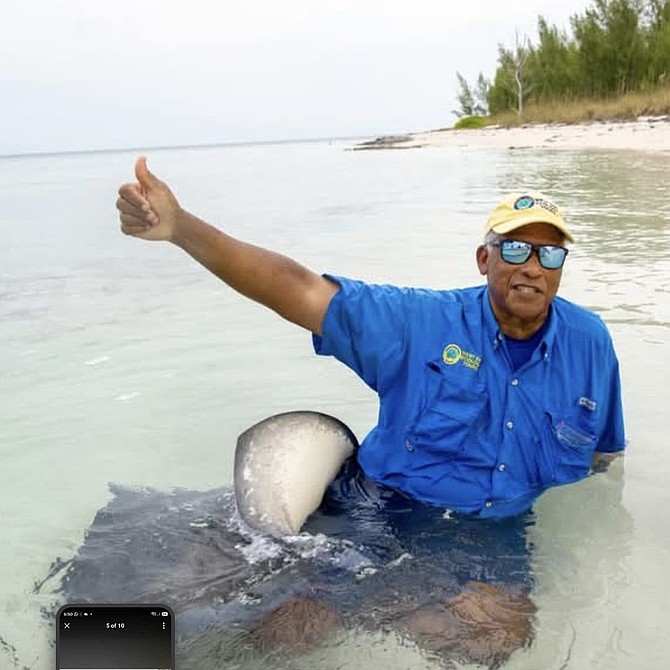
    The tight-knit coastal community of West End on Grand Bahama is gathering to mourn the passing of Keith Cooper, a trailblazing local eco-tourism entrepreneur and lifelong community champion who introduced thousands of people to the rich underwater biodiversity of the region’s waters. Cooper, the 69-year-old founder of West End Ecology Tours, collapsed and passed away unexpectedly on Sunday, August 2.

    A native of West End, Cooper launched his eco-tourism venture in 2010 after returning to his hometown more than 20 years earlier following time living abroad. He quickly built a reputation as a trusted guide, leading hundreds of excursions to the iconic Sandy Cay that gave visitors the rare opportunity to interact safely with wild stingrays, while learning firsthand about the area’s shark populations, native fish species, and the delicate interconnected marine ecosystem that supports the island’s coast.

    Kingsley Smith, the Member of Parliament for West Grand Bahama, emphasized that Cooper’s legacy stretches far beyond his successful tourism business. In the years after his return to West End, Smith said, Cooper poured his energy into lifting up the next generation of local young people, creating accessible outdoor programs that taught core skills like swimming and fishing, before expanding to add sailing opportunities. “It was something new for the community, and many young people benefited from his programme,” Smith noted.

    Cooper’s tours also reshaped West End’s tourism landscape, drawing travelers who otherwise would have only visited the area’s popular nightlife into the heart of the village to experience its unspoiled natural beauty. Most recently, he had expanded his local footprint by venturing into the restaurant industry: he purchased the former Coffee on the Bay property, renovated the space, and launched Conchshells, a new eatery designed to give both residents and visitors an authentic taste of West End’s local culture and cuisine.

    Joseph Darville, chairman of the Bahamian environmental advocacy group Save The Bays, shared that he joined Cooper on an excursion to Sandy Cay just two weeks before his death, to observe nurse sharks during their annual mating season. Darville said Cooper was enthusiastic and full of energy during the trip, updating him on the final renovations for his new restaurant and looking forward to its opening. “Keith Cooper had an intimate, almost divine knowledge of the ocean, the fish and everything connected to marine life,” Darville said, noting he had spent hundreds of hours exploring West End’s waters with Cooper over the years. “I learned a great deal from him. I always looked forward to spending time with him.”

    Cooper also regularly partnered with environmental education programs, opening his tour sites to student groups who came to study marine ecosystems firsthand. He spent countless hours teaching visitors and students alike how to safely and respectfully interact with local marine life, Darville added.

    Beyond his work in tourism and youth development, Cooper was also a critical support for West End in times of crisis. Following damaging hurricanes that have repeatedly impacted the Bahamas, Smith said Cooper leveraged his extensive network of international connections built through decades of tourism work to secure donations and emergency aid for local residents. “Any time there was a disaster, Keith used the many international contacts he had built over the years to help West End,” Smith explained. “People donated, and he always used his reach for the benefit of the community.”

    Since news of Cooper’s death broke, tributes have flooded social media from current and former residents, past tour guests, and friends, many of whom highlighted the indelible mark he left on Grand Bahama’s identity and marine conservation work. Multiple commenters described his passing as a devastating loss for the community, noting that the island will never be the same without his leadership and passion. Both Smith and Darville extended formal condolences to Cooper’s family and loved ones, reflecting on the deep void his death leaves in the West End community. “He will be greatly missed,” Darville said.

  • PMH kitchen delayed after $5m drainage issue found

    PMH kitchen delayed after $5m drainage issue found

    Bahamas’ Health and Wellness Minister Dr. Michael Darville announced Wednesday that the long-awaited reopening of Princess Margaret Hospital’s shuttered kitchen will be pushed back further, after crews uncovered an end-of-life sewage and drainage system that will require an entirely new $5 million infrastructure buildout.

    The hospital’s main kitchen has been offline for more than a year, shut down after health inspectors deemed the facility structurally and hygienically unsafe. Since its closure, the Public Hospitals Authority has contracted third-party vendors to prepare meals off-site for patients and staff, leaving the facility without an on-site cafeteria for employees and sparking ongoing frustration from people receiving care at the hospital.

    Originally, public health officials projected that kitchen renovations would wrap up by the middle of 2025, but that timeline has been scrapped following the unexpected discovery. While conducting pre-renovation assessments for planned upgrades to the kitchen and the hospital’s Legacy Ward, engineering teams found that the decades-old septic and drainage network, which runs to Shirley Street, had fully reached the end of its functional lifespan.

    Because the original system was constructed in the 1950s alongside the hospital itself, repairing the existing infrastructure would be more costly and less reliable than installing a completely new network. Minister Darville explained that the government has opted to build a parallel sewage and drainage system that will connect directly to the hospital, rather than attempting to patch up the failing original infrastructure.

    “This is a major challenge that we just found. It delayed the awarding of the contract for the kitchen because we had to have a proper septic system in order for the hospital to function effectively,” Darville told reporters.

    The $5 million price tag for the new sewage system is an unbudgeted expense, separate from the already allocated funds for the kitchen, Legacy Ward, and hospital dialysis unit renovations. Minister Darville noted that unforeseen infrastructure issues are a common challenge when updating mid-20th century healthcare facilities, pointing to similar unexpected costs that arose during prior upgrades to the hospital’s accident and emergency department.

    “You scope a section of work, and then as you begin to do the work, you realise there are some things that were missed. This is an incidental finding to the necessary repairs for the kitchen and the legacy ward, and we must get it done in order for the Princess Margaret Hospital to function effectively,” he added.

    The extended closure of the on-site kitchen has drawn repeated criticism from patients, who have raised concerns over the quality and temperature of outsourced meals transported to the facility. Hospital employees have also been without a staff cafeteria for more than 12 months, creating additional inconvenience for clinical and administrative teams.

    The revelation of this new costly delay comes one month after Darville defended the government’s plan to construct a second new tertiary hospital on New Providence, even as the country pours ongoing funds into upgrading Princess Margaret Hospital. Darville noted last month that the 1950s-era hospital is approaching the end of its operational lifespan, with maintenance and upgrades growing increasingly expensive and logistically complex over time.

    Prior to this discovery, the government had already allocated funding from a CIBC government loan to cover the planned kitchen, Legacy Ward, and dialysis unit upgrades. Darville also confirmed last month that ongoing renovations to the hospital’s operating theatres have temporarily paused elective surgical procedures, though all emergency surgical services have remained fully operational throughout the upgrade work.