标签: Bahamas

巴哈马

  • Advocate calls for chargesafter dog thrown to ground

    Advocate calls for chargesafter dog thrown to ground

    A disturbing viral video has sparked widespread outrage among animal welfare advocates in The Bahamas, who are calling for felony animal cruelty charges against a woman caught on camera assaulting a dog following a heated confrontation with a local animal advocacy group. The incident, which took place on August 7, has thrown a spotlight on gaps in animal welfare enforcement and the link between animal abuse and broader patterns of violence in the country.

    The sequence of events began three days earlier, on August 5, when members of the Bahamas Alliance for Animal Rights and Kindness (BAARK) were conducting a routine spay and neuter outreach across local communities. During the outreach, a local man flagged down the BAARK mobile clinic and asked the team to collect two unsterilized dogs from his property on St Charles Vincent Street. After granting the team permission to enter his land and collect the animals, BAARK workers spotted an additional stray dog without a collar, wandering loose under a parked car on a public roadway. Since the animal had no identifying tags and was not on private property, the team added it to their transport and brought all three canines to the clinic for sterilization procedures.

    Once all the dogs recovered from their surgery, the BAARK team returned the animals to their neighborhood on August 7 to be released back to their original environment. It was during this return process that the conflict erupted, according to BAARK’s official account of the incident. After the stray dog stepped onto a private porch, a local woman approached the animal, grabbed it forcefully, and hurled it down to the hard ground. Video footage of the confrontation captures the woman screaming repeatedly at BAARK members who were recording the interaction, while the team members confronted her about her obligation to spay her companion animals and questioned her ability to care for the dog.

    Kim Aranha, an advocate with the Bahamas Humane Society, told reporters that the footage left her physically ill, and that there is no justification for failing to file formal animal cruelty charges against the woman. “It’s on tape. There’s no reason why she shouldn’t be charged,” Aranha stated in an interview. She added that the unprovoked attack on a defenseless animal raises serious questions about potential harm to other vulnerable people in the woman’s home, noting that animal cruelty is widely documented as an early warning sign of other forms of violent behavior toward people. “If she does that with a dog, then my next question is, ‘Oh please God, tell me she doesn’t have children or an elderly person in the house,’” Aranha said, calling for the country’s Department of Social Services to launch a parallel investigation into the home environment if at-risk individuals live there.

    BAARK has labeled the incident “horrific and deeply disturbing,” arguing that the attack serves as a painful reminder of why consistent enforcement of existing animal welfare laws is so critical across the archipelago. As of press time, the organization confirmed it has not received any response or update from Bahamian Ministry of Agriculture officials, which oversees animal welfare regulation in the country, regarding the documented incident.

    Aranha noted that the dog appeared unharmed but visibly shaken after the assault, and remarkably returned to the woman moments later wagging its tail — a moment she said highlighted the innate loyalty and forgiveness of canines even in the face of abuse. She added that the incident reflects wider, systemic gaps in animal welfare protection in The Bahamas, saying, “because I know that she’s not the only person who behaves like that, and I know that there are hundreds of dogs out there being treated like that.” Aranha was careful to emphasize, however, that the violent behavior captured on video does not represent the majority of Bahamian animal owners, many of whom provide loving, responsible care for their companion animals. She noted that cases of good animal stewardship rarely receive the same viral attention as graphic footage of abuse.

    BAARK’s ongoing spay and neuter program is designed to address the root of the country’s stray animal crisis by reducing the number of unwanted litters born on public streets and cutting down on the widespread suffering of homeless canines. The organization is also currently working alongside the Bahamian national government to update existing animal protection legislation and improve the enforcement of animal welfare standards across the country.


  • Rokers Point school renamed in honour of veteran educator Pembroke Ferguson

    Rokers Point school renamed in honour of veteran educator Pembroke Ferguson

    A landmark ceremony held in Exuma, The Bahamas, on Wednesday marked the official renaming of Rokers Point Primary School to Pembroke E. Ferguson Primary School, a tribute to the late beloved educator whose decades of devotion shaped generations of learners and strengthened local communities across the island nation.

    Bahamian Prime Minister Philip “Brave” Davis opened the official ceremony by framing the occasion as a milestone moment for Exuma, celebrating the enduring legacy of Ferguson, who devoted his entire professional life and personal energy to advancing education and public service.

    Born in the small Exuma community of Farmers Hill in 1908, Ferguson built a 47-year career in education that spanned multiple Bahamian islands. He began his career as a head teacher in Crooked Island before advancing to principal roles first in San Salvador, and later returning to his home island of Exuma to lead the local education community.

    His impact extended far beyond the classroom walls. Beyond his work in education, Ferguson served the public as a justice of the peace, worked as an ordained Christian minister, and operated a small farm where he grew fresh produce to distribute to low-income and food-insecure families across the region.

    Prime Minister Davis emphasized that Ferguson’s commitment to community uplift was visible wherever he worked. He noted that Ferguson regularly went above his formal job requirements, staying after school hours to provide extra support to struggling students and offering mentorship to early-career teachers new to the profession.

    “In Mr Ferguson, we see a generation of Bahamian educators who understood that teaching was never confined to four walls. To teach was to serve. To educate was to build a community, and that is precisely why this renaming matters to us,” Davis said during his address.

    Bahamas Education Minister Chester Cooper echoed Davis’ remarks, noting that the formal recognition of Ferguson through the school renaming was a long-overdue honor for one of the nation’s most iconic educational leaders.

    “As the children walk through the doors, some will ask who he was and we must tell them. Tell them that he came from right here. Tell them that he did not begin with any advantage. Tell them he worked, he learned, he taught and served,” Cooper said, highlighting Ferguson’s story as an inspiration for current and future students at the school.

    Ferguson’s son, Bishop Franklyn Ferguson, spoke on behalf of the family at the ceremony, expressing gratitude for the honor and echoing Cooper’s sentiment that the recognition was a long time coming. “We are rejoicing today because as many would have said that this was long overdue,” he added.

  • ‘We still don’t have answers’

    ‘We still don’t have answers’

    Three full months have passed since 56-year-old veteran primary school teacher Jillian Pinder was killed in a brutal abduction and stabbing attack, yet no suspects have been arrested or charged in her death. For the first time since the tragedy, Pinder’s family has broken their public silence, sharing their overwhelming heartbreak and growing frustration over the lack of progress in the case, even as law enforcement confirms the investigation remains open.

    Pinder, a mother of two who taught at TG Glover Primary School, was attacked on June 4 at her residence in Lake Cunningham. According to official accounts, two male assailants held her at knifepoint, claiming a person close to Pinder owed them $4,000, before forcing her into her vehicle and abducting her to an undisclosed location. The attackers stabbed Pinder in the throat and abandoned her injured inside her car in the Wulff Road area.

    In an act of extraordinary resilience despite her life-threatening injury, Pinder managed to drive her vehicle to collide with another car, alerting the other occupants who immediately came to her aid. She was rushed to a local hospital and admitted to the intensive care unit, and after initial treatment, she was discharged. Pinder was later readmitted for complications, and she succumbed to her injuries on July 13. Her funeral was held in early August.

    Anna Capron, Pinder’s niece, told local outlet The Tribune that the entire family held out hope for her full recovery in the weeks between the attack and her death. “Nobody in our family was looking at those weeks thinking that we were watching the final chapter of her life,” Capron shared. After Pinder’s initial discharge, the family had made plans for her to heal at home, expecting she would gradually regain her strength and return to daily life. “There were conversations about her healing pretty quickly, being around family, and trying her best to move forward. And then everything changed,” she said. Before she passed, Pinder asked Capron to share a final message of gratitude with the entire family.

    Law enforcement officials confirmed this week that no new updates are available to release in the case. “The investigation is still ongoing, and the family has been in constant communication with officers,” Chief Superintendent Sheria King, police press liaison officer, told The Tribune.

    For Pinder’s loved ones, each passing day without an arrest or charges brings fresh pain and unanswered questions. Capron said the family lives daily with the staggering weight of knowing someone took Pinder’s life, yet no one has been held accountable. “There is a tremendous amount of frustration and heartbreak that comes with that,” she said. “Every day that passes without an arrest or charges is another day that her family has to live with unanswered questions.”

    The family has worked to honor Pinder’s memory by holding onto the small, warm details of her life that made her irreplaceable to them. Her children often recall her habit of taking photos with them, even during quick, routine trips out of the house. Relatives grieve the loss of her easy laugh, her sense of humor, and her steady presence in their lives.

    “Jill wasn’t just a victim in a news story,” Capron emphasized. “She was a mother, an aunt, a sister, a friend, a teacher, and someone who was deeply loved by her family and community.”

    Capron made clear the family’s decision to speak out publicly is not a quest for media attention, but a push to keep searching for the justice they need. “For us, this isn’t a headline that’s going to disappear when the next story comes along. This is our family. This is our loved one,” she said. She issued an urgent appeal to any member of the public with information related to the attack or the attackers to contact authorities, and confirmed the family will not stop speaking out until they get the answers they are desperate for. “We’re going to continue asking questions, continuing to speak her name, and continuing to ask for justice until there are answers,” she said.

  • Evans: Retirement rules fuel judicial brain drain

    Evans: Retirement rules fuel judicial brain drain

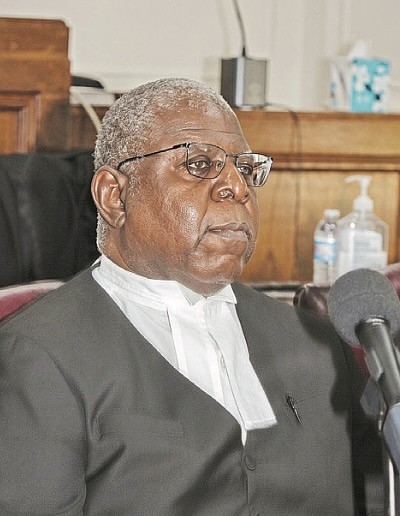
    In a historic moment for The Bahamas’ judicial system, the Court of Appeal has convened proceedings in Grand Bahama for the first time in 16 years, bringing top judicial leaders face-to-face with local communities and opening the door to long-awaited reforms to expand access to justice. During the two-day sitting held September 9 and 10, Court of Appeal President Justice Milton Evans used the occasion to raise a urgent, long-simmering concern: the country’s mandatory judicial retirement rules are actively draining the judiciary of its most experienced legal minds, creating a harmful brain drain that erodes institutional knowledge.

    Justice Evans explained that judicial expertise is not built overnight – it takes years of hands-on experience hearing cases, interpreting law, and refining decision-making for judges to reach the peak of their professional capabilities. Yet under current Bahamian constitutional rules, judges are forced to step down just as they hit this stride, and many go on to offer their hard-won expertise to judicial systems in other countries that allow jurists to serve longer tenures. He pointed to high-profile examples of retired Bahamian judges Dame Anita Allen and Justice Neville Adderley, who have both gone on to serve on benches in other jurisdictions after being forced to retire at home.

    The current constitutional framework sets a mandatory retirement age of 65 for Supreme Court justices, with a maximum extension to 67 granted only through rare approval by the Governor-General following consultation between the Prime Minister and Leader of the Opposition. For Court of Appeal justices, the ordinary retirement age is 68, with a maximum extension to 70. A 2002 constitutional referendum that would have raised these limits – boosting the normal retirement age for Supreme Court justices to 68 (with extensions to 72) and for Court of Appeal justices to 72 (with extensions to 75) – was resoundingly defeated by voters, with 71 percent rejecting the measure.

    Beyond the retirement debate, the Grand Bahama sitting itself marked a major milestone in the judiciary’s push to expand public access to justice. For decades, appellate proceedings have been held exclusively in New Providence, forcing Freeport residents, defendants’ families, and other stakeholders to travel long distances to observe cases. This two-day session, which heard two criminal matters involving local Freeport residents, was designed to change that: it gave community members direct access to watch the appellate court at work, correcting misinformation that often circulates when the public only learns about court proceedings through secondhand accounts.

    “Justice must not only be done, but must be seen to be done,” said Justice Gregory Smith, one of the participating panel members. Smith noted that while virtual hearing technology, widely adopted during the COVID-19 pandemic, has proven effective for remote participation, it cannot replace the value of in-person sittings that bring the judiciary directly to local communities. Chief Justice Ian Winder echoed this commitment, framing the Grand Bahama session as part of a broader national initiative to expand meaningful access to justice across all of The Bahamas’ Family Islands. Grand Bahama already benefits from a fully established local court infrastructure with three Supreme Court justices, four magistrates, and three registrars, and the judicial branch is now moving forward to build out new court facilities in Eleuthera to cut down on the need for local residents to travel to New Providence for court business. Virtual proceedings will remain a core tool for remote participation in cases that cannot be heard locally.

    The visit also brought progress on another longstanding public concern: inconsistent sentencing. Chief Justice Winder acknowledged ongoing public debate over perceived inconsistencies in punishments for similar offences, with some arguing sentences are too harsh and others saying they are too lenient. In response, the judiciary has developed its first-ever formal set of sentencing guidelines in consultation with prosecutors, the legal profession, social services, and other key stakeholders. The guidelines outline clear sentencing ranges and identify standard aggravating and mitigating factors for judges to consider. While they have not yet been implemented, once introduced judges will be required to adhere to the guidelines and provide explicit, strong justifications for any departure from the recommended ranges.

    Despite the progress, Justice Evans cautioned that regular appellate sittings in Grand Bahama remain out of reach for now due to resource and logistical constraints. The Court of Appeal only has six sitting members, so bringing the full panel to Grand Bahama requires pausing all appellate proceedings in Nassau. In the longer term, the judiciary aims to find a solution that allows proceedings to run simultaneously in both locations, but that will require additional funding and revised operational arrangements. He also shared an update on the court’s backlog, noting that the panel is currently processing cases filed in 2026, with only four outstanding judgments remaining as of the start of the Grand Bahama sitting, one of which was already finalized and pending delivery.

  • Georges backs call for English lessons

    Georges backs call for English lessons

    A leading immigration rights advocate in The Bahamas has thrown his support behind calls for mandatory pre-enrollment English language training for students entering the public school system who lack proficiency in the language, arguing that immediate placement in English-only classrooms creates unnecessary barriers for both learners and educators.

    Louby Georges, a prominent voice on immigration and migrant rights issues, made his position public in an interview with The Tribune, days after Bahamas Union of Teachers President Belinda Wilson reignited debate over growing language gaps in Bahamian public classrooms. Wilson recently raised urgent concerns that many teachers are now managing large cohorts of Creole-speaking students who are unable to communicate effectively in English, the primary language of instruction in Bahamian schools. To address this challenge, Wilson proposed that parents arrange private English lessons for non-proficient children before enrollment, and called on the Ministry of Education to enforce basic English proficiency requirements for all new public school entrants.

    Contrary to interpretations that framed Wilson’s proposal as an exclusionary tactic targeting Haitian and other foreign-born migrant children, Georges rejected that reading, emphasizing that the policy’s core goal is to set up students for long-term success rather than block access to education. “I didn’t take the statement as one that is trying to exclude Haitian children or any other foreign children,” Georges explained. “It’s about preparing them to succeed because, at the end of the day, it’s all about the well-being of the children and putting them in the best possible position to excel.”

    Georges went on to outline the practical downsides of placing students with no foundational English into mainstream English classrooms. He questioned how any student can meaningfully engage with coursework or retain lessons when they cannot understand the language instruction being delivered. Beyond putting the non-native student at an academic disadvantage, he added, this scenario also places unfair extra strain on already busy classroom teachers who are not trained or resourced to deliver concurrent language support to large numbers of beginner learners.

    The activist also agreed with Wilson that parents hold primary responsibility for ensuring their children meet basic English proficiency standards before enrollment. He noted that many Haitian residents living in The Bahamas on valid work permits already follow this practice, enrolling their children in pre-enrollment English programs that are often accredited by the Ministry of Education itself. However, Georges acknowledged that systemic barriers limit access to these programs for many low-income migrant families: not only are there too few such institutions across the country, but they also often serve only Haitian Creole speakers, leaving non-native speakers of other languages like Spanish and Filipino without targeted support.

    To expand access to affordable pre-enrollment training, Georges put forward two key proposals. First, he suggested that local Haitian community institutions – including the Embassy of the Republic of Haiti and the Haitian League of Churches – could partner to develop low-cost basic English programs for both children and adult migrant learners who need foundational skills. Second, he highlighted that bilingual Bahamians of Haitian descent, who are fluent in both English and Creole, represent an underutilized resource for language support. He proposed creating streamlined certification pathways for these bilingual community members to qualify as specialized English language instructors, expanding the pool of qualified support available to schools and pre-enrollment programs.

    Georges stressed that his support for pre-enrollment language training does not mean he backs barring non-proficient children from accessing public education while new training programs are developed. He clarified that all children legally residing in The Bahamas have a right to attend school, and he does not expect public schools to halt enrollment of these students in the interim.

  • Abaco residents warned over possible python sighting

    Abaco residents warned over possible python sighting

    Residents of Abaco are now facing a new potential ecological threat, prompting local authorities to issue an urgent warning: keep distance from any large, unidentified snakes and immediately report any suspected sightings of Burmese pythons as investigations into the invasive species’ possible presence on the island get underway. The Bahamas’ Ministry of Agriculture and Marine Resources confirmed on Wednesday that it received a public report of a large snake in Abaco that witnesses believe to be a Burmese python, and the agency is treating the developing situation with extreme urgency. Officials warn that if this large non-native snake becomes established on Abaco, it could wreak havoc on local native wildlife, commercial agricultural operations and the island’s entire fragile natural ecosystem. At this early stage of the investigation, two core questions remain unanswered: first, whether the reported snake is confirmed to be a Burmese python, and second, whether the individual sighting points to an isolated released or escaped pet, or the first evidence of a reproducing wild population. To help investigators answer these questions quickly and accurately, local officials have put out a broad call for public participation. Any resident who spots a suspected Burmese python is asked to report the sighting immediately, sharing the exact location and time of the encounter with authorities. For those who are able to do so safely, officials also request clear photographs or video footage of the animal to speed up the identification and risk assessment process. In the event that a resident has already killed or captured a suspected Burmese python, authorities are asking that the specimen be kept as intact as possible. This allows scientists to conduct a full examination, determine the snake’s sex, collect critical biological samples, and gather data that will help reveal whether the sighting is an isolated incident or proof that a wild population is already established. Burmese pythons, one of the largest snake species on the planet, are non-venomous constrictors native to regions of South and Southeast Asia. Unlike venomous snakes that subdue prey with toxins, these large reptiles kill their food by tightening their coils around prey to cut off breathing, then swallow the entire animal whole. Most mature adult Burmese pythons measure between 10 and 16 feet in length, though the largest recorded specimens have grown past 18 feet. Highly adaptable, Burmese pythons thrive in a wide range of habitats including wetlands, swamps, grasslands and forested areas, and they are surprisingly powerful swimmers that can travel long distances across open water. Their diet consists of a wide range of native species, including small to medium mammals, birds and reptiles. Combined with their large size, extreme adaptability to new environments, and high reproductive rate, these traits have made them one of the most damaging invasive species in regions where they have been introduced outside their native range. A single female Burmese python can lay up to 100 eggs in a single clutch, a reproductive rate that means a small founding breeding population could explode into a large, established wild population very quickly. This high reproductive potential is one of the key factors driving authorities’ urgent response to the unconfirmed sighting. The Ministry of Agriculture and Marine Resources says it will continue ongoing monitoring of the situation and release updated public information as more details become available. Residents can report any suspected sightings directly to Agriculture Officer Josefina Adderley-Curry at the contact number 376-5069.

  • School administrators set to receive promotion letters

    School administrators set to receive promotion letters

    After years of unmet promises and a rare show of labor unrest that disrupted the start of the academic year, a breakthrough has emerged for hundreds of senior school administrators in the Bahamas waiting for career advancement. The Bahamas Educators Managerial Union (BEMU) confirmed this week that long-overdue promotion notification documents have been formally handed over to the Ministry of Education, clearing the way for distribution to eligible staff.

    BEMU President Stephen McPhee told reporters on Wednesday that some affected union members have been stuck in stalled promotion processes dating all the way back to 2016. That backlog of unaddressed advancement issues stood as one of the core grievances that pushed more than 90 percent of the nation’s school administrators to join organized industrial action on September 2, a move that sent roughly 40,000 students home early on the first week of the new school term.

    According to McPhee, the promotion letters arrived at the Ministry of Education on Monday, and ministry staff are currently preparing the documents to send out to the eligible administrators. This step forward comes after a series of tripartite meetings between BEMU representatives, the national Labour Relations Unit, and Ministry of Education officials, held to resolve the full slate of union concerns beyond just promotions. Those other outstanding issues include unfilled administrative vacancies across the country’s public school system, an expired industrial agreement governing union member working conditions, and multiple other unresolved workplace matters.

    McPhee noted that formal negotiations for a new collective industrial agreement have already gotten underway, and negotiators have made measurable progress updating policies related to staffing levels, working conditions, and the formal rights of BEMU members. Still, the BEMU president struck a cautious note, emphasizing that critical financial components of the new agreement remain on the table with no final resolution reached to date.

    “BEMU will continue to advocate strongly for a financial package that properly recognises the responsibilities and value of our members as leaders in education,” McPhee said, adding that the union is now entering what he called the most critical phase of negotiations around financial terms. Union leadership hopes to see all outstanding financial matters resolved before the end of the current week.

    The promotion dispute was explicitly named by McPhee as one of the driving forces behind the September 2 industrial action. The backlog affects three separate groups of school leaders: administrators connected to a 2021 Supreme Court filing over delayed promotions, staff who completed all requirements for advancement as early as 2018, and eligible members who applied for promotion last year but have not yet received a decision or placement. The group waiting for notification includes senior education leaders across all levels of the public system: principals, vice principals, district superintendents, and assistant directors of education, all of whom are also waiting for the corresponding salary increases that come with their new roles.

    The industrial action prompted the Minister of Education and the Attorney General to file an urgent court request for an injunction, which was granted by Justice Darron Ellis shortly after the work stoppage. The court order prohibits BEMU, its leadership, and its members from organizing or participating in any future strike or industrial action, and requires all Ministry of Education-employed staff to report to their assigned workplaces during scheduled hours. It also restricts unapproved sick leave, requiring a valid medical certificate for any absence, and bans union representatives and members from pressuring, intimidating, or encouraging other staff to skip work.

    As negotiations continue through the critical financial phase, McPhee urged BEMU members to maintain solidarity throughout the process. “To our members, I say, remain encouraged, remain unified, and remain vigilant,” he said. “Success is being achieved, and your union continues to work for you.”

  • US invests $245,000 to restore historic Fort Montagu and cannons

    US invests $245,000 to restore historic Fort Montagu and cannons

    A landmark cross-border cultural preservation effort is underway in The Bahamas, as the United States commits $245,000 to restore Fort Montagu — one of the Caribbean nation’s oldest remaining military installations — with targeted conservation work focused on the site’s corroded historic cannons.

    The funding comes from two U.S.-backed initiatives: the Ambassadors Fund for Cultural Preservation and the Freedom 250 Initiative. U.S. Ambassador to The Bahamas Herschel Walker confirmed that this grant marks the second-largest U.S. investment in Bahamian cultural heritage protection to date, bringing total American support for such projects across the country to more than $750,000.

    Senior officials from both nations gathered at the National Art Gallery of The Bahamas this week to formally launch the restoration project, a step Walker framed as more than just a construction effort. “Fort Montagu has stood there for nearly three centuries,” Walker noted, emphasizing that conserving the fort means safeguarding a core chapter of the Bahamian national story. He added that the collaborative venture also serves as a powerful example of what shared commitment between the two neighboring countries can deliver.

    Completed in 1741, the coastal fort has faced decades of damage from its harsh seaside environment. Dr. Michael Pateman, executive chairman of The Bahamas’ Antiquities, Monuments and Museums Corporation, explained that the work will include critical repairs to the fort’s roof alongside urgent interventions for its 18th-century cannons. “Salt, moisture, and the coastal environment have caused serious corrosion,” Pateman said, adding that the cannons have reached a point where immediate action is required to stop irreversible damage.

    To address the corrosion, conservation specialists will use electrolytic reduction, a specialized technique designed to leach destructive chlorides and salt deposits out of the metal. According to Pateman, the full process is expected to take roughly 12 months, but it provides the most reliable path to preserving the cannons intact for future generations to study and experience.
    Leslia Miller-Brice, The Bahamas’ Minister of Culture, Arts and Heritage, highlighted that the project draws on professional expertise from three nations: The Bahamas, the United States, and the Dominican Republic. Beyond repairing the physical structure of the fort, Miller-Brice emphasized that the initiative is focused on protecting the collective history and national identity tied to the site.

    “Fort Montagu is still standing, and tonight, The Bahamas and the United States are connected once again through this historic site, not through conflict, but through friendship, collaboration, and a shared commitment to preservation,” Miller-Brice said. “We are preserving memory. We are preserving identity. We are preserving a place where history happened.”

    A core goal of the project, she added, is to make local history accessible to young Bahamians, pushing back against the idea that meaningful historical events only occurred in far-flung places covered in textbooks. “I want our young people, especially, to understand that history did not only happen in distant places in textbooks,” she said. “History happened here, on our shores, in this harbor, on Bahamian soil.”

  • FNM senator urges probe of Simpson Penn conditions

    FNM senator urges probe of Simpson Penn conditions

    A senior opposition politician in The Bahamas is pushing the ruling Davis administration to launch an urgent investigation into sweeping allegations of dangerous working conditions and exploitative labor practices at the Simpson Penn Centre for Boys, a maximum-security rehabilitation facility for young male offenders.

    The calls for action followed complaints from a long-serving anonymous staff member at the understaffed center, who shared damning details of systemic mistreatment with local outlet Eyewitness News. The whistleblower said the facility’s team is chronically overworked, underpaid, and forced to tolerate dehumanizing treatment, saying staff have grown fed up with being treated like disposable labor.

    Among the most serious claims are that employees are routinely required to cover multiple unrelated job roles to compensate for chronic understaffing, and that the facility lacks sufficient security personnel to keep both staff and residents safe. The source also claimed some workers are forced to work seven consecutive days without any scheduled rest break.

    Arinthia Komolafe, a Free National Movement (FNM) Senator and the party’s shadow minister for social services, information and broadcasting, described the allegations as deeply troubling and said the claims demand immediate, transparent scrutiny from regulators.

    “Allegations of unfair labor practices where workers do not receive adequate compensation are completely unacceptable,” Komolafe said in an official statement. “It is both unsafe and unhealthy for any person to work seven days straight with no rest. We call on all relevant authorities with oversight of the center, including the Minister of Social Services, to fully investigate these claims.”

    Komolafe emphasized that maintaining the facility’s recently reported low recidivism rate — a key marker of successful rehabilitation for the young men housed there — depends on adequate staffing that can meet the full spectrum of residents’ mental, physical, emotional and psychological needs. She noted that appropriate staffing levels are non-negotiable for protecting both workers and youth, supporting effective rehabilitation, and preventing avoidable harmful incidents.

    Citing international corrections best practices, Komolafe said the facility should cap the ratio of residents to staff at no more than eight boys per employee. She added that frontline workers must receive proper support from trained specialists and mental health professionals, and that the center’s physical infrastructure must be kept in good, safe repair.

    Komolafe also praised the whistleblower for stepping forward to raise concerns, noting their actions were taken in the best interest of both the institution and the broader country. She added that the case underscores an urgent need for stronger national governance frameworks that offer legal and institutional protection to whistleblowers who expose misconduct.

    Following the publication of the allegations, a spokesperson for the Bahamas Department of Social Services confirmed that an official response to the claims was being prepared. As of press time, no formal statement from the department had been released to the public.

  • 80 Grand Bahama jobs at risk at Bahama Rock

    80 Grand Bahama jobs at risk at Bahama Rock

    An impending shutdown at a major Grand Bahama mining operation has placed nearly 80 local jobs in jeopardy and triggered widespread concern over potential economic ripple effects across the island, according to official company announcements. Bahama Rock, an aggregate mining firm currently run by global materials company Martin Marietta, is set to wind down all production activities on September 18, after decades of operations exhausted the permitted limestone reserves the company has access to. Currently employing 82 local Bahamian workers, the firm has already initiated temporary layoffs for hourly staff as it prepares for a full halt to operations. The coming closure carries notable weight for Grand Bahama’s economy: industry estimates show the company injects roughly $25 million into the island’s economy each year, making its potential shutdown a significant concern for local business and community leaders. To avoid this outcome, Bahama Rock has submitted a formal proposal to the Bahamian government to take over and mine 270 acres of land previously owned by the defunct Bahamas Cement Company (BCC), located near the planned Freeport Harbour expansion project. If approved, the new site would grant the company access to enough untapped limestone reserves to resume operations long-term and retain its full local workforce, company representatives say. The proposal has not moved forward without intense pushback from local communities, however. Back in July, the Bahamas’ Department of Environmental Planning and Protection (DEPP) hosted a public consultation to gather feedback on the project’s Environmental Impact Assessment (EIA), where dozens of West Grand Bahama residents voiced strong opposition to the expansion plan. Many local homeowners shared accounts of past blasting operations run by Bahama Rock causing structural damage to their properties, alongside persistent noise pollution and unhealthy dust accumulation that has disrupted daily life in the area. Amid growing public and political debate over the proposal, the Grand Bahama Chamber of Commerce stepped in recently to conduct its own independent review. Last week, Chamber president Ralph Hepburn and members of the organization’s board of directors held a closed-door meeting with senior Bahama Rock leaders, followed by an on-site tour of the current mining facility to gain first-hand context for both the company’s proposal and the environmental concerns outlined in the EIA. Hepburn confirmed that the Chamber is preparing to release a formal public statement outlining its position on the project this Wednesday. Bahama Rock officials have moved quickly to refute growing criticism that the company’s warnings of impending job losses are a calculated tactic to pressure the government into fast-tracking approval for the new mining site. Company representatives emphasized that the BCC site is the only viable path to preserving local operations and employment, and framed the project as compatible with strong environmental protections. “This is not an either-or situation between protecting local jobs and safeguarding our environment,” a company spokesperson said in a statement. “Our goal is to find a balanced solution that protects existing employment, maintains critical investment in Grand Bahama’s economy, secures long-term access to essential construction materials for the entire country, and addresses all community and environmental concerns thoroughly.” Up to the time of this reporting, Bahama Rock General Manager TJ Mackey has not responded to multiple requests for direct comment on the impending shutdown or expansion proposal.