分类: world

  • Overstromingen Azië: Dodental blijft stijgen, meer regen verwacht

    Overstromingen Azië: Dodental blijft stijgen, meer regen verwacht

    A catastrophic flooding disaster across Southeast Asia has claimed over 1,500 lives, with rescue teams racing against time to reach survivors isolated by devastating landslides and floodwaters. The death toll includes 836 confirmed fatalities in Indonesia, 479 in Sri Lanka, 185 in Thailand, and three in Malaysia, while 859 individuals remain missing across the region.

    Environmental organizations are pointing to decades of systematic deforestation as a critical factor exacerbating the tragedy. The Indonesian Forum for the Environment (Walhi) revealed that uncontrolled mining operations, palm oil plantations, and illegal logging have stripped Sumatra of its natural defenses, removing the forests that once absorbed rainfall and stabilized soil. Satellite data from Global Forest Watch shows the affected Indonesian provinces of Aceh, North Sumatra, and West Sumatra have lost approximately 19,600 square kilometers of forest since 2000—an area larger than New Jersey.

    In response to growing public outrage, Indonesian President Prabowo Subianto has pledged policy reforms following his visit to the hardest-hit areas. “We must genuinely prevent deforestation and forest destruction. Protecting our forests is crucial,” the president stated. Environment Minister Hanif Faisol Nurofiq has announced investigations into eight companies suspected of contributing to the disaster through environmental degradation.

    The crisis continues to unfold as meteorological authorities warn of additional heavy rainfall and thunderstorms expected from Friday through Saturday. Teuku Faisal Fathani, head of Indonesia’s Meteorology, Climatology and Geophysics Agency, indicated saturated soils and swollen rivers remain primed for further flooding in vulnerable districts.

    Tens of thousands of survivors face severe shortages of food and clean water in isolated communities where floodwaters have washed away roads, bridges, and telecommunications infrastructure. In Batang Toru, the most severely affected region of North Sumatra, hundreds of hectares had been cleared for gold mining and energy projects, leaving slopes exposed and riverbeds clogged with sediment.

    For elderly survivors like 67-year-old Safnida, who now resides in an elementary school converted to an evacuation shelter in Padang city, the future remains uncertain. “We cannot expect life to always be good, right? I’m grateful to be alive while my house collapsed in the floods,” she reflected. “At my age, I don’t know if I can survive it again.”

  • Vier doden bij nieuwe VS aanval; Venezuela verwerpt aanval

    Vier doden bij nieuwe VS aanval; Venezuela verwerpt aanval

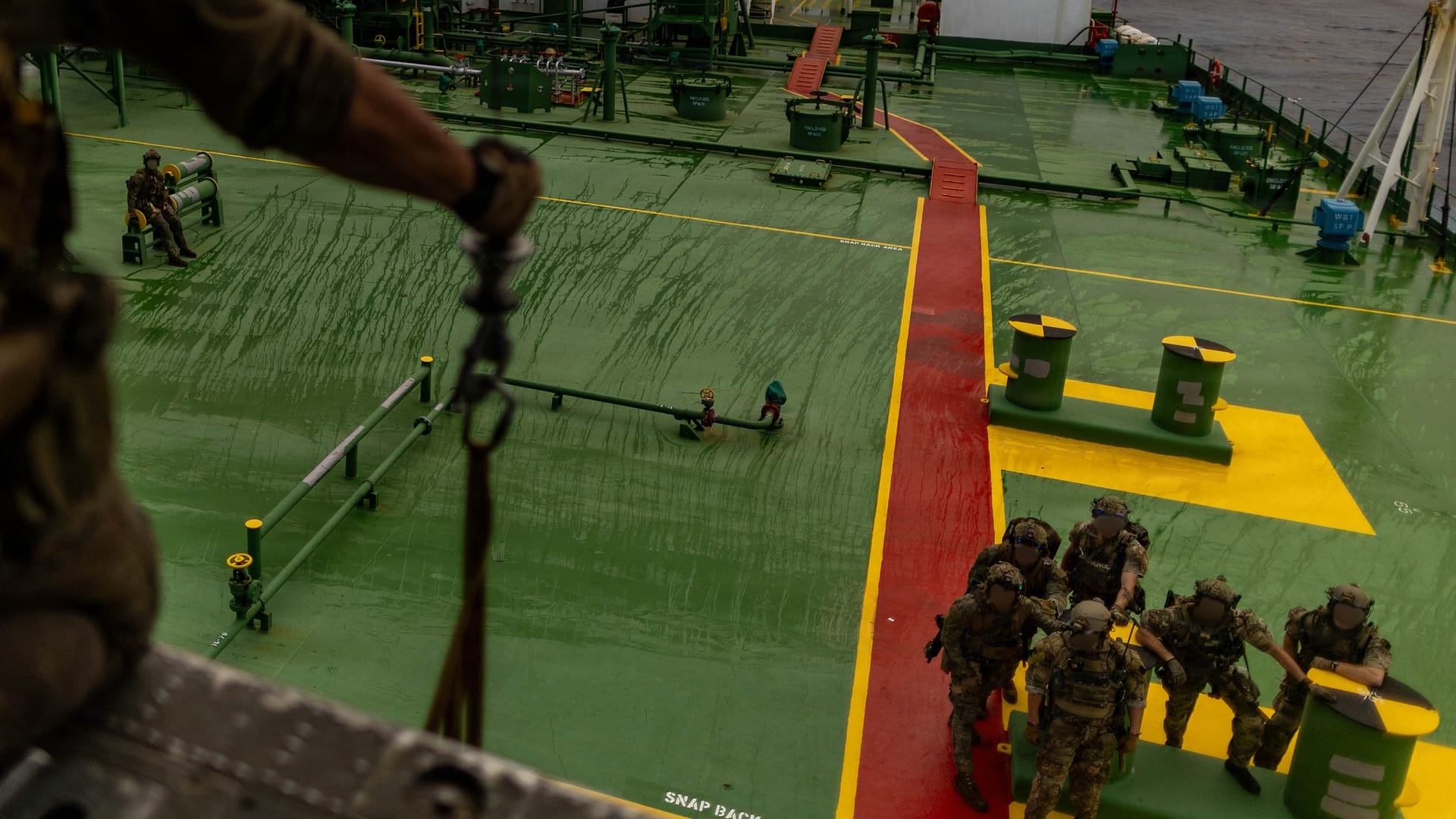
    The United States Navy has conducted another kinetic military strike against a vessel suspected of involvement in drug trafficking operations, resulting in four confirmed fatalities according to Pentagon officials. This incident represents the latest escalation in Washington’s intensified maritime campaign against narcotics smuggling that has targeted dozens of vessels since early September.

    Official statements from US Southern Command confirm the deployment of lethal force against what intelligence identified as a drug trafficking vessel. The operation, described as a ‘kinetic strike,’ eliminated four individuals aboard the suspect craft. This approach forms part of Operation Martillo, a broader multinational effort aimed at disrupting transnational criminal organizations operating in maritime transit zones.

    The Venezuelan government under President Nicolás Maduro has launched a vehement diplomatic response to the incident. Venezuela’s National Assembly has established a special commission to investigate the American military actions, with Parliamentary President Jorge Rodríguez promising a thorough examination of the circumstances. Venezuelan officials have condemned the strikes as illegal under international law and characterized them as part of broader US pressure tactics targeting the resource-rich nation, particularly its substantial oil and gas reserves.

    While the US government maintains that these military actions represent justified measures in the global fight against drug trafficking, international observers and legal experts have raised significant concerns. Critics argue that employing lethal force against suspected vessels on the high seas without judicial process or transparent evidence presentation may constitute extrajudicial executions. The legal justification for such attacks in international waters remains particularly contentious, with questions emerging about compliance with international maritime law and human rights standards.

  • Cuba reaffirms zero-tolerance policy against drugs

    Cuba reaffirms zero-tolerance policy against drugs

    Cuban authorities have successfully intercepted 72 separate drug smuggling attempts between 2024 and 2025, seizing substantial quantities of marijuana, cocaine, methamphetamine, and synthetic cannabinoids originating from 11 different countries. This achievement comes despite significant challenges posed by the United States embargo and the increasingly sophisticated methods employed by international drug cartels.

    At a recent press conference, Justice Minister Oscar Manuel Silvera Martínez, who chairs Cuba’s National Drug Commission, detailed the nation’s comprehensive anti-narcotics strategy. The approach combines rigorous law enforcement with extensive public education campaigns, maintaining a zero-tolerance policy toward drug trafficking and consumption. Minister Silvera emphasized that Cuba’s geographical position places it along major drug transit routes connecting South American production centers with North American consumer markets, yet the country has consistently prevented itself from becoming a significant storage or transit point for narcotics.

    Colonel Juan Carlos Poey Guerra, head of the Ministry of Interior’s Specialized Anti-Drug Enforcement Agency, highlighted emerging challenges including the proliferation of synthetic substances and innovative smuggling techniques. These include speedboat deliveries, airborne drops, and packages deliberately abandoned in Cuban waters that wash ashore due to currents and weather patterns. The recent passage of Hurricane Melissa led to the discovery of 792.5 kilograms of marijuana and 12.25 kilograms of cocaine along Guantánamo’s northern coast, demonstrating how natural phenomena can unexpectedly introduce drugs into Cuban territory.

    First Colonel Yvey Daniel Carballo Pérez of the Border Guard Troops Directorate noted that Cuba’s extensive 5,746-kilometer coastline presents substantial monitoring challenges. Despite these difficulties, authorities have captured 14 speedboats and 39 traffickers in recent operations, seizing a total of 4,487 kilograms of illicit substances. All interdiction operations have been conducted without loss of human life, even during high-speed pursuits of smuggling vessels.

    The Cuban government has intensified its anti-drug efforts through enhanced training programs, technological modernization, and sophisticated laboratory analysis that has identified 41 new synthetic drug formulations entering the country, most traced to United States origins. Community involvement remains crucial to these efforts, with coastal residents playing a vital role in reporting suspicious packages and activities.

  • U.S. military aircraft expected to arrive in the Dominican Republic in the coming days

    U.S. military aircraft expected to arrive in the Dominican Republic in the coming days

    The Dominican Republic has authorized the temporary deployment of multiple U.S. military aircraft to its territory as part of a bilateral security cooperation initiative in the Caribbean region. According to official announcements, the American aircraft will operate from restricted zones at San Isidro Air Base and Las Américas International Airport under special temporary permits granted by Dominican authorities.

    The deployment features two of the U.S. Air Force’s most versatile aircraft: the KC-130 tanker and the C-130 Hercules transport plane. The C-130, with a service history dating back to 1954, represents one of the most successful military transport aircraft ever developed. Initially designed for demanding Cold War operations, this aircraft has demonstrated exceptional versatility across multiple conflict zones including Vietnam and Desert Storm, while simultaneously serving critical roles in humanitarian missions such as disaster response in Haiti and during Hurricane Katrina relief efforts. The latest C-130J variant continues to set the standard for tactical airlift capabilities worldwide.

    The KC-130, introduced in the 1960s, functions as both a tanker and logistics aircraft, providing essential aerial refueling capabilities for fighter jets, helicopters, and unmanned aerial systems. This platform has supported numerous combat operations across theaters including Iraq, Afghanistan, and Libya, in addition to facilitating nighttime special operations and personnel transportation.

    While specific details regarding flight schedules and the exact number of aircraft remain undisclosed for operational security reasons, the deployment is expected to enhance maritime and aerial surveillance efforts, enable transport of sensitive equipment, provide logistics support for regional security operations, conduct in-flight refueling missions, and facilitate the movement of technical personnel. This initiative strengthens the ongoing security and technical cooperation framework between the United States and the Dominican Republic.

  • Agricultural research experts in Caribbean and Latin America reflect on Manuel Otero’s tenure as head of IICA

    Agricultural research experts in Caribbean and Latin America reflect on Manuel Otero’s tenure as head of IICA

    Agricultural research leaders from across Latin America and the Caribbean have unanimously celebrated the impactful tenure of Manuel Otero as Director General of the Inter-American Institute for Cooperation on Agriculture (IICA), whose term concludes on January 15. Under Otero’s leadership since January 2018, IICA has undergone significant transformation, particularly through strengthened alliances with FONTAGRO, the region’s premier agricultural innovation platform.

    Otero’s strategic vision focused on enhancing the competitiveness of agrifood systems, poverty reduction, and promoting sustainable natural resource management. His administration supported 212 active agricultural innovation projects engaging over 8,000 researchers throughout the region.

    Regional agricultural directors highlighted various aspects of Otero’s legacy. Nicolás Bronzovich of Argentina’s INTA stated that Otero’s vision ‘transformed agricultural cooperation in our region,’ while Peru’s INIA Executive President Jorge Ganoza Roncal acknowledged his ‘steadfast support for capacity-building efforts.’

    Chile’s INIA Food Sector Head María Teresa Pino emphasized that ‘Otero’s commitment to innovation and research has been key to improving our capabilities,’ a sentiment echoed by Colombia’s AGROSAVIA Executive Director Miguel Serrano López, who praised Otero’s ability to ‘unite diverse nations behind a common goal.’

    Costa Rica’s INTA Executive Director José Roberto Camacho Montero noted that ‘Otero’s dedication to food security has been an example to us all,’ and Ecuador’s INIAP Director Raúl Jaramillo commended his efforts to address evolving agricultural challenges.

    Panama’s IDIAP acting head Alexandra Rodríguez recognized Otero’s crucial role in fostering agricultural innovation, while Uruguay’s INIA President Miguel Sierra praised his ‘tireless efforts to unite the agricultural community of Latin America.’

    FONTAGRO Executive Secretary Eugenia Saini highlighted the strategic partnership between IICA and the innovation fund, recalling that ‘Manuel Otero opened the doors of IICA to us at a difficult time.’ She noted that his leadership ‘put us back on the map’ in international dialogues.

    Otero will be succeeded by Guyanese agronomist Muhammad Ibrahim, who assumes the Director General position on January 15.

  • United Nations warns of famine among Sudanese children

    United Nations warns of famine among Sudanese children

    The United Nations Children’s Fund (UNICEF) has issued a grave warning regarding the escalating humanitarian catastrophe in Sudan, describing the situation as a ‘silent emergency’ for the global community but ‘deafening for the children who endure its horrors daily.’ Blanca Carazo, overseeing International Programs at UNICEF Spain, emphasized on Wednesday that millions of Sudanese children have been forcibly displaced from their homes, facing profound uncertainty regarding their next meal or access to essential medical treatment. The UN agency further reported that Sudan’s healthcare infrastructure is teetering on the brink of total collapse, exacerbated by multiple direct airstrikes targeting medical facilities. Compounding the crisis, humanitarian access remains critically constrained, severely hampering relief efforts. This devastating turmoil stems from an intense power struggle that erupted in mid-April 2023 between the nation’s military leader, General Abdel Fattah al-Burhan, and the commander of the paramilitary Rapid Support Forces (RSF), General Mohamed Hamdan Dagalo. The conflict has plunged the country into a severe internal war, creating one of the world’s most urgent yet underreported humanitarian disasters.

  • Dominica holds 5th National Climate Outlook Forum

    Dominica holds 5th National Climate Outlook Forum

    Dominica has launched its fifth National Climate Outlook Forum at the Prevost Cinemall, gathering cross-sector stakeholders to confront escalating climate challenges under the theme “Safeguarding Health and Lives against Dust and Climate Impacts.” The initiative represents a coordinated effort to bolster national resilience through scientific forecasting and strategic planning.

    Central to the discussions are the health implications of Saharan dust incursions and atmospheric pollutants, with experts emphasizing the urgent need for mitigation strategies. The forum features detailed analyses of the anticipated 2025 wet and hurricane season, providing critical data for emergency preparedness. Additionally, participants will examine projections for the 2025-2026 dry season to inform resource allocation and long-term planning.

    The event serves as a collaborative platform for sharing best practices and developing practical solutions to reduce climate-related health vulnerabilities. Through structured presentations and dialogues, attendees aim to create actionable frameworks that address the interconnected challenges of air quality, extreme weather, and public health.

    Notable participants included Mrs. Vernie Marcellin Honoroe from Dominica Meteorological Services, who welcomed delegates, and Mr. Adrian Thomas, Chief of Applied Meteorology at the Caribbean Institute for Meteorology and Hydrology. Key government representatives included Mr. Samuel Carrette, National Resilience Coordinator, Hon. Kent Edwards, Parliamentary Secretary for Health, and Permanent Secretary Jo-Anne Commodore from the Ministry of National Security, underscoring the multidisciplinary approach to climate resilience.

  • TTEC workers to return after helping Jamaica restore power

    TTEC workers to return after helping Jamaica restore power

    PORT OF SPAIN – Following an extensive month-long deployment, members of Trinidad and Tobago Electricity Commission’s (TTEC) emergency response team are preparing to return home after significantly advancing power restoration efforts in hurricane-ravaged Jamaica. Utilities Minister Barry Padarath confirmed the anticipated December 10 return date pending final arrangements.

    The specialized contingent, which departed from Piarco International Airport on November 10, has been instrumental in recovering Jamaica’s electrical infrastructure devastated by Category 5 Hurricane Melissa. Their technical expertise and tireless efforts have yielded remarkable progress, with electricity restoration rates jumping from approximately 45% to 75% across the island nation.

    Minister Padarath revealed that prior to the team’s intervention, a staggering 55% of Jamaica remained without power following the October 28 catastrophe that claimed over 30 lives and prompted Prime Minister Andrew Holness to declare a national disaster zone. The TTEC team’s dedicated work has effectively reduced the outage percentage by approximately 35 points, bringing substantial relief to affected communities.

    The Jamaican government has expressed profound appreciation for the regional solidarity demonstrated through this crisis response. High-level communications between Prime Ministers Holness and Kamla Persad-Bissessar have underscored the continued commitment to bilateral support. Padarath emphasized that dialogue remains ongoing regarding additional assistance requirements before the team’s scheduled departure.

    The returning linemen and technical personnel will enjoy well-deserved reunions with their families ahead of the holiday season. Minister Padarath extended the nation’s gratitude, acknowledging that ‘no amount of compensation can truly reflect their work under such difficult circumstances.’ The successful mission stands as a testament to Caribbean cooperation in times of crisis, reinforcing the region’s collective resilience against natural disasters.

  • Help from the East

    Help from the East

    MONTEGO BAY, Jamaica – The Chinese naval hospital ship Ark Silk Road has arrived in this Caribbean port city, initiating a crucial three-day medical mission to assist communities devastated by Hurricane Melissa. The vessel’s deployment represents a significant bilateral cooperation effort, combining advanced medical capabilities with humanitarian relief.

    Medical authorities confirmed the ship’s arrival will directly address a critical backlog of elective surgeries postponed due to the hurricane’s impact on healthcare infrastructure. Dr. Delroy Fray, Western Regional Health Authority Clinical Coordinator, described the floating medical facility as “a first-class, modern hospital” equipped with comprehensive medical resources.

    The collaborative medical operation will feature joint Sino-Jamaican medical teams working across eight operating theaters. Daily capacity includes five cataract surgeries, four hernia repairs, approximately 100 CT scans, 40 ultrasounds, and numerous laboratory investigations. Jamaican surgical and ophthalmology specialists will remain stationed aboard throughout the mission to ensure continuity of patient care and seamless follow-up treatment through local outpatient departments.

    Chinese Ambassador Wang Jinfeng emphasized the historical significance of this mission, noting that the Chinese Navy’s Peace Ark previously served Jamaican patients in 2011. “This visit reflects the deep and long-standing ties between our nations,” Ambassador Wang stated during welcoming ceremonies, characterizing the ship’s return as “a significant milestone in China-Jamaica relations.”

    The medical assistance complements substantial Chinese humanitarian support following the Category 5 hurricane, including $2 million in grant assistance and $2.1 million in relief supplies encompassing emergency food, lighting equipment, shelter materials, and reconstruction machinery.

    Montego Bay Mayor Richard Vernon acknowledged the strategic timing of the intervention, noting that the regional healthcare system faces dual pressures from storm-related injuries and pre-existing medical conditions. Local Chinese community representative Yangsen Li highlighted the unique integrative medical approach, combining Western and Eastern medical expertise to provide comprehensive patient evaluations.

    The Ark Silk Road will subsequently travel to other hurricane-affected communities following its Montego Bay deployment.

  • Bill Clinton visits Jamaica

    Bill Clinton visits Jamaica

    Former U.S. President Bill Clinton concluded a high-profile visit to Jamaica on Thursday, where he assessed the aftermath of Hurricane Melissa and engaged in strategic discussions with the nation’s public and private sector leadership. The 42nd President was personally escorted by Jamaica’s Energy Minister, Daryl Vaz, to survey regions severely impacted by the recent hurricane. This tour was strategically organized to galvanize international assistance and financial support for the island’s recovery and rebuilding efforts.

    The day’s agenda culminated in an exclusive dinner hosted by Sandals Resorts International Executive Chairman Adam Stewart at the AC Kingston Hotel. The event served as a convening point for a distinguished gathering of top government officials and influential private sector leaders. Among the notable attendees was Rolando Gonzalez Bunster, a prominent board member of the Clinton Foundation who also serves on the Energy Committee of the Clinton Global Initiative. The closed-door discussions are believed to have centered on forging public-private partnerships to address Jamaica’s urgent infrastructural and energy needs post-disaster, leveraging the networks and initiatives of the Clinton Foundation to facilitate long-term support.