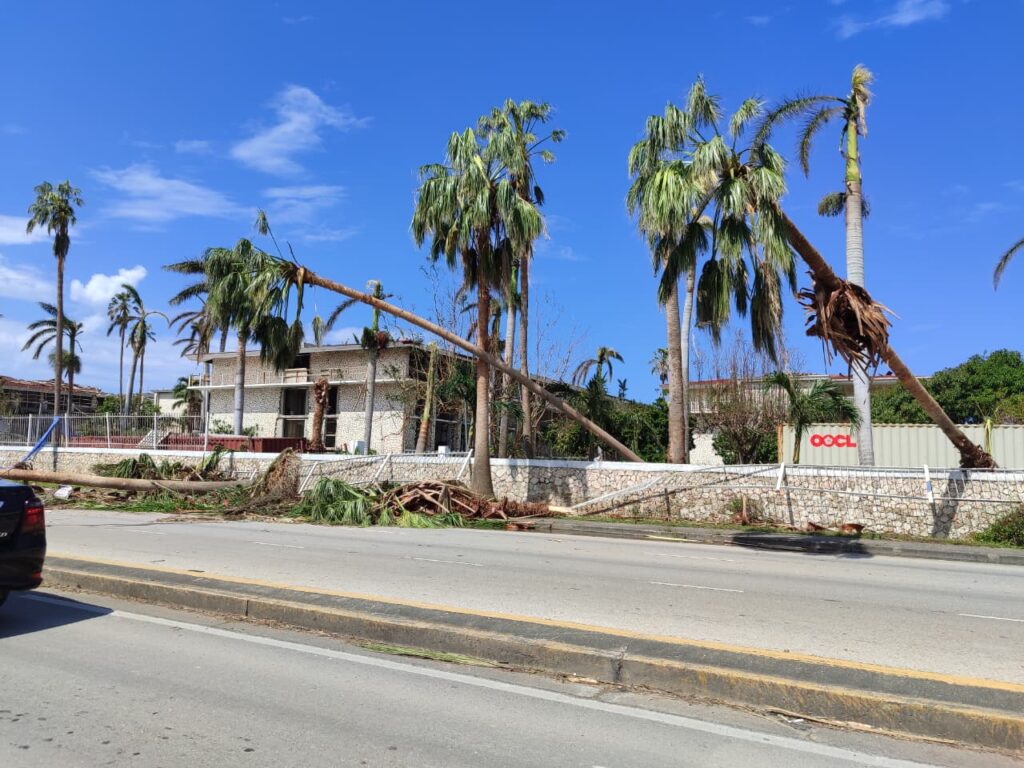
St James, Jamaica — The aftermath of Hurricane Melissa has left a stark trail of destruction along the Elegant Corridor, stretching from the western airport to Iberostar in the east. Numerous properties, including the upscale Iberostar and Jewel Grande resorts, have suffered significant roof damage. Rehabilitation efforts are currently underway at Catalonia, another affected property. The shopping village opposite Catalonia has also experienced substantial damage, with several shops impacted by the storm. The health care facility, Hospiten, saw sections of its roof torn off during the tempest. While flooding was reported in some areas, the waters have since receded, leaving behind muddy patches along the roadway. The storm also brought down trees and power lines, disrupting traffic and hindering daily commuters. Many of the stately palm trees that once lined the road have been broken, bent, or stripped of their leaves, rendering them unrecognizable. Despite the visible devastation, the full extent of the damage to Jamaica’s primary tourism belt remains uncertain, as assessments are still ongoing to determine the overall impact.
分类: world
-
Global action urged to lower insurance costs for hurricane-prone island states – CARICOM Secretary-General
Dr. Carla Barnett, Secretary-General of the Caribbean Community (CARICOM), has emphasized the urgent need for international cooperation to address the escalating insurance costs in the tourism sector of Small Island Developing States (SIDS). Speaking at the 6th Global Services Forum, held during the 16th United Nations Conference on Trade and Development (UNCTAD16), Dr. Barnett underscored the vulnerability of CARICOM’s service-driven economies to increasingly severe and frequent climate events. She highlighted that older tourism properties face significantly higher insurance premiums, while securing coverage for new investments has become nearly impossible. Dr. Barnett called for collective global action to mitigate these challenges. The Forum, themed ‘Services: A New Frontier of Economic Transformation for Equitable, Inclusive and Sustainable Development,’ explored the pivotal role of the services sector in fostering economic growth, job creation, and exports. Services now account for two-thirds of global GDP, with CARICOM states like The Bahamas, Saint Lucia, and Barbados seeing this figure rise to 75 percent. Even in more diversified economies such as Trinidad and Tobago and Jamaica, services contribute approximately 60 percent of GDP. Dr. Barnett stressed the importance of international partnerships in bridging structural gaps and enhancing resilience. She cited collaborations with UNCTAD, the World Trade Organization (WTO), and international development banks as critical to strengthening institutional capacities and service provider capabilities. The Trade in Services project, a joint initiative between UNCTAD and CARICOM, exemplifies such efforts by building the data infrastructure necessary for evidence-based policymaking and transformative growth. CARICOM’s services sector encompasses tourism, financial services, ICT, professional services, entertainment, and cultural and sporting services. Dr. Barnett reiterated that targeted global support is essential to unlock the full potential of these industries and protect them from climate-related disruptions.
-
Support for Jamaica in the aftermath of Melissa
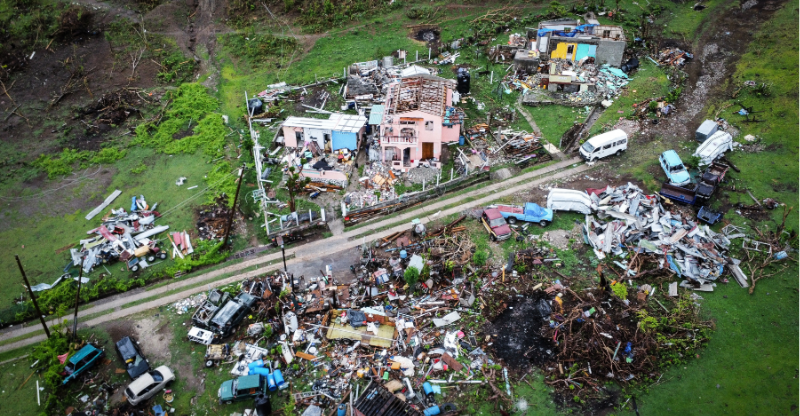
During the Caribbean Week of Agriculture in October 2024, Saboto S Caesar, Minister of Agriculture in St Vincent and the Grenadines, emphasized the urgent need for enhanced post-disaster support for Caribbean nations. This call to action comes in the wake of Hurricane Beryl, which devastated several countries, including St Vincent and the Grenadines, in July 2024. The Caribbean Regional Fisheries Mechanism (CRFM) has responded by launching a climate resilience portal, designed to provide critical information on hurricane preparedness and recovery efforts. This initiative aligns with the CRFM’s mandate to support member states in their post-disaster recovery processes. Additionally, the CRFM has urged its community to contribute to Jamaica’s recovery following Hurricane Melissa, which struck the island on October 28, 2024. With maximum sustained winds of 145 miles per hour, Melissa tied as the strongest hurricane ever recorded in the Atlantic Basin, causing catastrophic damage to both national infrastructure and personal property. The CRFM has pledged to collaborate with the Caribbean community and Jamaican residents to expedite recovery efforts and rebuild affected areas.
-
Hurricane Melissa Brings Life-Threatening Floods and Winds Across Caribbean
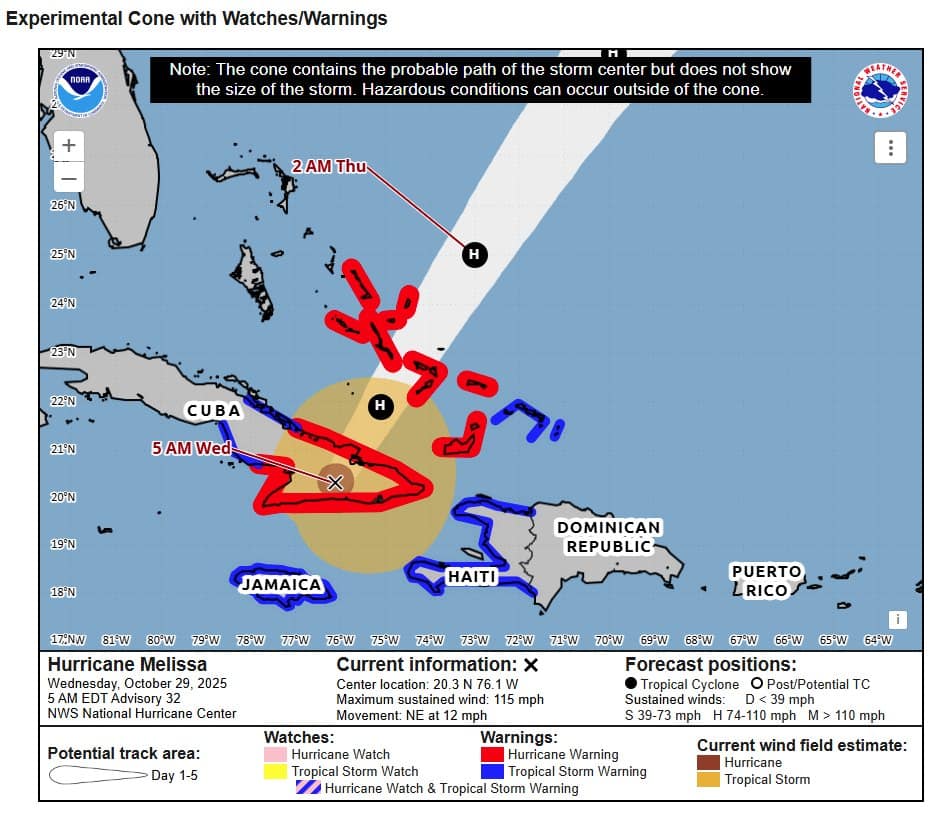
Hurricane Melissa, a formidable Category 5 storm, continues to wreak havoc across eastern Cuba and is poised to advance into the southwestern Atlantic. The National Hurricane Center has issued urgent warnings of catastrophic winds, torrential rainfall, and perilous storm surges affecting multiple Caribbean nations. The US National Oceanic and Atmospheric Administration (NOAA) released its latest advisory at 5:00 am local time on Wednesday, underscoring the severe dangers posed by the hurricane. In Jamaica, authorities have implored residents to stay indoors, citing risks of downed power lines, flooding, and other hazards. Safety measures include proper generator ventilation to prevent carbon monoxide poisoning and cautious clean-up operations. Haiti and the Dominican Republic are bracing for devastating flash floods and landslides, with Haiti’s communities likely to be cut off due to extensive damage. Eastern Cuba is enduring life-threatening storm surges and flash floods, with hurricane-force winds battering the region. The Bahamas and Turks and Caicos are also on high alert, with hurricane conditions, heavy rainfall, and storm surges expected. Bermuda, though farther from the storm’s core, may face hurricane conditions and heavy rainfall by Thursday. NOAA forecasters have emphasized that Hurricane Melissa remains a grave threat, urging residents in affected areas to take all necessary precautions.
-

COMMENTARY: Rising from Ruin: Turning Caribbean Pain into Power
The Caribbean, though small in size, embodies an indomitable spirit. Despite enduring the ravages of Hurricane Melissa in Jamaica and a soul-shaking earthquake in Antigua, the region faces not only natural disasters but also political and social upheaval. Cuba and Venezuela are ensnared in geopolitical tensions, while CARICOM’s unity is strained as Trinidad and Tobago steps away from shared regional commitments. Amidst this turmoil, the Caribbean stands at a crossroads of anguish and awakening, yet within this chaos lies a profound opportunity for transformation. Dr. Isaac Newton, a renowned strategist and scholar, calls for a shift from reactive politics to proactive, functional solidarity. He advocates for the creation of Flexible Solidarity Networks, uniting scientists, faith leaders, educators, and entrepreneurs to act swiftly across borders during crises. Regionalism must transcend rhetoric and manifest in shared action, ensuring that the Caribbean becomes the architect of its own protection. Innovation, too, must play a pivotal role. Dr. Newton proposes a Resilience Incubator Initiative, fostering collaboration among universities, youth innovators, and diaspora investors to fund climate-smart agriculture, digital entrepreneurship, and renewable energy projects. The Caribbean’s wealth of intellect and ideas, when integrated, can turn crisis into a catalyst for progress. Diplomatically, the region must embrace Ethical Realignment Diplomacy, grounding foreign policy in truth, transparency, and mutual respect. The Caribbean must resist being drawn into the ambitions of larger powers, asserting its sovereignty and moral voice. Healing the region’s soul is equally crucial. Dr. Newton envisions a Caribbean Emotional Renewal Project, leveraging culture, faith, and mental well-being as pillars of renewal. Education must cultivate wise citizens, and leadership must inspire as well as govern. The Caribbean’s history of resilience—from slavery to colonialism to natural disasters—proves its capacity for rebirth. Unity, wisdom, and compassion must guide the region as it rises from the ashes of ruin, not as victims but as visionaries of destiny. Pain, when transformed by purpose, becomes power, and the Caribbean’s greatest storms may yet birth its greatest strength.
-
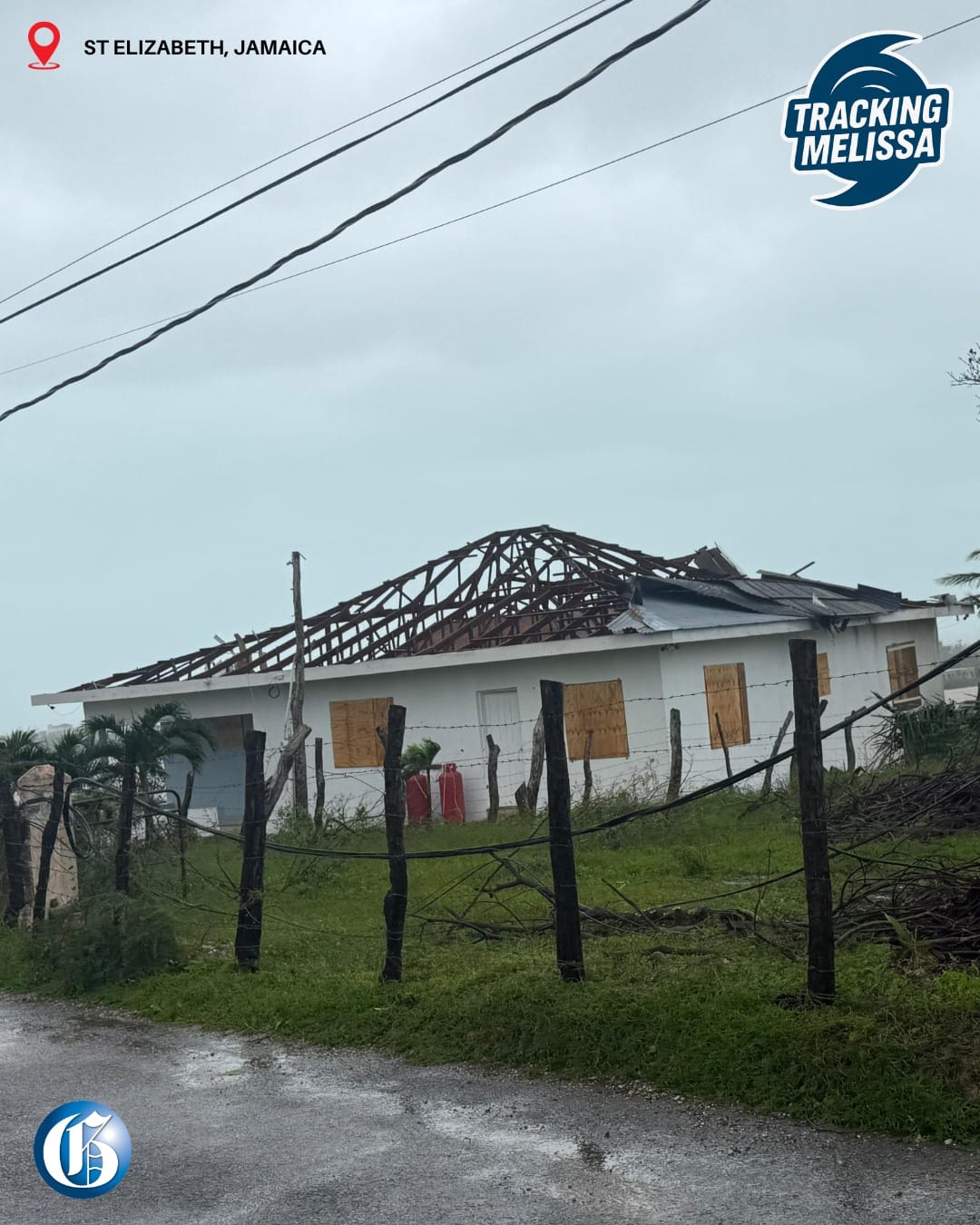
Jamaicans wake to devastation as hurricane causes floods, power cuts and splits city in two
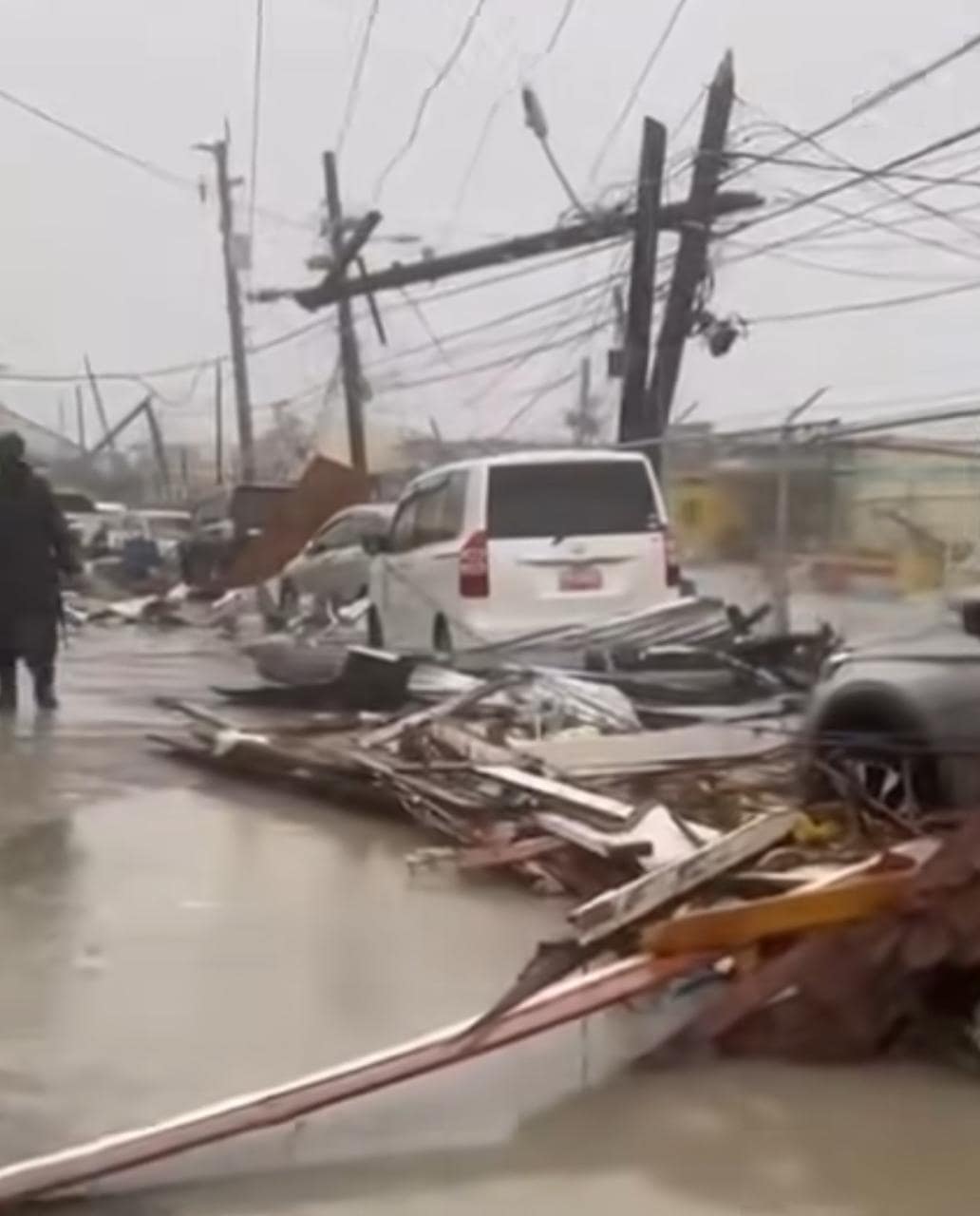
Jamaica awoke to a grim reality this morning as Hurricane Melissa, the most powerful storm to hit the island in modern history, left behind a trail of devastation. Nearly three-quarters of the country is without electricity, and extensive flooding has submerged entire communities, particularly in the western regions. Prime Minister Andrew Holness declared the island a ‘disaster area,’ emphasizing the ‘devastating impacts’ on infrastructure, including hospitals, homes, and businesses. While no fatalities have been confirmed, the true scale of the destruction remains unclear due to crippled communication networks. Local officials described the aftermath as resembling ‘the scene of an apocalypse movie,’ with floodwaters reaching the roofs of two-story homes and rescue teams struggling to reach trapped families. Montego Bay, a tourism hub, was split in two by floodwaters, and the agricultural heartland of St. Elizabeth, known as Jamaica’s breadbasket, faces significant crop losses. Hurricane Melissa, which intensified rapidly due to abnormally warm Caribbean waters linked to climate change, has now moved on to Cuba, leaving Jamaica to grapple with the monumental task of recovery. The country’s catastrophe bond offers some hope for rebuilding, but the immediate challenges are immense.
-
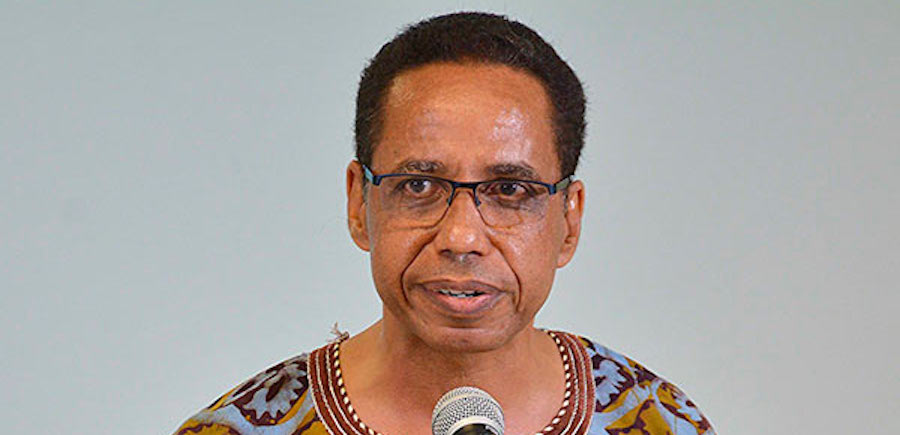
Bajan students in Jamaica accounted for as Hurricane Melissa batters island
All 41 Barbadian students in Jamaica have been confirmed safe and securely accommodated as Hurricane Melissa, a Category 5 storm, made landfall on the island. Ambassador to CARICOM, David Comissiong, provided this assurance on Tuesday, just before the hurricane struck with unprecedented wind speeds of 185 miles per hour and heavy rainfall. While 26 students were evacuated on short notice, others remained safely sheltered at the University of the West Indies’ Mona Campus and a hotel in Kingston, the island’s capital. Comissiong emphasized that the situation in Kingston, where most students are based, remained stable, with Barbados’ honorary consul in Jamaica maintaining constant communication with the students. Some students were flown back to Barbados via a special flight arranged by the government, though the tight timeline of just four hours meant not all could be accommodated. Rakeia Mayers-Parris, Public Relations Officer of the Barbados Student Association of Jamaica (BSAJ), recounted her experience of receiving a last-minute call for an afternoon flight back home. She praised the government’s swift action, noting that those unable to evacuate were provided safe accommodations at hotels. Despite reports of infrastructure damage and flooding at the UWI Mona Campus, Comissiong assured that the Foreign Ministry is closely monitoring the situation and maintaining contact with both students and Jamaican authorities. The BSAJ expressed profound gratitude to the government and all individuals involved in ensuring the students’ safety, highlighting the efforts of Foreign Minister Kerrie Symmonds, Director General of Foreign Affairs Donna Forde, and Honorary Consul Winston Bayley.
-
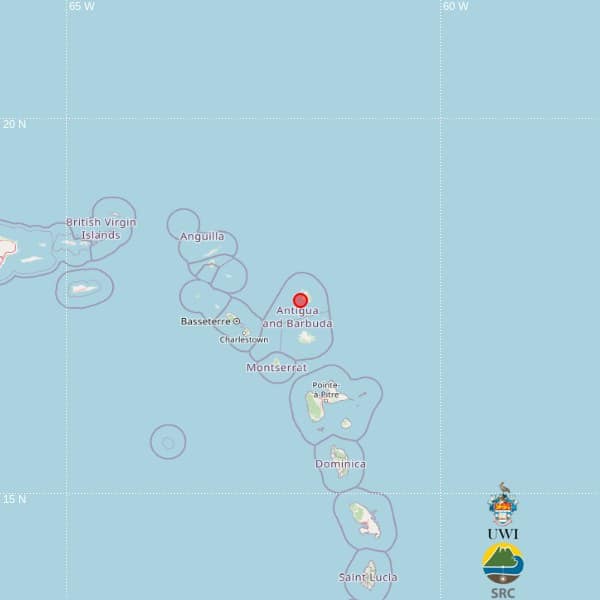
Three Earthquakes Recorded Near Antigua and Barbuda
The northeastern Caribbean experienced a sequence of moderate earthquakes between late Tuesday night and early Wednesday morning, as reported by the UWI Seismic Research Centre (SRC). This latest seismic activity adds to a series of tremors that have recently affected the region. The first earthquake, with a magnitude of 3.9, occurred at 10:04 p.m. local time on October 28, approximately 52 kilometers north of St. John’s, Antigua and Barbuda, at a depth of 22 kilometers. A second tremor, measuring 3.8, was recorded at 12:13 a.m. on October 29, located 261 kilometers east-southeast of Antigua, at a shallow depth of 10 kilometers. The third and most powerful quake, with a magnitude of 4.1, struck at 2:42 a.m., about 282 kilometers east of Antigua, also at a depth of 10 kilometers. All events were automatically detected by the SRC’s monitoring systems, which noted that these initial readings are provisional and may be updated following further analysis. Fortunately, there have been no reports of damage or injuries. The SRC has encouraged residents who felt the tremors to share their experiences to aid in ongoing research and analysis.
-
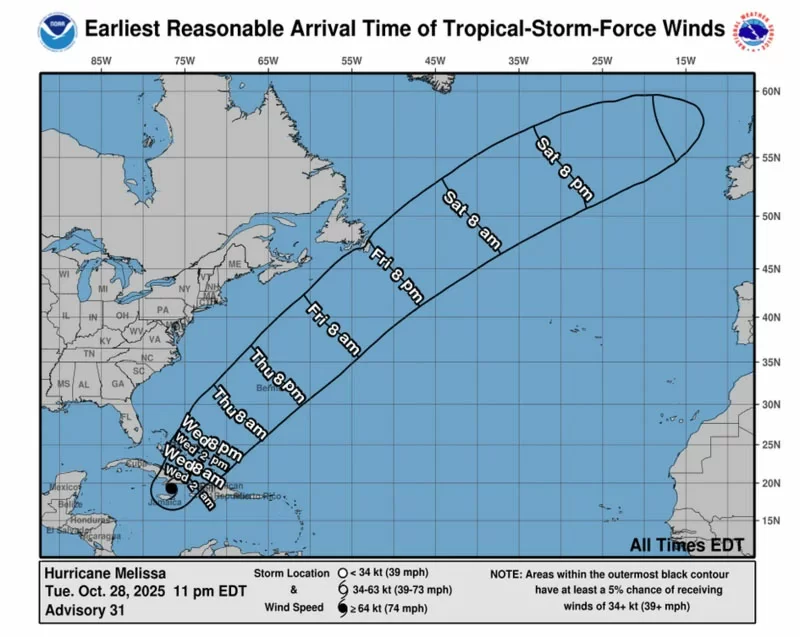
Gevaar nasleep orkaan Melissa in Jamaica, orkaan nadert Cuba
Jamaica is reeling from the devastating impact of Hurricane Melissa, a Category 5 storm that struck the island on Tuesday with wind speeds reaching up to 295 km/h. The hurricane unleashed torrential floods, powerful gusts that ripped roofs off buildings, and triggered landslides, claiming at least three lives and leaving tens of thousands without power. Prime Minister Andrew Holness emphasized the unprecedented strength of the storm, stating that no infrastructure could withstand such force and that recovery efforts would be monumental. The southwestern region, particularly St. Elizabeth, bore the brunt of the destruction, with widespread flooding and severe damage reported. Many families were trapped in their homes as emergency services struggled to navigate the perilous conditions. Approximately 15,000 people sought refuge in shelters, while 77% of households were left without electricity. Four major hospitals sustained damage, with one losing power entirely, necessitating the evacuation of 75 patients. Hurricane Melissa set multiple records, with a barometric pressure of 892 millibars and wind speeds of 298 km/h, rivaling historic storms like the 1935 Labor Day hurricane and Hurricane Dorian in 2019. The storm also generated life-threatening storm surges of up to 4 meters. As Melissa moved toward Cuba on Tuesday evening, Cuban authorities braced for heavy rainfall of up to 51 centimeters and significant coastal flooding. President Miguel Díaz-Canel urged citizens not to underestimate the storm’s power, and thousands were evacuated from eastern provinces. The U.S. Defense Department released footage from Hurricane Hunter flights, which provided critical data to the National Hurricane Center. The storm claimed seven lives across the Caribbean, including three in Jamaica. Jamaican officials warned of ongoing dangers, such as the potential displacement of crocodiles due to flooding, and prepared boats and helicopters for rescue operations post-storm. International aid organizations are poised to deliver food, medicine, and other emergency supplies. Jamaica’s airports are expected to reopen by Thursday, contingent on damage assessments.
-
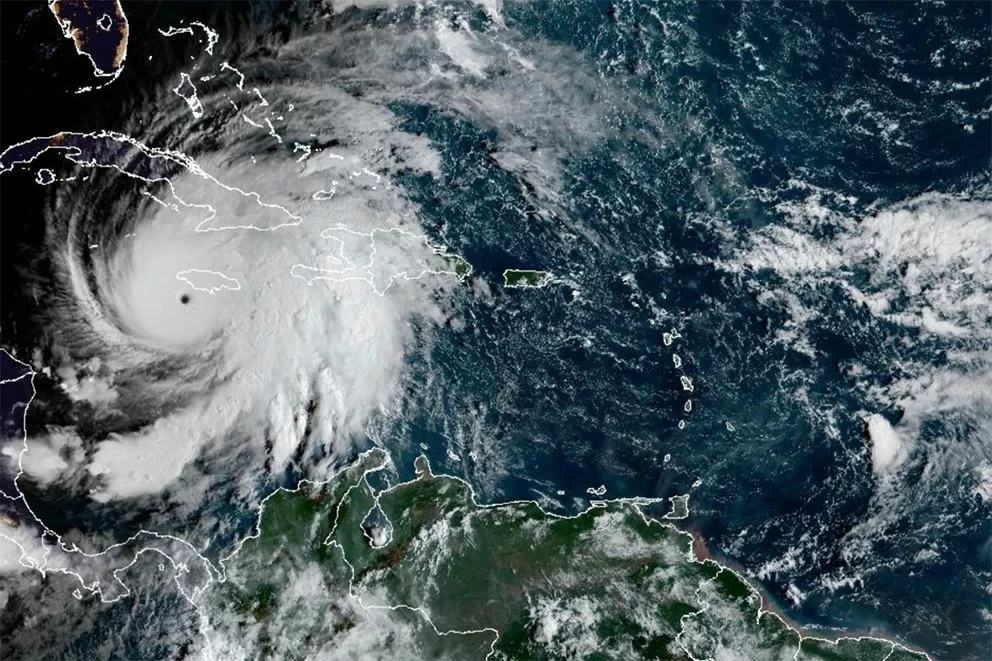
Melissa is beest te midden van reeks monsterlijke Atlantische stormen
Hurricane Melissa, a Category 5 storm, made landfall in Jamaica on Tuesday with unprecedented wind speeds of 298 km/h, matching historical records. This extraordinary hurricane defied typical meteorological patterns, intensifying even as it approached land, a phenomenon that left scientists both baffled and concerned. Melissa’s rapid intensification—gaining 113 km/h in wind speed within 24 hours—was fueled by unusually warm Atlantic waters, a direct consequence of climate change, according to experts.
Phil Klotzbach, a hurricane researcher at Colorado State University, described Melissa as ‘a remarkable storm, just a beast.’ The hurricane’s wind speeds and air pressure matched records set by the deadly 1935 Labor Day storm in Florida and Hurricane Dorian in 2019. Unlike typical hurricanes, Melissa did not weaken during an eyewall replacement cycle, a process that usually tempers storm intensity. Instead, it maintained its strength, even lingering near Jamaica’s mountainous terrain, which typically disrupts storms.
Bernadette Woods Placky, chief meteorologist at Climate Central, emphasized the role of warm ocean waters in Melissa’s intensity. ‘The storm seemed to effortlessly ventilate itself,’ she noted, highlighting the unusually deep and warm waters that provided continuous fuel for the hurricane. Melissa’s rapid intensification occurred in five six-hour periods, a rare and alarming pattern.
Climate Central’s analysis suggests that the warming of ocean waters, driven by human-induced climate change, made the conditions for Melissa’s formation 500 to 700 times more likely. This aligns with a broader trend: since 2016, there have been 13 Category 5 hurricanes in the Atlantic, a significant increase compared to previous decades. While hurricane records from the pre-satellite era are less reliable, the data underscores a clear link between climate change and the intensification of storms.
As the world continues to warm, experts predict more powerful hurricanes, even if the total number of storms does not increase. ‘When these storms move over extremely warm water, it’s extra fuel for rapid intensification and record-breaking events,’ Woods Placky concluded.