分类: sports

  • Fearsome France begin World Cup wary of overconfidence

    Fearsome France begin World Cup wary of overconfidence

    EAST RUTHERFORD, U.S. – As top-tier favorites gunning for their third FIFA World Cup title following back-to-back final appearances, France faces a stern opening test against Senegal on Tuesday – a fixture that carries decades-old warnings of how overconfidence can derail even the most talented squads.

    The echoes of 2002 still ring in French football memory. Entering that Japan and South Korea-hosted tournament as heavy favorites to defend their 1998 crown, Les Bleus suffered a devastating 1-0 opening defeat to Senegal in Seoul. Plagued by a key injury to legendary playmaker Zinedine Zidane, France never bounced back, crashing out of the group stage in humiliating fashion without registering a single goal across three matches.

    Didier Deschamps, who captained France’s 1998 World Cup-winning and 2000 European Championship-winning squads before retiring from international play, was not part of that 2002 disappointment. Now, 22 years later, the 55-year-old manager stands on the cusp of ending an unprecedented 11-year tenure in charge of the national side, stepping down from his post once this tournament concludes. Deschamps understands better than most that the mindset his star-studded squad brings to their opening kickoff at MetLife Stadium, with Manhattan’s iconic skyline visible just beyond the stadium walls, will make all the difference.

    Speaking to reporters on the eve of the match at the venue, Deschamps emphasized that while the opening fixture carries significant weight, it is not make-or-break for France’s campaign. “Starting with a win in a four-team group is ideal and always the objective,” he said. “But the one thing we can’t measure or quantify is the emotional aspect. Some players might tense up with the atmosphere around the match. The ideal thing is to be focused but also relaxed.”

    Deschamps was clear in his assessment of Tuesday’s opposition, calling Senegal “a very, very high-level opponent.” He also reaffirmed the discomfort he expressed weeks earlier with widespread media and fan predictions that France will automatically advance to the July 19 tournament final. “People are already talking about us being there on July 19 and I don’t really like that, not at all in fact,” he said. “Yes we might be one of the best teams, but I know only too well that there are important steps before you can think about going that far.”

    France touched down at their U.S. training base in Boston last Wednesday, coming off a confident 3-1 victory over Northern Ireland in their final warm-up friendly that saw young standout Michael Olise net a hat-trick. Even so, the side received a wake-up call just days before that win, dropping their first match in a full year with a 2-1 home defeat to Ivory Coast.

    Over the past seven World Cup tournaments, France has advanced to the final four times, lifting the trophy twice and falling just short twice, both losses coming via penalty shootout. They claimed the title in 2018 in Russia, then lost a dramatic final to Argentina on penalties in the 2022 Qatar edition.

    Since Qatar, Les Bleus have integrated a wave of exciting new talent into their squad, headlined by Olise. The London-born Bayern Munich playmaker is set to feature in the number 10 role, forming a devastating attacking trio alongside Ballon d’Or winner Ousmane Dembele on the right flank and captain Kylian Mbappe leading the line up front.

    Mbappe, the Real Madrid superstar, will earn his 99th cap against Senegal and enters the match level with Brazilian legend Pele as the sixth-highest all-time leading goal scorer in World Cup history, with 12 goals. Only Miroslav Klose, Ronaldo Nazario, Gerd Mueller, Just Fontaine, and Lionel Messi sit above Mbappe on the rankings. The French captain netted four goals in 2018 and eight more in 2022, including a historic hat-trick in the Qatar final.

    France’s depth in attack is one of their biggest strengths, with additional options including Rayan Cherki, Bradley Barcola, Desire Doue, Marcus Thuram, Jean-Philippe Mateta and Maghnes Akliouche. At the back, William Saliba and Dayot Upamecano form one of the tournament’s most physically imposing center-back pairings, while Aurelien Tchouameni of Real Madrid anchors a hard-tackling, dynamic midfield.

    Veteran midfielder N’Golo Kante, 35, is one of just three remaining members of the 2018 World Cup-winning squad in this year’s roster, and he says the current campaign feels like a entirely new experience. “This is my second World Cup. In 2018 it was all new and it was beautiful to win it. This time it’s different,” he said. “We have new players, but it is still just as beautiful. And I really want to make the most of it and win again.”

    Ranked among the top four teams in the FIFA rankings, France earned a seeded spot in the draw, but their path out of Group I is far from guaranteed. After facing Senegal, they will take on underdog Iraq before closing out group play against Erling Haaland’s Norway – a tough group where even a moment of complacency can lead to early elimination.

    The full slate of matches scheduled for Tuesday kicks off with the France-Senegal clash at 2:00 pm local time, followed by Iraq against Norway at 5:00 pm. In Group J, Argentina will face Algeria at 8:00 pm, and Austria will take on Jordan at 11:00 pm.

  • Infantino celebrates ‘1 million fans’ so far at World Cup matches

    Infantino celebrates ‘1 million fans’ so far at World Cup matches

    LOS ANGELES – Just six days after the historic expanded 48-team FIFA World Cup kicked off across the United States, Canada and Mexico, FIFA President Gianni Infantino announced a striking early milestone: more than one million fans have already passed through stadium turnstiles to watch the tournament’s matches.

    Infantino shared the milestone with his social media followers on Instagram Tuesday, expressing enthusiastic gratitude for the ongoing turnout from fans around the world. “Wow! 1 million fans in stadiums!” he wrote in the post, adding that the packed crowds had turned this iteration of the men’s World Cup into the most inclusive edition in the tournament’s history. “A huge thank you to all our passionate supporters who continue to fill the stadiums — you have brought the most inclusive FIFA World Cup to life,” his post read.

    As of Infantino’s announcement, 16 of the tournament’s 104 total scheduled matches have been completed across the three host nations. The landmark 1 million fan mark comes despite widespread controversy that marred the lead-up to the first-of-its-kind expanded World Cup. Leading up to kickoff last Thursday, tournament organizers faced fierce backlash over exorbitant match ticket prices that put attendance out of reach for many casual fans. Additionally, strict U.S. visa entry policies created significant barriers for fans from several countries, preventing many supporters from traveling to the North American tournament to see their teams compete.

    The early attendance milestone offers a point of optimism for FIFA as the tournament enters its second week of group-stage play, even as organizers continue to address the pre-existing concerns that overshadowed the tournament’s opening.

  • USADA rips WADA over plan for test changes at big events

    USADA rips WADA over plan for test changes at big events

    LOS ANGELES, U.S. – A fierce debate over the future of global anti-doping governance has erupted this week, as the head of the United States’ national anti-doping body has publicly condemned sweeping reforms proposed by the World Anti-Doping Agency (WADA), arguing the changes would undermine independent testing and put the integrity of major international competitions — including the 2028 Los Angeles Olympic Games — at risk.

    The controversial proposals come as part of a 19-point set of recommendations released by WADA’s own Working Group on National Anti-Doping Organizations Operational Independence (WGOI), convened to address longstanding concerns about perceived conflicts of interest in global anti-doping testing protocols. The working group’s report notes that many stakeholders, including competing athletes, have raised red flags over a system that leaves national anti-doping organizations (NADOs) solely responsible for testing their own country’s top international athletes. To resolve this perceived bias, the report proposes a new structural framework that reassigns core testing responsibilities away from host nation NADOs and grants expanded authority to international sport federations and independent third-party bodies during major events.

    Under the 19th and most contentious recommendation, host nation anti-doping bodies would be completely sidelined from testing their own country’s athletes at major events held on home soil. All key functions — from developing and monitoring testing plans, to selecting athletes for screenings, to administering tests and managing result analysis — would be transferred out of NADO hands, to be taken over by what the report frames as an “independent, non-partisan body.” The working group argues this restructuring will eliminate both actual and perceived conflicts of interest, strengthen the global anti-doping system as a whole, and rebuild trust among competing athletes.

    But the proposal has drawn sharp pushback from Travis T. Tygart, Chief Executive Officer of the United States Anti-Doping Agency (USADA). In a formal statement released Tuesday, Tygart denounced the plan as a dangerous retreat from independent anti-doping enforcement, arguing that WADA leadership is pushing aside truly independent national bodies to hand testing control back to sport governing bodies and private service providers.

    “This is a dangerous step backwards that risks compromising the fairness of major events and athletes’ fundamental right to fair competition,” Tygart said. He added that framing the restructuring as progressive reform is a deliberate attempt to mislead clean athletes, sports fans and the general public, who he says deserve a system built on real independence and accountability, not one that shields sports governing bodies from public scrutiny and lets the global anti-doping watchdog avoid accountability for its own decisions.

    Tygart’s criticism is echoed by top U.S. policy officials. He highlighted a public letter released Monday by Sara Carter, director of the White House Office of National Drug Control Policy, which raised urgent alarms that the reforms would weaken the authority of national anti-doping organizations and erode public confidence in doping testing in the lead-up to the 2028 Summer Olympics, set to be hosted in Los Angeles. Carter called on WADA to abandon plans to use the WGOI report as a foundation for rewriting core rules of the global anti-doping program.

    For Tygart, the proposed overhaul is more than just a bad policy shift — it is a deliberate insult to clean athletes and all countries that consistently and fairly enforce global anti-doping rules. The standoff sets the stage for a high-stakes debate over the future of anti-doping governance just two years before the Los Angeles Games, a competition that will be under intense global scrutiny for its handling of performance-enhancing drug violations.

  • Belgium fight back to draw with Egypt in World Cup group game

    Belgium fight back to draw with Egypt in World Cup group game

    SEATTLE, Wash. – The opening Group G match of the 2026 FIFA World Cup delivered a tense 1-1 draw between European powerhouse Belgium and African side Egypt on Monday, as a late second-half own goal erased Egypt’s early lead and spoiled a potential birthday fairytale for Egypt’s star forward Mohamed Salah.

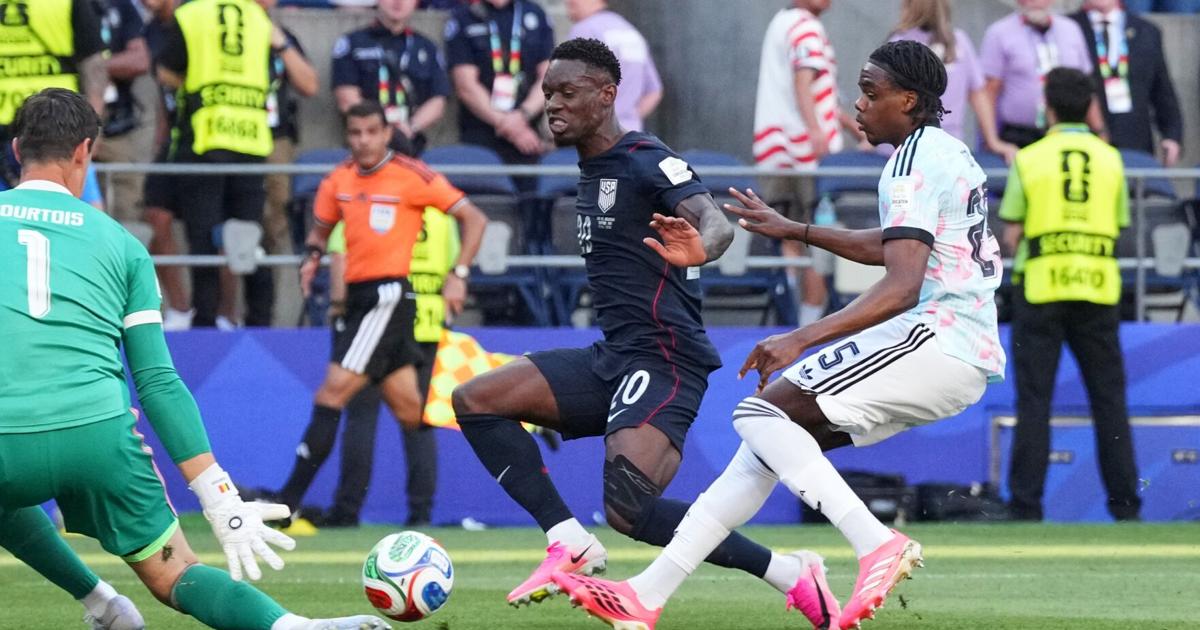
    Played in front of a packed crowd in the Pacific Northwest, the match got off to a surprising start when 26-year-old midfielder Emam Ashour broke the deadlock just before the first-half hydration break. Picking up the ball in nearly the same position where Kevin De Bruyne had launched an early dangerous effort just minutes prior, Ashour fired a perfectly placed strike into the bottom-right corner of the net, leaving Belgian goalkeeper Thibaut Courtois with no chance to make a save. This historic goal marked only the second time in Egypt’s World Cup history that the North African nation has held a lead in a tournament match, with the first coming from Salah himself in a 2-1 loss to Saudi Arabia at the 2018 World Cup.

    The result leaves Egypt’s long-running search for its first-ever World Cup win intact, a drought that has stretched across four appearances in the global tournament. Egypt, a seven-time winner of the Africa Cup of Nations, still has Group G fixtures upcoming against Iran and New Zealand, leaving the squad optimistic that it can break its long-standing hoodoo on North American soil.

    “We know Belgium are a good team with high-quality players, but we don’t treat this match as harder or easier than any other. We go into every game aiming to take all three points,” said 18-year-old Barcelona forward Hamza Abdelkarim, one of Egypt’s rising young talents.

    For Belgium, the draw extends a winless drought that now spans three consecutive World Cup matches dating back to their group-stage exit from the 2022 tournament in Qatar. This World Cup is widely viewed as the final shot at glory for the remaining core of Belgium’s celebrated golden generation, who claimed a third-place finish at the 2018 Russia World Cup but have never lifted the sport’s biggest trophy. Veterans De Bruyne, Courtois, and all-time leading Belgian goalscorer Romelu Lukaku remain key figures in manager Rudi Garcia’s 2026 squad.

    “Opening matches at a tournament as big as the World Cup are always a huge test, especially when you’re up against one of the top-ranked teams on the African continent,” Garcia told reporters after the match. “We were able to find the equalizer through a substitute, which just goes to show how critical every member of the squad is for success this tournament.”

    All eyes going into the match were fixed on the clash between two of world football’s biggest superstars: Salah and De Bruyne. It was De Bruyne who created the first clear chance of the game in the seventh minute, pulling a sharp, powerful effort just wide of the goal. Early in the second half, the Belgian playmaker came even closer to leveling the score, whipping a close-range free kick over Egypt’s defensive wall that crashed off the outside of the post, inches away from going in.

    At the other end of the pitch, Salah responded with a dangerous chance of his own, slipping into the Belgian penalty box unmarked to connect with a downward header that was pushed away by a quick reaction from Courtois. Ashour rushed in for the follow-up but misfired on the attempt, leaving Egypt’s lead intact through the hour mark. As the half wore on, the game opened up, with both sides creating multiple close opportunities, including a blistering left-footed volley from Belgian captain Youri Tielemans that went off target.

    In the 65th minute, Garcia made the game-changing substitution, bringing Lukaku off the bench to add attacking pressure. The change paid off almost immediately: when right back Thomas Meunier sent a cross into the Egyptian penalty area, Lukaku’s aggressive run toward the six-yard box forced Egyptian defender Mohamed Hany to misplay the ball, knocking it into his own net for the Belgian equalizer.

    With 15 minutes left to play, Egypt made a tactical substitution of their own, removing Salah to shore up their defense and protect the 1-1 scoreline. The gambit worked, as Egypt held off late Belgian pressure to secure a valuable point in their opening group fixture.

  • HEROES WEAR CAPES

    HEROES WEAR CAPES

    ATLANTA, Ga. – European champions Spain kicked off their 2024 FIFA World Cup campaign with an underwhelming goalless stalemate against World Cup debutants Cape Verde on Monday, yet manager Luis de la Fuente remains adamant his side is still poised to make a deep run in the tournament.

    Playing in front of nearly 70,000 fans at Atlanta Stadium, La Roja struggled to generate meaningful offensive chances against the 67th-ranked underdog, with the absence of a fully fit Lamine Yamal weighing heavily on their attacking output. The 18-year-old Barcelona star, returning from a recent injury, was only deemed fit enough for a second-half substitute appearance, and his introduction immediately injected much-needed energy into Spain’s flat attacking play. Even so, Cape Verde neutralized Yamal’s impact by deploying multiple defenders to mark him whenever he touched the ball, cutting off his space to create danger.

    Another of Spain’s high-impact attacking threats, Nico Williams of Athletic Bilbao, was also held in reserve until the 87th minute, as the winger has worked through an injury-interrupted club season. De la Fuente acknowledged after the match that his side lacked sharpness and dynamic energy in the opening fixture. “We lacked freshness and precision,” the manager told reporters. He added, “We are completely calm, convinced that there is a long way to go. As we see it, we have seven games left.”

    The underwhelming performance echoes painful past disappointments for Spain at the World Cup: the side exited in both 2018 against Russia and 2022 against Morocco, falling on penalties after dominating possession but failing to find the back of the net. Even with the underwhelming start, the result extended Spain’s impressive unbeaten streak across competitive matches to 32, a run that dates back to March 2023. When asked about the streak, de la Fuente downplayed its immediate relevance, joking “Tomorrow I’ll bring up that magic number.”

    The manager emphasized that Spain will remain committed to their possession-based playing philosophy, and that once key injured players return to full fitness and sharpness, the side will find its rhythm as the tournament progresses. “They are two game-changing players, but the ones we’ve had on the pitch are too. They bring different qualities to the table,” de la Fuente said of Yamal and Williams. “They will provide new options and the team will continue to grow. What we need to do is find our rhythm and the decisive touch required for this type of competition, which I have no doubt we will acquire.

    “Lamine showed exactly what he’s capable of the moment he stepped onto the pitch, forcing the opposition to change their approach, but that was the amount of playing time we felt was right for him,” he continued. “Once we regain our chemistry and competitive edge, the team will be even better.”

    Spain will stay in Atlanta for their second Group H fixture against Saudi Arabia this coming Sunday, before wrapping up group stage play against Uruguay in Guadalajara.

  • Ainstein steps down as Waterhouse head coach

    Ainstein steps down as Waterhouse head coach

    Two major coaching and leadership changes have shaken up Jamaica’s top-tier football landscape this week, bringing sudden adjustment to two competing clubs ahead of the upcoming domestic season.

    On Tuesday, Kingston-based Waterhouse FC, a former Jamaican national club champion, confirmed in an official statement that head coach Javier Marcelo Ainstein has stepped down from his post with immediate effect. The Argentine becomes the second top-flight head coach to resign in the span of a week, following former Chapelton Maroons head coach Donovan Duckie, who vacated his role last week.

    Ainstein’s tenure at Waterhouse was short but eventful: he took the helm at the club back in January, after the organization dismissed long-serving manager Marcel Gayle. Under his leadership, the club secured a spot in the Jamaica Premier League (JPL) playoffs, though their run ended in the quarterfinals with a defeat to Cavalier SC. The club’s statement expressed gratitude for Ainstein’s contributions during his time in charge, acknowledging the effort and dedication he brought to the role, and extended well wishes for his future career projects.

    Far from waiting to address the sudden vacancy, Waterhouse’s governing board has already begun the process of finding a replacement to keep the club’s operations on track. “The Board of Management has already initiated plans to ensure continuity within the club’s football operations as preparations continue for the upcoming season,” the statement read, signaling the club’s priority on maintaining stability through the transition.

    In a separate leadership restructuring move, Montego Bay United (MBU) has announced that current head coach Xavier Gilbert will be promoted to the newly created position of technical director, effective July 1. Unlike his previous role, Gilbert will report directly only to the club’s chairman and board of directors.

    Though MBU fell short of its stated seasonal goals — claiming the JPL title and qualifying for regional CONCACAF club competition — the club framed the restructuring as a strategic step to streamline its program. The new role will create a centralized, unified leadership structure for all of the club’s football activities, with clear accountability at every operational level.

    In his new capacity, Gilbert will own full responsibility for the club’s overall football strategy, and take oversight of every football-related department: that includes the senior men’s and women’s squads, the youth academy covering age groups from under-5 to under-18, scouting and recruitment across local, regional and global talent markets, and the club’s official representation with both Professional Football Jamaica Limited (PFJL) and the Jamaica Football Federation (JFF).

    Reporting by Paul A Reid

  • ‘Back on track’

    ‘Back on track’

    Two years after their last home T20 International series victory, the West Indies men’s cricket team has broken their drought, defeating Sri Lanka 2-1 in a dramatic three-match series that head coach Daren Sammy calls a critical stepping stone toward the 2028 ICC T20 World Cup hosted in Australia.

    The deciding third match at Kingston’s Sabina Park on Sunday delivered all the tension and drama that has become synonymous with elite T20 cricket. After young fast bowler Shamar Joseph delivered a sensational maiden five-wicket haul to bowl Sri Lanka out for just 169, the Windies found themselves in deep trouble early in their chase, slumping to 54 runs for the loss of four top-order wickets.

    What followed was a controlled, match-saving stand that turned the tide of the game. Jamaican captain Rovman Powell and all-rounder Sherfane Rutherford forged a crucial 81-run partnership that steadied the West Indies innings and brought the target back within reach. With late runs still needed, veteran all-rounder Jason Holder delivered a blistering finish, smashing 21 runs off only five deliveries to guide the Caribbean side across the line with two full deliveries remaining. Rutherford closed the innings unbeaten on 54, while Powell contributed a steady 33 to the match-winning effort.

    In a post-match press conference, Sammy praised the team’s disciplined, intelligent approach to the pressure game, singling out the match-winners for special credit. “It was a lot more thoughtful and smarter cricket, especially by Rovman and Sherfane and followed by Jason Holder,” he said. “But I think the game was set up front when we bowled — Shamar Joseph, he continues to impress. We needed a victory. It’s been a while since we won a T20 series at home in front of the Jamaican fans, I know they wanted a victory for us so I’m glad that we could finish the series on a high.”

    Joseph, who was honored with both player-of-the-match and player-of-the-series honors after finishing the three matches with a stunning 11 wickets, said he was just focused on doing his job for the team. “I just enjoy taking wickets, I cannot ask for better coming out here, that’s my job,” he said. “Bowling in the death is one of the hardest overs to bowl in any T20 game so coming and executing and getting wickets, I enjoy it. Sometimes we fall short but we always bounce back. It’s the West Indies at the end of the day, we play good cricket and T20 is our game.”

    This series win marks a key milestone for the West Indies program: it is their first T20I series victory since their quarter-final exit from the 2024 T20 World Cup in March, and their first home T20I series win since they defeated South Africa at Sabina Park earlier in 2024.

    Sammy acknowledged that the team still has room to improve as they build toward the 2028 World Cup, but emphasized that the win and the manner of the comeback is a promising foundation for future progress. “You could have a plan in the dressing room, but you’ve got to go out there and be able to execute the plan, and today we did that more often than not and it was enough to win the series,” he said. “Still areas and skills we’ve got to develop, but it’s something that we as the coaching staff and players will continue to work on. Getting a series win after, I think, almost two years is something to be proud especially after a World Cup and building for Australia 2028. Being under pressure today and having the nerve and the calm and the cricket smarts to do what it takes to come out over the line, that was special.”

    Following the win, most members of the squad departed Jamaica on Monday to shift focus to the next stage of the tour: a two-match Test series against Sri Lanka hosted in Antigua. The first Test is scheduled to get underway next Thursday.

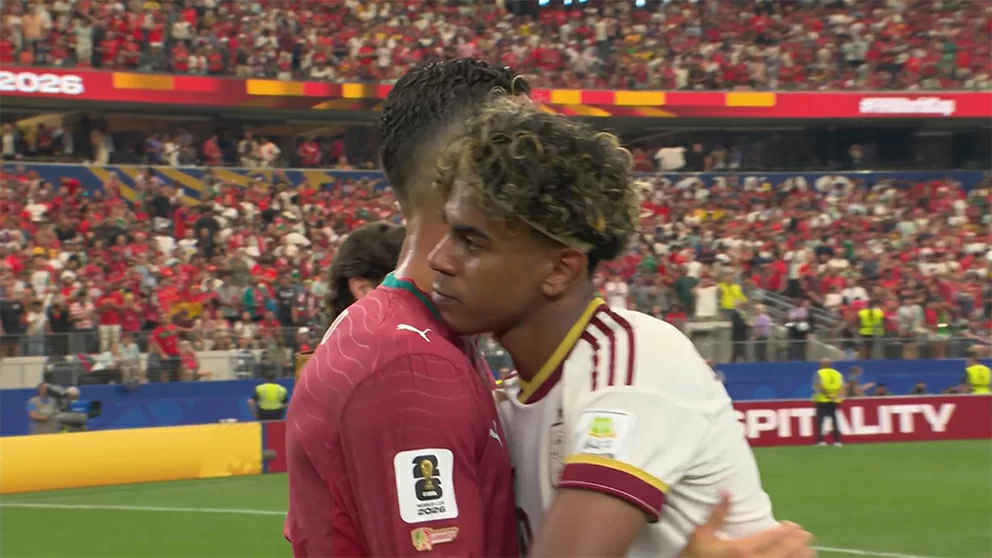
  • Mbappe double fires France to opening win over Senegal

    Mbappe double fires France to opening win over Senegal

    In a sun-drenched World Cup Group I clash played in front of 80,545 spectators with Manhattan’s iconic skyline glinting in the distance, two-time World Cup champions France kicked off their quest for a third global title with a hard-fought 3-1 victory over 2021 Africa Cup of Nations winners Senegal on Tuesday.

    The match carried echoes of 22 years ago, when a heavily-favored French side suffered a humiliating opening-round defeat to Senegal at the 2002 World Cup that sent them crashing out in the group stage without a single goal. This time, Senegal looked set to repeat history after dominating the opening 45 minutes, but a half-time tactical adjustment from France head coach Didier Deschamps unlocked the game, turning the tide in the European side’s favor.

    Senegal, led by veteran star Sadio Mane and fielding four starting players born in France, entered the clash fresh off a controversial end to their Africa Cup of Nations title defense. Pape Thiaw’s side lifted the AFCON trophy in extra time earlier this year, only to be stripped of the title after a player walk-off protest mid-match; an appeal against the decision remains pending, and the side showed little rust in their first competitive match since the final.

    The African side dominated the first half, coming inches from taking the lead just 25 minutes in. Nicolas Jackson broke clear on a counter-attack, fired a shot that crashed off the post, and the deflection bounced off French goalkeeper Mike Maignan before rolling narrowly wide of the goal. Ismaila Sarr then wasted a golden chance to open the scoring in first-half stoppage time, sending a clear effort over the crossbar – misses that would come back to haunt Senegal later.

    Deschamps’ critical half-time switch saw Michael Olise shift infield from the right wing, swapping positions with Ousmane Dembele, and the tactical change immediately transformed France’s performance. The reigning champions burst into life after the break, with Olise testing Senegal keeper Edouard Mendy before setting up Kylian Mbappe for a close-range attempt that was turned away. A potential penalty on the hour mark, when Mbappe went down under a challenge from Mane, was waved away by referee Alireza Faghani after a VAR review, but France would not be denied.

    In the 66th minute, Olise slid a pinpoint pass across the penalty area, and Mbappe darted into space to convert the opening goal, breaking the deadlock in a tightly-contested contest. Les Bleus doubled their lead late when Paris Saint-Germain winger Bradley Barcola, brought on as a second-half substitute, ran onto a through ball from Adrien Rabiot to slot home France’s second. Senegal struck back in stoppage time, with PSG’s Ibrahim Mbaye pulling a goal back for the African side in the 95th minute, but Mbappe had the final say. Just a minute later, the 27-year-old Real Madrid striker hammered a long-range effort into the back of the net to seal the three points, capping a historic night for the French captain.

    Mbappe’s double saw him rewrite multiple record books: he moved past Pele (12 goals), Lionel Messi (13) and French legend Just Fontaine (13) to take his career World Cup tally to 14, level with Germany’s Gerd Muller. Only all-time leader Miroslav Klose (16) and Brazil’s Ronaldo (15) sit above Mbappe in the global scoring charts. The brace also pushed the 27-year-old past all other French internationals to become France’s all-time leading men’s goalscorer with 58 goals, in just his 99th appearance for the national side.

    The result continues Mbappe’s extraordinary legacy on the World Cup stage: he scored in France’s 2018 World Cup final victory over Croatia, and netted a stunning hat-trick in the 2022 final against Argentina, where France fell on penalties after a dramatic draw. Pre-tournament favorites France will now look to build on their opening win, with their next group stage match against underdogs Iraq, followed by a final group clash with Erling Haaland’s Norway, as they target progression to the knockout round.

    For Deschamps, who will step down as head coach after 12 years in charge following this tournament, the narrow win served as a reminder of the threat his side faces, reinforcing his long-stated warnings against overconfidence in a squad packed with elite talent. Senegal, meanwhile, proved they are a force to be reckoned with in Group I, and will look to bounce back in their upcoming matches to keep their own World Cup dreams alive.

  • ‘Competitive animal’ Messi set for sixth World Cup

    ‘Competitive animal’ Messi set for sixth World Cup

    KANSAS CITY, U.S. – As defending World Cup champions get set to kick off their 2026 tournament campaign against Algeria on Tuesday, all global eyes are fixed on Argentine icon Lionel Messi, according to head coach Lionel Scaloni. The 38-year-old legend is on the cusp of making history, set to become the first player in modern history to compete at six men’s World Cup tournaments, a full four years after he lifted the iconic golden trophy in Qatar to deliver Argentina’s third world title.

    Last month, a wave of concern washed over the Argentine camp after Messi was forced to exit Inter Miami’s 6-4 victory over Philadelphia Union early with muscle fatigue, sparking fears over his fitness ahead of the expanded 48-team World Cup. Those worries have since been put largely to rest, however: Messi made his successful return to the pitch last week during Argentina’s final pre-tournament warm-up friendly against Iceland, coming off the bench to turn in a sharp 20-minute performance that included a converted penalty goal in a winning effort.

    Speaking at his pre-match press conference on the eve of the opening group stage clash, Scaloni emphasized that Messi’s appeal stretches far beyond Argentina’s borders. “Everyone wants to see him out on the pitch, not just Argentinians, because of the impact he has on people,” the coach said. “He has always been crucial for us and now he will be even more so. He looks good.”

    Veteran center-back Nicolas Otamendi, who will be playing in his fourth World Cup alongside Messi, echoed that sentiment, highlighting the captain’s relentless competitive drive that has lifted the national team for more than a decade. “He’s a competitive animal,” Otamendi said of Messi. “He makes you keep trying, he doesn’t let you relax. We enjoy every moment with him. He is a humble person who enjoys the team gatherings and training sessions.”

    While Messi’s fitness is no longer a major question, Scaloni did face other last-minute injury concerns surrounding starting goalkeeper Emi Martinez and star forward Julian Alvarez. According to the coach, both players have recovered sufficiently and are cleared to start Tuesday’s matchup in Kansas City.

    Argentina enters the opening match with hard-won perspective from their 2022 Qatar run, when they suffered a shocking opening group stage defeat to Saudi Arabia before rallying to claim the title. Scaloni stressed that the opening result is not the final word on a team’s tournament hopes, even as he acknowledged its importance. “The last World Cup taught us that the opening game isn’t decisive. It’s important, sure, but we have the peace of mind of knowing it doesn’t end there,” he said. “We’re about to face a very good team with great players, but we’re in good shape, we’re confident and we’re arriving in good form.”

    The first matches of the expanded 48-team World Cup have already served as a warning to top European and South American sides, as African nations have proven their ability to compete with the world’s elite. On Monday, tournament debutants Cape Verde held 2010 World Cup champions Spain to a goalless draw, while 2022 semi-finalists Morocco secured a 1-1 draw against five-time World Cup winners Brazil.

    Scaloni drew a direct parallel between Algeria and Morocco, noting that the African side poses a similar tough test for the defending champions, and warned his squad against complacency. “Algeria is an opponent similar to Morocco. They have great players and a great coach. The Brazil-Morocco match is a good example of why we can’t be overconfident. We’ve already seen with Spain that there are no easy opponents. Those teams have earned their place at the World Cup, and Algeria concerns us because they are a great team.”

  • Derde helft WK 2026: Dag 5, Strijd om punten en verrassingen op het veld

    Derde helft WK 2026: Dag 5, Strijd om punten en verrassingen op het veld

    As the 2026 FIFA World Cup group stage continues its cross-United States tour, Monday, June 15 brings four highly anticipated matches spanning Groups G and H, with teams vying for crucial points to advance to the knockout rounds. From Atlantic coast to West Coast, host cities Atlanta, Seattle, Miami and Los Angeles will welcome football fans for a full day of world-class action.

    The opening kickoff of the day comes at 1:00 PM local time in Atlanta, where European powerhouse Spain faces World Cup debutant Cape Verde in Group H. Spain enters the fixture as the overwhelming favorite, but Cape Verde’s underdog status leaves room for a potential historic upset – a reminder that only one African nation, Nigeria, has ever beaten Spain at a World Cup tournament, a 3-2 group stage win dating back to 1998.

    Next up at 4:00 PM in Seattle, Group G’s second match of the day pits Belgium against Egypt in what is projected to be a tight, one-goal affair. Belgium enters the clash as slight favorites, but the squad carries significant pressure after a disastrous 2022 World Cup campaign that saw them exit in the group stage, a far cry from their third-place finish in Russia 2018. With both sides boasting balanced talent, a single mistake or moment of brilliance could decide the three points.

    Group H action continues at 7:00 PM in Miami, where Saudi Arabia faces Uruguay. The two sides have a shared World Cup history: Uruguay claimed victory in their only previous World Cup meeting in 2018, and are favored to repeat that result on Monday. The pair also played a friendly match in Saudi Arabia in 2014, which ended in a 1-1 draw. Notably, Uruguay’s preparation has been disrupted by unexpected travel trouble: charter flight issues departing Mexico forced the team to delay their arrival, meaning they will only land in the U.S. one day before kickoff.

    The day’s final match kicks off at 10:00 PM in Los Angeles, where Group G rivals Iran and New Zealand face off in their first ever official competitive meeting. Pre-match predictions give Iran a 53.8% chance of claiming victory, and the two sides have only met twice before in friendly fixtures. Their first encounter in New Zealand back in 1973 ended in a scoreless draw, while a 2003 friendly in Tehran saw Iran run out 3-0 winners, with Ali Karimi bagging a brace and Hossein Kaebi adding the third.

    Beyond the on-pitch action, off-field developments are drawing attention across the tournament. Japanese fans have once again upheld their longstanding World Cup tradition of cleaning up stadium waste after matches, a practice that began in 1998, following the team’s thrilling 2-2 draw with the Netherlands on Day 4. In Los Angeles, home of Monday’s Iran-New Zealand clash, the local Iranian-American community is divided over support for the Iranian national team: some activists are planning public protests against the side, while other community members have called for leaving politics out of the sporting event.

    Looking back at Day 4 of the tournament, Sunday June 14 delivered exactly the mix of talent, experience and surprise that makes the World Cup football’s most watched event, as group stage tension continues to build with every fixture. Australia got their campaign off to a winning start with a 2-0 victory over Turkey in a hard-fought contest that saw both sides create clear chances, with Australia’s resilience ultimately tipping the scale. Germany lived up to their favorite billing with a dominant 7-1 thrashing of World Cup first-timers Curaçao, controlling the match from start to finish to send an early warning to other title contenders. The Netherlands and Japan played out a dynamic, end-to-end 2-2 draw that kept fans on the edge of their seats until the final whistle. In Group E, Ivory Coast snatched a late 1-0 win over Ecuador in a tactical battle between two young squads, securing three massive points early in their campaign. Sweden rounded out the day’s action with a solid 5-1 victory over Tunisia, putting themselves in a strong early position in their group.