分类: sports

  • Cricket West Indies Plans Full-Time Cricket Academy at Antigua Campus

    Cricket West Indies Plans Full-Time Cricket Academy at Antigua Campus

    Cricket West Indies, the governing body for the sport across the Caribbean region, has announced an ambitious long-term plan to establish a purpose-built, full-time cricket academy based at its Antigua campus. This initiative marks a significant strategic shift from the organization’s previous occasional training camps and ad-hoc development programs, aiming to create a sustained hub for nurturing young cricketing talent from across all member territories.

    The proposed academy will offer year-round training facilities, professional coaching staff, sports science support, and academic education tailored to young aspiring players, addressing a long-standing gap in the region’s cricket development infrastructure. Antigua was selected as the permanent site for its existing sporting facilities, favorable climate for outdoor training year-round, and central geographic location that makes it accessible to prospects from across the Caribbean.

    Officials from Cricket West Indies have emphasized that the full-time academy is designed to reverse the region’s recent declining performance in international cricket by building a stronger pipeline of homegrown talent. The project is expected to attract partnerships with international cricket governing bodies and private sponsors, with plans to open the academy’s doors to its first cohort of players within the next three years. Local stakeholders in Antigua have welcomed the plan, noting that it will also boost tourism and create local jobs in the sports and hospitality sectors.

  • Derde helft WK 2026: Zuid-Afrika wint historisch duel van Zuid-Korea en bereikt knock-outfase

    Derde helft WK 2026: Zuid-Afrika wint historisch duel van Zuid-Korea en bereikt knock-outfase

    The 2026 FIFA World Cup Group A produced one of the tournament’s most memorable underdog stories on June 25, as South Africa claimed a tense 1-0 victory over South Korea to secure their first-ever knockout stage berth in World Cup history. The result has turned the Group A standings on their head, leaving South Africa firmly in position to advance while South Korea faces a devastating early exit from the competition.

    A major talking point ahead of kickoff was the surprise omission of South Korean star forward Son Heung-min from the starting lineup, marking the first time the Tottenham Hotspur attacker had not started a World Cup match for his nation since 2010. Despite the unexpected change, South Korea got off to a flying start, creating a clear goalscoring chance within the opening two minutes. After a corner into the box, Bayern Munich defender Kim Min-jae directed a powerful header toward goal that was cleared off the line by South Africa’s Aubrey Modiba, and the ball went just wide of the post.

    South Korea continued to carry the bulk of the attacking threat for much of the first half, with Paris Saint-Germain’s Lee Kang-in firing a low effort narrowly off target. South Africa looked shaky at times in their build-up play from the back, but when they won possession, they posed consistent problems on the counter. Midfielder Thalente Mbatha forced a strong save from South Korean goalkeeper Kim Seung-gyu to prevent an early South African lead, while striker Evidence Makgopa also sent a header just inches away from the goal.

    South Korean center-back Lee Gi-hyuk put in a string of solid defensive interventions to keep the game scoreless, most notably blocking a close-range effort from South Africa winger Oswin Appollis. Just before halftime, Thapelo Maseko sent a long-range effort over the crossbar for South Africa, and the first 45 minutes ended goalless, with tension building steadily as both sides fought for the vital result that would secure their knockout stage hopes.

    South Korea manager made three attacking changes at halftime, bringing on star man Son Heung-min along with Jens Castrop and Kim Jin-gyu in place of Hwang Hee-chan, Lee Tae-seok and Paik Seung-ho, looking to inject more attacking thrust into his side. The substitutions upped the tempo of the match, and the deadlock was finally broken in the 63rd minute: Maseko received a well-timed through ball from Tshepang Moremi, cut inside onto his strong foot, and fired a blistering shot into the bottom right corner of the net to put South Africa ahead.

    The late goal completely flipped the Group A qualification outlook. Before the strike, a 0-0 draw would have seen South Korea comfortably through to the next round, but the result now leaves South Africa in pole position to finish in the top two of the group.

    South Africa dug in deep after taking the lead, showing immense defensive discipline and organization to protect their slender advantage. Despite South Korea throwing everything forward in the final half-hour and winning multiple late set pieces, South Africa’s compact defensive block held firm every time. Son, who had entered the game to turn the tide, found every space closed down quickly by the South African backline, and he could not create the clear chance South Korea desperately needed.

    Six minutes of stoppage time gave South Korea one last chance to find an equalizer, but their desperate late attacks failed to break down South Africa’s resistance. When the final referee’s whistle blew, it sparked jubilant celebrations among the South African squad and fans, as the nation celebrated a groundbreaking milestone: their first ever appearance in the World Cup round of 16.

    This historic victory, built on a foundation of stubborn, organized defense and clinical, purposeful attacking play, marks a landmark turning point for South African football, and sets the stage for what promises to be an exciting knockout stage run for the African side at the 2026 World Cup.

  • Derde helft Wk 2026: Mexico wint overtuigend van Tsjechië en sluit groepsfase foutloos af

    Derde helft Wk 2026: Mexico wint overtuigend van Tsjechië en sluit groepsfase foutloos af

    June 25, 2026 — Co-host nation Mexico has wrapped up its 2026 FIFA World Cup Group A campaign in dominant fashion, clinching a 3-0 victory over Czechia at Mexico City Stadium to secure a full nine points from three matches and book its place in the knockout round with soaring momentum.

    The first half of the match unfolded as a tight, tactical stalemate, just as many pre-match analysts had predicted. Czechia set up in a compact, deep defensive block, limiting the space for Mexico’s attacking players to exploit and allowing the co-hosts to hold the majority of possession without creating clear-cut high-quality chances. While Mexico pushed continuously forward, probing the flanks and testing through central runs, they could not break through the organized European defense. Czechia, meanwhile, looked for opportunities to hit on the counterattack, keeping the Mexican back line honest and ensuring the half ended goalless as both sides headed to the locker rooms to reset.

    It was a completely different story after the break, as manager Jaime Lozano’s side upped their intensity and shifted into a higher gear. The pressure on Czechia’s goal grew rapidly, and it did not take long for the deadlock to be broken. In the 55th minute, Miguel Chávez García opened the scoring after a beautifully crafted build-up play from Luis Romo, the opening goal lifting the pressure off the hosts and unlocking their confidence.

    Just six minutes later, Mexico doubled their advantage to put the game almost out of reach. Julián Quiñones found the back of the net in the 61st minute, tapping home a well-placed cross from Jorge Sánchez to put the co-hosts 2-0 up. While midfielder Edson Álvarez picked up a yellow card in the 64th minute for a late challenge, the booking did nothing to slow Mexico’s momentum or disrupt their control of the match.

    In stoppage time, Mexico added a third goal to put the final gloss on an already impressive performance. In the 94th minute, Álvaro Fidalgo finished off a neat counterattack, tapping in a cross from Roberto Alvarado to seal the 3-0 scoreline, prompting a roar of celebration from the tens of thousands of cheering home fans inside the stadium.

    The result capped a flawless group stage for Mexico, which had previously secured 2-0 and 1-0 wins over South Africa and South Korea respectively. With three wins from three matches, Mexico finishes top of Group A and advances to the round of 16, a result that confirms the team’s steady improvement as the tournament progresses.

    For Czechia, the result brings an early end to their 2026 World Cup journey. The European side finished the group stage with just one point from three matches, having drawn with South Africa and lost to South Korea and Mexico, failing to accumulate enough points to qualify for the knockout round. Post-match, analysts acknowledged that Czechia put up a stubborn defensive fight for much of the match, but ultimately could not match Mexico’s higher intensity, superior combination play and greater individual quality in the final third.

    As co-hosts, Mexico heads into the knockout round with growing expectations. The side has long been plagued by a history of early exits at the World Cup, consistently falling in the round of 16 in previous tournaments. But their error-free, dominant group stage performance has dramatically boosted confidence within the squad, with veteran leaders like Álvarez, Romo and Quiñones leading a balanced side that combines polished positional play with the raucous support of home fans, leaving the co-host dreaming of a deep run in the tournament this year.

  • Daly Challenges Young Athletes After Successful Super Nationals

    Daly Challenges Young Athletes After Successful Super Nationals

    In a motivational address to emerging athletic talent across Belize, Minister of State for Tourism, Youths and Sports Devin Daly has issued a bold challenge to participants of the just-concluded first-ever Super Nationals, urging the young competitors to chase ambitious long-term goals rooted in personal discipline and clear purpose.

    Launched as a groundbreaking new multi-sport initiative for Belizean youth, the inaugural Super Nationals brought together hundreds of the nation’s most promising young athletes from every region of the country. Far more than a simple competition, the event was crafted to fill a critical gap in the national youth sports ecosystem: it serves as a dedicated platform to nurture young talent, identify standout athletes for future development, and elevate the standard of domestic youth competition across all disciplines.

    Drawing from his own journey from youth athlete to senior government leader, Daly connected with the audience through a deeply personal backstory that resonated with the student-athletes in attendance. “Not so many years ago, I was standing right where you are,” he shared. Daly’s own athletic path began with basketball, a passion he still holds today. Balancing academic progress with skill development, he earned a high school opportunity after primary education, then parlayed strong academic performance and dedicated training into an athletic scholarship to study in the United States. After completing his college degree, he went on to compete professionally in basketball before entering public service.

    Daly emphasized that his story holds a lesson for every young athlete still navigating their own path, noting that it is normal for competitors to adjust their goals or switch sports as they grow and explore their strengths. Regardless of where an athlete’s journey leads, he said, three core principles will always serve as a foundation for lasting success – what he calls the “three Cs”: communication, commitment, and consistency.

    “First, you have to be clear about what you want, and communicate that openly to the people around you – your parents, your family, your coaches and support team,” Daly explained. Once your goals are out in the open, the next step is unwavering commitment: if a coach offers to train at 6 a.m. every day for your sport, whether that’s football, basketball, track or any other discipline, you show up on time, ready to work. The final and most often overlooked principle, Daly said, is consistency. While a tiny fraction of the population boasts innate talent that requires little effort to excel, the vast majority of successful athletes build their achievements through steady, repeated work over time.

    The first edition of the Super Nationals has been hailed as a resounding success, laying the groundwork for what organizers hope will become a staple annual event for Belizean youth sports, opening new pathways for athletic and personal growth for generations of competitors to come.

  • Derde helft WK 2026: Marokko breekt taai Haïti na spectaculaire strijd

    Derde helft WK 2026: Marokko breekt taai Haïti na spectaculaire strijd

    On Tuesday evening, a high-scoring, action-packed Group C clash at Foxborough’s Gillette Stadium near Boston sealed Morocco’s place in the knockout stage of the 2026 FIFA World Cup, as the 2022 semi-finalists edged a valiant Haiti side 4-2. The Caribbean underdogs pushed their more fancied opponents to the final minutes, but Morocco’s greater tournament experience and elite individual quality ultimately proved decisive in a game that swung wildly from start to finish, bringing Haiti’s inspiring World Cup run to an end.

    The match got off to a sensational start, with Haiti grabbing an early lead in the 10th minute. An unlucky deflection off Moroccan goalkeeper Yassine “Bono” Bounou sent the ball rolling into his own net, sending thousands of travelling Haitian supporters into raptures and boosting the underdogs’ belief that they could pull off another major upset. After the early setback, Morocco dominated possession and pushed forward in search of an equaliser, but struggled to break down Haiti’s well-drilled defensive block. It was not until the 39th minute that the North Africans finally found a deserved leveller, as Paris Saint-Germain star Achraf Hakimi finished off a fine team move to draw the score level at 1-1.

    Before the first half could wrap up, the match delivered another twist. In the 43rd minute, Wesley Isidor put Haiti back in front after a clever build-up from Jean Duverne, leaving the Moroccan side reeling. But the Caribbeans’ joy was short-lived: deep into first-half stoppage time at 45+1, Ismael Saibari netted off another assist from Hakimi to restore parity at 2-2, sending both sides into the halftime break all square.

    The second half continued to deliver end-to-end entertainment. Haiti maintained its aggressive, high-energy approach, looking to hit Morocco on the counter with pace and intensity, while the North Africans held most of the ball and probed patiently for gaps in the Haitian defence. The game’s decisive moment arrived in the 78th minute, when Soufiane Rahimi collected a pinpoint pass from Chadi Riad and fired home to put Morocco ahead for the first time all game, making the score 3-2. Barely had Haiti processed the setback when another blow followed just a minute later, as tempers flared in a heated passage of play that saw Duckens Nazon and Haitian goalkeeper Johny Placide both receive yellow cards.

    In the closing stages, Haiti threw everything forward in search of an equaliser, but their all-out attacking approach left space at the back for Morocco’s dangerous forwards to exploit. The Atlas Lions capitalised on the space in stoppage time, netting a fourth goal to put the result beyond doubt and secure a 4-2 full-time score.

    The three points from the win confirm Morocco’s progression to the knockout round as Group C’s second-placed team, finishing behind group leaders Brazil, who topped the table to secure their own knockout spot. While Haiti exits the tournament, the underdog side leaves the competition with heads held high. Throughout their 2026 World Cup campaign, the Caribbean side proved they can compete with the world’s top teams, impressing audiences and pundits alike with their fearless attacking style, relentless fighting spirit, and uncompromising approach to the game. Bosnia and Herzegovina also closed out their tournament with a win, but fell short of the points required to advance to the knockout stage.

    This result once again underlines why Morocco has emerged as one of Africa’s strongest men’s football nations over the past decade. The side that made history as the first African nation to reach a World Cup semi-final in 2022 once again showed their composure under intense pressure, stepping up when it mattered most to see off a spirited challenger. For Haiti, the match proved that Caribbean football is continuing its rapid development. Playing without fear of their more established opponent, Haiti attacked from the first whistle and pushed Morocco to the very final whistle. While Morocco left the pitch relieved to have secured their progression, Haiti departed with disappointment balanced by a quiet pride in a performance that earned the side new respect on the global football stage.

  • Derde helft WK 2026: Brazilië langs Schotland naar knockout-fase

    Derde helft WK 2026: Brazilië langs Schotland naar knockout-fase

    As the only nation to have qualified for every edition of the FIFA World Cup, five-time tournament champions Brazil entered their final Group C match against Scotland facing a do-or-die battle to advance to the knockout round. Two underwhelming opening results – a draw with Morocco and an unconvincing victory over Haiti – left the South American giants needing at least one point to keep their tournament alive. Widespread skepticism has grown around the current Brazilian squad following mediocre performances in recent World Cup cycles, with many questioning whether this generation can retain the trophy on South American soil.

    For Scotland, the path to the knockout stage was similarly uncertain. The European side got off to a strong start with an opening win over Haiti, but fell to Morocco in their second group match. Sitting on three points, they were also not guaranteed a spot in the next round, setting the stage for a high-stakes, competitive clash that ultimately ended in a 3-0 final score in favor of Brazil, with the five-time champions holding a 2-0 lead at halftime.

    Brazil launched aggressive attacking chances from the opening whistle, as expected, and Scotland held firm in defense for the first several minutes. But in the 7th minute, Scott McKenna gave Brazil an unplanned gift while under pressure from young prospect Rayan, and Vinícius Júnior pounced to slot the ball home, putting Brazil up 1-0. Before the first-half hydration break, the Scottish defense made another error that saw Vinícius find the back of the net a second time, but VAR overturned the goal to Scotland’s benefit, with Mexican referee César Palazuelos ruling out the score after a review.

    After the hydration break, Scotland stepped up their attacking play, putting significant pressure on Brazil’s defensive line. However, the side’s forwards failed to test Brazilian captain and goalkeeper Alisson Becker, despite multiple promising build-up sequences. For Brazil, the attacking combinations and creativity were consistent, but the team’s finishing was far from clinical. It was not until first-half stoppage time that Vinícius broke through again, heading a cross from Bruno Guimarães past Scottish goalkeeper Angus Gunn to double Brazil’s lead to 2-0. In the final seconds of the first half, young Rayan had a golden opportunity to mark his World Cup debut with a goal on his first tournament appearance, but Gunn made a solid save to keep the scoreline unchanged heading into halftime.

    After the break, Scotland pushed forward in search of an equalizer that would keep their tournament hopes alive, and carved out several clear chances to get back into the match. In the 51st minute, Brazil had a chance to put the game out of reach when Vinícius went for his third goal of the night, but he failed to convert. Nine minutes later, Matheus Cunha put the result beyond doubt, finishing a pass from Guimarães to extend Brazil’s lead to 3-0. Minutes after Cunha’s goal, Scotland had a prime opportunity to pull one back, but Scott McTominay was denied by a sharp save from Alisson. McTominay missed a second close-range chance just minutes later, firing wide of the target.

    Scotland continued to push for a consolation goal and fought until the final whistle, but Alisson held firm to keep a clean sheet for Brazil. In the final 15 minutes of the match, Brazil brought on Neymar for his first appearance in three years, and the forward received a warm welcome from the crowd. McTominay had one final late chance to break Alisson’s clean sheet, but once again could not beat the Brazilian goalkeeper, confirming Brazil’s 3-0 victory and their place in the knockout round.

  • Chase targets series victory over Sri Lanka

    Chase targets series victory over Sri Lanka

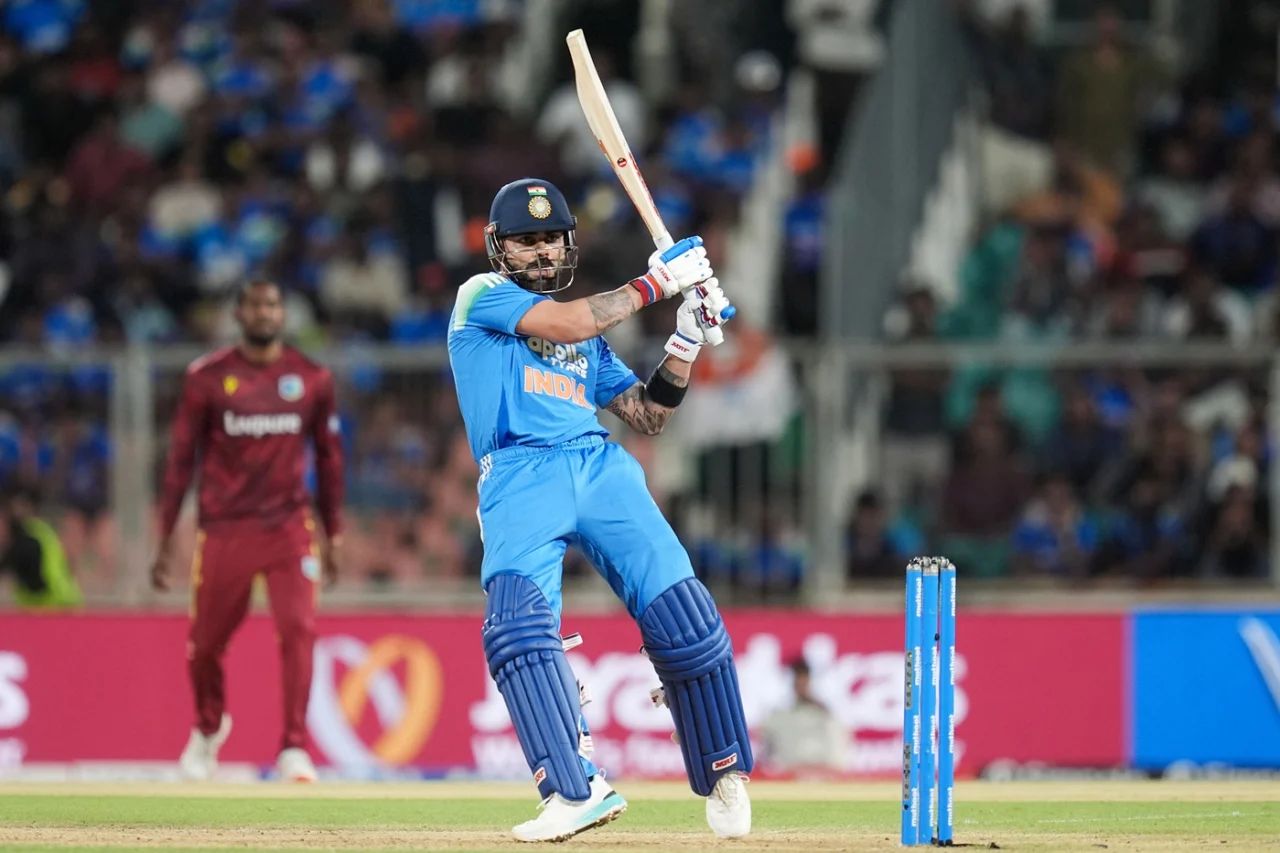
    As the first Test of a highly anticipated two-nation series between West Indies and Sri Lanka approaches, kicking off Thursday at North Sound in Antigua, West Indies skipper Roston Chase has made no secret of his side’s ambitions: to notch a long-awaited breakthrough victory in the ongoing ICC Test Championship cycle.

    North Sound has long been a fortress for the regional side, with just two losses across 13 previous Test matches hosted at the venue. History is also on West Indies’ home advantage: Sri Lanka has never claimed a Test series win on Caribbean soil, a stat Chase has highlighted as he builds momentum ahead of the opening fixture.

    Chase’s top priority for the squad is clearing a fundamental collective hurdle that has eluded the team in recent outings. “We’ve put together a number of solid individual performances across our recent matches, but we haven’t quite crossed that finish line together as a unified unit to close out wins,” Chase told reporters ahead of the opener. “That’s our first immediate goal: get a win in this first Test, then push to take the full series.”

    Beyond the team’s core goals, the series also offers two of West Indies’ star fast bowlers a chance to etch their names into regional cricket history. Veteran pacer Kemar Roach enters the series sitting just six wickets shy of the 300 Test wicket milestone, a mark that would see him become only the fifth West Indian bowler in history to hit the iconic benchmark. Young speedster Jayden Seales is also on the cusp of a landmark: the 26-Test veteran has already claimed 95 career wickets, putting him just five wickets away from 100, a milestone he is on track to reach at one of the fastest paces of any elite fast bowler in West Indies history.

    Chase attributed much of his side’s confidence to the home field advantage that comes with intimate knowledge of Caribbean pitches. “Understanding our local conditions is our biggest edge, and we’ve proven we know how to leverage it,” he explained, pointing to the side’s recent series against Australia, where the fast bowling unit dominated on spinning, pace-friendly Caribbean decks. “Our bowlers were unplayable that series, and they made the most of exactly what these wickets give us. That’s where our strength lies, and we plan to lean into that as much as we can this week.”

    Both sides have had limited recent experience in the longest format of the game: Sri Lanka has not competed in any international red-ball cricket for a full year, while West Indies last took the Test field back in December 2025. Looking ahead beyond the opening match, Chase identified collective consistency from the batting order as the final piece of the puzzle for the side to become a consistent contender in Test cricket.

    “To our credit, we’ve already notched five centuries across our recent matches, which shows our batters are stepping up individually when called upon,” Chase said. “What we need to improve on is doing it together as a unit, to post big, match-winning totals consistently. If we can keep putting 280 to 300 runs on the board inning after inning, there’s no question we’ll be a formidable opponent that any Test nation has to take seriously.”

  • 2026 World Cup : Morocco narrowly defeats Haiti (4-2)

    2026 World Cup : Morocco narrowly defeats Haiti (4-2)

    On June 24, 2026, history was made at Atlanta’s Mercedes-Benz Stadium, when Haiti’s men’s national football team – nicknamed the Grenadiers, ranked 83rd globally – faced 7th-ranked Morocco’s Atlas Lions in their final Group C match of the 2026 FIFA World Cup, marking the first ever meeting between the two sides at the tournament, in front of a sold-out official crowd of 68,324 spectators. Though the North African side claimed a hard-fought 4-2 win, the Caribbean underdogs exited the tournament with widespread praise, pushing the tournament favorites to the final whistle in a performance that defied expectations.

    French head coach Sébastien Migné made two adjustments to Haiti’s starting lineup from their previous match against Brazil, bringing in forward Wilson Isidor of England’s Sunderland AFC and winger Lenny Joseph of Hungary’s Ferencváros TC, while regular starters Carlens Arcus and Frantzdy Pierrot started the game on the bench. Haiti set up in a 4-4-2 formation, with Johnny Placide (SC Bastia, France) starting in goal, Ricardo Adé (LDU Quito, Ecuador), Duke Lacroix (Colorado Springs Switchbacks, USA), Martin Experience (AS Nancy-Lorraine, France), and Josué Casimir (AJ Auxerre, France) forming the defensive line, Ruben Providence (Almere City FC, Netherlands), Jean-Jacques Danley (Philadelphia Union, USA), Jeanricner Bellegarde (Wolverhampton Wanderers, United Kingdom), and JK Duverne (KAA Gent, Belgium) completing the midfield, and Isidor and Joseph leading the attacking line.

    Migné made five substitutions throughout the second half to refresh his side: Louicius Deedson replaced Isidor, and Duckens Nazon replaced Providence in the 67th minute; Carlens Arcus replaced Duverne, and Dominique Simon replaced Danley in the 80th minute; and Pierrot came on for Joseph in the 83rd minute.

    The opening 45 minutes delivered end-to-end drama, with four goals split evenly between both sides. Haiti shocked the global football audience in the 10th minute, opening the scoring for their first ever World Cup goal when a low cross from Duverne deflected off Lenny Joseph’s backheel attempt, wrong-footing Moroccan goalkeeper Yassine Bounou and rolling into the back of the net for an own goal, putting the underdogs up 1-0.

    Haitian goalkeeper Johnny Placide put in a string of impressive saves in the 13th, 23rd, and 36th minutes to keep Morocco off the scoresheet, but Atlas Lions captain Achraf Hakimi finally found an equalizer in the 39th minute, slotting home after a cross took a deflection off a Haitian defender.

    Haiti refused to back down, and retook the lead just four minutes later in the 43rd minute. After Brahim Díaz gave away possession in Morocco’s half, Isidor hit a powerful long-range strike into the top corner, leaving Bounou with no chance and putting the Grenadiers up 2-1.

    Morocco leveled the score right before the halftime whistle, when Hakimi cut the ball back into the path of Ismael Saibari, who converted the chance to make the score 2-2 going into the break.

    After halftime, Morocco, the higher-ranked side, began to dominate possession and territory, putting consistent pressure on Haiti’s defense. The breakthrough finally came in the 78th minute, when substitute Soufiane Rahimi converted from a corner to put Morocco ahead 3-2, the first time the North African side had led in the match.

    The match’s final goal came in the 89th minute, when young substitute Gessime Yassine capitalized on a defensive miscommunication from Haitian defender Carlens Arcus, who had assumed the ball had gone out of play. A VAR review confirmed the goal was valid, sealing Morocco’s 4-2 win.

    In the final Group C standings, Brazil and Morocco both advanced to the knockout stage with seven points each: Brazil claimed first place on goal difference, with two wins, one draw, seven goals scored, and one conceded, while Morocco finished second with two wins, one draw, six goals scored, and three conceded. Scotland finished third with three points from one win in three matches, while Haiti ended their historic first World Cup campaign in fourth place with zero points, having scored two goals across three group matches.

  • Derde helft WK 2026: Bosnië wint cruciale duel van Qatar dat veerkracht toonde

    Derde helft WK 2026: Bosnië wint cruciale duel van Qatar dat veerkracht toonde

    The 2026 FIFA World Cup Group B clash in Seattle delivered a dramatic, action-packed encounter between Bosnia-Herzegovina and Qatar on June 24, with Bosnia securing a critical 3-1 victory that puts them on the cusp of a knockout stage spot. The result comes just days after Qatar suffered a heavy 6-0 opening defeat to Canada, leaving the 2022 World Cup hosts already facing elimination heading into their final group fixture. For Bosnia-Herzegovina, the match carried extra significance: it marked veteran striker Edin Dzeko’s 150th senior international cap, a personal milestone the 40-year-old football icon was determined not to celebrate with an early tournament exit. Dzeko, Bosnia’s all-time record appearance holder and leading goalscorer with 72 international goals entering the game, had missed Bosnia’s opening match through injury but returned to the starting lineup to anchor his side’s attack, coming within inches of adding a landmark 74th goal to his legendary career. Both sides headed into the fixture on a five-game winless run, amplifying the pressure to secure three points, and the tension was palpable from kickoff in what was the first meeting between the two nations since 2010. Bosnia started the match on the front foot, dominating possession and carving out early chances, with 18-year-old young talent Kerim Alajbegovic producing one of the tournament’s standout goals to open the scoring. The teen prodigy glided past two Qatari defenders before firing an unstoppable strike into the top corner, leaving the goalkeeper with no chance. Bosnia doubled their lead shortly after, when a dangerous cross from Dzeko deflected off Qatari forward Sultan Al-Brake for an unlucky own goal. Far from folding under pressure, Qatar responded with a stunning fightback, led by captain Hassan Al-Haydos, who pulled a goal back with a powerful strike to reignite the contest. Energized by their breakthrough, Qatar shifted up a gear, stringing together quick combinations and pushing Bosnia onto the back foot. A shot from Pedro Miguel cannoned off the post, ramping up the tension as Qatar finished the first half with the momentum firmly on their side. After the break, Dzeko remained a constant threat in attack for Bosnia, and he too saw a shot bounce off the woodwork, denying him the milestone goal he chased. Near-29 degree temperatures in Seattle slowed the overall pace of the game, but the intensity and fighting spirit from both sides never dropped. Qatar lost Al-Haydos to cramp late in the contest, but his replacement injected fresh energy into the side, and the underdogs remained dangerous on the break. With full-time approaching, substitute Ermin Mahmic sealed the three points for Bosnia, slotting home after a mistake from the Qatari goalkeeper. Mahmic received a yellow card for removing his shirt in celebration of his decisive goal. In the simultaneous Group B fixture, Switzerland beat Canada 3-1 to finish top of the group with seven points, while Canada and Bosnia-Herzegovina both finished on four points. Bosnia edged out Canada on goal difference to secure their knockout stage spot, while Qatar finished bottom of the group without a single point, confirming their elimination. Despite their early exit, Qatar turned in a spirited display that earned praise, showing impressive resilience and fighting spirit after their heavy opening defeat, giving the nation optimism for future international competitions. For Bosnia-Herzegovina, the result capped off an evening of memorable milestones: the performance blended the experience of a generational talent in Dzeko with the exciting potential of young star Alajbegovic, creating a promising foundation for what fans hope will be a deep run in the knockout stage of the 2026 World Cup.

  • Derde helft WK 2026: Canada ondanks nederlaag door naar de volgende ronde

    Derde helft WK 2026: Canada ondanks nederlaag door naar de volgende ronde

    The final group stage match between Switzerland and Canada, held at Vancouver’s host stadium, carried high stakes: both sides had accumulated four points from their opening two fixtures, and a draw would have been enough for both to advance to the knockout round of the World Cup.

    Many Canadian supporters hoped their side would push for a full three points after securing their first ever World Cup victory earlier in the tournament. For most pre-match observers, however, a low-tempo, cagey draw seemed the most likely outcome – and the first half of the match played out exactly according to that script. The opening 45 minutes delivered almost no attacking action of note, with both sides reluctant to commit players forward and leave themselves exposed at the back. The only clear-cut chance fell to Swiss striker Breel Embolo, who was caught by surprise by the unmarked scoring opportunity and failed to convert from close range.

    Beyond the lack of goals, the first half was marked by frequent fouls and repeated theatrical falls designed to draw yellow cards from the referee. When the halftime whistle blew, the scoreboard still read 0-0, with neither side having made a breakthrough.

    That all changed immediately after the break, when Canada grabbed the opening goal against all expectations. Rubén Vargas fired a low shot into the far corner off a precise layup from Johan Manzambi, putting the co-hosts ahead 1-0. Just 11 minutes later, the tide turned again: it was Manzambi who turned goal scorer, tapping home a cross from Embolo to put Switzerland in front 2-1.

    The two-goal swing finally woke the Canadian side up, which launched a sustained wave of attacking pressure that pinned Switzerland back in its defensive half for the rest of the match. Rushing to find an equalizer in front of its home crowd, however, Canada grew careless in its final passes and finishing. With 15 minutes remaining, substitute Promise David pulled one back for Canada. Getting on the end of a cross from Nathan Saliba, David nudged the ball past Swiss goalkeeper Gregor Kobel to cut the deficit to 2-1.

    In the closing minutes, Canada had multiple golden opportunities to salvage a draw and claim the top spot in the group. In the final seconds of stoppage time, striker Alphonso Johnston got a free header on goal that would have leveled the score, but his attempt lacked the power to beat Kobel. When the final whistle blew, Switzerland held on to the 2-1 win, finishing the group stage top of the table and booking its place in the knockout round. Canada’s late comeback fell just short, leaving the co-hosts to wait to confirm its own knockout stage qualification.