分类: sports

  • Antigua’s First Jiu-Jitsu Black Belt, Whylee O’Brien, Continues International Success

    Antigua’s First Jiu-Jitsu Black Belt, Whylee O’Brien, Continues International Success

    In a groundbreaking achievement for the dual-island Caribbean nation of Antigua and Barbuda, Whylee O’Brien has etched his name into the history books as the country’s first-ever Jiu-Jitsu black belt, elevating both his own athletic career and his homeland’s profile in the global martial arts community.

    O’Brien, a native of New Winthropes Village, earned this elite rank after years of relentless training, unwavering discipline, and steadfast commitment to the sport — a discipline that demands not just peak physical conditioning, but extraordinary mental resilience and strategic focus. As the trailblazer from Antigua and Barbuda to reach the highest echelons of ranked Jiu-Jitsu, O’Brien has already emerged as a beacon of inspiration for the next generation of young athletes across the nation, proving that even elite global athletic milestones are within reach for Caribbean competitors.

    Most recently, O’Brien took his place as an official representative of Antigua and Barbuda at the high-profile Wings of Charity 007 James Bond gala, hosted June 12, 2026, at The Chancery Rosewood Hotel in London’s prestigious Mayfair district. The invitation-only event drew a cross-section of global leaders, including international ambassadors, senior diplomats, top business executives, and other distinguished guests from across the world.

    During the gala, O’Brien had a formal meeting with Her Excellency Karen-Mae Hill OBE, Antigua and Barbuda’s High Commissioner to the United Kingdom, and networked confidently with other attending dignitaries, including the Ambassador of Seychelles. Carrying the flag of Antigua and Barbuda emblazoned on the lapel of his formal evening blazer, O’Brien carried the cultural identity and values of his homeland with effortless poise, acting as a de facto unofficial ambassador that won praise from attendees.

    Beyond his athletic accomplishments, O’Brien draws motivation and character from deep roots in Antigua and Barbuda’s cultural and community heritage. He is the great-grandson of the late Mary Henry, a beloved local figure known affectionately as “Mem,” and nephew of celebrated Antiguan author William Henry, whose written works have played a key role in shaping the nation’s modern cultural identity. Even as his athletic feats have earned him nationwide acclaim at home, those close to O’Brien highlight his consistent humility, quiet determination, and unwavering commitment to lifting up his country’s reputation in every international space he enters.

  • Joseph, Rutherford power WI to record chase and series victory

    Joseph, Rutherford power WI to record chase and series victory

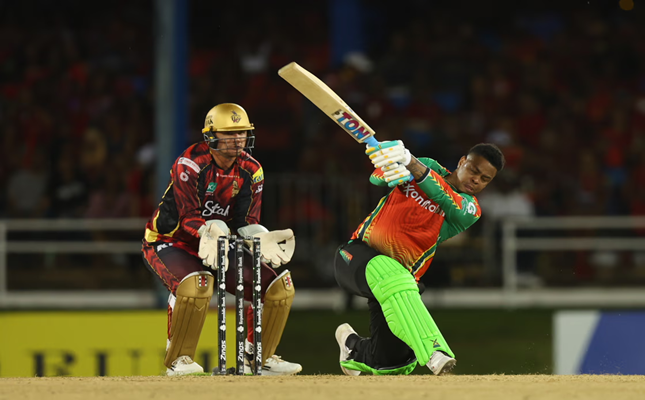
    On a tense Sunday night at Kingston’s Sabina Park, the West Indies men’s cricket team claimed a landmark 2-1 three-match T20 International series win against Sri Lanka, pulling off their highest successful run chase at the ground to seal the result. The series had been set up as a perfect decider: the Caribbean side, known universally as the Men in Maroon, took the opening match, before a resurgent Sri Lanka side bounced back to claim victory in the second fixture, leaving everything to play for in the final encounter. After West Indies captain Shai Hope won the pre-match coin toss, he elected to put Sri Lanka in to bat first, a decision that would pay off by the end of the night. The Caribbean bowling attack made consistent breakthroughs throughout the Sri Lankan innings, with young fast bowler Shamar Joseph turning in a career-best performance, taking five wickets for just 33 runs to destabilize the opposition batting order. Despite the early collapses, late-order hitting from Dunith Wellalage, who struck a rapid 43 off only 28 balls, and Vanindu Hasaranga, who contributed 21 runs from 13 deliveries, helped Sri Lanka post a competitive total of 169 all out, setting a challenging target for the hosts. The West Indies’ run chase got off to a disastrous start, with captain Hope departing for a golden duck without adding a single run to the scoreboard. Shimron Hetmyer injected much-needed momentum into the innings with an aggressive 32, but his departure left the middle order needing to rebuild the chase. That rebuilding work was delivered brilliantly by Rovman Powell and Sherfane Rutherford, who combined for an 81-run fifth-wicket stand – the highest fifth-wicket partnership in West Indies T20I history. When Powell fell with the target still out of reach, experienced all-rounder Jason Holder stepped up to finish the job. In the penultimate over of the innings, Holder smashed three monstrous sixes off the Sri Lankan bowling, finishing an unbeaten knock of 21 runs from just 5 deliveries to turn the tide firmly in the hosts’ favor. Rutherford anchored the innings with a polished half-century, ending on 54 not out, and guided the West Indies across the finish line with five wickets in hand and two full deliveries remaining. This win marks a much-needed turning point for the West Indies side: it is their first series victory in four attempts, and their first home T20I series win of 2025. Speaking after the final wicket fell, captain Hope summed up the significance of the result, noting that consistent success is built through small, repeated habits, and that “winning is a habit.”

  • 11 qualifying spots within reach as Grenada prepares for CAC Games selection decisions

    11 qualifying spots within reach as Grenada prepares for CAC Games selection decisions

    As the qualification window for track and field events at the 2026 XXV Central American and Caribbean (CAC) Games closed officially on 8 June 2026, Grenada has emerged with a strong showing, locking in 11 qualification slots — 6 for male athletes and 5 for female athletes — for the regional tournament. Now, all attention turns to administrative preparations, with Grenada’s national sporting bodies facing a tightly packed timeline of key deadlines to finalize their travelling delegation ahead of the games, which are set to run from 2 to 8 August 2026 at the Félix Sánchez Olympic Stadium in Santo Domingo, Dominican Republic.

    This edition of the CAC Games holds extra historical significance: it marks not only the 25th iteration of the regional multi-sport event but also the 100th anniversary of Centro Caribe Sports (CCS), the governing body that oversees the games. Final qualification rankings published on the official website of the North America, Central American and Caribbean Athletics Association (NACAC) confirm that Grenada will field a balanced, highly competitive squad that blends elite, globally accomplished veterans with exciting emerging collegiate prospects.

    In field events, two-time World Championship gold medallist and Olympic bronze medalist Anderson Peters leads Grenada’s medal hopes as the top-ranked javelin thrower across the entire CAC region. Peters booked his spot with an outstanding seasonal best throw of 89.53 metres, cementing his status as one of the tournament’s top contenders for gold. Joining him in the javelin competition is Suerena Alexander, a collegiate competitor based in the United States, who qualified for the women’s event with an impressive personal mark of 49.66 metres.

    Grenada’s squad also boasts exceptional depth in sprints and 400-metre events. Olympic gold medallist Kirani James, along with Gamali Felix, Devonni Ferguson, and Joshem Sylvester, all hit the automatic qualification standard for the men’s 400 metres. However, strict CAC regulations cap the number of competitors per nation at two athletes per individual event, meaning national selectors will have to make a difficult decision on which two runners will get the chance to compete in Santo Domingo.

    The outlook for Grenada’s relay teams is mixed as they work toward finalizing the team roster. The men’s 4×400-metre relay squad fell just short of automatic qualification, finishing ninth overall at the 2025 NACAC Senior Championships with a season-best time of 3:07.94 — one spot outside the top-eight cutoff required for automatic entry. In contrast, the men’s 4×100-metre relay team delivered a breakout performance at the 2025 Barbados Grand Prix, setting a blistering new national record of 39.16 seconds that has placed them firmly among the top eight ranked teams in the region, securing their automatic qualification spot.

    One of the most impressive individual performances of the qualification period came from sprinter Nazzio John, who earned a coveted double qualification across both the 100-metre and 200-metre individual events. John clocked a 10.13-second qualifying run in the 100m and matched the existing national senior record with a 20.27-second finish in the 200m.

    On the women’s side, Grenada has multiple elite athletes ranked high enough to contend for medals in their qualified events. Kelsie Murrel-Ross qualified for the women’s shot put with a dominant throw of 18.07 metres, while Ahshareah Enoe enters the high jump competition ranked joint-second in the CAC region after clearing an outstanding 1.93 metres. Jamora Alves secured her spot in the discus throw with a new national record mark of 57.56 metres, and Jamora Patterson rounded out the women’s automatic qualifiers on the track with a swift 50.98-second run in the 400 metres.

    With the final roster still pending confirmation from national sporting bodies, several key administrative milestones must be met before the Grenada Olympic Committee and the Grenada Athletics Association (GAA) formalize the full travelling delegation. 15 June 2026 marks the deadline for Grenada to accept any reallocated qualification slots, followed by final confirmation of reallocated entries on 17 June. The official finalized list of qualified athletes will be published on 20 June, and the nominal entry window for the tournament will close on 25 June.

    As CCS puts the finishing touches on the official competition rosters, Grenada enters the final pre-tournament phase in a position of clear athletic strength. The small tri-island nation has combined proven global competitive excellence with a fast-rising new generation of young talent, putting it in a strong position to deliver notable results at this historic centennial edition of the CAC Games.

  • GAA powerhouse 25-member roster for NACAC U18/U23 Championships

    GAA powerhouse 25-member roster for NACAC U18/U23 Championships

    The Grenada Athletics Association (GAA) has officially announced its most competitive developmental athletics squad in recent memory: a 25-strong national team set to compete at the 2026 North America, Central American and Caribbean Athletics Association (NACAC) Under-18 and Under-23 Championships, taking place July 10–12 in Apizaco, Mexico.

    This tri-island nation’s delegation blends decorated regional medalists and standout collegiate talents competing in the United States, with five women athletes and 20 men athletes split across the Under-18 and Under-23 age divisions. The women’s roster is led by Suerena Alexander, the current United States National Junior College Javelin champion, and backed by an impressive supporting cast: five-time All-American sprint hurdler Shantay Augustine, 2025 CARIFTA Triple Jump title holder Christana Charles, 2025 CARIFTA Mixed Relay bronze medalist Ameiah Samuel, and 2026 CARIFTA 800m silver medalist Annalisa Brown, who is the team’s sole Under-18 female competitor.

    The men’s roster carries an equally formidable competitive pedigree, with 11 athletes slotted for the Under-23 division and nine set to compete in the Under-18 group. The Under-23 men’s squad features a high-profile 4x400m relay pool anchored by Devonni Ferguson, Joshem Sylvester, and Shaquane Toussaint. Ferguson enters the championship in peak form, fresh off earning All-American honors with a runner-up finish at the 2026 National Junior College Athletics Championships. Sylvester and Toussaint return to regional competition after claiming 4x400m relay bronze at the 2025 NACAC Athletics Championships, with Sylvester also holding an individual Under-20 400m bronze medal from the 2024 CARIFTA Games.

    Five-time CARIFTA medalist Ethan Sam joins national champions Ian George and Samuel Greene on the Under-23 squad. Sam and George were core members of the 2026 CARIFTA bronze medal 4x100m relay team that set a new Grenadian Under-20 national record of 40.18 seconds. Field and distance events for the Under-23 division are led by three-time All-American thrower Jaylon Calder, who recently took second place in discus and sixth in shot put at the 2026 US National Junior College Championships. He is joined by 2026 CARIFTA 800m silver medalist Nicholas Frederick and up-and-coming sprint hurdler Kyle Nedd, a 2025 CARIFTA 4x400m bronze medalist.

    Grenada’s Under-18 boys’ squad is packed with emerging talent primed to deliver standout performances. It features 2025 CARIFTA Octathlon silver medalist Shyiem Phillip, who will contest the decathlon in Mexico, 2024 CARIFTA Triple Jump champion Christophe Calliste, and 2026 CARIFTA Javelin champion Deshawn Smart. Two-time CARIFTA throws silver medalist Kazim Telesford, 2025 CARIFTA 4x100m silver medalists Karmal Joseph and Nathaniel Douglas, and InterCol standouts Nathaniel Alfred and Phillip Mitchell round out the young men’s group. With final team entries now officially confirmed, GAA officials note this 25-member delegation stands as one of the strongest young teams Grenada has ever sent to a continental developmental championship, with high hopes for strong performances and medal finishes in Mexico.

    Full Official GAA National Team Roster

    Under-18 Boys
    – Karmal Joseph: 400m, 4x100m, 4x400m
    – Nathaniel Douglas: 100m, 4x100m
    – Phillip Mitchell: 100m, 200m, 4x100m, 4x400m
    – Nathaniel Alfred: 200m, 4x100m
    – Jovanie Greene: 400m, 4x100m, 4x400m
    – Deshawn Smart: Javelin
    – Kazim Telesford: Discus, Shot Put
    – Christophe Calliste: Long Jump, Triple Jump, 4x400m
    – Shyiem Phillip: Decathlon

    Under-23 Boys
    – Ian George: 100m, 200m, 4x100m
    – Kanick Nixon: 4x100m, 4x400m, 4x400m Mixed Relay
    – Ethan Sam: 100m, 4x100m, 4x400m
    – Shaquane Toussaint: 200m, 4x100m, 4x400m, 4x400m Mixed Relay
    – Joshem Sylvester: 400m, 4x400m, 4x400m Mixed Relay
    – Devonie Ferguson: 400m, 4x100m, 4x400m, 4x400m Mixed Relay
    – Samuel Greene: 4x100m
    – Kyle Nedd: 110m Hurdles, 4x400m
    – D’Angelo Brown: 800m, 4x400m
    – Nicholas Frederick: 800m, 1500m
    – Jaylon Calder: Discus

    Under-18 Girls
    – Annalisa Brown: 800m, 1500m, 4x400m Mixed Relay

    Under-23 Girls
    – Ameiah Samuel: 800m, 4x400m Mixed Relay
    – Shantay Augustine: 100m Hurdles
    – Christiana Charles: Long Jump, Triple Jump
    – Suerena Alexander: Javelin

  • Local players confirmed for WCPL following draft

    Local players confirmed for WCPL following draft

    The 2026 edition of the Women’s Caribbean Premier League (WCPL) has locked in its full roster of domestic players after the conclusion of its annual player draft, marking a major milestone as the tournament enters an exciting new era of expansion.

    This year, top-tier women’s cricket in the Caribbean grows from three competing franchises to four, with the newly formed Jamaica Empress making its debut in the tournament. To accommodate the arrival of the expansion side, league organizers adjusted the traditional draft structure to ensure fair team building across all four competing units.

    Under the revised framework, each franchise was first allocated one designated Heritage player, a standout domestic talent drawn from the franchise’s home territory. That allocation saw Barbados Tridents secure Hayley Matthews, the region’s globally recognized star all-rounder, while Jamaica Empress claimed Chinelle Henry, Guyana Amazon Warriors locked in Shemaine Campbelle, and Trinbago Knight Riders earned Karishma Ramharack.

    Following the Heritage player allocation, the three returning, established franchises were given the opportunity to protect two additional domestic players from their 2025 tournament rosters, locking in key core talent ahead of the open selection round. After that protection phase concluded, new entrant Jamaica Empress selected two players from the remaining available domestic pool, picking up veteran star Stafanie Taylor and all-rounder Aaliyah Alleyne to build its initial foundation.

    After the completion of the early protection and selection phases, the draft moved into its final round to fill out the full local roster for each side. The full confirmed local squads for 2026 are:
    – **Barbados Tridents**: Hayley Matthews, Qiana Joseph, Afy Fletcher, Shawnisha Hector, Shabika Gajnabi, Mandy Mangru, Cherry-Ann Fraser, Naijanni Cumberbatch, Asabi Callender, Amrita Ramtahal
    – **Jamaica Empress**: Chinelle Henry, Stafanie Taylor, Aaliyah Alleyne, Rashada Williams, Zaida James, Djenaba Joseph, Kate Wilmott, Celina Whyte, Abigail Bryce, Shriya Jairam
    – **Guyana Amazon Warriors**: Shemaine Campbelle, Realeanna Grimmond, Ashmini Munisar, Shamilia Connell, Eboni Brathwaite, Sheneta Grimmond, Chedean Nation, Reniece Boyce, Latoya Williams, Tilleya Madramootoo
    – **Trinbago Knight Riders**: Karishma Ramharack, Deandra Dottin, Jahzara Claxton, Jannillea Glasgow, Steffie Soogrim, Earnisha Fontaine, Samara Ramnath, Ameila Khan, Brianna Harricharan, Sainavi Kambalapalli

    Each franchise will next add five overseas international players to reach the tournament’s 15-player squad limit for the 2026 season. In a notable rule change for this edition, all five signed overseas players will be eligible for selection in each match’s starting playing XI, giving team management far greater tactical flexibility throughout the tournament. The full list of signed international players is set to be announced in the coming weeks.

    Beyond on-field roster changes, the 2026 WCPL has launched a refreshed brand identity centered on three core values: female empowerment, competitive ambition, and deep community connection. These values are brought to life through the league’s new creative platform, “She’s In”, which will be promoted via a targeted advertising campaign across women-focused social media channels throughout the Caribbean.

    As the region’s premier professional women’s cricket competition, WCPL was reimagined for the 2026 season with a clear mission: to celebrate, empower, and elevate Caribbean women through sport, while providing a world-class stage for the region’s most talented female cricketers to showcase their skills. Beyond elite cricket action, the league integrates family-friendly matchday experiences, youth cricket development programs, public health and wellness initiatives, and business opportunities for female entrepreneurs across the region. The “She’s In” campaign specifically aims to inspire the next generation of Caribbean girls and young women, proving that there is a space for them at the highest levels of competitive sport.

    The 2026 WCPL will be hosted as a centralized cricket festival across the first two weeks of September, with all matches taking place in Barbados. Looking forward, league leadership has laid out long-term ambitions for global expansion, with plans to eventually welcome teams from outside the Caribbean as it works to establish itself as a truly elite international women’s cricket competition.

  • Derde helft WK-2026: Zweden te sterk voor Tunesië en wint met 5-1

    Derde helft WK-2026: Zweden te sterk voor Tunesië en wint met 5-1

    June 15, 2026 — Sweden delivered a dominant 5-1 victory over Tunisia in their opening 2026 FIFA World Cup Group F fixture on Sunday, putting down an early marker for their knockout stage ambitions with a polished attacking display led by midfield star Yasin Ayari, who scored two goals. Right from the opening kickoff, the Scandinavian side pressed forward with clear attacking intent, and they wasted no time translating their pressure into an opening goal. In the 7th minute, Ayari found unmarked space just outside the Tunisia penalty box, unleashed a powerful low strike that beat the Tunisian goalkeeper to put Sweden 1-0 up. Sweden maintained firm control of possession and territory through the first half, doubling their lead in the 30th minute with a clinical counter-attack after breaking up a Tunisian foray forward. Newcastle United striker Alexander Isak carried the ball down the left flank, cut inside toward goal, and slot a precise finish into the bottom right corner to extend Sweden’s advantage to 2-0. Tunisia looked set for a lopsided first half, but the North African side pulled one back just before halftime to reignite tension in the match. In the 43rd minute, defender Omar Rekik directed a well-placed header from a cross into the back of the Swedish net, bringing the score to 2-1 heading into the break. Tunisia entered the second half hoping to build on their late first-half goal and push for an equalizer, but a costly defensive mistake derailed their comeback hopes just 15 minutes after the restart. In the 60th minute, Sporting CP striker Viktor Gyökeres capitalized on miscommunication between Tunisia’s backline, intercepted a sloppy pass, and coolly finished past the goalkeeper to restore Sweden’s two-goal lead at 3-1. That goal broke Tunisia’s resistance, with Sweden continuing to create high-quality chances through the final 30 minutes. In the 84th minute, Mattias Svanberg thought he had scored Sweden’s fourth, but the goal was initially ruled out for offside. After a VAR review of the footage, the decision was overturned and the goal was awarded, pushing the score to 4-1. Deep into six minutes of stoppage time, Ayari put the finishing touch on Sweden’s win with a superb individual goal, securing the final 5-1 scoreline and claiming his second brace of the fixture. The comfortable three-point win puts Sweden in an excellent position early in Group F, reinforcing their stated goal of advancing to the knockout round of the tournament. For Tunisia, the heavy defeat means the side will need to regroup quickly ahead of their upcoming group matches to keep their hopes of progressing to the next stage alive.

  • Derde helft WK 2026: Ivoorkust verrast en wint laat van Ecuador in spannend duel

    Derde helft WK 2026: Ivoorkust verrast en wint laat van Ecuador in spannend duel

    The opening Group E match of the 2026 FIFA World Cup at Philadelphia Stadium delivered a dramatic, edge-of-your-seat encounter on June 14, as substitute Amad Diallo’s 90th-minute solo goal gave Ivory Coast a hard-fought 1-0 victory over Ecuador. The result marked a historic milestone for Diallo’s strike: it was the first late winning goal scored by a substitute in a 1-0 World Cup match since Francesco Totti converted a 94th-minute penalty for Italy against Australia back in June 2006.

    Both sides entered the clash as underrated outsider squads, bringing contrasting tactical identities to the pitch. Ecuador, led by head coach Sebastian Beccacece, arrived at the tournament boasting one of the most formidable defensive records in global football. The side conceded only seven goals across 20 qualifying matches and carried a 19-game unbeaten streak into their World Cup opener, anchored by star center backs Willian Pacho of Paris Saint-Germain and Piero Hincapie of Arsenal, who seamlessly translated their elite club form to the international stage. While Ecuador’s defense proved solid throughout the encounter, their attack struggled to find clinical finishing, even with veteran talisman Enner Valencia, who has notched six goals in his last seven World Cup matches, leading their line.

    For Ivory Coast, the match carried extra narrative weight: the side fielded the youngest starting lineup at a World Cup since 2006, a hungry, youthful group eager to prove their credentials against established competition on football’s biggest stage.

    The match burst into action from the opening whistle, with Ecuador creating the first dangerous chance just two minutes in, when Brighton star Moises Caicedo dragged a long-range effort just wide of the post. Nine minutes later, a defensive mistake from Ivory Coast handed Valencia a clear opening that he failed to convert, and just a minute after that, Ivory Coast winger John Yeboah saw his low shot drift inches past the opposite post. Ecuador dominated the early exchanges, moving the ball with sharp, quick combinations and pressing Ivory Coast high up the pitch.

    Unshaken by Ecuador’s early pressure, Ivory Coast gradually worked their way into the match. In the 18th minute, Bazoumana Toure unleashed a powerful strike that forced a brilliant save from Ecuador goalkeeper Hernan Galindez. Ecuador then came inches from opening the scoring twice in 12 minutes, hitting the woodwork first through Gonzalo Plata in the 24th minute and again through Alan Minda, who finished off a delightful through ball from Pedro Vite, six minutes later. The high-tempo, physical encounter produced its first yellow card for Ivory Coast’s Guela Doue, as challenges remained intense across the pitch. Before halftime, Yan Diomande created multiple dangerous moments with sharp crossing and direct runs, while Wilfried Singo wowed the crowd with an acrobatic bicycle kick attempt. Ecuador’s first-half performance earned them a unique place in World Cup history: they became the first team to hit the woodwork twice inside the opening 30 minutes of a World Cup match since Ivory Coast did so against North Korea in 2010, and the first to hit the frame of the goal two or more times in a first half since Costa Rica faced Switzerland in 2018.

    The second half started much like the first, with Ecuador in the ascendancy. Just a minute after the restart, Valencia combined beautifully with Plata to create a goalscoring chance, but once again he put his effort wide. As Ecuador continued to push, Ivory Coast grew into the half, winning more possession and creating increasing pressure on the Ecuadorian defense. In the 52nd minute, Elye Wahi hit the woodwork for Ivory Coast, following a pinpoint cross from Diomande, raising the tension in Philadelphia Stadium. Diomande continued to threaten with clever movement, but dragged a 58th-minute effort well off target, while Seko Fofana saw a weak shot roll agonizingly wide of the post.

    Ecuador’s center back pairing of Pacho and Robert Ordonez held firm under growing pressure, but the introduction of Diallo as a 56th-minute substitute shifted the dynamic of the match completely. The substitute’s blistering pace and athletic energy stretched Ecuador’s defense, opening up space for Ivory Coast’s attackers to exploit.

    In the 69th minute, Plata came close to putting Ecuador ahead, firing a long-range strike that forced Ivory Coast goalkeeper Yahia Fofana into a desperate save. But it was Ivory Coast that would strike the decisive blow deep into stoppage time. After a wonderful driving run and layoff from fullback Wilfried Singo, who put in a man-of-the-match performance, covering every blade of grass to contribute at both ends of the pitch, Diallo broke through on goal with a stunning solo run. He coolly slotted the ball into the far corner with the outside of his foot, sending the Ivory Coast bench into wild celebrations.

    The three points give Ivory Coast a crucial opening advantage in Group E, while Ecuador are left empty-handed after a performance that saw them create multiple chances but fail to convert any into goals.

  • 2026 World Cup : Coach Migné confident the Grenadiers can qualify for the second round (video)

    2026 World Cup : Coach Migné confident the Grenadiers can qualify for the second round (video)

    Three matchdays remain in Haiti’s 2026 FIFA World Cup group stage campaign, and head coach Sébastien Migné is refusing to count his side out of a spot in the tournament’s knockout round, even after a narrow 1-0 opening defeat to Scotland on June 13.

    Speaking to reporters just one day after the tough opening result, the French manager acknowledged the disappointment of falling short in their first outing, but stressed that Haiti’s World Cup dream is far from over.

    “Of course we’re disappointed. But this tournament isn’t over for us, and we’re still in the fight,” Migné said. “From the very beginning of our preparation, we knew this would not be an easy group. We don’t have the depth or the global ranking that some of the other teams here boast, and we went into this campaign ready to fight for every chance we get.”

    Migné broke down where his side fell flat against Scotland, noting that Haiti’s build-up play consistently broke into dangerous areas, with the side moving the ball effectively into the final 25 yards of the pitch. The issue, he explained, came in the final moments of attacking sequences: the Grenadiers lacked clinical spontaneity in front of goal, and made uncharacteristically poor decisions when chances opened up.

    With the score sitting at 1-0 for the full 90 minutes, Migné told his side to prioritize controlled attacking pressure rather than throwing all players forward in a reckless chase for an equalizer— a decision rooted in the reality that final group stage placings can be decided by just a single goal of difference.

    Under the 2026 World Cup format, the top two teams from each group advance directly to the knockout round, while the four best third-placed teams across all groups also qualify for the second round. That structure, Migné pointed out, leaves Haiti with a clear path forward: if the side can claim victory in just one of their three remaining group fixtures, they remain firmly in contention to advance.

    Beyond the results, Migné reflected on the once-in-a-lifetime experience of competing on the world’s biggest football stage. “Above all else, what an incredible privilege it is to play in this kind of atmosphere,” he said. “It was truly fantastic. We won’t give up this fight, and we’ll be ready to compete again when we step onto the pitch for our next match.”

  • Derde helft WK 2026: Japan sleept op de valreep een punt uit het vuur tegen Nederland: 2-2

    Derde helft WK 2026: Japan sleept op de valreep een punt uit het vuur tegen Nederland: 2-2

    Group F’s 2026 World Cup encounter between the Netherlands and Japan delivered a dramatic late twist at Dallas’s AT&T Stadium in Arlington, Texas on Saturday, as a 89th-minute header from Koki Ogawa rescued a 2-2 draw for Japan after the Netherlands had twice held the lead in the second half. Officiated by American referee Ismail Elfath, the match opened with a remarkably cagey first 45 minutes that offered little of the excitement fans expect from a World Cup group stage fixture.

    The Netherlands controlled the majority of possession in the opening half, but the side struggled to break down Japan’s organized defensive block, with play proceeding cautiously for long stretches. The first clear chance of the game came as early as the third minute, when Donyell Malen turned sharply away from his marker to get a shot away, only for Japan goalkeeper Zion Suzuki to make the save. Japan did not cede ground entirely, posing periodic threats on the counter and advancing into the Dutch penalty area on multiple occasions to keep the contest evenly balanced in its opening phase.

    By the middle of the first half, the Netherlands had pinned Japan back in their own half, but their sustained possession failed to translate into dangerous scoring opportunities. Malen came close to breaking the deadlock again in the 33rd minute, this time with a headed effort that was again turned away by a sharp stop from Suzuki. The Dutch continued to dominate territory for the rest of the half, but their movement in the final third lacked cutting edge. Late in the half, both sides created half-chances to open the scoring, but poor finishing from attackers on both ends left the scoreline goalless when the teams headed into the locker room for halftime.

    The sluggish tempo of the first half gave way to a far more eventful second 45 minutes, with the first goal arriving just six minutes after the restart. Dutch defender Virgil van Dijk rose highest to connect with a cross from Ryan Gravenberch, nodding the ball into the back of the net to put the Netherlands 1-0 up. The Dutch celebration was short-lived, however: just six minutes later, Japan’s Keito Nakamura fired a powerful strike from outside the penalty area that beat Dutch goalkeeper Bart Verbruggen to level the score at 1-1.

    Undeterred by the equalizer, the Netherlands retook the lead just moments later, as Crysencio Summerville converted another assist from Gravenberch to put Oranje up 2-1. Shortly after the goal, Japan’s Takefusa Kubo came inches from drawing his side level again, sending his effort just over the crossbar. At the other end, Cody Gakpo had a chance to extend the Dutch lead, but Suzuki produced a last-gasp save to deny him and keep the score within one goal. Following the second Dutch goal, Netherlands manager Ronald Koeman made a tactical substitution, replacing Gravenberch with defender Nathan Ake to shore up his side’s defense and protect the one-goal advantage.

    Japan pushed hard for an equalizer in the final 15 minutes of regulation, creating a string of half-chances as they threw players forward in search of a late point. Their pressure finally paid off in the 89th minute, when Ogawa got in front of van Dijk to meet a Japan corner kick, heading the ball past Verbruggen to level the score at 2-2. The late goal held up through stoppage time, securing a valuable point for Japan in their opening group stage fixture, while the Netherlands were forced to settle for a share of the points after twice leading the match.

  • Do You Know How Many Caribbean Countries Reached the World Cup?

    Do You Know How Many Caribbean Countries Reached the World Cup?

    The 2026 FIFA World Cup, football’s most prestigious global tournament, is set to mark an unprecedented milestone for Caribbean football, as two nations from the region will compete on the sport’s biggest stage this year — a rare achievement that has not happened in the tournament’s history. For context, only five Caribbean nations have ever earned a World Cup qualifying spot before 2026: Cuba, the trailblazer that first qualified in 1938, Haiti (1974), Jamaica (1998), and Trinidad and Tobago (2006).

    This year’s tournament breaks new ground for the region, with two standout stories capturing global football fans’ attention. First, Haiti secures its return to the World Cup after a 52-year absence, becoming the first Caribbean nation ever to qualify for the tournament twice. Even more remarkable is the historic debut of Curaçao, a tiny Caribbean island nation tucked just 37 miles off Venezuela’s northern coast. With a total land area of just 171 square miles — smaller than most individual districts in Belize — and a population of barely more than 150,000 people, Curaçao will go down in history as the smallest country ever to compete at a FIFA World Cup.

    Curaçao’s journey to the 2026 tournament was no easy feat. The underdog side fought through two grueling qualifying rounds, competing in 10 matches, claiming seven wins, and finishing the entire qualification process undefeated to claim their spot. Their Cinderella run will now face its toughest test, as they have been drawn into Group E alongside formidable opposition: four-time World Cup champions Germany, South American contender Ecuador, and African powerhouse Ivory Coast. All of Curaçao’s group stage matches will be hosted across venues in the United States, one of the three host nations for the 2026 tournament.

    For Haiti, the long-awaited return to the World Cup kicked off on June 14 with their first Group C match against Scotland at Boston’s Gillette Stadium in Massachusetts, where the side suffered a narrow 1-0 defeat. Haiti’s next group stage challenge is scheduled for June 19, when they will take on five-time World Cup winners Brazil, in what is expected to be one of the most watched group stage matches of the tournament. For Caribbean football as a whole, the 2026 World Cup stands as a landmark moment, proving that even the smallest and most under-resourced footballing nations can compete with the world’s best.