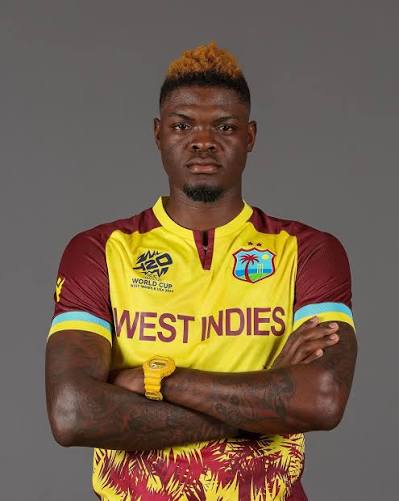
The DP World International League T20 (ILT20) Season 5 player auction, held in Dubai on Thursday, delivered a career milestone for Antigua and Barbuda fast bowler Alzarri Joseph, who secured a lucrative $230,000 contract with the Gulf Giants. As one of the most sought-after international quicks in the pool of 200+ players from 23 nations, Joseph’s price tag cemented his status as one of the highest-valued signings at this year’s event. The 29-year-old paceman, a core component of the West Indies international attack across all three cricket formats, brings extensive franchise cricket experience to the Gulf Giants’ already star-studded roster. The franchise targeted multiple top international talents throughout the auction, led by England all-rounder Liam Livingstone, who became their biggest acquisition with a $350,000 bid. Afghanistan wicketkeeper-batter Rahmanullah Gurbaz also rejoined the club via the Right to Match mechanism for $310,000. The Gulf Giants added a second West Indian pace talent, Shamar Joseph, for $80,000, followed by Namibia all-rounder David Wiese at $70,000, Afghanistan batter Ibrahim Zadran at $65,000, and West Indies batter Alick Athanaze, the final Caribbean addition, who joined for just $10,000. Across the entire auction, Afghanistan fast bowler Fazalhaq Farooqi claimed the highest bid of the day, with MI Emirates securing him for a tournament record $380,000. Other top-valued signings included Faf du Plessis, the former South Africa captain, who went for $300,000. When combining spending on retained players, pre-auction direct signings and Thursday’s auction purchases, the Gulf Giants have invested a total of $1.972 million to build their Season 5 squad. The roster already boasts a host of global cricket stars, including South African batting standouts David Miller and Heinrich Klaasen, Zimbabwe pace bowler Blessing Muzarabani, and Afghanistan all-rounder Azmatullah Omarzai. Joseph’s signing brings renewed representation for Antigua and Barbuda in one of the world’s fastest-growing elite T20 franchise competitions. When ILT20 Season 5 kicks off, the paceman will share the field with many of the biggest names in the short format of the sport, adding another high-profile chapter to his already impressive cricket career.
分类: sports
-
![Nations League 2026 : Haiti crushes the Dominican Republic [4-1]](https://wp.caribscopeonline.com/wp-content/uploads/2026/10/64989d921a6691e429c0058c14204882.webp)
Nations League 2026 : Haiti crushes the Dominican Republic [4-1]
The 2026 CONCACAF Nations League group stage delivered a thrilling Caribbean derby on Thursday, October 1, when Haiti’s national men’s football team, nicknamed the Grenadiers, pulled off a commanding 4-1 win against the Dominican Republic at Santo Domingo’s Félix Sánchez Stadium. The result marked a third consecutive win for Haiti, extending their undefeated run through the early stages of the tournament against their regional rival.
Spanish head coach David Badía made only one adjustment to the starting lineup that had carried Haiti to two prior wins, calling up FC Lugano defender Hannes Delcroix to the first XI while retaining his preferred 4-2-3-1 tactical formation. The full starting lineup featured goalkeeper Alexandre Pierre of France’s FC Sochaux, captain Carlens Arcus of Angers SCO, Delcroix, Carl-Fred Sainté of USL Championship side El Paso Locomotive FC, fan-favorite Fabrice “Fafà” Picault of Atlanta FC, experienced midfielder Duke Lacroix of Colorado Springs, Wolverhampton Wanderers’ Jean Ricner Bellegarde, Louicius Deedson of FC Sochaux, Bodrumspor’s Ruben Providence, Jean-Jacques Danley of Major League Soccer’s Philadelphia Union, and striker Wilson Isidor of England’s Sunderland AFC.
Four second-half substitutions freshened up the side for Haiti, with Yassin Fortuné replacing Deedson in the 61st minute, Frantzdy Pierrot taking over for Picault just a minute later, Dany Jean stepping in for Isidor in the 72nd minute, and both Louicius Delinois replacing Providence and Kervin Quétant coming on for Bellegarde in the 82nd minute.
From the opening kickoff, the Grenadiers controlled the pace of the match, breaking the deadlock early in the 9th minute. Deedson put Haiti on the scoreboard first, converting a well-placed assist from Providence to give the side an early 1-0 lead that they would not relinquish.
Haiti doubled their advantage just six minutes into the second half, when a poorly cleared Dominican free kick fell to an unmarked Isidor inside the 18-yard box. The Sunderland striker made no mistake, nodding a clinical header past the goalkeeper to make the score 2-0.
The Dominican Republic, long undefeated in this tournament, got a lifeline just four minutes later, when Dorny Romero capitalized on a misplaced touch from Carl-Fred Sainté to fire a left-footed finish past Pierre from inside the box, cutting the deficit to 2-1 and reigniting hope for the thousands of home fans packed into the stands.
That hope fizzled quickly, however. Just 12 minutes after the Dominican equalizer, Isidor bagged his second of the match, extending Haiti’s lead to 3-1 and quashing any chance of a home comeback. The final goal came 10 minutes later from substitute Yassin Fortuné, who scored with a header in the 77th minute to lock in the final 4-1 scoreline and deliver a resounding statement win for Haiti.
Following the result, Haiti remains tied atop Group A of League A with nine points from three matches, level with Curaçao who have scored one more goal across their three wins. The Dominican Republic drops to third place with six points from two wins and one loss, while Costa Rica sits in fourth with three points, and Trinidad & Tobago occupies last place with zero points.
Up next, Haiti will travel to face Costa Rica in the second leg of their group stage fixture on October 4, with kickoff scheduled for 6:00 PM local Haiti time at Estadio Ricardo Saprissa Aymá in San Juan de Tibás. The quarter-finals of the tournament are scheduled to take place in November 2026, with the final tournament round set for March 2027. All teams in the competition are competing for qualification to the 2027 CONCACAF Gold Cup, North America and the Caribbean’s flagship men’s international football tournament.
-
Tridents prepare for Concacaf Nations League clash against Bermuda
Barbados’ Concacaf Nations League campaign reaches a pivotal juncture this week, as the national side, nicknamed the Bajan Tridents, prepares for consecutive home clashes with Bermuda that could define their path out of League B Group B. With two matches left on their group stage schedule and an unbeaten start to their run, the Caribbean side is gunning to solidify its hold on the group’s top position when play gets underway.
Both encounters will take place at the BFA Technical Centre in Wildey, with the first kickoff slated for Friday, October 2, and the rematch at the same venue three days later on October 5. Barbados kicked off their 2024 campaign with a dominant 2-0 shutout victory over Saint Lucia, followed by a hard-fought 2-2 draw against Guadeloupe, leaving the side with four points from two outings to lead their four-team group.
Head coach Kent Hall has opened up about his team’s preparation for the high-stakes back-to-back fixtures, revealing that the weeks of build-up have been dedicated to addressing weak points from earlier matches, while refining offensive and defensive strategy alike. “We’ve spent time breaking down Bermuda’s play and preparing for every scenario they could bring to the pitch,” Hall explained. “We know this is still the early stage of the tournament, and every one of the four teams in the group still has everything to play for. Our four-point lead puts us in a stronger position, but we know Bermuda will come out fighting tooth and nail.”
While Hall is eager to leverage the benefits of playing both matches on home soil, he stressed that there are no guarantees in these contests, and his side will not underestimate their opponents. “No one in this camp is under the impression that we can just walk through these matches. Every team in this group deserves full respect, so even as we feel confident in our abilities, we have to match that confidence with relentless drive and a strong work ethic from the first minute to the last,” he said.
For Hall, the first step to securing six points is cleaning up the small errors that cost the side full points in their draw against Guadeloupe. The coach emphasized that constant improvement is a core priority for the squad, even after a solid unbeaten start. He added that the team’s morale is currently at a high, with exceptional camaraderie building both on and off the pitch. “The bonds between the players are incredibly strong. It’s a really tight group, and the more experienced players have gone out of their way to welcome newer squad members, which has helped those connections grow faster,” Hall noted. “That chemistry is going to be a huge advantage for us in these matches, so we feel really good going into these critical games.”
The head coach also issued a special call to local football fans ahead of the kickoff, asking supporters to turn out in force to create a raucous home advantage. “Home fans are always the X-factor when you play on your own pitch,” Hall said. “We’re really hoping everyone comes out, gets behind the lads, and makes some noise. Cheer on the hard work the players are going to put in, and push us to put in our best performance and bring home those six points.”
-
Piton Boyz Target back-to-back wins
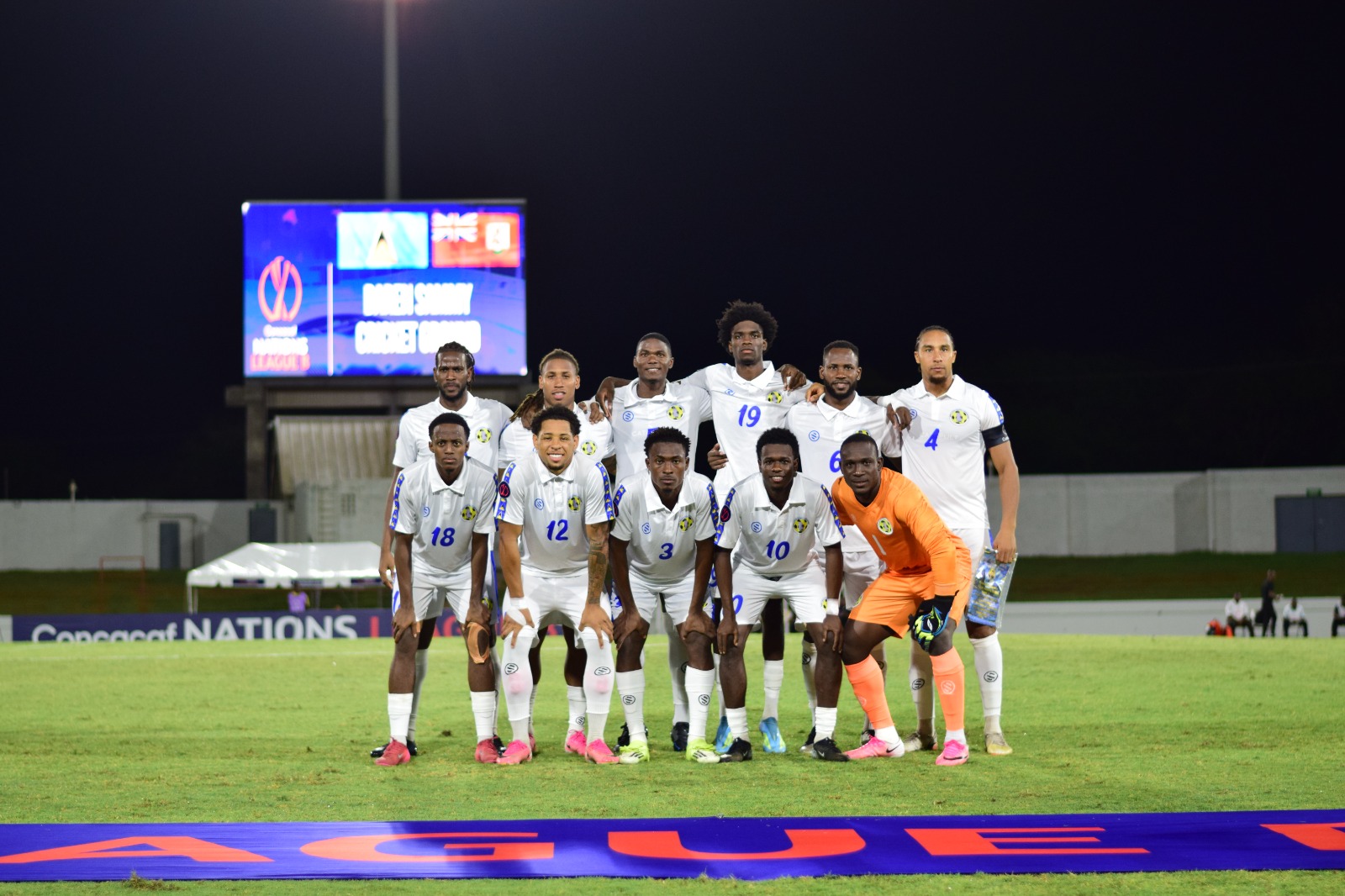
Fresh off a historic home victory that earned them three points in the first half of the September-October FIFA international break, Saint Lucia’s senior men’s national football team has traveled to Barbados with one clear goal: secure consecutive wins against Guadeloupe in their upcoming two matches. The first clash between the two sides is scheduled for 3 p.m. Friday at the Wildey Technical Centre, with a return fixture kicking off at the same time the following Monday.
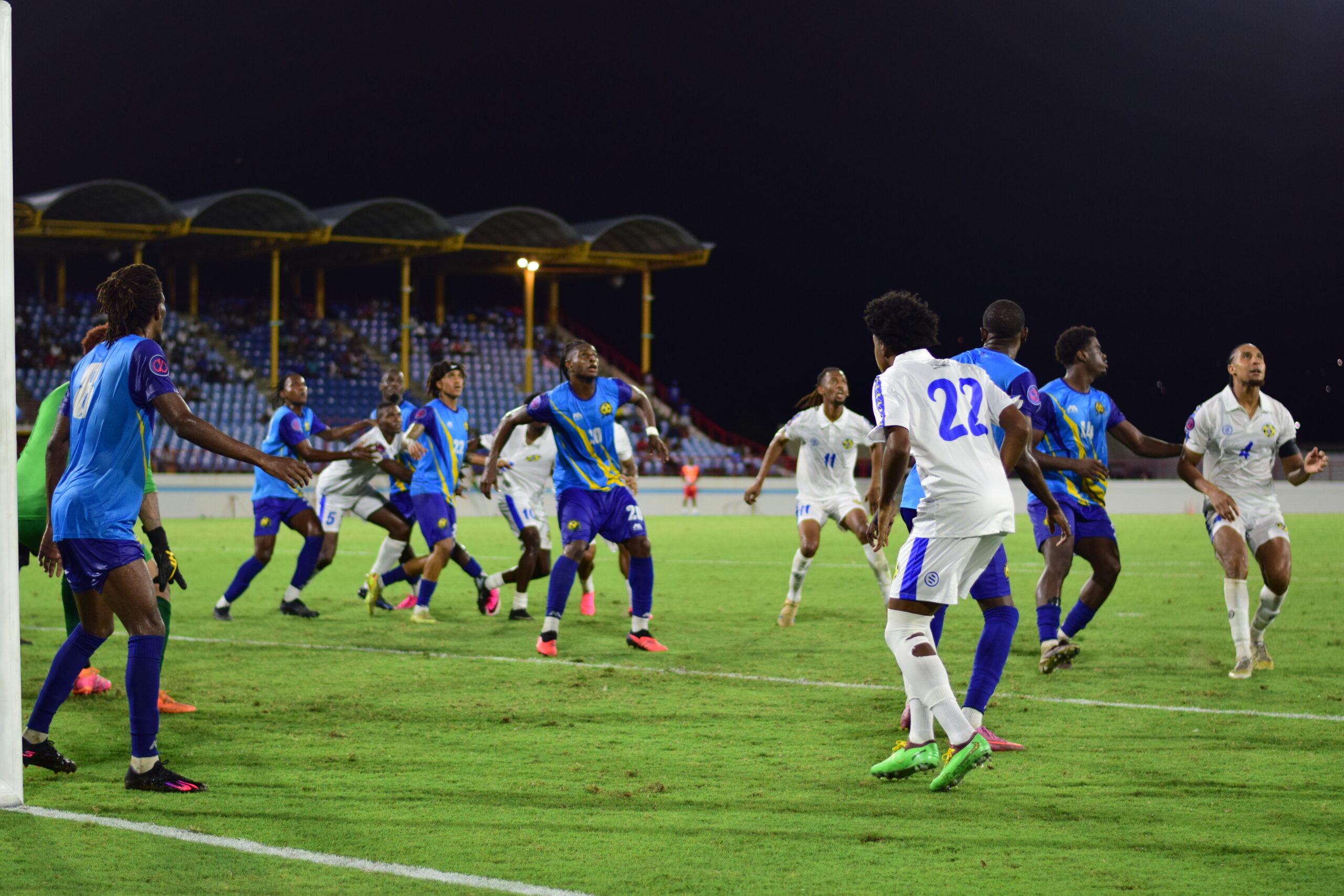
Led by newly appointed head coach Rajesh Latchoo, the Piton Boyz notched their largest ever home win in Concacaf Nations League history earlier this week, routing Bermuda 5-2 on Monday night at the Daren Sammy Cricket Ground. The standout performance of the match came from striker Kegan Caull, who netted a hat-trick to power his side’s victory, while 23-year-old defender Arkell Jude-Boyd made a long-awaited home senior debut for the squad.
Though Jude-Boyd, currently plying his trade with English side Shrewsbury Town, has seven senior caps to his name, Monday’s match marked his first time appearing for the national side on home turf. The young defender shared that the experience was more than worth the years of waiting, even without his family in attendance to cheer him on.
“I’ve visited this stadium so many times before, but due to previous complications, I never got the chance to step onto the pitch for a competitive match,” Jude-Boyd said. “Just being out there representing my country at home was an absolutely amazing feeling. Unfortunately, my family couldn’t make the trip to be in the stands today, but even without them here, it’s an experience I’ll never forget.”
Despite the thrilling five-goal result, the team has shown clear defensive vulnerabilities through their first two matches of the qualifying window, conceding four goals total. Latchoo has repeatedly emphasized that the squad needs to tighten its organization at the back to improve results. While key defender Chris Forino-Joseph of Bolton Wanderers is expected to rejoin the squad for the November international break, the Piton Boyz will have to face the in-form Gwada Boyz (Guadeloupe’s national nickname) without his presence this round.
For Latchoo, the end goal remains clear: pick up all six available points from the two upcoming Guadeloupe matches to push the team toward a top position in the group. “Our target is to take all the remaining points on offer, to get to 12, and once we hit 15 points, we’ll control our own destiny for qualification,” the coach explained. “But we can’t do this alone. We need the Saint Lucian public to get fully behind the team 100 percent. If the fans give us their full support, the players will always give 100 percent effort in return.”
The squad has received a timely attacking boost ahead of the two Barbados-based matches, with in-form Colorado Rapids forward Donavan “Gusto” Phillip linking up with the team following his strong form in Major League Soccer. The 21-year-old has found the back of the net in his last two consecutive MLS appearances, giving Latchoo a dynamic new option to deploy up front against Guadeloupe.
The head coach noted that the squad will continue leaning into its attacking strengths while working to fix its defensive lapses. “We know where we need to improve, and we’re working every day to close the gap on our weaknesses,” Latchoo said. “In previous matches, we’ve had periods where we switched off and gave opponents too much space to work with. Now, the focus is on managing that concentration over 90 minutes, tightening our play both in possession and when we’re without the ball.”
Phillip joins a surprisingly young core for Saint Lucia, alongside the likes of Jude-Boyd, 22-year-old Caull, 22-year-old Shaquan Nelson, and 18-year-old Shevon Byron. Latchoo also addressed Caull’s current situation, noting that the in-form striker is out of contract at the club level, and the coaching staff has had to carefully manage his minutes to help him rebuild match fitness after an extended break from competitive action.
“Going into the camp, we knew Kegan was a little rusty because he hadn’t played a full competitive match in a while,” Latchoo explained. “So we structured his training and playing time carefully, building him up to peak at the right time as he works his way back to his best form.”
As of September 30, the current Concacaf rankings reflect the gap between the two sides: Guadeloupe sits 15th out of 41 member territories, while Saint Lucia ranks 28th. In Group B, Bermuda holds 24th place and hosts Barbados is 30th. Heading into the second week of the international window, Guadeloupe and Barbados share the top spot in Group B with four points apiece, after each earned one win and one draw in matches hosted by Saint Lucia during the first half of the break.
-
Girls getting a kick out of football
Women’s football in the Caribbean nation of Saint Lucia is entering a new era of growth, with targeted investments and programs advancing the sport both on the pitch and in leadership roles off the field. The Saint Lucia Football Association (SLFA) has rolled out a coordinated series of initiatives designed to raise the profile of women’s football and remove barriers to entry for young girls seeking to participate in the sport.
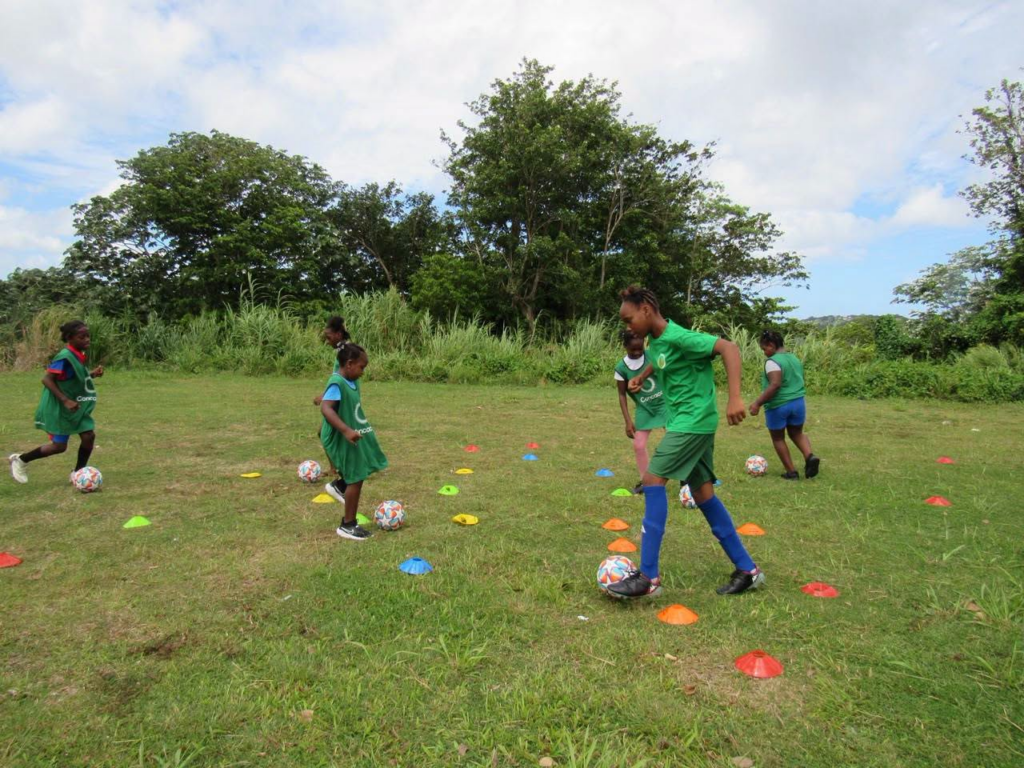
The first major public event of this push was a community-focused girls’ football festival held last weekend in Babonneau, organized in partnership between the SLFA and the Babonneau Football League. The event brought together more than 30 primary school students from six local campuses, giving young aspiring players the chance to learn directly from seasoned international female football stars. Participating schools included La Guerre, Boguis, Des Barras Combined, Babonneau, Balata, and Fond Assau, with additional support from the country’s Ministry of Education and the local Member of Parliament’s office.
Led by a team of local sports officials, education representatives, and professional players, the festival combined inspirational talks with hands-on skills training. Krysan St Louis, a veteran international player who earned her university degree through a sports scholarship, shared insights about the life-changing opportunities football can create for girls and women. Joining her was Kayla Polius, Saint Lucia’s current Junior Female Footballer of the Year, who encouraged the young participants to stay dedicated to their goals: “Stay humble, work hard, and believe that one day you can represent your country.”
After the talks, the girls took to the pitch for structured drills covering core football fundamentals, from dribbling, passing, and shooting to ball control and overall coordination. The day concluded with small-sided exhibition matches that let the young players showcase the new skills they had picked up during the session.
SLFA leaders including technical director Miran Louis and association president Lyndon Cooper laid out the long-term vision for the Babonneau program: to build sustained participation among local girls, create structured, age-appropriate player development pathways, and connect young talent to formal organized competition. The ultimate near-term goal for the community is to launch a competitive youth girls’ team that can compete in SLFA’s official national Girls and Women’s Competitions. A second phase of the program will retain at least 25 interested girls for ongoing training, ensuring the energy and momentum generated at the festival translates into lasting opportunities rather than a one-off event.
Beyond youth player development, the SLFA is also working to grow women’s representation in football leadership. Recently, the organization held a capacity-building workshop with the Vieux Fort North Football League at the Grace community centre, focused on integrating women into football administration and equipping them for decision-making roles. The session brought together SLFA representatives, local league leaders, and female stakeholders to discuss barriers, shared aspirations, and priorities for growing the women’s game, ensuring women’s voices remain central to the league’s strategic goals. This workshop followed a July grassroots girls’ development program in the region, laying groundwork for ongoing community programming as part of SLFA’s broader Women’s Development Programme.
Looking ahead, the SLFA will take another major step next month with a national consultation on a new national Women’s Football Strategic Plan, held in collaboration with global governing body FIFA. Scheduled for Saturday, October 10 at Castries’ Bel Jou Hotel in La Pansee, the consultation will bring a FIFA delegate together with representatives from all 19 of SLFA’s member leagues. Consultants leading the strategic planning process will present the draft plan, walk stakeholders through the document’s core strategic priorities, explain the reasoning behind key decisions, and open discussion about proposed implementation strategies for the multi-year plan.
-
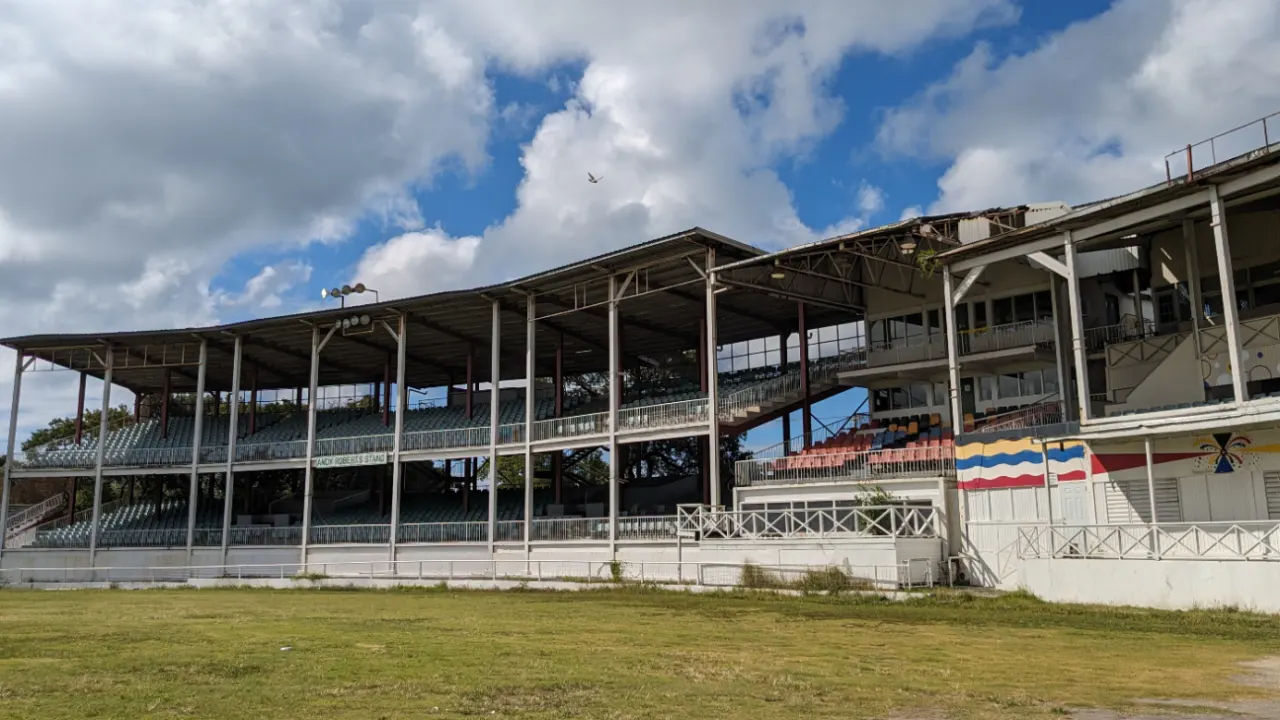
Antigua Recreation Grounds to Be Converted Into 5,000-Seat Football Stadium With FIFA Funding
Antigua and Barbuda’s Cabinet has approved a strategic plan to repurpose the historic Antigua Recreation Grounds (ARG) into the nation’s official home of football, converting the existing venue into a modern 5,000-seat stadium with funding committed by global football governing body FIFA. The announcement of this forward-thinking decision was made by Director General of Communications Maurice Merchant during a post-Cabinet media briefing held on Thursday.
Rather than waiting more than half a decade for a completely new purpose-built football stadium to be constructed, the government has opted to prioritize the faster rehabilitation of the existing iconic ARG site. When FIFA President Gianni Infantino visited the twin-island nation recently, he pledged financial support for the development of a new national football stadium. But Cabinet analysis found that constructing a brand new facility from the ground up would take roughly five years, and potentially even longer, to complete.
Under the revised plan, the government will redirect the pledged FIFA funding toward the extensive reconstruction and upgrade of the current Antigua Recreation Grounds, transforming it into a regulation 5,000-seat football venue that meets international standards. Before any construction work can get underway, the revised proposal must first be reviewed by FIFA and secure formal approval from the organization’s leadership.
Merchant emphasized that the decision to redevelop the existing venue carries multiple key benefits. First, it will cut down waiting times dramatically, allowing upgrade work to commence far earlier than it would for a new build. Second, the revamped ARG will retain its ability to host a wide range of other major national and international events beyond football. The upgraded venue will continue to host international Test cricket matches, annual Carnival celebrations, and a variety of other key cultural events that have long called the historic grounds home.
“Once FIFA signs off on the funding arrangement for this plan, we will deliver a fully renovated, world-class Antigua Recreation Grounds that is specifically tailored to meet the needs of international football,” Merchant stated, outlining the government’s end goal for the project.
-
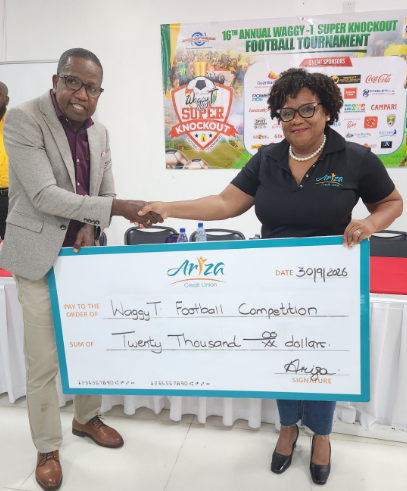
Ariza increases support to Waggy T Super Knockout
As one of the most anticipated local football tournaments prepares to kick off its 16th iteration, regional financial institution Ariza Credit Union has announced a major expansion of its long-running support, raising its total sponsorship commitment to $20,000 – double the amount it contributed in previous installments. The announcement was formally delivered during the official media launch event for the tournament, where representatives from the credit union also reaffirmed their enduring collaborative relationship with event organizer Megaforce Promotions, a partnership that has lasted for more than 10 years. The expanded sponsorship package includes both direct cash funding and curated prizes for participants. A standout component of the prize pool is complimentary Ariza Credit Union memberships and shares, an offering designed to introduce young athletes to formal financial services and help them start building long-term financial stability with the institution. In a formal address at the launch, Ariza Credit Union Chief Executive Officer Mervyn Lord emphasized that the cooperative has consistently prioritized community programs that deliver tangible, life-changing opportunities for young people across the region. “At Ariza, we hold the core belief that investing in our youth is equivalent to investing in the long-term prosperity of our local communities and our entire nation,” Lord explained. “Events like the Waggy T Super Knockout create a structured space for young athletes to nurture their football skills, strengthen their personal character, and internalize core values including collaborative teamwork, self-discipline, and consistent perseverance. We are thrilled to expand our support this year, and to continue our successful partnership with Megaforce Promotions as we work to open new doors for the next generation.” Beyond the tournament itself, Ariza Credit Union highlighted its pride in sustaining this beloved community sporting tradition, noting that the competition has become a cornerstone of local youth athletic development over the past 15 editions. The institution also emphasized its commitment to continuing to nurture opportunities for young competitors to grow, test their skills against top peers, and achieve excellence both on and off the pitch. Ahead of the 2026 tournament’s opening matches, Ariza extended its warmest wishes to every participating team, encouraging all athletes to compete with enthusiasm, integrity, and national pride throughout the duration of the competition. This report is published via NOW Grenada, which notes it does not take responsibility for opinions or statements shared by contributing authors. Individuals can report abusive content through designated platform channels.
-
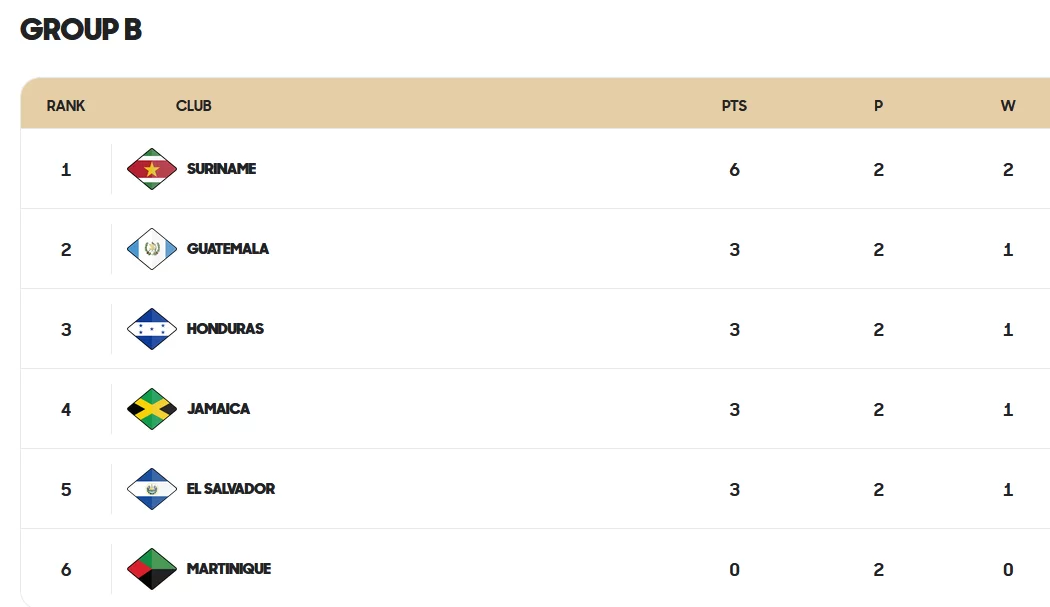
Column: Focus behouden
After two completed matchdays in the 2026-2027 Concacaf Nations League new season, Suriname’s national men’s football team, known locally as Natio, sits alone atop Group B with a perfect six points from two consecutive wins. The side currently needs just one more victory from its remaining two fixtures to secure a spot in the quarterfinals, while qualification for the CONCACAF Gold Cup also appears well within reach.
Natio’s next opponents across upcoming home and away fixtures are Guatemala, a side that carries significant historical weight for Suriname’s squad. Guatemala previously eliminated Suriname from 2022 FIFA World Cup qualification, leaving many fans and analysts expecting the Suriname team to enter the next fixtures driven by a desire for revenge. However, the analysis warns that entering matches fueled by revenge could prove disastrous: this emotional mindset adds unnecessary pressure that can cloud decision-making and pull players away from their core game plan. It is critical that the entire squad stays aware of this risk and does not lose sight of their immediate qualifying goals.
While Suriname has walked away with full points from its opening two matches, the team’s on-pitch performance has not earned praise for aesthetic quality. With no preparatory friendly matches scheduled before the tournament, team coordination has not yet reached the level coaching staff expects, and scattered unforced errors across both matches need to be corrected in training. Communication between the starting goalkeeper and the defensive backline also needs targeted improvement. That said, the priority for the side right now is not playing eye-catching football, but collecting the three points required to advance, and Natio has shown clear strengths in high-pressure moments. The squad displayed remarkable maturity across its opening fixtures, particularly showing resilient fightback after falling behind in matches, which signals strong underlying potential in the group. Another key positive is the squad’s collective work rate: players have consistently covered for teammates’ mistakes, preventing opposition goals through coordinated team effort.
Suriname still has a long road to reach its ultimate qualifying targets, but the analysis notes that if the national football association can create the right organizational and logistical conditions for the squad, the team is well-positioned to hit its goals. Without going into full public detail, the head coach has hinted at recent organizational missteps from the association’s leadership. The analysis expresses hope that the association will learn from these early missteps, so the squad no longer faces unnecessary disruptions to preparation. Experience shows that opponents will exploit every possible advantage to secure victory, so Natio’s support staff must travel ahead of the team for away fixtures to clear any potential logistical hurdles ahead of matchday. Every remaining fixture carries massive qualifying weight, so each must be approached with the intensity of a final to avoid unforced point losses.
The head coach has also publicly shared his desire to add one more player to the current match squad. The analysis expresses hope that the association will learn from past administrative missteps and cooperate with this request, which would give the coaching staff more tactical flexibility to implement their game plans across the remaining two matchdays. With two matches still to play, anything can happen in the group standings, so all unnecessary barriers to preparation must be eliminated to let the squad keep its full focus on earning the results they need to advance.
-

Tarish United Sports Club mourns ‘visionary sportsman’ Egbert ‘Tom’ Lambert
The Tarish United Sports Club has announced the recent passing of beloved community figure and football trailblazer Egbert ‘Tom’ Lambert, a resident of Gutter Village who dedicated decades of his life to expanding access to youth football in the local area.
In an official statement released by the club, president James Jervier paid heartfelt tribute to Lambert, remembering him not just as a core member of the Tarish Pit community but as a forward-thinking sportsman who deeply believed in football’s unique ability to bridge divides and bring people together.
“It is with deep sadness and a heavy heart that the Tarish Pit United Sports Club extends our deepest condolences to the family, friends and loved ones of Mr. Egbert Lambert,” Jervier said.
Lambert’s most enduring contribution to local sports is the founding of the Small Goal League, an initiative that created structured, accessible opportunities for young football lovers to gather, nurture their passion for the game, showcase their emerging talents, and build lasting friendships off the pitch. According to Jervier, Lambert’s vision for the league transformed youth sports access in the region, giving countless young people an outlet to grow through the sport they loved.
Jervier emphasized that Lambert’s relentless passion, unwavering dedication, and far-reaching contributions to the Tarish Pit community have left an indelible mark that will long outlast his passing. While the club and broader local sports community are grieving the loss of one of their most beloved figures, Jervier noted that Lambert’s legacy will live on through every young player whose life he touched, and through the thriving sporting community he helped build.
“Words cannot fully express the sadness we feel at this time, but we take comfort in knowing that his legacy will continue through the lives he touched and the sporting community here,” Jervier added.
In closing, Jervier reaffirmed the club’s full support for Lambert’s family and friends, noting that the entire Tarish United Sports Club stands alongside them in mourning during this difficult period. “May the memories of Tom, his kindness, passion, laughter, and dedication bring comfort and strength to all who knew him and loved him,” he said.
-
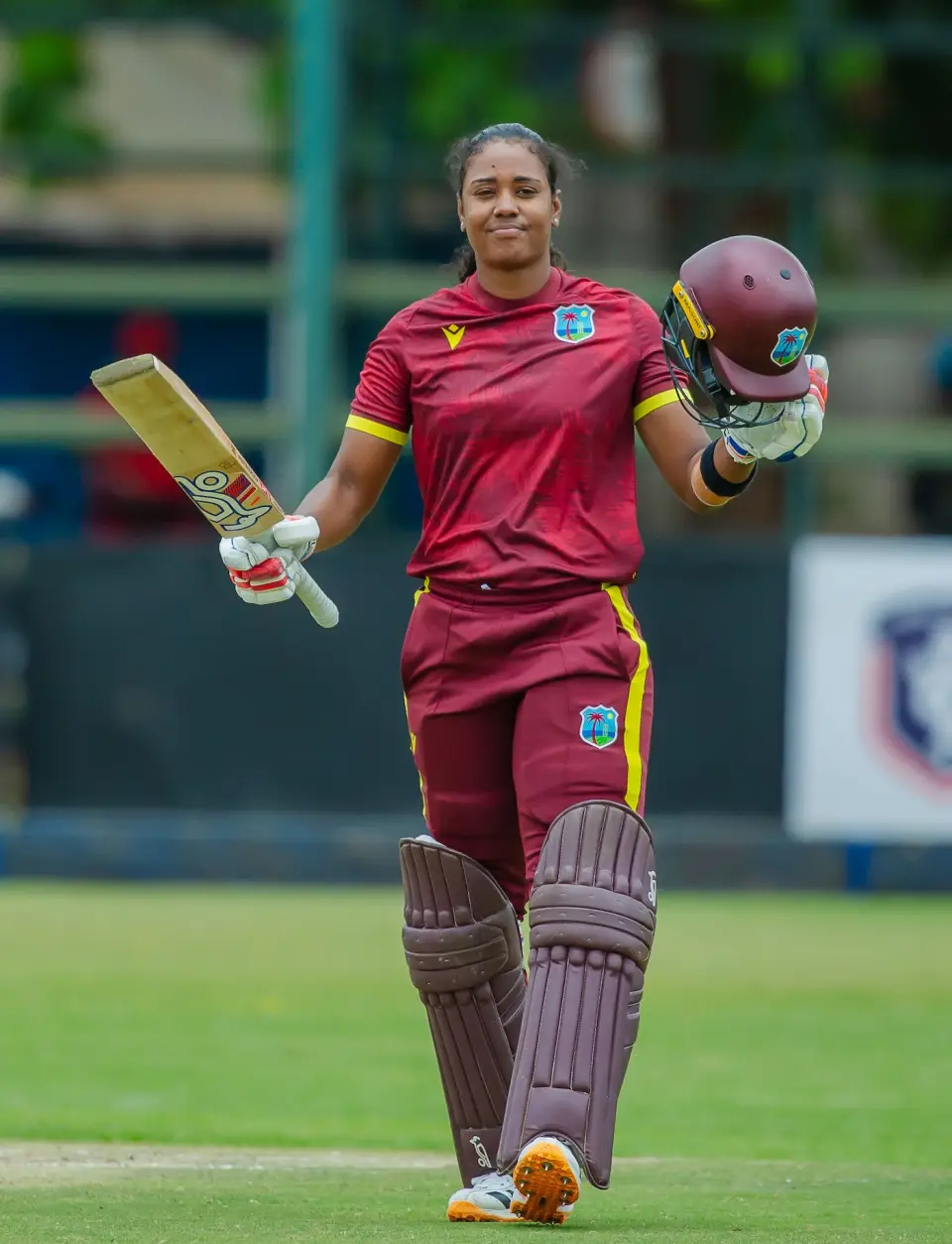
Matthews stars as West Indies Women seal ODI series
The West Indies Women’s cricket team has wrapped up a compelling 2-1 ODI series triumph over Zimbabwe, delivering a commanding 91-run victory in the series-deciding third match in Harare on Wednesday. The result was anchored by a masterful second century of the tour from skipper Hayley Matthews, who put in a career-defining performance to carry her side across the finish line.
After Zimbabwe won the pre-match coin toss and opted to put West Indies in to bat first, the Caribbean side built a formidable, match-winning total of 271 for five from their full 50-over allocation. Leading from the front, Matthews notched her 14th career One Day International century, finishing with a blistering 118 runs off just 113 deliveries. Her innings was punctuated by 18 fours and one six, marking the second consecutive century she recorded across the three-match series. She received valuable support from Shemaine Campbelle, who fell just one run short of a century herself, closing out her knock at 96 runs off 119 balls decorated with 13 fours. For the host nation, bowler Nomvelo Sibanda claimed two wickets for 42 runs, while fellow seamer Beloved Biza secured two wickets for 46 runs to cap Zimbabwe’s bowling effort.
By the end of the innings, Matthews’ outstanding form across the series pushed her total run tally to an unprecedented 326, finishing with an average of 108.66. Her dominant performance earned her both the Player-of-the-Match and Player-of-the-Series honors, cementing her status as the standout player of the tour.
Set a challenging target of 272 for victory, Zimbabwe’s batting lineup struggled to find consistent rhythm early on. The hosts stumbled to 9 runs for 2 wickets by the third over, slid further to 31 for 3 in the ninth over, and slipped to 85 for 5 by the 25th over. A late recovery led by captain Josephine Nkomo, who finished with an unbeaten 74 runs off 109 balls including five fours and one six, pushed Zimbabwe to a total of 180 all out in the 48th over. But the effort was not enough to overcome the target set by West Indies.
A disciplined, coordinated bowling attack from the Caribbean side dismantled Zimbabwe’s batting order. Spinner Ashmini Munisar finished with figures of two wickets for 32 runs, seamer Jannillea Glasgow took two wickets for 37 runs, and all-rounder Aaliyah Alleyne claimed two wickets for 39 runs. Across the entire series, Alleyne picked up seven total wickets, while Munisar followed closely behind with six wickets, making them the most effective bowling pair for the visitors.
Looking ahead, the two sides will turn their focus to the shorter format of the game, with a three-match T20I series scheduled to kick off at the same Harare venue this coming Saturday.