分类: sports

  • Caribbean get stronger voice in global equestrian sport

    Caribbean get stronger voice in global equestrian sport

    The global equestrian landscape is set to gain a powerful new Caribbean perspective at its top decision-making tables, after Heidi Lalor, president of the Equestrian Federation of Jamaica (EFJ), secured a historic appointment to the prestigious International Equestrian Federation (FEI) Solidarity Committee. The confirmation of Lalor’s appointment came during the FEI General Assembly held in Hong Kong, where she won a seat representing Group IV — a regional bloc encompassing Canada, the United States, and the entire Caribbean. She takes her place on a diverse, globally representative panel that also includes delegates from Qatar, Bolivia, Cambodia, Kenya, Uzbekistan, Finland, and Guatemala. This milestone marks the first time a Jamaican representative has earned a seat on the influential committee, extending a regional legacy of Caribbean participation that previously included representatives from Haiti, the Cayman Islands, and the Bahamas. Lalor’s appointment comes on the heels of five years of strategic, results-driven leadership at the head of the EFJ. During her tenure, she has overseen transparent and effective management of international development grants, boosted community morale across the regional equestrian community, and expanded support for athlete training, coach education, and participation in FEI World Challenge competitions. Reflecting on her selection, Lalor attributes the achievement to both aligned priorities and a proven track record of delivering impact across the Caribbean. “I believe my selection is due to alignment with global initiatives that raise awareness and participation, such as the Racehorse Retraining Programme and the Eventing World Challenge, as well as my ability to deliver and positively promote the sport throughout the Caribbean,” she shared. “It’s a pleasure to represent the Caribbean after five years of committed National Federation leadership and positive results. We’ve seen increased motivation, volunteerism, sponsorship, and raised standards, along with the development of new officials under the Jamaican flag.” Lalor notes that her appointment is part of a broader, tangible upward trend for Caribbean equestrian sport on the global stage. She pointed to recent regional wins: Barbados now holds a seat at the FEI Board level, Trinidad and Tobago maintains consistent, high-quality performance across Olympic disciplines using horses bred and trained locally, and nations including the Cayman Islands, Bermuda, and the Bahamas are advancing their own FEI Solidarity-backed development projects. For Lalor, the appointment is also a deeply personal full-circle moment, rooted in decades of support from FEI development programs. Since 2003, she has benefited from FEI-funded coaching initiatives across the Caribbean, training in Trinidad and Tobago, the Cayman Islands, and her home country of Jamaica. “I’m a product of these initiatives,” she explained. “They provided coaching education for local federations that helped athletes and also established professional frameworks for federations to govern and support the sport effectively.” Now working directly alongside Ingmar De Vos — FEI President, Solidarity Chair, and newly appointed International Olympic Committee Board member — Lalor says her role will go far beyond formal representation to drive active, inclusive global development of the sport. “This position proves that doors are opening,” she said. “It allows me to support multiple countries, assist with funding allocation, and contribute to shaping the future of equestrian sport on a global scale.” Looking ahead, her priorities are clear: unify Caribbean equestrian nations to raise the region’s global profile, and expand access to the sport by creating more development opportunities on individual Caribbean islands. “My goal is to continue enhancing regional standards and creating more on-island access through professional courses provided by FEI Solidarity,” she said, noting that expanded certification for local coaches and officials will be a core pillar of long-term, sustainable growth. She also emphasized the foundational role of strong governance, noting that robust administrative frameworks build trust with international stakeholders and unlock sustained development support. “With governance in place, there is greater confidence and productive management, which allows for long-term development,” Lalor said. “I look forward to elevating the Caribbean’s presence with energy, inspiration, and a deep passion for sustainable growth.” Even as she celebrates this milestone, Lalor acknowledges the persistent challenges facing small island equestrian communities, most notably the gap between grassroots participation and elite international competition. “Bridging that gap is always a challenge on the islands,” she admitted, “but with vision, a strong foundation, and advocacy, initiatives like the FEI World Challenge Series can help close it.” Beyond infrastructure, funding, and governance, Lalor says her appointment carries a critical message for young Caribbean equestrians. “It is very important for young people to see this level of international representation,” she said. “One of my first goals as president in 2022 was to show that pathway, that there is a broader vision through Federation involvement.” Her advice to emerging equestrian leaders and athletes is simple but impactful: “Whether you are an Olympian, rider, or coach, support your National Federation. Show up, stay positive, and put in the work, support will follow.” Launched in 2012, the FEI Solidarity programme remains focused on its core mission: expanding global access to equestrian sport, growing grassroots participation, raising competitive and administrative standards, and strengthening connections across the global equestrian community.

  • STATEMENT: A defining moment in the history of women’s cricket in the West Indies

    STATEMENT: A defining moment in the history of women’s cricket in the West Indies

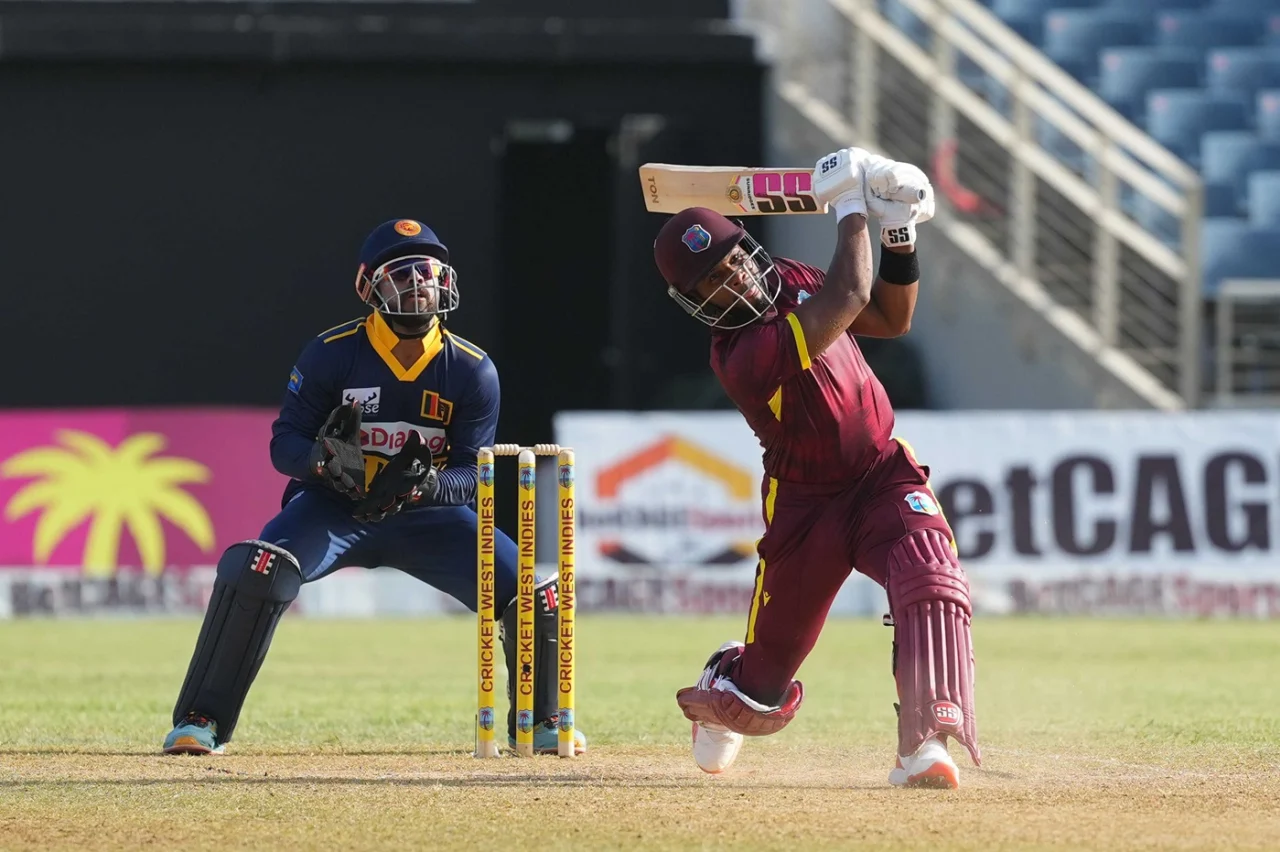
    Half a century after a watershed moment for Caribbean women’s cricket, Cricket West Indies is marking the golden anniversary of the West Indies Women’s national team’s first-ever international match, played against Australia in 1976. What began as a single contest in a bilateral series grew into far more than a game on the pitch: it was the official debut of West Indies women on the global cricket stage, opening an era of progress that still motivates young female athletes across the region today.

    Led by trailblazer Louise Browne, who made history as the team’s first captain and the first batter to face a delivery for the side, the 1976 squad stepped onto the field at a time when systemic barriers severely restricted competitive opportunities for women in cricket. Even with limited support and visibility, the group embodied remarkable courage, unshakable resilience, and unwavering belief in their right to compete at the highest level.

    The groundwork laid by that pioneering team has reshaped the landscape of women’s cricket across the Caribbean. From those tentative, barrier-breaking early outings to consecutive Women’s Cricket World Cup appearances and a regional reputation as a tough, competitive global contender, the steady rise of West Indies women’s cricket stands as a direct testament to the vision and grit of the 1976 pioneers.

    In commemorating this 50-year milestone, Cricket West Indies has reaffirmed its commitment to preserving and honoring the legacy of those first international players. Their story is one of tearing down long-standing gender barriers, creating accessible pathways for future generations of female cricketers, and writing one of the most proud and enduring chapters in the entire history of West Indies cricket.

  • Young Swimmers Shatter Records at Wadadli Invitational

    Young Swimmers Shatter Records at Wadadli Invitational

    Over a three-day competition window spanning Friday to Sunday, Antigua and Barbuda’s most promising young swimming talents gathered at the 10th Wadadli Aquatic Racers Developmental Invitational Swim Meet, where they delivered a series of stunning performances that redefined the country’s youth swimming record books. From seasoned competitors to first-time participants, athletes across all divisions delivered standout results: long-standing national records toppled, hundreds of swimmers hit new personal best times, and the emerging next generation of Antiguan and Barbudan swimmers put clear, widespread improvements in speed and race strategy on full display.

    Many of the meet’s top performers carried forward the momentum they built at the recent CARIFTA swimming competition, where they had already turned heads with strong form. That winning streak translated seamlessly to the invitational, with club teams from across the country claiming multiple record-breaking honors. The Vipers Swim Club saw three of its athletes claim new records: Madison MacMillan secured a new national title in the 50-metre backstroke, while teammate Anya DeGannes set a new age-group benchmark in the 200-metre freestyle. Teammate Alessandro Bazzoni turned in a grueling, consistent performance in the 400-metre individual medley — one of the sport’s most physically demanding events — to take another national age-group record.

    While these impressive feats dominated the list of weekend highlights, it was 14-year-old rising star Isabel Nicholas of the host Wadadli Aquatic Racers who delivered the most spectacular performance of the entire meet. Competing across six different events, Nicholas left her mark in five, breaking five separate national age-group records: 50-metre butterfly, 100-metre butterfly, 100-metre backstroke, 200-metre backstroke, and 200-metre butterfly. Her across-the-board wins, which spanned both sprint and mid-distance events, confirmed her rapid improvement and status as one of the country’s most exciting young swimming prospects.

    For coaches, federation leaders and spectators in attendance, the weekend’s results were not just a collection of new records — they were a clear indicator that Antigua and Barbuda’s youth swimming program is on an upward trajectory. Nelson Molina Fojo, head coach of Wadadli Aquatic Racers, shared that he felt immense pride in every swimmer who competed, regardless of whether they took home a medal or broke a record, noting that the sheer number of new personal bests achieved across the meet was a victory in itself. That positive outlook was echoed by Edith Clashing, President of the Antigua and Barbuda Swimming Federation, who praised the high competitive standard on display throughout the three days. Clashing emphasized that the most encouraging takeaway from the meet was that the vast majority of participating swimmers shaved time off their previous personal bests, a promising sign as the competitive swimming season continues to build momentum. She also added that it was particularly rewarding to watch new, young swimmers get their first taste of competitive action and begin their journey in elite swimming.

  • My biggest mistake!

    My biggest mistake!

    West Indies cricket, a sport woven deep into the cultural fabric of the Caribbean, has found itself at the center of a dramatic political reversal from one of the region’s most prominent cricket advocates. Ralph Gonsalves, the former Prime Minister of St. Vincent and the Grenadines and a past chair of the Caricom cricket subcommittee, has publicly acknowledged he made a wrong call in supporting the current Cricket West Indies (CWI) President Dr. Kishore Shallow, and now says the regional game was far better managed during Dave Cameron’s tenure as the top CWI official.

    Cameron, a Jamaican administrator who led CWI for six years between 2013 and 2019, has long been a divisive figure in Caribbean cricket circles, drawing fierce criticism from many quarters including Gonsalves himself during his time in office. But in a revealing interview with the Jamaica Observer, Gonsalves said his perspective has shifted dramatically amid what he sees as ongoing stagnation and mismanagement under Shallow’s leadership.

    Shallow’s journey to the CWI presidency began in 2019, when he ran as vice-president alongside presidential candidate Ricky Skerritt. The pair defeated the incumbent Cameron, with Gonsalves throwing his full public support behind their campaign at the time. Back then, Gonsalves praised Shallow and Skerritt as forward-thinking, modern Caribbean leaders with progressive plans to revitalize the regional sport, calling them serious leaders rooted in Caribbean culture. Shallow stepped into the presidency in March 2023 after Skerritt’s departure, and recently announced he will not run for re-election when his term ends in 2028, bringing his total tenure on the CWI executive to almost a decade when he leaves office.

    Over the past two years, however, Gonsalves has emerged as one of Shallow’s most vocal critics, repeatedly calling for his resignation over the sharp decline of the West Indies men’s national team – a call that grew louder following the side’s heavy Test defeat to Australia in Jamaica last summer. Gonsalves has also argued that Shallow should have stepped down from the CWI presidency immediately after he won a seat in St. Vincent and the Grenadines’ general election and was appointed the country’s Tourism Minister, citing a conflict of commitment.

    Speaking to the outlet, Gonsalves did not mince words about his change of heart. “I was wrong about Shallow. I thought that he had the depth to carry this thing to see what this issue was about and he turned out in disrespect to possess a shallow perspective,” he said. “You say to me ‘but Ralph, you supported him’ and I said to you, yes and a man is entitled to at least one mistake in his life.”

    Gonsalves leveled harsh criticism at the direction of CWI under Shallow’s leadership, arguing the governing body has become overly deferential to global cricket power dynamics dominated by what he called “Indian cricket imperialism,” tied to the massive Indian television audience that gives the Board of Control for Cricket in India outsized influence over the International Cricket Council (ICC). He claimed CWI now derives its legitimacy from the ICC rather than the Caribbean people it is meant to serve, and that regional member associations are locked in a patron-client relationship with CWI leadership rather than focusing on growing the sport at the grassroots level.

    He dismissed all institutional reforms pushed through under Shallow’s tenure as superficial, saying changes such as adjusting the presidential term length from two to three years and minor tweaks to voting rules are minor, esoteric changes that have no meaningful impact on the actual health of Caribbean cricket.

    Looking back at Cameron’s leadership, Gonsalves said there is no question that West Indies cricket performed far better during the Jamaican’s time in charge. Though Gonsalves was a prominent critic of Cameron during his presidency, he now believes Cameron has reflected on missteps from his tenure, and his creative leadership would be a marked improvement over the current administration. While Gonsalves stopped short of explicitly calling for Cameron to run for the presidency again in the next CWI election, he made clear he sees the former leader as a far better fit for the role than Shallow and his current executive team.

    Gonsalves added that even at his most confrontational with Caribbean governments, Cameron never disrespected cricket professionals the way the current CWI leadership has, and noted that Cameron remains deeply committed to the success of West Indies cricket. Photos accompanying the interview capture Shallow, Cameron, Gonsalves, and the July 2025 Test match against Australia that underscored the national team’s ongoing struggles, where young batsman Mikyle Louis was bowled by Australian fast bowler Josh Hazlewood during the day-night third Test at Kingston’s Sabina Park.

  • National Futsal Championship launched

    National Futsal Championship launched

    KINGSTON, Jamaica — Jamaica’s first nationwide structured National Futsal Championship formally entered its operational phase this week, with opening matches scheduled to kick off on May 16 at the Legacy 5 facility in Runaway Bay, St Ann. The tournament’s grand “Super Final” is slated for June 6 at the Horace Burrell Centre, bringing a months-long organizational vision to a competitive climax.

    Organized by the Jamaica Futsal and Scrimmage Association (JFSA), the official launch event was hosted Friday at the headquarters of the Jamaica Football Federation (JFF), marking a milestone in the organized growth of the five-a-side indoor sport across the island. A total of 28 teams from Jamaica’s 14 parishes — two qualifying squads per parish — will compete across four geographically divided regional pools to narrow down the field for the final stage.

    The four regional groups are drawn to reflect the island’s administrative and geographic layout: the North Eastern zone draws teams from St Ann, Portland, and St Mary; the North Western pool includes squads from St James, Hanover, Westmoreland, and Trelawny; the South Western zone encompasses Clarendon, Manchester, and St Elizabeth; and the South Eastern grouping brings together competitors from Kingston and St Andrew, St Catherine, and St Thomas. The regional stage will follow a round-robin format, with the top two point-earning teams from each pool advancing to the national finale in June.

    In his address at the launch, JFSA President Dr Curven Whyte framed the championship as far more than a single seasonal sporting event. Instead, he positioned it as a core step forward for a long-term grassroots movement centered on athletic development, community opportunity, and national progress. “Since 2024, the JFSA has been intensely laying the foundation for the structured growth of futsal in Jamaica, and so what we have is a vision and the strategic planning will quickly evolve into meaningful action across communities, institutions and the wider football landscape,” Whyte explained.

    He emphasized that the association’s strategic ambitions extend well beyond the current tournament to build a sustainable futsal ecosystem across Jamaica. The JFSA’s ongoing agenda includes rolling out targeted grassroots development programs, launching dedicated youth academy competitions, expanding programming for female futsal athletes, introducing masters competitions for veteran players, and creating inclusive competitive opportunities for athletes with special needs. The body is also working to strengthen cross-border collaboration with other Caribbean futsal governing bodies to raise the profile and competitive standard of the sport across the entire region.

    The National Futsal Championship has received formal endorsement from the island’s leading sporting bodies. JFF President Michael Ricketts voiced his support for the initiative, while Jamaica Olympic Association President Christopher Samuda also backed the tournament. Sports Minister Olivia Grange also extended her blessing for the event, though she was unable to attend the launch in person.

    Beyond the immediate competition, the 2025 National Futsal Championship serves a critical high-stakes purpose: it will act as a selection showcase for Jamaica’s national futsal squads, which are set to compete in upcoming regional tournaments with the long-term goal of qualifying for the prestigious FIFA Futsal World Cup.

  • Maddenstraight to the point

    Maddenstraight to the point

    On a tense Sunday of competitive motorsport action on April 26, young driver Zidan Madden clinched his second consecutive victory in the Point 2 Point Time Attack dexterity series, taking the top spot at the second round hosted at Overton Plaza in Montego Bay, St. James.

    Speaking exclusively to the Jamaica Observer’s weekly Auto publication after crossing the final line, Madden expressed his satisfaction with the hard-earned win, noting he entered the round determined to extend his winning streak. “Feels good. I came out of the last event of Point 2 Point with the win as well, so I came here for the win, did my best, did what I could, and it brought us the second win,” Madden said.

    His father Leslie Madden, who has supported his son’s racing career, shared that he was overcome with pride watching Zidan’s performance. “I’m speechless, actually. To see him drive and doing very well, displaying some excellent car control, is beyond words,” he told reporters.

    The path to victory was far from easy for Madden. He entered the round facing a deep field of seasoned dexterity racing veterans, including well-known competitors Maurice Whittingham and fan favorite Cleve Ottey. Through the preliminary qualifying sessions, Madden only ranked third in his class, trailing behind Ottey and Marc Graham – who set the fastest lap time of the entire evening. But once Madden advanced to the final top-10 championship round, he held steady nerves behind the wheel of his Toyota Starlet, outperforming all rivals to claim the top position when the final times were posted.

    Two of the event’s top contenders, Whittingham and Ottey, were forced to withdraw from the critical final round after encountering unexpected mechanical issues, opening up spots on the final podium. When the dust settled, Graham held onto second place, while Jayson Reid rounded out the overall podium in third.

    The day’s action also delivered intense competition across the front-wheel drive divisions. Stephen Mahoney took the non-LSD front-wheel drive class win in his Honda Fit, while Kai Chuck-Dion claimed victory in the front-wheel drive LSD class driving his Honda Civic.

    Madden credited his back-to-back success to pre-event adjustments and relentless team preparation. “We changed up a little stuff because we realised that there were some faults. It’s definitely the tuning and the hard work put in that plays a big part in my success,” he added.

    Event organizer Stephen Mahoney announced that the series is expanding its scope for the 2026 season, with plans to crown an official Jamaican national dexterity champion at the final round later this year. To qualify for the year-end championship, Mahoney explained that the series has partnered with Kingston-based Team Streetz, requiring competitors to compete in at least two Team Streetz events and two Point 2 Point events to earn a spot in the national title decider.

  • First kiss

    First kiss

    On Saturday, May 2, 2026, equestrian racing gained a new milestone moment when first-time winning trainer Wayne Binns notched the breakthrough victory he had worked years to achieve, guiding the 4-year-old bay colt Goodness Graceous to a decisive win in a 5-furlong (1,000-meter) straight maiden condition race. Binns, who graduated from the professional trainers’ school in 2023, could barely mask his elation immediately after the race crossed the wire.

    “Oh my gosh, I don’t know what to say, I am just so happy right now,” Binns said in a post-victory interview, his voice thick with emotion. The celebration moved quickly to the winner’s enclosure, where fellow trainers and close friends swarmed the first-time winner to mark the occasion, dousing him in celebratory liquid. While the unexpected soak shorted out his phone—triggering a humorous “do not charge your phone” warning when he finally checked the device after the celebration—Binns said the moment was worth every minor inconvenience.

    “That was a touching moment for me, and I thank all my colleagues and friends, who shared this victory with me,” he said. “No harm done, as saddling my first winner is something to cherish.”

    The road to the winner’s circle was far from smooth for both Binns and Goodness Graceous. The underdog entry faced 10 seasoned rivals, and the race got off to a rocky start when the colt broke slowly from the eighth starting barrier. Jockey Jaheim Anderson adjusted his strategy on the fly, biding his time behind early pace-setters Money Mission (ridden by Raddesh Roman) and Brilliant Mind (ridden by Dane Dawkins) before making a decisive move once the field entered the main straight. Anderson angled Goodness Graceous tight along the inside rail, opening a clear path for the colt to find his stride.

    From that point, the race belonged to Goodness Graceous. The colt accelerated past the entire field, pulling away to a 2 ½-length victory with a final time of 1:02.1, with intermediate splits of 23.4 seconds for the first quarter and 48.3 seconds for the first half. Modern Monarch, with Jemar Jackson in the irons, finished second, while Delightful One, ridden by Tevin Foster, took third place. Saturday’s win marked just the third competitive start of Goodness Graceous’ racing career.

    For Binns, the victory was the payoff for two years of grit and patience through a devastating setback. He began prepping Goodness Graceous, a son of Perfect Curlin out of Rachel’s Grace bred and owned by Michael Bernard, as a 2-year-old in 2024, with plans to launch his racing career at age three. But a late 2024 injury sidelined the colt for a full year of recovery, forcing Binns to pause all training and wait out the healing process. Goodness Graceous only returned to structured training in late December 2025, made his first career start in early March 2026, and claimed his first win just two starts later.

    Binns made a point to credit the owner and breeder who stood by him and the colt through the injury and recovery process. “This victory would not have been possible without the assistance of Mr Michael Bernard,” Binns said. “Mr Bernard has given a lot of encouragement, for which I am grateful.”

  • World Cup to hold trio of star-studded opening ceremonies

    World Cup to hold trio of star-studded opening ceremonies

    The 2026 FIFA World Cup, the first edition of the men’s global football tournament co-hosted by three North American nations, will kick off with an unprecedented series of three separate opening ceremonies, one held in each host country: Mexico, the United States, and Canada. FIFA, football’s global governing body, made the official announcement of the star-studded international lineup of performers on Friday.

    The celebration will get underway in Mexico on June 11, just 90 minutes before the tournament’s opening match between host Mexico and South Africa, which will be held at the iconic Azteca Stadium, temporarily renamed Mexico City Stadium for the duration of the tournament. Leading the performance lineup for the Mexican ceremony is Colombian reggaeton superstar J Balvin, alongside multi-Grammy-winning Mexican rock icons Maná and acclaimed pop performer Alejandro Fernández, son of the late legendary ranchera music icon Vicente Fernández. The roster also includes beloved Mexican pop performer Belinda, award-winning singer-songwriter Lila Downs, Grammy-winning South African breakout star Tyla, and iconic Mexican cumbia group Los Angeles Azules.

    The second opening ceremony will take place in Toronto, Canada the following day, June 12, ahead of Canada’s opening group stage match against Bosnia and Herzegovina. Headlining the Canadian show are Grammy-winning alt-rock pioneer Alanis Morissette and legendary crooner Michael Bublé, with additional performances from Juno Award-winning singer Alessia Cara, Palestinian-Maltese pop artist Elyanna, Colombian-Canadian R&B star Jessie Reyez, and Moroccan-Indian performer and dancer Nora Fatehi. Event organizers have framed the Canadian ceremony as a cross-country journey, designed to highlight the diverse landscapes and cultures that span Canada from its Atlantic to Pacific coasts.

    Later the same day, the United States will host its opening ceremony in Los Angeles, ahead of the U.S. men’s national team’s opening match against Paraguay. Headlining the U.S. ceremony is global pop icon Katy Perry, who previously drew record audiences as the headliner of the 2015 Super Bowl Halftime Show. She will be joined by Atlanta trap pioneer Future, global K-pop superstar Lisa of Blackpink, Brazilian pop icon Anitta, Nigerian afrobeats star Rema, and Tyla, who will pull double duty after performing at the Mexico City ceremony. FIFA notes that additional performers for the Los Angeles event are still set to be announced. Other global artists set to appear across the three ceremonies include Venezuelan reggaeton singer Danny Ocean and Bangladeshi-American Los Angeles-based DJ Sanjoy.

    In official statements announcing the lineup, FIFA President Gianni Infantino emphasized that the three-part ceremony structure was designed to celebrate both the unique cultural identity of each host nation and the collective unity at the heart of the first three-nation World Cup. “Starting with Mexico City and continuing the next days with Toronto and Los Angeles, these ceremonies will bring together music, culture and football in a way that reflects both the individuality of each nation and the unity that defines this tournament,” Infantino said. “It is a powerful way to begin a truly global celebration.”

    Of the Los Angeles ceremony, Infantino added that the diverse lineup of international performers reflects the multicultural fabric of the United States, highlighting how music serves as a universal force to connect people from all backgrounds. Organizers noted that fans in attendance will have an active, integrated role in the live ceremonies, and have encouraged ticketholders to arrive at the stadiums early to take part in the full celebration. Per FIFA’s official framing, the three cross-border celebrations are tied together by a core theme: that the entire world shares a single collective heartbeat in anticipation of the nearly six-week global football spectacle.

  • Super David: super late, super great

    Super David: super late, super great

    For Thoroughbred racing prospects, early debuts and flashy two-year-old form are often the first marker of future stardom. But three-year-old gelding Super David is proving that great talent can arrive late, and when it does, it can leave the entire industry rethinking expectations.

    Making his first career start only on April 26, 2026, Super David turned in a performance that was far from disgrace, crossing the line in third place over four furlongs (800 meters). He finished just one and a half lengths behind the race winners Wall To Wall and Nebraska, a solid result for a horse making his first trip to the track. But just six days later, in his second start on May 2, Super David delivered a performance no one saw coming, securing his first career win in a native-bred three-year-old event over six and a half furlongs (1300 meters) with a level of dominance that has connections already dreaming of bigger trophies down the line.

    Bred by Patton Proud out of the Storm Craft mare Storm Girl, Super David is both owned and trained by David Powell, with jockey Robert Halledeen in the irons for his breakout win. From the moment the starting gates flew open, Halledeen sent Super David straight to the lead, and what followed was nothing short of a solo exhibition. The quick-striding gelding extended his lead with every step, putting multiple lengths between himself and the chasing pack at every split, before crossing the finish line with ease well clear of the rest of the field. His final clocking stopped at 1 minute 20.2 seconds, with opening splits of 23.4 seconds for the first quarter, 48.1 seconds for the half, and 1:13.4 for the six furlong mark—an exceptionally fast time for a first-time winner, and an unprecedentedly sharp effort for a horse making just his second career start.

    Even his trainer Powell, who has watched the gelding develop from birth, said he was caught off guard by the scale of the win. “I expected Super David to run a good race with a good chance of winning, but the way he ran, the way he dominated was revealing,” Powell told reporters after the race.

    Many fans and analysts have questioned why a talent like Super David only made his racing debut at age three, when most top prospects start competing as two-year-olds. The answer, Powell explained, comes down to both his training philosophy and an early setback that pushed back the gelding’s debut. “As a trainer, I don’t like to race my horses at two, I prefer to wait until they actually reach the full age of three,” Powell said. “Super David was foaled on April 16, plus he had an injury, and it was then I decided to geld him.”

    Following his dominant win, speculation immediately turned to The Kingston, the final major prep race for the 2000 Guineas scheduled for May 9. But Powell quickly ruled out a start in that race, saying a quick turnaround would be too much for the young colt just days after his May 2 win. Instead, Powell laid out a more measured path to the Guineas, confirming Super David will likely get one prep outing ahead of the 2000 Guineas set to run in June.

  • Saint Lucia joins Caribbean Golf Association

    Saint Lucia joins Caribbean Golf Association

    At the Caribbean Golf Association (CGA)’s annual general meeting held last week in the Dominican Republic — convened in parallel with the 30th edition of the Caribbean Golf Classic — regional golf officials made a landmark decision to welcome two new national governing bodies into full membership. Alongside Bermuda, the Saint Lucia Golf Association (SLGA) secured the vote of approval from CGA delegates, marking a historic milestone for golf development in the Eastern Caribbean.

    Following the admission of the two new members, the CGA’s total full membership count now stands at 12. While Guadeloupe and the United States Virgin Islands hold affiliate status within the regional organization, Saint Lucia’s entry makes it the first full member from the Organisation of Eastern Caribbean States (OECS) to join the CGA’s ranks.

    The SLGA’s path to full membership began with a formal application submitted to the CGA leadership months prior to the AGM. During the meeting, SLGA representatives laid out their strategic vision for growing the sport locally, outlined their motivation for joining the regional body, and detailed the unique value their membership would bring to the wider Caribbean golf community. After the presentation, member delegates cast a unanimous vote to approve the SLGA’s application.

    In an interview following the historic vote, SLGA President Mario Reyes shared his organization’s excitement for the new chapter. “Our top priority continues to be expanding access to golf and raising the profile of the sport across Saint Lucia,” Reyes explained. “Joining the CGA as full members opens up entirely new competitive landscapes for our golfers at every skill level. This partnership will foster deeper camaraderie across regional players, strengthen cross-border friendships, lift the overall quality of play in our country, and most importantly, create clear pathways for our young emerging golfers to access opportunities that were simply out of reach before.”

    For the local Saint Lucia golf community, the benefits of CGA membership extend far beyond competitive access. The agreement will see the popular annual Saint Lucia Golf Open added to the official CGA regional tournament calendar, bringing increased exposure and high-profile regional competition to the island’s courses. Local golfers will also now earn the right to compete officially across all CGA-run tournaments.

    Founded in 1987, the CGA has long served as the leading governing body for golf across the Caribbean region. The organization hosts five annual championship events spread across different Caribbean nations, creating structured competitive opportunities for junior, amateur, and senior golfers alike while working systematically to drive sustainable growth of the sport across the region.

    CGA President Sidney Wolf emphasized that the addition of Saint Lucia and Bermuda reinforces the steady progress of golf across the entire Caribbean. “Both new members have demonstrated clear strategic vision, unwavering passion for the game, and a deep commitment to grassroots development that aligns perfectly with the CGA’s core mission,” Wolf noted. “We are incredibly eager to see their active participation and their unique contributions as we work together to lift Caribbean golf to new heights on the global stage.”