分类: sports

  • Derde helft WK 2026: Paraguay houdt hoop levend, Turkije na tweede nederlaag dichtbij WK-exit

    Derde helft WK 2026: Paraguay houdt hoop levend, Turkije na tweede nederlaag dichtbij WK-exit

    On the ongoing 2026 FIFA World Cup stage, Paraguay breathed new life into their knockout stage qualification hopes with a hard-fought 1-0 victory over Turkey in their second group stage encounter. The game’s only goal came just two minutes in, when Matías Galarza struck one of the fastest goals of the entire tournament to put the South American side ahead immediately.

    Paraguay got off to a blistering start, capitalizing on uncertainty in Turkey’s defensive line within the opening minutes of play. Galarza finished Paraguay’s first dangerous attacking opportunity with clinical composure, setting his side up for exactly the game plan head coach Gustavo Alfaro had envisioned: holding a compact defensive shape and hitting opponents on the counter-attack.

    Turkey quickly recovered from the early setback and dominated possession for large stretches of the first half. Led by captain Hakan Çalhanoğlu and creative playmaker Arda Güler, the European side continuously probed Paraguay’s defensive block, with Kenan Yıldız also creating several dangerous moments in the final third. However, every Turkish attacking effort was repelled by Paraguay’s well-drilled defense and an outstanding performance from goalkeeper Orlando Gill.

    The match took an unexpected turn just before halftime, when Paraguay was reduced to 10 men. Following a VAR review, Miguel Almirón was shown a red card under a new 2026 FIFA rule that prohibits players from covering their mouths during verbal altercations with match officials or opponents. This marked the first time at this World Cup that a player has been sent off directly for violating this new regulation.

    With a numerical advantage, Turkey ramped up the pressure in the second half, creating multiple clear-cut scoring chances to find an equalizer. Mert Müldür came agonizingly close to leveling the score with a header that struck both the crossbar and goalpost before bouncing clear off the goal line. Despite playing with 10 men for nearly 45 minutes, Paraguay held firm, battling for every inch of the pitch and maintaining their defensive organization. Their discipline and sheer fighting spirit ultimately proved to be the difference between the two sides.

    The defeat is a devastating blow for Turkey, who remain rooted at the bottom of their group without a single point after suffering a second consecutive loss, following an opening 2-0 defeat to Australia. A group stage exit now appears almost inevitable for the European outfit. In contrast, Paraguay bounced back impressively from a heavy 4-1 opening defeat to tournament hosts the United States, and have put themselves firmly back in contention for a spot in the knockout round.

    Heading into the final group matchday, Paraguay will face Australia, while Turkey will take on the United States. For Turkey to advance, a win is the minimum requirement, and they will still need favorable results from other group matches to keep their knockout hopes alive.

    This match served as a reminder of how a single moment can define an entire 90 minutes at a World Cup. Galarza’s lightning early strike was enough to secure three invaluable points for Paraguay, who demonstrated that tactical organization and relentless determination can be just as decisive as possession and fluid attacking play on the world’s biggest football stage.

  • Derde helft WK 2026: Brazilië overtuigt niet, maar wint wel van Haïti

    Derde helft WK 2026: Brazilië overtuigt niet, maar wint wel van Haïti

    In a Group C 2026 FIFA World Cup clash held at Philadelphia’s stadium on June 19, Brazil claimed a decisive 3-0 win over Caribbean side Haiti, bouncing back from a lackluster opening match that left them with only one point. The fixture was officiated by Spanish referee Alejandro Hernández Hernández, in a game that defied early expectations of a one-sided Brazilian rout.

    Heading into the match, global football fans and pundits widely anticipated that the five-time World Cup champions, the experienced South American giants, would cruise past the Concacaf representative easily after their underwhelming tournament opener. But Brazil started the contest slowly, playing disjointed, sloppy attacking football for much of the opening half-hour. For their part, Haiti, sitting at the bottom of Group C with zero points after a loss in their first fixture, entered the match determined to put up a far better fight and avoid another lopsided defeat.

    Though Brazil dominated possession throughout the first period, their attack was blighted by repeated offside calls and wasteful finishing, keeping the scoreboard locked at 0-0 until just before the mandatory hydration break. The deadlock was finally broken when Haiti goalkeeper Johnny Placide could only parry a shot from Vinicius Junior into the center of the box, where Brazil’s Matheus Cunha tapped the loose ball into the empty net to open the scoring at 1-0.

    Brazil doubled their advantage in the 36th minute, as Cunha once again found space in the penalty area, firing a clinical shot past Placide into the top corner of the net. On the stroke of halftime, Vinicius Junior put the result beyond doubt, tapping in a third goal to send Brazil into the break with a comfortable 3-0 lead.

    The pattern of play remained largely unchanged after the halftime interval. Brazil continued to control the ball and create opportunities, but sloppy finishing and recurring offside calls prevented them from adding to their tally. Haiti managed to carve out a handful of dangerous counter-attacks, but the Caribbean side was undone by inaccurate shooting, solid Brazilian defending, and their own offside errors. Haiti came closest to pulling a goal back just after the hour mark, but a last-ditch intervention from Brazil’s backline blocked the effort. In the 76th minute, Brazil’s Douglas Santos missed a golden opportunity to extend the lead further, and no more goals were scored for the rest of the match. When the final whistle blew, Brazil held on to their three-goal advantage to collect all three points, boosting their chances of advancing to the knockout stage of the 2026 World Cup.

  • Derde helft WK 2026: Canada’s Kone ondergaat zware operatie aan been; mist de rest van het toernooi

    Derde helft WK 2026: Canada’s Kone ondergaat zware operatie aan been; mist de rest van het toernooi

    A devastating injury during Canada’s 2026 FIFA World Cup group stage match against Qatar has ruled out Canadian starting midfielder Ismael Kone for the rest of the global tournament, but a successful surgery has left medical and team officials optimistic about his full long-term recovery.

    The incident unfolded in the 51st minute of Thursday’s match, held in Vancouver — the same city that would later host Kone’s emergency procedure. A tackle by Qatari midfielder Assim Madibo went wrong: Madibo’s right foot connected awkwardly with Kone’s lower left leg, causing an immediate and severe fracture to the bone. Kone was visibly in extreme pain right after the contact, prompting on-field medical staff to rush to his aid almost instantly. He was carried from the pitch on a stretcher within minutes, even managing to give a thumbs-up to the crowd of fans while receiving supplemental oxygen as he was wheeled off.

    After reviewing video footage of the tackle, match officials issued Madibo a red card — the second ejection of the game for Qatar, leaving the side to play out the rest of the fixture with only nine players on the pitch. Madibo later issued a public apology to Kone for the accidental tackle that caused the injury. Following the match, Canadian head coach Jesse Marsch told reporters he had been close enough to the tackle to audibly hear the bone break.

    In a statement released by Canada Soccer on Friday, the national football association confirmed that Kone had undergone a successful surgery the previous evening to repair the broken lower leg. The procedure, which involved a team of three specialized surgeons, lasted approximately 90 minutes, with medical staff standing by ready to treat Kone as soon as he arrived at the Vancouver hospital. “When we visited him after he was admitted, he had already received medication to manage his pain and was being prepped for surgery,” Marsch shared in his update Friday. “Even through everything, he was in good spirits, absolutely determined to come back stronger from this.” Marsch added that the surgical team moved quickly to prioritize Kone’s care after seeing the injury broadcast on television, and that the entire procedure went according to plan.

    While Kone is expected to make a full recovery, the extended rehabilitation timeline means he will not return to the pitch for the remainder of the 2026 World Cup. Canada, which defeated Qatar 6-0 in Thursday’s match, currently sits level on four points with Switzerland after two Group B matches. The two sides will face off next Wednesday in Vancouver to decide which team claims the group’s top spot.

  • Derde helft WK 2026: Marokko verrast Schotland met vroege goal

    Derde helft WK 2026: Marokko verrast Schotland met vroege goal

    The 2026 FIFA World Cup Group C stage delivered a dramatic opening clash on Thursday, as Morocco secured a hard-fought 1-0 victory over Scotland, driven by one of the most iconic early goals in the tournament’s recent history. The game was barely over a minute old when Ismael Saibari fired Morocco into the lead, with his 71st-minute strike standing as the fastest goal recorded at the tournament so far.

    The lightning-fast opener did not come out of thin air: Brahim Diaz split Scotland’s backline with a perfectly weighted through ball, but the chance opened up after Scotland center-back Grant Hanley made a costly misjudgment stepping out of the defensive line to intercept. Saibari burst through the gap, controlled the ball in one touch, and unleashed a blistering, precise finish into the far top corner, leaving Scottish goalkeeper Angus Gunn with no chance to make a save. The goal left stunned Scottish fans silent while erupting Morocco’s traveling support into celebration, and set the tone for 90 minutes of gritty, tactical battle across the pitch.

    From that point onward, Scotland was forced to chase the game. The side pushed forward immediately, looking for an equalizer through attacking threats Ryan Christie and Che Adams, but Morocco’s defense held firm under pressure. Goalkeeper Yassine Bounou made several key clearances, while right wing-back Achraf Hakimi kept Scotland pinned back with dangerous overlapping runs and sharp crosses that kept the Scottish defense on its heels. At the other end, Angus Gunn produced a string of critical saves to keep Scotland in the game, even as Morocco dominated possession and controlled much of the play down the left flank for most of the first half.

    After a hydration break, Scotland manager Steve Clarke adjusted his side’s tactics to push higher up the pitch, and the team saw slightly more possession and created half-chances, but failed to generate any clear-cut threats on goal. The first half ended with Morocco holding onto its 1-0 advantage from that iconic early strike.

    Tensions rose through the second half as Scotland threw more players forward in search of an equalizer. Scottish fans and players were left frustrated early in the half when a penalty appeal was turned away after John McGinn went down in the box, with the referee waving away the calls to the dismay of the Scotland camp. Morocco remained dangerous on the counter-attack, coming close to doubling its lead twice: Saibari hit the crossbar with a powerful effort, and Bilal El Khannouss saw a well-placed header saved by Gunn.

    Clarke turned to his bench to inject fresh energy into his side, taking off tired starters Christie and Adams to bring on Lyndon Dykes and Kenny McLean. Lewis Ferguson began to win more possession in the midfield as Scotland increased the pressure, and multiple rough tackles on key Scottish playmakers like McGinn and Scott McTominay drew boos from the traveling support, who felt more fouls should have been called. However, the referee allowed play to continue consistently through the physical contest.

    As the game entered its final stages, Scotland’s attacks grew increasingly dangerous. McTominay forced a late corner, and Dykes came inches away from connecting with a cross to head home the equalizer. Clarke made two more late substitutions, bringing on Ross Stewart and Anthony Ralston to add more attacking weight to his side, but Morocco’s defense held firm, shutting out every attempt to break through the organized backline.

    Six minutes of stoppage time gave Scotland one final push, as the side threw every player forward into the box for a series of late corners and crosses. But Morocco withstood the relentless pressure, holding on to their early lead to secure three points. While Scotland grew stronger as the match progressed and put in a gritty second-half performance, Saibari’s early blistering finish ultimately proved to be the difference that could not be overcome.

    The result gives Morocco a vital opening win in Group C, putting them in a strong position to progress to the knockout stage, while delivering a major setback to Scotland’s hopes of advancing from the group stage.

  • Minister Meets Cedar Valley Golf Course Management to Discuss Future Upgrades

    Minister Meets Cedar Valley Golf Course Management to Discuss Future Upgrades

    In a recent strategic meeting focused on bolstering Antigua and Barbuda’s sports and tourism ecosystems, Dwayne George, Minister of Sports and Creative Industries, sat down with senior management from Cedar Valley Golf Course to map out a forward-looking development roadmap for the iconic facility.

    The closed-door discussion centered on two core priorities: expanding the golf course’s existing contribution to the nation’s fast-growing sports tourism segment, and locking in its status as one of Antigua and Barbuda’s top-tier sporting and recreational hubs. Both sides exchanged actionable ideas to update operations, upgrade visitor experiences, and align the venue’s growth with national tourism goals, according to official statements released after the meeting concluded.

    Minister George used the meeting to reaffirm the Antigua and Barbuda government’s unwavering commitment to investing in initiatives that deliver three layered benefits: inclusive sports development, broad-based economic expansion, and deeper community engagement. He emphasized that Cedar Valley Golf Course is far more than a recreational spot — it is a critical national asset that caters to both local golf enthusiasts and international travelers, adding significant value to the country’s overall tourism offering.

    For years, Cedar Valley Golf Course has held a reputation as a cornerstone of Antigua and Barbuda’s sports infrastructure, drawing consistent interest from both residents planning weekend outings and tourists seeking world-class leisure activities during their stay. Moving forward, the national government has pledged to sustain collaborative work with all relevant stakeholders to advance development projects that lift the broader sports and recreation sector, while simultaneously strengthening Antigua and Barbuda’s global reputation as a premier destination for sporting events and active travel.

    This meeting marks the latest step in the government’s ongoing push to leverage existing sports assets to drive economic growth and position the twin-island nation as a top sports tourism hotspot in the Caribbean.

  • West Indies cautioned over power-play flaws despite unbeaten start

    West Indies cautioned over power-play flaws despite unbeaten start

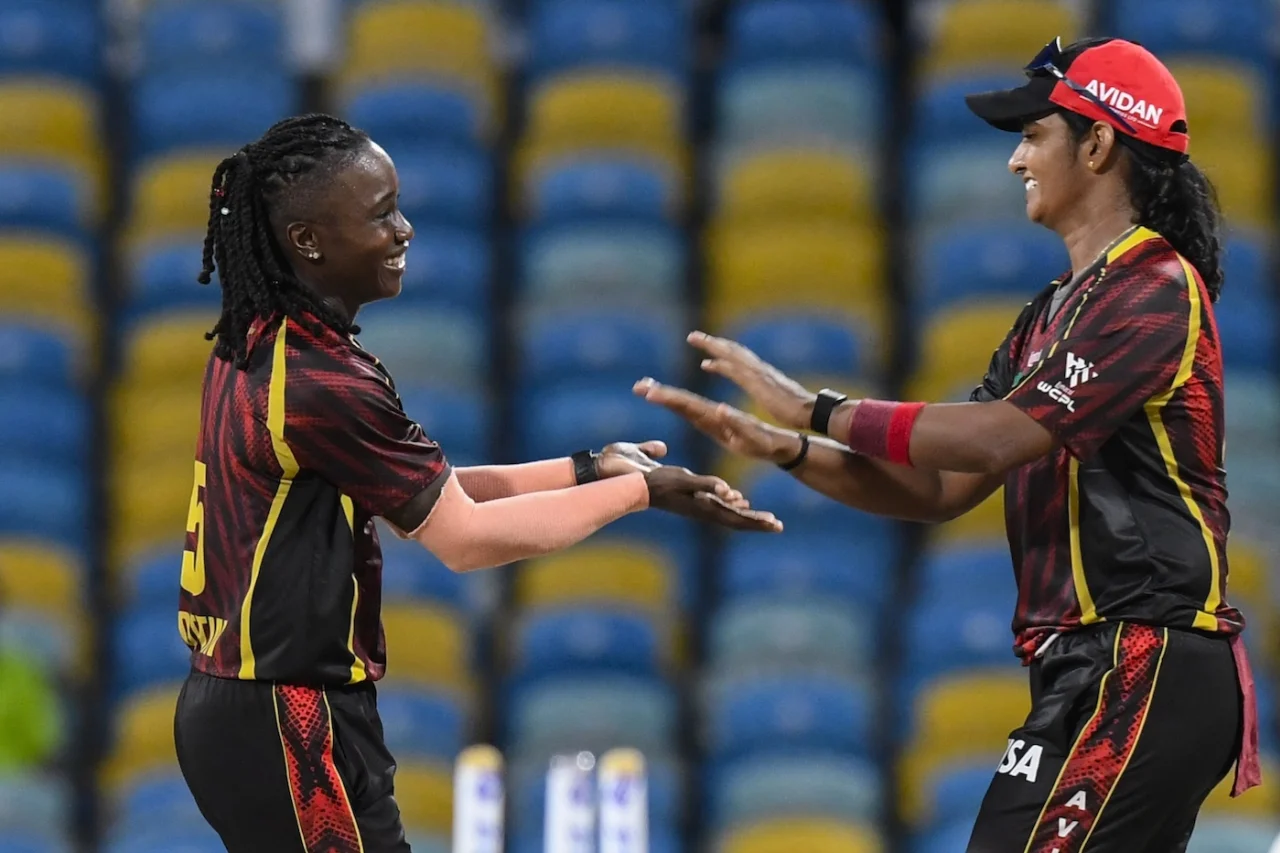
    The West Indies women’s cricket squad remains undefeated through two group-stage matches at the ICC Women’s T20 World Cup, but vice-captain Chinelle Henry is not shying away from addressing critical gaps in the team’s performance ahead of their upcoming fixture. Fresh off a nail-biting seven-run win over Scotland in Leeds last Thursday, the side has secured two consecutive victories to hold second place in Group B, trailing only hosts England on net run rate with both nations yet to drop a single match. This strong start keeps the Caribbean side firmly in the hunt for a knockout-stage spot, but Henry has openly flagged power play bowling as a key area requiring urgent adjustment to prepare for harder challenges ahead.

    All-rounder Henry, who missed West Indies’ opening group fixture after picking up an injury in the team’s final pre-tournament warm-up match, was cleared by medical staff to feature against Scotland, and she said her return to the pitch came down to a collective call from the team’s support and leadership groups. “Winning two opening games is undeniably a positive result that has put us in an excellent position in our group,” Henry noted in a post-match press interaction. “As we’ve repeated from the start of the tournament, there are no easy fixtures here – every side brings their best. That means it’s time for us to go back to the practice drawing board and refine our approach.”

    “Our bowling unit needs to sit down and review the first six overs of our innings, figure out what adjustments we can make to get better results out of that power play phase,” she added. “That said, the entire group has performed incredibly well so far, and we just need to keep backing our individual skills and trusting one another as we move forward.”

    Henry emphasized that this edition of the T20 World Cup is shaping up to be one of the most competitive tournaments in the event’s history, with every nation fighting hard to secure wins, making any outcome or victory prediction impossible to make ahead of time. On Sunday, West Indies will shift their full focus to their third group-stage fixture against Sri Lanka in Bristol, where a win would put the side on the cusp of a semi-final berth. Even with this high-stakes encounter on the horizon, Henry said the team is sticking to a pragmatic, game-by-game approach rather than looking ahead to knockout rounds.

    “The group table is still completely wide open, so our only goal is to win every remaining fixture we have, and leave nothing to chance,” Henry explained. “We saw firsthand how hard Scotland pushed us in that last game – every side is hungry to compete. We’re just focusing on taking each match one at a time, and playing our best cricket every time we step out onto the field.”

  • 2026 World Cup : Haiti, outclassed by Brazil, loses [3-0] and is eliminated (video)

    2026 World Cup : Haiti, outclassed by Brazil, loses [3-0] and is eliminated (video)

    In the second Group C match of the 2026 FIFA World Cup held on June 19, 2026 at Philadelphia’s nearly full-capacity Lincoln Financial Field, which drew 68,324 in-person spectators, Brazil’s Selecao secured a critical 3-0 win over Haiti’s national men’s football team, the Grenadiers. The result officially knocks Haiti out of the 2026 tournament, marking their second consecutive loss after a narrow 1-0 defeat to Scotland in their opening group fixture.

    Going into the match, Haitian head coach Sebastien Migné designed a defensive 5-4-1 formation to counter Brazil’s attacking 4-2-3-1 setup led by manager Carlo Ancelotti. Haiti’s resistance crumbled early, after right-back Carlens Arcus picked up a fourth-minute yellow card for an aggressive early challenge. Brazilian striker Matheus Cunha broke the deadlock in the 23rd minute, tapping home a precise setup from star winger Vinícius Júnior to put Brazil up 1-0. Cunha doubled his tally 13 minutes later, again connecting with a cross from Vinícius Júnior to extend Brazil’s lead to two goals. Just before halftime, in the third minute of stoppage time, Vinícius Júnior got on the scoresheet himself, converting a brilliant assist from Lucas Paquetá to make the score 3-0, putting the result out of reach before the teams entered the locker room.

    Migné made immediate tactical substitutions at the start of the second half, bringing on Wilson Isidor to replace striker Frantzdy Pierrot and Dany Jean Simon to take over from the yellow-carded Arcus. The adjustments yielded a more balanced second half, with the revised Grenadiers lineup showing more attacking enterprise and defensive discipline, successfully slowing down Brazil’s high-powered attack. Haiti managed to create a small number of promising chances, most notably through left-sided playmaker Jeanricner Bellegarde and striker Josué Casimir, but Brazil’s experienced defensive core led by center-back Marquinhos and goalkeeper Alisson held firm to keep a clean sheet. The full-time score remained 3-0 in Brazil’s favor.

    Despite the elimination, the match highlighted Haiti’s competitive spirit against a top-ranked global opponent. The result also reshapes Group C standings: Brazil bounces back from an opening-match draw with Morocco to claim the top spot in the group with 4 points from two matches, level on points with second-place Morocco, which also holds one win and one draw. Scotland sits in third with 3 points after one win, while Haiti remains at the bottom of the table with zero points from two matches and no goals scored.

    Now eliminated from contention for a spot in the Round of 32, Haiti will wrap up their 2026 World Cup campaign with a final Group C fixture against Morocco on June 24 at Atlanta’s Mercedes-Benz Stadium, kicking off at 6:00 p.m. local time. The Grenadiers will look to play the role of spoiler in the group’s final match, aiming to end their first World Cup appearance in decades on a positive high note against the 2022 tournament semi-finalists, currently ranked as the top national team in Africa.

  • Derde helft WK 2026: VS boekt eerste dubbele WK-overwinning in 96 jaar

    Derde helft WK 2026: VS boekt eerste dubbele WK-overwinning in 96 jaar

    At the 2026 FIFA World Cup hosted in Seattle, the United States men’s national team carried the momentum from their impressive opening win over Paraguay into their second group stage match against Australia on June 19. Buoyed by a raucous home crowd at Seattle Stadium, the Americans got off to a flying start, leaving the Socceroos struggling to keep pace for much of the fixture en route to a historic 2-0 victory.

    Right from the opening kickoff, the US pushed high and pressed aggressively, aiming to put Australia on the back foot early. Just five minutes in, forward Folarin Balogun carved open the Australian defense with a clever run, playing a delicate lobed pass into the path of striker Ricardo Pepi that was only just cut out by an alert Socceroos defender. The Americans felt the absence of captain Christian Pulisic, who missed the clash through injury, but his teammates stepped up quickly to fill the void left by their star playmaker.

    The home side broke the deadlock in the first half courtesy of an unfortunate own goal. After Balogun drove into the box and played a low, sharp cross across the six-yard box, Australia’s Cameron Burgess deflected the ball into his own net under pressure, sending the capacity home crowd into raptures. From that point, the US dominated play down both flanks, with dynamic combinations from Weston McKennie and Sergiño Dest keeping Australia’s defense constantly pinned back. The Socceroos struggled to find any rhythm against the Americans’ blistering pressing and sharp, accurate passing, with McKennie coming close to doubling the lead shortly after the opening goal, only for his effort to be cleared off the line at the last moment.

    As halftime approached, the US doubled their lead from a set piece. Sergiño Dest took a free kick on the edge of the penalty area, and his powerful low shot deflected off an Australian defender, bouncing into the air towards the back post. Alex Freeman rose above the defense to power a header into the net, sending the stadium into a second wave of celebration. The moment of joy was briefly paused for a VAR check, with match officials needing to confirm that Freeman was not offside when he made the header. After several tense minutes of review, the goal was confirmed to be valid, leaving the home crowd breathing a collective sigh of relief and cementing the US’s 2-0 lead going into halftime.

    Seven minutes of stoppage time were added to the end of the first half, which the US saw out comfortably, with Australia unable to create any clear cut chances before the break. After halftime, Australia manager made three attacking substitutions to inject fresh energy into his side, bringing on Nestory Irankunda, Connor Metcalfe and Jason Geria. The changes immediately turned the tide of the second half, with the Socceroos looking far more dangerous going forward. Irankunda caused constant problems down the right flank, delivering a series of dangerous crosses into the box, while Metcalfe forced US keeper Matt Freese into a smart save with a well-struck long-range effort. Despite their improved attacking output, Australia still could not find a way through the US’s well-organized defense.

    With a two-goal lead to protect, the US adopted a more controlled, possession-based approach in the second half, managing the game tempo effectively while soaking up Australia’s increased pressure. The Socceroos still had several close calls: Irankunda had a strong penalty appeal turned down by the referee, and Volpato saw a powerful effort drift just over the crossbar late in the game.

    German referee Felix Zwayer, the match official, was kept busy throughout the 90 minutes, dishing out multiple yellow cards for hard tackles from both sides, a decision that occasionally drew boos from the crowd. But the most memorable moment of the entire match came in the closing stages, when Zwayer suddenly suffered a cramp and collapsed to the ground. In a heartwarming display of sportsmanship, Balogun immediately went over to help stretch the referee’s calf, while other match officials rushed over to provide assistance. The crowd broke out into warm applause as Zwayer recovered enough to continue the match.

    In the final minutes, US manager Mauricio Pochettino brought on fresh substitutes to see out the game and protect the two-goal lead. When the final whistle blew, the US had secured their second consecutive World Cup win – a feat the nation had not achieved in 96 years. The historic victory keeps the US perfectly positioned to advance out of the group stage, capping off a match filled with attacking passion, fierce competitive fight, and an unexpected moment of sportsmanship that reminded fans of the human side of the beautiful game.

  • HOSTS ROLL ON!

    HOSTS ROLL ON!

    SEATTLE, Wash. – Co-host nation the United States has booked its place in the FIFA World Cup knockout stage one match ahead of the end of group play, turning in a polished 2-0 performance against Australia on Friday that has ramped up already soaring expectations among the home fanbase. The U.S. becomes the second co-host, following Mexico, to secure progression out of the group stage, and could lock in first place in Group D should Turkey drop points against Paraguay later the same day.

    Buoyed by a dominant opening win over Paraguay the previous week, American anticipation for the clash had been building for days. The sunny matchday in the Pacific Northwest delivered every bit of the excitement the thousands of red-and-white clad fans packed into Lumen Field – and the crowds that spilled out into surrounding streets and sports bars – had hoped for. Long known as the home of the NFL’s championship-winning Seattle Seahawks and a longstanding hotbed for club soccer via the MLS Seattle Sounders, the venue shook with pre-kickoff chants of “USA” long before the first whistle.

    Missing star winger Christian Pulisic, who was unable to recover from a nagging calf injury in time for the fixture, head coach Mauricio Pochettino adjusted his tactics, shifting to a 4-4-2 formation and bringing in second striker Ricardo Pepi to fill the gap in the attack. For the second consecutive match, the U.S. grabbed an early opening goal, this time from an 11th-minute Australian own goal. Star American striker Folarin Balogun made a run down the left flank, cutting a low pass back across the goal line from the byline. Under heavy pressure from the waiting Pepi, Australian defender Cameron Burgess accidentally redirected the ball into his own net to put the U.S. up 1-0.

    Australia, who surprisingly opted to leave both of their goalscorers from the opening upset win over Turkey on the bench to start the match, struggled to create meaningful attacking opportunities for most of the first half. The U.S. dominated possession and looked sharp on the break, with midfielders Weston McKennie and fullback Sergino Dest building consistent dangerous chemistry down the right wing. The Americans doubled their lead in the 44th minute on what was actually their first on-target shot of the entire match.

    Taking a right-sided free kick near the byline, Antonee Robinson passed up the crowded penalty box to find an unmarked Dest at the top of the 18-yard box. Dest’s initial shot was blocked and looped high into the air, where young midfielder Alex Freeman – the son of former Super Bowl-winning NFL wide receiver Antonio Freeman – rose first to nod a header past Australian goalkeeper Patrick Beach. The offside flag initially went up to rule the goal out, but a VAR review overturned the call, sending the home crowd into a second celebration of the half.

    Australia made three halftime substitutions, bringing on Connor Metcalfe and Nestory Irankunda – the two goalscorers from their opening win against Turkey – and pushed their defensive line higher to press for an equalizer. The move nearly backfired immediately, when Balogun broke through on a through ball for a one-on-one chance, only to miscontrol his touch and see his shot blocked by a recovering defender. Australia’s clearest chance of the match came in the 62nd minute: attacking playmaker Cristian Volpato, who switched his international allegiance from Italy to Australia just before the tournament began, skied his shot over the bar after a perfect cutback pass from Irankunda.

    As the U.S. dropped back to protect their lead in the final 20 minutes, Australia turned up the pressure: Metcalfe saw a long-range shot saved by U.S. goalkeeper Matt Turner, Irankunda was fouled by U.S. center back Chris Richards while breaking into the box, and defender Jason Geria had a close-range effort blocked by a last-ditch American tackle, making for a tense closing stretch for the home side. Despite late scuffles between players from both teams, the U.S. held firm to secure a clean sheet and all three points.

    The result means the U.S. can enter their final group stage match against Turkey next Thursday with no pressure, already guaranteed a spot in the round of 32. With the advantage of playing on home soil and two strong wins to open the tournament, U.S. supporters are already daring to dream of a deep run, with the team targeting a spot in the quarter-finals – a stage the country hasn’t reached since 2002 – and potentially further.

  • Shericka Jackson runs her fastest 100m in three years to win national title

    Shericka Jackson runs her fastest 100m in three years to win national title

    KINGSTON, Jamaica — On a warm Friday evening at Kingston’s iconic National Stadium, Shericka Jackson delivered a masterclass in competitive running to secure the women’s 100m crown at the Jamaica Athletics Administrative Association’s annual national championships, clocking a well-calibrated season-best time of 10.81 seconds against a gentle -0.3m/s headwind.

    Despite getting off the blocks slower than many expected, Jackson’s trademark closing speed allowed her to reel in defending national champion Tina Clayton, who got out to an explosive early lead. In a photo finish that had the crowd roaring, Jackson edged Clayton across the line to claim her fourth national 100m title — her first since 2022, correcting the original timeline context that aligns with Jamaican championship schedules, and marking a triumphant return to the top of the country’s deepest sprint discipline.

    Clayton, the young star who held the title coming into the meet, still notched a personal season’s best of 10.85 seconds to take home second place. Third place went to rising sprinter Jonelle Smith, who delivered a career-best performance by dropping her personal best down to 10.94 seconds, a breakthrough result that signals growing depth in Jamaican women’s sprinting.

    Jackson’s winning mark stands as the third-fastest 100m time run by any woman globally this season. It trails only the 10.63 seconds clocked by Adaejah Hodge of the British Virgin Islands and the 10.80 seconds recorded by fellow Jamaican sprinter Shenese Walker. Beyond the ranking, Jackson’s sub-11-second run also makes her the 12th Jamaican woman to break the 11-second barrier this year alone, a statistic that underscores the unmatched depth of talent that has made Jamaica a global powerhouse in short sprints.

    Reporting by Paul A Reid