分类: sports

  • Qatar earn first ever World Cup point with late goal to draw with Switzerland

    Qatar earn first ever World Cup point with late goal to draw with Switzerland

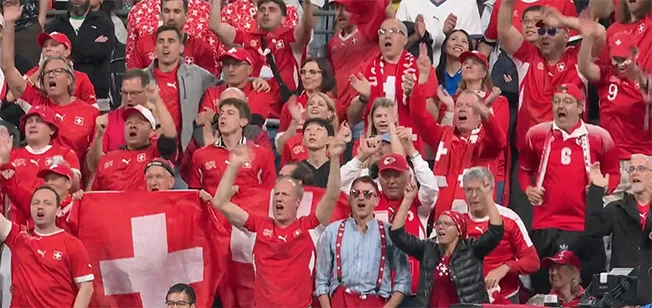
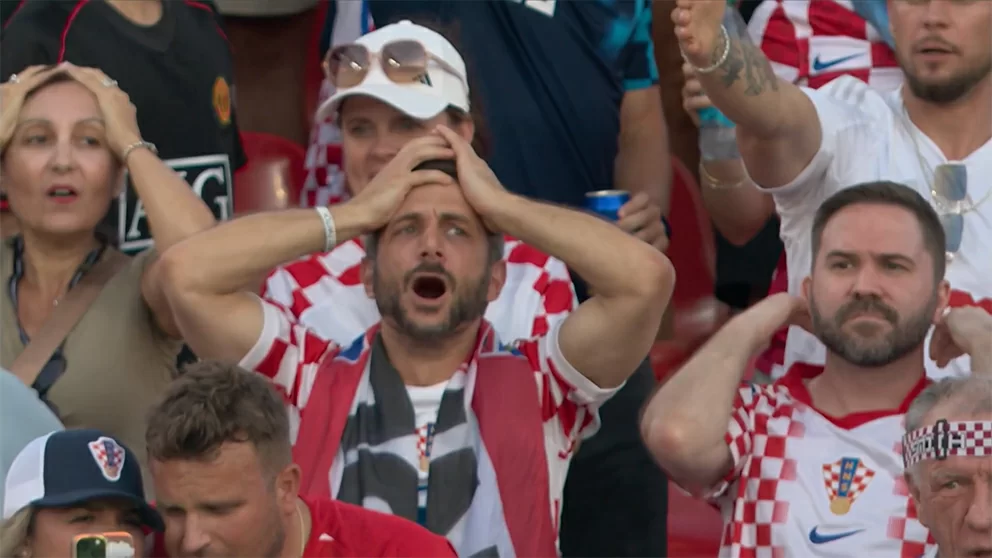
    SANTA CLARA, Calif. – In a stunning turn of events that capped off 90 minutes of one-sided play, Qatar’s veteran defender Boualem Khoukhi scored a dramatic injury-time equalizer to secure a historic 1-1 draw against Switzerland in their 2026 FIFA World Cup Group stage opener on Saturday, held at Levi’s Stadium in the San Francisco Bay Area.

    Switzerland, favored to claim all three points heading into the matchup, got off to a fast start after an early penalty broke the deadlock. Just 13 minutes into the first half, a collision between Qatar goalkeeper Mahmoud Abunada and Swiss midfielder Remo Freuler led to a spot-kick for the European side, despite ongoing debate over an apparent offside in the build-up. After a four-minute VAR review to confirm the decision, forward Breel Embolo sent Abunada the wrong way to put his side ahead.

    The opening 45 minutes saw Switzerland dominate possession and chances, pinning Qatar deep in their own half for nearly the entire frame. The Asian side nearly equalized against the run of play moments before halftime, when a rare counter-attack saw Edmilson Junior test Swiss goalkeeper Gregor Kobel from distance, forcing a solid save to keep Switzerland’s lead intact.

    Qatar entered the tournament facing significant pre-match disruption: two scheduled warm-up friendlies were canceled amid escalating conflict in the Middle East, leaving the side with just three competitive matches since December 2024, and they visibly struggled to find rhythm through most of 90 minutes. Playing under blistering midday California sun, the underdog side set up to defend their one-goal deficit through most of the second half, with Switzerland continuing to carve out opportunities but failing to convert. The closest the Europeans came to doubling their lead was a long-range strike from Granit Xhaka that whistled just over the crossbar, and a loose Embolo finish that settled into the side netting.

    By full time, Switzerland had outshot Qatar 26-5, but their repeated wastefulness in front of goal came back to haunt them. Four minutes into stoppage time, 35-year-old Khoukhi rose unmarked at the back post to power a bullet header past Kobel, sparking chaotic celebrations on the Qatar bench and securing the country’s first ever World Cup point – a milestone after they were eliminated in the group stage as hosts in 2022, their only previous appearance at the tournament.

    The draw also marks a landmark moment for Qatar manager Julen Lopetegui, who was managing his first ever World Cup match after a high-profile 2018 snub. The 59-year-old Spanish coach had originally been set to lead his home nation at the 2018 Russia World Cup, but was fired just days before the tournament kicked off after it emerged he had agreed to take over Real Madrid following the competition. Saturday’s result marked his long-awaited debut on the world’s biggest football stage.

    For Switzerland, the result will raise alarms for manager Murat Yakin, who is targeting a fourth consecutive knockout stage appearance for the side. Failing to secure all three points against a fatigued, underprepared Qatar side leaves their progression hopes hanging in the balance ahead of their next group fixture.

    Up next, Switzerland will face Bosnia and Herzegovina this coming Thursday in Los Angeles, while Qatar will take on co-hosts Canada the same day in Vancouver.

  • Ancelotti and Brazil face tough opening test at World Cup

    Ancelotti and Brazil face tough opening test at World Cup

    The 2026 FIFA World Cup, expanded to 48 teams for the first time in tournament history, kicks off its first full matchday this Saturday with a stacked slate of four games headlined by a blockbuster Group Stage clash between five-time champions Brazil and 2022 semi-final underdogs Morocco at New Jersey’s iconic MetLife Stadium.

    Brazil, the most decorated national team in men’s football history, enters the 2026 tournament looking to snap a 24-year title drought, a dry spell that has stretched back to their last championship win in 2002. Tasked with ending that wait is legendary Italian manager Carlo Ancelotti, who is making his first appearance at the World Cup as a head coach after taking the helm of the Seleção. Ancelotti struck a confident tone in pre-tournament press briefings, arguing his squad has what it takes to compete with any side in the world.

    “It’s a new experience, it’s a new responsibility to represent the country of football,” Ancelotti said Friday. “We have a team that can compete with every team in the world, we’re convinced of that. It’s a team with quality and experience, and with absolute confidence that it can compete with anyone.”

    The Brazilian side is not without its challenges heading into the opening clash. They scraped through South American qualifying, finishing fifth after dropping six of 18 matches, a result that would have sent them to inter-confederation playoffs under the tournament’s old 32-team format. Key attacking players Rodrygo and Estevao have already been ruled out of the tournament through injury, and veteran superstar Neymar will miss the opening match as he continues his recovery from a knock that has kept him out of international play since 2023. That leaves the bulk of Brazil’s attacking responsibility on the shoulders of Real Madrid star Vinicius Junior, who notched 22 goals for his club last season and will be expected to carry the team’s offensive threat against Morocco.

    Morocco, who made history at the 2022 Qatar World Cup as the first African nation to reach a World Cup semi-final, poses a serious early test for the South American giants. The side comes into the 2026 tournament as the de facto African champions, awarded the 2025 Africa Cup of Nations title on home soil after original winners Senegal were stripped of the cup following a chaotic final. Senegal walked off the pitch in extra time to protest a late penalty decision, resulting in their win being vacated. New Moroccan manager Mohamed Ouahbi, who took over from Walid Regragui in March, acknowledged the magnitude of the opening clash but said his side is ready to compete.

    “It’s a match that will tell us where we stand, but I think we’re in a good place to start this competition,” Ouahbi said. “Lots of people say it’s not the Brazil of old, but it’s still Brazil.”

    Saturday’s matchday also marks a historic return for Scotland, who are making their first World Cup appearance in 28 years after missing every tournament since 1998. The Scots, backed by their famous traveling supporter group the Tartan Army, will open their campaign against Haiti in Boston. Haiti, who have not played at a World Cup finals since 1974, will look to make their country proud amid ongoing political and economic turmoil at home. Scotland will pin their hopes on Napoli midfielder Scott McTominay, who became a national hero after scoring a stunning bicycle kick against Denmark last November to seal the side’s qualification.

    The remaining two matches on Saturday’s slate see 2022 host nation Qatar face Switzerland in Santa Clara, followed by a clash between Australia and Turkey to close out the day in Vancouver. Australia manager Tony Popovic said he is confident his side can exceed expectations at the expanded tournament, even against a tough opponent like Turkey.

    “If you ask every Australian, they expect to be right at the end because we always feel that we can punch above our weight,” Popovic said.

    Off the pitch, a visa controversy has cast a shadow over Ghana’s impending World Cup opener against Panama in Toronto next Wednesday. Ghana’s foreign minister Sam Okudzeto Ablakwa confirmed Saturday that the country has issued an official diplomatic protest over Canada’s refusal to grant a visa to star midfielder Thomas Partey, who is scheduled to go on trial in the United Kingdom on rape charges next year. Ghana is calling on co-host Canada to reverse what Ablakwa called its “unfortunate decision”.

    The tournament’s first matchday, held Friday, saw co-host the United States open its home campaign with a dominant 4-1 thrashing of Paraguay in front of a sellout 70,000-strong crowd at Los Angeles’ SoFi Stadium, which included a host of A-list celebrity spectators such as Leonardo DiCaprio and Tom Cruise. Co-host Canada also earned its first ever World Cup point, coming from behind to secure a 1-1 draw with Bosnia-Herzegovina.

    England, who are chasing their first World Cup title since 1966, hit a minor pre-tournament snag after a shipment of the team’s equipment was stolen while en route from Florida to their Kansas City training base. Kansas City mayor Quinton Lucas announced on social media platform X that local officials are working to trace the stolen gear and identify all individuals involved in the theft.

  • Florida politicians with Jamaican, Caribbean roots bask in FIFA World Cup atmosphere

    Florida politicians with Jamaican, Caribbean roots bask in FIFA World Cup atmosphere

    As the 2026 FIFA World Cup unfolds across the United States, Canada, and Mexico, Caribbean-descended political leaders in South Florida are brimming with excitement over the event’s far-reaching economic and cultural benefits for their region. While all Florida-based World Cup matches will be hosted in Miami, Broward County – home to a large, tight-knit Jamaican and Caribbean diaspora community – is stepping into the global spotlight, carving out its own meaningful role in the historic tournament.

    Denise Grant, the Jamaican-born mayor of Lauderhill, a small Broward County city of roughly 75,000 residents, has spearheaded a local initiative branded “World Cup Comes to Broward County” to ensure the region leverages the tournament’s momentum. Even without hosting any official matches, Grant emphasized that Lauderhill and the broader county are positioned to capture significant spillover benefits, from increased bookings at local hotels and restaurants to one-of-a-kind cultural experiences for visitors and residents alike.

    In an interview with the Jamaica Observer, Grant expressed enthusiasm about opening South Florida’s unique Caribbean-centric community to global visitors. “We’re extremely engaged as a city, and we’re so proud to be part of this global moment,” she said. “There’s so much excitement across our community, especially among young people. We want them to get to experience this event firsthand, to carry this memory with them for years to come. We’re grateful for the chance to participate even without being an official host city.”

    Grant, a self-described “soccer mom” whose son Joshua serves as goalkeeper and captain of Jamaica’s Under-20 men’s national team, noted that even though Jamaica failed to qualify for the 2026 tournament, she is still eager to cheer on Caribbean representation. “I don’t have one specific team I’m rooting for, though I expect Argentina will put on an incredible show with Lionel Messi,” she said. “Jamaica didn’t qualify this time around, but we’re still proud of how our team performed. Haiti is here representing the entire Caribbean, and that’s something the whole region can get behind. This is going to be an unforgettable experience.”

    Lauderhill’s Jamaican-born vice mayor, Richard Campbell, has worked to turn that excitement into tangible community action. More than 20 years ago, Campbell founded the Caribbean Americas Soccer Association (CASA), a nonprofit that promotes football development across Caribbean diaspora communities. In the lead-up to the World Cup’s opening kickoff, CASA partnered with local sponsors to host two days of pre-tournament youth football matches across Broward County venues.

    The action kicked off on June 6 at the Lauderhill Sports Complex, where three matches were held, including a lopsided 9-0 win for Jamaica’s Under-20 team over Haiti’s youth side. The following day, tournament action moved to Broward County Stadium, where Jamaica’s Under-20s fell to Miami United’s youth team in a penalty shootout.

    Campbell argued that even a non-host community like Lauderhill deserves a spot in the World Cup’s historic moment. “We were lucky enough to get this opportunity to engage, so it was our job to make the most of it – not just for our local businesses, but for our young people,” he explained. “This exposure will inspire them for the rest of their lives. These kids could be our next big football stars, and it’s our responsibility as leaders to give them every chance to experience world-class football. We want to put Broward’s 31 cities on the global map, and this is the perfect moment to do that.”

    Looking at economic projections, Campbell noted that an estimated $1.3 billion in total visitor spending is expected to flow through South Florida over the course of the month-long tournament. “We just want our fair share of that economic activity,” he said. “We’ve been working to mobilize local businesses to get ready, to position themselves to welcome visitors from all over the world, and make sure Broward County is fully prepared.”

    Broward County Commissioner Hazelle Rogers, another Jamaican-born leader, echoed that call, extending a formal welcome to global visitors to explore her region during the World Cup. “Broward County welcomes the whole world,” Rogers said. “Our schools are home to 191 different languages, and we have residents from more than 204 countries represented here. We know how to host the world, so we’re inviting everyone to come experience South Florida with us during this incredible tournament.”

  • Vinicius earns Brazil draw with Morocco in World Cup opener

    Vinicius earns Brazil draw with Morocco in World Cup opener

    In a highly anticipated Group C opening clash at New Jersey’s MetLife Stadium on Saturday, five-time World Cup champions Brazil kicked off their campaign for a historic sixth title with an underwhelming 1-1 draw against 2022 World Cup semi-finalists Morocco, leaving questions hanging over Carlo Ancelotti’s side ahead of the knockout stage.

    Morocco got off to a flying start early in the first half, after manager Mohamed Ouahbi openly urged his squad to set aside any fear of facing the South American giants. Following close threats from midfielders Neil El Aynaoui and captain Achraf Hakimi that tested Brazil’s defensive line, 21st minute saw PSV Eindhoven forward Ismael Saibari break the deadlock with clinical finishing. Latched onto a precision through ball from Brahim Diaz, Saibari outpaced Brazil center backs Marquinhos and Gabriel Magalhaes before coolly chipping a scooped finish over onrushing Brazil goalkeeper Alisson Becker, putting the Atlas Lions up 1-0.

    Brazil’s search for an equalizer paid off just 11 minutes later, when Real Madrid star Vinicius Junior produced a moment of individual magic to level the score. Receiving a perfectly weighted pass from Bruno Guimaraes on the left edge of the 18-yard box, Vinicius cut inside onto his stronger right foot and fired a powerful shot into the far top corner, beyond the reach of Morocco goalkeeper Yassine Bounou. The goal injected much-needed momentum into a sluggish Brazil side, and before halftime, Lucas Paqueta came close to turning the tide with an acrobatic volley that was pushed away by a sharp save from Bounou.

    After the break, Brazil piled on continuous pressure in search of a late winner to secure all three points. A quick throw-in caught Morocco’s defense off guard, with Igor Thiago’s strike forced into another impressive save by Bounou. Subsequent efforts from Raphinha and Danilo both failed to find the back of the net, with both shots straight at the in-form Moroccan goalkeeper.

    In a dramatic late twist, Morocco nearly snatched all three points at the death. El Aynaoui’s long-range effort was parried by Alisson, and the Brazil goalkeeper had to react quickly to block Ayoube Amaimouni’s close-range follow-up, preserving the 1-1 scoreline until the final whistle.

    The result stretches Brazil’s undefeated streak in World Cup opening matches all the way back to 1934, but the performance will do little to silence critics who have questioned the side’s readiness to end a 24-year title drought. Ancelotti, the first foreign manager to lead Brazil at a World Cup, was hired to end the nation’s long wait for another trophy after a rocky fifth-place finish in South American qualifying. The Italian coach has maintained that his squad has the quality to compete with any side in the new expanded 48-team tournament, but he was missing Brazil’s all-time leading goalscorer Neymar for the opener, who continues to recover from a lingering calf injury that has kept him out of international action since 2023.

    Icons from Brazil’s last World Cup-winning squad in 2002 – including Ronaldo, Roberto Carlos and Kaka – were in attendance at the match to watch the current generation’s opening campaign. Next up for Brazil is a second group stage clash against underdogs Haiti, while Morocco will face Scotland in their next Group C fixture.

  • SAMBA TIME!

    SAMBA TIME!

    MORRISTOWN, U.S. — As Brazil counts down to its opening 2026 FIFA World Cup Group C clash with Morocco, five-time champion goalkeeper Alisson Becker argues that the widespread skepticism surrounding the Selecao’s title chances could actually be a secret weapon for the side when the tournament gets underway in North America.

    Speaking to reporters Thursday at Brazil’s training base in Morristown, New Jersey, the Liverpool first-choice goalkeeper drew on Brazil’s historic underdog success to frame current low expectations as an advantage. “It is a good thing that there are some doubts about the team, because that has been the case on other occasions in the past,” Alisson explained, referencing past Brazil squads that entered tournaments not tipped as favorites but still claimed the World Cup trophy.

    Brazil’s last world title came 24 years ago, a drought that has left the nation’s passionate fanbase eagerly anticipating a return to the top of global football. Most notably, the 2002 World Cup co-hosted by Japan and South Korea saw Brazil enter the tournament not as the leading contender, yet the side went on to lift the trophy — a parallel that lines up directly with 2026, where Brazil has also been omitted from most conversations about the tournament’s top contenders.

    Heading into the 48-team 2026 tournament, pre-match analysis has overwhelmingly centered defending champions Argentina, European title holders Spain and 2022 runners-up France, with England and Portugal also regularly cited as more likely winners than Brazil. This underdog status is nothing new for the current squad, which has navigated a rocky lead-up to the tournament.

    Alisson acknowledged that the group’s path to the 2026 World Cup has been far from smooth. “The current team has different characteristics compared to past sides. That last period was very difficult for all the players, for various reasons,” he said. After a chaotic South American qualifying campaign that saw Brazil sack two head coaches before Carlo Ancelotti took charge one year ago, the side only secured qualification by finishing fifth in the 10-team CONMEBOL group. But recent form has turned a corner: Brazil has claimed wins in its last three friendly matches, including a 6-2 rout of Panama and a 2-1 victory over Egypt just last week.

    The matchup between Brazil (ranked 6th in the current FIFA rankings) and Morocco (ranked 7th) at MetLife Stadium on Saturday stands out as one of the most highly anticipated group stage fixtures of this expanded World Cup. Following their opening game, Brazil will face Group C underdog Haiti before wrapping up its round-robin play against Scotland, with both sides targeting a strong opening result to build momentum for the knockout stage.

    Brazil has historic success on U.S. soil, having won the 1994 World Cup hosted by the country. But recent tournament performances have left fans disappointed: Brazil has been eliminated in the quarter-finals in four of the last five World Cups, including a devastating 7-1 semi-final defeat to Germany on home soil in 2014. Most recently, the 2018 Russia World Cup ended in a quarter-final loss to Belgium, while the 2022 Qatar tournament saw Brazil knocked out by Croatia in a penalty shootout.

    For 33-year-old Alisson, who is set to play his third World Cup having featured in every game for Brazil in 2018 and all but one match in 2022, dwelling on past disappointment is not an option. “On what happened in the past, I think in football you can’t afford to spend time wallowing,” he said. The goalkeeper also highlighted the positive shift brought by Ancelotti’s appointment: “Since Ancelotti came in, the atmosphere has been transformed. He has such a strong presence and doesn’t focus on controversial issues.”

    Alisson and his teammates took to the Columbia Park Training Facility pitch in Morristown for their final training session on Friday, one day ahead of the opening kickoff against Morocco, alongside star forward Vinicius Junior and backup goalkeeper Ederson.

    Alongside Saturday’s marquee Brazil-Morocco clash, three other group stage matches are scheduled: Group B play sees Qatar face Switzerland at 2:00 pm ET, Group C action continues with Haiti vs Scotland at 8:00 pm ET, and Group D wraps up the day’s play with Australia taking on Türkiye at 11:00 pm ET.

  • Walker, Oakley and Foreman win NCAA titles

    Walker, Oakley and Foreman win NCAA titles

    The final day of the 2025 NCAA Division I Outdoor Track and Field Championships at Eugene, Oregon’s iconic Hayward Field delivered a historic showcase for Jamaican collegiate athletes, as three competitors stormed to national titles in stunning fashion on Saturday.

    Leading the historic charge was University of Georgia’s Dejanae Oakley, the pre-race favorite for the women’s 400-meter who delivered a record-smashing performance that cemented her status as the world’s top athlete in the event this season. In a thrilling back-and-forth race, University of Southern California’s Madison Whyte held the lead out of the final curve and maintained her edge through the final 60 meters, before Oakley shifted into a higher gear, powered past her rival, and crossed the finish line in 48.80 seconds. The time not only shaved 0.12 seconds off Oakley’s previous personal best of 48.92 seconds, but also broke the all-time collegiate and championship record of 48.89 seconds set just last year by another Jamaican star, Nickisha Pryce. It also extends Oakley’s position at the top of the global world rankings for the event in 2025.

    In one of the biggest upsets of the entire championships, Florida State University’s Shenese Walker outperformed the heavily favored Adejah Hodge of the University of Georgia to take gold in the women’s 100-meter. Hodge had entered the final as the overwhelming favorite after running a world-leading and new NCAA record of 10.63 seconds in Thursday’s semi-finals, but Walker got out to a blistering fast start out of the blocks and held off the entire competitive field to cross the line in 10.88 seconds with zero wind assistance. Hodge finished just behind Walker to take silver in 10.93 seconds. University of Florida’s Gabrielle Matthews notched top-eight finishes in both short sprint events, placing sixth in the 100-meter in 11.12 seconds and fourth in the 200-meter in 22.29 seconds.

    Clemson University’s Shantae Foreman, who already earned a silver medal in the long jump earlier in the meet, capped off her championships with a dramatic, personal best performance to win the women’s triple jump. Entering the competition as the top-ranked triple jumper in the NCAA all season, Foreman grabbed the lead in the second round with a wind-aided mark of 14.14m, which sat just one centimeter ahead of home crowd favorite Sharifa Davronova of the University of Oregon. Davronova then pushed Foreman to the brink on her final attempt, jumping a wind-aided 14.15m to take over the top spot in the penultimate jump of the entire competition. Foreman responded in clutch fashion on her final attempt, delivering a massive 14.25m leap that not only secured her the national title, but also set a new personal best and a new Clemson University school record. The jump also moves Foreman to sixth place on the all-time list of Jamaican triple jumpers, surpassing former top competitor Kimberly Williamson. The result marks a major improvement from 2024, when Foreman finished second in the event. Texas A&M’s Machaeda Linton finished 12th overall in the triple jump with a mark of 13.24m.

    Several other Jamaican athletes also delivered strong top-16 finishes across the final day’s events. Ohio State University’s Janela Spencer narrowly missed a podium finish? No, Spencer claimed third place in the women’s 100-meter hurdles, clocking 12.79 seconds to edge out Texas Tech’s Tonie-Ann Forbes, who finished fourth just one hundredth of a second behind in 12.80 seconds. In the women’s discus throw, Texas A&M’s Abigail Martin placed eighth with a throw of 56.15m, while West Virginia University’s Annishka McDonald tied for 13th in the women’s high jump with a clearance of 1.79m.

  • Knicks beat Spurs to claim first NBA title in 53 years

    Knicks beat Spurs to claim first NBA title in 53 years

    On a historic Saturday night at San Antonio’s Frost Bank Center, New York Knicks point guard Jalen Brunson delivered a career-defining performance, scoring 45 points to fuel a dramatic come-from-behind 94-90 victory over the host San Antonio Spurs, securing the franchise’s first NBA championship in more than half a century.

    The Knicks closed out the best-of-seven championship series 4-1, denying rising young superstar Victor Wembanyama a fairytale title in his first NBA season, and hoisting the Larry O’Brien Championship Trophy for the first time since their 1973 Finals win. This victory marks the culmination of an unprecedented playoff run defined by resilience—Game 4 of the series already entered the record books as the biggest comeback in NBA Finals history, when New York erased a 29-point deficit to steal a win on the road.

    Saturday’s matchup followed a familiar script for the gritty Knicks. The young Spurs came out locked in on defense from the opening tip, with Wembanyama setting an early tone by blocking three shots in the first quarter to power San Antonio to a 23-13 lead—the lowest first-quarter point total for the Knicks all postseason. By the early second quarter, the 7-foot-4 French phenom stretched the Spurs lead to 16, and finished the first half with five blocks, tying an NBA Finals single-game record. San Antonio carried a 42-37 lead into halftime, and quickly rebuilt a double-digit advantage early in the fourth quarter. But for the fourth time in the series, New York clawed back from a double-digit deficit.

    Brunson’s historic 45-point outing broke a 54-year-old Knicks franchise record for points in a Finals game, previously held by franchise legend Willis Reed, who scored 38 points in Game 3 of the 1970 championship series against the Los Angeles Lakers. For his dominant performance across the series, Brunson was named Finals Most Valuable Player. Following the win, the soft-spoken guard expressed disbelief at the historic achievement.

    “I’ve got no words,” Brunson told reporters postgame. “I don’t know what I’m feeling. I’m in awe. Whenever someone counts us out, we find a way to come back and do something about it.”

    The game’s turning point came with 3 minutes and 40 seconds left to play, when Brunson was fouled while attempting a three-pointer, and sank all three free throws to put the Knicks up 86-85—their first lead since the opening minutes of the game. The Knicks never relinquished the lead after that: Game 4 hero OG Anunoby extended the advantage with a driving dunk to make it 88-85, and after the Spurs tied the game at 88-88, Brunson scored another go-ahead basket to put New York back on top, closing out the win from the free-throw line.

    Aside from Brunson’s historic scoring, Mikal Bridges added 14 points for the Knicks, while Josh Hart notched a double-double of 13 points and 11 rebounds. Starting center Karl-Anthony Towns struggled offensively, scoring just two points before fouling out in the fourth quarter, but contributed 10 rebounds, three steals and a critical late block that helped New York hold on.

    For the Spurs, Wembanyama turned in an impressive all-around performance in his first Finals appearance, finishing with 19 points, 14 rebounds and five blocks, while rookie guard Dylan Harper came off the bench to score 25 points for San Antonio. The young Spurs had already pulled off a massive upset in the Western Conference Finals, defeating the defending champion Oklahoma City Thunder to earn their spot in the title series, but couldn’t hold off the determined Knicks down the stretch. After the game, Spurs head coach Mitch Johnson acknowledged his team’s youth and accepted the result with grace.

    “We weren’t ready to win an NBA championship,” Johnson said. “The better team won. We did a lot of good things, and we didn’t finish the job. That’s what it is.”

    News of the Knicks’ historic win sparked immediate, jubilant celebrations across New York City. For months, the team’s dramatic playoff run had captivated the five boroughs, with tens of thousands of long-suffering Knicks fans gathering at neighborhood watch parties to watch the team inch toward their first title in 53 years. Within minutes of the final buzzer, the Empire State Building was illuminated in the Knicks’ signature orange and blue, and thousands of cheering fans packed the streets outside Madison Square Garden, the team’s Manhattan home. A large contingent of traveling Knicks fans also celebrated at the Frost Bank Center in San Antonio, where celebrity attendees included Britain’s Prince Harry, who sat courtside alongside NBA Commissioner Adam Silver alongside lifelong Knicks supporters.

  • Paul Gray claims Lindy Delepenha Golf Classic title

    Paul Gray claims Lindy Delepenha Golf Classic title

    KINGSTON, Jamaica — A local golfer has pulled off a standout victory at one of Jamaica’s most anticipated amateur school-alumni golf tournaments, outperforming a packed field of competitors to claim the top prize. Last Saturday at the Caymanas Golf Course, Paul Gray secured the overall championship title at the annual Lindy Delepenha Golf Classic, finishing the tournament with a total of 40 points to edge out his rivals. This win marks the first time Gray has taken home the tournament’s crown, a milestone he says was made possible in large part by his intimate familiarity with the Caymanas layout.

    As an alumnus of Kingston College, Gray entered the event as an outsider competing against a large contingent of past students from host school Munro College, and his deep knowledge of the Caymanas course — his home course — proved to be his greatest advantage. “I know this course inside out,” Gray shared in a post-victory interview. “It played exactly how I anticipated it would on Saturday, which let me focus on enjoying the round rather than scrambling to adjust to unexpected conditions.”

    Weather conditions could have thrown a wrench in the day’s play, but ultimately worked out in favor of the competitors. Gray noted that while the group initially braced for disruptions from expected rain, the afternoon turned out far more pleasant than forecast. “The whole afternoon was pretty decent. Once the sun came out, it stayed cool enough to play comfortably,” he explained. “We never dealt with any extreme heat or sudden rain delays, so everyone could just relax, focus on their game, and have a good time. The course itself was also in excellent shape, which made for a great round overall.”

    Organized annually by the Munro College alumni network, the Lindy Delepenha Golf Classic holds more than just competitive significance for participants. Beyond the trophy, the tournament serves as a key fundraiser for Munro College’s athletic programs, a mission that has grown even more critical in recent years after the campus suffered widespread damage from a major hurricane. Gray emphasized that even as a competing Kingston College alumnus, he deeply respects the work the event does for the Munro fraternity and the broader Jamaican golf community.

    In a playful nod to the inter-school rivalry at the heart of the event, Gray joked about his mindset heading into the tournament. “If I’m ranking Jamaican high schools, Kingston College is definitely first, Munro comes second,” he said with a grin. “My whole goal today was to make sure that ranking stayed exactly the same, even against all their best golfers. I know Munro alumni won’t love hearing that, but that’s the fun of this event.”

    Gray also highlighted the historical and cultural weight of the tournament’s namesake, Lindy Delepenha, a beloved and charismatic Jamaican sports figure who was an alumnus of Munro College. “This event is all about community spirit, honoring one of Jamaica’s great sporting icons, and supporting the next generation of athletes at Munro,” he said. “It doesn’t matter if you’re from KC or Munro or any other school — turning out to play here, in Lindy’s honor, means something special to every golfer that participates. This is an event I hope continues for decades to come.”

  • Derde helft WK 2026: Toernooi opent met rode kaarten, VAR-discussies en drinkpauzes

    Derde helft WK 2026: Toernooi opent met rode kaarten, VAR-discussies en drinkpauzes

    The opening matchday of the 2026 FIFA World Cup delivered non-stop drama across two Mexican host cities on Thursday, serving up five goals, three red cards, four scheduled water breaks and all the high-stakes intensity fans expect from football’s biggest global tournament. From an early sending-off to a last-gasp comeback win, the first day of the 48-team, 39-day competition set an early tone for what is shaping up to be a historic edition of the World Cup.

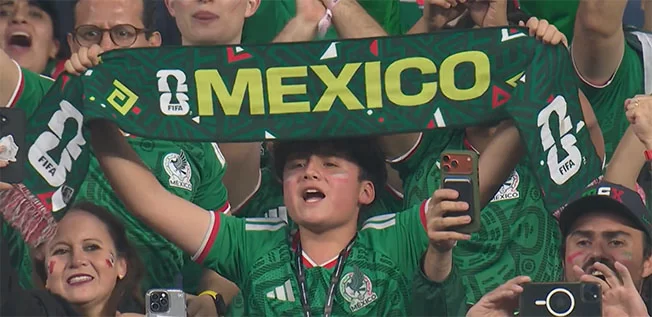
    One of the most talked-about outcomes of the opening day was the historic number of red cards issued during Mexico’s 2-0 victory over South Africa at the iconic Estadio Azteca. Referee Wilton Sampaio sent off three players across the match: South Africa’s Yaya Sithole and Themba Zwane, plus Mexico’s César Montes. To put that number in context, the entire 2018 and 2022 World Cups combined only saw four total red cards across 128 matches – meaning the opening fixture of 2026 nearly matched that full-tournament total in 90 minutes. It also falls just one short of the single-match World Cup record of four dismissals, set during the infamous 2006 “Battle of Nuremberg” between Portugal and the Netherlands. That 2006 tournament also holds the all-time record for most red cards in a single World Cup, with 28, leading observers to wonder if the 2026 edition could break that mark, given the early trend of strict officiating.

    The issuing of Zwane’s red card immediately reignited long-running controversy around the Video Assistant Referee (VAR) system. Sampaio initially opted not to show a red card after Zwane made contact with Mexico winger Roberto Alvarado’s face, but changed his decision after reviewing the pitchside monitor. While slow-motion replays were inconclusive, they suggested Zwane was attempting to navigate past Alvarado and made accidental contact, rather than swinging intentionally. Despite the unclear footage, Sampaio ultimately ruled the contact constituted violent conduct, a decision that drew sharp criticism from the South Africa camp. Head coach Hugo Broos argued the call was excessively harsh, noting Alvarado had blocked Zwane’s path and the contact did not merit a dismissal. “We have to accept the referee’s decision, but I do not think that was a red card,” Broos said after the match. “The contact was too soft to send him off.”

    Another new protocol making its World Cup debut on opening day also drew mixed reactions: mandatory scheduled water breaks, one in each half of play, regardless of matchday weather conditions. Introduced by FIFA to prioritize player welfare, the three-minute breaks immediately disrupted viewing experiences for fans, with multiple broadcasters cutting to full commercial breaks during the pauses. In the United States, Fox Sports drew widespread frustration from viewers when it cut away from live action to run ads during the second half water break of the Mexico-South Africa match, leaving fans unable to watch the end of the first half in real time.

    Coaches were also split on the new rule. United States head coach Mauricio Pochettino noted that while the breaks offer a welcome opportunity for staff to adjust tactics and address player issues, they are unnecessary when weather conditions are not extreme. “I don’t love it. I only think it’s needed when conditions are extreme,” Pochettino said. “For me it’s 50-50. It’s part of the tournament now, we accept it, it’s not a big problem that will change matches a lot.”

    While all the attention focused on the red card drama in the opening match, the second fixture of the day delivered its own memorable narrative, as South Korea pulled off a dramatic late 2-1 comeback win over Czech Republic. Son Heung-min, South Korea’s star talisman and tournament leader, was at the center of most of his side’s attacking chances, combining effectively with Lee Kang-in and Lee Jae-sung to carve out multiple opportunities in the first half. However, Son and his attacking teammates were unable to convert their chances, leaving the match deadlocked for much of the game.

    The two sides featured contrasting tactical approaches despite lining up in identical 3-4-3 formations: South Korea adopted a fluid, possession-focused style built around quick combination play, while Czech Republic relied on physical, direct football and set-piece chances to create danger. Even as Czech Republic applied early physical pressure, South Korea fought back to dominate possession, backed by a pro-South Korean crowd of neutral Mexican fans in Zapopan. Two second-half goals from Oh Hyeon-gyu and Hwang In-beom secured the comeback three points, despite Son’s missed chances.

    On Friday, the World Cup action continues with two more group stage fixtures: Canada faces Bosnia and Herzegovina in Group B at 16:00 local time, before the United States takes on Paraguay in Group D in the day’s late kickoff at 22:00 local time.

  • West Indies beat Sri Lanka in last-over finish in first T20

    West Indies beat Sri Lanka in last-over finish in first T20

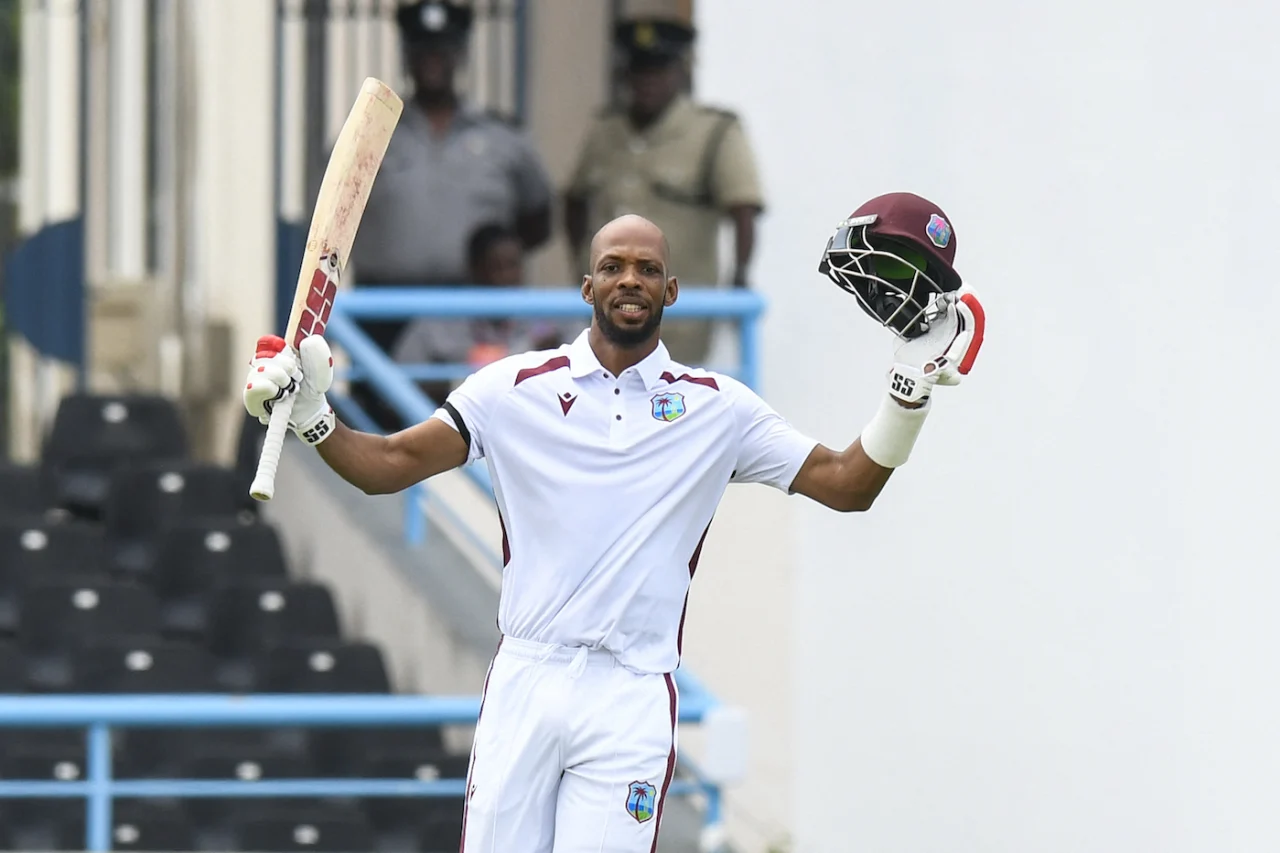
    The West Indies have claimed an early advantage in their three-match T20 International series against Sri Lanka, securing a tense seven-wicket win in the opening fixture at Kingston’s Sabina Park on Thursday night. Despite a small turn out, the crowd in attendance created an electric, boisterous atmosphere that lingered through the final dramatic moments of the match for the West Indies, known popularly as the Men in Maroon.

    Sri Lanka got off to a blistering start through their opening batting pair. Pathum Nissanka, who survived a dropped catch when he had only scored seven runs, went on to compile 43 runs, building a solid first-wicket stand with Kusal Mendis before veteran seamer Jason Holder claimed his wicket. That breakthrough triggered a steady collapse of Sri Lanka’s batting line-up, with the West Indies bowling attack tightening control over the run rate for most of the innings. A defiant half-century from Kamindu Mendis, who scored 51, stopped the lower order from folding entirely, but Sri Lanka still could only post a total of 147 runs for the loss of nine wickets from their full 20 overs.

    The West Indies pace attack delivered a standout performance to restrict the visitors. Shamar Joseph and Jason Holder shared six wickets between them, with Holder finishing with economical figures of 3 wickets for 18 runs and Joseph picking up 3 wickets for 29 runs. The fixture also marked a personal milestone for Holder, who brought up his 50th career wicket in T20 International cricket during the match.

    In response, the West Indies openers got their run chase off to a flying start. Captain Shai Hope, who remained unbeaten at the end of the innings, and opening partner Brandon King put on a 63-run opening stand that laid a strong platform for the home side. Shimron Hetmyer chipped in with a quickfire 17 runs from just 9 deliveries to keep the scoreboard ticking, but the run rate stalled in the middle and late overs. Roston Chase’s slow 16 runs from 26 balls epitomized the home side’s ongoing struggles in white-ball cricket: an inability to find consistent boundaries and rotate the strike effectively, an issue head coach Daren Sammy has long worked to fix with the side.

    The match went all the way down to the final over, with the West Indies still requiring six runs to win off the last six deliveries. With Hope holding his ground at the non-striker’s end having carried his bat through the whole innings, Jamaican hometown hero Rovman Powell hit a decisive six when the side still needed five runs, sealing the dramatic victory and putting the West Indies 1-0 up in the series.

    The two sides will return to Sabina Park for the second fixture of the series this Saturday, where the West Indies will have the chance to clinch the series with a win.