分类: sports

  • Derde helft WK 2026: Spanje herpakt zich tegen Saoedi-Arabië: 4-0

    Derde helft WK 2026: Spanje herpakt zich tegen Saoedi-Arabië: 4-0

    In a critical Group H World Cup fixture held at Atlanta Stadium on June 21, Spain delivered a dominant 4-0 victory over Saudi Arabia, bouncing back from a underwhelming opening-match draw that left fans and analysts questioning their form.

    Refereed by Brazilian official Raphael Claus, the high-stakes encounter carried equal pressure for both sides: while Spain needed a win to get their campaign back on track, Saudi Arabia knew a heavy defeat would all but crush their hopes of advancing to the knockout stage.

    Spain came out of the kickoff with aggressive, possession-based attacking football, controlling the tempo of the match from the opening whistle. With Saudi Arabia parking deep in their own half to absorb pressure, Spain sought to break the low block through long-range efforts and wide crosses. After a handful of early missed attempts, 18-year-old winger Lamine Yamal opened the scoring in the 10th minute, slotting a cross from Mikel Oyarzabal past Saudi goalkeeper Mohammed Al-Owais to put La Roja up 1-0.

    Just three minutes later, Álex Baena squandered a clear chance to double Spain’s lead, firing an uncontrolled shot well over the crossbar. Oyarzabal made no mistake minutes later, pouncing on a chaotic scramble inside the Saudi penalty area to tap home from close range, extending the score to 2-0. Before the first-half hydration break, the Real Sociedad forward struck again, tapping in his second of the match to put Spain up 3-0.

    In the 34th minute, Al-Owais gifted Oyarzabal a golden opportunity to claim a first-half hat trick after a misplayed pass landed straight at the forward’s feet inside the box, but Oyarzabal failed to convert the gift chance. The Spaniard had two more close opportunities to complete his hat trick before halftime, but the score remained 3-0 when the two sides headed to the changing rooms for halftime.

    Both Yamal and Oyarzabal were held out of the second half for rest, having done their damage in the opening 45 minutes. Shortly after the restart, Spain extended their lead to 4-0 when Marc Cucurella’s driven effort took an unlucky deflection off a Saudi defender and looped into the back of the net. Despite multiple additional chances for Pedro Porro and Ferran Torres to add to the scoreline, both players failed to convert their opportunities.

    After notching their fourth goal, Spain eased off the pressure and ceded possession to Saudi Arabia, who failed to capitalize on their newfound control of the ball and were unable to break down Spain’s defense to get on the scoresheet. The 4-0 result catapults Spain back into contention in Group H, significantly boosting their knockout stage qualification hopes while leaving Saudi Arabia’s tournament future hanging in the balance.

  • How Saint Lucia can get to the World Cup

    How Saint Lucia can get to the World Cup

    For decades, football fans on the Caribbean island of Saint Lucia—known locally as the Helen of the West—have only ever experienced the FIFA World Cup as distant spectators. The tiny island nation has never secured a spot in the world football’s most prestigious tournament, leaving local supporters to cheer for foreign squads that capture their attention through exciting playing styles and elite player talent.

    Now, a groundbreaking historic achievement by a fellow Caribbean CONCACAF nation has sparked serious discussion about what it would take for Saint Lucia to finally break its qualifying drought and earn a place at football’s top table. The potential blueprint? Curaçao’s 2026 World Cup run, which redefined what small nations can achieve on the global football stage.

    This year, Curaçao made its first-ever appearance at the World Cup finals, earning a spot in the Guinness World Records as the smallest nation by population to ever qualify for the tournament. With just 156,115 residents at the time of qualification, the island outperformed every other small nation in history to secure its historic spot. Though Curaçao suffered a lopsided 7-1 defeat to Germany in its opening match, simply reaching the finals stands as a landmark achievement for the autonomous constituent country of the Kingdom of the Netherlands.

    What makes Curaçao’s success particularly notable is its unorthodox team-building strategy: the overwhelming majority of its 26-man World Cup squad did not hail from the island itself. In fact, just one player was born in Curaçao; all other squad members were born in the European mainland, raised and professionally trained in the Netherlands’ elite youth football system. Thanks to Curaçao’s constitutional ties to the Kingdom of the Netherlands and familial heritage, these players were eligible to represent the island at the senior international level, and many chose to embrace their ancestral roots to play for the Blue Wave.

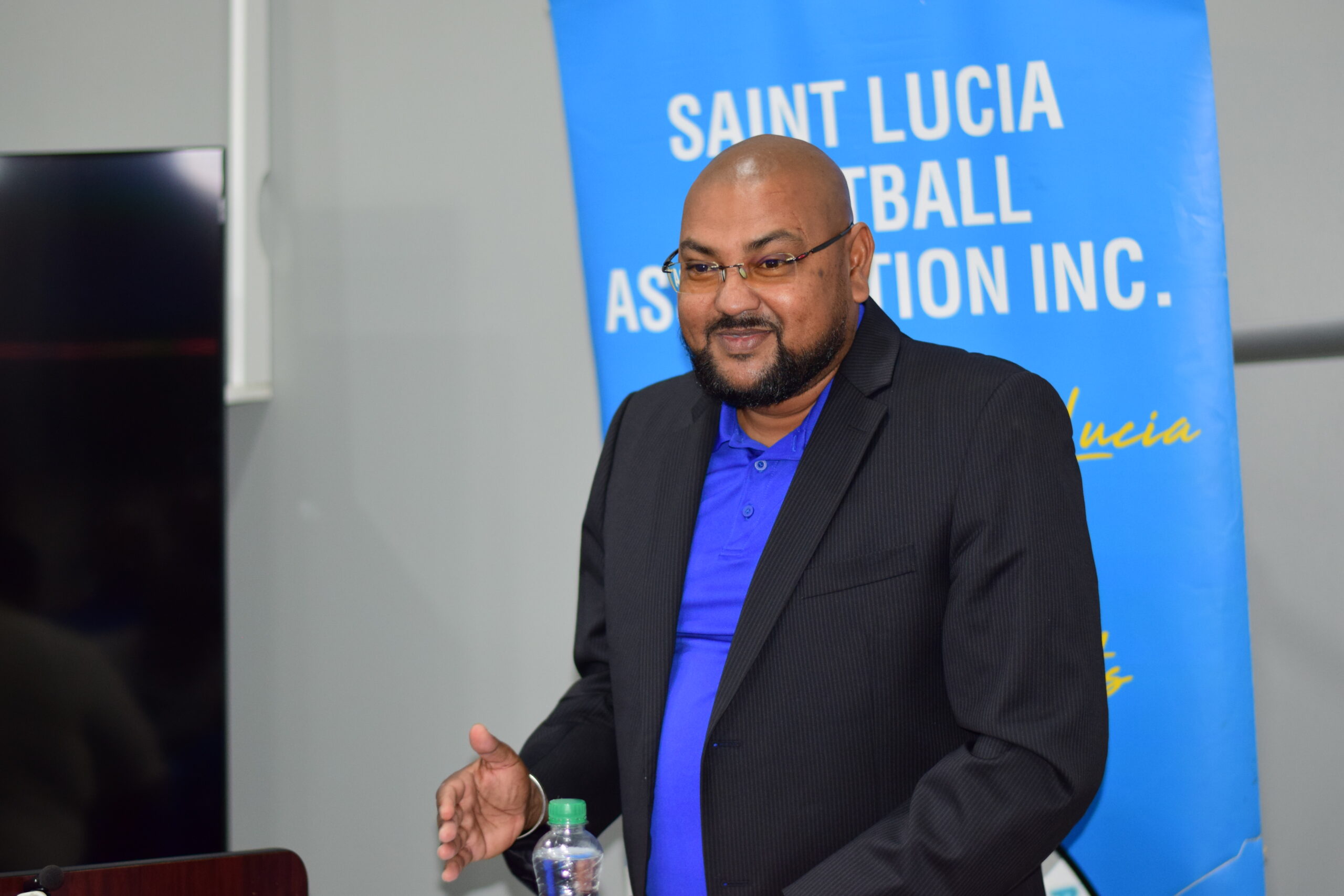
    The Curaçao model has drawn the attention of Saint Lucia’s top sports official, who is now exploring whether a similar approach could unlock his own country’s first World Cup berth. Speaking after observing Curaçao’s historic tournament run, Minister for Youth Development and Sports Kenson Casimir laid out his vision for regulatory and systemic changes to tap into Saint Lucia’s own large global diaspora of talented players.

    Casimir emphasized that Curaçao’s success was no accident: the island’s football federation invested years of intentional work into connecting with and recruiting second- and third-generation footballers of Curaçaoan heritage from across the Kingdom of the Netherlands, building a cohesive, professionally structured squad that small Caribbean nations have rarely been able to field. While the 7-1 opening match result was far from ideal, Casimir noted that Curaçao’s organized, structured style of play made clear that the strategy had delivered long-term results that few expected.

    “As a Minister of Sport, I was extremely jealous, and I pretty much got up the following morning thinking that we definitely need to do more by way of legislation to be able to attract more of our second and third generation footballers who are in England, who are in different parts of Europe, and, of course, South America and North America,” Casimir said.

    FIFA’s eligibility rules, laid out in Article 7 of the association’s statutes, already clear the way for this approach. Any player not born in a representative nation can qualify to play if they meet at least one of four criteria: they have at least one parent from the nation, at least one grandparent from the nation, they hold permanent residency or naturalized citizenship, or they lived in the nation from an early age. This framework has already been leveraged by other CONCACAF nations: Jamaica used diaspora recruitment to qualify for past World Cups, and Haiti followed the same strategy for its 2026 qualification.

    Curaçao’s path to the World Cup was also boosted by high-profile leadership. Former Barcelona and Netherlands striker Patrick Kluivert, who has Curaçaoan and Surinamese heritage, took over the national team in 2015 (and returned for an interim stint in 2021), using his global name recognition to convince talented diaspora players to commit to the side. This tactic of bringing in high-profile external leadership is not new: Trinidad and Tobago hired legendary Dutch manager Leo Beenhakker, formerly of Real Madrid and the Netherlands men’s national team, in 2005 to turn around their faltering qualifying campaign, ultimately helping them reach their first-ever World Cup.

    Casimir says big names—whether on the sidelines or the pitch—could deliver the same boost for Saint Lucia. He pointed to Arsenal youth star Myles Lewis-Skelly, who has Saint Lucian heritage, as an example of the untapped talent the nation could attract. “Can you imagine another nine or ten players on his level playing for Saint Lucia? We probably would have beaten Curaçao, we would have been Saint Lucia playing in that tournament,” he said.

  • HISTORY BECKONS!

    HISTORY BECKONS!

    DALLAS, U.S. (AFP) — World football’s biggest living icon Lionel Messi is set to bring his once-in-a-generation career to the AT&T Stadium in Dallas this Monday, as defending World Cup champions Argentina prepare to lock horns with Austria in their second Group L fixture — and with the 38-year-old just one strike away from rewriting the sport’s global record books.

    Just three days ahead of his 39th birthday, Messi delivered a masterclass to Argentina’s opening group game against Algeria, bagging a clinical hat-trick in a commanding 3-0 win that dragged him level with Miroslav Klose’s long-standing all-time World Cup scoring record of 16 goals. The moment carried extra emotional weight: Messi broke down in tears immediately after netting his first goal of the match, and it was later revealed that his father is currently recovering from an undisclosed health issue that has been weighing on the superstar’s mind.

    The Inter Miami forward had left lingering questions over his participation in the North America-hosted tournament right up until the final weeks before kickoff, but few fans or pundits ever truly believed he would miss the chance to lead Argentina in a bid to make history of another kind: becoming the first national side to defend the World Cup trophy since Brazil’s legendary 1962 squad. After dragging his country to long-awaited World Cup glory in Qatar four years ago, the allure of stepping onto the biggest stage in football one more time to represent his nation proved impossible for Messi to walk away from.

    Monday’s clash will be held at AT&T Stadium, the shimmering, air-conditioned home of the NFL’s Dallas Cowboys, a venue widely viewed as the ideal stage for Messi to surpass Klose’s 16-goal benchmark. Ever modest about his historic achievements, Messi downplayed the significance of the record ahead of the game, telling reporters: “In the end, it’s just a statistic and nothing more.”

    A win against Austria would put Lionel Scaloni’s side on the brink of qualifying for the round of 16 as Group L winners with one final group fixture still to play, a result that would give Messi valuable extra time to rest and recuperate ahead of the knockout stage. But Austria, led by highly respected manager Ralf Rangnick, will not be rolling out the red carpet for Messi’s record moment: they are also closing in on knockout stage qualification after picking up a solid 3-1 win over tournament debutants Jordan in their opening game.

    For long-time observers of Messi’s Argentina career, his current standing as the undisputed heart of the national side marks a stark shift from decades past. For years after his international debut, some Argentine fans questioned whether he brought the same match-winning brilliance to the national side that he displayed across 15 glittering seasons at Barcelona. Today, even as he approaches 39, Messi’s mere presence lifts his teammates both on and off the pitch, and the entire squad has built their system around the living legend.

    Following the win over Algeria, Argentina midfielder Alexis Mac Allister made clear the captain’s irreplaceable role in the squad: “If anyone thought this group was better off without Leo, today it became clear that Leo is the most important of them all.” While Messi no longer possesses the blistering pace that defined his peak playing days, and now rotates his minutes to conserve energy for key moments, his teammates have fully embraced taking on the gritty defensive and running work to free Messi up to produce his magic when it matters most.

    Scaloni, who was Messi’s teammate at the 2006 World Cup — the superstar’s first major international tournament — has deliberately constructed a team environment that lets Messi thrive. “He’s playing with a group of friends, with people that are going to play with their heart for him,” the Argentina manager said. “Whenever they need to have a conversation with him they can just approach him, and it’s really hard to explain whatever he conveys. I could stay here with you for over an hour trying to explain exactly what he does, but you need to be there to really understand. You need to understand the atmosphere, the ambience.”

    The cohesion between Messi and his Argentina side stands in stark contrast to the tension surrounding another aging legend at this tournament: Portugal’s Cristiano Ronaldo, who has become a disruptive headache for manager Roberto Martinez. By comparison, every member of Argentina’s squad has repeatedly emphasized their commitment to doing whatever it takes to let Messi tear through opposition defenses.

    Forward Julian Alvarez, who has played alongside Messi at both the international level and Manchester City, told DAZN: “He’s been my idol since I was a kid. Naturally, you want to repay that.” Inter Miami teammate Rodrigo De Paul put it even more bluntly: “He makes you want to go to war if he asks you to.”

  • Derde helft WK 2026: Dag 11 – Spanje en Iran in actie

    Derde helft WK 2026: Dag 11 – Spanje en Iran in actie

    As the 2026 FIFA World Cup enters its 11th day of group stage action, four eagerly awaited matches are scheduled to take place across North America on Sunday, headlined by defending European champion Spain’s clash with Saudi Arabia. Meanwhile, off-pitch developments, from Iran’s ongoing struggles with U.S. travel restrictions to a superstitious warning for French fans, have added extra layers of drama to the month-long global tournament.

    Defending European champions Spain got off to a rocky start in their World Cup campaign but will step onto the pitch at Atlanta Stadium in Georgia, United States, at 13:00 local time to face Saudi Arabia in Sunday’s marquee fixture. Spain enters the contest as the clear favorite to claim three points in the group stage encounter.

    Following the Spain-Saudi Arabia matchup, Belgium will face Iran at Los Angeles Stadium in California at 16:00 local time. For Iran, this match comes as the side continues to grapple with disruptive travel restrictions that have undermined their rest and recovery throughout the tournament. Per current U.S. rules, Iran is only permitted to enter the U.S. within 24 hours of their match in the country and must return immediately to their training base in Tijuana, Mexico after the final whistle. White House official Andrew Giuliani confirmed that while Washington continues reviewing its travel policies for Iran, existing restrictions remain in place for now, despite Iran’s threat to file an official complaint with FIFA over the unfair arrangements. Iran head coach Amir Ghalenoei has slammed the rules, calling his squad “the most oppressed team at the entire World Cup.” Giuliani noted that a decision on revised travel rules for Iran’s third group match against Egypt in Seattle will be made after Sunday’s clash with Belgium. Iran’s entire World Cup campaign has been overshadowed by geopolitical tensions between the U.S., Israel, and Iran, with the side facing months of uncertainty over whether they would even be allowed to compete before the tournament kicked off.

    The evening session will open with Uruguay taking on Cape Verde at Miami Stadium in Florida at 19:00 local time. While Uruguay is heavily favored to win the fixture, Cape Verde already proved its defensive resilience in the tournament’s opening round, holding defending European champion Spain to an unexpected 0-0 draw, making the contest far from a foregone conclusion. Sunday’s final match will see New Zealand face off against Egypt at BC Place in Vancouver, British Columbia, Canada at 22:00 local time. Egypt, which earned a 0-0 draw against Belgium in its opening fixture, enters the match as the favorite to claim victory. None of the eight teams competing on Sunday will either secure knockout stage qualification or elimination after this round of fixtures.

    Beyond Sunday’s scheduled matches, a number of off-beat and noteworthy stories have emerged from the World Cup host cities and competing squads. Ahead of France’s group stage match against Iraq on Monday, French supporters’ group Irresistibles Français has issued an urgent warning to traveling fans: leave the iconic Rocky Balboa statue in Philadelphia untouched. The warning comes after Ecuador decorated the statue with national team colors ahead of their match, and fans now blame that act for “monumental bad luck” that led to an unfavorable result. “Do not touch Rocky! To all French fans in Philadelphia: we urge you to be extremely cautious,” the group said in an official statement.

    In other team news, Belgium winger Jeremy Doku is facing a difficult scheduling conflict: he is expecting the birth of his first child during the tournament and has expressed a desire to be present for the delivery, a situation that could create tension with the Belgian national team setup.

    Earlier in the tournament, Germany secured its place in the knockout stage after a hard-fought 2-1 victory over Ivory Coast, with substitute striker Denis Undav scoring both goals to secure the win. Curaçao bounced back from a lopsided opening defeat to Germany to earn its first World Cup point, holding Ecuador to a 0-0 draw thanks to a standout clean-sheet performance from goalkeeper Eloy Room. Japan eliminated Tunisia from the tournament with a dominant 4-0 victory, making Tunisia the third team eliminated from the 2026 World Cup following Haiti and Turkey. Tunisia, which became the first African nation to win a World Cup match back in 1978, has never advanced past the group stage in its tournament history. After dropping its first two group stage matches, Tunisia can no longer qualify for the knockout round.

  • Cycling Community Rallies Around Tahjé Browne After Incident

    Cycling Community Rallies Around Tahjé Browne After Incident

    A wave of solidarity has swept through the global cycling community this week, as athletes, fans, and governing bodies rally around elite national cyclist Tahjé Browne following an unspecified incident during a routine Saturday morning training ride.

    The Windward Cycling Academy (WCA), which oversees Browne’s development and competitive career, released an official statement honoring the rider’s legacy of excellence, noting that he has represented the academy, the broader Antiguan and Barbudan cycling network, and the country itself with outstanding distinction throughout his career.

    The organization emphasized that all competitive priorities have been set aside in the wake of the incident, making clear that the entire community’s immediate focus rests entirely on Browne’s physical recovery, emotional healing, and overall well-being. “Right now, the race can wait,” the statement read, centering the athlete’s health above all upcoming competitive goals.

    WCA officials also highlighted Browne’s far-reaching impact on emerging talent in the region, pointing out that his unwavering commitment to cycling has already inspired a generation of young riders to pursue the sport. Officials praised his well-documented determination and resilience, traits that have defined his performance both on the race course and in his personal life off the bike.

    Expressing cautious optimism for his recovery, the academy noted that the same strength that has allowed Browne to overcome competitive and personal obstacles in the past will serve as a foundation for his healing process. “Rest. Heal. Come back stronger,” the statement concluded.

    As of the academy’s latest update, no further details regarding the specific nature of the incident or Browne’s current medical condition have been released to the public. In a closing appeal, WCA has encouraged members of the public across the region and beyond to hold Browne and his family in their thoughts and prayers as he begins his recovery journey.

  • LETTER: Antigua’s athletics need stepping up

    LETTER: Antigua’s athletics need stepping up

    In a recent open letter addressed to sporting authorities and national stakeholders in Antigua and Barbuda, a group of local athletics advocates has sounded the alarm over the steady decline of the country’s track and field program, calling for immediate, targeted action to reverse years of underperformance and stagnation.

    For decades, Antigua and Barbuda has produced talented sprinters and endurance athletes who have competed at the highest international levels, including the Olympic Games and World Athletics Championships. But in recent years, the sector has struggled with a cascade of systemic challenges that have undermined its ability to nurture new talent and compete regionally and globally.

    The letter outlines key gaps holding the sector back: outdated training facilities that lack basic equipment and proper maintenance, insufficient funding for youth development programs, limited access to professional coaching education for emerging trainers, and a broken pipeline that allows talented young athletes to fall through the cracks before they reach elite competition levels. It also notes that without intervention, Antigua and Barbuda risks losing its standing in regional track and field competitions, as neighboring countries invest heavily in their own athletics programs and pull ahead in performance results.

    Advocates argue that revitalizing athletics is not just about winning medals — it is a critical investment in youth development, public health, and national pride. A strong athletics sector provides young people across the country, especially those from underserved communities, with structured opportunities to build discipline, stay active, and pursue professional sports careers that can lift both themselves and their communities.

    The letter calls on the Antigua and Barbuda Ministry of Sports, the national athletics association, and private sector partners to collaborate on a comprehensive revitalization plan. Key proposals include upgrading national training facilities, expanding grassroots youth scouting programs in schools across the country, providing ongoing professional development for local coaches, and securing sustainable long-term funding to support athlete training and competition travel.

    Signatories emphasize that with the right investment and strategic focus, Antigua and Barbuda can reclaim its position as a competitive force in Caribbean athletics and unlock the potential of the next generation of elite track and field athletes. The public call to action has already sparked growing discussion among sporting officials and community leaders, with many signaling willingness to engage in talks to move the plan forward.

  • Public funds demand public accountability

    Public funds demand public accountability

    A long-simmering debate over public funding governance in Trinidad and Tobago’s national football scene has intensified, with Sport and Youth Affairs Minister Phillip Watts reaffirming that transparency, formal accountability, and rigorous financial oversight are non-negotiable requirements for any sporting body that receives taxpayer or public-backed funding.

    The minister’s comments came in response to questions from the *Sunday Express* about growing concerns over the Trinidad and Tobago Football Association (TTFA)’s management of funds allocated for its 2026 FIFA World Cup qualifying campaign. Watts framed the conversation not as an isolated issue targeting the TTFA, but as a matter of core principle that applies to every public-funded sporting entity across the nation.

    “Football holds such profound cultural and social importance for the people of Trinidad and Tobago that we cannot afford to leave any room for doubt about whether it is being managed in a way that prioritizes long-term, sustainable development,” Watts told the outlet. “Whenever questions emerge around governance, accountability, or strategic direction for any national sporting body, those concerns demand serious attention.”

    The controversy centers on a $6.79 million allocation from SporTT, Trinidad and Tobago’s sports development company, earmarked specifically for the TTFA’s World Cup qualifying campaign. To date, the association has not submitted required expenditure documentation for the funds, sparking questions from both regulators and the public. Additional reports have also raised questions about the TTFA’s mounting overall debt, despite receiving large government subventions and private sponsorship ahead of last year’s qualifying matches, with multiple groups including coaches, event vendors and administrative officials reportedly owed millions of dollars in unpaid payments. Another point of contention involves a $3 million sponsorship commitment from the National Gas Company (NGC), which has only released $1.5 million across two tranches, and has reportedly received no formal accounting for the spent funds despite repeated requests.

    TTFA president Kieron Edwards has pushed back against public criticism, arguing that claims of improper or irregular conduct are unfounded. He emphasized that any narrative suggesting misconduct based on delayed disclosure is misleading, noting that information related to the expenditure is reserved for formal review processes, not immediate public release. Edwards added that the TTFA takes its reporting obligations to SporTT extremely seriously, and that association teams are actively working to complete the required documentation. He explained that compiling and verifying comprehensive expenditure records requires a detailed, time-intensive auditing process, which the TTFA is committed to completing accurately and efficiently.

    In his formal responses to the *Sunday Express*’ questions, Watts outlined his clear stance on the situation. When asked whether he was satisfied with the TTFA’s financial compliance, he noted that all compliance matters must be handled with objectivity and rigor, and confirmed he had requested that official review processes be launched to confirm public funds have been properly accounted for and delivered expected public value.

    On questions surrounding the TTFA’s reported unpaid debts, Watts noted that specific details around individual payment obligations are best addressed directly by the TTFA’s leadership, but reaffirmed that transparency and accountability remain mandatory for any organization receiving public support, whether directly or indirectly.

    When asked about his level of confidence in the TTFA’s financial leadership and what guidance he would offer to Edwards and the TTFA executive, Watts said every sporting executive holds a core responsibility to manage their organization’s affairs with prudence, openness, and accountability. His core advice for the association’s leadership: build and maintain robust governance frameworks that earn and retain the trust of all stakeholders.

    On the topic of potential future public funding for the TTFA, Watts clarified that the ministry’s core mandate is to support sustainable sport development across the country, but that all public support must be tied to proper accountability. Any future requests for additional funding will only be considered after a full, clear assessment of past spending, current governance standards, and verified proven need, he said.

    When asked whether an independent audit of the TTFA is needed, Watts said he backs any lawful, appropriate process that can strengthen transparency and reinforce public trust. When concerns around financial management emerge, independent external scrutiny plays a critical role in clarifying outstanding questions and upholding accountability standards, he added.

    Addressing the unresolved NGC sponsorship accounting issue, Watts reaffirmed his core principle: any time public or private funding is allocated to support sport, timely and accurate accounting for how those funds are used is required. Any breakdown in this accountability process is a serious matter that must be resolved through proper, formal channels, he said.

    Watts also acknowledged that ongoing financial instability at the TTFA could have long-term repercussions for the future of football in Trinidad and Tobago. “I am concerned about any financial issues that threaten the long-term stability and growth of our national football,” he said. “Solid financial management is absolutely essential if we want the sport to develop properly, and if athletes, clubs, and all stakeholders are going to trust in our national football system.”

  • Derde helft WK 2026: Japan walst over Tunesië en zet grote stap richting achtste finales

    Derde helft WK 2026: Japan walst over Tunesië en zet grote stap richting achtste finales

    The 2026 FIFA World Cup delivered a dominant display from Japan on Sunday morning, as the Asian side cruised to a convincing 4-0 victory over Tunisia at Monterrey’s Estadio BBVA in Mexico. The lopsided result, which marked the historic 1000th match in FIFA World Cup history dating back to the inaugural 1930 tournament in Uruguay, puts Japan on the cusp of advancing to the knockout stage, while leaving Tunisia on the brink of early elimination.

    Japan came out of the gate with relentless energy, pressing Tunisia high and disrupting the North African side’s build-up play from the first whistle. It took just four minutes for the Samurai Blue to open the scoring, as Daichi Kamada coolly finished off a fluid attacking sequence after a precise setup from Keito Nakamura, setting the tone for the entire match.

    Tunisia struggled desperately to gain a foothold in the game after falling behind. The African side turned the ball over repeatedly in midfield, unable to cope with Japan’s high-intensity pressing and rapid positional rotations, and barely registered a dangerous chance on goal for the entire first half. The quality gap between the two sides became undeniable in the 31st minute, when striker Ayase Ueda doubled Japan’s lead, tapping home a clinical finish from a Ko Itakura pass to send Japan into halftime with a comfortable 2-0 advantage.

    Japan maintained full control of the match after the break, even as Tunisia was forced to push forward in search of goals, leaving gaps at the back that the Asian side exploited expertly. The match was put beyond all doubt in the 69th minute, when defender Junya Ito made an unexpected run into Tunisia’s penalty area and slotted home after a beautiful assist from Ueda, extending the lead to 3-0. Ueda completed his brace 14 minutes later, converting a cross from Kota Sano to lock in the final 4-0 scoreline.

    The lopsided win comes on the heels of Japan’s 2-2 draw with Netherlands in their opening group match, confirming the side’s status as one of the tournament’s most dangerous dark horses. Japan’s cohesive blend of structured positional play, high defensive intensity, strict tactical discipline, and blistering counterattacking pace has made them a formidable opponent for any side in the competition, with Ueda emerging as the standout performer of the match thanks to his two-goal haul.

    For Tunisia, the situation has become extremely precarious following the result. The North African side already suffered a heavy 5-1 defeat to Sweden in their opening fixture, and with two back-to-back losses and a poor goal difference of just one scored and nine conceded, early group stage elimination looks almost unavoidable.

    This tournament marks Japan’s eighth appearance at the World Cup finals. Since making their debut in 1998, Japan have developed into consistent competitors on the global stage, qualifying for the knockout round four times, and this current squad looks well-positioned to extend that record. Tunisia, by contrast, is competing in their seventh World Cup. Long ranked among the top football nations in Africa, the side has never managed to advance past the group stage in their previous appearances.

    To mark the historic occasion of the 1000th World Cup match, the officiating team wore a special gold edition of the FIFA emblem on their kits. With three points from two matches, Japan sit in a strong position in Group F heading into their final group fixture against Sweden, and can approach the game with plenty of confidence. For Tunisia, the task of turning their tournament around has become almost insurmountable.

  • Derde helft WK 2026: Achter de schermen van het WK

    Derde helft WK 2026: Achter de schermen van het WK

    When match cameras cut out and stadium crowds fade away, a whole other rigorous schedule begins for World Cup-starred footballers. The 90 minutes of on-pitch action only makes up a small fraction of their daily lives during the tournament. Behind the closed doors of opulent team hotels and heavily secured training complexes, every moment revolves around physical recovery, tailored nutrition, tactical strategy and mental preparation.

    From custom-built meal plans and ice baths to tactical video breakdowns, on-staff sports psychologists and carefully scheduled rest periods, no detail is left to chance. But how much personal freedom do these elite athletes actually get during their stay? Can their partners come to visit? Are they allowed to leave the compound to explore the host city? Do national team managers even dictate when players must put away their phones?

    For fans who assume a scheduled day off at the World Cup equals sleeping in and lazy relaxation, that assumption could not be further from the truth. In most squads, the daily routine kicks off early in the morning, even on supposed rest days. After a light breakfast, players go through routine medical checks, where physiotherapists and team doctors evaluate each athlete’s physical condition. Readouts of muscle tension, resting heart rate and post-match recovery metrics are then used to map out the rest of the day.

    For players who logged heavy minutes in the previous fixture, the entire day will center almost entirely on active recovery. Reserve players, by contrast, complete more intense training sessions to maintain their match fitness and rhythm ready for when they are called on. An on-field training session rarely lasts longer than 90 minutes, but every activity surrounding that block of work is tied directly to match preparation.

    Team nutritionists build individual eating plans for every player, tailored to their on-pitch position, body composition and the physical load they endure on match week. Carbohydrate, protein, vitamin and hydration intake are all tracked and adjusted with extreme precision. Even the exact time a player eats each meal is part of the carefully constructed tournament plan.

    After training wraps up, what is arguably the most critical part of the day begins: recovery. Ice baths, deep tissue massages, guided stretching, physiotherapy, and even whole-body cryotherapy help the body repair damaged muscle tissue as quickly as possible. Some players wear compression garments to reduce soreness, or sleep with wearable sensors that track the quality of their nightly rest. Even one extra percent of full recovery can be the difference between winning and losing a tight knockout match.

    Mental fitness gets equal attention from top national squads. Nearly all elite competing teams now bring a dedicated sports psychologist to the tournament, whose job is to help players cope with the enormous pressure of a World Cup, the weight of expectation from millions of fans back home, and the tension of high-stakes moments like a decisive penalty or a sudden-death knockout clash.

    At the same time, coaching staff spend hours on video analysis. Players and coaches watch footage of both their own recent performances and their upcoming opponent’s matches together to spot exploitable weaknesses. Tiny details, such as a striker’s preferred running channels or how a defender approaches one-on-one duels, can prove decisive on match day.

    That said, there is still intentional space carved out for relaxation and downtime inside team hotels. Players unwind with table tennis, billiards, video games or group movie nights. Some prefer quieter activities like listening to music, reading a book, or calling family back home for an extended chat. While social media is a central part of most modern footballers’ personal lives and brands, many national managers restrict usage during the tournament to cut down on unnecessary distractions.

    One of the most common questions fans have about World Cup camp life is whether partners and family members are allowed to stay or visit with players. Rules vary widely from nation to nation. Some national federations only allow visits during pre-scheduled windows, while others give players more flexibility to see family after the group stage of the tournament finishes. Almost all teams aim to strike a careful balance between giving players relaxed downtime and keeping the squad fully focused on the competition.

    What many fans also do not see is that far more people work behind a World Cup squad than just the 26 players named to the official tournament roster. Doctors, physiotherapists, sports scientists, nutritionists, video analysts, kit managers, psychologists, security staff and press officers all make up a support team that often numbers more than 60 people. Their work stays largely out of the public eye, but it is irreplaceable to a national team’s chances of success.

    To outside observers, a non-match day might look like a quiet period of rest for the squad. But behind the scenes, it is a meticulously orchestrated process where every single detail matters. Because at the highest level of the sport, a World Cup is not won only during the 90 minutes on the match pitch—it is won in every hour of preparation and recovery before and after kickoff.

  • Derde helft WK 2026: Curaçao sleept punt uit het vuur tegen Ecuador: 0-0

    Derde helft WK 2026: Curaçao sleept punt uit het vuur tegen Ecuador: 0-0

    A dramatic Group E CONCACAF Gold Cup clash in Kansas City ended goalless on June 20, as Curaçao put on a defensive masterclass to hold Ecuador and leave both nations still in contention for a spot in the tournament’s next round. Coming into the fixture, both sides had dropped points in their opening group matches, making a result critical to retain any hope of advancing. Officiated by Chinese referee Ning Ma, the matchup was always poised to be an open, attacking contest from the opening whistle, and it delivered on that promise.

    Ecuador got off to a blistering start, nearly grabbing an early lead within the first three minutes. Star forward Enner Valencia got a clean shot off toward goal, only for his effort to deflect off Curaçao goalkeeper Eloy Room, bounce off the crossbar, and clear the bar. That early chance set the tone for the entire 90 minutes: Ecuador dominated possession, launched 16 shots on goal, but failed to find the back of the net, with every attempt either blocked by Curaçao’s defense, saved by Room, or sent narrowly off target.

    Curaçao’s first dangerous threat came in the 8th minute, when Sherel Floranus broke past Ecuador’s backline on a counterattack, but his finish drifted just wide of the post. In the 14th minute, Pedro Vite had one of Ecuador’s best chances of the first half to break the deadlock, but his low shot curled just inches past the far post. Six minutes later, Valencia had a golden opportunity from point-blank range, but Room reacted quickly to stop the close-range effort, securing the clean sheet through the first half. Before halftime, Curaçao had its own best opening of the half, as Junior Bacuna found space in the box, but his shot went wide of Ecuador’s goal. When the halftime whistle blew, the score remained locked 0-0, with Room putting in a man-of-the-match first-half performance to keep his side level.

    The second half followed the exact same pattern as the first: Ecuador continued to throw men forward, piled on the pressure, and generated multiple chances, but still could not beat Room. In the 50th minute, Moises Caicedo tested Curaçao’s goalkeeper with a stinging long-range shot, but Room read the effort well and gathered it comfortably. After the hour mark, Curaçao began to push forward more aggressively, creating a handful of chances of its own against an Ecuador side committed to all-out attack, but neither side could find the breakthrough. In the final 15 minutes, Ecuador launched a relentless full-scale offensive to find a late winner, but Curaçao’s defense held firm, blocking every attempt and clearing every dangerous cross. When the final whistle blew, the scoreline remained unchanged, finishing 0-0.