分类: society

  • GARD Center Partners with Sir Novelle Richards Academy to Champion Inclusive Skills Development

    GARD Center Partners with Sir Novelle Richards Academy to Champion Inclusive Skills Development

    Antigua and Barbuda has initiated an innovative educational program that merges vocational training with special needs education, marking a significant advancement in inclusive learning practices. The Gilbert Agricultural and Rural Development (GARD) Center, in collaboration with the Special Education Needs Programme at Sir Novelle Richards Academy, has launched a comprehensive 12-week workshop designed to equip students with practical skills for economic participation.

    Funded by the Antiguan government under Education Minister Honourable Daryll Matthew, the program commenced on February 2, 2026, with seventeen students and four instructors participating. The curriculum encompasses three critical areas: customer service and hospitality training, backyard gardening techniques, and hydroponics agriculture.

    The initial phase focused on developing competencies in Antigua’s service-oriented economy through experiential learning methodologies. Students engaged in role-playing exercises, guided interactions, and hands-on activities to cultivate communication abilities, workplace etiquette, teamwork dynamics, and personal responsibility.

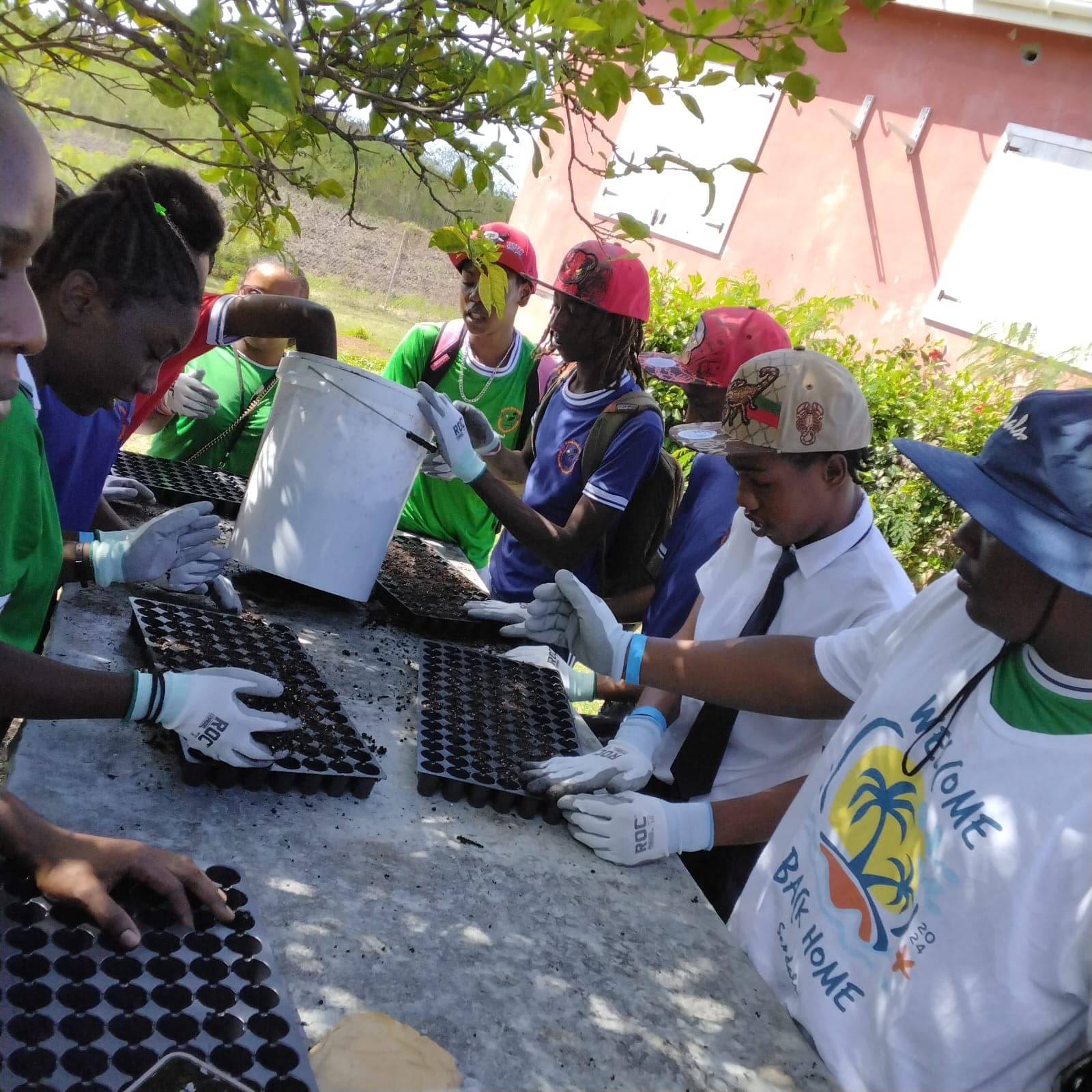
    On February 4, 2026, the program expanded to agricultural education through partnership with the Ministry of Agriculture’s Extension Division. Extension Officer Efuru facilitated sessions on seed germination, fundamental plant care, and crop production basics. These modules emphasized sustainability principles, food security awareness, and environmental responsibility while fostering patience and accomplishment through tangible results.

    The teaching team, comprising Mrs. Sindy Parker (Integrated Science), Ms. Jordane Roberts (Mathematics), Ms. Latoya Honoré (English and Head of SEN Department), and Ms. Andrea Wynter (Social Science), has reported notable improvements in student engagement, self-confidence, and social interaction since the program’s inception.

    This initiative represents a strategic investment in national development that transcends traditional education boundaries. By providing special needs students with marketable skills in hospitality and sustainable agriculture, the program creates avenues toward employment, entrepreneurial ventures, and economic self-sufficiency. It aligns with broader national objectives regarding workforce development, social inclusion, and economic resilience while addressing long-term food security concerns.

    Furthermore, the program challenges conventional perceptions about disabilities by demonstrating that with appropriate practical training and real-world learning opportunities, all students can meaningfully contribute to their communities. As the workshop progresses through its twelve-week duration, organizers anticipate it will serve as a replicable model for inclusive vocational education throughout the Caribbean region.

    The GARD Center continues to strengthen its collaborative partnerships with Sir Novelle Richards Academy, the Ministry of Education, and the Ministry of Agriculture, reaffirming its commitment to initiatives that empower individuals, strengthen communities, and build a more inclusive and sustainable national future.


  • Nah Claims Key Evidence in Triple-Murder Case Doesn’t Belong to Him

    Nah Claims Key Evidence in Triple-Murder Case Doesn’t Belong to Him

    In a significant development within a high-profile triple-homicide case, defendant Elmer Nah presented a comprehensive 27-minute statement from the dock vehemently denying all allegations against him. The 40-year-old accused directly challenged the prosecution’s physical evidence during proceedings presided over by Justice Nigel Pilgrim, who had previously dismissed a no-case submission requiring Nah to formally address all three murder charges.

    Nah’s defense centered on discrediting key evidentiary elements that the court had earlier ruled admissible. These included forensic items allegedly recovered from his vehicle—specifically a pair of boots and a headlamp purportedly worn during the crimes—alongside the witness testimony of the deceased Vivian Ramnarace.

    The defendant provided detailed counterarguments regarding the disputed footwear evidence, asserting that the boots presented in court differed substantially from his own. Nah clarified that his actual boots featured distinctive black and orange coloring, contrary to the all-black evidentiary pair submitted by prosecutors.

    Further contesting visual evidence, Nah highlighted anatomical discrepancies between himself and the shooter captured on surveillance footage. He emphasized that the visible gunman lacked any right-hand tattoo, whereas he himself bears a prominent tattoo acquired seventeen years prior to the incident. Nah maintained that enhanced video analysis could potentially identify the true perpetrator and urged the state to ensure judicial fairness through factual evidence rather than speculative conclusions.

    The defense strategy notably relied exclusively on Nah’s dock statement without calling additional alibi witnesses. Judicial proceedings have now been adjourned until March 13, 2026, when both parties will reconvene for oral arguments preceding the judge’s final deliberations.

  • LETTER: The dry weather community’s continued cry for help Donovan’s Estate

    LETTER: The dry weather community’s continued cry for help Donovan’s Estate

    Residents of Donovan’s Estate have issued a scathing indictment of government authorities over the deteriorating infrastructure conditions in their community, highlighting how recent interventions have worsened rather than alleviated their five-year ordeal.

    The situation reached a critical point when truckloads of construction materials were dumped indiscriminately across multiple access roads, effectively reducing community entry to a single point. This haphazard approach has created dangerous obstacles for property owners, construction vehicles, and emergency services, raising serious safety concerns.

    The crisis stems from the Land for Youth Initiative launched nearly five years ago, through which the government sold parcels to young citizens with contractual promises of complete infrastructure development. According to purchase agreements, the Vendor—representing government interests—was obligated to install lighting, water systems, and proper road networks. To date, these commitments remain largely unfulfilled, with road construction incomplete and water access nonexistent.

    Community representatives report years of frustrated attempts to engage Minister Turner’s office through calls and messages, all met with official silence. The property owners emphasize they have upheld their financial commitments in good faith while the government has consistently failed to honor its contractual obligations.

    With electoral periods approaching, residents question the expectation of political participation when basic governance promises remain broken. The community demands immediate, competent action—specifically the proper leveling of already-dumped materials to create stable road surfaces and a transparent timeline for project completion—rather than cosmetic measures that further complicate daily life.

    The unfolding situation at Donovan’s Estate represents a critical test of governmental accountability and the fulfillment of public commitments to citizen investors.

  • Placencia Says “No Funding”: Sargassum Control Left to Property Owners

    Placencia Says “No Funding”: Sargassum Control Left to Property Owners

    The Placencia Village Council has issued an urgent advisory to coastal property owners and tourism operators, alerting them to prepare for potential sargassum inundations along southern Belize’s shoreline within days. This warning comes as satellite monitoring confirms substantial seaweed mats accumulating near Roatán and throughout the Gulf of Honduras.

    According to current meteorological projections, these sargassum formations are expected to remain offshore until Thursday. However, council officials emphasized the inherent unpredictability of marine patterns, noting that beaching events could manifest over the weekend extending into early next week.

    In a significant policy shift, the council explicitly stated it lacks dedicated funding for seaweed removal operations. This financial constraint compels beachfront resorts, hotels, restaurants, and private homeowners to implement autonomous containment and cleanup strategies without municipal support.

    The Belize National Meteorological Service’s latest assessment presents a cautiously optimistic short-term outlook, indicating only limited sargassum presence immediately adjacent to Belize’s territorial waters. Despite this, Placencia maintains a medium-probability impact rating, recognizing the volatile nature of marine current patterns.

    This development highlights the growing environmental governance challenges facing Caribbean nations, where recurrent sargassum blooms increasingly threaten tourism-dependent economies and local ecosystems. The absence of institutional support mechanisms places unprecedented responsibility on private stakeholders to address these marine incursions independently.

  • Dr. Damien Dublin of the Dominica Reparations Committee Calls for reflection and revival during Black History Month 2026

    Dr. Damien Dublin of the Dominica Reparations Committee Calls for reflection and revival during Black History Month 2026

    During Black History Month observances, Dr. Damien Dublin, Chairman of the Dominica Reparations Committee, has issued a compelling call for substantive engagement with Caribbean historical narratives rather than superficial acknowledgment. In an official audio statement, the prominent reparations advocate emphasized the critical importance of pausing to reflect on and recommit to preserving the region’s rich cultural heritage.

    Dr. Dublin articulated that Black History Month should transcend mere remembrance, serving instead as an opportunity for profound understanding and active honoring of those who shaped Caribbean history. He stressed that national heroes, freedom fighters, cultural icons, and everyday resistance figures deserve more than fleeting mentions—they warrant celebration, discussion, and integration into the collective consciousness.

    The reparations leader specifically addressed educators and parents, urging them to employ history as a tool of enlightenment for Black children. “History should be taught to educate, inspire, and excite our children, to highlight the achievements and triumph of Black people,” Dublin asserted. He challenged the conventional narrative that often reduces Black history to slavery, pointing instead to pre-colonial civilizations like the Kingdom of Kush, Benin, and the Ashanti Empire that made significant contributions across science, medicine, agriculture, industry, and commerce.

    Dr. Dublin highlighted numerous technological innovations by Black inventors, including the traffic light system, automatic gear shift, carbon filament for light bulbs, improved ironing boards, artificial heart technology, pacemakers, and even toilet paper. These achievements, he noted, deserve recognition and pride alongside the more familiar narratives of struggle.

    The committee head also advocated for teaching about influential figures like Bob Marley, Marcus Garvey, Nelson Mandela, Fidel Castro, and contemporary leaders such as Ibrahim Traoré. By exposing youth to stories of triumph and resilience, Dublin believes we can inspire a new generation to pursue excellence while instilling cultural pride.

    Dr. Dublin cautioned against disconnection from historical roots, stating: “If we do not teach our history with intention and creativity, we risk losing the connection between our people, youth, and their identity.” He emphasized that understanding history equips people to shape the future with greater confidence and purpose.

    Finally, Dr. Dublin expressed gratitude to media outlets and the public for their support while encouraging broader societal participation in historical preservation efforts. He called on radio stations, schools, churches, community groups, and families to actively elevate local history initiatives and ensure that Caribbean stories are told through Caribbean voices rooted in lived experiences.

  • ONDCP Staff Walk Off Job Over Unsafe Conditions at Camp Blizzard

    ONDCP Staff Walk Off Job Over Unsafe Conditions at Camp Blizzard

    A significant operational disruption has unfolded at the Office of National Drug Control and Money Laundering Policy, as employees initiated industrial action over severe environmental health concerns at the Camp Blizzard facility. The walkout was precipitated by a damning internal report from the Department of Analytical Services, which documented pervasive mold infestation and excessive moisture levels within the building, creating conditions deemed hazardous to occupant health.

    Andie Stephen, General Secretary of the People’s Union, confirmed that the workforce felt compelled to withdraw their labor following a prolonged period of administrative inaction. Despite repeated formal appeals from both staff representatives and union officials urging immediate remediation of the unhealthy working environment, management failed to provide a satisfactory response or commit to a timeline for repairs.

    The union has declared that employees will maintain their position off the job indefinitely. Their core demands include an urgent, independent reinspection of the facility by certified industrial hygienists and a verifiable, fully-funded plan to eradicate all mold contamination and rectify the underlying moisture problems. This standoff highlights critical workplace safety failures within a key government agency responsible for national security matters.

  • Barber Charged in Punta Gorda Double Murder

    Barber Charged in Punta Gorda Double Murder

    Punta Gorda, Belize – Following an intensive two-day investigation, local authorities have formally charged 25-year-old Keron George Augustine, a barber from Seine Bight Village, with the double murder of two men in a residential shooting incident. The tragic event unfolded on the evening of February 7th outside a Queen Street residence, sending shockwaves through the community.

    According to official police reports, the victims—24-year-old Luis Barillas and 43-year-old Derrick Arnold—were engaged in social activities at Barillas’ home when the assailant approached the property’s perimeter. The gunman reportedly called out for Barillas from the gate, prompting both men to approach the front yard. Without warning, the attacker unleashed a barrage of gunfire, striking both victims multiple times.

    Medical examinations confirmed Arnold sustained numerous gunshot wounds throughout his body, while Barillas suffered fatal injuries to his head and facial area. Despite emergency response efforts, both men succumbed to their injuries at the scene.

    Law enforcement officials disclosed that multiple investigative angles are being pursued, including possible connections to local drug trafficking operations and the mysterious disappearance of Canadian citizen Alfred Pliel. The complex nature of these potential motives suggests deeper criminal undercurrents in the area that may have contributed to the violent outbreak.

    The community of Punta Gorda remains on edge as authorities continue their investigation into this brutal double homicide, which represents one of the most severe criminal incidents in the region this year.

  • Address gambling problems before casinos open, Crawford urges

    Address gambling problems before casinos open, Crawford urges

    Jamaica’s parliamentary opposition has launched a vigorous critique of the nation’s proposed casino regulatory framework, expressing profound concerns about inadequate protective measures for citizens as the country moves closer to authorizing casino gaming operations.

    During a heated House of Representatives debate on Tuesday regarding the Casino Gaming General Regulations 2025, St Catherine North Western MP Damion Crawford emerged as the most vocal critic. The regulations, which implement the longstanding Casino Gaming Act of 2010, received approval following opening remarks from Finance Minister Fayval Williams despite opposition objections.

    Crawford identified multiple critical deficiencies in the proposed safeguards, emphasizing the absence of a national self-exclusion registry that would allow problem gamblers to ban themselves across all gaming establishments. ‘The current system only permits self-reporting to individual casinos without any centralized tracking mechanism,’ Crawford noted. ‘This means an individual could simply move to another gambling venue like Caymanas Park without restriction.’

    The opposition parliamentarian advocated for comprehensive protective measures including third-party reporting channels that would enable family members, employers, and community organizations to intervene when individuals demonstrate gambling addiction behaviors. He further recommended mandatory staff training to identify problem gambling, established intervention protocols, and documented behavior triggers.

    Crawford raised particular alarm about ‘debt gambling’ practices, describing casino credit facilities as potentially devastating for vulnerable populations. ‘Debt gambling represents the most significant harm, especially for low-income earners who may approach casinos with financial desperation rather than entertainment purposes,’ he cautioned. This dynamic could trigger household collapse, multiple loan cycles, workplace misconduct, and even suicide risks.

    The MP proposed prohibiting casino credit and credit card gambling transactions for Jamaican residents while allowing tourists greater flexibility. He additionally called for implementing daily, weekly, and monthly gambling limits aligned with practices in the United Kingdom, Australia, and Canada.

    Beyond consumer protection issues, Crawford highlighted workforce development concerns, noting the regulations lack provisions for knowledge transfer and skills development that would prevent casinos from depending exclusively on imported labor. He recommended establishing casino-specific training academies through existing institutions like HEART/NSTA Trust and implementing employment quotas for Jamaican workers.

    Another significant economic concern involved the potential for integrated resorts to become self-contained spending enclaves that might undermine broader tourism businesses. Crawford warned that comprehensive resort amenities could discourage visitors from exploring external establishments, potentially creating competitive rather than complementary relationships with existing tour operators and hospitality services.

    In response, government officials indicated that many raised concerns were already addressed in the principal legislation or would be managed through licensing agreements governing casino operations.

  • Mentally challenged woman pleads to go home after stabbing mother

    Mentally challenged woman pleads to go home after stabbing mother

    KINGSTON, Jamaica — A profoundly emotional courtroom scene unfolded Tuesday as a 24-year-old woman with longstanding mental health challenges was remanded for psychiatric assessment after pleading to unlawfully wounding her own mother.

    The defendant, whose identity remains protected, appeared before Senior Parish Judge Sanchia Burrell in the Kingston and St Andrew Parish Court, where proceedings were repeatedly interrupted by emotional outbursts. When questioned by Judge Burrell about her presence in court, the young woman openly acknowledged, ‘Because mi stab mi mother,’ before immediately adding in a remorseful tone, ‘But mi neva stab her fi spite.’

    The complainant, who is the defendant’s mother, appealed to the court for mental health intervention rather than punishment, revealing her daughter had exhibited psychological disturbances since age 10 and discontinued formal education at 16. Though specific diagnosis details weren’t disclosed, the mother emphasized her daughter’s documented mental health condition.

    The courtroom atmosphere grew increasingly tense as the defendant tearfully begged her mother for forgiveness, crying out, ‘Mommy mi neva mean to stab you.’ The emotional exchange moved spectators and law enforcement personnel to visible distress, with many struggling to maintain composure.

    According to police testimony, the young woman has numerous prior encounters with law enforcement and demonstrates disruptive behavioral patterns. The court learned she currently divides her residence between her boyfriend’s home and her mother’s household.

    Judge Burrell, acknowledging the complexity of the case, determined that custodial remand with psychiatric evaluation represented the most appropriate interim solution. The magistrate emphasized, ‘She needs care and supervision, and that’s not going to happen here,’ while directing probation services to identify suitable mental health facilities.

    The case has been adjourned until April 21, pending completion of the ordered psychiatric assessment. This proceeding highlights ongoing challenges in Jamaica’s judicial system regarding mental health interventions and appropriate care protocols for psychologically distressed defendants.

  • WATCH: KSAMC allocates $220m for road repairs, urges businesses to meet signage deadline

    WATCH: KSAMC allocates $220m for road repairs, urges businesses to meet signage deadline

    KINGSTON, Jamaica — In a significant infrastructure development, the Kingston and St Andrew Municipal Corporation (KSAMC) has committed J$220 million to comprehensive road rehabilitation projects across all 40 divisions of the municipality. Mayor Andrew Swaby confirmed the funding, which originates from the Parochial Revenue Fund and is being administered through the Divisional Allocation Fund.

    The ambitious program directly addresses longstanding resident complaints regarding potholes, damaged surfaces, and generally deteriorating road conditions. While the substantial allocation will enable essential repairs through patching, resurfacing, and critical section rehabilitation, Mayor Swaby acknowledged financial limitations. “We recognize that these resources, though considerable, cannot address every parochial road under our jurisdiction,” he stated, emphasizing the corporation’s adherence to strict procurement guidelines to ensure compliance and fiscal responsibility.

    Concurrently, the KSAMC has initiated advanced preparations for the 2026 Jamaica Carnival season. An organizational meeting convened on January 27 brought together band leaders and J’ouvert promoters to evaluate previous season challenges and develop solutions for enhancing the Kingston carnival experience. All participating bands have committed to providing production teams that will collaborate closely with the City Engineering Department to ensure structural safety for event patrons.

    The Engineering Department will conduct specialized workshops to guide production teams through the approval process and ensure full regulatory compliance. The KSAMC will additionally coordinate with organizers of watch parties and related events to guarantee timely submission of applications, with a firm deadline set for March 6, 2026. The National Solid Waste Management Authority has been incorporated as a key committee member to ensure efficient post-event cleanup following the April 12 Road March.

    In a separate regulatory initiative, Mayor Swaby urged business operators to comply with the KSAMC’s signage regularization campaign ahead of its March deadline. Since its January launch, 98 businesses have received formal invoices, while the corporation has engaged in consultations with major business representatives including the Jamaica Chamber of Commerce and the Small Business Association of Jamaica. Quarterly meetings with outdoor advertising companies have been established to address concerns and clarify regulatory requirements.

    Despite operating without a dedicated advertising budget, the KSAMC has implemented extensive public awareness efforts through radio, social media, official websites, and traditional media outlets. “Claims of insufficient awareness cannot justify non-compliance,” Swaby asserted, reminding stakeholders that signage display falls under the Town and Country Planning Regulations of 1978 and the Kingston and St Andrew Building Act of 2018. While a temporary amnesty period is in effect, the mayor emphasized that signs failing to meet stipulated standards will not receive approval, applying equally to commercial and non-commercial public signage.