分类: society

  • Lee warns against squatting in HDC properties

    Lee warns against squatting in HDC properties

    Trinidad and Tobago’s Housing Minister David Lee has issued a stern warning against squatting in government-subsidized housing properties, declaring such actions will face zero tolerance from authorities. The minister’s comments came during a January 4 press conference at the UNC headquarters in Chaguanas, where he addressed growing concerns about unauthorized occupation of Housing Development Corporation (HDC) units.

    The crackdown follows a recent incident in Corinth where a family who had made payments for an HDC home discovered strangers attempting to occupy their property weeks before they were scheduled to receive keys. The couple filed an official police report on December 29 after being alerted to the unauthorized entry at their Riverside South townhouse near San Fernando.

    Minister Lee revealed that similar squatting attempts have emerged across multiple HDC settlements, including areas within his Caroni Central constituency. He strongly contested previous statements by former housing minister Camille Robinson-Regis suggesting the UNC administration permitted such activities. Lee emphasized that HDC chairman Feeroz Khan had never endorsed squatting in government housing.

    Producing documented evidence of squatting cases within HDC files, Lee asserted that neither he, Prime Minister Persad-Bissessar, nor the HDC would tolerate such ‘lawlessness.’ He warned potential squatters that law enforcement and HDC security divisions would collaborate to ensure only legally entitled occupants reside in government properties.

    Simultaneously, HDC chairman Khan disclosed significant financial challenges within the corporation, including over $600 million in outstanding payments to contractors. Khan criticized previous construction management practices under the PNM administration, alleging that houses worth approximately $500,000 were being constructed at costs nearing $2 million each. He claimed this benefited PNM associates and financiers while costing taxpayers millions in overpayments to contractors, including one instance of a $10 million overpayment.

    Despite these challenges, Khan assured the public that HDC has developed a recovery plan that includes increasing affordable housing production to bridge the gap between housing demand and availability.

  • Body found on Half Way Tree Road

    Body found on Half Way Tree Road

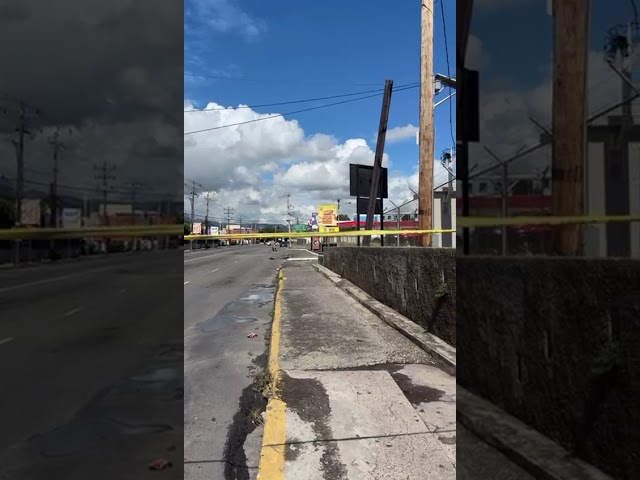
    KINGSTON, Jamaica — Jamaican authorities have initiated a comprehensive investigation following the grim discovery of a deceased male on Half Way Tree Road in the early hours of Sunday morning. Law enforcement personnel swiftly established a security perimeter around the affected section of the roadway as forensic examinations commenced.

    Preliminary reports indicate the discovery occurred approximately at 8:30 a.m. when an alert pedestrian noticed the remains and immediately notified local law enforcement. The prompt response resulted in multiple police units converging on the location to secure the area and initiate investigative protocols.

    The Kingston Central Police Division has assumed control of the ongoing operation, though officials have yet to release formal identification of the deceased or speculate on potential circumstances surrounding the incident. Crime scene technicians continue to process evidence while detectives conduct preliminary interviews with potential witnesses in the vicinity.

    This development has generated significant attention in the Half Way Tree area, with local residents expressing concern over the incident. Police commissioners have assured the public that all necessary resources are being deployed to determine the facts surrounding this case, with additional updates expected as the investigation progresses.

  • People flourish through Women Owned Media, Republic Bank

    People flourish through Women Owned Media, Republic Bank

    LONGDENVILLE – A transformative initiative bridging migrant and host communities celebrated its third graduation cohort on December 13 at the Longdenville Basketball Court. The Flourish: Empowering Resilience and Integration programme, funded by Republic Bank’s Power to Make a Difference initiative, successfully trained 40 participants in vocational skills and economic integration.

    Organized by Women Owned Media and Education Network (WOMEN) in collaboration with the International Organization for Migration (IOM) and corporate partners including Blue Waters, Kiss Baking Company, SMJaleel, Xtrafoods Cares, Domino’s Pizza, and Use My Services, the program provided hands-on training in three key disciplines: sewing, carpentry, and hydroponics. These technical skills were complemented by essential workshops in entrepreneurship, financial literacy, and community integration strategies.

    WOMEN founder Lucia Cabrera-Jones emphasized the program’s core mission: “Flourish is designed to integrate migrants into local society with the support of host communities, proving that when international, corporate, financial institutions, communities, and individuals come together with shared purpose, transformation happens.”

    Republic Bank’s senior manager Davi Samaroo-Singh highlighted the institutional commitment to sustainable community development: “Partnerships like this matter because they unite institutions that believe in empowerment, inclusion, and opportunity for all. Through our Power to Make a Difference programme, we are committed to creating pathways for women, youth, and vulnerable groups to achieve independence, economic stability, and personal growth.”

    The graduation ceremony attracted significant community leadership presence, demonstrating strong local endorsement for initiatives that foster social cohesion and inclusive economic development. Program organizers noted that the comprehensive curriculum was specifically designed to equip participants not merely with income-generating skills, but with the holistic tools necessary to sustainably manage, grow, and integrate their livelihoods within their communities.

  • Homeless appeal

    Homeless appeal

    For 39-year-old Sherdan Carr, surviving two years of homelessness in Jamaica’s capital has become a nightly battle for safety. He describes an existence where finding secure rest often means scaling buildings to sleep on rooftops, a desperate measure to avoid violent attacks that have become commonplace on Kingston’s streets.

    Carr’s account reveals a harrowing reality where homeless individuals face perpetual threat, even from children, with incidents of rock-throwing and machete attacks occurring regularly. He recounts witnessing a Rastafarian man having his head bashed with stones while sleeping just weeks before Christmas, and speaks of another elderly man who had his throat slashed during a robbery.

    Despite the brutality, Carr maintains hope for his future while advocating for systemic change. He identifies shelters as potentially dangerous environments where theft among residents is common and conditions often worse than the streets. His testimony suggests that improved shelter security and better facilities could encourage more homeless individuals to seek refuge indoors.

    The scale of violence is substantiated by official records showing that between January 2021 and April 2023, twelve homeless people were subjected to extreme violence across multiple parishes, with eight incidents occurring in Kingston alone. Only one victim survived these attacks.

    Government officials acknowledge the problem while claiming progress. Delroy Williams, State Minister in the Ministry of Local Government and Community Development, recently reported a significant reduction in abuse cases against homeless individuals. He made these remarks during World Homeless Day observances in October, emphasizing ongoing appeals to citizens to cease victimizing vulnerable populations.

    The situation has created survival strategies among Kingston’s estimated 3,000 homeless residents, including sleeping in shifts with lookouts posted for protection. Both Carr and another street-dweller, Teleta Allen, confirm that stone-throwing attacks have become almost recreational for some perpetrators, highlighting the profound vulnerability of those living without shelter in Jamaica’s urban centers.

  • Two shot dead in St Elizabeth amid curfew

    Two shot dead in St Elizabeth amid curfew

    The Jamaican parish of St Elizabeth has been plunged into a state of heightened security following two separate fatal shootings over the weekend, prompting authorities to declare an immediate 48-hour curfew in the affected Crawford district.

    The violence commenced on Friday evening at approximately 9:00 PM when Albert Smith was fatally shot by armed assailants while attending a social gathering in the Crawford district. In response to this homicide, local law enforcement moved swiftly to implement a curfew, effective from 6:00 PM Saturday, January 3rd, through 6:00 PM Monday, January 5th.

    Despite these security measures, a second murder occurred on Saturday night at around 10:00 PM in the parish capital of Black River. Forty-seven-year-old Basil Bruce was reportedly at a residence in the New Town area with a family member when two armed gunmen opened fire, resulting in his death.

    The curfew boundaries encompass a defined perimeter: extending south along the coastline from Galleon Beach to a cul-de-sac, east along Crawford Main Road from the Primary School to another cul-de-sac at Galleon Beach, north from a cul-de-sac to the Crawford main road near the primary school, and west along an imaginary line back to the starting point.

    These incidents mark the parish’s first two homicide cases of the new year, raising significant concerns about community safety and the effectiveness of security protocols in the region. Local authorities continue their investigations into both shootings while maintaining heightened police presence throughout the curfew period.

  • Don’t die before you are dead – live fully for 2026

    Don’t die before you are dead – live fully for 2026

    As we enter 2026, psychologist Dr. Margaret Nakhid-Chatoor presents a profound reflection on the dualities of human existence, emphasizing that true living involves embracing both joy and sorrow, triumph and failure. The new year represents an opportunity for personal renewal, yet for many, it evokes complex emotions ranging from hopeful anticipation to profound despair and isolation.

    The poignant phrase “Don’t die before you’re dead” serves as a powerful manifesto against emotional surrender, urging individuals to actively choose purposeful living despite life’s inevitable challenges. Dr. Nakhid-Chatoor emphasizes that genuine well-being transcends mere avoidance of mental health crises, requiring instead the conscious cultivation of resilience, meaningful connections, and daily courageous choices.

    Drawing from Viktor Frankl’s profound insights as a Holocaust survivor, the commentary highlights how humans can discover purpose even amidst unimaginable suffering. Frankl’s observations from concentration camps revealed that those who found meaning demonstrated greater resilience and maintained their humanity under extreme conditions.

    The analysis addresses contemporary mental health challenges, particularly noting how social media platforms can exacerbate feelings of inadequacy, loneliness, and negative self-perception through constant exposure to curated perfection. Dr. Nakhid-Chatoor recommends mindful social media usage and prioritization of authentic, face-to-face relationships.

    The new year offers a metaphorical blank canvas for personal transformation, encouraging active engagement with life rather than passive endurance. The psychologist advocates for conscious awareness of emotional numbness and deliberate reconnection with personal values and meaningful relationships.

    Ultimately, the message affirms the inherent value of each individual’s life and the transformative power of choosing one’s response to suffering. This choice represents the fundamental difference between merely existing and truly living—where endurance becomes courage, pain transforms into wisdom, and isolation evolves into genuine connection.

    The commentary concludes with an inspirational charge for 2026: to choose courage over fear, connection over isolation, and meaning over emptiness, carrying Frankl’s enduring wisdom into the new year.

  • William Knibb High to kick off phased reopening Monday

    William Knibb High to kick off phased reopening Monday

    In an extraordinary display of resilience, William Knibb Memorial High School in Martha Brae, Trelawny, is proceeding with emergency reopening plans despite sustaining catastrophic damage estimated at $400 million from Hurricane Melissa. The hurricane’s fury left eight of the school’s nine buildings severely compromised, with widespread destruction of roofs, windows, furniture, and critical infrastructure.

    Principal Linvern Wright has coordinated with Jamaica’s Ministry of Education to secure eight large tents that will serve as temporary classrooms, enabling a phased reopening process. The educational institution will welcome back Grade 11 students and sixth formers on Monday, with the remaining student population expected to return by Thursday. The school serves approximately 1,100 students from grades seven through sixth form.

    Innovative temporary measures include using plywood and tarpaulins in layered configurations to create weatherproof learning environments. ‘We cover it first with 3×8 ply, then cover it with tarpaulins and ensure that it is flat so that even if rain falls, the water goes off,’ Wright explained, emphasizing that these are not mere temporary fixes but carefully engineered solutions.

    The damage assessment reveals comprehensive destruction extending beyond classrooms to administrative offices, where staff were forced to dry important documents outdoors after the administration block lost its roof. The $400 million preliminary estimate includes complete replacement of fencing alone, projected to cost approximately $2.8 million, alongside destroyed electrical systems, technological infrastructure, doors, and windows.

    Wright highlighted the profound emotional impact on the school community, noting that many families have simultaneously experienced job losses due to hotel closures, home destruction, and personal tragedies. He expressed particular concern about ensuring students receive meals through the Programme of Advancement Through Health and Education (PATH), recognizing that for some, school lunch might represent their only daily meal.

    Despite the challenging circumstances, Wright stressed the critical importance of reopening for both academic recovery and psychological well-being. ‘They are not going to be 100 percent comfortable but we hope they’ll be 100 percent here…even just for the social and psychological well-being,’ he stated.

    As president of the Jamaica Association of Principals of Secondary Schools, Wright indicated that educational institutions across Trelawny are employing various strategies to resume operations safely. He warned of the ‘significant gaps in learning that you can’t compensate for’ when students miss instructional time, emphasizing that the long-term effects of extended closures would be dire for educational outcomes.

    Grounds crews worked through Friday afternoon removing hazardous debris, loose zinc sheeting, and preparing the compound for the students’ return, symbolizing the community’s determination to restore normalcy despite unprecedented challenges.

  • Warning!

    Warning!

    Jamaican religious authorities have issued a collective summons for national moral renewal and societal unity as the country enters 2026, framing recent hurricane devastation as divine warnings requiring immediate spiritual response.

    Pastor Grace Ade Gold revealed she experienced prophetic dreams of flooding prior to Hurricanes Beryl and Melissa’s catastrophic impacts, interpreting these natural disasters as celestial signals for Jamaica to undergo profound cleansing. She cautioned that without genuine nationwide repentance, further calamities might ensue. “People are not repenting, and the flood might come up back again,” Ade Gold warned the Jamaica Observer, emphasizing the urgent need for spiritual vigilance.

    The religious leader drew parallels between contemporary Jamaican society and ancient Israel, citing specific concerns about increasing acceptance of occult practices and LGBTQ+ advocacy. She challenged church members to overcome fear and vocalize opposition to these developments, invoking Timothy 1:7’s declaration that “God has not given us the spirit of fear.”

    Jamaica Evangelical Alliance President Bishop Alvin Bailey acknowledged the church’s substantial disaster response efforts while calling for enhanced involvement in national discourse. He criticized relief programs tainted by political maneuvering, advocating for truly collaborative recovery efforts involving government, opposition parties, and private enterprises. “This year must be a year of decency, probity, hard work, rebuilding of our nation,” Bailey asserted, envisioning comprehensive national advancement.

    Reverend Newton Dixon, General Secretary of the Jamaica Council of Churches, proposed a compassion-centered recovery model rooted in gospel principles. He urged businesses to maintain price stability protecting vulnerable populations and challenged political leaders to transform adversarial systems through authentic consultation and cooperation.

    Human rights advocate and Anglican priest Sean Major Campbell projected significant global power shifts in 2026, advising Caribbean nations to exercise diplomatic prudence. He emphasized regional vulnerability to superpower dynamics and urged strategic preparation for emerging multipolar world arrangements.

    Collectively, these religious voices articulated a vision for national restoration combining spiritual renewal with practical governance reforms, positioning moral regeneration as essential for Jamaica’s physical and societal reconstruction.

  • ‘Joy to the West’ initiative brings smiles to Westmoreland residents

    ‘Joy to the West’ initiative brings smiles to Westmoreland residents

    WESTMORELAND, Jamaica — A comprehensive holiday relief initiative transformed Christmas for vulnerable residents in Westmoreland, one of the regions most severely affected by Hurricane Melissa’s October 2025 devastation. Spearheaded by A-List Marketing & Entertainment Group, the “Joy to the West” program delivered essential supplies and seasonal cheer through a multi-stop community engagement strategy.

    The initiative represented phase two of the company’s ongoing hurricane recovery efforts, strategically blending disaster support with Christmas festivities. The program provided critical items including toys, educational materials, clothing, hygiene products, and refreshments to those facing continued hardship following the late October storm.

    Corporate representatives executed a carefully orchestrated route across the parish, targeting specifically identified vulnerable groups. Their first destination was the Women’s Centre of Jamaica Foundation’s Westmoreland branch, where they distributed baby supplies, sanitary products, water, and operational materials. In a gesture recognizing staff dedication, each employee received footwear as a Christmas gift.

    The outreach continued at Llandilo School of Special Education, where students and educators received tailored support through educational supplies, toys, and hygiene items. This segment highlighted the program’s commitment to inclusive assistance for children with special needs and their support systems.

    The initiative culminated at Cooke Street Sports Complex, which transformed into a vibrant community celebration space. Families experienced a festive atmosphere complete with bounce house entertainment, gift distributions, and comprehensive supply provisions—creating memorable moments of joy and collective healing.

    Founder and Managing Director Nickeria Smickle emphasized the program’s dual purpose of providing material support while restoring dignity and hope. “Westmoreland was deeply impacted by Hurricane Melissa, and we felt a responsibility not just to give, but to show up with love, dignity and joy,” Smickle stated, noting the initiative serves as a reminder that communities aren’t forgotten during challenging times.

    The company has committed to sustaining private sector support for Jamaica’s recovery, demonstrating corporate social responsibility through empathetic, presence-based action that addresses both immediate needs and long-term community resilience.

  • Ministry: Toll increase will not affect maxi taxis immediately

    Ministry: Toll increase will not affect maxi taxis immediately

    The Ministry of Transport and Civil Aviation has clarified that the recently implemented toll rate increases will not immediately impact maxi taxi operators across Trinidad and Tobago. This temporary exemption stems from the fact that approximately 1,000 operators completed their vehicle renewals in October 2025, securing their operational status for the entire 2026 period. Consequently, the adjusted toll rates will only become effective for these public transport providers during their next renewal cycle in October 2027.

    The policy clarification follows a productive December 30 meeting between Transport Minister Eli Zakour, ministry officials, and leadership of the Route 2 Maxi Taxi Association, including president Brenton Knights. The discussions focused on addressing various challenges within the public transportation sector while maintaining service affordability.

    Association president Knights confirmed the cordial nature of the discussions, explicitly stating that no fare increases are currently planned. ‘We are maintaining a watchful position regarding the evolving economic climate,’ Knights told Newsday. ‘With several financial factors emerging throughout the coming year, we believe in making informed decisions based on actual economic impacts rather than speculation.’

    Knights emphasized the shared economic realities facing both operators and passengers: ‘Our drivers are equally affected by rising living costs, educational expenses, and regulatory fines. We navigate the same economic pressures as all citizens while providing essential transportation services.’

    The ministry’s statement specifically addressed circulating misinformation, confirming the association’s position that no fare increase decision has been made. Officials reiterated that the toll adjustment—which increases daily rates from $3 to $6 after decades without change—provides no justification for fare increases, especially given the delayed implementation for maxi taxis.

    The ministry reaffirmed its commitment to collaborative work with transport associations and stakeholders to maintain a stable, fair, and efficient public transportation system that balances operator sustainability with public affordability.