分类: society

  • CANU issues national early warning alert for ecstasy after seizure

    CANU issues national early warning alert for ecstasy after seizure

    Guyana’s Customs Anti-Narcotics Unit (CANU) has activated a nationwide emergency alert system following the successful prosecution of a significant ecstasy trafficking case. The alert targets public awareness, law enforcement agencies, and healthcare providers in response to the confirmed presence of high-risk MDMA tablets in circulation.

    The agency confirmed the conviction of Devon Grant, who received a 12-month prison sentence and a GY$300,000 fine after pleading guilty to trafficking 164 grams of ecstasy. Co-defendant Lily Wills maintained her innocence and was released on GY$100,000 bail pending her February 2 court appearance. A third suspect was released due to insufficient evidence.

    According to CANU’s operational report, the arrests resulted from intelligence-driven surveillance that led to the interception of a vehicle at Movietowne, Turkeyen in Greater Georgetown. Officers discovered multiple ziplock bags containing brightly colored pills that were subsequently confirmed by the Guyana Forensic Science Laboratory to contain MDMA.

    Health authorities have been instructed to monitor for ecstasy-related medical emergencies, particularly symptoms including severe dehydration, hyperthermia, tachycardia, confusion, agitation, and collapse. CANU emphasized that seized tablets showed significant variation in potency and likely contained dangerous adulterants.

    The agency specifically warned young adults about the elevated risks of combining MDMA with alcohol or other substances, noting that most emergencies occur in nightlife environments. CANU has implemented enhanced monitoring of entertainment districts, improved surveillance of micro-distribution networks, and strengthened collaboration with venue security teams.

    Public cooperation is actively sought, with CANU urging parents, nightlife operators, and community leaders to report any suspicious activities or unfamiliar pills circulating among youth populations.

  • Mexico on alert for adverse weather conditions

    Mexico on alert for adverse weather conditions

    Mexican authorities have escalated emergency preparedness measures as two formidable winter systems converge to create severe weather conditions across multiple regions. The National Meteorological Service confirms Cold Front 27 has established stationary positioning over the Yucatan Peninsula and southeastern territories, triggering intense precipitation patterns with isolated torrential downpours particularly impacting Veracruz’s Los Tuxtlas and Olmeca regions.

    Simultaneously, an associated polar air mass continues to drive temperatures to frigid levels throughout central, eastern, and southeastern Mexico. This atmospheric combination has generated powerful ‘Norte’ wind events along the Gulf of Mexico coastline and through the Isthmus and Gulf of Tehuantepec, with wind intensities ranging from strong to severe.

    Compounding the situation, the season’s second winter storm—active since the weekend—continues to batter northern Mexico with freezing temperatures, gale-force winds, and sustained precipitation. Meteorological experts warn of probable snow and sleet accumulation across Chihuahua, Durango, Sinaloa’s mountainous terrain, Coahuila, Nuevo Leon, and Zacatecas. Additionally, dangerous freezing rain events are anticipated in Chihuahua, Durango, Zacatecas, and Nuevo Leon.

    Civil protection agencies have issued urgent advisories regarding potential river swelling and flash flooding in vulnerable watersheds. The compounded risks include heightened landslide susceptibility, urban waterlogging in low-lying areas, and wind-related hazards including tree uprooting and structural damage to signage and infrastructure. Officials emphasize continuous monitoring of official channels for emergency updates.

  • Aantal verkeersdoden in 2025 fors gedaald, jonge weggebruikers grootste risicogroep

    Aantal verkeersdoden in 2025 fors gedaald, jonge weggebruikers grootste risicogroep

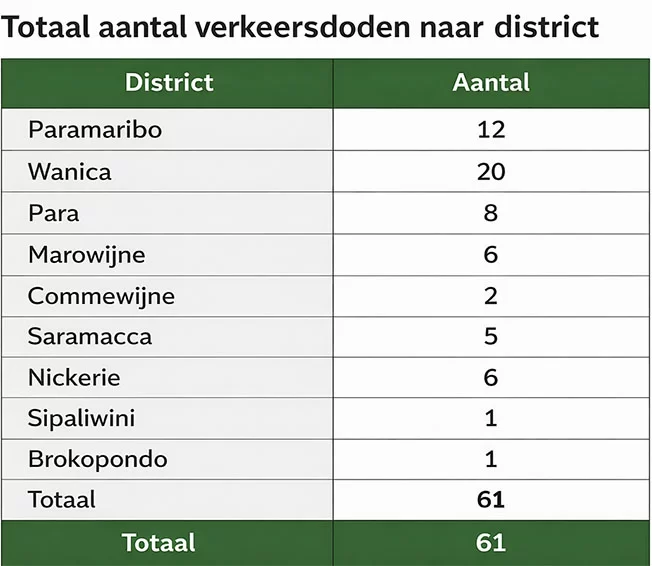
    Suriname has witnessed a significant reduction in traffic-related fatalities during 2025, with official statistics revealing a 22% decrease compared to the previous year. According to data released by Purcy Landveld, Deputy Director of the Traffic Safety Institute (VVI), the nation recorded 61 traffic deaths versus 78 in 2024.

    Despite this positive trend, road safety remains a critical concern, particularly for vulnerable commuters. Motorcyclists continue to represent the highest-risk demographic, accounting for 19 of the total fatalities. Other casualties included 12 car drivers, 1 bus operator, 3 truck drivers, 6 passengers, 13 pedestrians, 1 cyclist, 4 motorcyclists, 1 ATV rider, and 1 tractor operator.

    A disturbing pattern emerged in age distribution, with economically active adults between 21 and 40 years bearing the brunt of fatalities. The 21-30 age group suffered 16 deaths, while 31-40 year-olds accounted for 15 fatalities. Eight young people aged 11-20 also lost their lives in traffic incidents.

    Geographical shifts in accident hotspots were noted, with Wanica district reporting the highest fatalities (20), followed by Paramaribo (12) and Para (8). This represents a notable change from 2024, when Paramaribo led with 28 deaths.

    The healthcare system continues to shoulder substantial burden from traffic accidents, with the Academic Hospital Paramaribo’s emergency department treating 3,491 traffic victims—averaging 8-9 daily cases. This constant influx strains medical resources, elongates waiting times, and diverts significant healthcare budgets from other critical needs.

    In response to 39 fatalities occurring in the first half of 2025, authorities implemented stringent traffic measures including enhanced police surveillance, stricter speed and alcohol controls, and targeted awareness campaigns. These interventions yielded dramatic results, with only 8 deaths recorded in the second half—particularly remarkable during traditionally high-risk holiday periods.

    The VVI emphasizes that sustained enforcement combined with improved infrastructure, specialized education for young riders and drivers, and continuous data analysis are essential for maintaining this progress toward safer roads.

  • A quarter of Cuba’s inhabitants are over 60 years old

    A quarter of Cuba’s inhabitants are over 60 years old

    Cuba is experiencing a profound demographic transformation, establishing itself as one of the world’s most rapidly aging societies. Recent data from the National Office of Statistics and Information (ONEI) reveals that the Caribbean nation now demonstrates higher aging rates than several European countries traditionally associated with elderly populations, including Italy (24.1%), Bulgaria (23.8%), Finland (23.4%), Greece (23.3%), and Croatia (23.0%).

    The report, titled “Population Aging, Cuba and its Territories 2024,” employs a comprehensive methodology that calculates the effective population. This approach incorporates all individuals born within the country during a calendar year, plus permanent residents who have accumulated 180 days or more of stay in Cuba within the past 365 days, excluding those who have died.

    Significant regional disparities exist across the island. Villa Clara province in central Cuba records the highest aging rate at 29.1 percent, followed closely by the capital Havana at 28.1 percent. In contrast, Guantánamo province in eastern Cuba maintains the lowest rate at 22.5 percent.

    At the municipal level, Plaza de la Revolución in Havana emerges as the area with the oldest demographic profile at 36.8 percent, while Yateras in Guantánamo province maintains the youngest population structure at 17.1 percent.

    A particularly telling metric reveals the scale of Cuba’s demographic inversion: the ratio of population aged 60 and over to those under 15 reached 1,625 older adults for every 1,000 children and young people aged 0-14 by the end of 2024. This ratio has increased by 247 points compared to the previous year, highlighting the accelerating pace of Cuba’s population aging.

  • Billboard Thefts Raise Safety Concerns Across Antigua and Barbuda

    Billboard Thefts Raise Safety Concerns Across Antigua and Barbuda

    A concerning pattern of structural vandalism targeting commercial billboards has emerged across Antigua and Barbuda, triggering alarms over public safety risks along major transportation routes. The most recent incident occurred along the strategically important Queen Elizabeth Highway, where critical supporting braces were forcibly removed from an Antigua.news advertising structure.

    Multiple billboard sites have subsequently been found with identical damage, indicating coordinated theft rather than isolated acts. These specialized metal components serve as fundamental stabilization mechanisms for large-scale outdoor advertising installations, engineered specifically to withstand severe weather conditions including tropical storms and high-velocity winds.

    Their deliberate removal creates substantial hazards for all highway users, with compromised structures potentially collapsing onto roadways, endangering motorists, pedestrians and adjacent properties. Billboard operators are confronting unplanned financial burdens as they implement emergency safety protocols including comprehensive structural assessments, immediate repairs and preventive dismantling of vulnerable installations.

    Industry sources suggest the stolen structural elements are likely being diverted to unauthorized construction projects, representing a secondary illegal market. The situation has escalated to warrant official governmental attention, with law enforcement expected to intensify monitoring of advertising infrastructure. Citizens are being urged to report any suspicious activities near billboard locations to prevent potential tragedies.

  • Lawyer questions legality of NIS pension starting years after retirement

    Lawyer questions legality of NIS pension starting years after retirement

    A significant constitutional debate has emerged in St. Vincent and the Grenadines regarding the National Insurance Services (NIS) pension system, with prominent lawyer Jomo Thomas challenging the legality of mandatory waiting periods for retirees. The controversy centers on reforms implemented in June 2024 that have extended pension waiting periods to up to three years, with projections reaching five years by 2027 when the pensionable age increases to 65.

    Thomas, a respected social commentator and activist, confronted NIS Executive Director Stewart Haynes during a media appearance commemorating the agency’s 39th anniversary. “I always wondered about the constitutionality of this NIS plan, where people retire at 60 and you pay them five or six years later. That has to be legally questionable,” Thomas asserted, highlighting what he perceives as a violation of constitutional property rights protected under Section 6 of the nation’s constitution.

    The NIS reforms include a gradual contribution rate increase from 10% to 15% through 2026. Retirees seeking early access to their pensions face severe financial penalties, forfeiting 6% for each year before reaching official retirement age. Haynes defended the system, explaining that pensionable age differs from retirement age and emphasizing that the NIS operates as a statutory entity guided by specific legislation that evolves according to demographic and economic realities.

    Haynes, an actuary, framed the NIS as an intergenerational compact similar to a ‘sue-sue hand’—a traditional collective savings arrangement. “Every month that I contribute, that money is used to pay my mother. When my daughter enters the workforce and I reach retirement, her contribution will pay me,” Haynes illustrated, stressing the importance of intergenerational equity and system sustainability.

    Thomas countered with comparative analysis of the U.S. Social Security system, where delayed collection results in increased benefits rather than penalties. “In St. Vincent, the converse is true. I’m leaving my money there, and I’m not getting anything more on it, but if I try to get it earlier, I’m penalised. That can’t be right,” the lawyer argued, suggesting the current system might invite legal challenge.

    The exchange highlights growing tensions between social security sustainability requirements and fundamental citizen rights, setting the stage for potential constitutional litigation that could reshape the nation’s retirement security landscape.

  • Late Sunday Night Motorcycle RTA Claims Police Officer’s Life

    Late Sunday Night Motorcycle RTA Claims Police Officer’s Life

    The Belize law enforcement community is in mourning following the tragic death of Police Constable Edwardo Cus in a fatal motorcycle collision Sunday evening. The incident occurred approximately at 8:00 p.m. along the Philip Goldson Highway in Belize City, according to official reports.

    Preliminary investigations indicate that Constable Cus was operating his motorcycle when the accident transpired, resulting in him being violently ejected from the vehicle. The impact caused catastrophic injuries that proved immediately life-threatening. Disturbing video evidence from the accident scene depicts the officer lying motionless on the roadway awaiting emergency assistance.

    First responders arrived promptly at the location and administered critical medical intervention before transporting the gravely injured officer to the Karl Heusner Memorial Hospital. Despite exhaustive resuscitation efforts by medical personnel, Constable Cus was subsequently pronounced deceased.

    The Belize Police Department has initiated a comprehensive investigation into the precise circumstances surrounding the collision. Traffic reconstruction specialists are currently examining all potential contributing factors, including road conditions, vehicle mechanics, and environmental elements that may have played a role in the tragic outcome.

    This incident marks another sobering reminder of the inherent dangers faced by law enforcement personnel both on and off duty. The department has announced plans to honor Constable Cus’s service and provide counseling resources for affected colleagues during this period of profound loss.

  • Law Reform Commission invites public submissions by February 16

    Law Reform Commission invites public submissions by February 16

    The Barbados Law Reform Commission has initiated a nationwide public consultation campaign, calling upon citizens, civil society organizations, and professional associations to contribute written proposals for the comprehensive reform of the country’s legal framework. The consultation period remains open until February 16, 2026, with submissions limited to 1,500 words.

    Commission Chairman Sir David Simmons emphasized the critical importance of public participation in ensuring the nation’s laws remain relevant and responsive to contemporary societal needs. “Our legal framework must be recast in a form that is both intelligible and accessible while aligning with modern requirements,” stated Sir David. He further highlighted that public consultation represents a fundamental component of the law reform process, enabling Barbadians to contribute their expertise, experiences, and observations regarding the current state of legislation.

    While initial contributions must be submitted in written format, the Commission clarified that this would not preclude subsequent oral discussions with authors once submissions undergo preliminary review. This two-tier approach ensures thorough consideration of all proposals while maintaining an open dialogue with contributors.

    Submissions may be delivered electronically to lawreform@barbados.gov.bb or in physical format to the Commission’s offices at the Henry Forde and David Simmons Legal and Judicial Complex on Coleridge Street in Bridgetown.

    The Commission, operating under the Office of the Attorney General, derives its mandate from the Law Revision and Law Reform Act of 2019-6. Its statutory responsibilities include the systematic review, modernization, and simplification of Barbados’ legal corpus to ensure its continued relevance and effectiveness in addressing contemporary challenges.

  • Pastor Stanford Simon announces early retirement from St George’s Baptist Church

    Pastor Stanford Simon announces early retirement from St George’s Baptist Church

    St. George’s Baptist Church (SGBC) has officially confirmed the forthcoming retirement of its Senior Pastor, Reverend Stanford Simon, effective March 31, 2026. This significant leadership transition concludes more than twenty years of devoted ministerial service to both the congregation and the broader Grenadian community.

    The Church Council and SGBC membership have formally accepted Reverend Simon’s retirement decision, which follows an extensive period of spiritual contemplation and deliberation regarding the church’s future direction. The church’s foundational vision of “building communities” remained central to these considerations.

    In a reflective statement, Reverend Simon explained his decision-making process: “Having served this local church for over two decades, I recognized the necessity for a carefully planned leadership transition. More than ten years ago, I began prayerfully considering succession planning but did not then feel the appropriate leadership was positioned to assume pastoral responsibilities. I now discern that God has prepared the necessary personnel to ensure a seamless and faithful transition within the pastorate.”

    Concurrently with his SGBC pastoral retirement, Reverend Simon will step down from his additional leadership roles as President of the Grenada Baptist Association (GBA) and Communications Officer of the Conference of Churches in Grenada (CCG), effective the same date.

    SGBC leadership has proactively established a Pastoral Transition Committee chaired by Mrs. Matonia Munroe, a member of the Church’s Pastoral Team, who will serve as official spokesperson throughout the transition process. This committee will ensure organizational continuity and stability during this period of change.

    The church community expressed profound gratitude for Reverend Simon’s decades of spiritual guidance, dedicated service, and significant contributions to both the local congregation and Grenada’s wider Christian community.

  • 20 years, 7,420 deaths

    20 years, 7,420 deaths

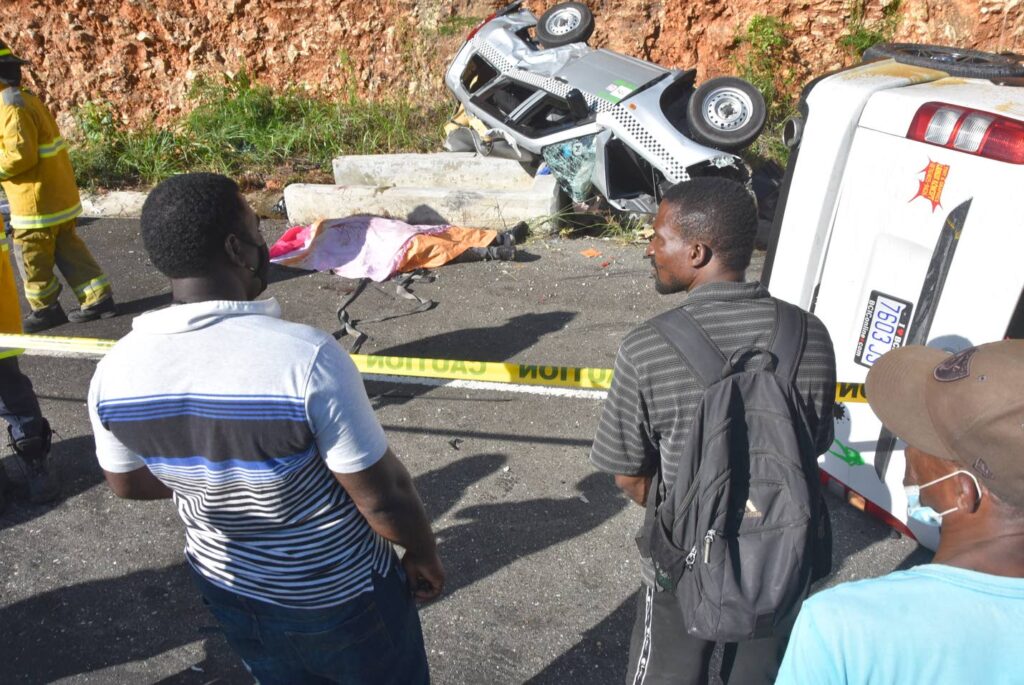
    Over a devastating 20-year period spanning from 2006 to 2025, Jamaica witnessed a staggering total of 7,420 road fatalities, equating to an average of one death per day. This harrowing statistic presents a profound public safety challenge for the Caribbean nation, which maintains a population under three million within its compact 4,244 square-mile territory.

    Official data released by the Island Traffic Authority (ITA) reveals an annual average of 371 deaths, or approximately 31 fatalities monthly. The figures across this two-decade timeline demonstrate alarming volatility, culminating in a record-shattering 488 deaths in 2022. The year 2012 marked the last instance where fatalities remained below 300, with 260 recorded deaths.

    The most recent five-year period from 2019 to 2023 proved particularly catastrophic, claiming 2,273 lives through traffic collisions. The annual breakdown shows: 440 deaths (2019), 433 (2020), 487 (2021), 488 (2022), and 425 (2023). While 2024 and 2025 saw a moderate decline with 365 and 374 deaths respectively, the numbers remain critically elevated.

    ITA analysis identifies five primary categories of road users disproportionately affected: motorcyclists, pedestrians, pedal cyclists, private vehicle occupants (both drivers and passengers), and pillion passengers. These groups collectively represent the most vulnerable participants in Jamaica’s transportation ecosystem.

    Detailed examination of the 2020-2025 period reveals motorcyclists suffered the heav losses with 814 fatalities (averaging 135 annually), followed by 500 pedestrian deaths (83 annually). Private motor vehicle drivers accounted for 451 fatalities (75 annually), while their passengers numbered over 300 deaths. Pedal cyclists recorded 141 deaths during this span, averaging 23 per year.

    Public passenger vehicle operators, frequently criticized for hazardous driving practices, experienced 50 fatalities (8 annually), though their passengers fared considerably worse with 88 deaths (15 annually).

    The ITA has pinpointed five predominant causes of traffic collisions: excessive speed without regard to road conditions; failure to maintain proper lane discipline; pedestrians walking or standing in roadways; careless right-turn maneuvers; and improper overtaking practices.

    From 2020-2025, speeding contributed to 670 fatalities, while lane indiscipline resulted in 509 deaths. Pedestrian positioning caused 195 fatalities, with improper right turns and overtaking accounting for 122 and 147 deaths respectively. An additional 913 fatalities were classified under ‘other’ causes, potentially including infrastructure deficiencies such as potholes and inadequate lighting.

    Notably, despite these alarming figures, Jamaica’s per capita fatality rate remains below the Caribbean and Latin American regional average of 19.2 per 100,000 population. Domestic statistics fluctuated between 10 per 100,000 inhabitants (2011) and 16 per 100,000 (2016), comparing favorably to the global average of 14.7 and significantly outperforming the European Union’s rate of 4.5 per 100,000 inhabitants.