分类: society

  • Full electricity restoration by early February

    Full electricity restoration by early February

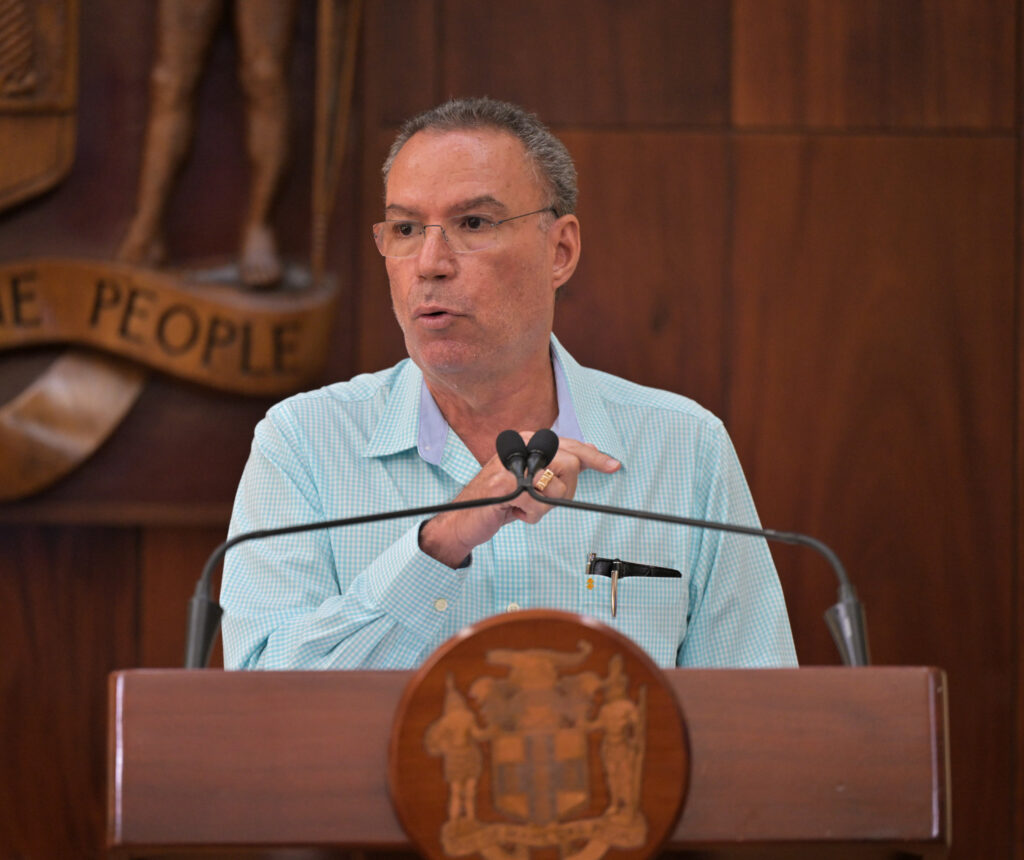
    KINGSTON, Jamaica — Jamaica’s energy infrastructure is rapidly recovering from Hurricane Melissa’s devastation, with officials projecting complete power restoration for eligible customers by early February. Energy Minister Daryl Vaz provided a comprehensive update during a post-Cabinet briefing at Jamaica House, revealing significant progress in the national recovery efforts.

    The Jamaica Public Service (JPS) has successfully restored electricity to 93% of affected customers, leaving approximately 51,000 households and businesses without power. Minister Vaz outlined a clear timeline for reconnection, indicating that 30,000 of these customers should have service restored by the end of January or early February.

    A critical distinction emerged regarding the remaining 21,000 customers who cannot currently receive power due to infrastructure limitations beyond JPS’s control. “These households are not ready to receive electricity, and the JPS cannot be held accountable,” Vaz explained, noting that these cases require additional structural assessments and repairs before power can be safely restored.

    The government has initiated a collaborative effort between the Ministry of Labour and Social Security and the Jamaica Social Investment Fund (JSIF) to identify and address barriers preventing these final connections. This targeted approach aims to facilitate eventual power restoration to all Jamaican residents.

    Westmoreland Parish has demonstrated remarkable recovery progress, jumping from 18% restoration in December to 51% currently. Of the parish’s 34,603 customers, 17,096 remain without electricity. Minister Vaz confirmed that the eastern section of Westmoreland should see service restoration between now and January’s end.

    The accelerated recovery follows the government’s strategic intervention last November, providing JPS with a US$150-million loan that enabled the utility company to procure additional equipment and hire more linesmen, significantly enhancing restoration capabilities.


  • A day in the Trinidad wild

    A day in the Trinidad wild

    In a landmark achievement for environmental journalism, the Wild Tobago column has reached its 500th installment with a special expedition to Trinidad’s Icacos wetlands. This ongoing series, initiated in July 2016 by coral reef ecologist Dr. Anjani Ganase during her PhD studies in Australia, has evolved into a platform for scientific communication and environmental advocacy across Trinidad and Tobago.

    The commemorative feature brought together Dr. Ganase and acclaimed birder Faraaz Abdool for a pre-dawn journey to the southwestern tip of Trinidad. Their mission: to document the spectacular biodiversity of the Icacos wetlands at sunrise. The team witnessed an extraordinary natural performance as the sky transformed through shades of yellow, salmon, pink, and blue, while the wetland came alive with avian activity.

    Abdool described the sensory experience: ‘As the first light touched the horizon, the dawn chorus began. Carib Grackles jostled for position in swamp ferns, yellow-hooded blackbirds gathered in smaller groups, and yellow-chinned spinetails created a rattling soundtrack.’ The experience turned dramatic when a large spectacled caiman emerged with deep bellows and rhythmic grunts, performing mating displays accompanied by ‘dancing water’ phenomena known as Faraday waves.

    The team observed over 50 scarlet ibis whirling overhead, ospreys patiently waiting for prey, wattled jacanas foraging at water’s edge, and common gallinules taking clumsy flight. Despite signage declaring the area protected, the birds’ furtive behavior suggested ongoing human disturbance.

    The expedition continued to Pointe-a-Pierre Wildfowl Trust, where conservation efforts have successfully reintroduced Muscovy ducks hunted to extinction on the islands. The trust represents a beacon of conservation education, complemented by the Freebird Restaurant offering world-class meals with local ingredients.

    Dr. Ganase reflected on the column’s advocacy role, particularly in challenging government plans to develop the country’s only marine protected area for resort construction. She expressed concern about current threats to Mt Irvine Reef from hotel and housing development, noting that marine ecosystems already face climate change impacts while basic management measures remain unimplemented.

    The feature concludes with an invitation to all citizens to undertake their own Wild Tobago journeys, emphasizing that appreciation and respect for natural spaces can foster greater community consciousness and care for both environment and fellow inhabitants.

  • Towards better traffic management systems

    Towards better traffic management systems

    Dr. Stephen Ramroop, former CEO of Trinidad and Tobago’s Office of Disaster Preparedness and Management (ODPM), has issued a stark warning regarding the nation’s preparedness for major disasters. In a recent editorial, Ramroop contends that the country remains critically unprepared for significant hazard impacts, despite observable warning signs demonstrated through recent traffic crises.

    The assessment follows severe traffic incidents on September 8 that paralyzed the Beetham Highway, creating cascading consequences throughout the transportation network. Commuters endured excessive delays exceeding six hours, resulting in missed medical appointments for critical conditions including cancer treatments and post-operative care, numerous missed flights, and widespread physical discomfort among stranded travelers.

    Ramroop emphasizes that these incidents serve as measurable indicators within disaster risk management assessment frameworks. He poses a compelling hypothetical: had an earthquake struck during similar peak traffic periods, the consequences would have extended beyond a single highway to affect multiple transportation arteries simultaneously.

    The former disaster management executive identifies fundamental deficiencies in the national response framework, noting insufficient coordination between multiple sectors including transport, homeland security, infrastructure, defense, and local government. He specifically calls for revitalization of the National Operations Centre (NOC) beyond its current crime-fighting mandate to encompass comprehensive emergency management.

    Ramroop proposes integrated technological solutions including automated smart roadblocks with sensor connectivity, unified automatic number plate recognition systems, AI-driven traffic analytics capable of predicting congestion patterns, and drone surveillance for real-time situational awareness. Operational improvements recommended include dynamic lane control systems, queue warning mechanisms, variable speed limits, and enhanced communication protocols utilizing V2X technology.

    Additionally, he advocates for improved crisis communication strategies incorporating social media alerts, alternative route recommendations, and welfare assistance programs for stranded motorists requiring essential supplies such as water, food, and medication.

    The commentary concludes with an urgent recommendation to reconfigure the NOC to include ODPM and other agencies operational during the 2012-2015 period, emphasizing that comprehensive disaster readiness requires multi-sectoral coordination rather than isolated police responsibility.

  • Inmate recaptured in Port of Spain

    Inmate recaptured in Port of Spain

    A dramatic prison escape attempt at Port of Spain Prison ended in failure on January 21 when inmate Travis Curtis was apprehended just minutes after his bold dash for freedom. According to an official statement released by the Prison Service at 3:20 PM, the incident unfolded at approximately 10:00 AM when Curtis scaled the western perimeter wall along Pembroke Street.

    The escape proved short-lived as coordinated efforts between Port of Spain Prison officers and the specialized Emergency Response Unit resulted in Curtis’s recapture at approximately 10:18 AM near Abercromby Street in the capital. The rapid response demonstrated exceptional operational coordination between prison authorities and security forces.

    Authorities have launched a comprehensive investigation into the escape incident, examining whether additional charges will be filed against Curtis for escaping lawful custody. The Prison Service publicly commended the responding officers for their vigilance and professional conduct during the operation, while also acknowledging the cooperation received from members of the public.

    The Prison Service indicated that further updates regarding the incident would be provided as the investigation progresses and more information becomes available.

  • Goodbye, Newsday

    Goodbye, Newsday

    A devoted reader has expressed profound disappointment upon learning about the imminent shutdown of Newsday, marking the end of a 32-year legacy in Trinidad and Tobago’s media landscape. In a heartfelt letter to the editor, the reader identified as C Denoon acknowledged the newspaper’s pivotal role in keeping citizens informed about local, regional, and international developments.

    The correspondence, submitted via email, highlighted the publication’s significance as a platform for public discourse, noting personal gratitude for having multiple letters published over the years. The reader characterized Newsday as an institutional pillar within the nation’s media ecosystem, emphasizing its contribution to an informed citizenry.

    While expressing sadness about the closure, the author acknowledged the inevitability of such transitions, stating that goodbyes remain an unavoidable aspect of life. The message concluded with a simple yet poignant farewell to the publication that had served Trinidad and Tobago for more than three decades.

    The closure represents a significant shift in the country’s media environment, removing a long-standing voice that had provided news coverage and commentary across multiple domains including politics, social issues, and international affairs.

  • How to keep your New Year’s resolutions, with Shani Fitness

    How to keep your New Year’s resolutions, with Shani Fitness

    As the New Year unfolds, many individuals experience a familiar cycle of burnout and disappointment when their ambitious resolutions remain unfulfilled. Shani McGraham Shirley, a prominent influencer, motivational speaker, and CEO of Yahsuh Fitbox, proposes a radical solution: discard the traditional concept of New Year’s resolutions entirely. McGraham argues that these grand annual commitments often set people up for failure, creating a psychological barrier that undermines long-term success.

    McGraham’s approach doesn’t reject goal-setting altogether but rather advocates for a fundamental shift in methodology. Instead of waiting for January 1st to establish monumental objectives, she recommends implementing smaller, manageable goals throughout the year. This strategy leverages the psychological power of incremental achievements, where consistent small victories generate momentum and sustain motivation more effectively than infrequent major accomplishments.

    The fitness expert emphasizes the critical role of positive self-talk and what she terms ‘the power of suggestion.’ Drawing an analogy to pregnancy awareness—where women suddenly notice expecting mothers and baby-related items everywhere after contemplating pregnancy—McGraham demonstrates how our minds selectively focus on what we verbally reinforce. By consistently articulating positive aspirations, we program our subconscious to recognize opportunities and resources that were previously overlooked.

    Addressing procrastination, McGraham dismisses the notion of perfect timing, insisting that ‘the perfect time is now.’ She specifically advises against waiting for symbolic starting points like Monday mornings or new equipment, even suggesting beginning on a Wednesday to break psychological barriers associated with traditional starting points.

    McGraham outlines three fundamental pillars for achievement: the art of showing up, consistency, and moderation. She stresses that personal accountability—showing up for oneself rather than others—forms the foundation of sustainable progress. Using fitness as an example, she contrasts sporadic intense workouts with regular moderate sessions, demonstrating how consistency outperforms occasional bursts of effort.

    The motivational speaker cautions against ‘craven’ behavior—using Jamaican colloquialism for greed—in both dietary habits and goal-setting. Instead of overwhelming oneself with excessive targets, she advocates for measured, consistent steps that accommodate human limitations while maintaining progress.

    Perhaps most innovatively, McGraham reframes failure as a valuable teachable moment rather than a setback. Drawing parallels to burpee exercises where dropping down and rising up builds strength, she encourages embracing failure as an essential component of growth and self-discovery. This perspective transforms the fear of failure into a motivational tool, ultimately creating more resilient and adaptable goal-pursuers.

  • Vulgar Fraction presents TantiBlak with live talk, band launch

    Vulgar Fraction presents TantiBlak with live talk, band launch

    Belmont-based independent mas band Vulgar Fraction is poised to introduce its groundbreaking 2026 Carnival presentation titled ‘TantiBlak’ through two significant events scheduled for January 21 and 28. Both gatherings will convene at 24 Erthig Road, Belmont commencing at 6:30 pm, featuring a live discussion and official band launch respectively.

    According to founder and creative director Robert Young, TantiBlak represents an innovative cultural synthesis that channels the anti-anti-blackness movement through the symbolic Caribbean figure of the Tantie—a revered icon embodying care, truth, and resistance. This conceptual framework extends beyond mere opposition to racism, embracing a broader practice of refusal and reimagining societal structures.

    The philosophical foundation positions Blackness not as a racial category but as a dynamic condition of becoming—characterized by fluidity, incompletion, and boundless potential. This perspective acknowledges how Blackness is shaped through historical loss, survival mechanisms, cultural improvisation, and the courage to transcend externally imposed limitations.

    Young explains the conceptual origin: ‘The terminology emerged from contemplating our collective response to anti-blackness, which we term anti-anti-blackness. The phonetic resonance between ‘anti’ and ‘aunty’ naturally evolved into Tantie—the reassuring figure who affirms self-worth while teaching resistance without self-erasure.’

    Vulgar Fraction deliberately grounds this global discourse in Caribbean vernacular through Carnival expressions, making complex theoretical concepts accessible through masquerade, kaiso, and local cultural frameworks. The project examines how blackness transcends identity politics, functioning as an experimental space that raises fundamental questions about power dynamics, historical erasure, and how marginalized communities navigate dominant systems.

    Citing philosopher Bayo Akomolafe’s concept of cracks as spaces where new worlds are rehearsed, Young emphasizes: ‘We’re fascinated by the crack not as weakness but as intelligence—precisely where the Tantie demonstrates her resilience through strategic adaptation and skillful navigation of challenging circumstances.’

    The band’s aesthetic approach will feature layered black textures creating simultaneous sensations of menace and intimacy. ‘I want the presentation to feel unsettling yet affirming,’ Young notes, ‘inviting participants to confront internalized anti-blackness while reflecting on self-definition and protection.’

    The January 21 live talk will feature cultural practitioners Camille Quamina, Omari Ashby, and mental health professional Shivonne DuBarry. The band launch culminates in a procession led by moko jumbie king Adrian ‘Daddy Jumbie’ Young accompanied by Egbe Omo Oni Isese drummers, with presentations by researcher Abeo Jackson and cultural creative Marva Newton. A post-Carnival discussion featuring Professor Kevin Adonis Brown is scheduled for February.

  • Congrats on icons support

    Congrats on icons support

    The Ministry of Culture and Community Development has unveiled a significant new initiative designed to provide sustained support for the nation’s cultural pioneers and veterans. Announced by Minister Michelle Benjamin, the program specifically targets those individuals who have played foundational roles in shaping the country’s cultural identity.

    This comprehensive support framework aims to ensure that cultural icons and practitioners receive meaningful assistance during difficult periods, addressing concerns about their welfare and recognition. The initiative represents a formal commitment to protecting those who have contributed substantially to the nation’s cultural heritage.

    The announcement, which featured Minister Benjamin alongside renowned calypso legend Timothy ‘Baron’ Watkins, has been welcomed as a necessary step in honoring cultural contributors. According to the ministry’s statement, the program will focus on three primary objectives: recognizing artistic achievements, securing the well-being of aging artists, and preserving their legacies for future generations.

    In a letter to the editor, commentator Gerald Agostini praised the initiative as “long overdue” and expressed hope that the support system would remain in place for years to come. The program addresses growing concerns about the welfare of aging cultural figures who have historically received inadequate institutional support despite their significant contributions to national identity.

  • Media barred in ‘good samaritans’ fatal crash case

    Media barred in ‘good samaritans’ fatal crash case

    In an unusual procedural shift, judicial authorities barred press members from attending Wednesday’s court session for Tor McIntosh, the university student facing two counts of death by dangerous driving. The Kingston and St Andrew Parish Court conducted the hearing in-camera, marking a departure from previous sessions where media observation had been permitted.

    McIntosh stands accused in the tragic September 28, 2024 incident that claimed the lives of two men who had stopped to assist a stranded motorist. According to police reports, the fatal collision occurred approximately at 3:30 AM on Washington Boulevard in St Andrew. The victims, identified as 37-year-old Javaughn Rodney, a vehicle inspector from Spanish Town, St Catherine, and 50-year-old Mark Garrick of Kingston 20, were struck and killed while providing assistance to another driver experiencing vehicle difficulties.

    The court’s decision to exclude journalists raises questions about transparency in high-profile legal proceedings. This development follows earlier reports that McIntosh had received relaxed bail conditions in connection with the case that has drawn public attention due to the victims’ altruistic actions prior to their deaths.

    Judicial authorities have scheduled the next hearing for March 9, though no official explanation has been provided regarding the sudden change in media access policy for this ongoing legal matter.

  • As AI reshapes job market, St James bee farmers to take training into schools

    As AI reshapes job market, St James bee farmers to take training into schools

    In the face of artificial intelligence’s pervasive transformation of global employment landscapes, Jamaica’s apiculture sector is emerging as a bastion of irreplaceable human expertise. Dennis McKay, President of the St James Bee Farmers Association, has declared beekeeping among the professions least vulnerable to AI disruption, launching an ambitious youth education program to secure the industry’s future.

    The association is implementing a comprehensive initiative featuring school visits and specialized training sessions throughout St James this year. This program aims to introduce younger generations to apiculture as both an economically viable and environmentally sustainable career path. “We’re developing structured school training programs through our committee,” McKay stated. “Our objective is to train emerging youth through these educational visits, teaching them the essentials of bee farming.”

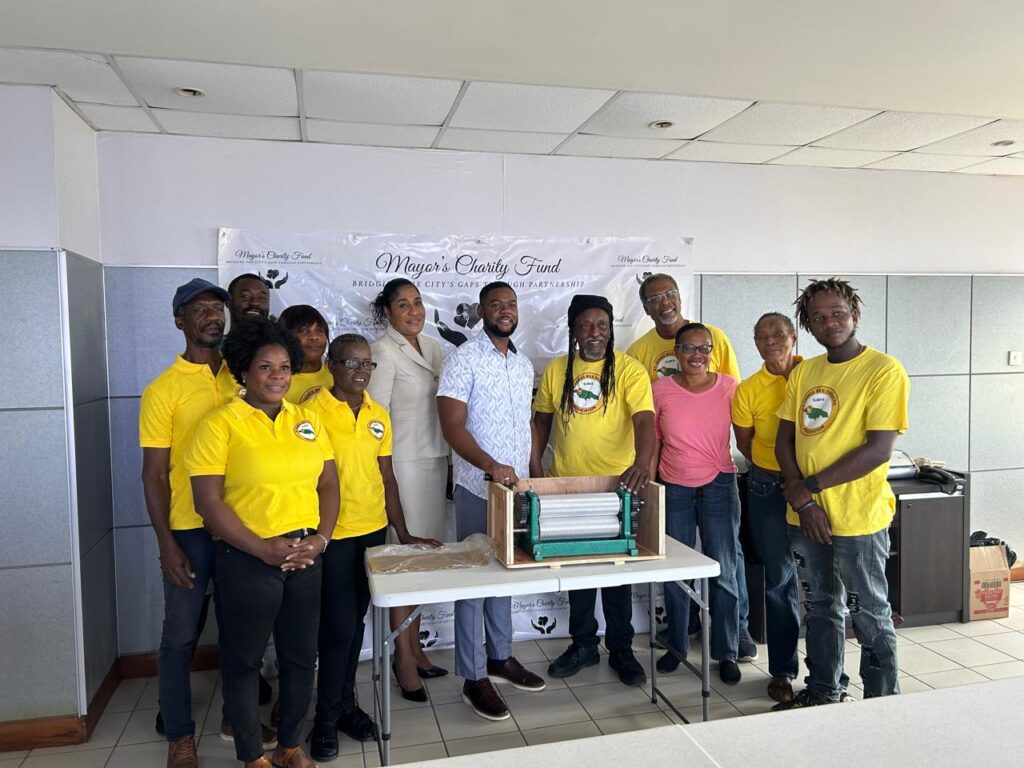
    The announcement coincided with the ceremonial handover of a wax foundation mill, valued at approximately J$200,000, to the association. This equipment was donated by the St James Municipal Corporation through the mayor’s charity fund, with the presentation occurring at the corporation’s Montego Bay offices.

    McKay emphasized the unique resistance of hands-on agricultural professions to technological displacement during his address. “In this era of AI advancement, people must pursue occupations that technology cannot replicate,” he asserted. “Artificial intelligence cannot perform beekeeping tasks—AI doesn’t experience bee stings, but human beekeepers do,” he noted with pragmatic humor.

    The association president outlined a vision where innovation and practical skill development form the cornerstone of Jamaica’s youth preparation for future economic realities. “We must adopt innovative, hands-on approaches to facilitate our younger generation’s advancement through the 21st century and beyond,” McKay explained. “Supporting the next generation through foundational work benefits not just ourselves, but the entire community.”

    Beyond the educational initiative, the association plans to expand its community engagement through its annual Healthy Lifestyle Day event, potentially relocated to Harmony Beach Park this year. Traditionally hosted at the Rural Agricultural Development Authority (RADA) office in Catherine Hall, Montego Bay, this collaborative event with RADA and the St James Health Department focuses on strengthening local apiculture, recruiting new beekeepers, and promoting the health advantages of bee-derived products.