分类: society

  • TotalEnergies Jamaica donates 1,884 solar lamps to aid hurricane recovery

    TotalEnergies Jamaica donates 1,884 solar lamps to aid hurricane recovery

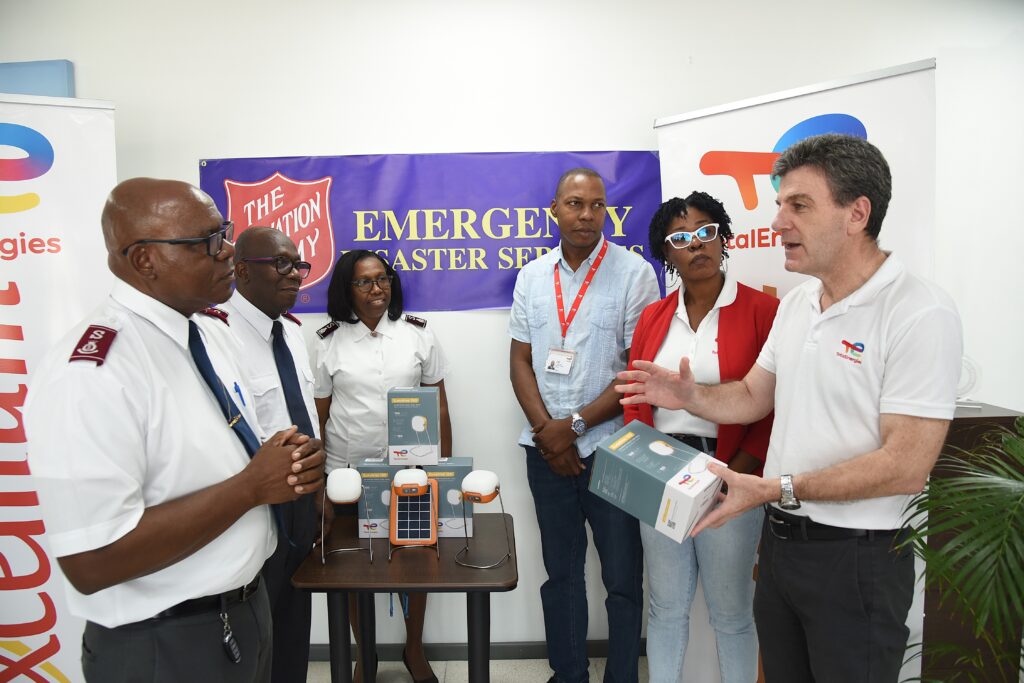
    KINGSTON, Jamaica — In a significant boost to post-hurricane recovery efforts, TotalEnergies Jamaica has delivered 1,884 solar-powered lamps to humanitarian organizations across the island. The substantial donation, distributed between Food For The Poor (FFTP) and the Salvation Army, was formally presented during a ceremony at the energy company’s corporate headquarters last Friday.

    This initiative addresses a critical infrastructure gap persisting after Hurricane Melissa’s devastating passage. While Jamaica Public Service has worked to restore main power grids, Marsha Burrell-Rose, Marketing and Public Relations Manager at FFTP, highlighted that numerous remote mountainous communities remain without electricity and telecommunications. “These solar lamps will definitely help us because, if they don’t have anything, they do have sunlight in abundance,” she stated, expressing gratitude for the 1,164 lamps allocated to her organization.

    The Salvation Army received 720 units, which Colonel Edward Lyons, Chief Secretary for Caribbean Territorial Emergency Disaster Services, described as meeting an urgent need. “People have been calling for these same lamps for a long time,” Lyons revealed. “They are very scarce. It’s the first time this amount has ever been made available locally.” He emphasized that the lamps provide a vital alternative for residents who cannot afford generators, though distribution would require careful planning to maximize impact.

    TotalEnergies executives Howard Henry (Retail, Shops, Foods and Services Manager) and Ulanda Graham (Human Resources Director) emphasized their deliberate selection of partner organizations based on rigorous due diligence. Burrell-Rose affirmed FFTP’s operational transparency, noting their 43-year track record: “We don’t just give away items. We capture data, monitor and evaluate. We believe in showing people how we are spending their money.”

    The solar lamps represent the latest phase in TotalEnergies’ comprehensive hurricane response, which began November 13 with 700 care packages delivered to St. Elizabeth and included subsequent monetary donations of $10,000 to Jamaica Red Cross and $20,000 to FFTP in December.

    Managing Director Vincent Daniault, who witnessed the hurricane’s unprecedented destruction firsthand, expressed his personal commitment to the relief efforts. Having toured affected areas from Montego Bay to Black River, he recounted: “The buildings were destroyed and trees stripped bare. It was difficult not to act seeing the kids and people. I have never seen anything like this.”

    The distributed Sunshine 150 Solar Lamps represent advanced appropriate technology, featuring detachable solar panels, USB ports for mobile phone charging, and capability to provide up to 100 hours of illumination across four lighting modes. Valued at approximately $60 per unit internationally, these lamps have previously been deployed by TotalEnergies in energy-deprived regions of Africa, reflecting the company’s broader commitment to energy access in vulnerable communities.

  • WATCH: NSWMA workers protest after colleague dies of electrocution

    WATCH: NSWMA workers protest after colleague dies of electrocution

    KINGSTON, Jamaica — Grief and frustration erupted at the National Solid Waste Management Authority (NSWMA) headquarters as sanitation workers staged an emotional protest following the tragic death of their colleague Garfield Johnson. The sanitation worker succumbed to severe burn injuries on Tuesday, January 27, after being electrocuted during operations in the Greenwich Farm community of St Andrew eleven days prior.

    According to official reports, the fatal incident occurred on January 16 when Johnson was performing his duties on a garbage truck that became entangled with live electrical wiring. Despite being rushed to medical facilities and considered for transfer to a specialized burn unit, Johnson could not overcome his critical injuries.

    The protest revealed significant tension between frontline workers and management, with attendees expressing anger over perceived communication failures following the tragedy. Mourners gathered outside NSWMA offices weeping openly while displaying placards bearing messages including ‘RIP’ and ‘No justice.’

    Audley Gordon, Executive Director of NSWMA, countered claims of inadequate response, stating that authority officials had maintained consistent contact with Johnson’s family since the incident and had visited him in hospital. Gordon emphasized the organization’s commitment to allowing space for collective grieving, describing Johnson as ‘a dedicated sanitation officer’ who ‘served up to the point of his demise.’

    In an official statement, the NSWMA acknowledged the inherent dangers faced by sanitation workers across Jamaica and extended condolences to Johnson’s family and colleagues. The Jamaica Public Service Company has launched its own investigation into the electrocution incident, while police authorities continue their separate inquiry into the circumstances surrounding the operational tragedy.

  • Rise & Thrive initiative strengthens community leadership in Kingston ZOSO

    Rise & Thrive initiative strengthens community leadership in Kingston ZOSO

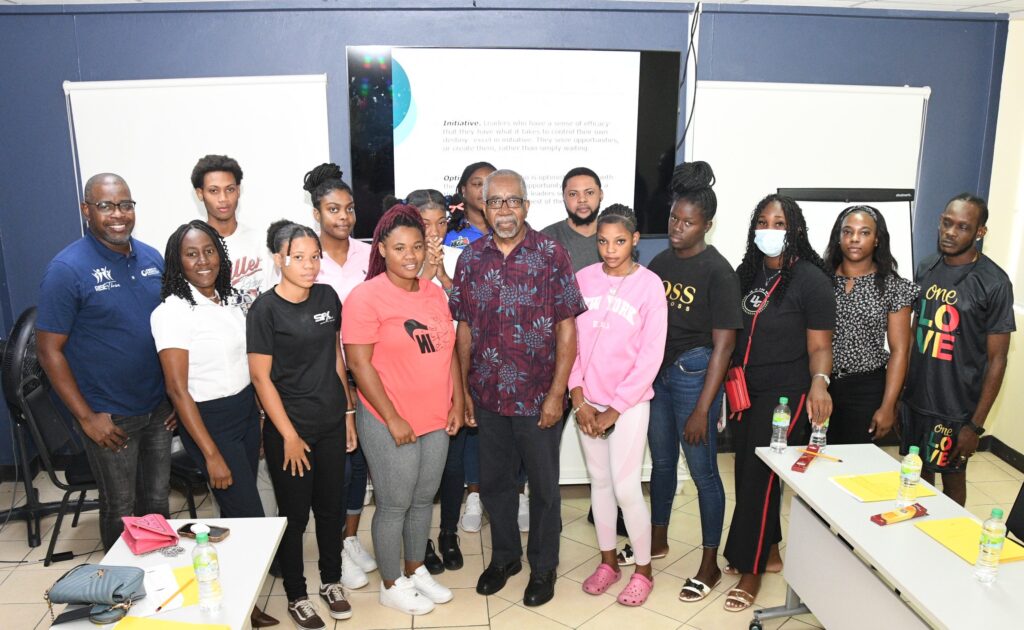
    KINGSTON, Jamaica — A transformative initiative is delivering crucial support to community organizations operating within Kingston and St Andrew’s most vulnerable neighborhoods. The six-month Rise & Thrive project, funded by the UK’s Foreign, Commonwealth and Development Office (FCDO) and implemented by the Council of Voluntary Social Services (CVSS), represents a strategic intervention in four Zones of Special Operations (ZOSOs) communities: Parade Gardens, Greenwich Town, Denham Town and August Town.

    The program specifically addresses governance gaps that have emerged following the initial security-focused phases of Jamaica’s ZOSO framework. According to Project Manager Damion Hylton, while earlier ZOSO phases concentrated on ‘clearing and holding’ operations, the crucial ‘build phase’ requires strengthened community governance to ensure sustainable social and infrastructure development.

    Rather than introducing new programs, the initiative focuses on enhancing existing community-led efforts through institutional capacity building. In close collaboration with the Social Development Commission (SDC), the project provides targeted training in governance structures, project planning, financial management, and monitoring systems. This approach enables Community Development Committees (CDCs) and other grassroots organizations to transition into formal civil society entities capable of independently accessing funding and implementing programs.

    A distinctive feature of the initiative is its emphasis on youth leadership development. Recognizing that young people are both disproportionately affected by violence and statistically overrepresented in crime statistics, the program actively cultivates their participation in community decision-making processes.

    The personal impact is already evident among participants. Jada Brown, a 20-year-old university student from August Town, reports that the leadership training has transformed her self-perception: ‘Being selected as a leader for change has made me feel empowered. I believe I can use what I’ve learnt to inspire other young people.’

    Similarly, Hopeton Robinson of Parade Gardens has leveraged the initiative to advance youth development through a football program that successfully unites youths from previously conflicting communities.

    The project incorporates peacebuilding, restorative justice, and violence interruption approaches to address various community conflicts beyond crime reduction. By the conclusion of the six-month period, communities are expected to demonstrate more active CDCs, enhanced collaboration among civil society groups, and stronger partnerships with government agencies through coordinated ‘community conversations’ that assess needs and reduce effort duplication.

  • Decomposed body found in car in St Elizabeth

    Decomposed body found in car in St Elizabeth

    Authorities in St Elizabeth have launched a comprehensive investigation following the grim discovery of a severely decomposed male body inside a parked vehicle in Lacovia on Wednesday morning. The unsettling find was initially reported by local residents at approximately 10:00 am after they observed an unusual concentration of flies surrounding the automobile. Upon closer examination, the witnesses made the disturbing discovery of human remains within the vehicle and immediately alerted law enforcement officials. Police personnel promptly secured the area and conducted a thorough forensic processing of the scene as part of their standard investigative protocol. The remains have been subsequently transferred to a medical facility for official autopsy procedures. Law enforcement representatives have indicated that the autopsy results will be crucial in determining both the cause of death and the exact circumstances surrounding this incident. The identity of the deceased individual remains undisclosed pending formal identification procedures and notification of next of kin. Police investigators are currently pursuing multiple lines of inquiry while appealing to the public for any relevant information that might assist in reconstructing the events leading to this tragic discovery.

  • Hundreds of flood warnings in effect as UK weathers Storm Chandra

    Hundreds of flood warnings in effect as UK weathers Storm Chandra

    The United Kingdom is grappling with severe disruption and tragedy in the wake of Storm Chandra, which battered the nation with extreme wind and torrential rain on Tuesday. The adverse weather has resulted in at least one fatality and precipitated a major flooding crisis, prompting the issuance of over 200 official alerts across the country.

    According to a BBC report, the storm claimed the life of a truck driver in Hampshire after his vehicle was involved in a catastrophic accident, crashing into a swollen river. Widespread scenes of devastation have emerged from multiple regions, depicting submerged streets, abandoned vehicles, and floodwaters breaching residential and commercial properties.

    Meteorological analysis indicates that Storm Chandra represents the third officially named tempest to strike the UK this year, arriving shortly after the departure of its predecessor, Storm Ingrid. A critical factor exacerbating the flooding was the already saturated ground condition from previous rainfall, which drastically reduced the land’s capacity to absorb Chandra’s deluge, leading to rapid runoff and overflow.

    The severity of the situation necessitated urgent evacuations in high-risk zones. Authorities mandated the immediate evacuation of the Iford Bridge Home Park, a residential area in Dorset, citing an imminent ‘danger to life’ from the rising waters.

    While meteorological forecasts for Wednesday suggest a reduction in precipitation, the aftermath remains critically severe. As of Wednesday, 87 high-level flood warnings, indicating expected flooding, remained active alongside 207 flood alerts, which signal potential flooding. This state of high alert extends across England, Wales, and Scotland, as emergency services continue to manage the widespread impacts and assess the full extent of the damage.

  • Goat thieves hit Sydney Pagon STEM Academy

    Goat thieves hit Sydney Pagon STEM Academy

    The Sydney Pagon STEM Academy in Elim, St Elizabeth, has been struck by criminals for the third time in recent years, with armed thieves stealing seven valuable goats worth approximately $500,000 Jamaican dollars. The incident occurred Monday night as the agricultural institution continues to recover from extensive damage caused by Category 5 Hurricane Melissa three months ago.

    According to Principal Milbert Miller, the thieves fired two shots to intimidate security personnel during the brazen operation. The stolen livestock included five bucks and two does, with one pair having been recently donated by Jamaica’s Ministry of Agriculture to improve the school’s breeding stock. The loss represents a significant setback to both the educational program and nutritional initiatives that benefit students.

    The academy, situated on over 200 acres just miles from Santa Cruz, specializes in agricultural education alongside STEM subjects. The goats, sheep, and rabbits maintained on the property serve dual purposes: providing hands-on learning opportunities for students who often apply these skills at home, and supplying protein for the school’s nutritional program.

    Principal Miller expressed particular concern about the theft of their ‘service buck,’ which will severely impact their breeding capabilities. The school has suffered approximately $1.5 million in total losses from repeated thefts in recent years. Miller cited the lack of electricity in the area as enabling criminals to operate under cover of darkness and appealed for enhanced security measures including armed personnel and surveillance cameras to protect the vulnerable institution.

  • Hanna Martin eyes tougher penalties for campus assaults

    Hanna Martin eyes tougher penalties for campus assaults

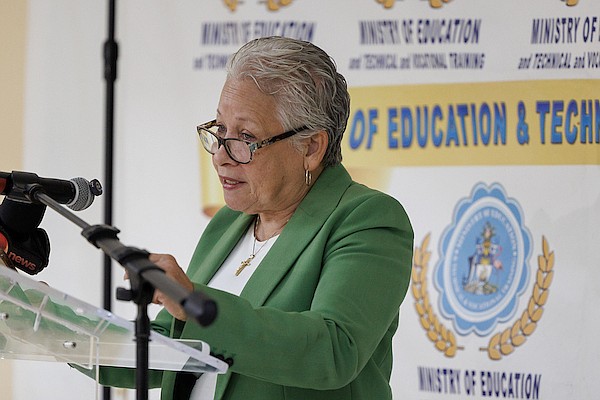
    The Bahamas Ministry of Education is collaborating with the Attorney General’s Office to establish specialized criminal offenses specifically for assaults occurring on school premises. This legislative initiative comes in response to growing public outcry over campus violence, highlighted by the recent sentencing in a brutal attack against a Grand Bahama principal.

    Education Minister Glenys Hanna Martin announced the policy development during a press briefing in Grand Bahama, emphasizing that the proposed measures would classify school campus assaults as aggravated offenses carrying enhanced penalties compared to similar attacks occurring elsewhere. The initiative aims to create stronger deterrents against violence in educational environments.

    “We are determined to send an unequivocal message that school campuses are inviolable spaces,” Minister Hanna Martin stated. “Those who believe they can commit violent acts on educational grounds will face consequences of a significantly more severe nature. Our collaboration with the Attorney General’s office seeks to establish aggravated offense classifications specifically for assaults occurring on school property, which would impact both sentencing severity and the fundamental nature of the offense.”

    The policy development follows the judicial resolution of a high-profile case involving Kenneth Farrington, who received a 30-month prison sentence for attacking McLean’s Town School principal Simone Butler-Cornish with an iron bar in her classroom in June. The victim was assaulted while retrieving a student’s report card for Farrington, after which she fled outside and feigned death to halt the attack.

    Butler-Cornish and her colleagues have publicly expressed that the sentence was insufficient given the brutality of the assault and Farrington’s previous convictions for similar offenses. While Minister Hanna Martin declined to comment specifically on the sentencing, she emphasized that such attacks must carry substantial repercussions.

    Regarding the principal’s future placement, the minister indicated that any decision about reassignment would rest entirely with Butler-Cornish herself. The government’s overarching objective remains ensuring that school campuses become completely secure environments where educators and students can operate without fear of violence.

  • ‘Legal light, and it feels good’

    ‘Legal light, and it feels good’

    ANNATTO BAY, St. Mary — A transformative initiative is bringing legal electricity and renewed dignity to residents of rural Jamaica through the government’s Rural Electrification Programme (REP). The program, implemented through a partnership between the Ministry of Science, Energy, Telecommunications and Transport and the Jamaica Social Investment Fund (JSIF), is regularizing previously unauthorized connections while installing proper electrical infrastructure.

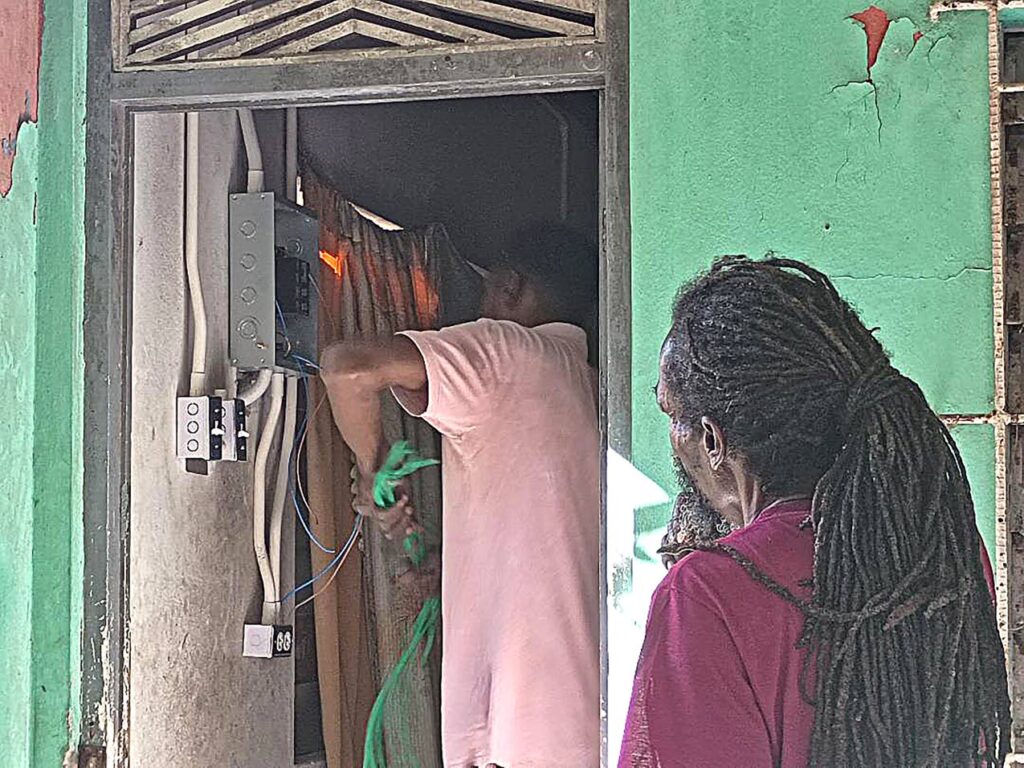
    Sixty-year-old Kerron Buchanan, once disconnected from the Jamaica Public Service Company (JPS) grid due to unaffordable accumulating bills, now watches with anticipation as certified electricians install a new breaker box at his Cargill Lane residence. “I maintained monthly payments, but the carried-over balances became insurmountable,” Buchanan recounted, describing the financial strain that led to his disconnection.

    Buchanan is among more than 70 Annatto Bay residents who received complete household rewiring on January 21, marking a significant step in normalizing their electrical access. The emotional impact was palpable as Buchanan shared his immediate plans: “The first thing I will do is play some music and clean up the place.”

    Local cosmetologist Malika Murray expressed profound relief at transitioning from an illegal connection to authorized service. She described the constant anxiety of living with unauthorized electricity: “When you see a JPS vehicle, your heart leaps because you don’t know if they’re coming with police to your house.” Murray praised the utility’s initiative and committed to maintaining regular payments, encouraging fellow community members to embrace legal connections. “No more hide and seek. Legal light, and it feels good,” she beamed.

    The current initiative continues work that began in 2023 under former Member of Parliament Dr. Norman Dunn, with Annatto Bay representing the first phase in St. Mary South Eastern where over 100 households were previously regularized. REP liaison officer Omar Love confirmed the program’s expansion across the constituency, with more than 300 residents slated for regularization.

    Established with a mandate to extend electricity access to rural regions, REP supports the government’s broader objective of island-wide power availability to stimulate economic development. The institutional framework was strengthened in 2006 when JSIF signed a memorandum of understanding with REP and JPS to facilitate household regularization across 12 inner-city communities. The program encompasses complete household wiring and certification of contractor-performed electrical work.

  • Nationwide underground grid too costly, says JPS

    Nationwide underground grid too costly, says JPS

    Jamaica’s national electricity provider has declared a comprehensive underground power grid financially unfeasible despite growing political pressure for storm-resistant infrastructure. The Jamaica Public Service Company (JPS) presented this assessment during a parliamentary committee hearing that examined grid resilience strategies following recent devastating hurricanes.

    JPS President and CEO Hugh Grant, drawing from his experience with New York’s extensive underground network, informed Parliament’s Public Administration and Appropriations Committee that subterranean systems typically cost ‘north of 15 times’ more than overhead lines. While acknowledging the superior reliability of underground infrastructure, Grant emphasized that burying Jamaica’s entire electrical network would impose an overwhelming financial burden on the nation.

    The debate emerged amid heightened concerns about climate resilience after Hurricane Melissa’s October 2025 devastation, which caused extended blackouts across multiple parishes. Lawmakers specifically questioned whether Jamaica’s overhead grid could withstand increasingly severe weather events and seismic activity, with St Mary Central MP Omar Newell querying earthquake preparedness and underground alternatives.

    Instead of nationwide conversion, JPS is advancing a strategy of ‘selective undergrounding’ that prioritizes critical infrastructure. This targeted approach would focus protection on essential facilities like hospitals, tourism corridors, and other high-priority zones rather than attempting complete grid overhaul. Grant confirmed the company has obtained preliminary pricing for such targeted projects, noting they remain ‘extremely expensive’ but offer more achievable resilience benefits.

    The discussion reflects Jamaica’s broader ‘build back better’ initiative following repeated storm seasons that have exposed vulnerabilities in overhead transmission systems, particularly in rural and coastal communities most susceptible to weather-related damage.

  • First set of modular homes expected in February

    First set of modular homes expected in February

    KINGSTON, Jamaica — Jamaica’s government has announced a multi-faceted recovery strategy to address housing devastation caused by Hurricane Melissa in October 2025, with the first shipment of modular homes expected to arrive by February’s end. Education, Skills, Youth and Information Minister Senator Dana Morris Dixon confirmed the timeline during Wednesday’s post-Cabinet briefing at the Office of the Prime Minister.

    The modular housing initiative represents a critical component of the broader Shelter Recovery Programme (SRP), which encompasses six distinct government-led efforts. The National Housing Trust (NHT) is spearheading the acquisition of approximately 5,000 modular units to meet urgent accommodation needs across affected regions.

    Concurrent with housing delivery, the government has deployed Jamaica Defence Force (JDF) personnel alongside international teams from partner nations including Guyana and Ghana to execute reconstruction projects in the most severely impacted parishes. This collaborative approach combines local knowledge with global expertise in disaster recovery.

    A particularly innovative aspect of the SRP involves the BRIDGE program (Building Resilience and Inspiring Development through Guided Experience), administered through the HEART/NSTA Trust. This initiative recruits unemployed youth from hurricane-damaged communities for intensive construction training programs. Participants will subsequently work alongside JDF soldiers and international teams, gaining practical experience while contributing to rebuilding efforts.

    Minister Morris Dixon emphasized the dual benefit of this approach: “We’re not just rebuilding homes; we’re creating transformative opportunities for young people to acquire trade skills, experience international best practices, and fundamentally redirect their career trajectories. This represents both immediate disaster response and long-term workforce development.”