分类: society

  • “The Truth is Simple: Girls are Incredible Problem Solvers”

    “The Truth is Simple: Girls are Incredible Problem Solvers”

    In a significant move to address gender disparities in technology, Belize Bank has unveiled the latest iteration of its Girls4Tech program, providing hands-on training in coding, digital security, and analytical problem-solving for young female students across Belize. This Mastercard-supported initiative has now expanded its reach to approximately 300 participants nationwide, marking a substantial commitment to fostering female representation in STEM fields.

    The program emerges against the backdrop of persistent underrepresentation of women throughout Caribbean technological sectors. Girls4Tech was specifically conceived to dismantle these barriers and create equitable opportunities for female participation in digital innovation.

    At the official launch ceremony, Chief Banking Officer Monica Daryanani Urbina delivered a powerful address challenging entrenched stereotypes about gender and technology. ‘The fundamental truth remains undeniable: young women possess extraordinary problem-solving capabilities,’ Urbina asserted. ‘They demonstrate remarkable creativity, innovation, and consistently pose the critical questions that spark transformative ideas.’

    Urbina further observed that many participants already exhibit innate innovative thinking through their engagement with puzzles, applications, and computer systems—activities that form the foundational mindset for technological proficiency. She emphasized technology’s central role in modern development, stating, ‘Technology transcends being merely an organizational department; it represents the core engine of innovation, the primary driver of progress, and among our most potent tools for empowerment in the contemporary world.’

    In her concluding remarks, Urbina addressed the psychological barriers that frequently deter women from pursuing technical careers, offering an empowering perspective: ‘Every existing barrier presents an opportunity to dismantle it.’ The program represents a strategic investment in building a more inclusive technological landscape while equipping young women with essential digital skills for future professional success.
  • Caribbean Development Bank initiates program to enhance educational results in Haiti

    Caribbean Development Bank initiates program to enhance educational results in Haiti

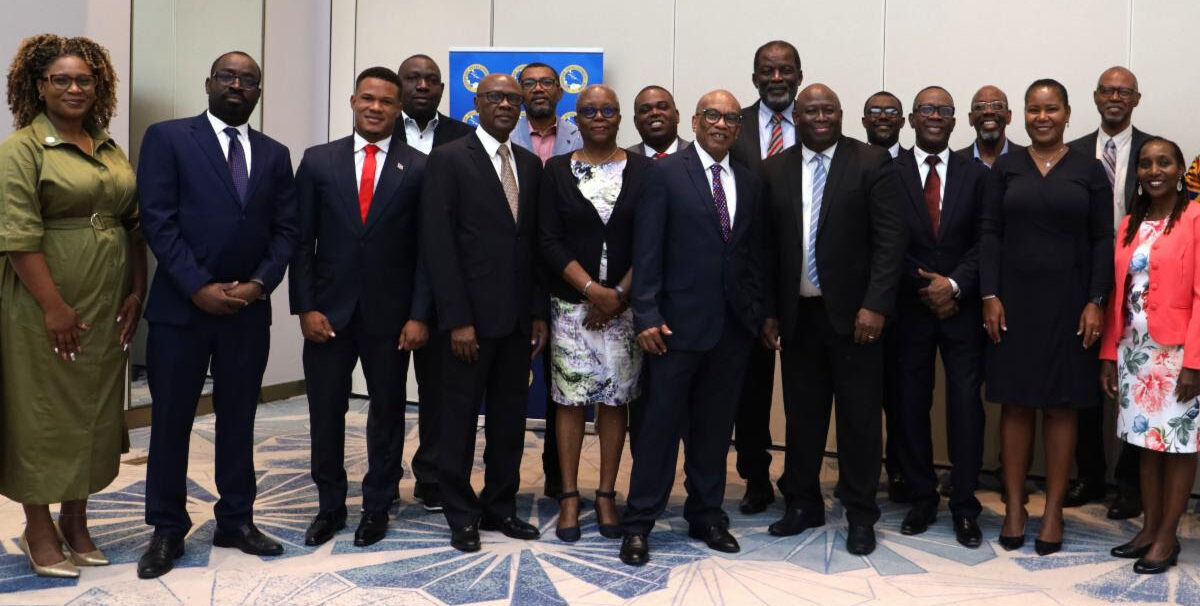
    The Caribbean Development Bank (CDB) has formally initiated the Quality Enhancement in Public Education II (QEPE II) Project in collaboration with Haiti’s government, marking a substantial advancement in educational reform for the Caribbean nation. This comprehensive $14.7 million initiative combines a $13 million grant from CDB’s Special Development Fund with $1.7 million in counterpart funding from Haitian authorities to address educational disparities nationwide.

    Building upon the foundational achievements of its predecessor, QEPE II is strategically designed to impact approximately 16,000 students and 700 educators through multifaceted interventions. The program encompasses nutritional support through school feeding programs, financial assistance via tuition waivers, gender-responsive initiatives, technological enhancements through ICT equipment distribution, and comprehensive professional development frameworks for educational personnel. A cornerstone of the project involves the development and implementation of an innovative e-learning platform for secondary students, ensuring educational continuity during socio-political disruptions.

    Dr. Martin Baptiste, Division Chief of CDB’s Social Sector Division, emphasized the transformative potential of the initiative during the launch ceremony: “Education represents one of the most potent instruments for fostering resilience, social stability, and sustainable development. QEPE II constitutes a vital investment in Haiti’s future trajectory, guaranteeing that children across all socioeconomic backgrounds can access secure, supportive, and high-caliber learning environments.”

    Yves Roblin, Director General of Haiti’s Ministry of National Education and Vocational Training, acknowledged the project’s critical timing: “Amidst our nation’s challenges, QEPE II delivers essential support to maintain educational operations and preserve every Haitian child’s fundamental right to education. This collaborative partnership with CDB enhances our institutional capabilities, enriches classroom resources, and ultimately improves student outcomes nationwide.”

    The initiative demonstrates strategic alignment with Haiti’s Decennial Education Sector Plan (2022–2032) and advances national priorities including school health protocols, nutritional support, educational accessibility, and governance improvements. Simultaneously, it supports CDB’s Country Engagement Strategy for Haiti (2023–2025), which identifies human capital development—particularly educational quality and access—as fundamental pillars for sustainable economic growth.

    This educational transformation project further contributes to CDB’s overarching mission of fostering social resilience through educational innovation while simultaneously addressing broader developmental objectives including poverty reduction, gender equality, and inclusive socioeconomic progress. The Bank reaffirms its commitment to supporting Haiti’s long-term developmental aspirations, particularly through expanding educational opportunities for youth and strengthening foundational elements for future national development.

  • NMA traint personeel voor betere milieuregels en controle

    NMA traint personeel voor betere milieuregels en controle

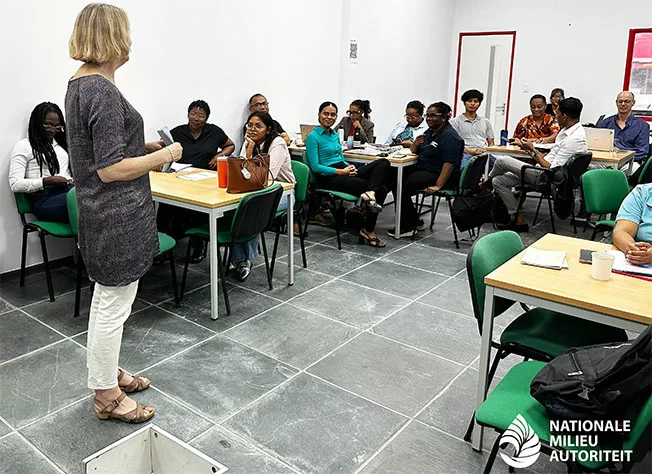
    The National Environmental Authority (NMA) has initiated a comprehensive four-day training program designed to enhance staff capabilities in converting environmental impact assessments (EIAs) into actionable and enforceable licensing conditions. Commencing on March 16, 2026, this specialized training is being conducted through a collaborative effort between the Netherlands Commission for Environmental Assessment and WWF-Guianas.

    The core curriculum focuses on three critical areas: strengthening the evaluation of environmental reports, formulating more precise project conditions, and improving monitoring and enforcement mechanisms. The NMA emphasizes that environmental impact assessments should not be considered final documents but rather foundational tools for policy development and implementation.

    According to agency officials, the primary objective of this initiative is to ensure that environmental reports are effectively utilized in practical applications rather than remaining dormant in archives. Deputy Director Iwan Samoender stressed that this knowledge enhancement is essential for balancing economic development with environmental protection and sustainable management of natural resources.

    ‘The transformation of assessment data into enforceable parameters represents a significant advancement in our regulatory approach,’ Samoender noted. ‘This training ensures that theoretical assessments translate into concrete environmental safeguards.’

    The program, which concludes on March 19, 2026, represents a strategic investment in regulatory capacity building that could establish new standards for environmental governance throughout the region.

  • Nine Years, No Trial: Court Rules Paumen’s Rights Violated

    Nine Years, No Trial: Court Rules Paumen’s Rights Violated

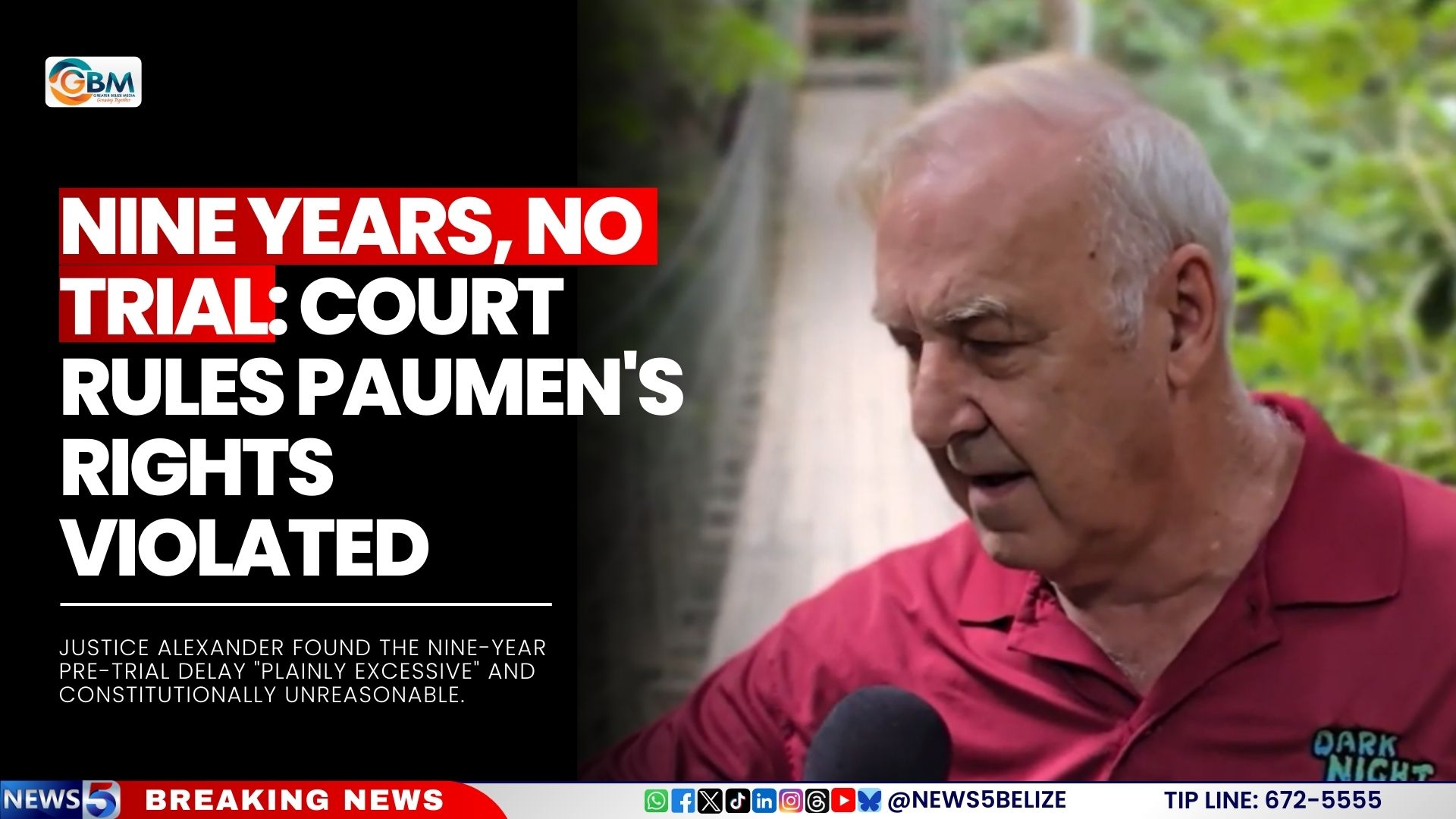
    In a landmark judicial decision, Belize’s High Court has determined that the state violated the constitutional rights of businessman Bradley Paumen through excessive pretrial delays spanning nearly a decade. Presiding Justice Martha Lynette Alexander delivered the ruling this month in case CV29 of 2025, declaring the nine-year postponement of Paumen’s murder abetment trial “plainly excessive” and constitutionally unreasonable.

    The 68-year-old owner of Dark Night Cave Tubing Adventure Park in the Cayo District faced criminal charges since January 2016, accused of soliciting Jerome Crawford to murder four individuals: attorney Nazira Myles, businessman Michael Modiri, security officer Paul Wade, and potential witness Juan Shol. Despite pleading not guilty and remaining on bail, Paumen’s case languished in judicial limbo without progressing to trial.

    Justice Alexander identified “sustained institutional inaction” as the primary cause of delays, particularly highlighting a four-year period from mid-2020 to mid-2024 when the case entered administrative paralysis following two judicial recusals. During this timeframe, the Director of Public Prosecutions encountered contradictory information from court officials regarding case assignment, despite repeated written inquiries and court attendance.

    While acknowledging some delay attribution to defense-requested adjournments in 2019-2020 due to bereavement and illness, plus pandemic-related court disruptions, the court determined these factors accounted for less than two years of the total delay. The overwhelming majority stemmed from systemic institutional failures.

    Paumen’s legal team, led by Magali Marin-Young SC and Allister T. Jenkins, sought comprehensive relief including constitutional violation declaration, permanent case dismissal, and compensatory damages for alleged business losses. The court granted only the declaration of rights violation and ordered expedited case management before Justice Creary-Dixon, mandating trial commencement within six months to avoid automatic case dismissal.

    The ruling declined additional remedies, finding no proven connection between judicial delays and Paumen’s claimed business losses. In a concerning postscript, Paumen was recently hospitalized after sustaining multiple gunshot wounds during a home invasion at his Frank’s Eddy residence, with police detaining one suspect and pursuing two others.

  • PRESS RELEASE: CCJ remits matter to high court for reconsideration

    PRESS RELEASE: CCJ remits matter to high court for reconsideration

    In a landmark ruling with significant implications for Caribbean judicial procedures, the Caribbean Court of Justice (CCJ) has established a comprehensive framework for handling deficient statements of claim in civil litigation. The decision, delivered on March 17, 2026, stems from the case Harry Panday v Malcolm Panday and Deosaran David, originating from Guyana.

    The court’s reasoning addresses a longstanding partnership dispute between brothers Harry Panday (the Applicant) and Malcolm Panday (the First Respondent) concerning a judgment sum of USD 733,451 plus interest that Harry claims belongs to their partnership. The case had previously been struck out at multiple judicial levels—first by Guyana’s High Court, then upheld by both the full Court and Court of Appeal—due to insufficient particulars in the statement of claim.

    The CCJ’s groundbreaking approach, now termed the ‘Panday Approach,’ mandates that courts must first determine whether a pleading discloses a reasonable cause of action before considering striking it out. Crucially, the framework requires judges to conduct a balancing exercise considering multiple factors: effective use of judicial resources, proportionality, fairness to all parties, and the overriding objective of delivering justice.

    Justice Jamadar, delivering the judgment on behalf of the panel comprising Honourable Justices Barrow, Jamadar, Ononaiwu, Eboe-Osuji, and Bulkan, emphasized that cases should be determined on substantive merits rather than procedural technicalities whenever possible. The court found that lower courts had erred in law by failing to consider whether the Applicant should have been granted an opportunity to amend his Statement of Claim before dismissal.

    The ruling represents a significant shift in judicial philosophy toward more substantive justice rather than procedural technicalities, potentially affecting civil litigation practices throughout the Caribbean Community. The full judgment is available for legal professionals and scholars on the CCJ’s official website at www.ccj.org.

  • JACRA completes $120m coffee recovery programme following Hurricane Melissa

    JACRA completes $120m coffee recovery programme following Hurricane Melissa

    KINGSTON, Jamaica — Jamaica’s agricultural sector has achieved a significant milestone with the completion of a comprehensive $120 million recovery initiative targeting the island’s hurricane-damaged coffee industry. The Jamaica Agricultural Commodities Regulatory Authority (JACRA) successfully executed this extensive intervention to address the devastating impacts of Hurricane Melissa on the nation’s premier coffee-growing regions.

    The strategic program formed an integral component of the coordinated governmental response to widespread destruction that affected coffee farms, critical infrastructure, and farmer livelihoods across Jamaica’s most productive agricultural zones. Farmers operating in both the prestigious Blue Mountain and High Mountain regions received substantial support including fertilizers, insecticides, and various essential crop protection materials. Additionally, the initiative provided quality planting resources to facilitate replanting operations and restore agricultural productivity throughout affected farmlands.

    Wayne Hunter, Acting Director General of JACRA, characterized the intervention as a crucial measure for stabilizing the valuable coffee industry and supporting agricultural recovery. “The conclusion of this support program represents a pivotal milestone in our coffee sector’s rehabilitation. In the aftermath of Hurricane Melissa, rapid and decisive action was essential to assist our farming community,” Hunter stated. “This substantial investment guaranteed that producers obtained necessary resources to rehabilitate their operations and recommence production activities.”

    The regulatory authority emphasized that the recovery strategy was meticulously designed to address both immediate rehabilitation requirements and the long-term sustainability objectives of the coffee industry. Through the provision of high-quality agricultural inputs and certified planting materials, the program aims to reconstruct production capacity while preserving the exceptional standards that distinguish Jamaican coffee in international markets.

    This recovery effort was implemented under JACRA’s broader Crop Restoration and Establishment Programme (CREP), which incorporates comprehensive replanting initiatives, plant nutrition management, technical guidance services, and continuous field support operations. The authority maintained collaborative partnerships with farmers, industry associations, and stakeholders to ensure effective distribution of resources and alignment with practical agricultural needs.

    JACRA officials clarified that completing this support phase signifies substantial progress rather than a conclusion in the coffee industry’s recovery journey. While acknowledging accomplishments achieved thus far, the authority remains committed to ongoing support as the sector progresses toward subsequent phases of recovery and sustainable growth.

  • ‘It’s hellish down here!’

    ‘It’s hellish down here!’

    Residents across western Jamaica continue to face severe telecommunications challenges nearly five months after Hurricane Melissa devastated the region, with widespread reports of unreliable mobile service and internet connectivity hampering daily life and economic activities.

    In Westmoreland parish, frustrated customers describe enduring what one anonymous resident called ‘hellish’ conditions, with both major providers—Digicel and Flow—failing to deliver consistent service. The Farm Pen neighborhood resident reported making multiple unanswered service requests, noting that promised 24-hour callbacks never materialized despite repeated follow-ups.

    Telecom companies cite interdependent recovery complexities, particularly reliance on Jamaica Public Service Company (JPS) for pole infrastructure restoration and commercial power reactivation. Digicel CEO Stephen Murad revealed that five towers require complete reconstruction with completion projected for April 2026, while 14 additional sites await JPS infrastructure repairs. Many sites still operate on temporary satellite backhaul systems, resulting in congested networks that cannot deliver optimal LTE experiences.

    Service quality varies dramatically by location and provider. Taxi operator Mark Ellison reported Flow provides better coverage along the Savanna-la-Mar to White House route, while Digicel service frequently drops. Another driver, Michael Samuels, expressed relative satisfaction with Flow despite acknowledging signal weaknesses in areas where hurricane-damaged fiber networks forced satellite dependency.

    Sandra Alcock, a toll gate operator from Grange Hill, described the service as ’50/50′ for both providers, noting significant financial losses from her monthly $4,000 Digicel credit due to unreliable connectivity. Multiple anonymous residents in Grange Hill rated Digicel as average and Flow as worse, with similar patterns reported in Hanover parish where speed tests near Flow towers showed average daytime download speeds of just 1 Mbps.

    In St. James parish, many Digicel customers have resorted to data-based calling as traditional voice services frequently fail. The company outlined its four-phase recovery process, currently operating phases three and four simultaneously, involving fiber restoration via JPS infrastructure and network re-optimization requiring antenna adjustments across 925 towers.

    Flow Jamaica declined to provide specific timelines for restoration when contacted by media, requesting additional time to respond to inquiries about the ongoing challenges.

  • Special needs students shine at inaugural UWI-UNICEF Special Mathematical Olympiad

    Special needs students shine at inaugural UWI-UNICEF Special Mathematical Olympiad

    In a groundbreaking educational milestone, Jamaica’s special needs students demonstrated exceptional mathematical prowess at the inaugural UWI-UNICEF Special Mathematical Olympiad Champions 2026. The competition, held Thursday at the University of the West Indies’ Mona campus, witnessed remarkable achievements from visually impaired and deaf scholars across multiple categories.

    Lister Mair Gilby School for the Deaf’s Port Antonio unit claimed junior championship honors through the brilliant performances of Tevaughn Douglas and Kemario Anderson. The senior category victory was secured by a talented quintet from Salvation Army School for the Blind and Visually Impaired: Kevaughn Thompson, Jahmarie Morales, Abria Bishop, Jhanelle Palmer and Katheriel Johnson.

    This pioneering regional event assembled 53 exceptional participants representing various special needs backgrounds, with 28 students identifying as low vision or blind and 25 as deaf or hard of hearing. The competitors hailed from multiple campus locations including Portland, May Pen, Papine and Port Antonio, with every participant receiving formal recognition during the awards ceremony.

    Professor Tannecia Stephenson, Dean of UWI Mona’s Faculty of Science and Technology, praised the initiative as transformative for educational accessibility. “This wonderful initiative enables access to activities that develop the skills we all need to excel,” Stephenson remarked, while challenging participants to “persist with your dreams until you possess them.”

    The event garnered significant governmental support with Pearnel Charles Jr., Minister of Labour and Social Security, sharing personal reflections on mathematics education. Minister Charles emphasized the importance of overcoming mathematical anxiety, noting “Not fearing math has caused me not to fear any subject.”

    The Minister simultaneously announced enhanced support systems through the Jamaica Council for Persons with Disabilities (JCPD), urging families to register for assistance programs. These include the Margaret Moody Scholarship valued at $350,000 per recipient and education assistance grants of $50,000 for educational materials. Minister Charles further encouraged students to actively participate in policy formation, specifically requesting recommendations for the Minister of Education and Youth regarding special needs education improvements.

  • 19 tonnes of building supplies on the way to Jamaica

    19 tonnes of building supplies on the way to Jamaica

    A major humanitarian initiative is underway as £30,000 worth of essential building materials en route from the United Kingdom to Jamaica will provide temporary shelter for families displaced by Hurricane Melissa’s devastating impact. The relief effort represents a collaborative partnership between Tazio Heath, founder of Trizone Electrical Services Ltd (UK) and Trizone Haulage Services Ltd (Jamaica), and Simon Lawson, chairman of Lawson’s Timber, Building and Fencing Supplies.

    Heath, originally from Old Harbour, St Catherine, was present in Jamaica when the Category 5 hurricane made landfall. Witnessing the destruction firsthand became the catalyst for his intervention. “Seeing the destruction first-hand compelled me to act,” Heath stated. “I knew I had to do something meaningful for the people of Jamaica who were severely impacted. Through consultations with partners, we identified building materials as the most urgent need for communities seeking to rebuild shelters and restore security.”

    Lawson detailed how the initiative rapidly developed following Heath’s appeal. Having previously spent time in the Caribbean, Lawson understood the catastrophic potential of hurricanes. “Taz reached out to me and made it very clear that construction materials represented the most critical immediate need,” Lawson explained. “As a builders’ merchant, this aligned perfectly with our capabilities. After consulting our suppliers and internal team, we committed 19 tonnes of building materials to support this cause.”

    When questioned about his company’s motivation for supporting such substantial humanitarian efforts, Lawson referenced the philosophical foundations guiding his business approach. “Coming from a Quaker background, I operate on the principle that business transcends mere profit generation,” Lawson articulated. “It fundamentally concerns community building and support. The greatest privilege of entrepreneurship lies in the capacity to assist others facing tragedies beyond their control, particularly natural disasters. Commercial enterprises must maintain a moral compass that supersedes purely profit-driven motivations.”

    The humanitarian cargo, comprising timber, plywood, tarpaulins, fittings, tools, and other essential construction materials, departed England’s Port of Hull on February 17, 2026. The shipment is anticipated to arrive in Jamaica imminently, where it will facilitate the construction of robust temporary accommodations for affected families.

    Complementing this effort is Marlon Barclay, a St Thomas-born associate of Heath, who played a pivotal role in coordinating the planning, procurement, and loading operations. Both individuals plan to travel to Jamaica to personally oversee the distribution process and collaborate with government relief agencies to ensure materials reach the most vulnerable communities.

    Barclay emphasized their targeted approach: “We remain committed to ensuring these materials specifically benefit the north-west St James constituency, an area that has received limited attention despite experiencing severe impacts from this unprecedented hurricane. Our absolute priority remains delivering support to those with the greatest demonstrated need.”

  • Mom: I just want justice for my son

    Mom: I just want justice for my son

    Eight years following the tragic death of her infant son, Madeen Bullard continues her relentless pursuit of accountability in a medical negligence case that she alleges originated from a critical error at Princess Margaret Hospital during her pregnancy. The case, which remains pending before the Supreme Court, has seen minimal progress despite repeated attempts by the grieving mother to seek resolution.

    Mrs. Bullard maintains that she received an incompatible blood transfusion during her pregnancy—A positive instead of her actual O negative blood type—which she believes directly contributed to severe complications and ultimately the death of her two-year-old son, Joshua Bullard, in 2018. Clinical documentation reviewed by media outlets indicates Joshua exhibited significant neurological complications at birth, including minimal limb movement, weak crying, and poor reflexes, requiring immediate intensive care.

    The prolonged legal battle has named the Public Hospital Authority, former Health Minister Dr. Duane Sands, and the Attorney General as defendants. Court records reveal the case has progressed through various procedural stages, including summons, affidavits, and medical records requests. In June 2022, the family’s legal representatives proposed a potential settlement, but despite acknowledgment from the Attorney General’s Office, no substantive response has been forthcoming.

    Mrs. Bullard describes the profound emotional and physical toll the ordeal has taken on her entire family. “It has affected me really badly health-wise,” she recounted. “I was crying, I couldn’t sleep, I couldn’t eat.” Her other children similarly struggled with the loss, having anticipated their younger brother’s eventual return home after celebrating both of his birthdays in hospital settings.

    The COVID-19 pandemic was cited in official correspondence from 2020 as contributing to earlier delays. Mrs. Bullard has engaged with multiple government administrations, including a meeting with Prime Minister Philip Davis in August 2023, who reportedly acknowledged the case’s excessive duration and promised investigation. Despite these high-level interventions, the mother reports receiving no meaningful updates from either government officials or her legal representatives, leaving her in a perpetual state of uncertainty and grief.