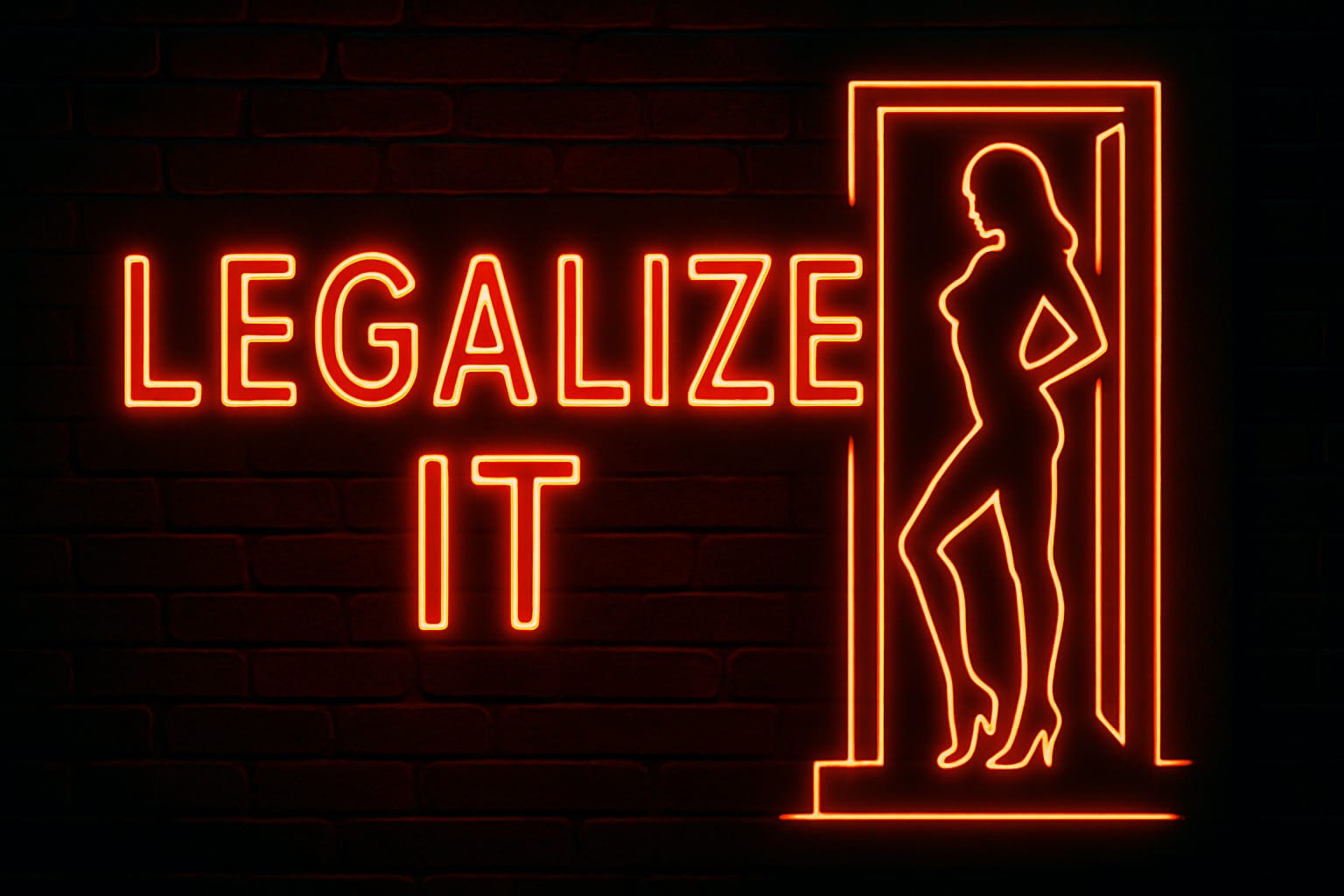
The Caribbean presents a paradoxical legal landscape where many countries have legalized marijuana and same-sex relations among consenting adults, yet prostitution remains largely criminalized. Nations like Grenada, Jamaica, Saint Vincent, and Trinidad and Tobago have decriminalized cannabis but maintain bans on same-sex acts, with Grenada moving toward cannabis legalization. This selective approach highlights a cultural and legal inconsistency, where societal acceptance of certain behaviors lags behind legislative changes. Meanwhile, prostitution, often referred to as the ‘oldest profession,’ remains illegal across most of the Caribbean, except in the Dutch Caribbean, though enforcement is rare. This contradiction underscores the region’s struggle to reconcile traditional values with modern liberalization. The United Kingdom, which has historically influenced Caribbean legal systems, has legalized prostitution with restrictions, raising questions about why its former colonies have not followed suit. Legalizing prostitution could provide legitimacy and safety for sex workers, aligning with broader societal shifts toward personal freedoms. However, such a move would require overcoming deep-seated cultural and moral resistance, particularly in societies where colonial legacies continue to shape legal and social norms.
分类: society
-

Ministry Highlights New National Office Of Disaster Services Building In Barbuda (+PHOTOS)
In the wake of Hurricane Irma’s catastrophic impact in 2017, Barbuda has made significant strides in bolstering its hurricane preparedness and resilience. A cornerstone of these efforts is the newly constructed National Office of Disaster Services (NODS) building, which was completed earlier this year. This state-of-the-art facility equips NODS to execute its vital functions more effectively, a necessity underscored by the escalating urgency of climate change-driven extreme weather events. The Ministry of Works has lauded the Project Implementation Management Unit for their unwavering commitment and exceptional performance in spearheading numerous infrastructure projects. These initiatives include the development of durable concrete roads spanning miles on Barbuda, alongside the renovation of key public buildings. The revitalized NODS Building is part of a broader suite of civil works financed by a USD 31 million loan from the Caribbean Development Bank (CDB) and supplementary government funding. Other completed projects encompass the refurbished Barbuda Council Administrative Building, the upgraded Community Centre now retrofitted for emergency shelter purposes, and the newly constructed Community Multipurpose Centre, which also serves as an emergency shelter.
-

The department of creative industries reminds everyone that the christmas home and business lighting competition 2025 registration is still ongoing.
The Department of Creative Industries in St. John’s, Antigua and Barbuda, has announced that registration for the highly anticipated Christmas Home and Business Lighting Competition 2025 remains open. This festive event, designed to celebrate the holiday spirit through creative and dazzling lighting displays, invites both homeowners and business owners to participate. The deadline for registration is Wednesday, December 17, 2025. Registration forms can be obtained from Monday to Friday, between 9:00 a.m. and 1:00 p.m., at the Department of Creative Industries Headquarters on Old Parham Road, the INET office upstairs, or the National Festivals Office on Redcliffe Street and Corn Alley. Pre-judging for the competition will take place on December 20th and 21st, 2025, with the final judging scheduled for December 28, 2025. Winners will be announced on Good Morning Antigua, Barbuda on Friday, January 5th, 2026. Home entries will be judged across four zones—East, West, North, and South—with participants receiving a 100% waiver on electricity services from December 15th, 2025, to January 15th, 2026, duty-free concessions on Christmas lights and decorations, and cash prizes for the top three winners in each zone. Business participants will receive a 50% waiver on electricity services for December 2025, duty-free concessions, and cash prizes. The competition promises to bring joy and splendor to the holiday season, and the Department encourages everyone to register and be part of this festive tradition.
-

Intrant issues new national standard for approved motorcycle helmets
The Dominican Republic has taken a significant step toward enhancing road safety with the introduction of a new Technical Regulation by the National Institute of Transit and Land Transportation (Intrant). This regulation establishes standardized requirements for helmets used by motorcycle drivers and passengers across the nation. Rooted in Law 63-17 and Decree 256-20, the measure has been internationally validated by the World Trade Organization (WTO), underscoring the country’s dedication to transparency and technical collaboration. The regulation was developed with support from the FIA Foundation and involved extensive consultations with importers, sellers, motorcyclist associations, and other stakeholders. The new rule mandates the use of helmets certified under globally recognized standards, such as UN/ECE 22-06, DOT, and SNELL, while banning half helmets due to inadequate protection. Approved helmets must feature a rigid shell, shock absorption capabilities, and a secure retention system. Both drivers and passengers are required to wear certified helmets correctly, avoiding damaged or expired equipment, with penalties for noncompliance outlined in Law 63-17. The regulation was unveiled during the 2025 Regional Dialogue on Public Policies for Transport, co-organized by the Inter-American Development Bank (IDB) and the International Transport Forum (ITF-OECD). Milton Morrison, Intrant’s executive director, highlighted that each certified helmet represents a life saved. Intrant and Digesett will support the initiative with educational campaigns and increased inspections to ensure compliance.
-

Column: Stay true to yourself and your professionalism
In a world that is constantly evolving, where expectations and trends shift at a rapid pace, it is easier than ever to lose sight of oneself. The pressure to conform and align with what is ‘in’ can be overwhelming. However, one guiding principle remains steadfast: stay true to yourself and your professionalism. This means adhering to your values, beliefs, and professional standards, even when the path is challenging. Clarisa, who reached out to me through a mutual friend, reminded me of this when she said, ‘Stay true to yourself and your professionalism.’ This simple yet profound statement underscores the importance of authenticity and integrity in both personal and professional life. Remaining true to oneself involves listening to your inner voice and choosing what aligns with your core values. Similarly, professionalism is about maintaining integrity, passion, and quality in your work. When these two principles converge, they create something extraordinary—work that is not just a means to an end but an extension of who you are. Losing oneself often leads to a loss of professional essence. Authenticity and professionalism reinforce each other, as seen in the individuals we admire in their fields. They stand out not just for their skills but for their commitment to ethics and consistent professional conduct. Clarisa’s words, ‘I am here for my country,’ also highlighted the importance of hope and collective progress, especially as we approach the celebration of 50 years of independence. Staying true to oneself and professionalism can sometimes mean going against the tide, but it is precisely this courage that sets individuals apart and drives meaningful change. By weaving these principles into the fabric of our multicultural society, we can build a chain of strength and unity that propels our nation forward. Integrity and authenticity should be the norm, not just for individuals but as the foundation for our collective growth.
-
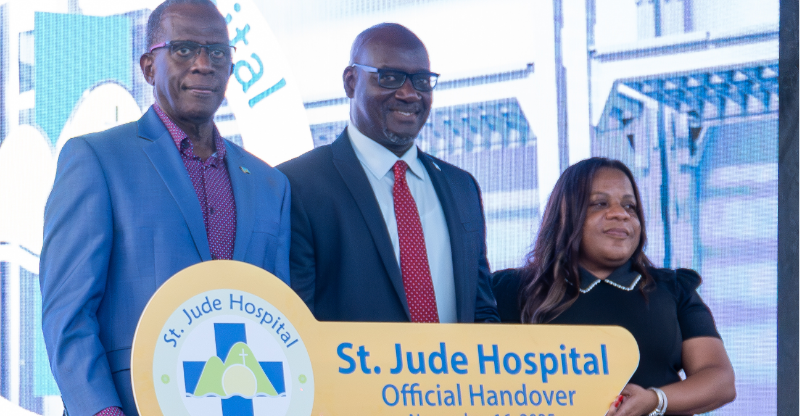
‘Anguish has ended’: St Jude Hospital handed over to Government
After years of delays and public scrutiny, the Government officially received the reconstructed St Jude Hospital on Sunday, marking a significant milestone in the facility’s journey toward full operational readiness. Although the hospital is not yet prepared to admit patients, the handover ceremony symbolized the completion of extensive reconstruction efforts and the commencement of the final phase of preparation. The event was attended by government officials, hospital staff, contractors, and community supporters, underscoring the collaborative effort behind the project. Paul Hilaire, Permanent Secretary in the Department of Economic Development, highlighted the hospital’s advanced features, including modern diagnostic capabilities, energy-efficient systems, and enhanced clinical workflows, designed to serve future generations. Hilaire emphasized that the handover signifies the start of critical tasks such as commissioning, staffing, and regulatory alignment to ensure a safe and efficient opening. Prime Minister Philip J. Pierre reiterated that the reconstruction was guided by technical expertise rather than political considerations, addressing public skepticism and the challenges faced over the years. The hospital’s staff had operated from the George Odlum Stadium for 15 years following a fire that destroyed the original facility. Outgoing Vieux Fort South MP Kenny Anthony expressed relief, stating that the project’s completion marks the end of a long period of uncertainty and the beginning of a more confident future.
-

Column: Borrelpraat no. 898
In a recent discussion on education reform and teacher salaries, concerns were raised about the inflationary effects of salary increases and the broader implications for the education system. Marcelino N. der Kus, in an article published on Sterrennieuws, argued that while salary adjustments might provide temporary relief, they would not address the systemic issues plaguing the education sector. Instead, he emphasized the need for comprehensive reforms starting from the training of the next generation of teachers, as highlighted in Ivan Fernald’s latest book. The conversation also touched on the inefficacy of past educational conferences, which have often resulted in confusion, wasted time, and unused reports. To truly transform the education system, bold actions are required, such as reintroducing school fees, starting with higher education and gradually extending to lower levels. This measure, though politically unpopular, could ensure sustainable funding. Additionally, students enrolling in teacher training programs should receive substantial monthly allowances to focus solely on their studies, with the condition of repayment upon graduation. The discussion also highlighted the necessity of rigorous entrance exams for aspiring teachers, including proficiency in Dutch and English, and the ability to articulate current issues clearly. Experienced retired teachers and overseas specialists could play a crucial role in mentoring new educators. However, these reforms would require significant financial investment, new infrastructure, and a long-term commitment of 15 to 20 years. The government must explore new revenue streams, such as property taxes, and reduce subsidies to loss-making state enterprises to fund these initiatives. The conversation concluded with a call for decisive action rather than mere rhetoric, as the future of the education system hangs in the balance.
-

Pro Consumidor to monitor Bad Bunny concert ticket sales
Santo Domingo – In a significant move to protect consumer rights, the National Institute for the Protection of Consumer Rights (Pro Consumidor) has initiated a large-scale monitoring operation for ticket sales to Bad Bunny’s upcoming concerts. The highly anticipated events are set to take place on November 21 and 22 at the Félix Sánchez Olympic Stadium. Pro Consumidor’s initiative seeks to ensure fair practices and safeguard the economic interests of concertgoers. Executive Director Eddy Alcántara emphasized that the operation will involve teams from the Inspection, Surveillance, Advertising, and Prices departments, who will oversee the entire sales process from Friday through the concert dates. The monitoring effort aims to identify and prevent any practices that could violate consumer rights, as outlined in Law 358-05, which grants Pro Consumidor authority over national market surveillance. Alcántara revealed that the institution has already engaged with all stakeholders to preempt potential violations. Additionally, Pro Consumidor inspectors will be stationed at stadium entrances during the concerts to supervise ticket verification and ensure a smooth, transparent entry process for attendees.
-

OM stelt hoger beroep in tegen beslissing Rechter-Commissaris over inverzekeringstelling Torilal
The Public Prosecution Service (OM) has filed an appeal against the decision of the examining magistrate (Rechter-Commissaris, RC) that deemed the detention of businessman Ryan Torilal on November 14, 2025, unlawful. This appeal has delayed Torilal’s release by three days, adhering to legal procedures. The case will now proceed to a higher court, with a date yet to be determined. Torilal is suspected of involvement in attempted fraud and forgery, allegedly using falsified documents in 2023 to persuade the government to pay SRD 86 million for a cattle delivery that never occurred. The scheme was uncovered by the Central Government Accounting Service (CLAD), which detected irregularities and halted the payment. The Ministry of Agriculture, Livestock, and Fisheries (LVV) initiated an internal investigation, revealing that cattle from the ministry had been sold without the proceeds reaching the state treasury. Additionally, the LVV director reportedly leased parts of the state farm to Torilal without formal approval since 2022 and signed documents falsely claiming entitlement to the SRD 86 million payment. The OM awaits further proceedings in the higher court.
-

MP champions love and community spirit in crime fight
In response to escalating violent incidents across Barbados, Minister of People Empowerment and Elder Affairs Kirk Humphrey has issued a heartfelt appeal for Barbadians to prioritize love and unity in their communities. Speaking during a ‘Love Walk’ in his St Michael South constituency on Saturday, Humphrey emphasized the need to reshape the narrative surrounding local neighborhoods.