分类: society

  • Woman charged with murder of 7-year old daughter

    Woman charged with murder of 7-year old daughter

    On Monday, April 13, 2026, a 26-year-old domestic worker from Guyana was formally arraigned on a murder charge in connection with the alleged death of her 7-year-old daughter, law enforcement authorities confirmed. Sarah Elizabeth Shivpersaud, a resident of Fyrish Village on the Corentyne in Berbice, made her first court appearance at the New Amsterdam Magistrate’s Court, where the indictment against her was read by presiding Magistrate Michelle Mathias.

    Under standard judicial procedure for indictable offences, Shivpersaud was not required to enter a formal plea during the hearing. Following the presentation of the charge, the magistrate ordered that the defendant be remanded into state custody, and adjourned all further proceedings in the case to May 12, 2026, when the matter will resume for additional legal processing.

    The charge stems from an incident that unfolded at Shivpersaud’s home, where responding police officers first discovered the unresponsive body of 7-year-old Isabella Dabidyal, a student at the local Cropper Primary School. Alongside the deceased child, officers found the defendant’s 21-month-old son in a semi-conscious state, and observed self-inflicted knife wounds on the back of Shivpersaud’s heels.

    All three individuals were immediately transported to a nearby medical facility for urgent care. The toddler received treatment for his condition and was subsequently released to care, while Shivpersaud was admitted for observation and treatment of her injuries before being discharged into police custody to face legal action.

    According to official statements from investigators, the defendant told authorities she had been driven to desperation after being abandoned by her husband, leaving her and her two children without financial resources or access to food. The tragic case has drawn attention to widespread challenges of economic insecurity and unaddressed mental health support for vulnerable households in rural Guyanese communities, as the judicial process moves forward toward a full resolution of the murder charge.

  • There’s a fuel shortage but supplies are coming tonight- Pres Ali

    There’s a fuel shortage but supplies are coming tonight- Pres Ali

    Guyanese President Irfaan Ali has publicly confirmed a temporary national fuel shortage on Monday, 13 April 2026, attributing the disruption to an unexpected logistics incident affecting major fuel importer SOL. The issue emerged after one of SOL’s cargo vessel anchorages sustained damage, forcing the fuel-laden ship to turn back from port, cutting off planned incoming supply to the South American nation.

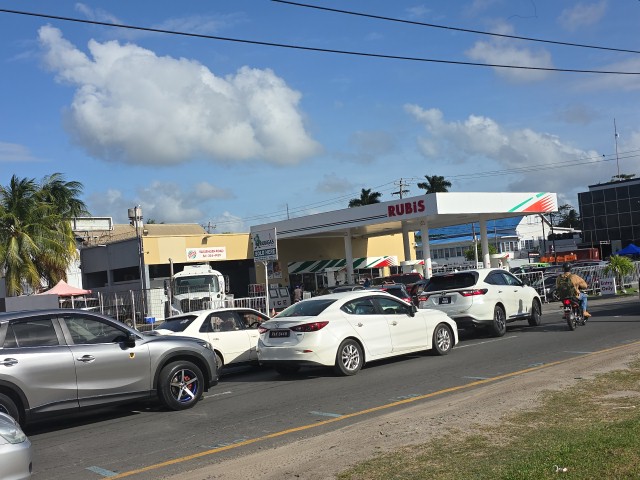
    The announcement comes as photos circulated online showing lengthy queues of motorists waiting to refuel at RUBIS gas station on Vlissengen Road, highlighting the immediate public impact of the supply crunch. Following an emergency meeting with all major fuel suppliers operating in Guyana, President Ali shared updates on the government’s response via his official Facebook page.

    “I met with fuel importers today to address the current fuel shortages. I’ve been assured that shipments are expected as early as tonight, with additional supplies already being sourced to meet national demand,” the President wrote.

    In subsequent comments to Demerara Waves Online News, President Ali clarified that fuel supplies for Guyana Power and Light (GPL), the country’s primary public electricity provider, would remain fully unaffected by the supply disruption, easing fears of widespread power outages across the nation.

    According to President Ali’s briefing, state-owned fuel operator Guyana Oil Company (GUYOIL) currently holds adequate stock to meet demand, while competitor RUBIS has confirmed it is positioned to supply as much fuel as the country requires, with new shipments already en route. He added that RUBIS is already moving to boost its on-ground distribution to ease short-term tightness.

    To proactively prevent further supply issues, President Ali announced he has issued an order directing GUYOIL to utilize 100% of its available storage capacity to build up reserve stocks. He emphasized that the national administration is maintaining close, continuous monitoring of the fuel supply situation to ensure market stability and consistent flow of product to consumers, noting that officials will follow through to verify that all supplier commitments for incoming shipments are met.

    “RUBIS and GUYOIL said that they don’t foresee a challenge and they have orders in line and some of it will arrive as early as tonight (Monday) night. Well, we are monitoring it to ensure that the assurances given are followed through with,” the President stated.

  • Traffic Officer Charged with Aggravated Assault

    Traffic Officer Charged with Aggravated Assault

    In an early morning incident that has shocked local law enforcement circles, a 33-year-old serving traffic officer with Belize’s transport department has been taken into custody and formally charged with aggravated assault following a violent confrontation outside a popular Belize City nightclub. The event unfolded in the pre-dawn hours of Saturday on New Town Barracks, where the encounter between the off-duty officer and a local resident quickly escalated into a firearms threat.

    According to official police reports, the complainant, 33-year-old Rodney Card, had just exited the nightclub and was making his way to his privately owned vehicle parked in an adjacent parking lot when he spotted two women engaged in a physical altercation. Stepping in to prevent the fight from growing more serious, Card attempted to calm the two parties and de-escalate the tension. It was at this point that Ignatius Peyrefitte, the 33-year-old traffic officer, approached Card and ordered him to stay out of the dispute.

    Witnesses and official statements confirm that Peyrefitte then drew a loaded pistol from his waistband and cocked the weapon directly toward Card, a move that put Card in immediate fear for his life. Luckily for all parties involved, uniformed police officers were already patrolling the nearby area and responded to the disturbance within seconds. The responding officers quickly intervened to defuse the situation, disarmed Peyrefitte, and took him into custody without further incident.

    Following standard processing procedures at the local police precinct, Peyrefitte was formally arrested and slapped with a single count of aggravated assault. As of the publication of this report on April 13, 2026, no additional information has been released regarding a potential court date, whether Peyrefitte has retained legal representation, or if he has been suspended from his official position with the Belize transport department pending the outcome of the case. Local community leaders have already called for a full internal review of the incident to determine if any departmental policy violations occurred, underscoring growing concerns about off-duty conduct among public safety officials in Belize City.

  • LETTER: It’s Time We Kiss “Town” Goodbye

    LETTER: It’s Time We Kiss “Town” Goodbye

    Decades after serving as the functional capital of Antigua, St. John’s has fallen into a state of such severe disrepair that local observers argue it can no longer meet the basic standards expected of a national capital. What was once a thriving urban center has decayed into a maze of accessibility barriers, outdated infrastructure, and unaddressed maintenance failures that harm both long-term residents and visiting tourists alike.

    For pedestrians, navigating downtown St. John’s has become a grueling, obstacle-filled experience rather than a routine task. Outside the limited, upgraded area of Heritage Quay, continuous, even sidewalks are almost impossible to find. Crumbling pavement, inconsistent step heights, and unmarked hazards force pedestrians to constantly weave and adjust their path to avoid injury. This is far more than an inconvenience: it creates a fundamentally exclusionary environment for people with mobility impairments.

    The scope of this accessibility failure was laid bare in a recent firsthand observation: a visitor attempting to navigate the streets with a loved one in a wheelchair faced constant, insurmountable barriers. Onlookers described the scene as painful to watch, noting that any visitor experiencing these barriers would likely abandon their exploration of the city and return immediately to their cruise ship, cutting off potential revenue for local businesses. The incident makes clear that meaningful accessibility for disabled people is simply non-existent in St. John’s today.

    Mobility issues are not the only pressing problem. Persistent, unpleasant odors permeate multiple neighborhoods throughout the city, traced back to open drainage systems and aging, overcapacity trash receptacles. What were once functional, practical infrastructure solutions for a smaller city have long been outdated by growing population and tourism volumes, leaving them to become public nuisance that requires urgent replacement.

    The broader built environment of St. John’s tells the same story of neglect. Commercial and residential buildings show clear signs of structural deterioration, while many retail storefronts make little to no effort to create welcoming, appealing spaces for customers. Basic merchandising planning that draws in foot traffic is often an afterthought, if it is considered at all, further eroding the city’s ability to support local commerce.

    Parking management adds another layer of frustration for anyone trying to visit or do business in the capital. Informal parking space claiming, enforced by traffic cones from business owners, local organizations, and individual operators including car wash services, has locked out the general public from most convenient spots. This unregulated system sends a clear message: visitor convenience is not a priority for stakeholders in the city. For potential customers considering a trip into the capital to shop or support local businesses, this barrier alone is often enough to discourage them from coming at all.

    Even when municipal repairs are initiated, they often leave the city in worse shape for months. When the Antigua Public Utilities Authority completes road excavation work for utility upgrades, the excavated sections are regularly left unrepaired for extended periods of time, leaving roads partially or fully impassable. Community members argue these delays are entirely unreasonable and avoidable with proper project planning.

    At its core, the crisis facing St. John’s boils down to a simple, unavoidable truth: no city can maintain itself without consistent investment, strategic planning, and regular reinvestment in infrastructure. Just as ongoing care is required to maintain any valuable asset, St. John’s has been starved of the consistent attention it needs to function, and the visible decline across the city makes that neglect impossible to ignore.

    This critique is not an attack on St. John’s rich historic identity. Supporters of change emphasize that acknowledging the capital’s current collapse is not about dismissing the city’s past, but about being honest about its future. The current state of St. John’s is not sustainable, and continuing to pretend otherwise does a profound disservice to residents who rely on capital services, business owners who depend on visitor traffic, and tourists who come to the island expecting a functional, welcoming capital.

    For proponents of dramatic change, the conclusion is unavoidable: St. John’s has deteriorated past the point of cost-effective rehabilitation. To give residents, businesses, and visitors the functional, comfortable urban environment they need, core commercial and government activity must be relocated to a new, properly planned urban center.

  • ‘We Are Exercising That Right for You’: MOHW Defends Contraceptive Enforcement Policy

    ‘We Are Exercising That Right for You’: MOHW Defends Contraceptive Enforcement Policy

    A public controversy over contraceptive access has erupted in Belize after the Ministry of Health and Wellness (MOHW) moved to enforce a long-dormant prescription requirement for birth control products, spurring widespread confusion and pushback from communities across the country, particularly in underserved rural regions.

    During a public press briefing held on the morning of April 13, 2026, Dr. Melissa Diaz Musa, Director of Public Health and Wellness, pushed back against growing criticism, framing the policy as a measure that protects rather than infringes on women’s reproductive rights. She emphasized that the government has not implemented any new laws or regulatory changes related to contraceptive access – the prescription requirement is already outlined in existing national drug policy, and the recent enforcement action has only reignited long-unapplied rules.

    Dr. Musa addressed widespread misinformation that spread across social media over the past week, where many critics framed the new enforcement as a direct attack on women’s bodily autonomy. “I am uncertain where the many views on social media over the last week regarding women’s rights have surfaced from, and why there is a perception that asking for a prescription equates to the violation of a woman’s right,” she stated.

    In her defense of the policy, Dr. Musa argued that mandatory pre-purchase consultations with doctors or nurses actually strengthen reproductive autonomy by ensuring women make fully informed decisions about their birth control. “The request for a prescription for contraceptives after having a proper doctor’s or nurse’s consultation ensures that your rights have been fully exercised as you have determined the safest, the most effective, and the best birth control method for you,” she explained. “You are now an informed and consenting woman. We are exercising that right for you.”

    She did, however, acknowledge critical missteps in the rollout of the enforcement: public outreach and education fell far short of what was needed to help communities understand the change, and distinguish between over-the-counter and prescription-only medications. Dr. Musa admitted that MOHW failed to pair its discussions with retail pharmacy operators and the Belize Pharmacy Association with a large-scale public health sensitization campaign that could have prevented much of the current confusion.

    She also noted that the updated national drug list actually expands access to a range of other medications, and that contraceptives remain widely accessible through multiple existing channels, including free public healthcare services, repeat prescription programs, and rural health clinics.

    Despite the ministry’s reassurances, critics of the enforcement warn that the on-the-ground reality for many women will create new, unnecessary barriers to reproductive care. For people living in remote rural regions of Belize, obtaining a prescription requires additional time, costly travel to urban or central clinics, and often out-of-pocket fees for medical appointments that did not exist when contraceptives were available over the counter, leading to delayed or denied access for low-income and geographically isolated women.

  • Alleged Jamaican gangster facing charges after dragging Florida trooper with car

    Alleged Jamaican gangster facing charges after dragging Florida trooper with car

    A transnational fugitive with ties to a Jamaican criminal street gang, who was wanted for a murder in his home country, has been taken into custody by joint law enforcement teams in northeast Florida following a dangerous confrontation that left a state trooper injured.

    The suspect, identified as Ragar Mandela Allen, an unauthorized immigrant and documented member of Jamaica’s Craig Town Gang, now faces a raft of severe felony charges stemming from the March 31 incident, law enforcement officials confirmed this week.

    The operation that led to Allen’s arrest began on March 27, when U.S. Immigration and Customs Enforcement (ICE) received a critical tip from the agency’s attaché based in Kingston, Jamaica. The alert confirmed that Allen, who had already been deported from the U.S. once before, had unlawfully re-entered the country and was actively wanted by Jamaican authorities on homicide charges.

    Acting on the intelligence, ICE special agents teamed up with troopers from the Florida Highway Patrol (FHP) to launch a targeted interdiction, stopping a vehicle Allen was operating two days after receiving the tip. What followed was a brazen, violent attempt to evade custody: Allen pressed his vehicle forward to flee, catching the responding FHP trooper on his vehicle and dragging the officer into a nearby perimeter fence before the vehicle was stopped.

    The Department of Homeland Security (DHS) confirmed in an official statement released Tuesday that the injured trooper was rushed to a local medical facility for treatment. The trooper’s injuries were categorized as non-life-threatening, and officials confirmed the officer is expected to make a full recovery. Footage capturing Allen’s aggressive attempt to escape has been publicly released by DHS on the X social media platform for transparency.

    A search of Allen’s vehicle following his arrest turned up two additional pieces of incriminating evidence: a quantity of illegal narcotics and a handgun that had been reported stolen.

    Authorities have confirmed that Allen is being prosecuted in coordination with the U.S. Attorney’s Office for the Northern District of Florida and the Florida Attorney General’s office. The charges he faces include aggravated battery on a law enforcement officer, felony fleeing and eluding custody, possession of a stolen firearm, possession of a firearm by an unapproved alien, illegal re-entry after deportation, and a number of other related criminal offenses. ICE has also filed a formal detainer with Duval County jail officials, which requires that once Allen completes any state or federal criminal proceedings, he will be turned over immediately to ICE custody for eventual removal from the United States.

    DHS officials also shared Allen’s prior immigration history with the public Tuesday. Allen was first taken into federal immigration custody back in December 2021, near San Ysidro, California, after he attempted to cross the U.S.-Mexico border illegally to enter the country. He was placed in formal immigration removal proceedings, received a final order of deportation from an immigration judge in February 2022, and was officially removed from the U.S. to his home country that April. It remains unclear when or where Allen crossed the border to illegally re-enter the U.S. following his deportation, officials confirmed. Under U.S. federal law, illegal re-entry after a prior deportation is classified as a felony offense.

    Lauren Bis, Acting Assistant Secretary for ICE’s Homeland Security Investigations division, praised the interagency collaboration that led to Allen’s arrest, noting that the operation removed a violent, wanted fugitive from U.S. communities. “This gang member wanted for murder in his origin country is out of our communities because of ICE and our Florida partners,” Bis said in the official statement.

    Bis also emphasized the threat Allen posed, adding: “This criminal illegal alien was in illegal possession of a firearm and drugs at the time of his arrest. He attempted to evade arrest by weaponizing his vehicle and dragged a law enforcement officer, injuring him.”

    Beyond the details of Allen’s arrest, Bis used the incident to highlight a growing safety crisis for law enforcement officers working immigration enforcement. She noted that assaults on ICE officers, particularly vehicle-based attacks, have skyrocketed in recent years. “As our officers put their lives on the line to arrest the worst of the worst, they are facing a more than 1,300 percent increase in assaults and a 3,300% increase in vehicle attacks,” Bis said. “The arrest of this fugitive murderer would not have been possible without the help of our Florida law enforcement partners.”

  • Five police officers detained as probe continues into deadly stampede in Haiti

    Five police officers detained as probe continues into deadly stampede in Haiti

    PORT-AU-PRINCE, Haiti — Haiti entered a period of three national days of mourning starting Tuesday, after a fatal crowd crush at the iconic Citadelle Laferrière last weekend claimed the lives of at least 25 people. The 19th-century mountain fortress, a UNESCO World Heritage Site, holds profound cultural meaning for Haiti: it was constructed in 1820 by the newly independent Haitian state to fend off a feared French re-invasion, and stands as a lasting monument to the freedom won by the formerly enslaved people who led the world’s first successful slave revolt to found an independent nation.

    The deadly incident unfolded last Saturday during an unsanctioned annual cultural gathering held at the landmark in the northern Haitian town of Milot. In the wake of the tragedy, law enforcement officials have taken seven people into custody, a group that includes five active police officers and two employees of the National Institute for the Preservation of Heritage (known locally by its French acronym ISPAN), the government agency charged with managing and protecting Haiti’s historic landmarks. Investigators have also seized six mobile phones and six official security badges from the suspects as they build their case.

    Initial official death counts put the fatalities at 30, but authorities have since revised the toll downward to 25 confirmed deaths. Multiple conflicting accounts have emerged about the chain of events that led to the stampede. Local mayor Wesner Joseph told Haitian outlet Magik9 Radio that his municipal administration had no advance notice of any event being held at the citadel that Saturday. Investigations have revealed the gathering was organized organically after a local disk jockey promoted the event to thousands of followers on the social media platform TikTok.

    Jean-Hérold Pérard, a former ISPAN director who worked as the site’s lead engineer, shared detailed observations with the Haitian Times, noting that one of the citadel’s only two public entrances had been blocked by personnel who were collecting entry fees from arriving visitors. When a sudden rainstorm hit the site, crowds trapped outside began pushing to force their way into the fortress. Pérard also alleged that unknown actors fired gunshots into the air and deployed tear gas amid the growing chaos. “People were pushing against one another, and many died of asphyxiation, especially after tear gas was thrown into the crowd,” Pérard explained. Pre-event videos circulated on social media showed that the gathering drew large numbers of children and young people, many of whom completed the steep, strenuous hike up the mountain to reach the historic fortress.

    Caribbean regional bloc the Caribbean Community (CARICOM) has already issued an official statement extending its sincere condolences to the people and government of Haiti in the wake of the tragedy. Prime Minister Alix Didier Fils-Aimé has also acknowledged the loss of life, confirming the stampede occurred at a tourist event that drew a large crowd of young attendees to the landmark site.

  • New helmet standard targets road deaths

    New helmet standard targets road deaths

    KINGSTON, Jamaica — As motorcycle usage surges across the island, fueled by the expansion of delivery services and informal transit networks, Jamaica has launched a groundbreaking national safety standard for road user helmets, responding to alarming data that links substandard head protection to billions in annual economic losses and thousands of preventable deaths.

    At the official launch of JS 374:2025, the new Jamaica Standard Specification for Protective Helmets for Road Users, hosted by the Bureau of Standards Jamaica (BSJ) in Kingston, road safety advocates have framed helmet regulation as both a life-saving public health intervention and a critical pillar of long-term economic stability. Sydoney Preddie, lead for youth and education programs at the JN Foundation, told attendees that the cumulative costs of unregulated motorcycle safety gear are draining Jamaica’s resources at an unsustainable rate.

    Drawing on regional economic data, Preddie explained that road traffic incidents cost between 3% and 5% of annual GDP across Latin American nations. For Jamaica, that scale of loss translates to more than JMD $100 billion in crash-related expenses every year — funds that could otherwise be directed to upgrading public infrastructure, expanding education access, and driving inclusive job creation. The economic toll extends far beyond immediate emergency response, she emphasized, compounding across direct medical costs, lost workforce productivity, long-term disability support, and missed income for affected families.

    The public health system already bears the brunt of this burden: treating a single severely injured motorcyclist costs an average of JMD $3 million, stretching thin an already overstretched public healthcare network. Motorcyclists are already one of the most vulnerable groups on Jamaican roads, accounting for more than 30% of all annual road fatalities. From 2012 to 2025, the country has recorded more than 1,600 motorcycle-related deaths, including 126 fatalities in 2025 alone.

    The root of much of this harm, Preddie revealed, lies in the widespread sale of uncertified, substandard helmets that offer almost no protection in a crash. A 2024 mystery shopper study conducted by the foundation found that just 1 out of 16 helmets purchased from local retailers met international safety benchmarks — even though every single product tested was labeled as certified. Common flaws included flimsy, weak chin straps, insufficient impact-absorbing padding, and deceptive marketing that put riders at unnecessary risk. Preddie warned that without strict regulation, Jamaica could follow the path of other developing nations that have become dumping grounds for low-quality, unsafe safety gear, noting that a similar study in Kenya found more than 90% of tested helmets failed to meet safety requirements.

    However, regional examples prove regulatory action can deliver transformative results. Preddie pointed to Guyana, where the implementation and strict enforcement of national helmet safety standards cut motorcycle fatalities by more than 80% — a dramatic outcome that demonstrated both the life-saving and economic benefits of proactive regulation.

    Dr. Velton Gooden, BSJ’s executive director, noted that the new national standard will close critical regulatory gaps by increasing inspection and oversight at ports of entry, ensuring only certified, safety-compliant helmets can enter the local market. “This represents a critical step toward reducing preventable deaths while safeguarding the country’s economic future,” Gooden said.

    Delano Seiveright, State Minister in the Ministry of Industry, Investment and Commerce, echoed that sentiment, framing the new standard as a landmark moment for national road safety and consumer protection. “Today marks a critical milestone in Jamaica’s ongoing efforts to strengthen road safety, consumer protection and our national quality infrastructure,” Seiveright said. “The launch of JS 374:2025 represents far more than the introduction of a technical standard. It represents a decisive step by Jamaica to protect lives through science, regulation and coordinated national action.” Seiveright added that too many lives have been lost or permanently altered by both the failure to wear helmets and the widespread availability of unprotective substandard gear, echoing Preddie’s core message that regulation will serve both people and the broader national economy.

    For advocates, the new standard is a long-overdue intervention that addresses both public health and economic priorities. “We are not only protecting motorcyclists,” Preddie emphasized, “we are protecting Jamaica’s economy.”

  • Peter Champagnie retained by Jahvy Ambassador after Big Wall shooting incident

    Peter Champagnie retained by Jahvy Ambassador after Big Wall shooting incident

    A high-profile Jamaican legal figure has stepped forward to represent one of the country’s most well-known entertainment industry figures, who remains in police custody following a mass shooting at a popular carnival event over the weekend.

    King’s Counsel Peter Champagnie confirmed Tuesday in an interview with *Observer Online* that he has been formally retained to serve as legal counsel for Jahvel “Jahvy Ambassador” Morrison, a prominent music producer and talent manager. Morrison was taken into police custody after gunfire broke out Sunday at the Big Wall carnival party, a widely attended event on Jamaica’s annual carnival calendar.

    The shooting left three people hospitalized with gunshot wounds, including well-known local podcaster and blogger Jhaedee “Jaii Frais” Richards, a member of dancehall recording artist 450’s entourage who sustained critical but non-fatal injuries, and a United States citizen. No fatalities have been reported from the incident, which sparked immediate widespread speculation across Jamaican social media channels about Morrison’s potential involvement.

    Addressing the flood of unconfirmed public claims online, Champagnie pushed back against the rampant conjecture surrounding the case. He emphasized that the public and commentary platforms must allow law enforcement to complete their investigation without outside interference or premature judgment. “Note is taken of various commentaries being made on a number of social media platforms which are rooted in conjecture or fanciful assertions. The relevant concern and consideration must be for the police investigation to go unimpeded without any undue influence,” Champagnie stated.

    Despite the intense public scrutiny and unsubstantiated accusations circulating in public discourse, both the attorney and his client expressed full confidence that the investigative process will clear Morrison of any wrongdoing. “Mr Morrison is confident that at the end of such an investigative process he will be vindicated,” Champagnie added.