分类: society

  • 60 homes for Christmas

    60 homes for Christmas

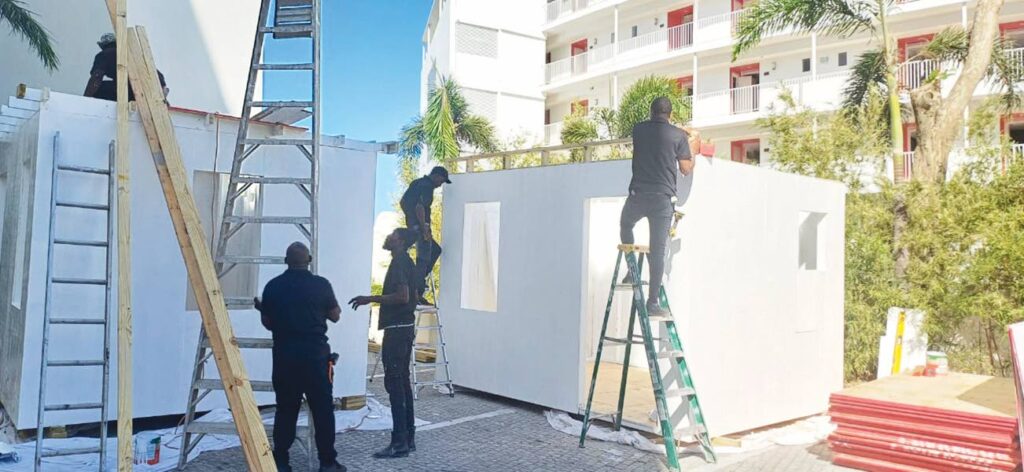
    MONTEGO BAY, Jamaica – In an extraordinary humanitarian response, the S Hotel has mobilized a rapid-deployment project to construct 60 one-bedroom housing units for western Jamaican residents displaced by Hurricane Melissa. With a total investment exceeding $21 million Jamaican dollars, the ‘S for Shelters’ initiative represents one of the most significant private-sector recovery efforts following the devastating storm.

    The ambitious program, driven by the Jamaican-owned hospitality brand, aims to provide safe accommodation for homeless families before Christmas celebrations begin. Hotel Manager and Brand Ambassador Andres Cope emphasized the emotional urgency behind the project: ‘This initiative resonates deeply with our core values. With Christmas approaching rapidly, ensuring our fellow Jamaicans have proper shelter becomes our paramount concern.’

    The innovative housing solution emerged after the hotel received heartfelt communications from international guests expressing concern about traveling to a disaster-affected region. ‘Our overseas clients conveyed genuine distress about visiting while Jamaicans suffered,’ Cope explained during Tuesday’s press briefing. ‘As a locally-owned establishment, we recognize our responsibility to support communities in crisis.’

    Construction teams have demonstrated remarkable efficiency, completing structures at an accelerated pace of two to three units daily. The 10×12-foot wooden houses, engineered for durability and longevity, are being assembled in the hotel’s parking lot before transportation to identified recipients. Projects Manager Tardo Nelson confirmed the buildings’ structural integrity: ‘With appropriate maintenance including regular painting and care, these shelters can provide secure housing for a decade or longer, substantially outperforming conventional board houses common in the region.’

    The identification process for beneficiaries relies on grassroots intelligence from hotel employees residing in affected parishes. This community-based approach ensures assistance reaches the most vulnerable individuals, including a paralyzed gentleman who became the first recipient after losing his entire home.

    The humanitarian endeavor has inspired active participation from international visitors. Mike Vanbuskirk, a tourist from Florida, joined construction teams personally, noting: ‘Contributing physically to Jamaica’s rebuilding process embodies compassionate tourism. Having witnessed Jamaican resilience previously, I feel privileged to participate meaningfully.’

    Other guests, including retirees Tim and Marva Joseph from Virginia, praised the hotel’s transparent crisis communication throughout the hurricane period. ‘Their consistent social media updates demonstrated unwavering resilience,’ Tim noted. ‘We maintained our reservation specifically to support this commendable recovery effort.’

    The project exemplifies growing trends in corporate social responsibility within the hospitality industry, showcasing how tourism infrastructure can directly contribute to disaster recovery while maintaining operational excellence.

  • Jamaican former correctional officer mowed down by moped in New York

    Jamaican former correctional officer mowed down by moped in New York

    NEW YORK — A devastating traffic incident in Queens has cut short the homecoming plans of a retired correctional officer, highlighting ongoing concerns about road safety and unlicensed vehicle operation in New York City.

    Trevor Lloyd Samuels, 68, a former Department of Correctional Services officer and father of five, was fatally struck by a moped while crossing at the intersection of 168th Street and 93rd Avenue in Jamaica, Queens on December 5. The Springfield Gardens resident was engaged in final shopping preparations for what would have been his first visit to Jamaica in three years.

    According to police reports, the collision involved Yunior Buleje Rodriguez, 26, of Richmond Hill, who was operating the two-wheeled vehicle without proper licensing. Authorities apprehended Rodriguez at the scene and charged him with aggravated, unlicensed operation of a motor vehicle.

    The Daily News revealed that Samuels had planned to depart for Jamaica on December 9, carrying gifts for family members and friends affected by Hurricane Melissa. The trip also included intentions to attend a colleague’s funeral service.

    Kievette Samuels, the eldest of his children, described her father as possessing extraordinary recall abilities, capable of vividly recounting events from half a century past. The retired correctional officer had previously served in the medical section of Kingston’s General Penitentiary.

    Samuels’ personal story reflects transnational family connections—four of his children remain in Jamaica, while his nonagenarian mother resides in Florida. He is survived by five grandchildren in addition to his immediate family.

    While expressing acknowledgment that the arrest cannot reverse her loss, Kievette Samuels noted her satisfaction that investigative measures had been implemented following the tragic incident.

  • Roget sues Rowley over Facebook post

    Roget sues Rowley over Facebook post

    In a significant legal development, Oilfields Workers’ Trade Union (OWTU) President General Ancel Roget has initiated defamation proceedings against former Trinidad and Tobago Prime Minister Dr. Keith Rowley concerning a social media post from August 2022. The lawsuit centers on allegations that Rowley’s official Facebook publication falsely associated Roget with criminal activities and attempts to undermine national stability.

    The contentious post, which garnered substantial social media engagement with over 1,000 reactions and 300 shares, allegedly suggested Roget and the opposition United National Congress (UNC) had encouraged highway blockages and supported groups involved in metal theft operations. Roget maintains these assertions were entirely baseless and manufactured without evidence.

    Legal documents indicate the labor leader immediately sought retraction through pre-action protocol correspondence on the same day the post appeared. Despite these efforts, no correction or apology was forthcoming. Instead, Rowley’s legal representatives reportedly denied defamation claims in an October 2022 response, invoking defenses of justification and fair comment.

    Roget’s legal team argues the statements carried exceptional weight due to Rowley’s position as sitting prime minister at the time, potentially exacerbating public hostility toward the union leader. The plaintiff emphatically denies any involvement with or endorsement of illegal activities, emphasizing his longstanding commitment to lawful industrial advocacy.

    The lawsuit seeks comprehensive remedies including full retraction of the allegations, a formal public apology, and financial compensation for reputational damage. Roget is represented by attorneys Kiel Taklalsingh, Leon Kalicharan, Matthew Allahar, and Johanna Richards in this high-profile legal confrontation.

  • Marina workers, residents raise safety concerns after Monos Island kidnapping — Peninsula of fear

    Marina workers, residents raise safety concerns after Monos Island kidnapping — Peninsula of fear

    The tranquil waters surrounding Trinidad’s Down D Islands have been shattered by anxiety as the three-day kidnapping ordeal of renowned 70-year-old boating expert Derek ‘Stones’ Tardieu and his wife Clarabelle continues unabated. The maritime community, once considered a safe haven, now grapples with unprecedented security concerns as authorities scramble to address systemic vulnerabilities.

    At Tardieu Marine Ltd in Chaguaramas, boatmen expressed profound unease about their exposure to criminal elements. ‘We operate without any meaningful protection,’ one marine worker revealed, drawing disturbing parallels to established extortion schemes in other coastal areas. ‘The pattern from Sea Lots, where boat owners face monthly payments to criminal entities, appears to be spreading to our waters.’

    The security vacuum stems from insufficient patrols by Coast Guard and Marine Police units, leaving workers fundamentally vulnerable. Despite having communication radios, the prohibition against firearms aboard vessels creates critical safety gaps. ‘When armed intruders board, our options vanish within seconds,’ another boatman explained. ‘The psychological toll is constant—we’re perpetually calculating risks in what was once our sanctuary.’

    Yohan Goviah, President of the Island Property Owners Association, articulated the community’s shaken confidence: ‘This incident forces us to reconsider our security paradigm. Our proximity to Venezuela and the porous maritime border create inherent challenges, while law enforcement agencies face resource constraints that limit 24/7 surveillance capabilities.’

    Investigative developments reveal sophisticated criminal tactics. The kidnappers communicated via a Colombian-numbered phone, demanding a $2.5 million ransom in a voice message from Tardieu. Subsequent social media circulation showed disturbing footage of the couple held at gunpoint with a military-grade M-26 grenade—a weapon variant produced in Colombia—pressed against Tardieu’s chest.

    Minister of Homeland Security Roger Alexander acknowledged institutional shortcomings: ‘We inherited limited assets for coastal protection, but are developing coordinated responses with defense counterparts.’ His comments referenced ongoing debates about maritime radar systems, particularly one installed in Tobago that failed to detect the kidnappers’ approach.

    The Trinidad and Tobago Police Service has classified the investigation as high-priority, mobilizing specialized resources while urging media restraint to protect the victims’ safety. Western Division ACP Henry encouraged community reporting of extortion attempts, pledging immediate response to credible threats.

    As the search operation continues across the complex maritime border region, the incident has exposed fundamental security deficiencies in Trinidad’s coastal communities, raising urgent questions about sustainable protection strategies for vulnerable maritime populations.

  • TCL, Red Cross team up to donate supplies to Jamaica

    TCL, Red Cross team up to donate supplies to Jamaica

    In a powerful demonstration of corporate solidarity, international cement conglomerate Cemex and its subsidiary Trinidad Cement Ltd (TCL) have mobilized a worldwide humanitarian response to address the devastation caused by Hurricane Melissa in Jamaica. The comprehensive relief initiative, branded ‘Together for Jamaica,’ has generated substantial donations of critical supplies including non-perishable food items, infant care products, and essential hygiene kits through an organization-wide fundraising campaign.

    The multinational effort engaged employees, distribution networks, suppliers, and business partners across Cemex’s global operations, with the corporation matching all contributions received. Remarkably, TCL employees in Trinidad and Tobago exhibited extraordinary generosity by not only donating physical supplies but also converting their vacation days into monetary contributions for the relief effort.

    Francisco Aguilera, Managing Director of TCL Group, emphasized the initiative reflects the organization’s fundamental commitment to supporting neighboring communities during their most challenging times. ‘I am profoundly proud of our employees who demonstrated tremendous generosity, offering both essential supplies and personal contributions that reflect a deep sense of compassion and regional unity,’ Aguilera stated.

    The companies have established a strategic partnership with the Trinidad and Tobago Red Cross Society to ensure efficient distribution of aid. Red Cross Director General Stephan Kishore highlighted the critical importance of such collaborations during emergency response operations, acknowledging TCL’s leadership and the heartfelt contributions from its employees.

    Hurricane Melissa struck Jamaica on October 27 as a catastrophic Category 5 storm, representing the most powerful hurricane ever recorded to hit the island nation. The disaster resulted in 45 fatalities and widespread destruction across multiple parishes, with severe flooding submerging numerous homes and displacing thousands of families. Communication networks in rural areas remained compromised well into November. According to United Nations assessments, the storm caused approximately US$6 billion in damages, equivalent to 30% of Jamaica’s GDP, with economic impacts expected to escalate further.

    The humanitarian campaign aligns with Cemex and TCL’s broader social responsibility framework, which prioritizes community resilience, strategic humanitarian partnerships, and empowering Caribbean populations during crises. Through their collaboration with the Red Cross, the companies ensure all donated resources reach the most vulnerable communities in Jamaica, supporting both immediate recovery efforts and long-term regional reconstruction.

  • Fireworks Bill passes with unanimous support in House

    Fireworks Bill passes with unanimous support in House

    In a historic legislative move, Trinidad and Tobago’s House of Representatives has unanimously approved the Summary Offences (Amendment) Bill, 2025, establishing comprehensive regulations for fireworks usage through a permit system. The decisive 38-0 vote on December 9 marks a significant shift in public safety policy regarding explosive celebrations.

    Attorney General John Jeremie, championing the legislation, emphasized that fireworks represent more than celebratory items—they constitute serious explosive devices capable of causing substantial damage, injury, and even fatalities. The bill emerges from growing concerns over public safety incidents, including a recent tragedy involving a newborn’s death in October attributed to fireworks misuse.

    The legislation introduces a structured permit system administered by the Commissioner of Police, prohibiting individuals under 18 from obtaining permits. It mandates advance notification to the Fire Service 14 days prior to any fireworks display and establishes explicit restrictions regarding locations, specifying half-mile exclusion zones around hospitals, airports, zoos, animal shelters, farms, and protected natural areas.

    Notably, the bill preserves traditional celebration windows, allowing firework usage without permits on public holidays from 8-9 PM and on December 31 from 11:30 PM to 12:30 AM. Enforcement mechanisms include fixed penalty notices, with provisions for contesting tickets through the District Criminal and Traffic Court.

    The legislative process began in 2020 with a comprehensive law reform commission review, culminating in a 2021 draft that incorporated public feedback. A groundbreaking evidentiary provision allows video recordings from mobile devices as admissible evidence in enforcement cases.

    While opposition MP Symon De Nobriga expressed support for the bill, he raised concerns about enforcement practicality, potential video evidence manipulation, and the need for stronger regulations regarding fireworks sales to minors. He additionally highlighted possible conflicts with traditional celebration venues like Queen’s Park Savannah, which falls within restricted zones near medical facilities and the zoo.

    The legislation represents a balanced approach between cultural traditions and public safety, aiming to mitigate risks while preserving celebratory practices under controlled conditions.

  • PM underscores the need for Jamaica to preserve identity amid growing development

    PM underscores the need for Jamaica to preserve identity amid growing development

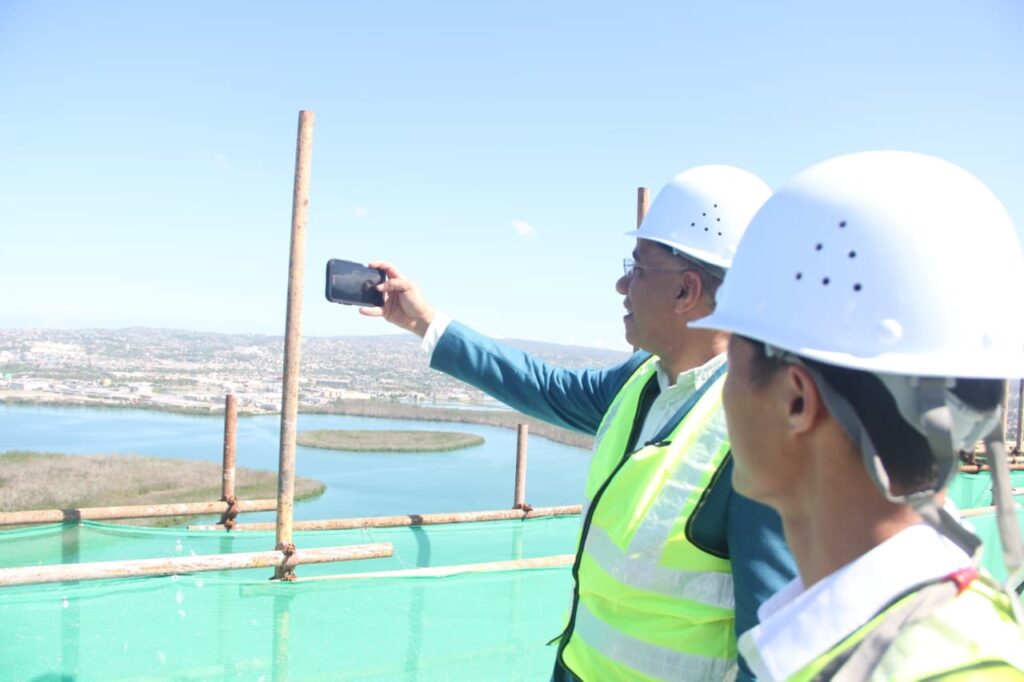
    ST JAMES, Jamaica — Prime Minister Andrew Holness has articulated a compelling vision for Jamaica’s developmental trajectory, emphasizing the critical importance of preserving national identity while pursuing economic progress. During a keynote address at the topping out ceremony for Tower One of the Pinnacle Development, the leader articulated a philosophy of balanced modernization that safeguards Jamaica’s distinctive character.

    Prime Minister Holness presented a nuanced perspective on tourism-driven development, arguing that Jamaica’s global appeal stems from its authentic cultural and environmental assets rather than replicated urban landscapes. “The objective isn’t to recreate Manhattan in the Caribbean,” Holness stated emphatically. “Visitors seek genuine Jamaican experiences—they want to encounter the unique qualities that distinguish our nation from any other destination.”

    The Prime Minister’s comments arrive amid significant infrastructure transformation, with large-scale projects like the Pinnacle Towers reshaping Jamaica’s urban fabric. While enthusiastically endorsing architectural modernization and future-proofed construction, Holness simultaneously issued a powerful call to conserve the nation’s essential character. “We must advance our built environment while retaining the natural and cultural assets that define us,” he declared.

    Environmental sustainability emerged as a crucial component of this balanced approach. Holness revealed extensive consultations with the National Environment and Planning Agency (NEPA) to ensure that developments like Pinnacle adhere to rigorous ecological standards. “Montego Bay’s mystique derives not from skyscrapers but from sun, sea, and sand,” he observed, acknowledging the project’s proximity to sensitive mangrove ecosystems and fishing habitats.

    In a striking extension of his identity preservation argument, Holness identified specific cultural practices requiring transformation. He criticized the visual disorder of poorly maintained properties and streetscapes, labeling haphazard development patterns as “chaka-chaka”—a local expression for disorganization. “Tourism demands certain standards of orderliness and aesthetic coherence,” he noted, urging property owners to maintain attractive facades that collectively enhance Jamaica’s appeal.

    The Prime Minister praised the LCH development group for achieving this balance at the Pinnacle project, highlighting their success in creating modern infrastructure that simultaneously respects Jamaican environmental and cultural priorities. His address ultimately framed national development as a sophisticated negotiation between progress and preservation, modernity and identity.

  • Tragic domestic violence incidents spark outrage

    Tragic domestic violence incidents spark outrage

    Trinidad and Tobago faces a devastating surge in gender-based violence as the nation grapples with three separate femicide cases within two weeks, exposing critical failures in domestic violence protection systems. The recent tragedies have sparked national outrage and forced government officials to confront systemic inadequacies in safeguarding vulnerable women.

    The violence culminated with the December 8th murder of Angel Lutchman, a 42-year-old mother of two from Claxton Bay, who was brutally killed by her ex-boyfriend despite having an active restraining order against him. Shazard Mohammed, 29, allegedly stabbed and slit Lutchman’s throat before dying by suicide. The victim’s 12-year-old son made the horrific discovery upon returning home from a relative’s house.

    This tragedy follows the November 23rd murder-suicide involving UNC councillor Romona Victor, 36, killed by her husband Rodney Ramsumair, 45, at their Siparia residence. Just days later on December 7th, Nicole Ovid, 56, was found dead on a pavement in St. James following an alleged altercation with an acquaintance who subsequently surrendered to police.

    Prime Minister Kamla Persad-Bissessar, who had previously vowed to strengthen crisis support systems at Victor’s funeral, now faces mounting criticism. When questioned about concrete plans to address violence against women, the Prime Minister stated she had requested information from Gender Affairs Minister Vandana Mohit but provided no specific timeline or strategy.

    Homeland Security Minister Roger Alexander acknowledged fundamental flaws in the restraining order system, admitting: ‘I have always said that the programme does not work well. We are taking a look at it to see how best we can treat with it.’ He emphasized the need for educational initiatives starting at school level to address domestic violence prevention.

    Opposition leader Mickela Panday delivered a powerful social media statement condemning the cultural acceptance of gender-based violence. The attorney and daughter of former prime minister Basdeo Panday highlighted how ‘coercive control, monitoring, threats, financial manipulation, and isolation break a woman down until she doubts her own reality.’ She criticized victim-blaming tendencies and demanded perpetrator accountability, urging police to treat every report with urgency and properly enforce protection orders.

    Panday proposed comprehensive reforms including increased safe houses, financial support for women escaping abusive relationships, strengthened laws, rehabilitation programs for abusers, and relationship education in schools to break the intergenerational cycle of violence.

    As autopsies for Lutchman and Ovid proceed at the Forensic Science Centre, investigations continue while the nation confronts its gendered violence epidemic that has left multiple families shattered and communities demanding immediate action.

  • Tabaquite Carollers keep an old tradition alive

    Tabaquite Carollers keep an old tradition alive

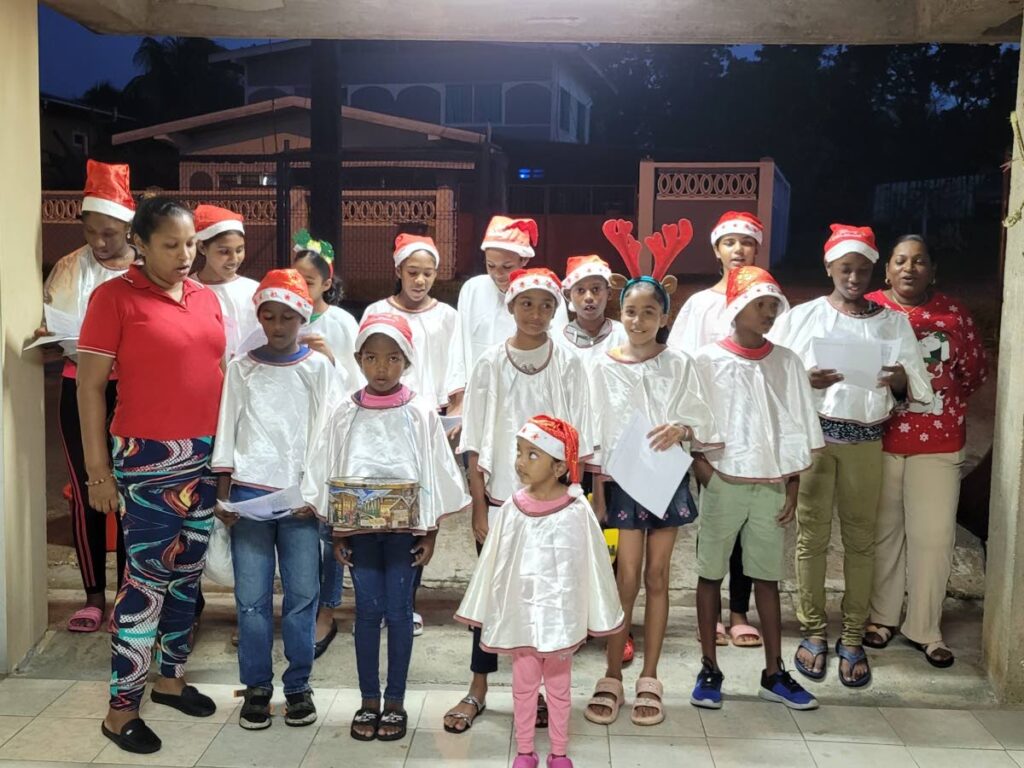
    For over fourteen years, the Tabaquite Carollers have revitalized the ancestral practice of Christmas caroling across their rural community, transforming December evenings into celebrations of faith and unity. This women-led initiative, coordinated by Reena Donna De Leon, represents both cultural preservation and spiritual ministry, blending traditional hymns with local parang music while nurturing the next generation’s moral development.

    The ensemble traces its origins to earlier community pioneers like Bernadette ‘Auntie Bunny’ Badal, formally organizing in 2011 to continue their legacy. Today, approximately 30 children aged 3-15 from diverse religious and socioeconomic backgrounds participate annually. The program transcends musical performance by emphasizing almsgiving, compassion, and evangelical outreach as core values.

    Throughout December, the carolers process along TPD Road, Manuel Junction, and recently expanded routes including Brothers Road, where residents enthusiastically receive them. Community engagement manifests through homemade treats and financial contributions, though De Leon stresses the initiative prioritizes spiritual enrichment over monetary gain. Remarkably, children reinvest collected funds into Christmas celebrations for 120 underprivileged youth and food hampers for struggling families.

    Despite challenges like limited parental involvement and safety concerns in isolated areas, the group maintains rigorous protocols with support from the Tabaquite Village Council and transportation assistance from community members. De Leon envisions this project as a pilot model for national revival of community-based traditions, advocating for renewed emphasis on moral stability amidst technological distractions.

    The coordinator’s fundamental message urges communities: ‘Embrace public expressions of faith. Guide youth toward positive values and courageous evangelism. Christmas’s true meaning must be lived through joyful fellowship and service.’

  • Question onbaby challenge

    Question onbaby challenge

    A recent population growth proposal by Tobago’s Chief Secretary has ignited vigorous public discourse regarding parental capabilities and long-term child welfare. Farley Augustine, head of the Tobago House of Assembly, has formally encouraged residents to increase childbirth rates through a structured incentive program offering essential baby supplies including footwear, diapers, and complementary infant care products upon childbirth.

    The policy initiative, designed to address demographic concerns, has prompted critical examination from community members. Richard Lobo of Diego Martin has articulated substantial concerns regarding the program’s potential limitations. In a published editorial response, Lobo questioned whether material incentives adequately address the comprehensive requirements of successful child-rearing, emphasizing that nutritional support, educational opportunities, emotional development, and dedicated parenting represent fundamental components that extend beyond initial material assistance.

    The critique highlights apprehensions that without sufficient support systems ensuring children’s holistic development, society might eventually confront significant challenges stemming from decisions made by improperly nurtured youth. This exchange between government officials and citizens underscores the complex interplay between demographic policies and social responsibility, reflecting broader societal concerns about sustainable family support structures and intergenerational welfare planning.