分类: society

  • Jamaican Cabinet approves additional $42 million to restore small businesses

    Jamaican Cabinet approves additional $42 million to restore small businesses

    The Jamaican government has significantly escalated its financial response to Hurricane Melissa’s devastation, approving a substantial $42 million injection for small business rehabilitation. This emergency funding targets parishes that sustained severe damage when the hurricane struck on October 28, 2025.

    Senator Aubyn Hill, Minister of Industry, Investment and Commerce, detailed the comprehensive recovery plan during a December 5 senate address. The reconstruction initiative will focus on critically affected areas including Middle Quarters in St. Elizabeth, along with designated zones in St. James, Trelawny, and Hanover.

    This latest allocation builds upon previous government support, supplementing a $20 million package approved on November 10 that facilitated restoration of 44 retail establishments in Border, St. Elizabeth. The engineering enhancements incorporate hurricane-resilient designs featuring concrete foundations and specialized roof anchoring systems to withstand future extreme weather events.

    Infrastructure improvements extend to flood mitigation measures, with boulder-and-concrete revetments currently under construction behind commercial properties. The renovation specifications additionally encompass modernized kitchen facilities, customer seating areas, and upgraded bathroom amenities.

    Parallel to structural repairs, the ministry is implementing an emergency power solution through generator distribution to community shops across affected regions. Procurement processes have secured 15 generators thus far, with an additional 25 units in the acquisition phase. The initial deployment prioritized St. James parish, where 11 gasoline-powered generators were distributed to sustain businesses lacking refrigeration capabilities for perishable goods and beverages.

    Comprehensive damage assessments conducted between November 10 and December 1, 2025 identified 1,293 businesses requiring intervention. Notably, evaluations in Accompong Maroon village revealed 25 enterprises needing repairs, with wooden structures completely destroyed and concrete buildings experiencing extensive roof damage. While some establishments maintain partial operations, consistent power access remains critical, prompting the ministry’s ongoing generator installation program to facilitate commercial reactivation.

  • Still making Christmas – even at ‘these prices’

    Still making Christmas – even at ‘these prices’

    Faced with persistently rising supermarket prices, Barbadian families are demonstrating remarkable ingenuity to maintain cherished Christmas traditions while navigating economic pressures. Across the island, households are adopting diverse strategies ranging from home cultivation of ingredients to strategic cross-border shopping, fundamentally redefining their holiday preparations.

    At Popular Discounts in Kendal Hill, a steady flow of shoppers carried essential provisions including meats, fruits, and baking materials, indicating advanced stages of seasonal preparation. This scene reflects a broader trend of resourcefulness becoming essential for holiday celebrations.

    Elsa Marshall, mother of five, exemplifies this adaptive approach through heightened self-sufficiency. “I maintain focus on fundamental necessities,” she explained, noting her commitment to providing homemade cakes and treats despite financial constraints. Her calculus extends beyond immediate savings: “A $50 purchased cake represents three homemade equivalents, plus saved supermarket time and avoided queues – time is money.” Marshall supplements her kitchen with backyard-grown seasonings, though she acknowledges persistent financial strain despite three working adults in her household.

    Budget-conscious strategies vary across households. Ericson Thomas emphasizes comparative shopping across different supermarkets to optimize expenditures, while maintaining traditional menus including ham, chicken, and turkey for expected guests. Heather Bostic adopts a minimalist philosophy, concentrating on essentials while acknowledging ongoing financial obligations. “The extravagance would be a ham,” she remarked with laughter, emphasizing modest vegetable additions and children’s treats without excess.

    Some residents undertake extraordinary measures, with Mrs. Blackett from St John reporting international procurement trips to Canada for more affordable breakfast items and meats. “Overseas shopping reduces costs significantly,” she noted, adding that manageable Customs charges helped mitigate living expenses.

    The tangible impact of inflation emerges through stark comparisons. One elderly shopper documented a $10 increase for identical fruit purchases within a single week, prompting early July preparations to avoid December price surges.

    Despite these challenges, the cultural commitment to Christmas tradition remains unwavering. Michael Beckles, while loading groceries, articulated this resilience: “Certain necessities reflect our inherent traditions. We must procure ingredients for jug jug and traditional dishes. Christmas remains what you make it.” His balanced approach – “a little bit of everything without excess” – captures the prevailing sentiment of determined celebration amid economic adaptation.

    For wheelchair user Yvette Sealy, the season’s essence has shifted toward spiritual significance rather than material display, focusing on church attendance and simple meals while utilizing previous years’ frozen ham.

    This collective response illustrates both the pressures of economic reality and the enduring strength of cultural traditions, as Barbadians creatively preserve Christmas spirit through community resilience and adaptive celebration.

  • COMMENTARY: Dominica land of such beauty -The genesis & evolution of a special song (part II)

    COMMENTARY: Dominica land of such beauty -The genesis & evolution of a special song (part II)

    In a remarkable tale of cultural resonance, a Peace Corps volunteer’s 1969 composition has unexpectedly evolved into Dominica’s unofficial national anthem, traversing generations and media formats while capturing the island’s collective heart. Dr. Robert Maguire originally penned ‘Dominica, Land of Such Beauty’ during his service in the Caribbean nation, receiving a mere $25 EC dollars (under $10 USD) as one-time compensation—a document he cherishes as priceless memorabilia.

    The song’s journey began with the Siffleur Montagne Chorale’s recording but gained momentum through unexpected channels. Decades after Maguire left Dominica for graduate studies, he discovered through a colleague in 1993 that his composition had become deeply meaningful to Dominicans, often evoking tears of nostalgia and national pride. This revelation marked the beginning of his awareness of the song’s cultural significance.

    The digital age further propelled the anthem’s reach. In 1998, Maguire learned during a conference visit that Marpin Television had produced a music video set to the original recording. Later, in 2010, his daughter helped upload this video to YouTube, where it has since garnered over 22,789 views by late November 2025, making it accessible to global audiences.

    Parallel revivals emerged through various artistic interpretations. The UK-based Dominican vocal group Sisserou included a cover on their 1997 album ‘Streets of Gold,’ while producer Earl Lawrence preserved the original on a 2006 CD reissue of Siffleur Montagne Chorale recordings. Most innovatively, music producer Cornell Phillip created a steel drum adaptation titled ‘Dominica in Pan’ in 2008, blending cadence-lypso and bouyon genres—a version now routinely used as bumper music on Dominican radio programs.

    The song’s enduring appeal has also reconnected Maguire with lost friends from his Dominican days, including Wilma Bellot-Thomas, who now serves as his ‘Calypso Guru,’ keeping him informed about the island’s musical evolution. Despite generating no substantial royalties, the composition’s true value lies in its emotional impact on Dominicans at home and abroad, serving as a timeless tribute to the island’s natural beauty and cultural spirit that continues to resonate across generations.

  • Writer of Creole national anthem reflects on its origins, significance

    Writer of Creole national anthem reflects on its origins, significance

    In a significant cultural development for the Caribbean nation, Saint Lucia now boasts an officially recognized Kweyol translation of its national anthem, culminating a thirteen-year journey sparked by one man’s dedication to linguistic inclusion. The project originated in 2009 when Wulstan Charles, a Seventh-day Adventist Church Minister and former educator, recognized that substantial portions of the population struggled to comprehend the English lyrics of the national anthem.

    Charles’s awareness of literacy disparities developed through his experiences growing up in various communities across the island and his professional background in education. ‘I became sensitive to the needs of people who are not very literate,’ Charles explained to St Lucia Times. He emphasized that fluency in Kweyol represented its own form of literacy, even for those who couldn’t write the language formally.

    The initiative gained momentum through Charles’s work with Praize FM radio station, where he created and continues to host the bilingual program ‘Your Lesson for Today.’ This platform, delivering content in both Kweyol and English, directly informed his approach to the anthem project. Charles believed that providing a Kweyol translation would ‘clarify meaning’ and ensure no citizen felt excluded from this fundamental expression of national identity.

    The formal process began in 2016 when Charles presented his translation to the Folk Research Centre, where he serves on the Kweyol Literacy Committee. The government subsequently established a review committee chaired by former Governor General Dame Pearlette Louisy, which refined and officially approved the translation. The Kweyol anthem has since been performed at significant events, including a St Lucia Labour Party rally and by school choirs, marking its integration into national life.

    Charles describes the accomplishment as part of a broader collective effort in nation-building. ‘Each person’s role is significant and collectively what we contribute makes all of the difference when we look at the big picture,’ he reflected. Beyond the anthem, Charles sees his work in poetry and radio as continuing conversations about Saint Lucian identity, using Kweyol as a vehicle for cultural preservation and national pride.

  • IHO Offers 30 Scholarships for Soap & Candle Making, & Other Crafts to Empower Local Residents

    IHO Offers 30 Scholarships for Soap & Candle Making, & Other Crafts to Empower Local Residents

    A groundbreaking initiative to foster sustainable economic development through artisan training is now underway in Antigua. Integrated Health Outreach (IHO), a nonprofit organization, has unveiled an innovative 8-week ‘Arts & Crafts Making for Business’ program, generously supported by 30 full scholarships for qualified applicants.

    The application window for these competitive scholarships commenced on December 12, 2025, and will remain open until January 15, 2026. Successful candidates will gain comprehensive hands-on training in four specialized craft disciplines: artisanal soapmaking, candlemaking, resin crafts, and traditional flower pressing techniques. The instructional sessions will be conducted twice weekly at the historic BBC Relay Station facility in Lightfoot, with courses scheduled to begin on February 2, 2026.

    This vocational training program represents a strategic component of IHO’s broader climate resilience efforts within Nelson’s Dockyard National Park (NDNP). The initiative operates under the CBF EbA Caribbean Project, funded by the Caribbean Biodiversity Fund, with a primary focus on creating sustainable livelihood opportunities for residents of environmentally vulnerable communities.

    Priority consideration is being given to applicants from ten designated communities within the NDNP focus area: Liberta, Falmouth, Cobbs Cross, English Harbour, Spring Hill, Patterson, Fishers, Doigs, Barters, and Cherry Hill. The selection process incorporates an initial eligibility screening followed by a substantive final question where candidates must articulate their qualifications and need for the program.

    Kieron Murdoch, IHO Communications Officer, reported strong early application numbers and emphasized the importance of compelling responses to the final application question. “This program offers exceptional value for both established entrepreneurs seeking skill enhancement and individuals pursuing supplemental household income through marketable product creation,” Murdoch stated.

    The arts and crafts course joins several other sustainability initiatives under IHO’s CBF EbA Caribbean Project umbrella, including beekeeping training, ecotourism certification programs, and a scuba diving scholarship program supporting marine conservation efforts with the National Parks Authority. Additional project components include coral restoration, wetland assessments, and comprehensive public consultation activities.

  • Soroptimistclub doneert kookvoorzieningen aan vrouwenafdeling Santo Boma

    Soroptimistclub doneert kookvoorzieningen aan vrouwenafdeling Santo Boma

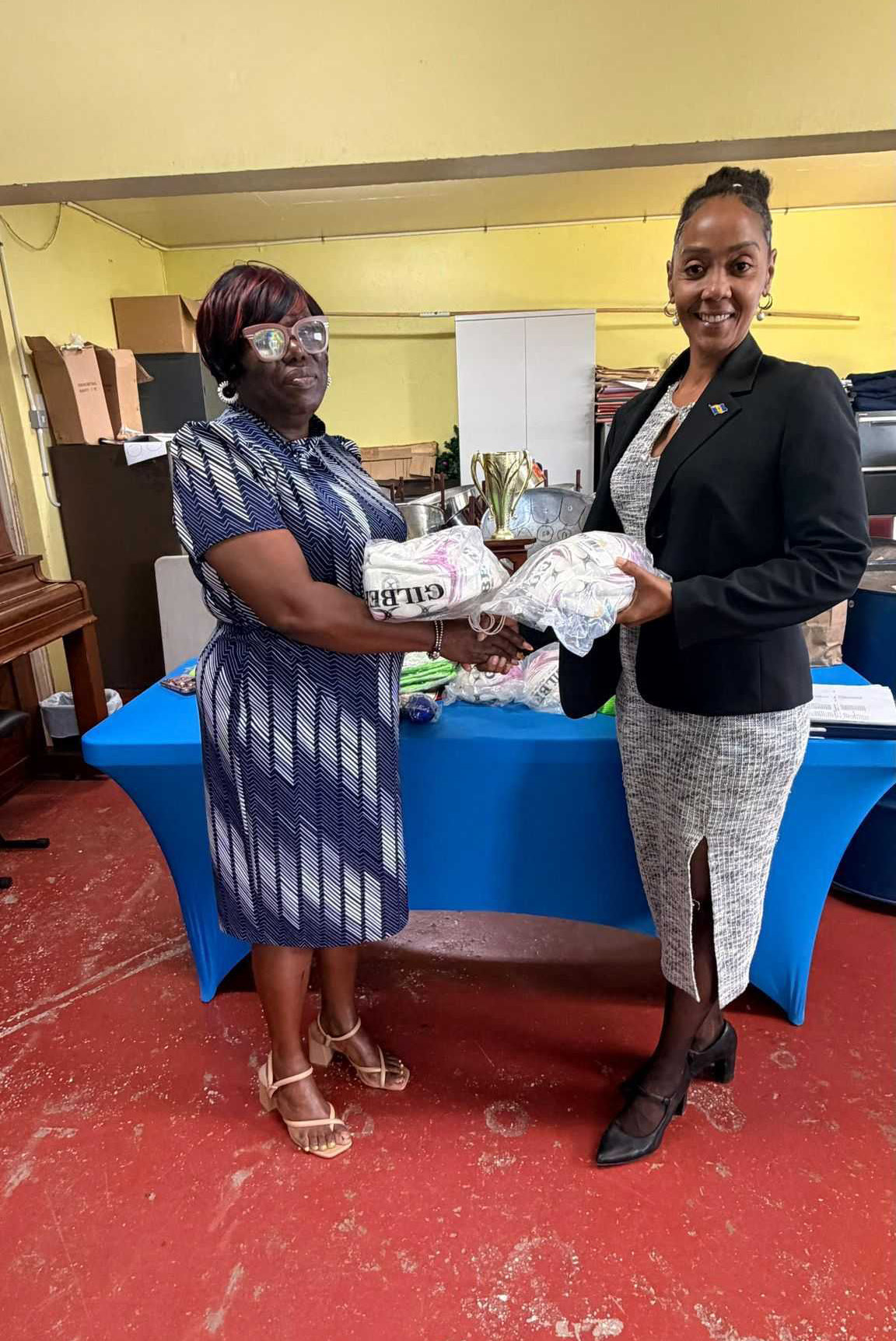
    The Soroptimist International Club Paramaribo (SICP) has significantly improved living conditions for incarcerated women at Santo Boma Central Penitentiary Institution’s female wing through a substantial donation of kitchen equipment. The humanitarian contribution included two gas stoves, two large cooking pots, and a gas cylinder, directly addressing practical needs expressed by the detained population.

    During an official handover ceremony, Prison Corps Chief Joyce Alfaisi expressed profound gratitude for the initiative, noting that female detainees frequently face societal neglect despite their legitimate right to dignified treatment and rehabilitation support. Alfaisi emphasized the alignment between Soroptimist values and the correctional system’s fundamental mission: guiding inmates toward meaningful societal reintegration.

    SICP President Trees Cirino revealed that the donation resulted from a July 2025 visit to the facility where detainees specifically requested improved cooking facilities. This marks the organization’s continued engagement with the institution, following previous book donations facilitated through collaboration with Soroptimist Club Hilversum from the Netherlands.

    Cirino reinforced that Soroptimist advocacy for women’s empowerment explicitly includes incarcerated women, who deserve particular support during rehabilitation and personal development processes. The donation provides both practical benefits and psychological encouragement, enabling detainees to actively shape their daily routines while maintaining dignity and self-worth.

    The recipient women conveyed deep appreciation for the equipment, pledging responsible usage. The proceedings unfolded in an atmosphere characterized by mutual respect, positivity, and gratitude. This successful humanitarian endeavor was made possible through collaborative efforts among multiple partners and donors committed to penal system improvement.

  • When does a vehicle cease to be useful in the Dominican Republic according to the law?

    When does a vehicle cease to be useful in the Dominican Republic according to the law?

    SANTO DOMINGO – The Dominican Republic has implemented sweeping vehicle safety and retirement regulations under its comprehensive Law No. 63-17 on Mobility, Land Transportation, Transit, and Road Safety. This legislation establishes precise criteria for determining when a vehicle must be permanently removed from circulation, prioritizing public safety and environmental protection.

    The law specifies three primary conditions under which a vehicle is deemed unroadworthy and must be demolished. First, mandatory age limits are imposed based on vehicle type: motorcycles (10 years), light passenger vehicles (15 years), minibuses (17-20 years depending on capacity), buses (25 years), and heavy cargo vehicles (30 years). Upon reaching these thresholds, vehicles become ineligible for inspection tags and operational permits.

    Second, regardless of age, any vehicle failing the mandatory Technical Vehicle Inspection (ITV) – which assesses mechanical integrity, safety features, and emissions compliance – will be prohibited from operation. The National Institute of Transit and Land Transportation (Intrant) holds authority to revoke circulation authorizations for vehicles presenting public safety risks.

    Third, insurance companies must declare vehicles as total losses following severe damage from accidents or fires, permitting sale only for parts or demolition. The law explicitly bans importing vehicles with salvage or rebuilt titles.

    Enforcement mechanisms require the General Directorate of Internal Taxes (DGII) to remove non-compliant vehicles from the National Registry, while Intrant coordinates immediate demolition operations. This regulatory framework represents one of the Caribbean’s most stringent vehicle safety initiatives, aiming to modernize the national fleet and reduce traffic fatalities.

  • Police investigate double homicide in Savanne Paille

    Police investigate double homicide in Savanne Paille

    Authorities in the Commonwealth of Dominica have initiated a comprehensive investigation following a deadly shooting incident that claimed the lives of two male victims this past weekend. The tragedy occurred in the Savanne Paille district on Saturday, though specific details surrounding the circumstances remain limited as police continue their preliminary examination of the case.

    The Commonwealth of Dominica Police Force (CDPF) has confirmed the active status of their investigation but has not yet released official statements regarding potential suspects, motives, or detailed chronology of events. This development marks a significant violent episode in the community, prompting heightened attention from local media and residents alike.

    Dominica News Online (DNO), the island’s premier digital news source, has committed to tracking the investigation’s progress and will provide subsequent updates as official information becomes available through proper channels. The community awaits further clarification from law enforcement officials as they work to establish the factual sequence of this fatal encounter and identify those responsible for the violence.

  • Constitutional Court upholds 20-year prison sentence for soldier for killing two men

    Constitutional Court upholds 20-year prison sentence for soldier for killing two men

    The Dominican Republic’s Constitutional Court has rejected an appeal filed by Army First Lieutenant Yarin Esteudy Novas Sena, who sought to overturn his 20-year prison sentence for the 2014 fatal shooting of two men. The court’s decision represents the final judicial resolution in a case that has spanned nearly a decade.

    Novas Sena’s conviction stems from a December 2014 incident in Los Guaricanos, Santo Domingo Norte, where he shot and killed Manuel José Crespo Núñez (‘El Mello’) and Yarel Jesús Taveras Ulloa (‘El Guardia’). The lieutenant claimed the victims had assaulted him moments earlier, stealing cash and his cellular phone.

    The constitutional appeal challenged Ruling No. 1305, issued by the Second Chamber of the Supreme Court of Justice on October 30, 2019, which had affirmed the original sentence handed down by the Collegiate Court of the Judicial District of Santo Domingo.

    While the Constitutional Court acknowledged technical validity regarding filing deadlines due to improper notification procedures, it ultimately determined the appeal lacked substantive legal foundation. The court concurred with the Attorney General’s Office that the petition failed to meet requirements established by Law No. 137-11, the Organic Law of the Constitutional Court.

    Judicial authorities noted that Novas Sena’s submission contained only superficial arguments without proper legal analysis. The appellant merely referenced constitutional provisions and criminal code articles—including Article 321 and 329(2) of the Criminal Code and Article 40.13 of the Constitution—without demonstrating their specific relevance to his case.

    The court emphasized that such perfunctory legal references prevented meaningful judicial review, making it impossible to assess whether the challenged ruling contained procedural deficiencies or fundamental rights violations. This absence of substantive argumentation led to the appeal’s inadmissibility declaration, effectively upholding all previous judicial determinations. The court additionally exempted Novas Sena from bearing procedural costs.

  • Gonaïves : Mission to evaluate the work of the Drinking Water Supply System

    Gonaïves : Mission to evaluate the work of the Drinking Water Supply System

    In a significant move to address critical infrastructure delays, Haiti’s National Directorate of Drinking Water and Sanitation (DINEPA) has conducted a comprehensive evaluation mission of the Gonaïves Drinking Water Supply System rehabilitation project. Led by Director General Engineer Théophile Ostinvil, the inspection comes as part of the Grand-Nord Program—a major initiative funded by the Inter-American Development Bank (IDB) focusing on drinking water, sanitation, and hygiene improvements.

    The high-level delegation pursued dual objectives: assessing substantial construction delays that have pushed the project’s completion timeline to April 2026, and evaluating the performance of the Results-Based Technical Assistance program responsible for operational strengthening at the Gonaïves Technical Operations Center. The supervising firm TECINA received formal notice regarding these delays during the mission.

    This proactive governance approach aligns with DINEPA’s three strategic priorities: ensuring good sector governance, achieving financial autonomy through operational structures, and maximizing development within the drinking water and sanitation sector. The mission included technical meetings with both the Technical Assistance team and TECINA representatives to discuss project advancements and address field implementation challenges.

    Strategic decisions were made to enforce contractual commitments, particularly concerning the April 2026 amendment expiration. Director Ostinvil and his technical team conducted multiple site visits to evaluate rehabilitation progress, network expansion efforts, and the condition of hydraulic installations undergoing modernization.

    The intensified oversight demonstrates DINEPA’s renewed commitment to modernizing water infrastructure in Haiti’s strategic Grand-Nord region, particularly in densely populated Gonaïves where reliable drinking water access remains a pressing public need.