分类: society

  • Pomona Resident Gunned Down Under Mango Tree

    Pomona Resident Gunned Down Under Mango Tree

    Authorities in Belize are probing a brazen fatal shooting that left a 29-year-old Salvadoran immigrant dead in the Stann Creek District over the weekend, marking the third homicide investigated by local law enforcement in recent days.

    The victim, identified by police as Jose Marvin Alvarado Ramos, was ambushed on Sunday night, May 10, 2026, shortly after stepping out of his residence in Pomona Village. According to official accounts from ASP Stacy Smith, a staff officer with the local police force, Ramos had walked from his room to a spot near a large mango tree on his property when the attack unfolded. Witness accounts indicate an unidentified male attacker emerged from an orange orchard located across the public street from the victim’s home, fired multiple rounds directly at Ramos, and then fled back into the orchard to avoid detection. Ramos died at the scene from his gunshot wounds.

    As of Tuesday, investigators have not yet identified any persons of interest in connection with the attack, nor have they uncovered a clear motive for the killing. Smith confirmed that the investigation remains active and ongoing, with law enforcement working to piece together details of the attack and track down the perpetrator. The killing has added to a recent string of violent deaths in the region, with police simultaneously investigating two other unrelated homicide cases.

    This report is adapted from a transcribed evening television newscast originally published online by local Belizean media. The original broadcast included witness accounts that have been verified by law enforcement spokespeople as the investigation progresses.

  • Minor Faces Murder Charge in Shocking Barroom Execution

    Minor Faces Murder Charge in Shocking Barroom Execution

    Four days after a deadly public shooting inside a Belize City bar left a 34-year-old mother of three dead and two others wounded, law enforcement officials have formally charged a 16-year-old male minor with first-degree murder in connection with the shocking incident. The victim, identified as Salma Funez, was gunned down at the venue on May 7, in an attack that has sent shockwaves through the local community over the youth of the accused and the brazen nature of the killing.

    Beyond the murder charge, the teenage suspect, a resident of Lord’s Bank, also faces two additional counts of attempted murder for the two other people injured during the attack. Investigative updates from Assistant Superintendent Stacy Smith, a senior staff officer with the Belize police force, outline that the minor brought a pre-obtained stolen weapon to the bar, contradicting any early speculation that the attack was unplanned or spontaneous.

    According to Smith’s latest briefing to reporters, the murder weapon is confirmed to be legally owned by the employer of the suspect’s father. Investigators believe the teen accessed the weapon by sneaking into the property and cracking open a locked safe where the licensed firearm was stored. A damaged cellphone was also recovered from the scene of the shooting, which investigators are currently examining as potential evidence. Early unconfirmed reports that the suspect and victim had a prior personal relationship remain under active review, with Smith noting that investigators have not yet confirmed the validity of that line of inquiry.

    As the investigation progresses, police confirmed that additional charges related to the illegal theft and possession of the stolen firearm are expected to be filed against the minor in the coming days. The case has raised urgent questions in Belize about youth violence, unsecured storage of licensed firearms, and the circumstances that led to a minor carrying out a fatal public attack.

    This report is based on a broadcast transcript from local Belizean news outlets, first published on May 11, 2026.

  • Who’s Next? Repeat Vandal Suspected After Latest Attack in Malacate

    Who’s Next? Repeat Vandal Suspected After Latest Attack in Malacate

    Residents of Independence Village are on edge following a fresh act of vandalism in the Malacate district that has left local leaders fearing a repeat offender is targeting the quiet community. The latest incident, which took place ahead of Mother’s Day, saw multiple parked vehicles suffer extensive broken window damage, with a striking detail that has investigators and locals puzzled: no valuables or property were stolen from any of the targeted cars.

    This pattern of destruction without theft has ruled out random opportunistic crime for many community officials, who point to a near-identical incident that occurred in the area roughly one month prior. In that earlier case, a projectile was thrown through the window of a parked Toyota Land Cruiser Prado, again with no items stolen from the vehicle.

    In an interview with local reporters, Independence Village Councilor Emilio Zabaneh shared his perspective on the string of attacks. He noted that the offender appears to have a specific fixation on damaging vehicle windows, and may be motivated by personal resentment or jealousy rather than financial gain. “I don’t believe it is theft, I believe it is straight vandalism,” Zabaneh explained. “I would venture to say it is the same person behind both attacks, someone who has a fixation with breaking car windows. He seems to know which vehicles to target, and likely holds a grudge driven by some kind of jealousy.”

    All of the vehicles damaged in the May incident belonged to company employees who had parked in Malacate while attending a Mother’s Day celebration on a nearby island. Immediately after local council members obtained security footage of the incident, they notified area law enforcement, including Assistant Superintendent of Police Sherwin Wade, who launched an investigation right away. To aid the probe, council leaders also reached out to Norwegian Cruise Line, which maintains security camera coverage of the Malacate area that could capture critical evidence.

    Authorities already identified a person of interest in the first vandalism incident, and that individual remains a person of interest in this latest attack due to their frequent presence in the Malacate area. While police have taken the lead on the investigation, the repeated attacks have already eroded the sense of personal safety that once defined the small village community, with locals left wondering who will be targeted next.

  • Too Hot to Learn? Rising Temperatures Disrupt Belize Classrooms

    Too Hot to Learn? Rising Temperatures Disrupt Belize Classrooms

    As an early summer heatwave settles over Central America, the small Caribbean nation of Belize is facing a growing disruption that extends far beyond routine outdoor discomfort: it is upending daily learning in the country’s classrooms.

    This May, unseasonably high temperatures and oppressive humidity have pushed thermal comfort to its limit for students and staff across the country, with one of the hardest-hit institutions being Belize Elementary/High School in the heart of Belize City. On a recent visit mid-morning, official thermometers registered a relatively moderate 90 degrees Fahrenheit, but thick 66 percent humidity pushed the real-feel temperature well past the 100-degree mark. Inside unairconditioned classroom walls, the stifling heat does not dissipate as the day goes on; by early afternoon, temperatures climb even higher, leaving both learners and educators drained and struggling to concentrate.

    School administrators moved quickly to implement low-cost, practical adaptations to protect student health and preserve learning continuity for the final weeks of the academic year. The most visible change comes to the school’s dress code: the standard formal button-up uniforms made of heavy traditional fabrics have been temporarily set aside, and students are now permitted to wear lightweight casual clothing that supports better air circulation and heat dissipation.

    Beyond policy changes to uniforms, the school has prioritized constant hydration, widely recognized as the first line of defense against heat-related illness. Water coolers are positioned across the entire campus, and administrators have relaxed rules banning personal drinks in classrooms. Students are now allowed to keep full water bottles at their desks and refill their containers as often as they need throughout the school day.

    Principal Majiba Sharp told reporters that the flexible, quick adjustments have already delivered clear, positive results in the school’s daily operations. Before the changes, many younger students complained constantly about the oppressive heat, and school staff were concerned about cases of heat exhaustion or fainting among learners. Since implementing the new rules, Sharp reports that there have been no heat-related fainting incidents, far fewer complaints from students, and a noticeable reduction in the grogginess and lethargy that made afternoons unproductive just weeks ago.

    Teachers echo Sharp’s assessment, noting that while the classroom environment remains far from cool, the small adjustments have made a major difference in students’ ability to stay focused and engaged through the end of the school day. With climate projections showing that early summer heatwaves will only grow more intense and more frequent in the Caribbean region in coming years, the low-cost adaptations tested at Belize Elementary could serve as a model for other schools across the country grappling with rising temperatures. For now, administrators say they will keep the temporary measures in place for the remainder of the term, prioritizing student safety and health as temperatures continue to climb.

  • Market Manager Defends Enforcement at Michael Finnegan Market

    Market Manager Defends Enforcement at Michael Finnegan Market

    A simmering conflict over selling scheduling and access at Belize City’s iconic Michael Finnegan Market has boiled over into public view, leaving small retail vendors feeling sidelined amid renewed enforcement of long-dormant trading rules. Last week, retail vendors at the popular public market told local reporters that strict new enforcement from city council officials has pushed them to the brink, restricting their operations exclusively to Saturdays and barring them from setting up stalls on the traditional wholesale trading days of Tuesdays and Fridays.

    But in a public defense of the policy released Wednesday, Delroy Herrera, market manager for the Belize City Council, pushed back against claims that the restrictions are new. He explained that the split-day trading model has been enshrined in local market regulations for years, and the recent crackdown only comes after months of escalating complaints from wholesale vendors who said their business was being disrupted.

    Herrera detailed the root of the friction: For an extended period, many retail vendors had been flouting the existing rules to set up on wholesale trading days. Once on site, Herrera said, these retailers would pressure wholesale sellers to raise their prices, accusing wholesalers of undercutting their profit margins by selling directly to customers at bulk rates. This, the manager argued, put retailers in the wrong, as they had no authority to dictate pricing or trading terms on days reserved for wholesale operations.

    Under the long-standing framework, Herrera explained, the system is designed to benefit both groups: Wholesalers get dedicated days to move large quantities of product at bulk prices, while retailers source their stock from wholesalers and then sell it at a marked-up rate to end consumers exclusively on Saturdays. To resolve the ongoing conflict between the two groups, the council made the decision to reinstate full enforcement of the original rulebook rather than crafting new policy.

    “Based on the amount of complaints that we had with the wholesalers, who are saying that they’re having friction and so forth with the retailers, because they want to designate their prices and stuff, we have decided okay let’s look into it and go back to what we had in law, the Tuesdays and Fridays for the wholesale day, and then the retailers come up on Saturdays,” Herrera explained in a statement to local media.

    Herrera added that enforcement officials are now monitoring the market to ensure compliance from both sides, noting that the council has documented evidence — including video footage — of both groups violating the day-designation rules: wholesalers selling on retail Saturdays and retailers setting up on wholesale weekdays. Moving forward, he said, the policy will protect both groups: wholesalers will retain their dedicated trading days, while retailers will get exclusive access to the Saturday customer base that relies on their smaller-batch, retail-priced goods. “I believe that the wholesalers will be protected tomorrow. And moving forward, the retailers as well will be protected on Saturdays,” he said.

    The dispute has sparked broader local discussion about whether the enforcement of the decades-old rules is being carried out fairly, and whether the policy disproportionately harms small retail vendors who rely on multiple trading days to make a living. Local news outlets have confirmed they will continue tracking developments as the situation unfolds to update the public on any changes to the policy or further conflict between vendor groups.

    This report is adapted from a transcript of a televised local newscast, originally published online.

  • Belize District Residents: Here’s What the New SOE Means for You

    Belize District Residents: Here’s What the New SOE Means for You

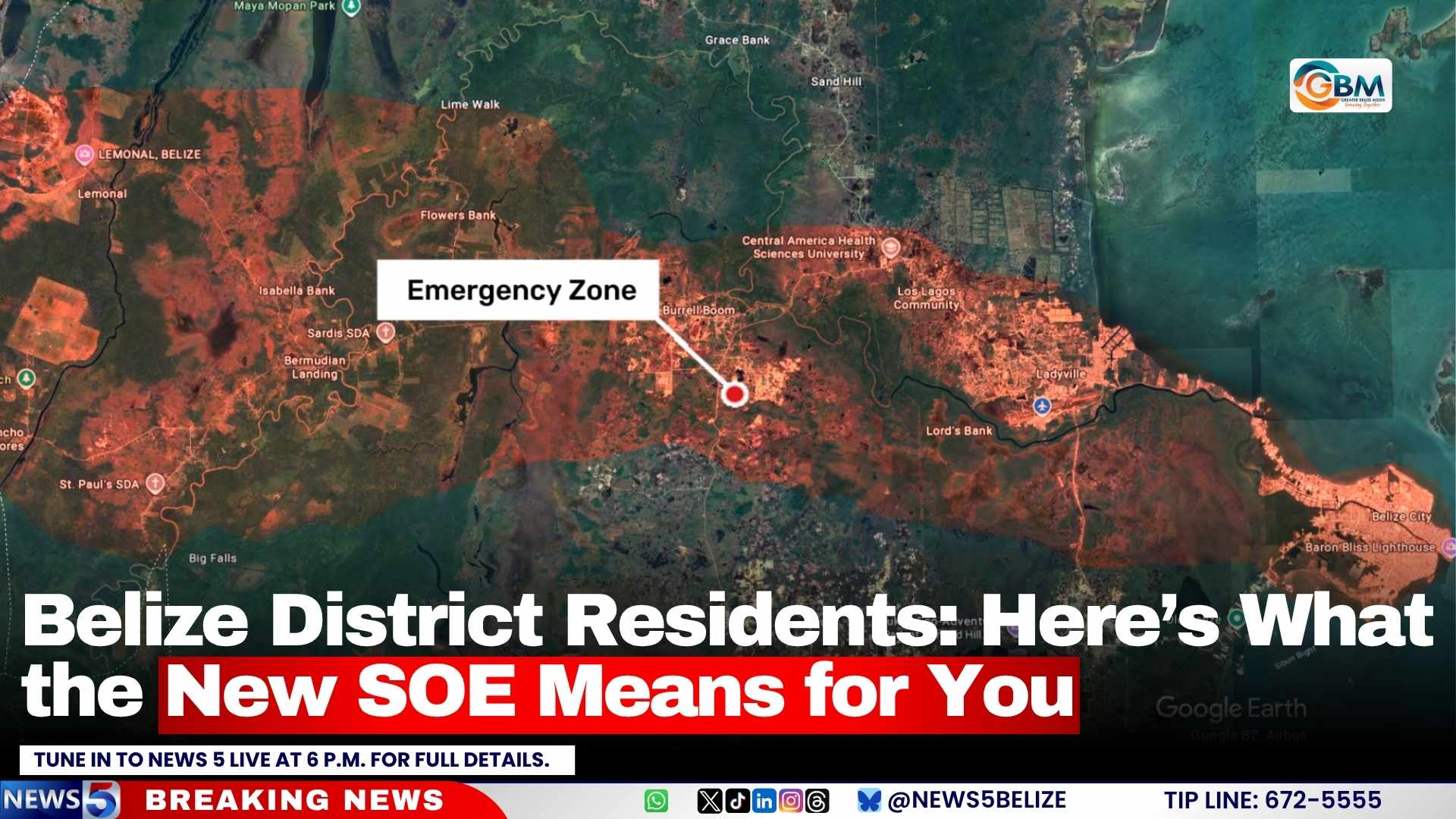
    Residents across Belize District began their weekend facing a dramatically altered daily landscape after the government enacted a new State of Emergency (SOE) granting sweeping new powers to law enforcement. The drastic public safety measure came in direct response to a rapid series of deadly shooting incidents that left multiple people dead and terrified local communities on both the northern and southern outskirts of Belize City. Over just a handful of days, the small Caribbean district was rocked by four separate fatal attacks, including the targeted ambush of two men, Hubert Baptist and Eric Frazer, along the busy Philip Goldson Highway. In another incident, 29-year-old Jamal Samuels was gunned down in what investigating officers have classified as a retaliatory gang-related killing. Most shocking of all was the fatal shooting of a mother of three, which authorities allege was carried out by a 16-year-old gunman. Formalized under Statutory Instrument 50 of 2026, the new SOE rules have reshaped routine life for thousands of local residents. Key restrictions imposed under the emergency order include a total ban on public gatherings of three or more people, a prohibition on public alcohol consumption, and an 8 p.m. curfew for all minors. Beyond these daily life restrictions, the order grants expanded search and detention authority to joint patrols of police officers and Belize Defence Force (BDF) personnel. Under the new rules, security personnel can stop and search individuals, motor vehicles, private residences and commercial properties without requiring a prior warrant from a court. Law enforcement also now holds the power to detain individuals suspected of threatening public safety for up to 30 days without charge, and can order the permanent closure of any location deemed to be a hub for violent or criminal activity. Armed mobile patrols now operate across high-risk areas of the district, with permanent checkpoints set up to monitor vehicle and foot traffic. As the new restrictions went into effect, many residents are questioning the scope of the new powers, the impact on personal privacy and daily routines, and whether the dramatic emergency measure will succeed in curbing the ongoing wave of violent crime that prompted its declaration. Local broadcaster News 5 will air a full special report exploring these questions and sharing resident reactions during its 6 p.m. live News 5 broadcast, featuring on-the-ground reporting from across the impacted district.

  • Flow Antigua congratulates Solange Benta, the latest winner in Flow’s Riddim and Rewards promotion

    Flow Antigua congratulates Solange Benta, the latest winner in Flow’s Riddim and Rewards promotion

    Telecommunications provider Flow Antigua has extended official congratulations to Solange Benta, who has secured her position as the newest winner of the company’s popular Riddim and Rewards promotion. The ongoing campaign, which has captured widespread public attention across the island nation, is designed to engage local customers through a blend of entertainment-themed incentives and rewarding prizes that celebrate Antigua and Barbuda’s rich musical culture.

    Since its launch, the Riddim and Rewards promotion has built a loyal following among local residents, offering participants regular opportunities to win valuable prizes while connecting with the regional rhythmic musical style known as riddim, a cornerstone of Caribbean cultural expression. Benta’s win marks the latest in a series of successful giveaways hosted by Flow Antigua as part of the campaign, which aims to give back to the community that has supported the brand’s growth in the region.

    In a statement released to the public, representatives from Flow Antigua expressed their excitement about Benta’s victory, noting that the promotion continues to deliver on its promise of creating memorable, rewarding experiences for customers across the country. The company also encouraged all remaining participants to continue engaging with the campaign, teasing that more prizes and winner announcements are planned in the coming weeks.

  • Public versus private, who owns Grenada’s beaches?

    Public versus private, who owns Grenada’s beaches?

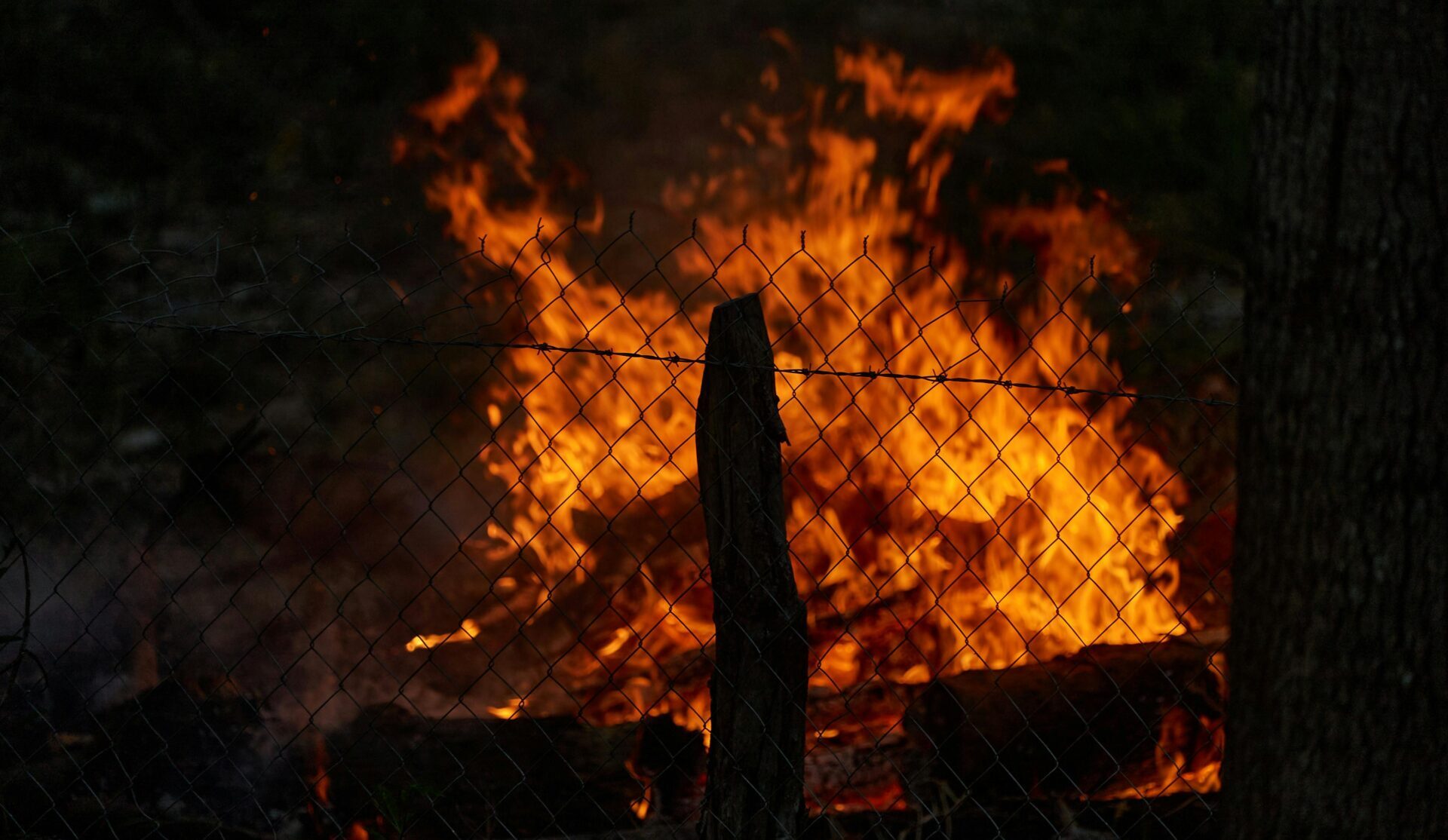
    Last week, local land rights advocacy group Grenada Land Actors (GLA) received reports of a sudden disruption to public access at one of Grenada’s popular coastal spots: the Levera Beach entrance from the La Fortune route had been completely blocked by large boulders, with suspicious open burning underway just meters from the access point.

    When local contractor Dexter Forrester arrived at the scene to confront the development team working on the site, he formally notified the Heng Sheng personnel on duty that blocking a public beach access route violated Grenadian law and ordered them to clear the obstructions immediately. Initially, the team claimed they could not understand the instructions. But once the Royal Grenada Police Force (RGPF) was called in to respond to the unpermitted burning, the personnel suddenly understood all legal directives, quickly extinguishing the fires and removing the blocking boulders.

    For GLA, this isolated incident is far from an anomaly—it is the latest visible symptom of a troubling, repeated pattern unfolding across Grenada’s coastline. Time and again, foreign developers have encroached on public beach lands, acting as though these shared natural spaces are privately held, despite clear legal precedent confirming all Grenadian beaches are public domain. This principle was first firmly established decades ago during the high-profile ‘Brownlow saga’ and has since been enshrined in common law. It is further codified in the Integrated Coastal Zone Act (ICZA), which explicitly defines all beach land extending 165 feet from the high-tide mark as public property.

    Yet this long-standing legal standard is being quietly eroded across the island, with developers facing little to no accountability for violations. At La Sagesse, developers have repeatedly stacked boulders along the shoreline to cut off public access to large stretches of the beach. At the Silversands Beach House development, luxury villas have been built directly on public beach land: a GLA survey conducted in March 2026 found the closest villa sits just 50 feet from the high-tide mark, less than a third of the 165-foot minimum required by the ICZA. To add to this violation, the developers have even posted a “Private Property” sign at the beach access point just 21 feet from the high-tide line, barring public entry to land that is legally owned by all Grenadians.

    Recent community consultations have also raised new alarms: the Silversands development team, which already violated regulations at Beach House Beach, is now weighing a similar unlawful encroachment at Dr Groom’s Beach, another popular public coastal space.

    On another part of the island at Woodford, a beach that has served as a traditional landing site for local fishermen for generations—highlighted by journalist Arley Gill on *The Bubb Report* on April 26, 2026—the site is now marked for construction of a private jetty to support raw material imports for a nearby industrial complex. The project has moved forward despite fierce pushback from local communities and repeated demands that developers complete a mandatory full Environmental Impact Assessment before breaking ground, demands that have so far been ignored.

    Taken together, these overlapping incidents add up to a slow but steady loss of public beach access across Grenada, with most violations going unchallenged and unpunished. For generations, Grenadians have relied on these shared coastal spaces—from La Sagesse to Dr Groom’s to Beach House—for core cultural traditions: gathering to socialize, cook outdoors, and spend time with family and friends on weekends and public holidays. These are not luxury recreational spaces reserved for wealthy developers or foreign investors; they are a core part of Grenada’s national cultural fabric.

    For GLA, the debate is no longer whether public beach rights are being eroded. The urgent question now is: how much more public land will be taken before Grenadians mobilize to protect their legal rights and their cultural heritage, one beach at a time?

  • Pottersville man in custody for arson

    Pottersville man in custody for arson

    A resident of Pottersville is now behind bars at Dominica State Prison, facing six separate arson charges connected to a destructive early-morning blaze that tore through multiple structures in Roseau earlier this month. Police Chief Lincoln Corbette confirmed the details of the case in an official media briefing held on Tuesday.

    The suspect, 48-year-old Wilson Joseph, made his initial appearance before a Roseau magistrate court earlier the same day, where law enforcement officials formally opposed any grant of bail. Following the hearing, the court ordered Joseph to be held in pre-trial custody at the island’s state penitentiary. The next scheduled review of Joseph’s case is set for October 2026, according to official court records.

    The incident that led to the charges dates back to 3:20 a.m. on May 6, 2026, when first responders received an emergency call reporting a fire that broke out at Jane’s Cuisine, a local eatery located on Upper Lane in Roseau. Chief Corbette explained that the fire spread at an unusually rapid rate, jumping from the original restaurant location to adjacent adjacent buildings before firefighters could fully contain the blaze. While no casualties have been reported as of the press briefing, multiple properties sustained significant damage from the flames, heat, and smoke.

    Corbette added that official assessments of the total financial and structural damage are still ongoing, as investigators work to document the full scope of the destruction and corroborate evidence connected to the charges. Arson investigations often require extensive forensic analysis to rule out accidental causes and confirm intentional ignition, a process that can take weeks to complete in cases involving widespread damage.

  • Temporary closure of Mont Tout Back Road

    Temporary closure of Mont Tout Back Road

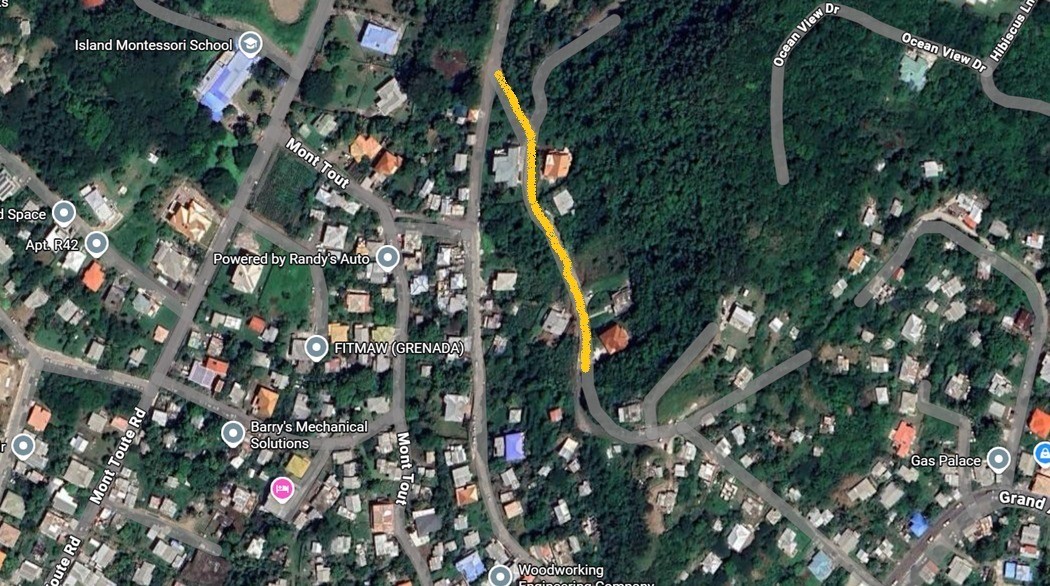
    Drivers and local commuters in St George, Grenada, are preparing for a major disruption to their daily travel routines, after the nation’s Ministry of Infrastructure, Public Utilities, Civil Aviation and Transportation announced a temporary indefinite closure of a key local roadway. Starting Monday, May 11, 2026, Mont Tout Back Road, located in the Grand Anse district of St George, will be completely closed to all motor vehicle traffic, with no confirmed reopening date released to the public as of the announcement.

    The government agency explained that the full closure is required to carry out critical infrastructure improvement projects along the stretch of road. The planned works include full resurfacing of the existing pavement, the installation of a new upgraded drainage system, and the construction of a new reinforced curb wall along the route. All three projects are designed to improve long-term road safety, reduce flood-related disruptions during heavy rain events, and extend the service life of the roadway for local residents and visitors.

    In its official statement, the Ministry extended a formal apology to residents, businesses, and daily commuters who will be affected by the travel disruption. Officials noted that while detours may add travel time for those relying on the route, the short-term inconvenience will result in a safer, more durable roadway for the community long-term. The agency also called on the general public to cooperate with traffic management measures during the construction period.

    This official announcement was originally issued by the Ministry of Infrastructure, Public Utilities, Civil Aviation and Transportation. NOW Grenada, the outlet publishing the notice, has clarified that it holds no responsibility for the content of statements released by third-party contributors, and provides a channel for users to report any abusive content related to its platform.