分类: society

  • Electricity outage hits San Francisco, thousands without power

    Electricity outage hits San Francisco, thousands without power

    SAN FRANCISCO, United States – A substantial electrical failure severely impacted San Francisco on Saturday, resulting in a widespread blackout that deprived approximately 130,000 residents of power for an extended duration. The city’s primary utility provider, Pacific Gas & Electric Company (PG&E), confirmed that a substation fire was the root cause of the disruption, which occurred during a critical pre-Christmas shopping weekend.

    At the peak of the incident, significant portions of the West Coast’s renowned technology hub were engulfed in darkness. The outage precipitated considerable public inconvenience, including the failure of numerous traffic signals and a suspension of services for the self-driving ride-hailing operator, Waymo. Public transportation networks also experienced considerable delays and disruptions.

    In an official communication via social media platform X, PG&E provided a restoration update, indicating that power had been successfully returned to roughly 90,000 customers by 9:00 PM local time. The utility company assured that efforts would continue through the night to restore electricity to the remaining 40,000 affected households.

    San Francisco Mayor Daniel Lurie addressed the public from the city’s emergency operations center, acknowledging the severity of the situation. He urged residents still without electricity to prioritize safety and to check on their neighbors. Mayor Lurie also confirmed that additional police, fire department personnel, and city officials had been deployed across affected areas and advised the public to remain at home unless absolutely necessary.

    The timing of the blackout proved particularly detrimental to local commerce. The San Francisco Chronicle reported that numerous businesses were compelled to shutter on one of the busiest shopping weekends of the year. Dense fog further compounded the challenging conditions, rendering typically vibrant commercial districts unusually quiet and causing what one retail manager described as a ‘devastating’ financial impact so close to the Christmas holiday.

  • Jamaican-born pastor pleads guilty to tax evasion scheme in New York

    Jamaican-born pastor pleads guilty to tax evasion scheme in New York

    NEW YORK – A prominent Brooklyn pastor has entered a guilty plea in federal court for orchestrating a sophisticated tax evasion operation that diverted church funds for personal enrichment. Paul Mitchell, 60, the Jamaican-born leader of Changing Lives Christian Centre and president of its affiliated daycare, confessed to a single count of tax evasion following a Department of Justice investigation.

    The seven-year scheme, spanning from 2015 to 2022, involved systematic misuse of religious organization assets. Court documents reveal Mitchell utilized church credit cards for extravagant personal purchases including high-end jewelry, luxury timepieces, and premium men’s apparel. He additionally transferred substantial cash amounts from institutional accounts to his personal banking services and wrote checks directly from church accounts to settle personal credit card debts and income tax obligations.

    According to federal prosecutors, Mitchell deliberately concealed these illicit financial gains from tax authorities, creating a significant tax liability shortfall. His actions resulted in an estimated $2.9 million loss to the Internal Revenue Service and approximately $316,700 in unpaid state taxes to New York.

    The pastor, who previously worked in banking for over fourteen years before his religious calling, now faces potential imprisonment of up to five years alongside restitution requirements and fines reaching $250,000. Mitchell’s church biography describes him as “a man of integrity and uprightness” who believes in empowering community members, starkly contrasting with the criminal behavior admitted in court.

    Born in Kingston, Jamaica, Mitchell immigrated to the United States with his family in 1971. His transition from banking to religious leadership in 2003 was characterized by his congregation as seamless. The case highlights serious financial misconduct within religious institutions and underscores increased regulatory scrutiny on nonprofit organizations.

  • WATCH: Woman dead, daughter and grandkids injured, in Manchester crash

    WATCH: Woman dead, daughter and grandkids injured, in Manchester crash

    A tragic vehicular accident in Manchester, Jamaica, has resulted in one fatality and multiple injuries, casting a somber shadow over the parish this Sunday morning. The incident occurred approximately at 8:00 a.m. along New Green Road in the vicinity of Martin’s Hill dump.

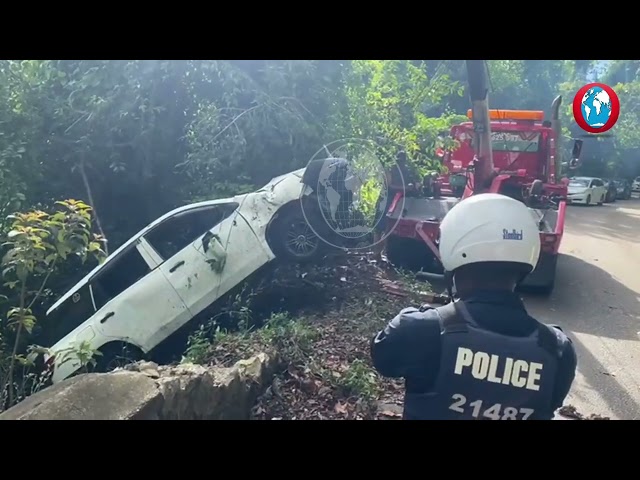
    Preliminary investigative reports indicate that the driver of a Nissan AD Wagon experienced a catastrophic loss of control over the vehicle. This mechanical or driver error led the car to veer off the roadway and plummet an estimated 100 feet into a deep precipice, causing severe damage to the automobile and critical injuries to its occupants.

    The victims have been identified as a 57-year-old woman, who was pronounced dead at the scene, and three other family members—her daughter and two grandchildren—who sustained serious injuries. All survivors were rushed to a medical facility for emergency treatment and remain hospitalized.

    In the immediate aftermath of the crash, the driver, amidst the chaos, encountered difficulties reaching emergency services via the Mandeville Fire Station’s telephone lines. Demonstrating remarkable presence of mind, she instead contacted a local towing service, Big Rat Wrecking, to alert them of the dire situation and request urgent assistance from authorities.

    The rescue operation was a coordinated effort involving Manchester firefighters, local law enforcement officers, and several courageous passersby. Together, they worked to extract the trapped individuals from the mangled wreckage at the bottom of the ravine, a complex and dangerous task given the terrain and the vehicle’s condition.

    The community of Manchester is reeling from the shock of the incident, which highlights ongoing concerns regarding road safety in certain perilous areas of the parish. An official investigation into the precise cause of the accident is currently underway by the Jamaican police.

  • Chaplain sets out to break cycle of crime

    Chaplain sets out to break cycle of crime

    A Jamaican correctional chaplain, drawing from his profound experiences with inmate remorse, has launched a groundbreaking initiative to address the alarming surge in student violence following the resumption of in-person learning post-pandemic. Dwayne Nelson, 44, an ordained minister, educator, and justice of the peace, founded ‘Generational Impact’ to serve as a human barrier between at-risk youth and the prison system. The program operates under the mantra ‘Stop, Think, Then Act,’ aiming to fundamentally reconstruct maladaptive thought patterns among students.

    Nelson’s unique perspective stems from his role conducting life skills sessions within the Department of Correctional Services, where he has witnessed firsthand the devastating consequences of criminal choices. This experience fueled his determination to break the cycle of crime by addressing its root causes in educational settings, particularly in low-performing schools where family dysfunction and negative influences often prevail.

    The initiative employs a comprehensive behavior modification program targeting eight known criminogenic needs—factors that increase crime risk—including substance abuse, antisocial attitudes, and association with criminal peers. Nelson has assembled a resource team of professionals and incorporates powerful testimonies from ex-inmates to demonstrate the harsh realities of prison life.

    In an innovative approach, the program has integrated chess as a strategic mental exercise to enhance emotional regulation, improve academic performance, and foster cognitive, emotional, and social development. Research indicates chess effectively builds self-confidence and character—qualities often lacking in misbehaving children.

    Currently self-funded and operating in five Corporate Area schools, Nelson balances this mission with his ministry and family responsibilities, utilizing leave time and weekends to deliver his message. The ultimate vision involves institutionalizing the program within Jamaica’s educational curriculum from primary to secondary levels, creating a foundational platform for developing positive thinkers with healthy self-esteem and self-control.

    The initiative’s core messaging inspires youth to recognize their inherent worth and latent greatness, encouraging them to reject negative influences and criminal trajectories. Nelson’s firsthand knowledge of inmate regret provides compelling authenticity to his warning: continued destructive choices lead to places where freedom is lost and remorse prevails.

  • Early potential unlocked

    Early potential unlocked

    In an extraordinary academic achievement, 10-year-old Jamaican expatriate Knyhiem Fraser has successfully conquered the Caribbean Secondary Education Certificate (CSEC) technical drawing examination—typically undertaken by high school students after years of preparation—while residing in Canada and attending a French-language institution.

    Knyhiem’s remarkable journey involved a year of intensive independent study and online tutorials under the guidance of his father, Everett Fraser, an accomplished technical drawing instructor and textbook author whose works are utilized throughout Caribbean secondary schools. The young scholar traveled to Jamaica specifically to complete the examination at Kingsway High School, all while maintaining an active schedule that includes competitive soccer, ice hockey, and creating educational content for his YouTube channel.

    What makes Knyhiem’s accomplishment particularly noteworthy is his dual-language educational environment. In Canada, he has simultaneously distinguished himself as the top-performing French-speaking student in his fifth-grade class, demonstrating exceptional linguistic and academic versatility.

    The foundation of his success lies in his parents’ educational philosophy. Both Jamaican educators, Tricia Smith and Everett Fraser have long championed early childhood potential development. Fraser’s innovative teaching methodology, which incorporates video-based learning originally designed for academically struggling students, proved equally effective for his son. This approach has historically resulted in 100% pass rates among his students in external examinations.

    Knyhiem confronted the challenge with remarkable maturity, transforming initial apprehension into determined confidence through psychological repositioning. “I changed the words from ‘I can’ to ‘I can, and I will pass the exam, no matter what,’” he recounted to the Sunday Observer.

    His resilience was tested during the actual examination when technical difficulties disrupted his AutoCAD software. Demonstrating composure beyond his years, Knyhiem calmly reset the system and continued, attributing his poise to parental guidance and cultivated mental fortitude.

    This same determination characterizes his athletic pursuits. Having begun ice hockey at eight years old without prior skating experience, Knyhiem diligently practiced to become team goalkeeper for the West London Hawks competitive squad.

    The Fraser family advocates strongly for early childhood stimulation, arguing that children possess sponge-like learning capabilities during formative years. “If we stimulate them earlier at this age, they’re way more focused,” Everett Fraser explained, noting that Knyhiem frequently outperformed older students in regional revision classes.

    Both parents encourage greater parental involvement in childhood education, emphasizing that learning extends far beyond classroom walls. Smith advised: “Having a strong foundation is a plus. Most of the time it helps to determine the path that our children will move in life academically.”

    With aspirations toward professional soccer and entrepreneurship, Knyhiem offers simple yet profound advice to peers: maintain clarity of mind, prioritize rest, and embrace calculated risks. “The way to heaven is like hell,” he philosophizes, “because you have to make sacrifices and take risks.”

  • Green addresses vets’ concerns over dog rescue claim

    Green addresses vets’ concerns over dog rescue claim

    Jamaica’s Agriculture, Fisheries, and Mining Minister Floyd Green has addressed mounting concerns from veterinary professionals regarding the government’s handling of animal rescue operations following Hurricane Melissa. The controversy emerged after Minister Green’s December 3 media briefing created the impression that government-led aerial reconnaissance missions had directly rescued and facilitated international relocation for 58 dogs affected by the late October hurricane.

    At a Jamaica Observer Press Club event on December 16, 2025, Minister Green acknowledged the communication error, describing it as “an unfortunate conflation of two separate things.” The minister specifically sought to reassure Jamaicans who had lost pets during the hurricane that no animals were taken abroad without proper protocols.

    The clarification comes after clinical veterinarians Dr. Sarah Wilkinson-Eytle and Dr. Paul Cadogan challenged the initial narrative. According to their professional assessment, the dogs transported to the United States and Canada were already housed at the Negril Pup Rescue shelter prior to Hurricane Melissa’s landfall on Jamaica’s southwestern coast.

    Dr. Wilkinson-Eytle of Phoenix VetCare explained that the ministry’s role was strictly administrative: “What happened was that the ministry, along with the International Fund for Animal Welfare, had to accelerate that movement post-Melissa because the shelter sustained damage. All the ministry did was facilitate paperwork so that the export permits and veterinary inspections could be completed expediently.

    Both veterinarians confirmed that government veterinary personnel did participate in aerial surveys with the Jamaica Defence Force, but these missions focused exclusively on assessing storm impact on agricultural animals and identifying areas with large concentrations of animal casualties—not rescuing stranded pets.

    Minister Green expressed regret over the misleading narrative, emphasizing the government’s collaborative relationship with animal welfare organizations like Montego Bay Animal Haven and Humane World for Animals. He clarified that while the Veterinary Services Division plays a crucial regulatory role in animal exports, the actual rescue and rehoming efforts are primarily conducted by specialized non-governmental organizations.

  • JFJ moves to clarify position on decriminalising consensual sex among minors, close-in-age exemptions

    JFJ moves to clarify position on decriminalising consensual sex among minors, close-in-age exemptions

    Human rights organization Jamaicans For Justice (JFJ) has issued clarifications regarding its controversial recommendations to decriminalize consensual sexual activity among minors, following significant public backlash. The proposals were initially presented in JFJ’s comprehensive 42-page report titled ‘A Civil Society Review of the Diversion and Alternative Measures for Children in Conflict with the Law in Jamaica.’

    The report argued against prosecuting consenting minors through the court system, contending that Jamaica’s Child Diversion Programme misallocates resources, overburdens law enforcement, overwhelms legal infrastructure, and causes unnecessary school disruptions. Instead, JFJ advocated for addressing such instances through enhanced comprehensive sexual education programs rather than judicial proceedings.

    Central to the proposal were tiered close-in-age exemptions, including a primary provision that would exempt partners within two years of age (both under 16) from criminal charges. A secondary provision would allow defense against prosecution for age differences up to five years when activities are truly consensual, no position of authority exists, and the younger participant is at least 12-14 years old.

    The recommendations drew sharp criticism from social commentators, including criminologist Dr. Jason McKay, who expressed concerns that such measures could potentially empower sexual predators.

    In response, JFJ emphasized its unwavering support for maintaining Jamaica’s age of consent at 16, stating this threshold ‘protects young people from adult exploitation and ensures appropriate access to sexual and reproductive health services.’ The organization clarified that it neither promotes nor encourages early sexual activity, but rather advocates for prevention through education.

    JFJ highlighted several issues with Jamaica’s current legal framework under the Sexual Offences Act, which applies a blanket approach to all sexual activity involving persons under 16 without close-in-age provisions. This results in disproportionate impacts on boys due to societal norms, overwhelming caseloads for diversion programs, and unnecessary trauma for minors involved in consensual peer relationships.

    The organization cited Canada’s tiered close-in-age framework as an effective model, noting its successful implementation since 2008. JFJ announced plans to release a detailed policy brief exploring both models to inform Parliamentary review, emphasizing its commitment to factual discourse and solutions that best serve Jamaican children.

  • Rebuilding history

    Rebuilding history

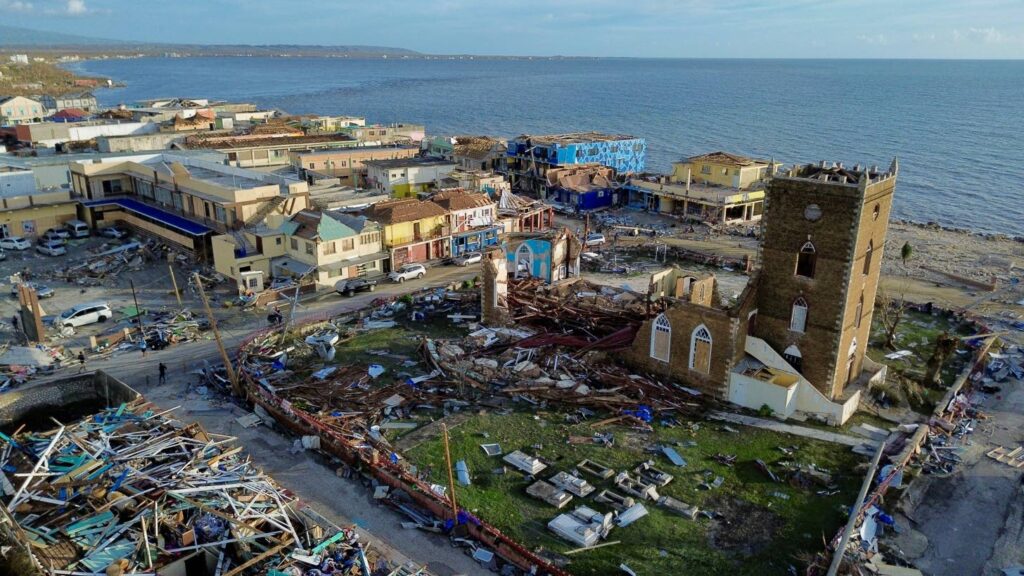
    In the wake of Hurricane Melissa’s devastating path through Jamaica, leading architectural conservationists are advocating for expert-led restoration of the nation’s damaged heritage structures. Preservation specialists Pat Green and Sarah Ann Hodges emphasize that immediate professional intervention is crucial to salvage both physical materials and historical knowledge from affected sites.

    The Category 5 hurricane, one of the most powerful Atlantic storms in recorded history, caused extensive damage to centuries-old churches, courthouses, and schools when it made landfall on October 28 with sustained winds of 185 mph. While acknowledging the storm’s unprecedented strength, both experts identified systemic neglect and poor maintenance practices as significant factors exacerbating the destruction.

    Registered architect and conservation consultant Pat Green stressed the urgency of professional assessment before cleanup operations begin: “My concern is that bulldozers might scrape up everything without proper evaluation. We need heritage professionals on the ground to guide the salvaging process—this isn’t just debris but valuable knowledge, technology, and reusable materials.”

    Preservation architect Sarah Ann Hodges, co-founder of Kingston 10 Architects, outlined immediate priorities: “Where roofs are damaged, the critical first step is preventing further water intrusion. We must literally pick up the pieces—collect timbers, commemorative stones, and tiles—and ensure these materials aren’t diverted elsewhere.”

    Both experts highlighted the educational opportunity presented by the damage. Green explained, “Examining these structures reveals construction techniques that need to be passed to younger generations. Many assume these buildings were entirely European imports, but my research shows they were designed and built by Jamaican craftspeople using local materials—a testament to our ancestors’ ingenuity.”

    The architects proposed two conservation approaches: either preserving ruins as historical monuments while constructing modern facilities within them, or rebuilding structures to original specifications with strengthened connections and reinforcements. They pointed to successful post-disaster reconstructions after Jamaica’s 1907 earthquake and 1951 Hurricane Charlie as models.

    A recurring theme in both interviews was Jamaica’s problematic maintenance culture. Hodges noted the paradox: “People meticulously maintain their cars but expect buildings to look after themselves. Then they’re surprised when structures collapse.” Green identified termite damage from untreated lumber and inferior building materials as particular vulnerabilities.

    Despite the devastation, Green remains optimistic about recovery prospects, citing historical precedents: “After the 1907 earthquake, major rebuilding occurred within years. The same happened post-Hurricane Charlie and in Belize after Hurricane Hattie. Recovery is possible with sufficient will and proper techniques.”

    The extensive damage to structures like St John’s Anglican Church in Black River serves as both a tragedy and a wake-up call for improved preservation practices across Jamaica’s architectural heritage.

  • Big cost of climate change on Jamaica

    Big cost of climate change on Jamaica

    Jamaica faces an existential threat to its economic foundation and developmental trajectory as climate change evolves from an environmental concern into a paramount national security issue. Professor Michael Taylor, a leading climate scientist at The University of the West Indies, Mona, delivered a stark warning that the nation’s partial resilience measures equate to no resilience at all in the face of cascading climate impacts.

    The interconnected nature of Jamaica’s infrastructure means that failure in one sector could trigger catastrophic breakdowns across the entire economy. Professor Taylor revealed that a single major climate event could wipe out 30-40% of Jamaica’s GDP—not through obvious weaknesses already addressed, but through overlooked downstream sectors that could become ignition points for widespread devastation.

    The evidence is already apparent. Hurricane Melissa inflicted unprecedented losses of $1.3 trillion, equivalent to 41% of GDP, dwarfing the damage from Hurricane Ivan in 2004 (6.8% of GDP). What makes the current situation particularly dire is the accelerating frequency of extreme weather events, leaving insufficient recovery time between disasters.

    Beyond dramatic hurricanes, Jamaica struggles to quantify slower climate threats, including record-breaking heat waves and sea-level rise. The scientific tools to measure these gradual but damaging effects remain underdeveloped, creating critical data gaps that hinder effective policy formulation.

    In response, Jamaican institutions are developing innovative solutions like the Jamaica Systemic Risk Assessment Tool (J-SRAT), which aims to comprehensively assess risks across sectors. Researchers are also working to quantify the value of ecosystem services and nature-based solutions that could prevent future losses.

    The economic implications are already materializing. Minister Matthew Samuda warned that climate risk is reshaping Jamaica’s physical and financial landscape, with insurance premiums rising beyond affordability in vulnerable coastal areas. Some regions are becoming effectively uninsurable and unlivable, directly constraining investment, housing development, and national growth.

    The consensus is clear: Jamaica must develop context-specific solutions rather than importing foreign approaches. Addressing this crisis requires coordinated action from academia, government, and the private sector to transform climate resilience from an environmental concern into a core development priority.

  • Shanti’s floral designs with an Xmas twist

    Shanti’s floral designs with an Xmas twist

    In the heart of San Fernando, a remarkable story of resilience and creativity unfolds at Pretty V’s Petals floral boutique. Shanti Kissoon, 55, has transformed life’s profound hardships into an extraordinary talent for creating beauty through floral arrangements.

    Growing up in rural Cumuto as one of thirteen children, Kissoon faced early adversity when she lost her mother to cancer at just 13 years old. This tragic loss became the catalyst for developing both practical skills and emotional resilience that would later define her artistic vision. “I learned to help maintain our home quickly,” Kissoon reflects, “but more importantly, I learned to see potential where others saw only limitation.”

    Her floral business, co-operated with Amaan Dar at the Arcade Mall, represents more than commercial enterprise—it embodies a philosophy of transforming “ugly into beauty” and “pain into pleasantries.” This approach stems from childhood influences; her mother, Phoolmat, was an avid craft enthusiast and plant lover whose passion became Kissoon’s inheritance.

    “My mother instilled in me this deep appreciation for nature’s overlooked treasures,” Kissoon explains. “While others might dismiss certain materials as ‘old bush,’ I see inherent beauty. This perspective extends beyond floristry—it’s how I approach life itself.”

    Completely self-taught, Kissoon developed her distinctive style through observation and experimentation. Her creations have gained particular attention for their non-conventional designs and colors, with clients increasingly seeking arrangements that maintain their appeal beyond seasonal celebrations.

    The Christmas season holds complex emotional resonance for Kissoon, evoking memories of impoverished but joyful celebrations. “We created decorations from saved matchboxes wrapped as gifts and used pine branches as Christmas trees,” she recalls. “Those experiences taught me that celebration isn’t about material wealth but about shared joy and creativity.”

    This philosophy now informs her business ethos: “Christmas represents faith, family, and love—not commercial competition. I strive to help people remember those less fortunate and brighten lives through floral artistry that carries emotional significance beyond aesthetic appeal.”

    Kissoon’s journey from Cumuto to successful entrepreneurship demonstrates how personal history can shape professional excellence. Her story stands as testament to the transformative power of viewing challenges as opportunities and finding beauty in unexpected places.