分类: society

  • Two Men Busted in Belmopan With Gun and Over 50 Rounds of Ammo

    Two Men Busted in Belmopan With Gun and Over 50 Rounds of Ammo

    In a targeted law enforcement operation carried out on the morning of May 15, 2026, Belizean police have apprehended two men and seized an unregistered firearm and more than 50 rounds of mixed ammunition in Belmopan, Cayo District. Acting on operational intelligence, officers stopped a vehicle carrying the two suspects at approximately 8:30 a.m. local time, launching a planned search that uncovered the illegal cache.

    The recovered contraband includes a 9mm Beretta pistol, alongside 51 rounds of ammunition spanning three different calibers: 28 rounds of 7.62 ammunition, 15 rounds of .22 caliber ammunition, and 8 matching 9mm rounds for the seized pistol. Authorities have publicly identified the two accused as 23-year-old Kamron Adolphus, a resident of Burrell Boom Village, and 20-year-old Culzac Vaughn from Roaring Creek Village.

    Following their arrest and charging, the pair have entered differing pleas in initial court proceedings. Adolphus has formally pleaded guilty to the weapons charges and is currently awaiting a scheduled sentencing hearing, while Vaughn has maintained a not guilty plea and will return to court for future proceedings. Both suspects remain in custody at Belize Central Prison ahead of their next legal steps.

    Assistant Superintendent of Police Stacy Smith spoke publicly on the case, addressing the ongoing challenge of illegal firearms trafficking in Belize. Smith highlighted that the country’s long porous land border remains the primary entry point for most unregistered weapons entering the nation. “Our teams remain actively deployed along border regions and other unregulated crossing points to disrupt this dangerous trade,” Smith explained, noting that the specialized Mobile Interdiction Team was created specifically to address this persistent threat. She added that law enforcement has scored recent wins against weapons smuggling, including a separate successful interception of an attempt to bring multiple illegal firearms into the country at a customs checkpoint just prior to this Belmopan seizure.

  • Police Seek Help Identifying Elderly Man Found in Long Bay

    Police Seek Help Identifying Elderly Man Found in Long Bay

    Law enforcement authorities in Antigua and Barbuda are turning to the public for help following the discovery of an elderly man in the Long Bay region, who has yet to be identified. The Royal Police Force of Antigua and Barbuda’s Criminal Investigation Department has issued an official call for community assistance, asking locals and anyone with relevant information to step forward to help confirm the man’s identity and track down his family members or designated caregivers.

    As of the release of this appeal, no additional details about the circumstances of the man’s discovery or his current condition have been made public. Police officials note that any piece of information, no matter how small it may seem, could play a critical role in reuniting the man with his loved ones quickly and safely.

    Members of the public who have details that could support the investigation are encouraged to reach out through the official Crimestoppers hotline at 800 8477. Authorities have emphasized that every contribution from the community will be valuable to advancing this case, and expressed gratitude in advance for the public’s cooperation and support.

  • Man charged with Marchand double homicide

    Man charged with Marchand double homicide

    A violent shooting incident that left two people dead on Marchand Road earlier this month has resulted in murder charges against a local man, according to official updates from the Royal Saint Lucia Police Force. The fatal attack unfolded on the evening of May 9, prompting a rapid response from law enforcement and subsequent investigative work that led to an arrest within three days.

    At approximately 11 p.m. on May 9, patrol officers assigned to the Marchand Police Station received an urgent emergency call reporting active gunfire in the Marchand Road area. First responders rushed to the scene immediately, where they found two victims who had sustained multiple gunshot wounds. Among them, 64-year-old Pearl Ramsay, a long-time resident of Marchand, was confirmed dead at the location by first responders. The second victim, 34-year-old Sheston Duncan—who also went by the alias “Bolom” and resided in Black Mallet, Marchand—was rushed via emergency ambulance to the Owen King European Union Hospital for urgent care. Despite medical teams’ best efforts, Duncan was pronounced dead shortly after arriving at the medical facility.

    Investigators launched a full probe into the double homicide immediately after securing the crime scene. According to an official statement released by the Royal Saint Lucia Police Force this past Monday, 29-year-old Seth Shem John was taken into police custody last Tuesday, exactly three days after the shooting took place. Following processing and the completion of initial investigative steps, prosecutors formally charged John with two separate counts of murder in connection with the deaths of Ramsay and Duncan.

    John made his first court appearance before the First District Court this past Friday. Following the brief hearing, the judge ordered John to be remanded into custody at the Bordelais Correctional Facility, where he will remain held as the legal process moves forward. No additional details about possible motives for the shooting or upcoming court hearings have been released by police as of the statement’s publication.

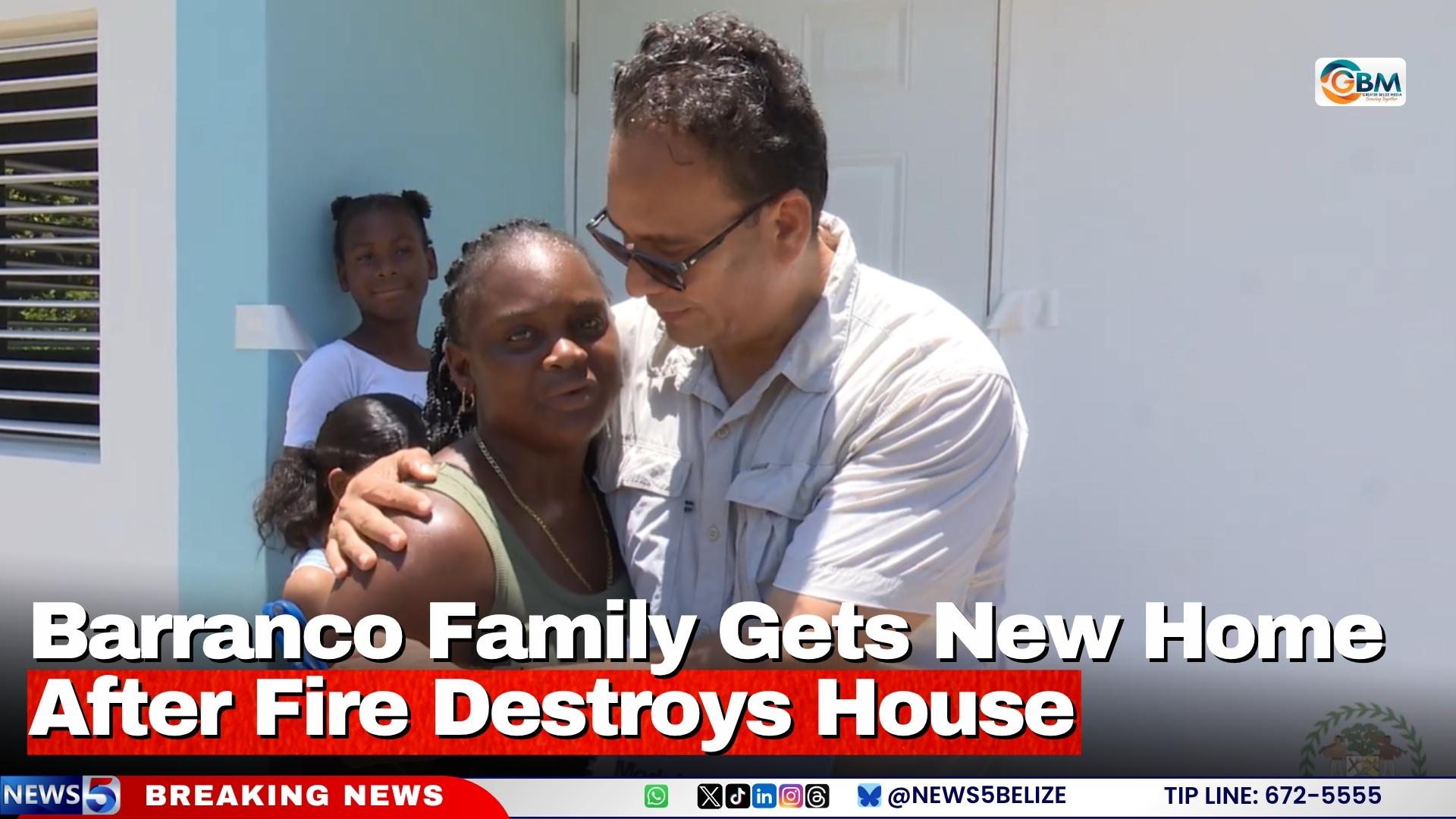
  • Barranco Family Gets New Home After Fire Destroys House

    Barranco Family Gets New Home After Fire Destroys House

    In the small community of Barranco Village, located in southern Belize’s Toledo District, one family is turning the page on a devastating disaster after receiving the keys to a brand-new home months after an unexpected fire left them completely homeless. Back in an incident that destroyed every possession the family owned, the blaze left homeowner Shamira Zuniga and her children with no shelter, no personal belongings, and a long, uncertain road to recovery.

    For months, Zuniga navigated the heavy emotional and logistical toll of rebuilding her life from absolute zero. But on a hopeful day that marks a major turning point for the family, the completed new home offers a fresh start that many never expected they would get so quickly. In an interview reflecting on her journey, Zuniga opened up about the despair she felt after losing everything, and the overwhelming gratitude she holds for the support that has changed her family’s future.

    “When my home burned to the ground, I hit rock bottom. I had nothing left, and I had to start every single part of my life over from scratch,” Zuniga explained. “Now, standing in front of this new house, I feel so much hope. I can build onto this space, make it feel like our own, and turn it into something good for my family. I’m so happy, I can’t even put it into words – this is such a blessing for us.”

    The new home was delivered as part of government-backed support for vulnerable families across the country, spearheaded by Osmond Martinez, the Area Representative for Toledo East. Martinez emphasized that the project extends far beyond just putting a roof over the family’s head, noting that stable housing will have a life-changing impact on Zuniga’s three children – two daughters and one son.

    “For these kids, this new home means they finally have a safe, consistent place to sleep at night and a quiet space to focus on their schoolwork,” Martinez said. “Beyond that, it lifts up their whole family’s sense of dignity and confidence. That is the greatest outcome you can ask for from this work.”

    Martinez also shared that his personal experience growing up in low-income conditions gives him a unique understanding of how critical stable housing is for families facing crisis. “I know what it’s like to grow up without reliable housing, so I understand how much this changes things for them,” he said. “Now that I am in a position to help, it’s so important that we pass the blessings we have received on to people who are going through hard times.”

    The initiative to support Zuniga’s family is part of Plan Belize 2.0, a broader national program focused on expanding social support and improving living conditions for vulnerable households across the country. Local community leaders say this project is just one example of the ongoing work the plan is bringing to rural communities in southern Belize, with more housing support expected to roll out to other families in need in the coming months.

  • COMMENTARY: Is Universal Education really universal?

    COMMENTARY: Is Universal Education really universal?

    For decades, successive governments of the small Caribbean island nation of Dominica have anchored their policy philosophy in the core principle of “all shall eat.” Rooted in the reality of limited natural and institutional resources, this guiding ideology demands that every member of society gets an equitable share of the island’s opportunities. This commitment has historically translated to tangible public goods, from large-scale public housing projects to widespread investments in indoor plumbing access for underserved rural communities. When it comes to education, this principle has evolved beyond basic access to foundational literacy and numeracy to demand that learning opportunities remain open regardless of a student’s socio-economic background, race, religion, or geographic location.

    Before the early 2000s, Dominica’s secondary education system faced a stark capacity crisis. The limited number of secondary schools and their small enrollment meant that only top performers on the national Common Entrance Examination could secure a spot. Most of these successful candidates came from elite urban primary schools, concentrated in the capital Roseau, while rural and low-income students were systematically locked out of traditional secondary education. For students who did not pass the entrance exam, the government offered the Junior Secondary Programme (JSP), a three-year skills-focused initiative that combined core academic coursework (English and mathematics) with vocational training in trades like plumbing, carpentry, electrical work and agriculture, plus optional classes in music and physical education. Critically, the JSP also created a pathway for late-blooming students to transition into traditional secondary education after strengthening their foundational skills.

    In 1998, driven by the goal of achieving universal secondary education aligned with regional sustainable development targets, the government phased out the JSP. Backed by the 1997 Education Act, which enshrined the right of all children to education, and with financial and technical support from the World Bank, the initiative led to the construction of new secondary schools (including Isaiah Thomas Secondary and Castle Bruce Secondary) and the expansion of existing campuses, plus targeted training for educators. By the late 2000s, nearly all primary school leavers were able to enroll in secondary education, with new campuses bringing schooling within closer reach of rural communities. This expansion opened unprecedented pathways to tertiary education and professional careers for thousands of Dominican students.

    Yet for all this progress, the shift away from the JSP left critical gaps unaddressed, meaning the universal secondary education project has only delivered half of its promised benefits. The JSP filled two unique niches that current reforms have failed to replace: it allowed slower-learning students to progress at their own pace, and it gave students with a natural aptitude for vocational trades the chance to build marketable skills for rewarding careers. When the JSP was eliminated, policymakers discarded these core functions without putting adequate replacement systems in place.

    Today, vocational training is scattered across traditional secondary schools, and ability grouping (or streaming) has replaced the JSP’s tailored support for slower learners. But the current model is deeply flawed: even when students are separated by ability, all learners are still expected to master the same volume of content in the same timeframe, regardless of their learning speed. Worse, remedial classes for struggling students are often staffed by underqualified educators with no specialized training in special education, while top-performing tracks get the most experienced and skilled teachers. The education system also lacks the diagnostic capacity to identify the root of students’ learning challenges and deliver targeted support to address them.

    Another widespread practice that highlights systemic misalignment is social promotion: students who fail to meet grade-level performance standards are often pushed to the next level simply because they are approaching 16, the age when compulsory education ends. While this practice avoids the social harm of holding students back a grade when no support is offered, it does nothing to address the underlying learning gaps that hold students back.

    At its core, the systemic failure stems from a persistent misunderstanding of what universal education actually means. Many policymakers and educators still cling to a one-size-fits-all model that prioritizes traditional academic coursework for all students, ignoring the reality that not all learners thrive in lecture-based, theoretical learning environments. Many students have natural aptitudes for hands-on trades, but current vocational offerings across most public secondary schools are underfunded, underdeveloped, and treated as second-tier alternatives to core academic subjects. Vocational curricula are often overly theoretical, lacking the hands-on practical training that makes these pathways valuable, and few students graduate with the skills to work independently as skilled or semi-skilled tradespeople. Most notably, Dominica has no dedicated standalone vocational education institutions, a stark contrast to neighboring Caribbean countries like Jamaica (with its Heart Trust NTA) and Trinidad and Tobago (with the MIC Institute of Technology) that have built successful specialized vocational systems.

    The persistent gaps in tailored vocational and adaptive learning have contributed to high youth dropout rates and elevated youth unemployment, particularly among young men. True universal education, the article argues, is not just about getting every student into a classroom until age 16—it is about providing education that is tailored to each student’s unique learning needs and strengths. Extending the original “all shall eat” metaphor, the author notes that universal access means nothing if the education provided does not meet the needs of every learner: “all indeed shall eat, but the food should be good, and it must be able to satisfy the hunger of all who eat it.”

    In recent years, growing recognition of these gaps has led to repeated calls from former education ministers and other stakeholders to reintroduce the JSP or a comparable modern vocational program. The current government has responded with a plan to convert the reconstructed Goodwill Secondary School into a Centre of Excellence for technical and vocational education, with planned programs in robotics, cosmetology, carpentry and other in-demand trades. While the initiative holds promise, its impact will depend on how well it addresses the historical shortcomings of the current system.

    In the short term, the author outlines clear steps to improve outcomes: strengthen existing vocational programs with rigorous, regularly updated curricula and qualified, trained instructors; prioritize specialized training for educators working in remedial and special education roles; improve foundational literacy and numeracy instruction at the primary level, since vocational options are useless for students who lack core basic skills; and invest in diagnostic facilities to identify and address learning difficulties early. As these changes are implemented, Dominica can finally move toward a truly universal education system that delivers on its founding promise of opportunity for all.

  • Fatal Massade shooting renews calls for mental health reform

    Fatal Massade shooting renews calls for mental health reform

    The tight-knit neighborhood of Massade in Gros Islet, Saint Lucia, is enveloped in grief following the fatal shooting of 34-year-old Julien Cedrick Agian, who was allegedly killed by his own cousin in a late-night incident on Sunday, May 17, 2026. The senseless homicide has not only left a family and community shattered, but has also reignited urgent public conversations about three pressing, long-unaddressed issues plaguing the island nation: gaps in mental health care, lax public safety protocols, and the persistent scourge of gun violence.

    According to official police reports, officers assigned to the Gros Islet Police Station were dispatched to the Massade shooting location at approximately 10:45 p.m. on the day of the incident. First responders found Agian with multiple gunshot wounds; he was rushed to the Gros Islet Polyclinic in a private vehicle by bystanders, but medical staff were unable to save his life. To date, one person has been taken into custody and is cooperating with law enforcement investigators, and multiple family sources have confirmed the suspect is Agian’s close cousin. A post-mortem examination to confirm the official cause and manner of death has been scheduled for a future date, as the investigation remains ongoing.

    Those who knew Agian remember him as a warm, generous, and uplifting presence, whose sudden death has left loved ones in profound shock and disbelief. “He was always the life of the party,” one heartbroken family member shared in an emotional interview. “You could always go to him for advice. He always had something positive to say and always tried to guide people in the right direction. You could go to him feeling completely beat down, and he would make you feel like yourself again. He would tell you, ‘Relax, things happen. Think about the positive that will come out of it.’”

    The tragedy carries an extra layer of heartbreak for the family: Agian’s wife is currently pregnant, and he will never get to meet his unborn child. Even days after the shooting, many relatives are still struggling to accept their loss. “I’m in denial,” the relative added. “I just kept thinking he got shot and he would pull through. I was waiting for him to call and say he was okay.”

    Across the community, Agian’s reputation as a kind, approachable person who was always willing to lend a hand is widely shared. A close friend of the victim noted that the entire neighborhood has been shaken to its core by the violence. “He was a very nice guy,” the friend said. “He used to sit around, joke with everybody and help people. Everybody knew him as a good person.”

    In the wake of the killing, many community members are speaking out about systemic failures that they say allowed this tragedy to happen. Multiple residents interviewed highlighted deep concerns over the treatment of people living with severe mental illness, particularly in cases where prior threats of violence have already been made. One close associate of the community argued that the country’s mental health system is failing to adequately monitor and support people experiencing acute psychiatric instability. “When somebody mentally unstable keeps threatening people, we can’t keep taking it lightly,” he said. “People say, ‘That’s your cousin, leave him alone,’ until something like this happens.” He called for extended, long-term inpatient psychiatric care for people who pose a threat to themselves or others, arguing that unstable patients should not be released back into the community before they have made a full recovery. “If somebody needs treatment, keep them there until they recover,” he said. “You can’t send them out the next day and expect everybody to be safe.”

    Beyond mental health reform, the incident has also sparked renewed demands for tougher enforcement against illegal firearms and intervention to stop violent crime among young men. One local resident emphasized that communities cannot afford to be passive in addressing these issues, arguing that collective action is needed to prevent future tragedies. “We cannot leave everything for the government and police,” he said. “If we see problems, we have to speak about it and try to stop it before things happen.”

    As the investigation into Agian’s homicide continues, Saint Lucia police are asking the public for any information that could help advance the case. Anyone with details related to the shooting is encouraged to contact the Gros Islet Police Station at 456-3830. Anonymous tips can also be submitted via the national Crime Hotline at 555, or through the RSLPF Crime Hotline mobile app available on the Google Play Store.

  • NODS to Host National Hurricane Season Thanksgiving Service on May 31

    NODS to Host National Hurricane Season Thanksgiving Service on May 31

    As the twin-island nation of Antigua and Barbuda gears up for the 2026 Atlantic hurricane season, the country’s National Office of Disaster Services (NODS) has opened an open invitation to all residents to join a special National Hurricane Season Thanksgiving Church Service scheduled for later this May.

    The collective prayer and worship event is set to take place at 4 p.m. local time on Sunday, May 31, hosted at the Bible Speaks Seventh-day Adventist Church, just one day before the official start of the annual Atlantic hurricane season on June 1.

    Centered around the unifying theme “A Nation Prepared, A People Protected,” the service is designed to bring together community members from across the country to join in collective prayer and reflection ahead of the high-risk weather period. Unlike routine disaster preparedness briefings, this gathering frames seasonal readiness around communal gratitude and shared hope for safety throughout the coming months.

    In an official statement released by the agency, NODS extended a warm call to all residents: “Come and worship with us as we pray and give thanks for a safe and hurricane-free nation.” The disaster management office also specifically encouraged attendees to bring their family members, close friends, and neighbors to build a sense of collective community resilience ahead of the season.

    The event forms part of NODS’ broader seasonal preparedness outreach, combining spiritual preparation with community building to help the nation align for the potential challenges of the Atlantic hurricane season, which typically runs from June through November each year in the region.

  • A Push to Get More Women Into the Maritime Industry

    A Push to Get More Women Into the Maritime Industry

    To mark International Women in Maritime Day 2026, the Central American nation of Belize is bringing well-deserved attention to a quiet, transformative shift underway in one of its most economically critical industries: a centuries-old field that has long been almost exclusively dominated by male workers. At the forefront of this grassroots movement is Jada Sutherland, a rising industry leader whose personal mission to open doors for women has evolved into the formal Women in Maritime Association of Belize, a national advocacy platform. What started as an individual vision to challenge systemic barriers has quickly grown into an initiative dedicated to expanding women’s visibility, delivering targeted professional support, and broadening access to career pathways across all segments of Belize’s maritime sector. Sutherland’s trailblazing work and growing influence took center stage at a recent national maritime summit, where government and industry officials highlighted her as a defining voice of a new generation working to rebuild and reshape the sector from the inside out. Kaylon Young, Ports Commissioner at the Belize Port Authority, shared that he has observed Sutherland’s remarkable professional journey firsthand. Unlike many industry leaders, Sutherland did not enter the field with a formal academic background in maritime studies; instead, her passion and expertise grew organically through hands-on on-the-job experience and repeated exposure to the sector’s inner workings. “She never formally studied the maritime sector, but she came into the field, fell deeply in love with the work, and recognizes the transformative opportunities this industry holds not just for herself, but for all Belizeans — and especially for Belizean women,” Young explained in an interview at the summit. For Young and many other industry stakeholders, the push to bring more women into Belize’s maritime industry is about far more than advancing gender equity alone. It is a strategic change that stands to strengthen the entire sector by bringing new perspectives to the table. “Every one of us has a unique role to contribute in the maritime space, and bringing more women into the fold adds a completely fresh dynamic to how we approach challenges and envision the future of our industry,” Young said. “Diverse points of view let us expand our reach, take on more ambitious projects, and grow as a sector far more than we ever could with a homogeneous workforce.” This developing story will be covered in full during News 5 Live’s primetime broadcast at 6 p.m. local time tonight.

  • Helmet Laws Are Changing. Here Is What Riders Need to Know:

    Helmet Laws Are Changing. Here Is What Riders Need to Know:

    Across Belize, nearly 40 percent of all fatal road collisions involve motorcyclists, and head trauma consistently ranks as the leading cause of death in these incidents. That grim statistic is pushing the Central American nation’s Ministry of Transport to pursue sweeping legislative reforms aimed at strengthening motorcycle helmet safety standards and reducing preventable road deaths.

    Current national regulations require all motorcycle operators to wear helmets while riding, but contain a critical gap: there is no legal definition of what qualifies as a safety-approved helmet. Chief Transport Officer Leon Gentle explained that this regulatory oversight has allowed unfit, low-protection headgear to be used in place of certified motorcycle helmets.

    “On Belize’s roads today, you see every type of headgear passed off as safe motorcycle protection – from standard bicycle helmets to partial half-helmets that offer almost no impact protection,” Gentle noted in an interview. “That is why we are taking a close look at updating and formalizing binding safety standards for all helmets used by motorcyclists.”

    The updated helmet regulations are just one component of a broader package of motorcycle safety reforms the transport department has spent months developing. The package will also introduce new rules governing pillion riders – passengers who travel behind the motorcycle operator.

    Gentle pointed to dangerous, common unsafe practices involving passengers that the new rules will address, including underage passengers riding without properly certified helmets and small children placed on bikes with no properly sized footrests to keep them secure. “These are avoidable hazards that put vulnerable riders at unnecessary risk, and we have to address them proactively,” he added.

    Belize recorded an encouraging drop in overall traffic fatalities across the country last year, but officials stress that motorcyclists remain the most at-risk group of road users. The full details of the reform package, including additional rules for pillion passengers, will be shared during a primetime broadcast on News 5 Live at 6 p.m. local time.

  • Water supply advisory Petite Martinique 18–19 May 2026

    Water supply advisory Petite Martinique 18–19 May 2026

    Residents of the Grenadian island of Petite Martinique have received an official advisory from the National Water and Sewerage Authority (Nawasa) regarding an upcoming scheduled operational shutdown for reservoir recharge at the island’s desalination plant. The mandatory maintenance work is set to begin at 10 a.m. on Monday, May 18, 2026, and will run continuously through to 5 a.m. the following day, Tuesday, May 19. Throughout this 19-hour maintenance window, regular water distribution services will be temporarily interrupted to allow crews to safely complete the reservoir recharge work.

    In anticipation of the temporary service halt, Nawasa has issued a clear call to all residential and commercial customers across the area: begin setting aside adequate water supplies in advance of the scheduled start date to cover daily needs during the interruption. The authority also emphasized the importance of practicing strict water conservation for the full duration of the maintenance period, even for households that have stored extra water, to prevent unnecessary shortages.

    Nawasa has extended a formal apology to the local community for any disruption to daily routines that this necessary work may cause. The agency also expressed its gratitude in advance for the patience and cooperation of local residents, noting that this scheduled maintenance is a critical part of ongoing efforts to sustain a consistent, reliable water distribution network for Petite Martinique long-term. This proactive upkeep aligns with Nawasa’s stated core mission of meeting the evolving water access needs of all its customers across Grenada.

    This advisory was published by NOW Grenada, which notes that it is not liable for any opinions, statements, or third-party content shared in official contributor advisories, and provides a channel for users to report content that violates platform guidelines.