
In a somber turn of events, 59-year-old police corporal Bibzie Foster was discovered unresponsive at her residence in Brooks Close, Granville, St James, Jamaica, on Wednesday morning. Foster, who was on the verge of retirement, was rushed to a nearby medical facility, where she was pronounced dead. Preliminary reports have not yet disclosed the cause of her sudden passing. Foster was set to retire in November, marking the end of her dedicated service with the Jamaica Constabulary Force (JCF). The JCF’s Corporate Communications Network (CCN) has officially confirmed her untimely demise. The incident has left the local community and her colleagues in mourning, as they reflect on her contributions to law enforcement and her impending retirement that will now remain unfulfilled.
分类: society
-

‘They don’t want us inside’
In downtown Kingston, Jamaica, a meeting between homeless individuals and local government officials on Wednesday revealed deep-seated resistance to plans aimed at relocating them from Justice Square to shelters. The gathering, held at Marie Atkins Night Shelter on Hanover Street, saw only two individuals express willingness to move permanently, while the majority remained silent or voiced grievances about the shelter’s conditions. Complaints ranged from inadequate food and restrictive policies to alleged verbal abuse by staff. One man recounted, ‘When yuh get di food dem tell wi seh wi haffi leave out,’ while a woman claimed shelter staff often turned them away during rainstorms. Local Government Minister Desmond McKenzie acknowledged the issues, promising to address specific complaints, including the removal of a problematic staff member. However, he also urged the homeless to cooperate, emphasizing the dangers of living on the streets, such as past incidents of violence. McKenzie stressed the need for mutual effort to resolve the situation, warning that indiscipline would not be tolerated. Meanwhile, some shelter residents expressed concerns about newcomers disrupting the facility’s cleanliness and order. The relocation initiative follows repeated calls from citizens and the judiciary, particularly after a recent fire at the court building allegedly caused by a homeless individual. Justice Paulette Williams highlighted the urgency of addressing the issue to prevent further incidents. Despite the challenges, McKenzie and Kingston Mayor Andrew Swaby remain committed to finding solutions, though the homeless population’s reluctance underscores the complexity of the problem.
-

Allow children to be children
In a compelling letter to the editor, Kelli Coombs highlights the pervasive influence of gang leaders on youth and the urgent need for government intervention to address this societal crisis. Coombs reflects on her 2016 article, ‘Gold, girls and guns,’ where a 13-year-old boy aspired to become a gang leader, citing the allure of wealth, power, and societal validation. This aspiration, she argues, is fueled by the legitimization of gang leaders through government contracts, which sends a dangerous message to impressionable children.
Coombs recounts numerous interactions with young individuals who committed crimes under duress from gang leaders, often referred to as ‘the boss.’ These leaders, she notes, wield immense power in their communities, acting as law enforcers, judges, and executioners. One harrowing account involves a young man forced to kill his best friend after a gang leader threatened his mother’s life.
The author criticizes the government’s historical practice of awarding contracts to gang leaders, which perpetuates a cycle of violence and criminality. She calls for immediate action, including audits of HDC apartments to remove unauthorized residents, frequent roadblocks in gang-prone areas, and bolder measures from the Homeland Security Ministry. Coombs emphasizes the importance of protecting children and ensuring they can grow up free from the influence of gang culture.
Her letter concludes with a plea for the government to leverage its authority to dismantle gang networks and create safer communities for future generations.
-
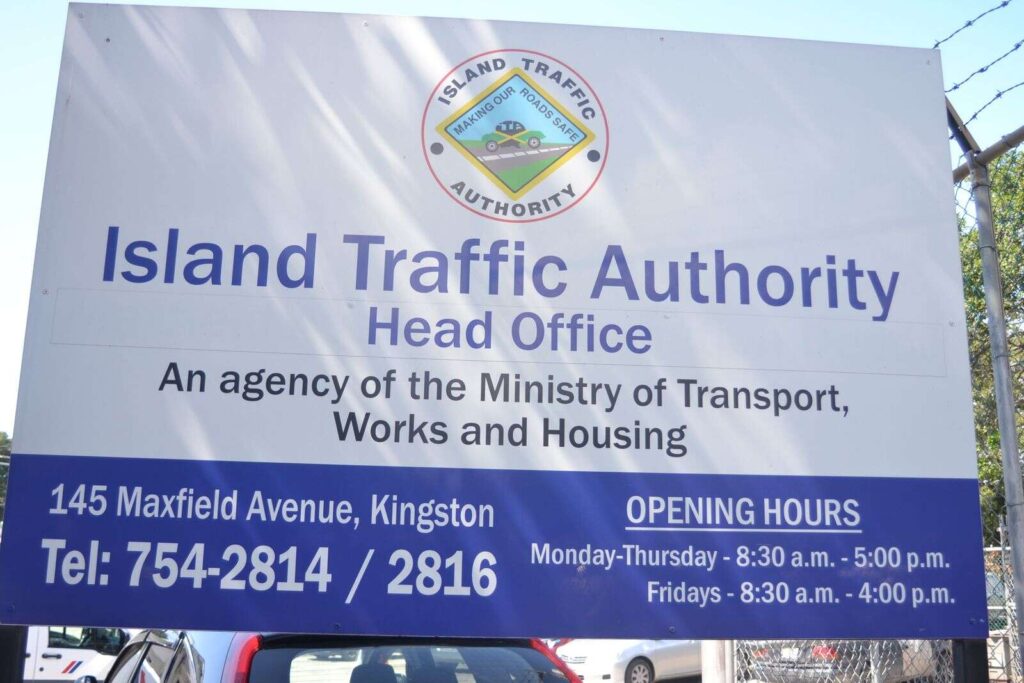
ITA temporarily suspends driver’s licence tests at Swallowfield hub
KINGSTON, Jamaica — The Island Traffic Authority (ITA) has declared a temporary suspension of driver’s licence and learner’s permit tests at its Swallowfield Service Hub in St Andrew, effective next Tuesday. The suspension is due to scheduled repairs at the facility, which are set to commence on October 21 and are projected to last four to five weeks. During this period, written, yard, and road tests will not be conducted at the Swallowfield location.
To accommodate affected customers, the ITA has advised individuals to utilize alternative service hubs, including the Spanish Town Road Service Hub, the Harbour View Service Hub, and the Spanish Town Service Hub. Those with pre-scheduled appointments for learner’s permits or driver’s licences at Swallowfield will be redirected to the Spanish Town Road Service Hub.
Despite the suspension of testing services, motor vehicle inspections will continue as usual at the Swallowfield facility. Additionally, certificates of fitness will be issued digitally to ensure minimal disruption to customers. The ITA emphasized its commitment to maintaining service efficiency and urged the public to plan accordingly during the repair period.
-

NSWMA apologises, vows to end garbage collection delay
The National Solid Waste Management Authority (NSWMA) has issued a public apology for ongoing garbage collection delays across Jamaica, with Executive Director Audley Gordon pledging to resolve the issue within the next few weeks. Speaking to the Jamaica Observer on Wednesday, Gordon expressed regret for the inconvenience caused to residents and outlined efforts to address the backlog, including extended working hours and additional collection trips. He emphasized that improper waste disposal practices by the public have exacerbated the problem, urging Jamaicans to adopt better habits to ease the burden on collectors. Gordon also highlighted challenges such as mechanical issues with collection vehicles and the time-consuming task of clearing illegal mini dumps within communities. While acknowledging the recent acquisition of over 100 new garbage trucks by the government, Gordon stressed that an additional 200 trucks are needed to achieve optimal operational standards. He also addressed concerns about street sweepers in downtown Kingston, noting that investigations are underway to ensure accountability. Gordon called for collective responsibility, urging the public to play their part in maintaining a clean environment by adhering to proper waste disposal practices.
-

Six schools close as unions protest
A significant wave of industrial action swept through The Bahamas yesterday as over a thousand public school teachers failed to report to work, leading to the early closure of six schools. The mass absenteeism, orchestrated by Bahamas Union of Teachers (BUT) President Belinda Wilson, was part of a broader protest against the government’s handling of pay adjustments. According to Education Director Dominique McCartney-Russell, 1,135 out of 3,186 public school teachers were absent, with the majority concentrated in New Providence. The government has privately warned that participants in the protest could face salary deductions and disciplinary measures. Meanwhile, Labour and Public Service Minister Pia Glover-Rolle reported no widespread absenteeism among other public servants, despite calls for action from Bahamas Public Service Union (BPSU) President Kimsely Ferguson. The protest culminated in a march to Parliament, where demonstrators, including teachers, janitors, and social workers, voiced their frustrations over stagnant wages, poor working conditions, and lack of promotions. Among the protesters, janitress Geraldine Strachan shared her struggles with mounting bills and medical needs, while teacher aide Sharon McKenzie highlighted the emotional toll on educators. In Grand Bahama, social worker Taronya lamented her 12-year career without a promotion, citing systemic barriers to upward mobility. Prime Minister Philip “Brave” Davis faced criticism for his handling of the dispute, particularly after canceling a scheduled meeting with union leaders. In a national address, Davis accused some union leaders of “grandstanding and public drama,” while defending the government’s phased pay adjustment plan, which excludes certain categories of workers. The plan, aimed at closing the pay gap between public service and the wider sector, includes base pay increases of 8 to 31 percent over four years. However, union leaders argue that the plan prioritizes middle management over frontline workers, leaving many in precarious financial situations. The protest underscores deepening tensions between the government and public servants, with union leaders vowing to continue their fight for fair treatment and equitable pay.
-

Daughter finds note left by mom who committed suicide
In a heart-wrenching revelation, 18-year-old Emmanuela Polidor shared the devastating details surrounding her mother’s suicide on October 9. Ketlyne Ferdinand, 34, took her own life in an outdoor shed at a Rasta Camp off Fire Trail Road, leaving behind a note that deeply shattered her daughter. Emmanuela recounted how her mother had handed her a purse containing the note, a moment that left her emotionally unprepared for the sudden loss. ‘Nobody could be mentally ready for something like this, especially when it’s someone so close to you,’ she expressed.
The day before her mother’s death, Emmanuela visited her and sensed her sadness, describing her as ‘down’ during their final hug. Ketlyne, a long-time member of the Rastafarian community, had been described by leader Priest Richmond McKinney as ‘unstable’ in recent years following a trip to Haiti. However, Emmanuela dismissed this claim, insisting her mother was a cheerful and caring person who did not suffer from mental illness, though she occasionally seemed sad.
On the morning of the tragedy, Emmanuela planned to visit her mother but noticed her father acting strangely. Moments later, she received a message offering condolences, which confirmed her worst fears. Overwhelmed with grief, she rushed to her mother’s home, only to be met with the sight of yellow caution tape—a haunting reminder of the loss.
Emmanuela, now working as a beautician like her mother, reflected on their bond, particularly the times they spent together while her mother fixed her locs. At just 18, she never imagined she would be planning her mother’s funeral. This tragic experience has underscored the importance of seeking emotional support during difficult times, a lesson she hopes others will take to heart.
-

JUTC urges parents to register children for rural school bus fare card
KINGSTON, Jamaica — The Jamaica Urban Transit Company Limited (JUTC) has issued a call to action for parents and guardians of children utilizing the rural school bus program. With the impending shift to a cashless fare system set for November 1, 2025, the JUTC emphasizes the urgency of registering for the electronic fare payment card to ensure uninterrupted service. Currently, the program transports approximately 16,600 students daily, yet only 4,900 have completed the registration process. The JUTC, in a recent media release, highlighted the critical need for immediate action to avoid potential disruptions. Since its inception, the rural school bus service has been free of charge. However, starting November 1, 2025, a fare will be introduced, making the electronic payment card the sole method of payment. Registration is mandatory for all students using the service. Parents can register online via the JUTC’s dedicated portal, and printed forms will also be distributed by bus drivers. Completed forms should be returned to school principals or designated administrative personnel. The JUTC has assured that registration will remain an ongoing process as the company works to expand and enhance the rural school bus program over the next two years.
-

Opposition to Garvey’s visit
In 1927, the Universal Negro Improvement Association (UNIA) in Trinidad and Tobago eagerly prepared for Marcus Garvey’s anticipated visit. However, the Trinidad Guardian’s editorial on December 11, 1927, vehemently opposed his arrival, accusing Garvey of making extravagant promises during his visits to British Honduras and Jamaica. The editorial urged the government to bar Garvey, labeling him an ‘undesirable immigrant’ and warning of his potential to deceive the public for personal gain. This stance sparked outrage among the working class, with a letter to the Labour Leader condemning the editorial as a ‘gross insult to the Negro race.’ Garvey, undeterred, expressed his intention to visit Trinidad in 1928, dismissing the opposition as beneath his dignity. Despite his plans, the Legislative Council passed the Expulsion of Undesirables (Amendment) Ordinance, widely seen as an attempt to block his visit. Garvey ultimately canceled his trip. Nearly a decade later, in 1937, Garvey sought permission to visit Trinidad again, assuring Governor Murchison Fletcher of his non-political intentions. After consultations, Fletcher allowed Garvey to land, recognizing that existing evidence did not justify a ban. This decision marked a significant shift in the colonial government’s stance toward the prominent Afro-Caribbean leader.
-

World Food Day: Let us be better together
As the world commemorates the 80th anniversary of the Food and Agriculture Organization (FAO) on World Food Day, Dr. Qu Dongyu, FAO Director-General, reflects on the organization’s monumental achievements and the pressing challenges that lie ahead. Established in 1945, FAO’s mission has been to eradicate hunger and ensure global food security. Over the decades, the organization has made significant strides, from eradicating the rinderpest virus to establishing the Codex Alimentarius food safety standards and nearly tripling global rice yields. Despite these successes, chronic undernourishment persists, affecting 8.2% of the global population today, a stark contrast to the two-thirds who faced inadequate food supply in 1946. The world now produces enough calories to feed its population, yet disparities in access and distribution remain. Recent crises, such as the 2019 desert locust outbreak and the COVID-19 pandemic, have underscored the interconnectedness of global agrifood systems and the need for international cooperation. FAO’s initiatives, including the Hand-in-Hand Initiative and the One Country One Priority Product program, aim to address these challenges by promoting sustainable agriculture, enhancing market access, and leveraging digital technologies. Dr. Qu emphasizes the urgency of collective action to combat transboundary threats like climate change, pests, and diseases, which threaten to reverse decades of progress. The FAO’s vision of ‘four betters’—better production, nutrition, environment, and life—guides its efforts to ensure no one is left behind. As Dr. Qu concludes, hunger is not inevitable, and with shared purpose and collaboration, the world can achieve a food-secure future for all.