
Several months ago, I purchased a delicate piece of measuring equipment. Upon its arrival, I meticulously inspected it, stored it safely, and studied its manual to avoid any mishaps. Over time, as I used it repeatedly and confirmed its reliability, I began to trust its durability and no longer treated it as fragile. This experience draws a parallel to how people approach the Bible. Many keep it untouched, unread, or approach it with fear and skepticism, often influenced by misconceptions. However, the Bible is far from fragile; it is a robust and transformative document that has shaped human history. The Bible encompasses the teachings of Jesus, prophetic guidance from God, detailed historical accounts spanning 4,000 years, genealogies, proverbs, songs, and predictions of future events. Authored by various individuals over millennia, it stands as an unparalleled historical and spiritual classic. Its authenticity is supported by archaeological findings and historical standards, such as the documented existence of Jesus and His crucifixion under Pontius Pilate. Reading the Bible offers profound insights into humanity’s past, present, and future. It encourages endurance, understanding, and hope. Some seek hidden codes or patterns within its text, such as the recurring mention of fourteen generations in Matthew’s Gospel. This pattern has sparked discussions about transformative figures like Moses, Jesus, and Mohammed, who emerged fourteen generations apart. Mohammed, a descendant of Abraham through Ishmael, initially preached monotheism and the teachings of the Bible before his message evolved. Over subsequent generations, religious leaders across Judaism, Christianity, and Islam often prioritized tradition over the Bible’s teachings, leading to conflicts and misunderstandings. Identifying transformative figures in the fourteen-generation pattern remains a complex but intriguing endeavor. The Bible, as a historical and spiritual guide, continues to inspire and challenge readers to reflect on their lives and the world around them.
分类: society
-
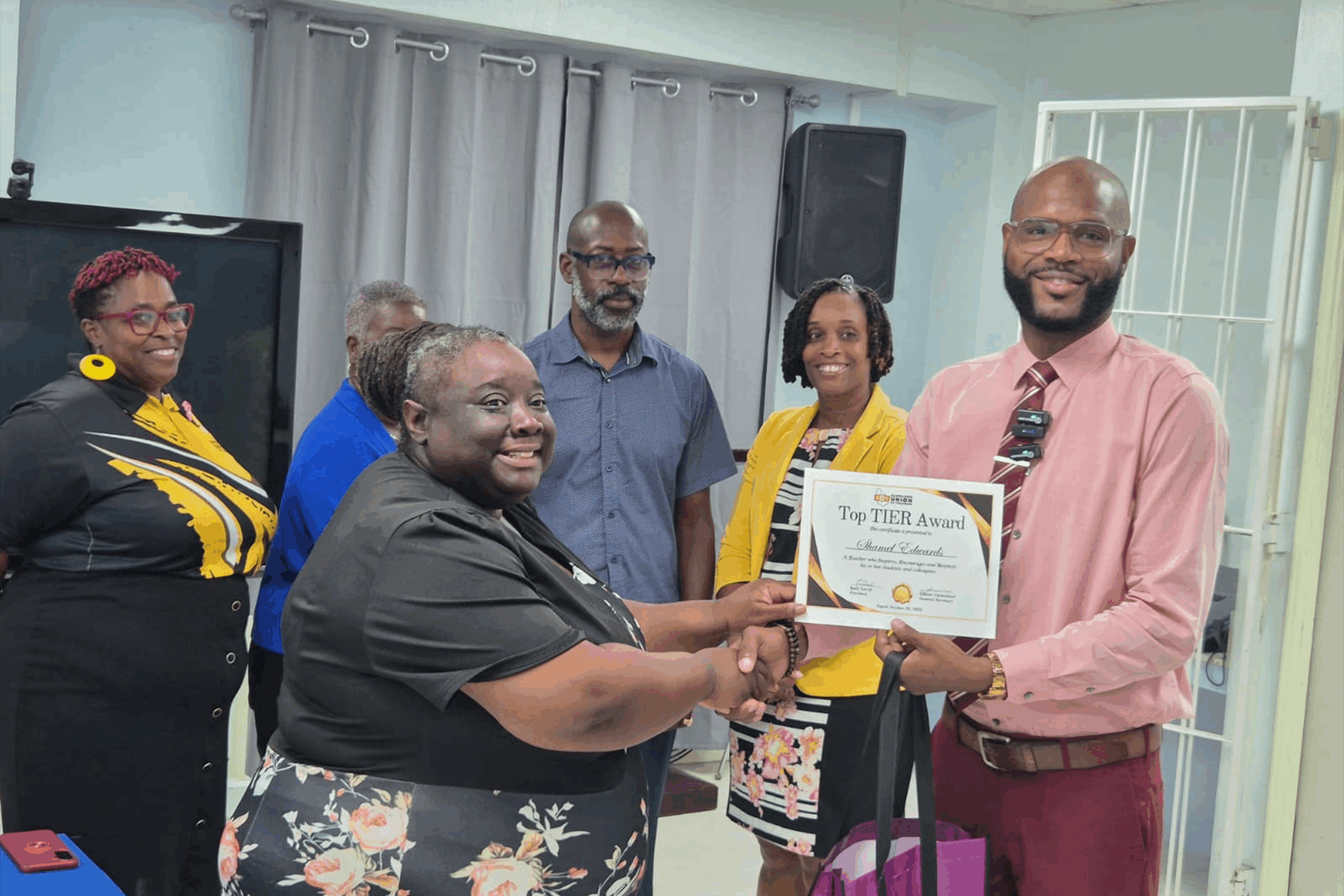
Educators honoured for inspiring excellence as Teachers Week heads to climax
This week, the Barbados Union of Teachers (BUT) is celebrating Teachers’ Week by honoring 11 remarkable educators with the esteemed Top TIER Awards. These awards recognize their unwavering dedication, impactful service, and profound influence on students’ lives. The culmination of the week-long celebration will be the President’s Reception, scheduled for Friday at 7 pm at the BUT Headquarters in Merryhill, Welches. Here, the awardees will receive both the President’s Choice and Top TIER Awards under the theme, “Teachers – The Heart of Educational Transformation.”
The 2023 recipients include Jeffrey Odle (President’s Choice – St Leonard’s Boys’), Bradley Murray (Lester Vaughan School), Ulric Batson (Hilda Skeene Primary), Hugh Griffith (Ignatius Byer Primary), Shamel Edwards (Ministry of Educational Transformation), Sonia Wickham (St Luke’s Brighton Primary), Fabian Massiah (St Leonard’s Boys’), Erika Leacock (The Lodge School), Natasha Agard (St Lucy’s Primary), Brenda Chaplin-Edwards-Drakes (Gordon Greenidge Primary), and Joanne Derrick-Harris (Derrick Smith School and Vocational Centre).
According to Cherise Rock, BUT Public Relations Officer, the Top TIER Award celebrates educators who “inspire, encourage, and respect” their students and colleagues. Rock also announced the first Top TIER teacher for 2025, emphasizing the award’s significance in recognizing excellence in education.
Shamel Edwards, a peripatetic reading teacher at the Ministry of Educational Transformation, expressed her gratitude for the recognition. “I feel so honored and blessed. I do everything with my heart, and their win is a win for me,” she said. Meanwhile, Jeffrey Odle, the President’s Choice Awardee from St Leonard’s Boys’ School, shared his joy after over 40 years in education, stating, “It’s probably the first time I’ve been recognized for anything.”
Fabian Massiah, a Physical Education teacher at St Leonard’s Boys’, also expressed his gratitude, saying, “Twenty-one years isn’t 21 days. I do it for the boys, and I believe my purpose is here.”
Teachers’ Week will continue with a Professional Development Workshop on Thursday at the Sky Mall Seminar Room, focusing on the theme “AI is Here,” before concluding with Friday’s President’s Reception, where the Top TIER teachers will be formally honored.
-
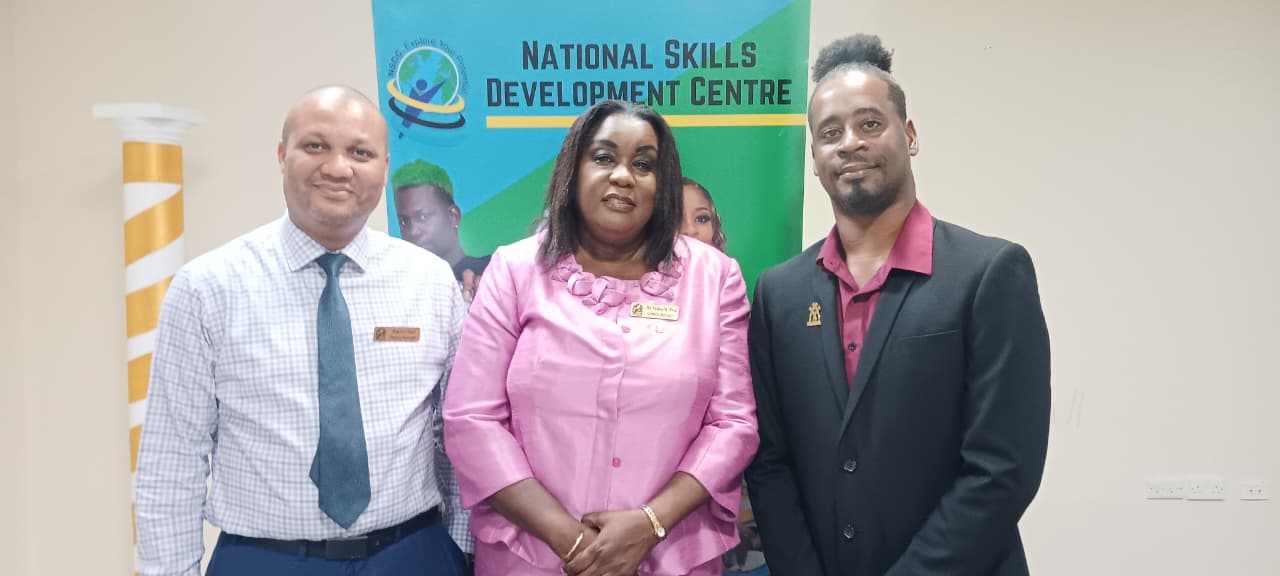
NSDC celebrates a quarter-century of skills training
The National Skills Development Centre (NSDC) is commemorating its 25th anniversary by reflecting on its transformative journey in upskilling Saint Lucians while setting the stage for an ambitious future. During a press briefing on October 28 at its Bisee headquarters, General Manager Dr. Selma St Prix unveiled plans to evolve NSDC into a collegiate institution, bridging secondary and tertiary education, particularly in technical and vocational fields. ‘We want to collegiate the NSDC,’ she stated, emphasizing the institution’s commitment to at-risk youth under its corporate social responsibility framework. The new structure will align with both technical and academic frameworks, enabling seamless progression for students from technical institutes to NSDC and onward to Sir Arthur Lewis Community College. NSDC, established at the turn of the century and officially launched in February 2021, has gained recognition locally and internationally despite financial challenges. The institution is actively fundraising to enhance its facilities and expand its programs. Recent initiatives include the launch of the Choiseul arts and crafts center and collaborations with international partners like Sandals University. NSDC offers a diverse range of courses, from culinary arts to information technology, and aims to attract more male students by introducing cutting-edge programs in mobile app development, virtual reality, gaming, and artificial intelligence. To mark its silver jubilee, NSDC hosted a church service, a games night, and will hold a fundraising show on November 8, auctioning off the skills of professional men to corporate sponsors. Proceeds will improve the accessibility of NSDC’s building. Over the past 25 years, NSDC has trained thousands in hospitality, tourism, construction, agriculture, and more, earning praise from employers for its transversal and life skills training. Dr. St Prix recently participated in a World Bank panel on improving young men’s educational outcomes, underscoring NSDC’s commitment to innovation and excellence.
-
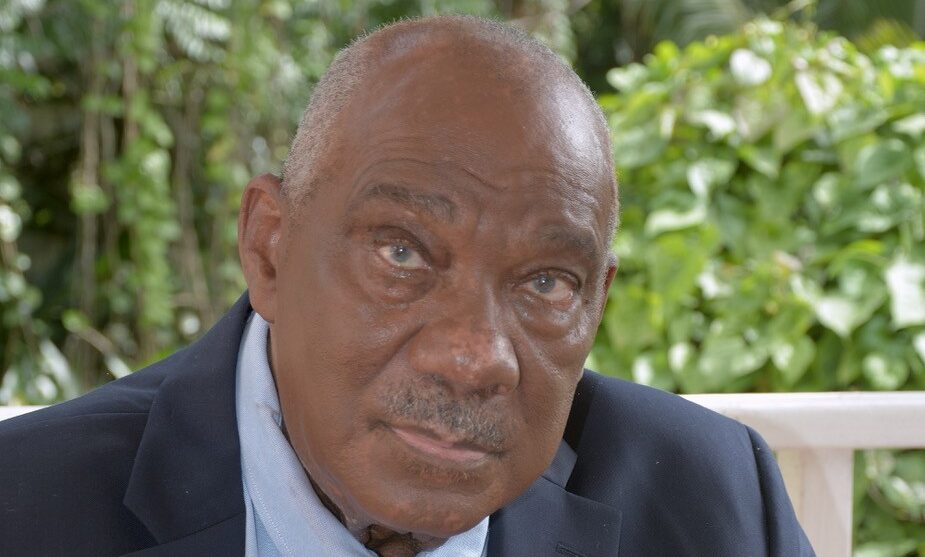
Sir Calixte George to be honoured for lifetime of service
Sir Calixte George, a distinguished agronomist, educator, and statesman from Saint Lucia, will be honored with the Doctor of Laws (LLD) (Honoris Causa) by the University of the West Indies (UWI) during its 2025 graduation ceremonies. This recognition celebrates his over six decades of public service, scientific research, and contributions to national development. Sir George, an alumnus of St. Mary’s College, earned his BSc in Agriculture from the University College of the West Indies and an MSc in Soil Science from the University of Reading, UK. His career includes pivotal roles such as Chief Research Officer and Acting Chief Agricultural Officer in Saint Lucia’s Ministry of Agriculture, and Executive Director of the Caribbean Agricultural Research and Development Institute (CARDI). He also transformed the banana industry as Managing Director of the Saint Lucia Banana Growers’ Association and played a key role in establishing the Windward Islands Banana Development and Exporting Company Limited (WIBDECO). Beyond agriculture, Sir George served in various governmental roles, including President of the Senate and Leader of Government Business, and was instrumental in liberalizing telecommunications in the OECS. Knighted as a Commander of the Order of Saint Lucia, he continues to contribute to public life through his writings and autobiography. The UWI’s recognition of Sir George and other honorees reflects its commitment to celebrating excellence and innovation across the Caribbean.
-

PHOTOS: Night Roadworks Underway in Liberta
In a bid to bolster road infrastructure and ensure smoother community access, construction crews in Liberta have been working tirelessly into the late hours, focusing on asphalt paving projects. This initiative is part of a broader effort to modernize and enhance the region’s transportation network, addressing long-standing issues of road quality and connectivity. The late-night operations aim to minimize disruptions to daily traffic while accelerating the completion timeline. Local authorities have emphasized the importance of these upgrades, highlighting their potential to improve safety, reduce travel times, and stimulate economic growth by facilitating better access to businesses and services. Residents have expressed cautious optimism, acknowledging the temporary inconvenience but appreciating the long-term benefits of the project.
-

Controverse en internationale bezorgdheid bij politie-invallen in Rio de Janeiro
A violent police operation targeting drug traffickers in Rio de Janeiro, Brazil, has resulted in the deaths of at least 119 people, nearly double the initially reported toll of 60. The victims included 115 members of the powerful criminal organization Comando Vermelho and four police officers, according to local authorities. However, the public prosecutor’s office suggested an even higher death toll of 132. The operation, involving approximately 2,500 officers, focused on the Penha Complex and Alemao Complex neighborhoods in the city’s north. It was supported by armored vehicles, helicopters, and drones, with intense gunfire exchanges reported between police and suspected gang members. Authorities stated that suspects barricaded themselves in buses and deployed explosive drones during the clashes. Victor Santos, Rio’s security chief, acknowledged that the high casualty count was “expected but not desired,” while Governor Claudio Castro labeled the situation as “narco-terrorism” and emphasized that the police were “the only real victims.” The operation has drawn widespread criticism, with residents describing it as a “massacre” and accusing police of extrajudicial executions. Mourning families gathered at sites where bodies were laid out, with one resident from Penha Complex stating, “The state came for a bloodbath, not a police operation. They came purely to kill, to take lives.” Activist Raul Santiago condemned the violence, citing evidence of executions with shots to the back of the head or back. Brazilian Justice Minister Ricardo Lewandowski revealed that President Luiz Inacio Lula da Silva was “shocked” by the death toll and surprised that the operation occurred without federal government knowledge. United Nations Secretary-General Antonio Guterres expressed concern, urging a swift and thorough investigation and emphasizing that police operations must comply with international human rights standards. Police raids in Brazil’s favelas are often deadly, with approximately 700 deaths recorded in Rio in 2024 alone. Human rights organizations have questioned the timing of such operations, which frequently precede major international events. Rio is set to host the C40 World Mayors Summit and the Earthshot Prize next week, followed by the UN Climate Summit COP30 in November. Santos denied any connection between the raid and these upcoming events.
-

Verdachte brandstichting Drietabikistraat krijgt 15 maanden celstraf
In a recent court ruling, O.R., a man who had been granted permission to stay in an abandoned property, was sentenced to 15 months of unconditional imprisonment for arson. The incident occurred on Drietabikistraat, where O.R. ignited coconut husks in the living room to repel mosquitoes. He then left on his bicycle to visit a store, claiming he later assisted a man unloading goods from a pickup truck. By the time he returned an hour later, the house was already engulfed in flames. A neighbor reported that O.R. attempted to extinguish the fire with a bucket of water, but the fire department had already been alerted. The fire spread to an adjacent property, causing significant damage, while a third home suffered water damage. The owner of the neighboring house, who was commuting to work, learned of the incident via a phone call. The prosecutor emphasized the gravity of the situation, stating, ‘You do not do this to someone who helps and shelters you,’ and initially demanded a two-year sentence. O.R.’s defense attorney, Harold Belfor, argued that the act was not intentional but rather a result of careless behavior. However, the judge dismissed this argument, asserting that O.R. should have been aware of the fire risk when lighting the coconut husks and leaving the premises unattended for an extended period. Ultimately, the court imposed a 15-month sentence, nine months less than the prosecution’s request.
-

Candlelight Vigil Held in Memory of Kahleel Simon
In a poignant display of unity and remembrance, the community of Bolans, Antigua, gathered on Wednesday evening for a candlelight vigil honoring the life of Kahleel Simon. The solemn procession, attended by dozens of mourners clad in yellow, began at Bolans Primary School and concluded at West Palm Beach, the location where Simon tragically lost his life. Participants carried candles and flowers, walking in silence to pay their respects. The evening was marked by heartfelt prayers, emotional tears, and moments of quiet reflection as family and friends shared cherished memories of Simon. The vigil culminated near the shoreline, where candles were placed in a touching tribute. The gathering stood together under the rallying cry of #JusticeForKahleel, emphasizing the community’s call for accountability and closure.
-

Puppet show promotes inclusion, understanding of disabilities
In an innovative approach to fostering understanding and inclusion, Blackman and Gollop Primary School transformed its school hall into a vibrant classroom filled with curiosity and laughter. On Wednesday, a puppet show organized by the Kiwanis Club Pride of Barbados and the Barbados Council for the Disabled helped young students grasp the realities of living with cerebral palsy. Using colorful puppets and engaging storytelling, the event aimed to educate children about disabilities in a relatable and accessible way. Roseanna Tudor, Operations Manager of the Barbados Council for the Disabled, emphasized the importance of early awareness. ‘Our puppetry programme, part of Disability Awareness Day celebrations, has been instrumental in teaching primary school and nursery children how to interact with and understand their peers with disabilities,’ she explained. Tudor also highlighted the need for teacher training to support inclusive education, stressing the necessity of sensory rooms, calm spaces, and resources for children with ADHD or autism. The puppet show featured Carl, a character with cerebral palsy, whose story illustrated the challenges of movement and coordination. Puppeteers like Joy-Ann Grazette-Corbin addressed students’ questions, showcasing how children with disabilities can thrive with proper support. Sheldene Williams, a teacher at the school, shared her experience of having a student with cerebral palsy in her class, noting how inclusion has enriched the learning environment. ‘Through Isabelle, our students are learning that everyone, regardless of ability, has something valuable to contribute,’ she said. The Barbados Council for the Disabled plans to expand the puppetry programme to more schools, building on the overwhelmingly positive response from this event.
-

Christ Church hails everyday heroes as Pride of Barbados
On Wednesday, approximately 40 residents of Christ Church, Barbados, were celebrated for their unwavering dedication to shaping their communities over several decades. The event, held at State House, also recognized three individuals from the diaspora who once resided in the parish. These honorees were part of the We Gatherin’ 2025 Honours List and received their awards from Barbados’ President Dame Sandra Mason during two distinct ceremonies. The Pride of Barbados Awards, attended by Members of Parliament for Christ Church, acknowledged the remarkable contributions of these men and women in areas such as education, mentorship, youth development, sports, and humanitarian service. Among the honorees was Patricia St Elmo Auntie Pat Linton, a community leader in Wotton Terrace for over 30 years, who has served as a Salvation Army officer, community organizer, and humanitarian. Her initiatives, ranging from supporting sanitation workers to providing free breakfasts for early commuters, have significantly enhanced her community’s social and spiritual well-being. Shelton Perkins, a distinguished educator and artistic director, was recognized for his leadership in education and mentoring youth through the arts. Eardley Selwyn Yarde was honored for his advocacy and dedication to youth and community development in Parish Land and Fairy Valley. Senior Minister Dr. William Duguid, MP for Christ Church West, commended the awardees for their compassion and consistency, emphasizing their extraordinary impact. Home Affairs Minister Wilfred Abrahams and Finance Minister Ryan Straughn also praised the honorees, highlighting the enduring influence of their selfless service and their role as inspirations for future generations.