
KINGSTON, Jamaica—Amid a surge in violent incidents targeting children, the advocacy group Hear The Children’s Cry (HTCC) has intensified its demands for stricter measures against child murderers. The organization is advocating for an automatic $1 million bounty on individuals who kill children, alongside harsher penalties for child-related crimes. Recent cases have highlighted the grim reality of children being caught in drive-by shootings, community violence, and suspected gang vendettas, prompting urgent calls for action.
分类: society
-

WATCH: Soup King re-opens at Market Place
KINGSTON, Jamaica — Soup King, a beloved local brand, made a triumphant return on Saturday at Market Place, located at 67 Constant Spring Road. To mark the occasion, the establishment offered free soup to its patrons during the grand reopening event. Adrian Wilson, co-owner of Soup King, expressed his enthusiasm for the relaunch, stating, ‘Soup King is a brand I’ve had before, but we’ve relaunched, and today is the day to do a grand sampling for all our customers, new and old. We’ve given away 500 soups and are just hanging out and vibing with our customers.’
The event drew both loyal and new customers, many of whom shared their excitement. One long-time patron reminisced, ‘This isn’t my first time at Soup King. I used to visit them when they were on Lynders Road. I’m having the seafood fiesta, which is my favorite soup. If you haven’t tried Soup King yet, you’re missing out.’ Another customer, a self-proclaimed soup enthusiast, added, ‘I’m a soup man. Sometimes I boil a pot of soup and freeze it for later. When I come here and find their chicken soup and shrimp soup, which taste amazing, I’ll be coming back repeatedly.’
The relaunch not only celebrated the return of a cherished local business but also reinforced the community’s love for Soup King’s offerings. The event was a vibrant gathering of old and new customers, all united by their appreciation for good soup and good company.
-

Divali activities brightens up Felicity Hindu School
Felicity Hindu School in Trinidad and Tobago recently hosted its annual inter-school decorating competition in preparation for Divali, the Hindu festival of lights, celebrated on October 20. The event, held on October 9, showcased the creativity and cultural pride of its 455 students, predominantly Hindu, who participated in various age-appropriate activities. From infants to Standard Five, students engaged in tasks ranging from coloring deyas (traditional oil lamps) to crafting intricate kalsa sets and Divali wreaths. The competition not only highlighted artistic talent but also reinforced cultural traditions, with some students planning to use their creations in home puja ceremonies. Principal Denesh Bhagwandeen emphasized the importance of such events in fostering cultural awareness and providing a break from academic routines. The best designs from each class will be displayed during the school’s Divali program on October 16, followed by a puja ceremony on October 17. The event underscored the beauty of Trinidad and Tobago’s multicultural heritage, offering students a platform to express their creativity while celebrating their traditions.
-

Jamaica Defence Force (JDF) coast guard, air wing, rescue missing fishermen
In a successful rescue operation, the Jamaica Defence Force (JDF) Coast Guard and JDF Air Wing located and saved two fishermen who had gone missing on Friday, October 10. The fishermen had departed from the Greenwood Fishing Village in Montego Bay to engage in fishing activities around the Montego Bay Harbour area. However, their vessel, expected to return before sundown, failed to do so, and all attempts to contact the crew proved futile.
-

Greed on the Rocks
Little Dunn’s River, a public beach in Ocho Rios, St Ann, has once again become a hotspot for illegal profiteering, with individuals charging Jamaicans for access to what is supposed to be a free facility. Despite being officially open only on Sundays, the beach was found to be fully operational on a recent Wednesday visit by the Jamaica Observer. A self-proclaimed caretaker at a side entrance demanded $300 for entry, claiming the main gate was closed. This unauthorized fee was justified by the man, who asserted that he and his associates maintain the property, purchasing supplies and cleaning facilities. However, the beach is owned and managed by the Urban Development Corporation (UDC), making such charges illegal. This issue is not new; in 2022, the beach was shut down after a fatal shooting linked to a criminal network extorting visitors. Member of Parliament Matthew Samuda condemned the illegal activities, emphasizing that Little Dunn’s River is a free public beach under UDC supervision. He revealed that security measures have been initiated, including police involvement and arrests. Samuda also highlighted the government’s commitment to providing free beach access and shared that a $170-million upgrade plan for the beach is underway. While the beach is currently open only on weekends due to resource constraints, the government aims to balance accessibility and security. Samuda stressed that unscrupulous individuals blocking access will be forcefully removed, as they are not legitimate custodians but criminals. The issue has sparked protests, with advocacy groups demanding seven-day access and asserting historical rights to the land. The government’s beach access policy, nearing completion, seeks to address these concerns while ensuring public safety and enjoyment.
-

Endangered olfactory pleasures
During a visit to Trinidad in late September, a casual shopping trip in Valpark turned into a heartfelt conversation about the changing scents of tradition and nature. The shop owners, a warm and welcoming couple, shared their excitement for the upcoming Divali celebrations, revealing their innovative plan to use deyas with wicks in water instead of the traditional coconut oil. While this modern twist is fascinating, the nostalgic aroma of coconut oil-soaked deyas remains unmatched, evoking cherished memories of past Divali celebrations spent with friends like the Sharmas, lighting deyas at dusk and savoring the homely scent that preceded Mrs. Sharma’s lavish vegetarian feast. The couple also reminisced about the once-special sight and smell of grapes and apples on Trinidad’s streets during Christmas, a seasonal treat that has now become commonplace, losing its unique charm. This conversation sparked a deeper reflection on how many natural and traditional scents seem to be fading from our lives. The scent of rain, sea spray, freshly-mown grass, and even the aroma of old book pages are becoming less noticeable, likely due to environmental degradation, urbanization, and shifting cultural habits. The impact of human activity on nature, including atmospheric heating and pollution, has altered the way life smells. Even the simple pleasure of smelling books, known as bibliosmia, may become a relic of the past as e-books dominate. The conversation also touched on the profound connection between scent, memory, and emotion, suggesting the idea of ‘scratch and sniff’ hubs to revive these endangered aromas and evoke nostalgic emotions. As one friend lamented, her sense of smell has been drastically diminished after multiple bouts of COVID-19, highlighting the fragility of this sensory experience. This reflection serves as a poignant reminder of the importance of preserving the scents that shape our memories and emotions.
-

JCF ready to lend support in mental health crisis
The Jamaica Constabulary Force (JCF), in partnership with the Ministry of Health and Wellness, is actively supporting individuals facing mental health challenges. Senior Superintendent of Police Dahlia Garrick, head of the Constabulary Communications Network (CCN), has urged the public to utilize these services, especially when encountering individuals displaying aggressive behavior or requiring urgent mental health treatment. This initiative aligns with Jamaica’s Mental Health Act, which empowers police officers to assist those exhibiting signs of mental illness. Under Section 15 of the Act, officers can take individuals in public spaces who appear mentally disordered to psychiatric facilities without a warrant, ensuring they receive timely care. Additionally, officers are required to submit a written report to the Mental Health Review Board within 30 days of such interventions. Garrick emphasized the importance of reducing stigma around mental illness, encouraging Jamaicans to support and refer individuals in need. She highlighted that police officers frequently encounter individuals with conditions like Alzheimer’s, dementia, and schizophrenia, often found wandering but non-aggressive. While most interactions are smooth, some cases have ended tragically, with 10 fatal shootings and 11 non-fatal encounters reported last year. Garrick stressed that excessive force is only used as a last resort to prevent greater harm. Health Minister Dr. Christopher Tufton acknowledged the collaboration between the JCF and community mental health officers, noting the challenges of reintegrating treated individuals into society without institutionalization. Dr. Kevin Goulbourne, Director of Mental Health and Substance Use, revealed plans to formalize protocols for police interactions with mentally ill individuals. The public is encouraged to contact the Mental Health and Suicide Prevention Helpline or the police for assistance in such cases.
-
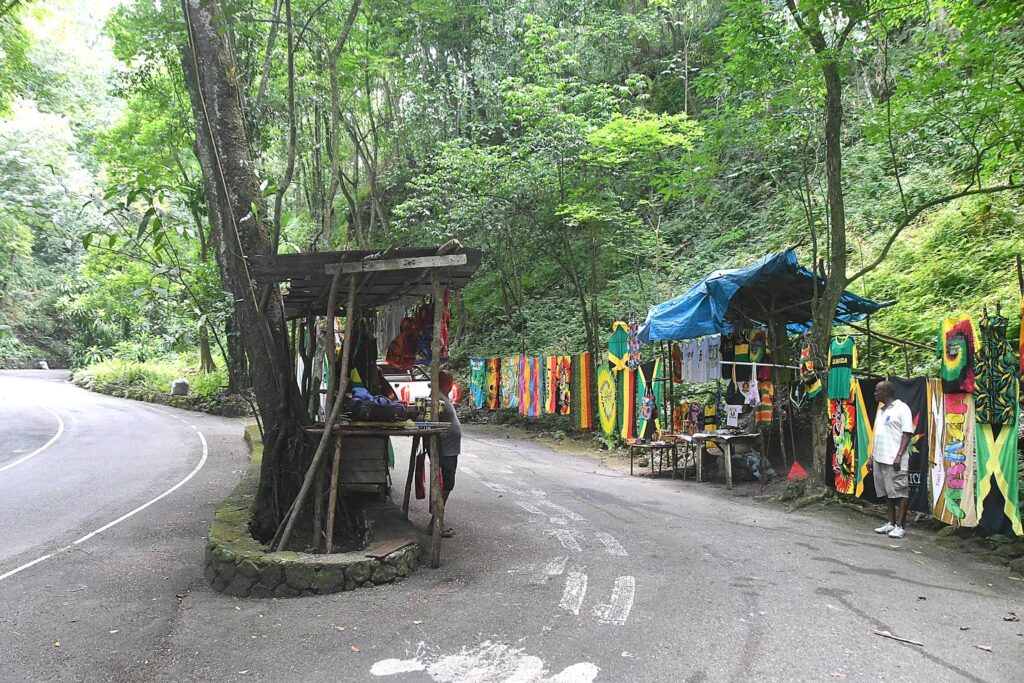
Echoes of Fern Gully
For over four decades, Fenton Coombs and Oneil Wilmot have been the heart and soul of Fern Gully in St. Ann, Jamaica, showcasing handcrafted items that reflect the island’s rich cultural heritage. Once a thriving hotspot for tourists, the scenic route has seen a decline in foot traffic due to the development of new highways and cruise ship ports. Yet, amidst the towering trees and dappled sunlight, these dedicated vendors continue to persevere, their vibrant crafts breathing life into the tranquil surroundings. Both Coombs and Wilmot remain hopeful, believing that Fern Gully still holds promise for their livelihoods. Coombs, now in his early 50s, began his journey as a craft vendor after high school, inspired by others who sold their creations to tourists. Despite the slowdown in business, he remains steadfast, refusing to abandon the place he calls home. ‘The natural scenery is better here,’ he said, emphasizing the tranquility and beauty of the area. Wilmot, who has also spent over 40 years in Fern Gully, shares Coombs’ optimism, especially with the approaching winter season and the anticipated influx of cruise ship visitors. Both vendors have raised their families through their craft sales, a testament to their resilience and dedication. Their story is a poignant reminder of the challenges faced by local artisans in a rapidly changing tourism landscape. Yet, their unwavering commitment to their craft and their community continues to inspire. Visitors like newlyweds Tina and Ali James, who stumbled upon Fern Gully by chance, praised the authenticity of the experience, highlighting the importance of supporting local vendors. ‘I prefer the authenticity of being on the island,’ said Tina, echoing a sentiment shared by many who seek to connect with the true essence of Jamaica.
-

Tancoo’s call to Trinidad and Tobago diaspora – Come back home to build up TT
In a heartfelt appeal during the opening of Divali Nagar on October 11, Trinidad and Tobago’s Finance Minister Davendranath Tancoo urged the nation’s diaspora to return home and contribute to the country’s renewal. Speaking in Chaguanas, Tancoo likened Trinidad and Tobago to ‘our Ayodhya,’ referencing the epic poem The Ramayan, where the Hindu god Shri Ram returned after 14 years of exile to become king. He emphasized that the country’s diaspora, whether born in Trinidad or of Trini ancestry, should bring their skills, resources, and love for the homeland to ignite a new era of hope, prosperity, and justice. Tancoo’s message was clear: ‘Your exile is over. Your Motherland calls for you to come home.’ He called on the diaspora to invest, teach, mentor, and share their experiences to help build a nation that shines as a beacon in the Caribbean and beyond. The minister also urged citizens to banish corruption and greed, embrace fairness, and unite as one people. The Divali Nagar, a cultural festival celebrating the Hindu festival of lights, served as the backdrop for this appeal. Surujdeo Mangaroo, president of the National Council of Indian Culture, highlighted the festival’s role as a ‘national institution of cultural and moral development.’ He stressed the importance of investing in Divali Nagar to preserve values like discipline, respect, and compassion for future generations. Mangaroo pointed out that the festival’s children’s programs act as living classrooms, instilling values that guide young citizens toward responsible and compassionate leadership. This year’s theme, ‘Loka Sangraha’ or ‘Welfare of the World,’ called on attendees to rise above self-interest and act with compassion, justice, and solidarity. The event featured traditional performances, deya lighting ceremonies, and vibrant displays of East Indian culture, underscoring the festival’s dual role as both entertainment and education.
-

Samuda pleased as beach access policy takes shape
COOPER’S PEN, Trelawny — Jamaica’s efforts to ensure equitable beach access for its citizens are gaining momentum, with Minister of Water, Environment and Climate Change Matthew Samuda expressing satisfaction with the progress. During a recent visit to the Cooper’s Pen community, Samuda inspected the implementation of a new beach access policy, which includes the construction of well-designed roads connecting thoroughfares to beaches. This initiative aims to balance tourism development with the preservation of local livelihoods and public access.
Samuda highlighted the success of the policy in fostering a harmonious environment where both local and foreign businesses thrive. He emphasized that Jamaicans are actively engaging in commerce, employment, and leisure activities at these beaches, reflecting the policy’s practical impact. The minister cited the Riu Palace Aquarelle development as an example, where discussions with the hotel’s developer ensured continued beach access for locals, complete with a thoughtfully designed entry point.
During his visit, Samuda interacted with local vendors and observed tourists enjoying the beach while supporting local craftspeople and hairdressers. He noted the absence of conflicts, attributing it to the preservation of traditional rights for fisherfolk and vendors. The minister also revealed plans for additional access points and upgrades to public beach parks, including Success Beach in St James, Priory Beach in his constituency, and Little Dunn’s River, which will remain free for public use.
Looking ahead, Samuda outlined ambitious plans to enhance access to iconic beaches such as Bob Marley Beach in Bull Bay and to develop a Negril Beach Park modeled after Montego Bay’s Harmony Beach Park. He acknowledged the challenges of restoring access to traditionally public beaches that have become restricted, emphasizing the need for practical solutions. The beach access policy, nearing completion, is expected to be presented in Parliament soon, marking a significant step toward ensuring sustainable and inclusive beach access for all Jamaicans.