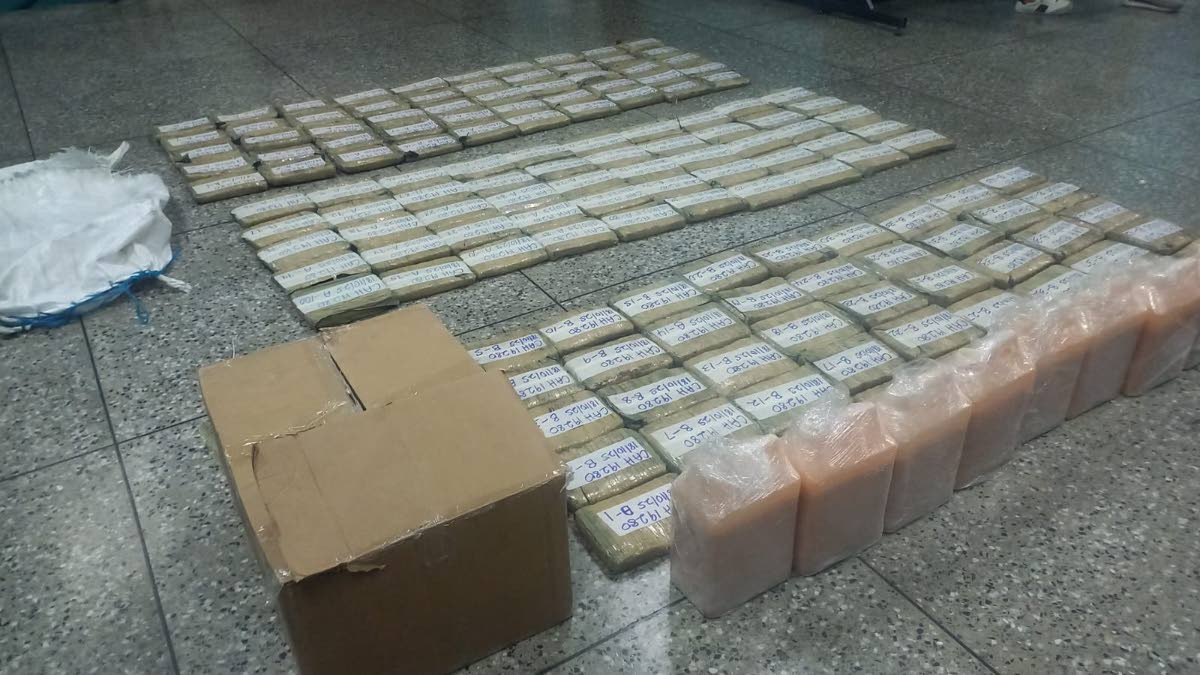
In a significant crackdown on organized crime, law enforcement officers from the National Operations Task Force and Southern Division conducted a successful raid in San Fernando on October 18, seizing approximately 75.35 kilogrammes of marijuana. The operation, carried out under Section 12 of the Emergency Powers Regulations, targeted an apartment on La Pique Street, where three Spanish-speaking individuals were present. During the search, police discovered a white crocus bag and a brown cardboard box containing 145 packages of marijuana. Additionally, eight one-gallon plastic containers with an orange-colored substance, four notebooks, and five cellphones were confiscated. All items were transported to the San Fernando Police Station for further analysis. The Trinidad and Tobago Police Service (TTPS) emphasized their commitment to aggressively dismantling drug trafficking networks and urged the public to report suspicious activities through official channels. The operation was led by senior officers including ACP Tactical Support Collis Hazel, ACP South Michael Pierre, and Senior Supt Simon, with support from various units and personnel.
分类: society
-

Miracle men and wild swimming
Richard ‘Richie’ Conybear’s life took a dramatic turn on May 26, 2023, when a boating accident during his swim near Booby Rock, Charlotteville, left him with severe injuries, including a broken pelvis and severed urinary tract. Despite the physical and emotional toll, Richie’s determination to reclaim his life and reconnect with the ocean became a beacon of resilience. His friend, John ‘Johnny’ Procope, played a pivotal role in his recovery, carrying him to the sea and reigniting his spirit. This act of compassion marked the beginning of Richie’s journey back to health and his passion for swimming. Johnny, a seasoned open-water swimmer, has since made headlines for his record-breaking feats, including a 60 km swim between Tobago and Trinidad in July 2024. On October 13, 2024, Johnny embarked on ‘Big Swim 2,’ an unprecedented attempt to circumnavigate Tobago, supported by friends like Richie and William Carr. The swim aimed to raise awareness and funds for marine conservation and swimming education initiatives. Despite the swim’s premature end due to strong currents, Johnny’s efforts have inspired global admiration and highlighted the potential for Tobago to become a hub for international open-water swimming events. However, the island must address critical safety concerns in marine activities to ensure sustainable tourism and prevent future accidents. Richie’s story and Johnny’s achievements underscore the power of human resilience and the importance of community support in overcoming adversity.
-

Westmoreland Municipal Corporation pledges full support for Negril’s cultural revival
In a significant move to bolster Negril’s entertainment industry, Mayor of Savanna-la-Mar, Councillor Danree Delancy, has pledged the full support of the Westmoreland Municipal Corporation. Speaking at the recent ‘Entertainment Venues of Negril’ press conference held at Wavz Beach Club, Delancy described the initiative as a bold and positive step forward. He emphasized the corporation’s commitment to expediting approvals for entertainment events in collaboration with local law enforcement. ‘This step only brings forth good things. We will ensure that all processes are handled swiftly,’ Delancy stated. He also highlighted the importance of stakeholder collaboration in restoring Negril’s vibrancy, a sentiment echoed by other key figures. Rudolph Seaton, Assistant Commissioner of the Jamaica Fire Brigade (JFB), reaffirmed the organization’s dedication to community safety and emergency preparedness. Seaton noted ongoing repairs to the Negril ambulance, a joint effort with the Negril Chamber of Commerce and the Tourism Enhancement Fund (TEF), to ensure reliable emergency coverage. Elaine Allen Bradley, President of the Chamber, stressed the need for unity and accountability in driving the town’s development. ‘Together, we have the energy and strength to make this work. Partnering with everyone is essential,’ she said. The press conference, themed ‘Reimagining Negril: Rootz, Culture, Irie Vibez,’ united representatives from Negril’s tourism, entertainment, business, and public sectors, signaling a collective effort to rejuvenate the town’s cultural and economic landscape.
-
Caribbean’s poor face growing climate threat – UN report
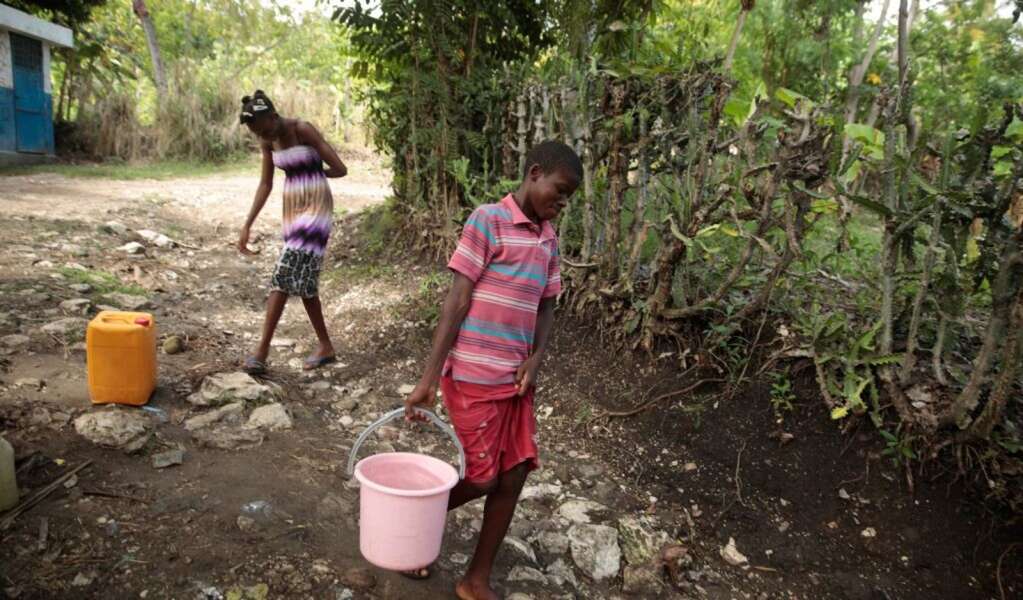
A recent report by the United Nations Development Programme (UNDP) and the Oxford Poverty and Human Development Initiative highlights the severe challenges faced by Caribbean nations, where deep inequalities and escalating climate risks are converging. The 2025 Global Multidimensional Poverty Index, titled ‘Overlapping Hardships: Poverty and Climate Hazards’, underscores the dual burden of poverty and environmental threats in Small Island Developing States (SIDS). Approximately 23.5% of the population in SIDS, or 13.6 million people, live in multidimensional poverty, which encompasses not only income but also access to education, health, housing, sanitation, and energy. While countries like Trinidad and Tobago and Cuba have achieved significant progress, with less than 1% of their populations living in poverty, Haiti remains one of the most impoverished nations globally, with over 40% of its population experiencing severe deprivations. The report also highlights regional disparities in Guyana, where poverty rates range from 0.1% to 23%. Common issues across the Caribbean include lack of clean cooking fuel, poor sanitation, inadequate housing, and unreliable electricity. Climate change exacerbates these vulnerabilities, with rising sea levels posing existential threats to low-lying coastal communities. The UNDP calls for integrated policies that address poverty reduction, climate adaptation, and sustainable development, emphasizing the need to prioritize both people and the planet to build resilient communities.
-
The moving finger writes
The phrase ‘This too shall pass’ often serves as a resigned yet hopeful reminder during overwhelming times. For many in Trinidad and Tobago (TT), the anticipation surrounding last week’s significant events has now crystallized into either unbridled joy or profound disappointment, depending on individual perspectives and circumstances. The recent budget reading, delivered last Monday, brought mixed reactions. While some sectors celebrated, the arts community was left puzzled by vague promises. The budget briefly mentioned plans to ‘expand cultural industries through a Creative Value-Chain Fund,’ supporting film, fashion, design, and music, alongside enhanced intellectual property (IP) protection and duty concessions. However, the lack of detail has left artists and creatives anxiously awaiting further clarification from the Ministry of Community Development and the Arts. The grouping of arts practice and people development within one ministry is a positive step, acknowledging their symbiotic relationship. Yet, concerns arise as tourism and trade increasingly overlap with culture. Proposals for a year-round Carnival city, driven by the Ministry of Trade and Tourism, risk prioritizing economic gains over cultural authenticity, potentially undermining the essence of TT’s vibrant traditions. The arts fraternity is currently in despair, facing what many describe as the most critical juncture in decades. Critics highlight a significant political knowledge gap regarding the sector’s true potential, both locally and internationally. Calls for a government summit aim to bridge this divide and foster a deeper understanding of the arts’ transformative power. Globally, the creative sector is a powerhouse, employing 50 million people—half of whom are women—and ranking as the world’s second-largest industry, surpassing even the automotive sector. In the UK, the ‘orange economy’ contributes £125 billion, while in the US, it adds over $1.1 trillion to the economy. Despite these staggering figures, TT’s budget failed to address key areas like literature and publishing, leaving the VAT on books unchanged—a move seen as a penalty on reading. The literary sector has been a success story over the past 15 years, with initiatives like the Bocas Lit Fest school projects enhancing cognitive skills, critical thinking, and communication among students. Advocates emphasize that the arts not only drive economic growth but also foster cultural evolution, social change, and interdisciplinary collaboration. Meanwhile, in the Middle East, Palestinians and Israelis cautiously celebrate a fragile ceasefire. The release of hostages and detainees has brought relief, but the question of ‘what next?’ looms large. The future hinges on the unpredictable actions of global leaders, leaving many to wonder if lasting peace and stability can be achieved.
-

Ramps Logistics hosts Divali in Cunupia 2025
Ramps Logistics recently hosted a spectacular Divali celebration in Cunupia, marking a night of cultural reverence, unity, and innovation. The event, attended by prominent figures including Minister of Public Administration and Artificial Intelligence Dominic Smith and Minister of Land and Legal Affairs Saddam Hosein, showcased a harmonious blend of tradition and modernity. The evening commenced with the ceremonial lighting of the first diya by the Rampersad family, symbolizing the triumph of light over darkness and setting a reflective tone for the festivities. The stage then came alive with vibrant performances by Devashish Ramdath and Group, Kaveesh Maharaj and Band, Joshua Regrello on steelpan, and Viraj Ramsundar on tabla, culminating in an electrifying set by DJ Ari, Agent SB, and a tassa group that energized the crowd. A highlight of the evening was the illuminated display by EVolve Mobility, which underscored the coexistence of progress and heritage. Shaun Rampersad, CEO of Ramps Logistics, emphasized the significance of Divali as a reminder of the light within people, the connections they build, and the progress they create together. The event stood as a testament to unity, cultural pride, and the shared hope that comes from spreading light.
-

Box for a bed
For months, a 63-year-old man in downtown Kingston called a cardboard box his home. Shielded only by a discarded plastic mattress wrap, he endured the elements, with Kingston Harbour serving as his makeshift bathroom. Dependent on sporadic meals from charitable organizations, he lived in absolute poverty, uncertain of his next meal. His life took a dramatic turn in 2003 when he found refuge at The Lord’s Place, a sanctuary run by the Missionaries of the Poor. Today, he has a stable job in landscaping, a roof over his head, and the ability to assist others experiencing homelessness.
-

Men, Stop Proposing: Let Women Do It
For centuries, the act of proposing marriage has been a male-dominated ritual, deeply rooted in patriarchal norms. Men have been conditioned to view it as both a duty and a declaration of love, a performative gesture that reinforces traditional masculinity. However, this practice is not as romantic as it seems; it is a relic of a bygone era when marriage was more about ownership and transaction than affection. Historically, proposals were contracts between families, with the man seeking the father’s approval rather than the woman’s consent. The ring symbolized not commitment but a transaction—a compensation for the transfer of guardianship. Love entered the equation only after commerce. By the 20th century, capitalism and De Beers’ diamond campaigns transformed this obligation into a cultural expectation, leaving men to shoulder the economic and emotional burden of proving their devotion while women remained gatekeepers. In a century obsessed with equality, this tradition persists, repackaged in hashtags and engagement reels. The imbalance remains: men kneel, women judge; men plan, women approve. But a woman who proposes doesn’t invert power—she equalizes it. She signals trust and mutual agency, choosing to lead beside her partner rather than waiting to be chosen. True equality isn’t about trading dominance; it’s about erasing outdated scripts that assign one partner perpetual initiative and the other eternal response. Men must question why they continue to bear the symbolic burden of pursuit in a world where leadership should be shared. Vulnerability should not be romanticized only when it’s male. If partnership is truly modern, the proposal must evolve. Imagine a world where women initiate commitment—it would be a cultural shock, but one that fosters empathy and balance. Men would learn the dignity of being chosen, and women would confront the courage required to risk rejection. The act of proposing is not trivial; it’s the thesis statement of a relationship, defining who holds initiative and who controls the tempo of commitment. To modernize love, we must modernize its symbolism. Men, retire the kneeling posture. The floor is not your place. If she believes in partnership, she’ll join you—not because she’s beneath you, but because she finally understands what it means to stand with you. The man who waits to be chosen isn’t weak; he’s wise enough to know that love, when equal, is not chased—it walks toward him.
-

VIDEO: Protests Call for Justice in Police Shooting of Kahleel Simon
Kelvin Simon, Member of Parliament for St. Mary’s South, has intensified his call for justice following the tragic police shooting of Kahleel Simon. Describing the incident as a profound loss, Simon emphasized the need for accountability and transparency in the ongoing investigation. Speaking at a community protest, he rallied residents and supporters, urging law enforcement to uphold their duty to serve and protect. “Kahleel’s life was taken far too soon,” Simon stated, adding that his family and community deserve answers and justice. The protest highlighted the community’s determination to ensure the matter is not forgotten. Simon stressed that the case is not just about one individual but about the broader principles of safety, trust, and the value of every life. He vowed to continue demanding answers, asserting that unity strengthens their call for justice. The incident has reignited discussions about public trust in law enforcement and the importance of transparency to prevent fear and injustice from shaping the community’s future. The investigation into the fatal shooting remains active, with no further details disclosed at this time.
-

Hope for young boy’s lifesaving surgery from energy firm’s gift
At just 11 years old, Jiovanni Osbourne, a First Form student at Alleyne School in Barbados, has demonstrated remarkable bravery in the face of a rare and life-threatening condition. Diagnosed with beta thalassaemia major at the age of four, Jiovanni has endured years of medical treatments, including regular blood transfusions, to manage the severe genetic blood disorder that prevents his body from producing enough healthy red blood cells. However, the only long-term solution to his condition is a bone marrow transplant, a procedure that comes with significant medical and financial challenges.