分类: society

  • Transport Department Graduates Second Cohort of Officers

    Transport Department Graduates Second Cohort of Officers

    In a significant stride toward enhanced road safety, Belize’s Department of Transport has officially graduated its second cohort of transport officers following an intensive three-week training program. The graduation ceremony, held on November 28, 2025, marks a pivotal development in the nation’s traffic enforcement capabilities and inter-agency collaboration.

    The comprehensive training regimen focused on sharpening enforcement techniques, reinforcing professional conduct, and instilling disciplined operational protocols. Officers from across the country participated in the program, which emphasized behavioral transformation and ethical enforcement practices as core components of their professional development.

    Transport Minister Dr. Louis Zabaneh addressed the graduates, highlighting the importance of leading by example. “We must embody the behavioral changes we expect from the public,” Zabaneh stated. “This training empowers you to emerge as transformed professionals, capable of executing your duties with enhanced competence and integrity.”

    The ceremony underscored the strengthened partnership between the Transport Department and Belize Police Department, representing a unified approach to traffic management. Home Affairs Minister Oscar Mira emphasized the critical role of transport officers in public safety, noting that “every traffic stop and inspection carries profound implications for order and safety on our roads.”

    Police Commissioner Dr. Richard Rosado detailed the training’s deliberate structure, designed to enhance operational judgment and decision-making capabilities. “The program was meticulously crafted to reinforce your authority through clarity, competence, and discipline,” Rosado explained to the graduates.

    This initiative reflects the Ministry of Transport’s ongoing commitment to establishing a safer, more disciplined transportation infrastructure through professionalized enforcement personnel. The graduation ceremony signifies Belize’s multi-sectoral approach to creating more secure roadways and building public confidence in traffic management institutions.


  • Shirley Arnold’s Family Seeks Justice After Prison Release Ends in Tragedy

    Shirley Arnold’s Family Seeks Justice After Prison Release Ends in Tragedy

    A tragic case from Belize has ignited serious concerns regarding prison healthcare protocols and judicial compassion for critically ill offenders. Shirley Arnold, a 47-year-old woman battling end-stage kidney disease and diabetes, died on November 25th, merely hours after her release from Belize Central Prison. Her passing has triggered a contentious dispute between her grieving family and prison authorities, now poised for a legal confrontation.

    Arnold’s encounter with the judicial system began in June, when she was apprehended for operating an unlicensed vehicle. Her explanation—that she was en route to a vital dialysis appointment—initially garnered public sympathy and resulted in a fine rather than incarceration. However, her subsequent inability to furnish court-ordered medical documentation led to a four-month prison sentence for accumulated fines.

    Her family contends that imprisoning an individual with such fragile health was fundamentally unjust. Joshue Bermudez, Arnold’s brother, vehemently asserts that the prison facility was ill-equipped to manage her complex medical needs. He alleges her scheduled dialysis was inconsistently administered and claims her official ‘release’ was merely a transfer to Karl Heusner Memorial Hospital only after her condition became irreversibly critical, with prison guards still present at her bedside.

    Contrasting this narrative, Virgilio Murillo, CEO of the Kolbe Foundation which operates the prison, defends the institution’s actions. Murillo maintains that Arnold received consistent dialysis treatment two to three times weekly, all necessary anti-diabetic medications, and immediate hospital transfers during health crises. He attributes her ultimate release to a compassionate decision based on her observable decline, despite her previously being denied parole in September due to assessments deeming her unfit for societal reintegration.

    The core of the dispute now rests on whether the prison provided adequate medical care as mandated for incarcerated individuals. Murillo has stated readiness to litigate the matter, challenging the family’s allegations of negligence. This case has sparked broader public debate in Belize about the ethics of imprisoning severely ill individuals for minor, non-violent offenses and the adequacy of healthcare provisions within correctional facilities.

  • Cyberbullying Charges Dropped Against Belize City Mom

    Cyberbullying Charges Dropped Against Belize City Mom

    In a significant judicial development, a Belize City mother has been fully acquitted of cyberbullying allegations following a protracted legal battle that captured national attention. Nichole Gilda McDonald, a 37-year-old matron and mother of five, faced charges under the Cyber Crime Act earlier this year after former Police Commissioner Chester Williams filed an official complaint.

    The case originated in March 2025 when McDonald was accused of utilizing computer systems to disseminate allegedly false statements intended to damage the Commissioner’s reputation. Following her arrest, she endured four days in detention under conditions she described as harsh, including denial of medication, food, and water. Despite appearing in court without legal representation initially, McDonald maintained her innocence throughout seventeen court appearances.

    McDonald explained that her online comments referenced statements made by her political party leader regarding Belize’s status as a narco state, asserting she never intended to cause harm. The controversy emerged amid discussions concerning the tragic killing of Geion Gomez, a disabled youth McDonald had been helping to walk through her work with the Youth Cadet Corps and Department of Youth Services.

    Following her acquittal, McDonald visited media offices to detail her experience, emphasizing the profound personal and financial consequences of the case. She reported losing her employment, depleting her savings, and having to postpone necessary surgical treatment due to the legal proceedings. McDonald now plans to pursue justice for what she describes as violations of her constitutional rights throughout the process.

  • Chester: No Sympathy for Cyber Bullies

    Chester: No Sympathy for Cyber Bullies

    Chester Williams, Chief Executive Officer of a transport corporation, has articulated an unequivocal condemnation of online harassment in the wake of a recent legal proceeding. Although not summoned to provide testimony in the case concluded on November 28, 2025, Williams voiced his resolute position against digital abuse.

    The executive emphasized that the utility of social media as an information-sharing tool does not excuse its weaponization for harassment. “I maintain zero sympathy for individuals who exploit social media platforms to bully others,” Williams stated. He challenged the notion that physical separation through screens and keyboards legitimizes abusive behavior, asserting that technological interface must not erode personal accountability.

    Williams highlighted the severe psychological and reputational consequences faced by victims of cyberbullying, noting that false allegations can inflict substantial damage regardless of the target’s resilience. While identifying himself as psychologically robust, the CEO clarified that his personal toughness doesn’t negate the obligation to confront defamatory content. “I bear a responsibility to ensure statements about me reflect reality and to demand accountability from those spreading falsehoods that could undermine my reputation and character,” Williams explained.

    His comments emerge amid growing societal attention to cyberbullying’s impacts, with the statement generating significant public engagement as indicated by its trending status and substantial reader interaction metrics.

  • High Court Denies Bail Again in Guinea Grass Murder Case

    High Court Denies Bail Again in Guinea Grass Murder Case

    In a brief seven-minute hearing at the High Court, 91-year-old Senior Counsel Simeon Sampson faced another judicial setback as his bail application for murder suspect Nelson De Jesus Segovia was denied for the third time. The defendant stands accused of fatally shooting his neighbor, Jose Miguel Cedillos, in the Guinea Grass community in April 2022.

    Presiding Justice Candace Nanton delivered the ruling, emphasizing that the defense had failed to present sufficient justification for bail consideration, particularly given the gravity of the capital offense. While the Director of Public Prosecutions’ office did not formally oppose bail, prosecutors expressed substantial concerns regarding potential relocation issues, noting the accused previously resided directly opposite the victim’s family members.

    The court additionally questioned investigative procedures, probing why authorities required nearly two years to apprehend Segovia following the alleged homicide. Police eventually captured the suspect in Belmopan in November 2023.

    With the defendant having already spent over two years in pretrial detention, Attorney Sampson indicated he would counsel his client to await approximately two additional years before pursuing further bail applications. No trial date has been established for the case, which originated from a fatal altercation that resulted in Cedillos sustaining multiple gunshot wounds in his residential compound.

  • Wannie’s Emotional Homecoming After Brutal Attack

    Wannie’s Emotional Homecoming After Brutal Attack

    In a heartwarming conclusion to a story that captured a nation’s attention, Wannie—Belize’s most celebrated horse—has triumphantly returned home following an eight-month rehabilitation from a vicious assault. The gentle giant’s ordeal began near Faber’s Road Extension, where surveillance footage captured a group of youths brutally attacking the defenseless animal, sparking nationwide outrage and mobilizing animal welfare advocates across the country.

    The narrative evolved from exposing humanity’s darkest impulses to demonstrating extraordinary compassion as multiple organizations united for Wannie’s recovery. Government agencies, veterinary centers, and agricultural producers coordinated efforts to provide comprehensive medical treatment and rehabilitation at Reimer’s property in Spanish Lookout.

    According to Ronaldo Blanco, Marketing Manager at Reimer’s, the recovery process required meticulous care and trauma rehabilitation. “Initially, we observed significant trauma responses typical of assault victims,” Blanco explained. “Our primary challenge involved rebuilding his trust in humans through gradual, step-by-step interaction protocols.”

    Medical teams implemented rigorous wound management strategies, initially concerned about potential New World Screwworm infection. After testing negative, Wannie’s treatment regimen focused on intensive wound care and nutritional support. His eventual responsiveness to treatment—including visible reactions to wound touch—marked critical milestones in his healing journey.

    Now described as “a walking miracle” by caregivers, Wannie exhibits transformed behavior, eagerly anticipating feeding routines and demonstrating renewed trust in human caregivers.

    The homecoming ceremony included Reimer’s donation of ongoing supplies—hay, vitamins, and medications—to young owner Devonte Broaster, who has faced scrutiny regarding his caretaking capabilities. Emotional during the reunion, Broaster expressed profound gratitude to supporters while vowing enhanced vigilance: “I will keep him in my eyesight and watch him good.”

    Reimer’s has committed to providing ongoing education and support to Broaster, with Blanco emphasizing empowerment over exclusion: “We believe providing resources and training to animal lovers proves more effective long-term than denying ownership opportunities.”

    The story culminates with Wannie settling into a new stable donated by Spanish Lookout companies—a tangible symbol of community solidarity that transforms this recovery into what many are calling an “early Christmas miracle.”

  • Protest Nurses raise their voices for their demands: “We are not asking for anything unreasonable.”

    Protest Nurses raise their voices for their demands: “We are not asking for anything unreasonable.”

    Nurses across the Dominican Republic have intensified their campaign for better working conditions and fair compensation, staging organized demonstrations outside key healthcare facilities. Members of the National Union of Dominican Nursing Services (UNASED) gathered in front of the Maternidad Nuestra Señora de la Altagracia hospital, holding banners and voicing frustrations over what they describe as years of governmental neglect regarding their professional demands.

    The protests highlight a significant gap between political promises and tangible outcomes. Union representatives specifically referenced commitments made by Dr. Mario Lama, executive director of the National Health Service (SNS), who had pledged to reclassify 1,000 nursing positions from assistant to bachelor’s degree level within the year. However, participants revealed that only approximately 200 of these reclassifications have been implemented to date—a mere 25% of the promised figure distributed across three separate installments.

    This incomplete fulfillment has left many university-educated nurses in financial distress. Protesters shared accounts of having pursued their education under considerable hardship, only to remain classified and compensated as assistants rather than licensed professionals. They emphasized that current salary structures fail to cover basic living expenses, particularly the family basket of goods which exceeds 47,000 Dominican pesos.

    Beyond salary increases, the nurses’ comprehensive list of demands includes the streamlining of pension processes, substantial improvements to hospital working conditions and staff safety protocols, and the construction of a dedicated clubhouse for nursing personnel. Many of these issues, they noted, date back to the mid-1990s.

    Union leadership has issued a clear warning that their demonstrations will continue to escalate in both frequency and intensity until government authorities engage in meaningful dialogue and implement concrete solutions. The movement reflects broader concerns about healthcare system sustainability and the valuation of essential medical workers in the country.

  • Beyond the Hairbrush: The Story Behind Abraham’s Craft

    Beyond the Hairbrush: The Story Behind Abraham’s Craft

    In an inspiring narrative of entrepreneurial spirit and cultural adaptation, Lebanese immigrant Abraham Safa has profoundly shaped Belize’s beauty landscape over three decades. Arriving in 1991 during the Central American nation’s beauty industry infancy, Safa defied gender norms in a female-dominated field to establish Abraham Hairmoda, now an institution renowned for technical excellence.

    Safa’s journey began amidst Lebanon’s civil war, which disrupted his formal education. His grandfather initially suggested barbering, but the young Safa discovered his passion lay in unisex and women’s hairstyling. This craft became both refuge and vocation during turbulent times, with his parents insisting he pursue a trade despite educational interruptions.

    The stylist’s Belizean venture nearly didn’t happen—after initially arriving, he briefly relocated to Canada before recognizing Belize’s unique opportunity for salon ownership. Returning permanently, he opened his flagship salon in 1995, betting on his talent in a market then devoid of male hairdressers.

    Three pillars define Safa’s enduring success: technical mastery particularly in blowouts that became legendary, comprehensive staff training, and genuine client relationships. Longtime employee Brenda Ramirez attests to his mentorship, having worked alongside him for fourteen years while mastering techniques that drew clients from across the country. Junior stylist Jasmine Guerra acknowledges the vast difference between cosmetic school training and the professional standards maintained at the salon.

    Beyond business, Safa’s story embodies immigrant success through cultural integration. His weekly client Sabreena Daly, a television journalist, highlights how his services provide both professional preparation and personal rejuvenation. The salon’s atmosphere combines technical precision with emotional support, creating what regular clients describe as a confidence-restoring experience.

    Now in 2025, Safa’s legacy extends beyond hairstyling to community building—training local talent, maintaining multi-generational client relationships, and proving that passion coupled with perseverance transcends cultural boundaries. His story reflects how individual dedication can transform entire industries while creating spaces where skill and human connection flourish equally.

  • Case Against Mother, Filed by Chester Williams, Thrown Out in Court

    Case Against Mother, Filed by Chester Williams, Thrown Out in Court

    In a significant legal development, the judicial system has dismissed charges against Nichole McDonald, a mother of five who faced prosecution under Belize’s Cyber Crime Act following allegations made by former Police Commissioner Chester Williams. The case was formally struck down due to lack of prosecution after Williams repeatedly failed to appear in court proceedings.

    McDonald endured seventeen court appearances over several months while maintaining her innocence against accusations of publishing defamatory content about the former commissioner online. The single mother detailed substantial personal and financial devastation resulting from the prolonged legal battle, stating she exhausted her life savings and suffered professional consequences throughout the ordeal.

    During initial detention following the allegations, McDonald claims she experienced severe mistreatment including denial of essential medication, food, and water for five consecutive days. Her legal troubles originated from a comment made on a Facebook post by opposition politician Shyne Barrow discussing the killing of a local youth she had previously cared for. McDonald maintains she was selectively targeted among numerous commentators despite exercising her constitutional right to free expression.

    The dismissed case concludes a sixteen-year public service career that began in 2008 as a school warden, a position she embraced following personal experiences with community violence. McDonald now seeks legal recourse for what she describes as constitutional rights violations and improper dismissal without severance benefits.

    When contacted for commentary, former Commissioner Williams expressed no sympathy for individuals he believes utilize social media platforms for bullying purposes, suggesting McDonald’s experience should serve as a deterrent to online misconduct.

  • High Turnout as Southern, Eastern Emergency Workers Cast Ballots

    High Turnout as Southern, Eastern Emergency Workers Cast Ballots

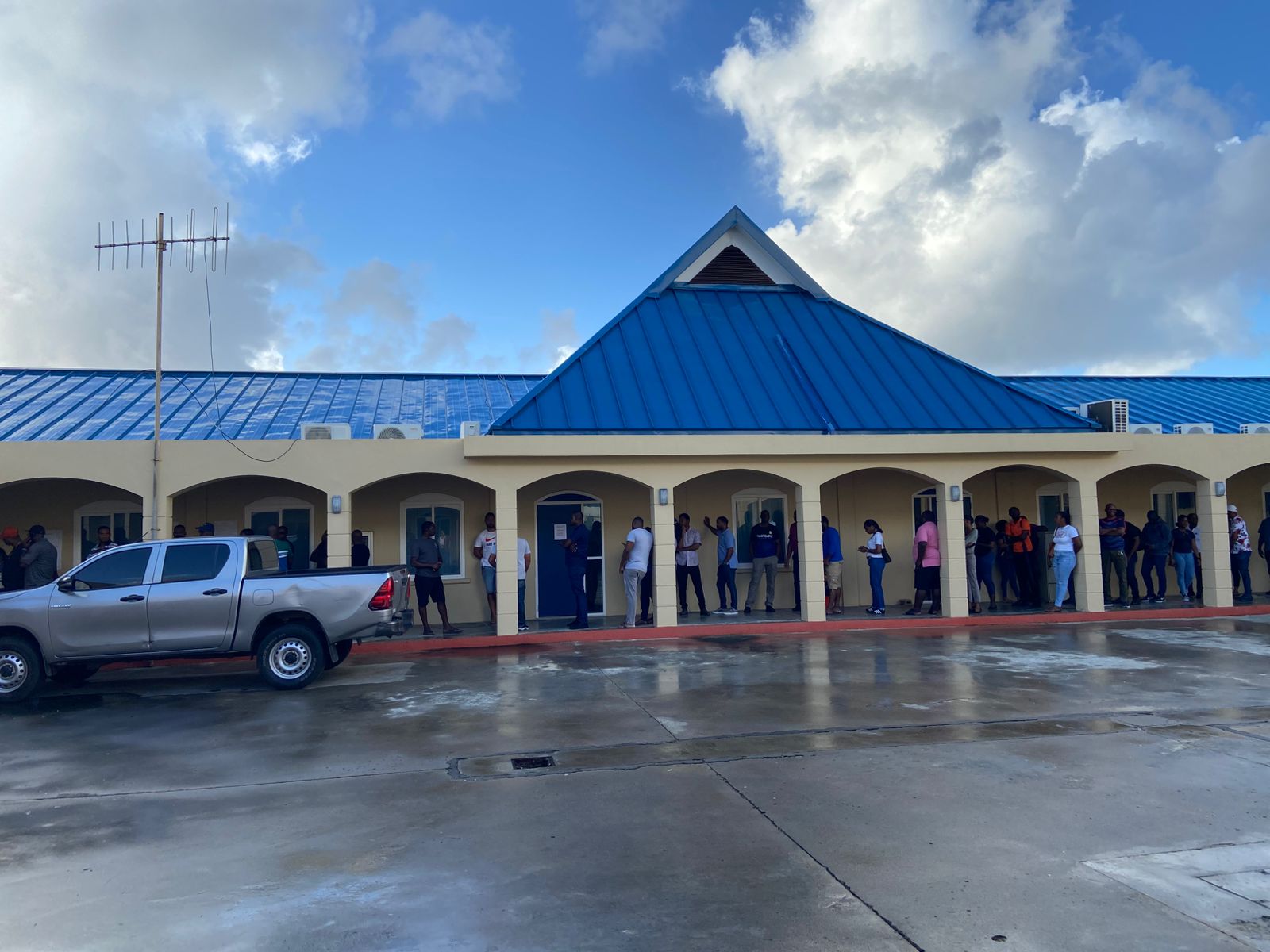
    Vieux Fort, Saint Lucia – A significant demonstration of civic participation unfolded Friday morning as special service personnel across southern Saint Lucia participated in early voting ahead of Monday’s general elections. Beginning promptly at 6 a.m., the Vieux Fort Police Divisional Headquarters operated two dedicated polling stations to accommodate police officers, port authorities, firefighters, and other first-response professionals.

    Despite the early hour, electoral officials reported steadily increasing traffic throughout the morning, with lines growing substantially by mid-morning. One anonymous police officer expressed surprise at the robust turnout, noting to St. Lucia Times: “The numbers are remarkably high based on my observations. Considering the early hour, we already have substantial participation, and I anticipate these numbers will continue to climb throughout the day.”

    The voting process, while orderly, presented some logistical challenges. The same officer revealed a nearly three-hour wait time, having entered the polling station shortly after 6 a.m. and exiting at 8:53 a.m. This extended processing time highlighted the constraints of operating only two polling stations for multiple constituencies, including Vieux Fort South, Vieux Fort North, Micoud South, Micoud North, Dennery South, and Laborie.

    Electoral staff addressed these concerns, explaining that Monday’s general election would feature significantly expanded polling capabilities. An election clerk stationed at the divisional headquarters clarified: “For the general elections, we will establish considerably more polling stations. While we’re experiencing some backup in lines today, Monday’s infrastructure will ensure smoother movement and substantially reduced waiting times, even with high voter turnout.”

    Personnel scheduled for duty on election day cast their ballots at the adjacent Vieux Fort Primary School, part of coordinated efforts to ensure all special service workers can exercise their democratic rights while maintaining essential services. The broader electorate is scheduled to participate in the electoral process on Monday, December 1, when the nation will select its next government.