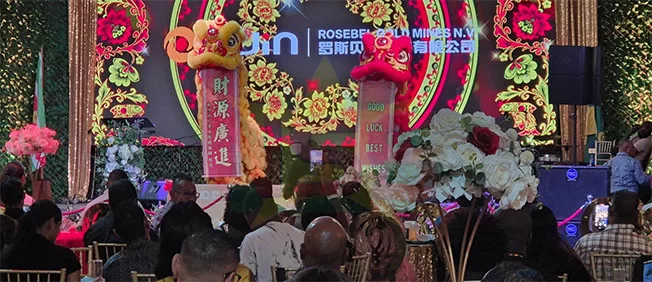
Zijin Rosebel Goldmines Suriname celebrated the dedication of its workforce on Saturday by honoring 175 employees who have served the company for periods ranging from five to thirty years. General Manager Qianjie Wang, in his address, humorously remarked, ‘Thirty years—that’s even longer than some of our machines have been operational.’ He praised the employees as the ‘true heroes’ of the company, emphasizing that their commitment is invaluable. A second group of honorees is set to be recognized in December. The event began with a moment of silence for a colleague who tragically lost his life in a recent collision between two trucks. Wang underscored the profound impact of the loss and reiterated that workplace safety remains the company’s top priority. Country Director Stephanie van Lobbrecht explained that a total of 437 employees will be honored this year, with the group divided to ensure a more personalized and meaningful ceremony. ‘In previous years, the event was too lengthy, and this approach allows us to focus more on each individual,’ she noted. The next ceremony is scheduled for December 6. Among the 437 honorees, 327 have served for five years, one for 25 years, and one for 30 years. Each recipient received a certificate, an award, a monetary bonus based on their years of service, and an evening out.
分类: society
-
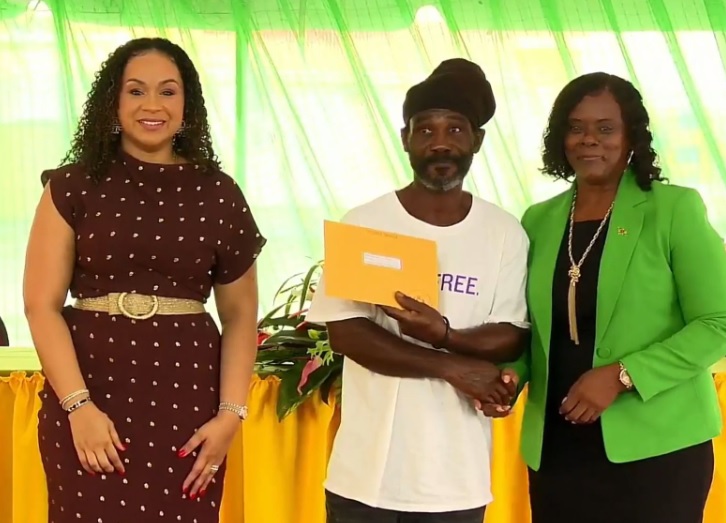
69 families receive new homes under Dominica’s Housing Recovery Project; Roberts defends programme
In a significant stride toward climate resilience, Dominica has handed over keys to 69 families for their newly constructed homes during a ceremony at the Windsor Park Sports Stadium. This initiative is part of the Housing Recovery Project, which has so far built 382 homes across the island. Minister for Housing and Urban Development, Melissa Poponne-Skerrit, emphasized the durability of these homes, stating, “Every home we build now is concrete, with a concrete roof. The hurricanes can come, they can huff and puff, but they will not blow your house down.” She highlighted the transformative impact of the project, sharing testimonials from beneficiaries, including an elderly woman who expressed how her new home has added comfort and dignity to her life. The Housing Recovery Project is unique in the Caribbean for its homeowner-driven approach, where beneficiaries actively participated in the construction process, hiring local contractors and purchasing materials. Poponne-Skerrit acknowledged the challenges faced, such as rising global costs and difficult terrain, but underscored the government’s commitment to ensuring every dollar circulated within local communities. Acting Prime Minister Gretta Roberts defended the investment in resilient housing, citing the increasing intensity of hurricanes due to climate change. She stressed that the project aims to protect vulnerable families, reduce the need for emergency shelters, and save them from the trauma of rebuilding after disasters. Roberts affirmed that resilient housing is not just a necessity but also an investment in Dominica’s people, economy, and future.
-

New Camera Network Will Not Only Police Crime But Littering and Traffic Violations Too
Prime Minister Gaston Browne has announced the deployment of a comprehensive national surveillance system in Antigua and Barbuda, featuring approximately 200 strategically placed cameras. This initiative aims to address a range of issues, including crime, littering, and traffic violations, marking one of the most significant upgrades in the nation’s monitoring and enforcement capabilities. During an appearance on the Browne and Browne Show, Browne emphasized that the system will enable law enforcement to monitor illegal activities in real time, contributing to both national security and environmental cleanliness. The government has already invested over a million dollars in the project, underscoring its commitment to the initiative. Browne highlighted the challenges of policing illegal dumping, noting that many violations go unreported, leaving enforcement officers without evidence. The new cameras are designed to address this issue by capturing violations directly. Additionally, the system will be linked to enforcement personnel, allowing for immediate identification and action against offenders. The Prime Minister stressed the government’s determination to maintain clean public spaces, stating, ‘Antigua and Barbuda must be a clean and beautiful country.’ The camera network is part of a broader effort that includes clearing derelict buildings, removing abandoned vehicles, enforcing beach vending rules, and increasing penalties for environmental violations. The first phase of the system is expected to become operational following an on-site assessment by the technical team.
-

ONS VOLKSLIED opnieuw bezongen
Suriname, a nation celebrated for its cultural diversity, stands out for its unique embrace of religious freedom and spiritual unity. The country’s ability to bring together various religious denominations on a single platform for prayer and meditation is a testament to its harmonious coexistence. Surinamese people collectively honor each other’s religious holidays, fostering mutual respect and understanding. At the heart of this unity lies a profound spiritual connection to the One Supreme Being, the invisible, immaterial, and boundless Father of all souls. This divine presence, which transcends injustice and inequality, guides individuals toward acceptance, love, and moral clarity, enabling them to act with integrity and compassion. The spiritual elevation offered by this connection encourages the best in humanity, emphasizing virtues like goodness and righteousness as the foundation for progress. Suriname’s history, shaped by the convergence of diverse cultures and societal backgrounds, reflects a collective journey of spiritual growth. The philosophy of karma provides a broader perspective, suggesting that souls have sought each other out to rebuild what was once broken. This process requires recognizing one another as kindred spirits, each with a unique role to play. Mother Earth, one of the five elements that constitute human existence, provides unwavering support, teaching lessons of unconditional giving, tolerance, acceptance, and respect. Together with the other elements, she creates an environment where cohabitation and harmony thrive naturally. However, the shift toward arrogance, greed, and selfish motives threatens this balance, leading to misuse, manipulation, and corruption. A positive attitude toward work not only promotes health but also stimulates creativity, contributing to a sense of purpose and self-worth. True freedom, rooted in the realization of one’s spiritual essence, allows individuals to act with honesty and integrity. The core qualities of the soul—love and peace—form the basis for self-respect, compassion, and appreciation for nature. These values, combined with the unconditional love of God, define the dignity and pride of Suriname, making it a beacon of independence and resilience. Celebrating Suriname in Suriname is the true essence of Srefidensi, a reflection of the nation’s spiritual and cultural richness.
-
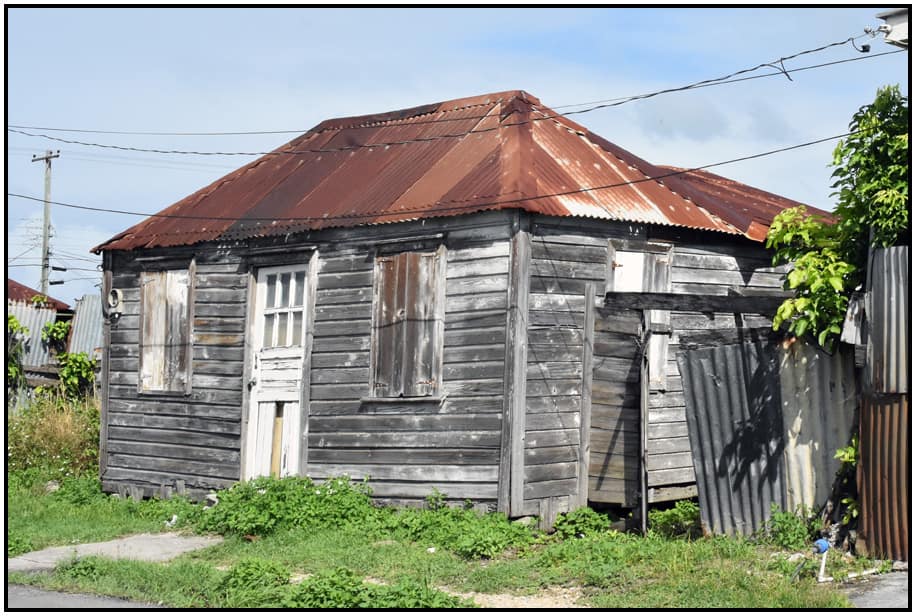
First set of derelict homes to be demolished after 28 days notice expires
Prime Minister Gaston Browne has announced a significant step in the government’s national clean-up campaign, issuing 28-day notices for the demolition of unsafe and derelict homes across the country. The initiative aims to address public health concerns and enhance community aesthetics by targeting structures deemed structurally unsound, long-abandoned, or misused for illegal activities such as dumping and squatting. Speaking on the Browne and Browne Show, the Prime Minister emphasized the urgency of the effort, stating, ‘We have given notice for a number of homes… I think it’s 28 days. You’re going to see us breaking down a ton of these… homes.’ This demolition program is part of broader beautification and environmental enforcement measures, which also include removing derelict vehicles and clearing abandoned structures. While specific locations were not disclosed, Browne confirmed that the initiative aligns with the government’s commitment to restoring neighborhoods and mitigating health hazards. The first demolitions will commence once the 28-day notices expire, marking a pivotal phase in the ongoing urban renewal project.
-
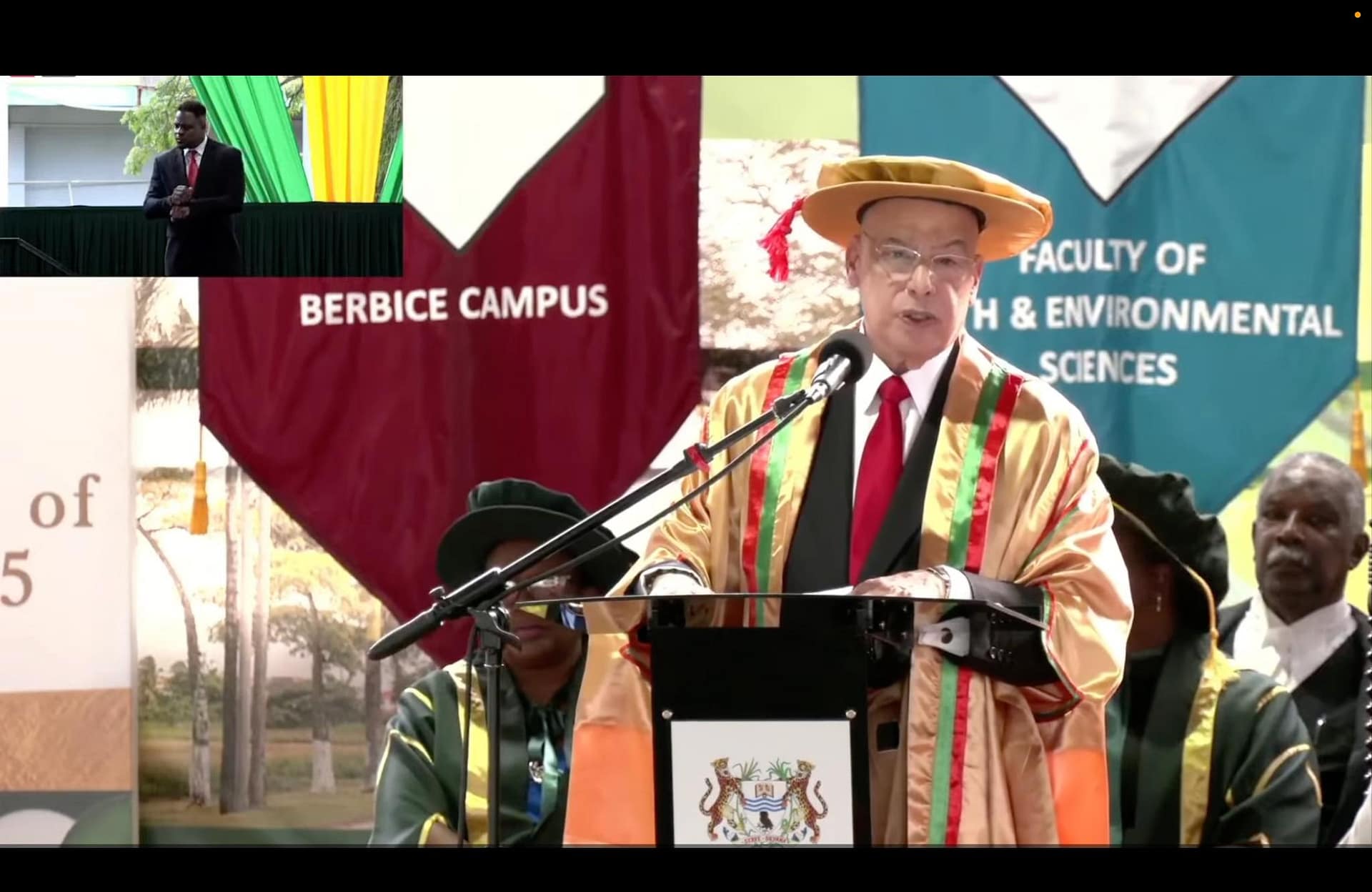
Sir Ronald Sanders Receives Honorary Doctor of Laws from University of Guyana
In a momentous ceremony on November 22, 2025, the University of Guyana bestowed the Honorary Doctor of Laws (LLD) upon Sir Ronald Michael Sanders, Antigua and Barbuda’s Ambassador to the United States and the Organization of American States (OAS). The prestigious accolade was presented during the university’s 59th Convocation Ceremony by Vice-Chancellor Professor Paloma Mohamed-Martin. The honor recognized Sir Ronald’s exceptional contributions to diplomacy, journalism, and international cooperation, cementing his legacy as one of the Caribbean’s most distinguished figures. The citation, delivered by senior lecturer Mr. R. Creighton (Mr. Arkwrighton), lauded Sanders’ decades-long career, emphasizing his “principled advocacy, intellectual rigor, and steadfast belief in the power of international collaboration.” The university highlighted his groundbreaking achievements, including his rise to General Manager of the Guyana Broadcasting Service at just 25 years old and his influential syndicated commentaries on justice, governance, and small-state diplomacy. His diplomatic milestones, such as chairing the OAS Permanent Council for three terms and leading the 2016 Good Offices Mission to Haiti, were also celebrated. The citation further underscored his unwavering commitment to Guyana’s constitutional order, electoral integrity, and territorial sovereignty, particularly in the context of the Guyana–Venezuela border dispute. Sanders’ global impact has earned him numerous accolades, including the Order of Merit of Ukraine in 2025. In his address, Sir Ronald reflected on Guyana’s transformative potential, urging the graduating class to shape a future defined by character, courage, and national purpose. The ceremony concluded with warm applause as Sir Ronald departed, with the university acknowledging the privilege of hosting such an accomplished diplomat amidst his demanding international commitments.
-

A product of the Education Revolution — and the lessons it taught me
As a beneficiary of what is often celebrated as the ‘educational revolution,’ I find myself reflecting on my journey with a mix of gratitude and realism. My opportunity came through a government-backed loan, but it was my father who shouldered the interest payments while I pursued my degree. For that, I am deeply thankful—both to the government and to my dad. Upon returning home, I was committed to contributing to my country’s human resource pool. I applied repeatedly for teaching positions in the public sector, but no doors opened. Undeterred, I pressed on. I found work in the private sector, worked diligently, and remained ambitious, even as I continued to pay off my student loan. When I became pregnant, my employer saw it as a burden rather than a natural part of life. I was eventually made redundant, left jobless with a baby in my arms and a loan still due every month. Yet, I continued paying, using the redundancy payout. Accountability mattered to me. At my second job, I again applied to teach—still no response. I sought stability, wanting to provide for my son. Eventually, I found myself working within a statutory body, where I witnessed inefficiencies and leadership driven by fear rather than inspiration. Skills were misaligned with roles, and decisions were made based on approval, appearance, and proximity to power rather than merit. Despite financial struggles, I kept paying my loan, even consolidating it into my mortgage to build a home for my child. Ambition drove me forward. I noticed a stark contrast: while some of us paid faithfully, others who benefited from the same educational opportunities did not. They lived freely, while those of us taking responsibility were weighed down by the system. I began to question whether I should have borrowed more—enough for school and a home—because life seemed designed to keep us repaying institutions until retirement. The turning point came when I realized I was no longer growing—emotionally, professionally, or financially—in my environment. I refused to beg politicians for favors, compromise my integrity, or believe that advancement should come through connections rather than qualifications. So, I made the hardest decision of my life: I left my country, SVG, the workforce I once hoped to strengthen, and the opportunities I never received. I left a system whose direction no longer aligned with my ideals. Ironically, I now teach in another nation’s classroom, shaping another nation’s children, while the classrooms of my birth country remain untouched by my hands. This is not a call to rebellion but a reminder that loyalty does not mean silence, and gratitude does not mean blindness. We have the right to question, grow, and choose. As Thomas Jefferson said, ‘When the people fear the government, there is tyranny; when the government fears the people, there is liberty.’ I once feared speaking out because of my job, but I no longer live with that fear. Today, I write to encourage reflection—not rebellion; awareness—not allegiance. Your vote is your power. Use it.
-
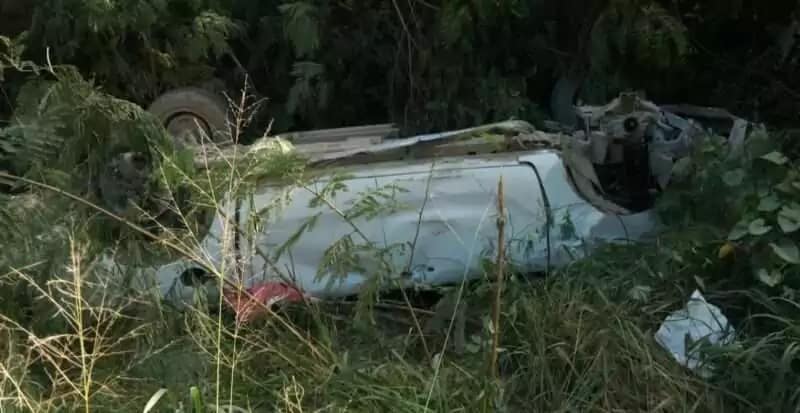
Driver Hospitalized After Pickup Overturns on Pares Main Road
A serious traffic incident unfolded on Sunday afternoon along the Pares Main Road, leaving a man hospitalized after his pickup truck overturned. According to police reports, the driver, who was the sole occupant of a Mazda pickup, was traveling eastbound when he reportedly lost control of the vehicle. The truck subsequently struck a culvert and flipped onto its roof. Emergency personnel from the Parham Police Station and Emergency Medical Services swiftly arrived at the scene. They provided immediate medical attention to stabilize the injured driver before transporting him to a nearby hospital. As of now, the driver’s condition remains undisclosed. The accident occurred shortly after 1 p.m., and authorities have launched an ongoing investigation to determine the exact cause of the crash.
-
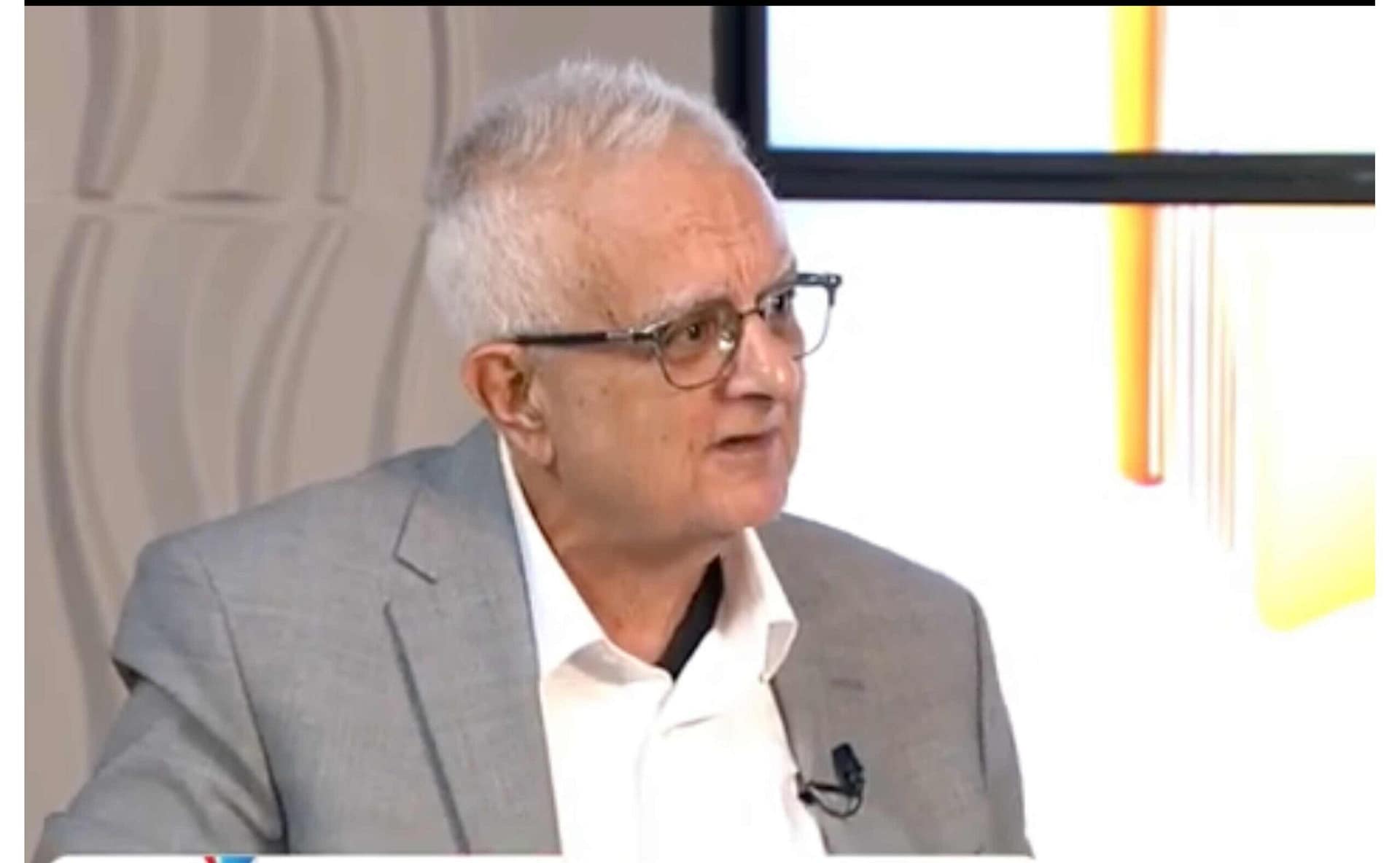
St. Lucia House Speaker Claudius J. Francis Hails Senior Counsel Anthony Astaphan’s Distinguished Legal Legacy
Anthony Astaphan SC has established himself as one of the Caribbean’s most formidable legal minds, renowned for his fearless advocacy, profound understanding of constitutional law, and steadfast dedication to democratic governance. Admitted to the Bar in 1983 and appointed Senior Counsel in 1999 by the Eastern Caribbean Supreme Court, Astaphan has become a pivotal figure in the region’s legal landscape. His practice spans Dominica, St. Vincent & the Grenadines, Antigua and Barbuda, and Saint Lucia, with a focus on constitutional law, public law, and defamation. He is frequently sought after to represent governments and political leaders in high-profile cases.
Astaphan’s legal prowess is matched by his strategic insight into political and constitutional dynamics. He has played a crucial role in safeguarding the legitimacy of elected governments, particularly in Dominica, where he has led landmark cases on electoral reform, judicial independence, and the separation of powers. His courtroom demeanor—bold, unyielding, and meticulously analytical—has earned him both acclaim and criticism, solidifying his reputation as a legal force in the Caribbean.
Among his most significant achievements are cases that have reshaped the constitutional framework of the Organization of Eastern Caribbean States (OECS). Astaphan has successfully argued before the Caribbean Court of Justice and the Privy Council, defending the rule of law and the authority of elected officials. His work has clarified critical legal principles, including the limits of judicial review, the scope of parliamentary privilege, and the boundaries of executive discretion.
Beyond his litigation success, Astaphan is a prolific commentator and public intellectual. His writings and media engagements reflect a deep commitment to democratic integrity and legal accountability. He has also served as President of the Bar Association of Dominica, where he advocated for legal education and professional standards.
Anthony Astaphan SC’s career is more than a series of legal victories; it is a testament to the transformative power of principled advocacy. His enduring influence continues to shape Caribbean constitutional law, inspiring a new generation of lawyers to view the law not merely as a profession but as a vocation. His courtroom contributions, often cited as masterpieces, stand as a testament to his unparalleled impact on the legal profession.
-

St. Peter MP Visits Gunthropes Residents Amid Ongoing Road, Drainage Concerns
Rawdon Turner, Member of Parliament for St. Peter, conducted a comprehensive tour of the Gunthropes community on Thursday, engaging directly with residents amidst ongoing infrastructure issues that have severely impacted daily life. Turner emphasized the importance of transparent and candid dialogue with affected individuals, acknowledging that while some progress has been made with concrete paving, significant upgrades remain essential. Residents voiced their concerns, highlighting areas still in dire need of repair. Accompanied by Public Works officials, including the minister and director, Turner reaffirmed the government’s dedication to completing the project. Officials outlined a phased approach to repairs, prioritizing the most severely damaged sections. Turner stressed that his hands-on, accessible approach allows him to better grasp the community’s challenges. “Meeting residents directly on the damaged roads is crucial to understanding their realities,” he stated. “While there is much work ahead, we are committed to moving forward with integrity, service, and resolve.” Turner plans to extend his outreach to other St. Peter communities in the coming weeks to address similar issues. Gunthropes residents expressed appreciation for the engagement and expressed hope that the renewed focus would result in sustainable improvements.