分类: society

  • Three children among four killed in St Elizabeth/ Westmoreland border crash

    Three children among four killed in St Elizabeth/ Westmoreland border crash

    A devastating high-speed collision between a passenger vehicle and a utility truck resulted in four fatalities Saturday evening near the St Elizabeth-Westmoreland parish boundary. The catastrophic incident occurred approximately at 5:27 PM along the Crawford-Font Hill thoroughfare, according to official police reports.

    Law enforcement authorities have identified three of the deceased: 30-year-old Jeneen Dawkins, who operated the 2011 black Toyota Voxy; 10-year-old Antwasia Ledgister; and a 17-year-old female known only as Ashley. A fourth victim, a 12-year-old child, remains unidentified pending formal notification of relatives.

    Preliminary investigation indicates the Toyota Voxy, transporting all four victims, was traveling at excessive velocity when it deviated from its proper lane. The vehicle crossed into the opposing traffic path, directly confronting a 2013 white Freightliner M2 160 utility truck operated by a Canadian national working in infrastructure services.

    The force of the head-on impact catastrophically deformed the passenger vehicle, requiring emergency extraction of all occupants. Despite rapid medical response, all four individuals were declared deceased upon arrival at a nearby medical facility. The truck driver emerged physically unharmed from the incident but received psychological trauma support.

    Jamaican Constabulary Force has launched a comprehensive investigation into the circumstances precipitating the tragedy, examining road conditions, vehicle mechanical status, and potential contributing factors to the lane violation. This incident marks one of the most severe road accidents in the parish this year, highlighting ongoing concerns about road safety practices in rural Jamaican thoroughfares.


  • Towards national conversation on pollution

    Towards national conversation on pollution

    Trinidad and Tobago’s recently enacted 2025 Summary Offences Amendment Act, designed to regulate fireworks usage through permit requirements, faces substantial criticism for its inherent contradictions and inadequate enforcement mechanisms. While the legislation aims to protect vulnerable populations and animals, experts identify significant flaws that may undermine its intended purpose.

    The amendment mandates that fireworks users obtain permits from the police commissioner, yet creates explicit exemptions during national holidays at 8-9 PM and on Old Year’s Eve from 11:30 PM to 12:30 AM. These waivers directly conflict with the legislation’s protective goals, as they authorize heightened fireworks activity precisely when traditional celebrations like Divali, Christmas, and Old Year’s observances occur—periods when pyrotechnic usage traditionally peaks.

    Environmental and health concerns present additional challenges. The law permits fireworks usage within 0.5 kilometers of sensitive areas including hospitals, farms, forests, parks, and zoos, potentially exposing humans and animals to dangerous pollutants. Scientific evidence indicates that fireworks emit strontium, barium, and aluminum particles that can trigger respiratory issues such as coughing and breathing difficulties. A 2020 Environmental Management Authority survey confirmed that fireworks exposure causes sleep deprivation, irritability, and anxiety in humans, while animals experience panic, trauma, and habitat displacement.

    The amendment’s enforcement mechanisms appear particularly insufficient. Violators face mere $450 fines—a sum unlikely to deter dedicated fireworks enthusiasts—while permits cost only $100, making legal compliance relatively inexpensive. This contrasts sharply with the United Kingdom’s model, which imposes fines equivalent to thousands of dollars for illegal fireworks usage.

    Legal experts question whether the amendment will achieve meaningful change, noting that Trinidad and Tobago already had fireworks regulations under the Explosives Act. The Supreme Court of India’s recent recognition that fireworks bans often create unpoliceable informal economies raises relevant concerns about enforcement practicality in the Trinidad and Tobago context.

    Commentators suggest that rather than implementing potentially redundant legislation, the government should convene a parliamentary joint committee to comprehensively examine human-induced noise and air pollution impacts on all living creatures. Such dialogue should include environmental NGOs, religious groups, and industry stakeholders to develop more effective solutions grounded in intelligent discourse rather than political expediency.

  • Transport Authority commences motor vehicle examinations January 12 for 2026/27 licencing period

    Transport Authority commences motor vehicle examinations January 12 for 2026/27 licencing period

    KINGSTON, Jamaica — Jamaica’s Transport Authority has announced it will initiate comprehensive motor vehicle inspections starting Monday, January 12th, initiating an extended preparation period for road license renewals that expire March 31, 2026. This strategic early launch aims to streamline the application process for the 2026/2027 licensing period, which officially opens February 1, 2026.

    The authority characterizes this proactive measure as part of its commitment to delivering more efficient and accessible services to vehicle operators. In parallel, Transport Authority Managing Director Ralston Smith is advocating for the adoption of the streamlined digital application system, which supports payments through bank transfers, VISA debit, and credit cards for enhanced convenience.

    Smith emphasized that both existing public passenger vehicle (PPV) operators and new applicants must comply with all established regulatory standards to qualify for licensing. Mandatory requirements include proper vehicle color coding, exterior markings, and updated documentation verifiable through the Island Traffic Authority and Tax Administration Jamaica’s online portals.

    Officials are urging early compliance to prevent potential legal penalties for operating with expired licenses. The Authority has confirmed that applications submitted after the March 31, 2026 deadline will be subject to additional late fees.

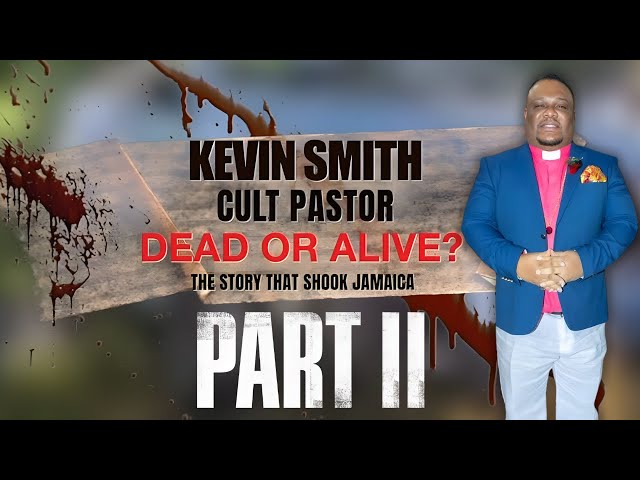
  • Part 2 of ‘Kevin Smith: Cult Pastor’ documentary premieres on YouTube

    Part 2 of ‘Kevin Smith: Cult Pastor’ documentary premieres on YouTube

    Jamaica confronts profound questions of faith and accountability as a shocking documentary concludes its investigation into the Kevin Smith cult phenomenon. The final installment of ‘Kevin Smith: Cult Pastor — Dead or Alive? The Story that Shook Jamaica’ premieres on YouTube, presenting new eyewitness testimonies and disturbing details about fatal rituals that transformed the once-revered spiritual leader into a posthumously charged criminal.

    The documentary meticulously examines how Smith’s influence escalated into deadly manipulation, resulting in multiple fatalities during extreme religious ceremonies. Jamaican authorities have brought unprecedented posthumous charges against Smith, including murder, conspiracy, and firearm offenses, creating legal history while reopening emotional wounds for victims’ families.

    Beyond the true-crime narrative, the investigation delves into systemic failures within religious and governmental institutions that allowed dangerous practices to flourish unchecked. The production team gathered extensive testimonies from survivors and experts analyzing the psychological mechanisms of control within closed communities.

    Most provocatively, the documentary presents evidence and expert commentary addressing persistent rumors that Smith may have fabricated his own death, leaving open the possibility that the cult leader could still be alive. This central question fuels an exploration of how charismatic authority can persist beyond physical presence and how communities struggle to heal from collective trauma.

    The case has sparked national conversations about regulating religious organizations and improving mental health support systems to prevent similar tragedies, making this documentary both a historical record and catalyst for institutional reform.

  • Ministry: Post on Licensing Office hours is fake

    Ministry: Post on Licensing Office hours is fake

    The Ministry of Transport and Civil Aviation of Trinidad and Tobago has issued an official alert regarding fraudulent information circulating through digital channels. On Sunday, the ministry formally discredited a fabricated media release titled ‘Revised Operating Hours of Licensing Division’ that has been spreading across online platforms.

    In an unequivocal statement, the ministry confirmed that all Licensing Division offices throughout the dual-island nation maintain their standard operational schedule of Monday through Friday from 8:00 AM to 4:00 PM. No changes to these hours have been implemented or are currently planned.

    The ministry emphasized the critical importance of obtaining information through authorized channels only. Citizens were expressly advised to disregard the misleading notice and instead rely exclusively on the ministry’s official communication platforms for verified updates and announcements. This precautionary measure aims to prevent public confusion and ensure that citizens receive accurate information regarding government services.

    This incident highlights the ongoing challenge of digital misinformation affecting public institutions. The ministry’s proactive response demonstrates its commitment to transparency and accurate information dissemination while safeguarding citizens from potentially disruptive false claims.

  • St James Municipal Corporation ramps up earthquake preparedness activities

    St James Municipal Corporation ramps up earthquake preparedness activities

    KINGSTON, Jamaica — The St. James Municipal Corporation has launched an extensive month-long initiative to bolster earthquake preparedness throughout the parish, designating January as Earthquake Awareness Month. This comprehensive program features enhanced public education sessions across educational institutions, commercial enterprises, and local communities, alongside realistic simulation drills and a coordinated media campaign to maximize public engagement.

    Mayor of Montego Bay, Councillor Richard Vernon, addressed constituents during the January 8 municipal meeting, emphasizing the critical importance of community participation. “I urge all residents to actively engage in preparedness drills and assume personal responsibility for their safety,” Vernon stated. “Heeding official advisories from the Municipal Corporation is particularly crucial this year, more than ever before.”

    Trevion Manning, the Corporation’s Director of Planning, provided crucial context regarding the distinct nature of earthquake emergencies compared to other disasters. “Public awareness regarding appropriate actions during and after seismic events requires specialized attention, as these situations differ fundamentally from hurricane protocols,” Manning explained.

    Despite the earthquake preparedness focus, Manning clarified that post-hurricane recovery operations remain an ongoing priority for the municipality. “We continue to support displaced residents through shelter accommodations, meal provisions, and permanent housing solutions,” he noted. “Both the Council and national government maintain recovery operations throughout the parish, with our primary objective being the restoration of normalcy for affected citizens and businesses.”

    The dual-focused approach demonstrates the municipality’s commitment to both immediate disaster recovery and long-term resilience building against future seismic events.

  • State loses battle for Valsayn lands

    State loses battle for Valsayn lands

    In a landmark property rights decision, Trinidad and Tobago’s High Court has resolved a decades-long dispute between Dipcon Engineering Services Ltd and the Housing Development Corporation (HDC) regarding ownership of over eight acres of valuable State land in Valsayn South.

    Justice Westmin James delivered a comprehensive 50-page ruling establishing that Dipcon lawfully acquired ownership through adverse possession, having maintained open, exclusive, and continuous control of the property for well beyond the statutory limitation period. The court determined this extended occupation effectively extinguished the State’s title, granting the engineering company legal entitlement to the property.

    The contested parcel at Real Springs East, Valsayn South, near the Southern Main Road, became the center of a complex legal battle. Dipcon asserted continuous occupation since May 1981, while the Attorney General and HDC maintained the land was acquired by the State in 1979 for public purposes and subsequently vested in state housing authorities.

    The court meticulously examined the property’s history, noting that Dipcon initially entered the land without permission to support construction works on the Valsayn housing project. Evidence demonstrated the company conducted extensive improvements including clearing and filling approximately seven acres, erecting buildings and perimeter fencing, installing utilities, operating a concrete batching plant, and maintaining continuous security and commercial use over several decades.

    A pivotal legal question addressed whether occupation time while the land was State-owned could count toward adverse possession after transfer to a non-State entity. Justice James ruled that Dipcon’s possession satisfied the applicable limitation period and that subsequent vesting in housing authorities did not invalidate accrued rights.

    The court rejected arguments that Dipcon lacked necessary intention to possess the land, finding the company’s conduct demonstrated clear intent to control and exclude others, including paper title holders. The judge noted that physical acts of possession were “substantial and enduring” and represented “acts of dominion” rather than transient or equivocal use.

    While upholding Dipcon’s claim against HDC, the court dismissed the corporation’s counter-claim against the engineering firm and similarly dismissed Dipcon’s claim against the Attorney General. The ruling establishes significant precedent regarding adverse possession rights against state entities in Trinidad and Tobago.

  • Statement by BADMC on theft of yams

    Statement by BADMC on theft of yams

    Barbados is confronting a significant organized crime operation targeting its agricultural sector following the theft of approximately 10,000 pounds of yams from the Barbados Agricultural Development and Marketing Corporation (BADMC). The sophisticated theft occurred between the evening of January 2, 2026, and the early morning of January 5, 2026, marking one of several coordinated incidents across St. Philip and St. John parishes during that weekend.

    The Barbados Police Service has launched a comprehensive investigation into the large-scale agricultural thefts that are depriving local farmers of their livelihoods and causing substantial financial damage estimated in the hundreds of thousands of dollars. Authorities have alerted vendors and retailers to exercise extreme vigilance when approached with yam supplies, particularly given the commodity’s limited availability on the island.

    In response to the criminal operation, BADMC has issued stringent guidelines for large-scale purchasers. Those buying more than 100 pounds of yams are urged to demand formal invoices, verify sellers’ identities through valid Farmers’ Identification cards or Barbados National Identification Cards, and obtain confirmation of the farm origin for all produce. These measures are designed to create an audit trail that will assist law enforcement in identifying the perpetrators.

    The situation has drawn commentary from Minister of Agriculture, Food and Nutritional Security Indar Weir, who emphasized the critical role of public cooperation in combating praedial larceny (agricultural theft). Minister Weir stressed that existing laws require consistent enforcement and community participation to be effective, noting that tolerance of black market produce sales ultimately enables continued criminal activity.

    BADMC is actively encouraging citizens to assist authorities in dismantling these organized theft networks that threaten both food security and agricultural sustainability in Barbados.

  • Crop theft ‘forcing’ top grower to scale back production

    Crop theft ‘forcing’ top grower to scale back production

    Prominent Barbadian agricultural producer Richard Armstrong has reached a critical juncture in his decades-long farming career, announcing plans to significantly scale back crop cultivation following massive organized thefts targeting his operations. The owner of Armag Farms revealed that thieves systematically stole approximately 15,000 pounds of yams from his St. John fields in recent weeks, with at least 3,000 pounds disappearing in a single night.

    The Christmas period brought an alarming escalation in what Armstrong describes as ‘commercial crop theft’ rather than petty larceny. ‘These people are making a living off of it,’ he emphasized, noting the sophisticated nature of the operations that have pushed his farming enterprise to the brink of sustainability. The thefts have forced Armstrong into difficult security decisions, juggling limited protection between his yam fields in St. John and sweet potato crops in St. Philip.

    Financial analysis reveals the staggering cost of security measures, with annual expenses approaching $80,000 including private security firms—a burden that cannot be passed to consumers given stagnant pricing structures. ‘We are price takers, not price setters,’ Armstrong explained, noting that potatoes currently sell at roughly the same price as forty years ago despite significantly increased production costs.

    The psychological impact has been profound, with Armstrong describing decades of nightly anxiety about crop losses as ‘exhausting and demoralizing.’ He criticized the lack of enforcement regarding produce sales legislation, noting that receipt requirements exist on paper but remain unimplemented. The farmer also questioned why the Barbados Defence Force hasn’t been deployed as a deterrent, citing Jamaica’s successful use of military personnel to combat agricultural theft.

    Armstrong warned that continued inaction threatens national food security, as large-scale producers reconsider their operations. With lower yam yields expected due to severe drought conditions in August and September, the coming year presents particularly challenging circumstances for Barbadian agriculture.

  • Holidays 2026: These are the long weekends this year

    Holidays 2026: These are the long weekends this year

    The Dominican Republic’s Ministry of Labor has officially released the 2026 holiday calendar, implementing the nation’s unique holiday rescheduling system established by Law 139-97. This longstanding legislation allows for the strategic movement of midweek holidays to Mondays, creating extended weekends throughout the year.

    According to the published schedule, Dominican workers can anticipate seven extended holiday weekends during 2026. The system operates on the principle that when a holiday falls on Tuesday, Wednesday, Thursday, or Friday, it is automatically relocated to the preceding Monday, effectively creating three-day weekends. This approach applies regardless of whether the original holiday date falls on a Friday, with the weekend extending through Sunday.

    The 2026 holiday calendar begins with Three Kings’ Day, originally falling on Tuesday, January 6th but officially moved to Monday, January 5th. This creates the first extended weekend starting at noon on Saturday, January 3rd through Monday, January 5th.

    Subsequent extended weekends include:
    – January 24th-26th: Celebrating Juan Pablo Duarte’s birthday
    – February 27th-29th: National Independence Day observances
    – April 3rd-5th: Holy Week holidays (Good Friday observance)
    – May 2nd-4th: Labor Day celebrations (moved from first Friday of May)
    – November 7th-9th: Constitution Day observances
    – December 25th-27th: Christmas celebrations

    Additionally, 2026 features five fixed-date holidays that maintain their original scheduling: New Year’s Day (January 1), Our Lady of Altagracia Day (January 21), Corpus Christi Day (June 4), Restoration Day (August 16), and Our Lady of Mercy Day (September 24). This brings the total number of official holidays for 2026 to twelve, with seven offering extended weekend opportunities for Dominican workers and families.