分类: society

  • NO CONSULTATION!

    NO CONSULTATION!

    A significant dispute has emerged between the Jamaican Government and its civil service representatives following a Cabinet directive canceling all official Christmas celebrations for government entities this year. Techa Clarke-Griffiths, President of the Jamaica Civil Service Association (JCSA), has expressed strong objections to the unilateral nature of this decision and is demanding full transparency regarding the redistribution of budgeted party funds.

    The controversy stems from an announcement made by Education, Skills, Youth, and Information Minister Senator Dr. Dana Morris-Dixon during a post-Hurricane Melissa briefing. While prohibiting external venue rentals for holiday events, the government encouraged small in-office morale-building activities and outreach initiatives for staff affected by the recent natural disaster.

    Clarke-Griffiths contends that the complete lack of consultation with the JCSA—representing over 30,000 public servants—demonstrates the government’s disregard for proper dialogue. Her primary concern centers on the destination of reallocated funds originally designated for holiday festivities. She insists that these resources should be directly channeled toward welfare support for civil servants grappling with Hurricane Melissa’s devastation rather than returned to the consolidated fund.

    The JCSA president revealed that many public servants face severe hardships, including complete home losses and psychological trauma. She emphasized that workers would more readily accept the cancellation if assured that funds would support colleagues in distress. The association has already identified 805 severely impacted members through needs assessment forms and distributed over 4,200 care packages in affected western regions.

    This situation mirrors previous concerns regarding unaccounted funds from canceled Civil Service Week activities, which had an allocated budget of approximately $8 million. Clarke-Griffiths has engaged in discussions with Finance Minister Fayval Williams, advocating for special allocations to address the urgent needs of traumatized and displaced government employees.

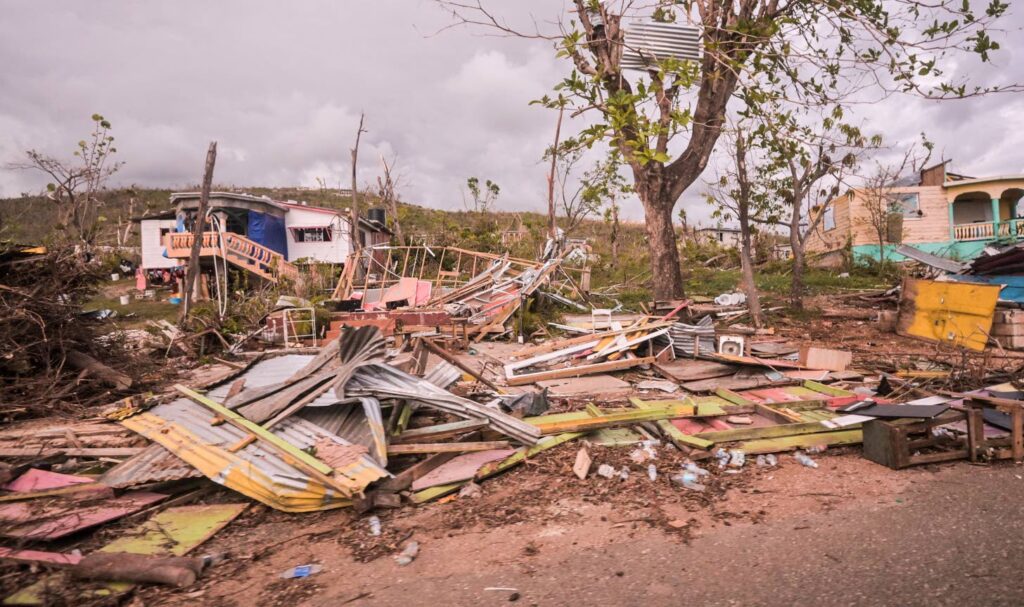
    Hurricane Melissa struck Jamaica on October 28 with devastating 185 mph winds, causing unprecedented flooding across the island’s southern and western regions. The catastrophe has created pressing humanitarian needs that the civil service union believes should be prioritized through redirected celebration budgets.

  • Outages costing Abaco thousands

    Outages costing Abaco thousands

    ABACO, THE BAHAMAS – Communities across Abaco face mounting economic losses and operational paralysis as an extended power crisis entered its second consecutive day, triggering widespread concerns about holiday tourism viability and long-term infrastructure stability.

    Residents throughout Central and South Abaco, Hope Town, and Sweeting Village reported enduring over 24 hours of intermittent electricity failures, resulting in substantial inventory spoilage, appliance damage, and minimal communication from Bahamas Power and Light (BPL) regarding restoration timelines.

    Hope Town restaurateur Junior Menard, 54, disclosed approximately $4,000 in refrigerated inventory losses after power fluctuations commenced Tuesday afternoon. ‘This isn’t a minor operational glitch but a systemic failure,’ Menard emphasized, noting the critical timing for tourism-dependent businesses preparing for peak holiday revenue. The crisis stems from BPL’s reliance on redirected power from North Abaco through rotational load-shedding protocols.

    In Sweeting Village, homeowner Deedee Russell, 70, sustained nearly $4,800 in losses after two refrigerators failed across separate properties. Russell condemned the utility’s communication breakdown despite regular bill payments, noting outages occur ‘almost daily’ without advance notice.

    BPL officials attributed the island-wide collapse to a critical compressor failure at the Wilson City Power Plant, which regulates essential airflow within the station. When primary and backup systems malfunctioned simultaneously, engineering teams attempted emergency repairs using locally sourced parts and portable compressors—all operating below required pressure thresholds.

    Northern Family Island Regional Manager Marvin Green confirmed a replacement compressor originally scheduled for December 8 has been delayed until January 2026, exacerbating the infrastructure emergency. Hope Town’s power stability was further compromised by land constraints preventing simultaneous operation of multiple new-generation units installed in August.

    Central and South Abaco MP John Pinder acknowledged the Wilson City facility’s historical operational challenges in Parliament, advocating for customer bill credits given the ‘enormous outage frequency’ during the critical holiday period. While residents recognize line crews’ efforts in sweltering conditions, businesses urgently seek reliable power before Christmas tourism surges intensify economic pressures.

  • RHA employees to benefit from PSA wage hike

    RHA employees to benefit from PSA wage hike

    In a significant development for Trinidad and Tobago’s healthcare sector, the Public Services Association (PSA) has confirmed that all Regional Health Authority (RHA) employees will receive substantial financial benefits from the recently negotiated compensation package. The breakthrough agreement, finalized on December 2, guarantees a ten percent salary enhancement for healthcare workers across the nation’s regional health authorities.

    The PSA, recognized as the majority union for health ministry employees and RHA staff, clarified in its December 10 media release that the comprehensive compensation package encompasses three distinct employee groups: ministry workers stationed at RHAs, public service employees who transitioned to RHAs, and personnel directly hired by the regional authorities. This inclusive approach ensures salary parity throughout the healthcare workforce.

    Union president Felisha Thomas emphasized that once the memorandum of agreement (MoA) is formally executed for ministry officers and transferred staff, remaining RHA employees will automatically receive comparable adjustments. The PSA is now preparing to engage with RHA leadership to finalize similar agreements specifically addressing salary increases, allowances, and back pay for transferred workers.

    The association has proactively contacted all RHA chief executive officers, urging payment advances from the estimated $3.8 billion in retroactive payments before December 23. The landmark agreement covers bargaining periods from 2014-2016 and 2017-2019, featuring new salary implementations commencing January 2026 alongside retroactive allowances dating back to January 1, 2014.

    Prime Minister Kamla Persad-Bissessar previously noted that the effective compensation increase reaches approximately 15 percent when incorporating the consolidated Cost of Living Allowance (COLA) for both periods. The settlement represents approximately $420 million in additional annual expenditures alongside the substantial $3.8 billion retroactive payment obligation.

  • Who qualifies?

    Who qualifies?

    Jamaican legislators are demanding transparency in the distribution framework for containerized housing units destined for hurricane victims, as the nation grapples with complex land ownership issues that threaten to delay critical relief efforts. With 1,061 citizens still occupying emergency shelters following Hurricane Melissa’s devastation, parliamentary members expressed urgent concerns during a Public Administration and Appropriations Committee session regarding how informal settlers without legal land titles will qualify for government-assisted housing.

    The core dilemma emerged during intense questioning of Office of the Prime Minister (OPM) officials, particularly regarding historical land tenure challenges pervasive in Westmoreland and St Elizabeth parishes. St Mary Central MP Omar Newell raised alarms about whether the anticipated January delivery of rapid-build container units would genuinely reach the most vulnerable populations, given widespread informal land occupation patterns.

    Ambassador Rocky Meade, Permanent Secretary at OPM, articulated the government’s delicate balancing act between humanitarian urgency and legal responsibility. “We have a legal obligation to ensure we are not encouraging citizens to occupy land without rights,” Meade stated, acknowledging potential litigation risks if housing is placed on contested property. While committed to expediting relief, the administration must conduct due diligence to avoid legal complications.

    The government is now pursuing alternative strategies, including identifying state-owned parcels where container homes can be legally deployed. This approach would allow families previously residing in high-risk zones to relocate securely while obtaining formal land tenure. Meade emphasized that despite procedural delays caused by ownership verification, the priority remains rapidly transitioning shelter occupants into permanent housing solutions, especially as educational authorities seek to reclaim school buildings currently serving as emergency shelters.

    The National Housing Trust is procuring 5,000 pre-fabricated container homes under Prime Minister Andrew Holness’s rapid deployment initiative, with an initial batch of 2,500 units scheduled for early-year distribution to address the island’s most pressing housing emergencies.

  • TTUTA president: Teachers to get back pay by Jan 2026

    TTUTA president: Teachers to get back pay by Jan 2026

    After prolonged negotiations, approximately 14,000 educators in Trinidad and Tobago are finally set to receive their long-awaited salary adjustments and back payments. The breakthrough came following a decisive December 10th meeting between the Trinidad and Tobago Unified Teachers’ Association (TTUTA) and Chief Personnel Officer Dr. Daryl Dindial at the Personnel Department headquarters in St. Clair.

    TTUTA President Crystal Ashe confirmed to media outlets that the settlement covers the 2020-2023 period, featuring a compounded five percent salary increase distributed as one percent, one percent, and three percent increments. Notably, the agreement extends beyond classroom teachers to include Third Schedule members such as school supervisors, curriculum officers, and guidance personnel who had previously been uncertain about their inclusion.

    Dr. Dindial committed to processing all payments by the end of January 2026, acknowledging that logistical constraints prevented December distribution. While refusing to guarantee absolute deadlines, he emphasized concerted efforts toward meeting the January timeframe.

    The resolution follows TTUTA’s April pre-election acceptance of the government’s offer, which also included an adjustment to the Cost of Living Allowance (COLA), increased to $51 effective October 31, 2023. According to budget statements, the implementation carries substantial financial implications—$214 million in recurrent annual costs plus $730 million in arrears through December 2025.

    Additional discussions addressed healthcare coverage expansion through Unimed to include retired educators and travel compensation for Tobago-based curriculum coordinators. The CPO’s office characterized the negotiations as ‘highly productive’ in building foundations for ongoing dialogue.

    The development comes despite TTUTA’s public appeal on December 4th for Prime Minister Persad-Bissessar’s personal intervention to secure pre-Christmas payments. While the PM subsequently committed to settling separate Public Services Association agreements at ten percent with advance holiday payments, she notably omitted reference to other trade unions’ pending settlements during parliamentary proceedings.

  • PM urges luxury segment to also provide low-income housing

    PM urges luxury segment to also provide low-income housing

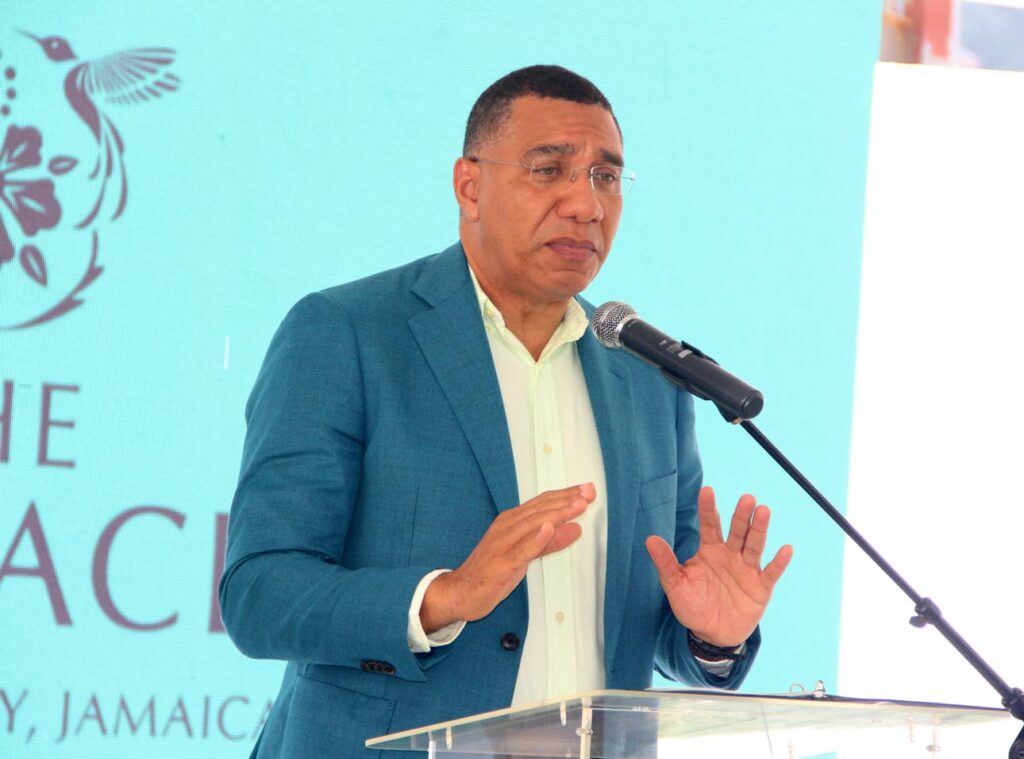
    In Montego Bay, Prime Minister Andrew Holness issued a compelling appeal to high-end property developers during a ceremony marking the completion of the 28th-floor tower at The Pinnacle luxury residences. Addressing the severe housing shortage exacerbated by Hurricane Melissa’s devastation, Holness directly challenged luxury construction firms to apply their expertise toward low-income housing solutions.

    The Prime Minister specifically recognized LCH Developments and Brothers Concepts Solution Limited for their construction capabilities, noting their achievement of erecting a luxury tower in under a year. “If you can do this, you can build thousands of low-income houses as well,” Holness stated, emphasizing the government’s willingness to form partnerships with private developers addressing the housing crisis.

    Hurricane Melissa, a Category 5 storm that struck Jamaica on October 28, caused significant damage to approximately 215,000 buildings across the island. Holness stressed the urgency of reconstruction, calling for contractors capable of operating “at scale and at pace” to accelerate recovery efforts. He framed this collaboration as essential for national unity, asserting that “luxury is going to help to bring people out of poverty” through the intersection of interests.

    Acknowledging the apparent contradiction between celebrating luxury construction while thousands remain homeless, Holness assured affected citizens that recovery remains his administration’s priority. “Every hour of my day is spent trying to figure out how to get to those roofs quickly, effectively, in an affordable way, and in a sustainable way,” he committed.

    The Prime Minister also highlighted ongoing initiatives in the tourism sector where new developments must include housing components for workers, either through acquisition opportunities or rental facilities. This policy demonstrates the government’s deliberate approach to addressing housing needs across different economic sectors through integrated development strategies.

  • UDC to expand New Year’s Eve fireworks display to western Jamaica to uplift spirits

    UDC to expand New Year’s Eve fireworks display to western Jamaica to uplift spirits

    KINGSTON, Jamaica — In a significant expansion of its traditional year-end celebrations, Jamaica’s Urban Development Corporation (UDC) has announced it will extend its New Year’s Eve fireworks display across five parishes. This strategic decision aims to bolster morale and foster unity among communities in western Jamaica still recovering from Hurricane Melissa’s recent impact.

    The state-owned corporation revealed through an official statement on Thursday that alongside established fireworks viewings in downtown Kingston, Ocho Rios, and Montego Bay’s Harmony Beach Park, two additional locations—Black River in St. Elizabeth and Long Bay Beach in Negril—will host the celebratory displays. This represents a deliberate effort to bring accessible festive experiences to more Jamaican families during the ongoing recovery period.

    UDC officials emphasized that while this year’s celebrations will adopt a more restrained approach compared to previous years, the organization recognizes the profound importance of creating spaces for collective joy, reflection, and community bonding. The initiative specifically aims to provide a sense of normalcy and shared optimism as the nation looks toward 2026.

    ‘Each designated location will feature complimentary public viewing areas for the official UDC midnight countdown ceremony followed by fireworks displays,’ the corporation confirmed. These gatherings are designed to facilitate moments of shared anticipation and national unity, allowing communities to collectively celebrate resilience and hope for the future. The expanded program demonstrates the government’s commitment to psychological recovery through community engagement, acknowledging that emotional healing remains crucial alongside physical reconstruction efforts in hurricane-affected regions.

  • Opposition, Independent senators back fireworks legislation

    Opposition, Independent senators back fireworks legislation

    In a rare display of political unity, Trinidad and Tobago’s Senate has unanimously approved the Summary Offences (Amendment) Bill, 2025, establishing comprehensive regulations for fireworks usage. The landmark legislation received cross-party support during December 10th proceedings at the Red House in Port of Spain, following the bill’s passage in the House of Representatives on December 9th.

    Opposition Senator Foster Cummings characterized the bipartisan cooperation as “an encouraging development” that demonstrates progressive legislation for maintaining public order. He emphasized that the bill represents a continuation of regulatory efforts initiated under the previous administration, noting that “it is an industry that needs regulation.”

    Senator Cummings aligned with Attorney General John Jeremie’s assessment regarding the detrimental effects of fireworks on human health, animal welfare, and environmental safety. He particularly highlighted the plight of animals, stating that “animals don’t have a say where you discharge fireworks in their natural habitat,” and urged all citizens to adopt an animal-loving perspective regardless of whether creatures were domesticated pets or indigenous wildlife.

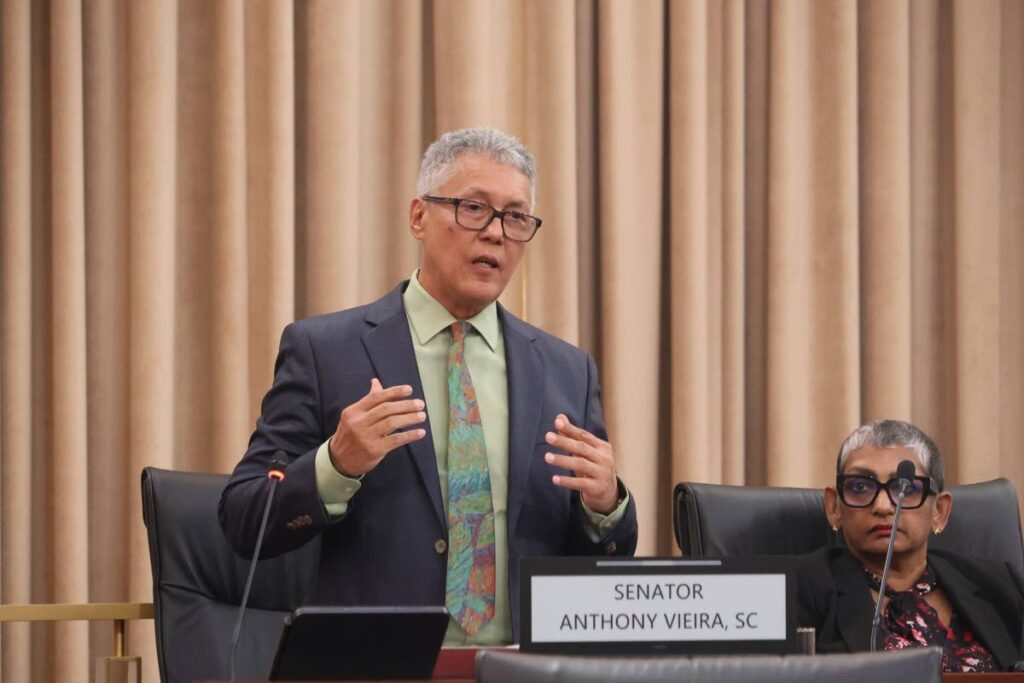
    Independent Senator Anthony Vieira, SC, revealed he had been preparing similar private legislation, welcoming the government’s initiative. As owner of three dogs, Vieira provided personal testimony about the distress fireworks cause animals. He corroborated the Attorney General’s observations that modern fireworks have become “more sophisticated and dangerous than their predecessors,” with some displays resembling “tactical military” operations.

    Both senators expressed concern about economic implications, noting the contradiction between substantial foreign exchange expenditures for importing fireworks—products with minimal economic benefit—versus the meaningful employment provided by poultry farms and veterinary clinics that suffer from fireworks-related disruptions. Vieira emphasized that “this imbalance must end.”

    The legislation establishes a permit system to ensure accountability and designated time restrictions for fireworks usage, particularly during celebrations like Old Year’s Night. The senators acknowledged the cultural embeddedness of fireworks in Trinidad and Tobago while advocating for balanced regulation that addresses public safety concerns without completely eliminating traditional practices.

    The bill passed with full consensus, receiving affirmative votes from all 30 senators present without opposition or abstentions.

  • Police to meet with Falmouth business community to address nightly lockdown

    Police to meet with Falmouth business community to address nightly lockdown

    FALMOUTH, Jamaica — Tensions are escalating between local entrepreneurs and law enforcement authorities in Trelawny parish following the imposition of a controversial nightly shutdown of commercial establishments. The security measure, implemented at 9:00 pm daily, has sparked significant backlash from business owners claiming substantial financial losses.

    Superintendent Velonique Campbell, commanding officer of the Trelawny Police Division, confirmed scheduled meetings with Falmouth’s business community to address growing concerns. The security protocol was initiated following a recent homicide and identified suspicious activities in the township post-hurricane. “We must prioritize security concerns for the general township,” Campbell stated, emphasizing that the measure aims to address public safety rather than hinder economic activity.

    However, Christopher Jobson, CEO of Falmouth Chicken, provided a starkly different perspective. His enterprise has suffered severe financial impacts since enforcement began on November 16, when police abruptly ordered closure at approximately 9:30 pm. Jobson revealed losses amounting to millions of Jamaican dollars from his restaurant operations alone, with additional unquantified losses from his gaming lounge and bar establishments. The businessman also highlighted the ongoing financial burden of maintaining payroll for his 19 employees despite the forced closures.

    The contentious situation is further complicated by conflicting accounts regarding communication. While Superintendent Campbell asserted that discussions had occurred with Jobson, the entrepreneur and his legal representative maintain they received no formal notification regarding the lockdown’s implementation or anticipated duration. “No one is saying anything. When we ask when the lockdown will end, they don’t know,” Jobson expressed with evident frustration.

    This development compounds recovery challenges for businesses already affected by recent hurricane damage. Jobson poignantly contrasted government encouragement for economic productivity with the police-enforced restrictions, stating: “The prime minister says keep the production wheel turning—and me turn it up—and the police turn it down.”

    Thursday’s scheduled meeting between police officials and business representatives is expected to clarify the security measure’s timeframe and operational parameters.

  • Equality for All Foundation unveils ‘Queer Agenda’ in Jamaica

    Equality for All Foundation unveils ‘Queer Agenda’ in Jamaica

    Jamaica’s Equality for All Foundation (EFAF) unveiled a comprehensive revision of its national Queer Agenda on Tuesday, presenting an evolved advocacy framework aimed at enhancing legal protections and social inclusion for LGBTQ+ citizens. Executive Director Glenroy Murray addressed diplomats, UN officials, civil society representatives, and media members at the launch event, emphasizing the document’s role in articulating concrete policy expectations from the government and broader society.

    The updated agenda reflects both measurable progress and persistent challenges since the original 2018 publication. Murray noted the intentional reclamation of the term ‘queer agenda’—historically weaponized against the community—as a positive assertion of policy priorities. Significant achievements highlighted include expanded mental health services, curriculum reforms at the University of the West Indies, training programs for over 150 social-service providers through EU partnerships, and sensitization initiatives with the Jamaica Constabulary Force supported by British diplomacy.

    Despite these advancements, Murray underscored alarming ongoing issues: 33% homelessness rates within the LGBTQ+ community, widespread discrimination, and insufficient legal safeguards. The document serves as a strategic roadmap across multiple pillars including security and justice, healthcare, education, housing, and family protections. Distributed copies outlined specific recommendations for creating a more inclusive Jamaica, with participation from international partners including Belgium and the United Kingdom, alongside local organizations like TransWave Jamaica and Jamaica Aids Support for Life.

    Murray concluded that while societal openness has gradually improved, formal recognition of the community’s contributions throughout Jamaica’s 63-year history remains inadequate, necessitating renewed commitment to structural change.