作者: admin

  • Stricter Rules Introduced for Water Taxis in St John’s Harbour

    Stricter Rules Introduced for Water Taxis in St John’s Harbour

    The Antigua Port Authority has announced a comprehensive tightening of safety and compliance protocols for water taxis and pleasure craft operating within St John’s Harbour. This regulatory enhancement mandates that all maritime operators must possess full licensing, ensure proper vessel registration, and strictly adhere to safety mandates including life jacket provisions and passenger capacity limits.

    Port Manager Darwin Telemaque emphasized that the new measures address growing concerns about unregulated vessel movements near large ships, which have caused navigational unease and potential hazards. The authority has designated Marine Manager James Lee to supervise compliance enforcement as these regulations take immediate effect.

    Concurrently, the Port Authority is evaluating the Montserrat Ferry Terminal’s temporary relocation site as a potential permanent water taxi hub. This consideration follows observed improvements in congestion management within cruise ship zones since the terminal’s interim use.

    These coordinated efforts aim to elevate safety standards, optimize harbor traffic flow, and establish a more organized marine ecosystem. The Port Authority has explicitly notified operators that permits issued by external agencies will no longer grant access to port jurisdictions without full compliance with these updated requirements.

  • Holness Hails Unity, Integration and Resilience in End-of-Year Message as He Hands Over CARICOM Chairmanship

    Holness Hails Unity, Integration and Resilience in End-of-Year Message as He Hands Over CARICOM Chairmanship

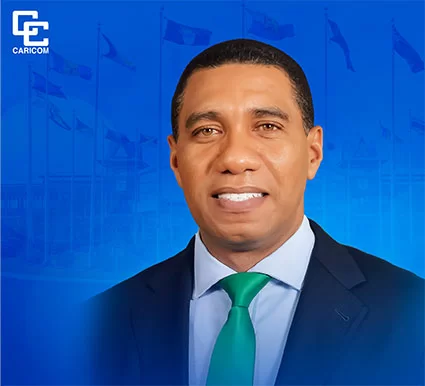
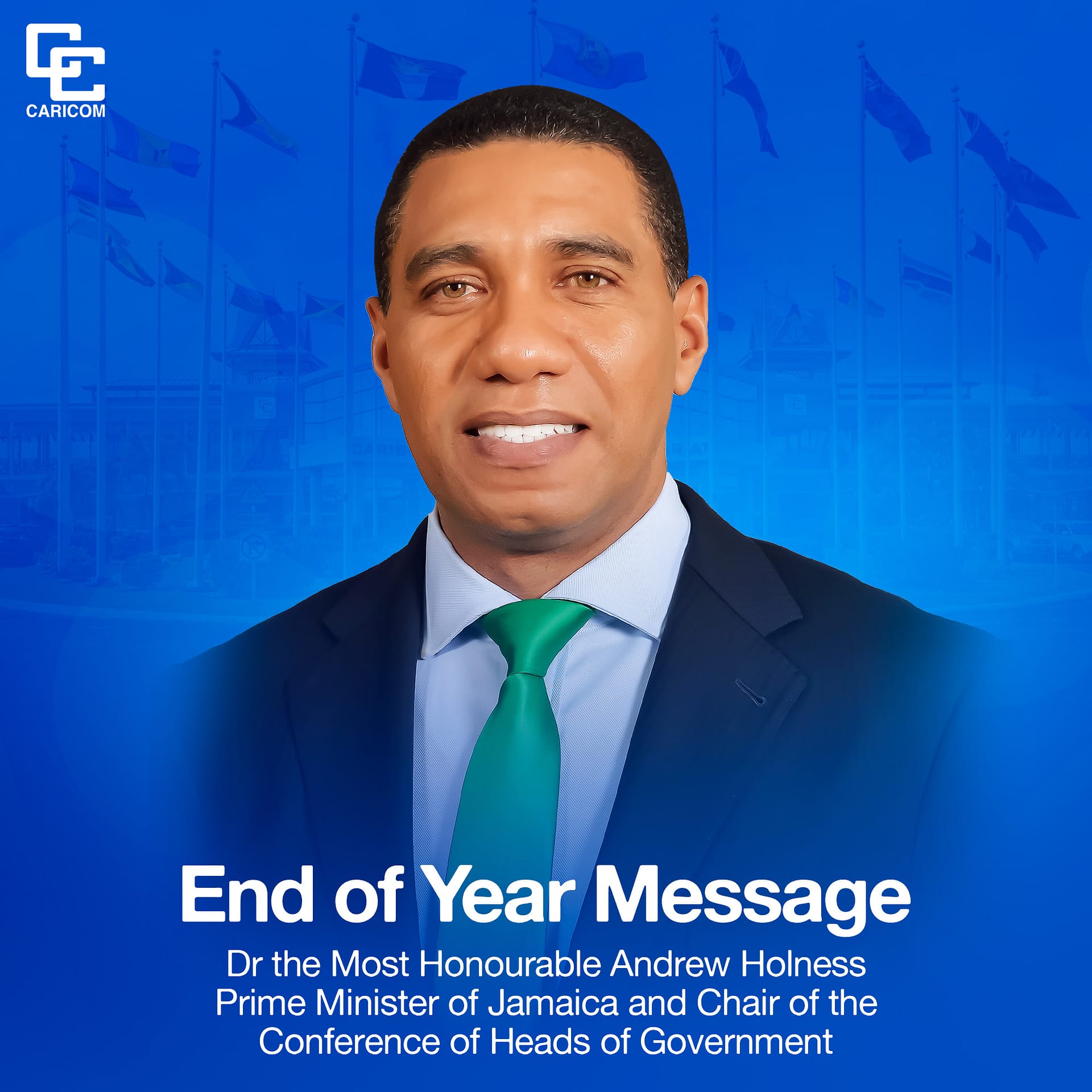
    In his concluding address as outgoing Chair of the Caribbean Community (CARICOM), Jamaican Prime Minister Dr. Andrew Holness highlighted significant advancements in regional integration and collective resilience during his tenure. The year 2025 witnessed CARICOM’s strengthened unity despite confronting catastrophic natural disasters, particularly Hurricane Melissa, which demonstrated the Caribbean family’s unwavering solidarity through regional and international support systems.

    A landmark achievement emerged from the July Conference of Heads of Government in Jamaica, where four member states—Barbados, Belize, Dominica, and St. Vincent and the Grenadines—committed to implementing full free movement of persons effective October 2025. This pioneering ‘concentric circles’ integration model enables willing nations to deepen cooperation while maintaining flexibility for broader participation.

    CARICOM successfully navigated shifting global trade dynamics through coordinated advocacy with the CARICOM Private Sector Organization and strategic international partners. Enhanced air connectivity bolstered intra-regional trade, while targeted initiatives improved food and nutrition security across the Community.

    The bloc maintained a unified diplomatic front at high-level international forums including the UN General Assembly, G20 Summit, and CELAC-EU Summit. This coordinated foreign policy approach strengthened crisis response capabilities and amplified the region’s voice on global platforms.

    Security remained paramount with the adoption of the Montego Bay Declaration on Transnational Organized Crime and Gangs, recognizing the inextricable link between security and sustainable development. While climate negotiations at COP30 fell short of Small Island Developing States’ urgent needs, CARICOM reaffirmed its commitment to the 1.5°C goal and acknowledged the critical work of regional institutions including the Caribbean Community Climate Change Centre and CDEMA.

    Strategic engagement with Africa expanded through the Second Africa-CARICOM Summit in Addis Ababa, fostering collaboration on trade, investment, cultural exchange, and global advocacy including reparations discourse. CARICOM sustained its advocacy for Haiti, contributing to UN Security Council actions and supporting preparations for democratic elections in 2026.

    The Community reaffirmed its commitment to maintaining the Caribbean as a Zone of Peace based on international law and peaceful dispute resolution. While acknowledging member states’ sovereign perspectives may differ, Dr. Holness emphasized that institutional mandates and economic interdependence remain foundational to regional cohesion amidst evolving geopolitical complexities.

    As leadership transitions to St. Kitts and Nevis and Saint Lucia, the outgoing Chair expressed confidence in CARICOM’s enduring integration model and the Secretariat’s continued professional service to member states.

  • Children gifted underwater adventure

    Children gifted underwater adventure

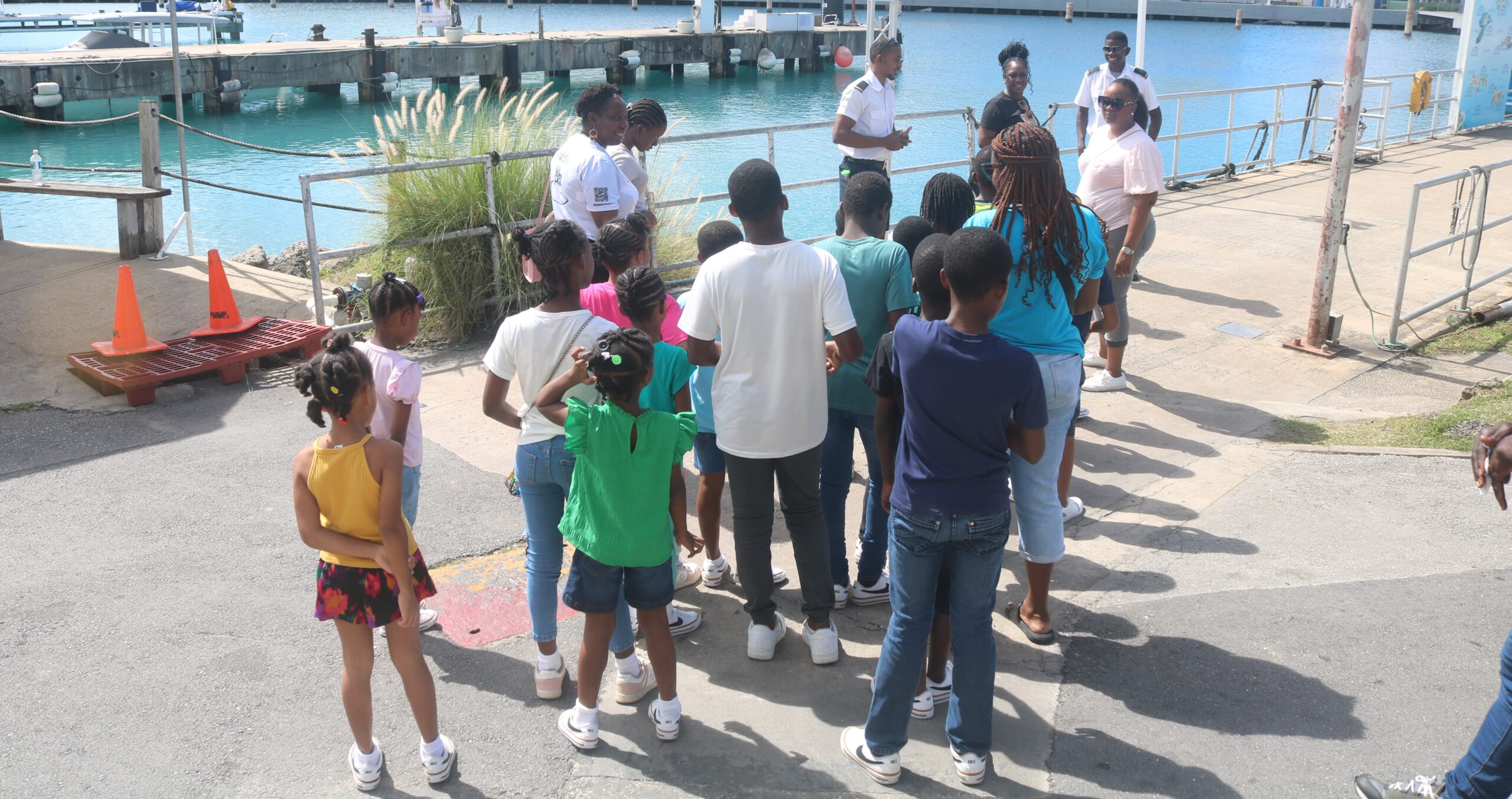
    In an extraordinary holiday initiative that transcended conventional gift-giving, thirty children from Nightingale Children’s Village embarked on an unforgettable underwater expedition aboard the Atlantis Submarine last Saturday. This remarkable experience was facilitated through a collaborative effort between the We Gatherin’ Secretariat, Atlantis Submarine, and the St Michael Parish Organising Committee (POC).

    Alicia Payne-Hurley, Deputy Chairperson of the St Michael We Gatherin’ POC, emphasized that the program was designed to create lasting memories rather than merely distributing seasonal presents. “Our objective extended beyond providing temporary holiday entertainment. We aimed to offer these children an educational and immersive marine experience that would leave enduring positive impressions,” she explained.

    The comprehensive outing included not only the submarine adventure but also lunch provisions and a commitment to ongoing support. Payne-Hurley clarified that future donations would prioritize practical necessities over novelty items, stating: “Our contributions will address actual needs rather than desires. Since many have already received recreational gifts, our post-Christmas donation will ensure continuous support rather than a one-time gesture.”

    Eight guardians accompanied the children during the expedition, with organizers expressing particular appreciation to Atlantis Submarine for providing the experience complimentary. Despite initial plans to accommodate forty children, participation limitations arose due to the submarine’s safety requirement of a minimum three-foot height.

    Addressing the unavoidable disappointment, Payne-Hurley acknowledged: “We regrettably had to exclude some younger children who didn’t meet the height criteria. We’re committed to creating alternative opportunities for them as they grow, ensuring no child is permanently excluded from such experiences.”

    This initiative exemplifies the parish’s broader dedication to supporting vulnerable community members through innovative and meaningful engagement programs that extend beyond traditional charitable approaches.

  • Grenadian pollster who got SVG’s election wrong says his poll was too old

    Grenadian pollster who got SVG’s election wrong says his poll was too old

    A prominent Grenadian data analyst has publicly analyzed his erroneous prediction that Saint Vincent and the Grenadines’ ruling Unity Labour Party (ULP) would secure a sixth consecutive term, attributing the miscalculation to conducting polls too early and failing to account for last-minute campaign dynamics.

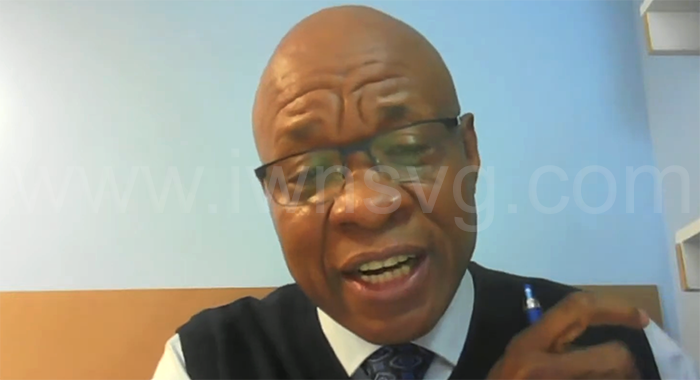
    Dr. Justin Pierre, a seasoned statistician and labor market consultant, revealed that his pre-election survey of 2,402 citizens conducted October 1-30 showed an 80% voter loyalty rate for ULP, leading his team to be ‘100% confident’ in their victory projection. However, the November 27 election resulted in a seismic shift, with the New Democratic Party (NDP) capturing 14 of 15 constituencies and outperforming ULP by approximately 9,854 votes according to preliminary counts.

    Critical factors unaccounted for in the initial survey included the COVID-19 vaccine mandate’s significant impact—a policy that resulted in hundreds of public sector dismissals in November 2021—and an unprecedented late-stage social media explosion. Pierre noted that while October social media consumption favored NDP by 110,100 to 157,000 minutes, this surged to nearly 900,000 minutes consumed from November 15 onward, creating what he described as an ‘insurmountable momentum shift.’

    The analyst also cited external campaign assistance from Jamaican specialists and alleged support from Trinidad and Tobago as additional factors that emerged after his survey period. Vincentian journalist and social commentator Jomo Thomas challenged Pierre’s methodology, noting that a purported 2% lead falling within the survey’s 2% margin of error indicated a statistical dead heat rather than a decisive advantage.

    Pierre concluded that future predictions should be made within one week of elections rather than thirty days prior, acknowledging that this was his first incorrect forecast after accurately predicting eight previous Caribbean elections.

  • Brenton Smith returns to policing, quits as NDP gen-sec

    Brenton Smith returns to policing, quits as NDP gen-sec

    In a significant development at the intersection of politics and public service, Brenton Smith has officially resumed his duties with the Royal St. Vincent and the Grenadines Police Force (RSVGPF). This reinstatement comes precisely four years and one month after his controversial dismissal during the previous administration’s tenure.

    Smith, who previously held the rank of station sergeant, was terminated in November 2021 under the Unity Labour Party government for his refusal to comply with vaccine mandates. His dismissal occurred shortly before his election as general secretary of the opposing New Democratic Party (NDP), where he served during their recent ascent to power.

    The transition back to police work was formally communicated to the NDP’s central committee on Saturday morning, with Smith immediately stepping down from his political position. According to verified reports, the former opposition leader will utilize accumulated leave time potentially extending through August 2026, effectively placing him on extended absence from active duty.

    In an emotional Facebook post dated December 22, 2025, Smith described returning to police headquarters as “a new chapter in my journey—one that I never thought would unfold like this.” He reflected on the personal significance of his dismissal date, noting it remained “etched in my memory as the day I was dismissed from the force for standing by my convictions.”

    The reinstatement occurs under the NDP’s policy of restoring public sector workers terminated due to vaccine requirements with full benefits. This policy mirrors similar measures implemented by the previous ULP administration, though the NDP has additionally committed to compensating affected workers for lost income during their termination period.

    Meanwhile, the legal battle surrounding the vaccine mandate continues its journey through the judicial system. Public sector unions successfully challenged the policy in High Court, but faced reversal in a 2-1 Court of Appeal decision. The case now advances to London’s Privy Council for final adjudication.

    Smith indicated his future plans include developing his private business ventures and composing an autobiography documenting his “trials, triumphs, and lessons learned” throughout his politically tumultuous journey.

  • PM outlines plan to return Unionites home, restart businesses

    PM outlines plan to return Unionites home, restart businesses

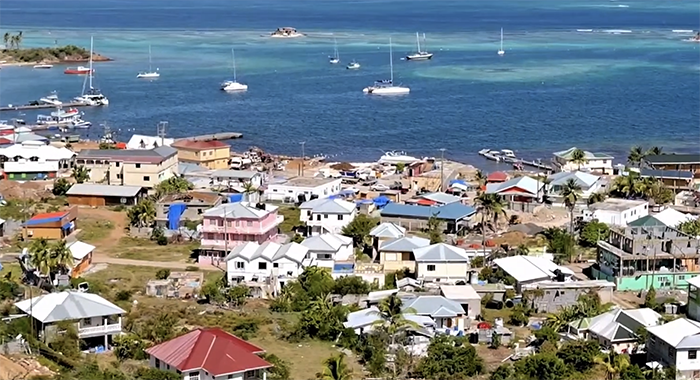
    The St. Vincent government has initiated a comprehensive housing relocation program for displaced residents of Union Island who remain in temporary rental accommodations on the mainland since Hurricane Beryl devastated the region in July 2024. Prime Minister Godwin Friday announced the urgent initiative during his Christmas Eve address on Boom FM, emphasizing that returning islanders to their communities constitutes a critical component of the nation’s recovery strategy.

    The catastrophic hurricane, which struck on July 1, 2024, destroyed over 90% of structures across the Southern Grenadines islands of Mayreau, Canouan and Union Island, forcing thousands to evacuate to St. Vincent. While the previous Unity Labour Party government provided temporary housing and repaired damaged homes, Prime Minister Friday criticized the pace of recovery as insufficiently slow.

    “We are addressing this problem with utmost urgency,” stated Friday, whose New Democratic Party assumed power after November’s general election. “Now that infrastructure including electricity, roads, and telecommunications has been largely restored, we must facilitate the return of displaced citizens to their preferred communities.”

    The administration is collaborating with Housing Minister Andrew John and Education officials to develop practical solutions, including potentially utilizing prefabricated housing units or constructing temporary shelters using local materials. Approximately 100 prefabricated houses imported by the previous government have encountered implementation challenges due to unsuitable terrain conditions on the islands.

    Concurrently, the government will close the temporary educational facility at Arnos Vale’s former Teachers’ College campus, where Union Island students had been accommodated. Most students have already returned to their original schools, with remaining pupils being integrated into other educational institutions nationwide.

    Prime Minister Friday highlighted the multidimensional nature of the crisis, noting that many displaced individuals face employment shortages alongside housing insecurity. “The previous approach created a limbo situation where people lacked permanent housing, stable employment, and consistent government support,” he observed. “Our strategy addresses both housing and economic needs simultaneously to ensure sustainable recovery.”

  • Some public servants to get more than double their salary as bonus — PM

    Some public servants to get more than double their salary as bonus — PM

    In a significant move to address economic disparities, the newly elected government of St. Vincent and the Grenadines has unveiled details of its promised salary bonus for public servants, revealing an equitable distribution model that disproportionately benefits lower-income workers. Prime Minister Godwin Friday, who also serves as Finance Minister, confirmed the initiative during a recent radio interview on Hot 97 FM.

    The compensation scheme, designed as a flat-rate across-the-board payment rather than a percentage-based increase, will result in approximately half of all public servants receiving a full double salary. Notably, those at the lower end of the pay scale will obtain more than double their regular monthly earnings. This approach marks a deliberate departure from traditional bonus structures that typically advantage higher-paid employees.

    Prime Minister Friday emphasized the government’s commitment to equity, stating, ‘The intention is that persons at the bottom of the scale would have the biggest benefit.’ He illustrated this principle with a comparative example: while an employee earning EC$9,000 would receive EC$18,000, someone making EC$1,500 would get the same flat bonus amount, effectively receiving more than double their regular salary.

    The payout, characterized as a ‘salary bonus’ rather than a conventional raise, is scheduled for disbursement in late January, separate from regular salary payments. This fulfills one of four key campaign pledges made by the New Democratic Party (NDP), which achieved a landslide victory in the November 27 general election, securing 14 of 15 parliamentary seats and ending the 22-year administration of the Unity Labour Party.

    The Prime Minister expressed confidence that public servants would appreciate the equitable approach, noting, ‘They know what the intent is: to put some money back into your pocket.’ He framed the bonus as a direct response to the ongoing cost-of-living crisis affecting the nation.

    Regarding other campaign commitments, the government has already implemented a VAT-free shopping day on December 19. The promised increase of Public Assistance to EC$500 will be incorporated into January’s budget legislation with implementation expected in February. Prime Minister Friday stressed the importance of responsible fiscal management, contrasting his administration’s approach with what he characterized as the previous government’s disregard for constitutional and financial safeguards.

    Despite acknowledging fiscal challenges, the Prime Minister remained resolute: ‘I’m not gonna go out and wring my hand and say things are worse than expected. I promised these things, I will deliver them.’

  • Andrew Holness blikt terug op voorzitterschap Caricom

    Andrew Holness blikt terug op voorzitterschap Caricom

    Jamaican Prime Minister Andrew Holness has concluded his tenure as Chairman of the Caribbean Community (CARICOM) for the second half of 2025, emphasizing the profound unity and shared purpose that defined regional cooperation during his leadership. In his closing address, Holness expressed unwavering confidence in CARICOM’s collective strength and optimism about the member states’ shared future.

    The year 2025 proved transformative for the Caribbean region, particularly in post-hurricane recovery efforts following the devastating impact of Hurricane Melissa. Holness highlighted how the crisis demonstrated the unshakable solidarity among Caribbean nations, stating, ‘As members of the Caribbean family, we never stand alone.’

    Significant milestones were achieved under Holness’s leadership, including substantial progress in regional integration and economic advancement. A historic development emerged with the announcement that Barbados, Belize, Dominica, and St. Vincent and the Grenadines will implement complete freedom of movement among their citizens starting October 1, 2025. This ‘concentric circles’ approach allows for enhanced cooperation while maintaining flexibility for other member states to join subsequently.

    CARICOM also strengthened its global positioning through strategic partnerships, particularly with the Caribbean Private Sector Organization (CPSO). The expansion of regional and international air transportation networks, alongside initiatives to bolster food and nutrition security, marked additional achievements.

    In international diplomacy, CARICOM maintained a unified voice during critical forums including the United Nations General Assembly, G20 Summit, and CELAC-EU Summit. This cohesion enhanced foreign policy coordination and enabled proactive crisis management.

    Security challenges remained prioritized throughout Holness’s chairmanship, with transnational organized crime and gang violence addressed through the Montego Bay Declaration adopted during July’s CARICOM summit. The Prime Minister emphasized the intrinsic connection between security and sustainable development.

    Climate change continues to pose existential threats to the region. While acknowledging progress made at COP30 in Belém, Holness noted that outcomes fell short of addressing the urgent needs of small island and low-lying coastal states. He commended regional organizations including the Caribbean Community Climate Change Centre and the Caribbean Disaster Emergency Management Agency for enhancing preparedness and resilience.

    The year also witnessed deepened ties with Africa during the Second Africa-CARICOM Summit in Addis Ababa, which reinforced the vision of an ‘Atlantic Bridge’ promoting development and shared prosperity. Discussions emphasized trade, investment, cultural exchange, and international cooperation—including the ongoing priority of reparations.

    CARICOM’s sustained engagement with Haiti remained crucial, with the community playing a pivotal role in coordinating international support and stabilization efforts ahead of planned free and fair elections in 2026.

    Concluding his remarks, Holness called for continued unity, strategic clarity, and discipline among member states amidst rapidly evolving geopolitical dynamics. He emphasized that regional responses must remain grounded in respect for sovereignty, international law, peaceful dialogue, and mutual respect, warning that division would undermine CARICOM’s credibility and effectiveness.

  • Economists cite challenges of the Dominican Republic for 2025

    Economists cite challenges of the Dominican Republic for 2025

    Prominent economists Rafael Espinal and Antonio Ciriaco Cruz have outlined a series of pressing economic challenges confronting the Dominican Republic as the nation approaches 2026. Their analysis identifies critical areas requiring immediate governmental attention to ensure sustainable economic growth and stability.

    Professor Rafael Espinal of Santo Domingo’s Technological Institute (Intec) emphasized that the foremost priority must be the implementation of a comprehensive fiscal reform. He characterized this reform as needing to be progressive in nature, socially inclusive, and strategically structured to benefit the broader economy.

    Espinal identified three additional crucial challenges: revitalizing public investment programs, particularly within the construction sector; maintaining monetary policies that ensure competitively low interest rates; and restoring public trust in governmental institutions through demonstrated administrative honesty and operational efficiency.

    Echoing these concerns, Antonio Ciriaco Cruz, Dean of Economic and Social Sciences at the Autonomous University of Santo Domingo (UASD), specifically called for increasing public investment to approximately 3% of the nation’s Gross Domestic Product. Cruz further recommended stimulating domestic credit mechanisms to boost both private consumption and investment activities—key drivers for achieving targeted economic growth objectives.

    The economics expert additionally cautioned against two emerging fiscal pressures: escalating public debt interest payments and excessive financial transfers to the electricity sector. Cruz warned that without containing these expenditures, the Dominican Republic’s economic progress could face significant headwinds in the coming years.

    Both experts presented their assessments during a recent economic outlook forum, highlighting the interconnected nature of these challenges and the necessity for coordinated policy responses.

  • Vader doodt vier eigen kinderen en twee buren bij gruwelijke steekpartij

    Vader doodt vier eigen kinderen en twee buren bij gruwelijke steekpartij

    A devastating act of domestic violence unfolded in Commewijne during the late hours, resulting in multiple fatalities and critical injuries. Local authorities received an emergency alert at approximately 12:23 AM regarding a severe violent incident occurring along Hadji Iding Soemitaweg.

    Preliminary investigative findings indicate that a male perpetrator armed with a bladed weapon systematically attacked his neighbors—a married couple—before turning the weapon against his own biological children. The brutal assault claimed the lives of six individuals total: both adult neighbors and four minors who were the assailant’s offspring.

    Miraculously, one adolescent daughter survived the stabbing frenzy despite sustaining life-threatening puncture wounds. Emergency medical services rapidly transported her to a specialized trauma facility where she remains in critical condition under intensive care.

    Law enforcement personnel successfully located and confronted the suspect shortly after the homicides. During apprehension attempts, the armed individual allegedly charged toward officers with the weapon still in hand. Following standard escalation protocols, police discharged service firearms, striking the suspect in the lower extremities to neutralize the threat. The subdued assailant received immediate medical treatment before being transferred to secure custody.

    Criminal investigators have established a perimeter around the crime scene while forensic specialists methodically document evidence and reconstruct the sequence of events. The motive behind this horrific familicide remains undetermined as detectives continue interviewing witnesses and examining the perpetrator’s background.

    This tragedy represents one of the most severe cases of domestic violence recorded in the region’s recent history, prompting discussions about community mental health resources and intervention protocols.