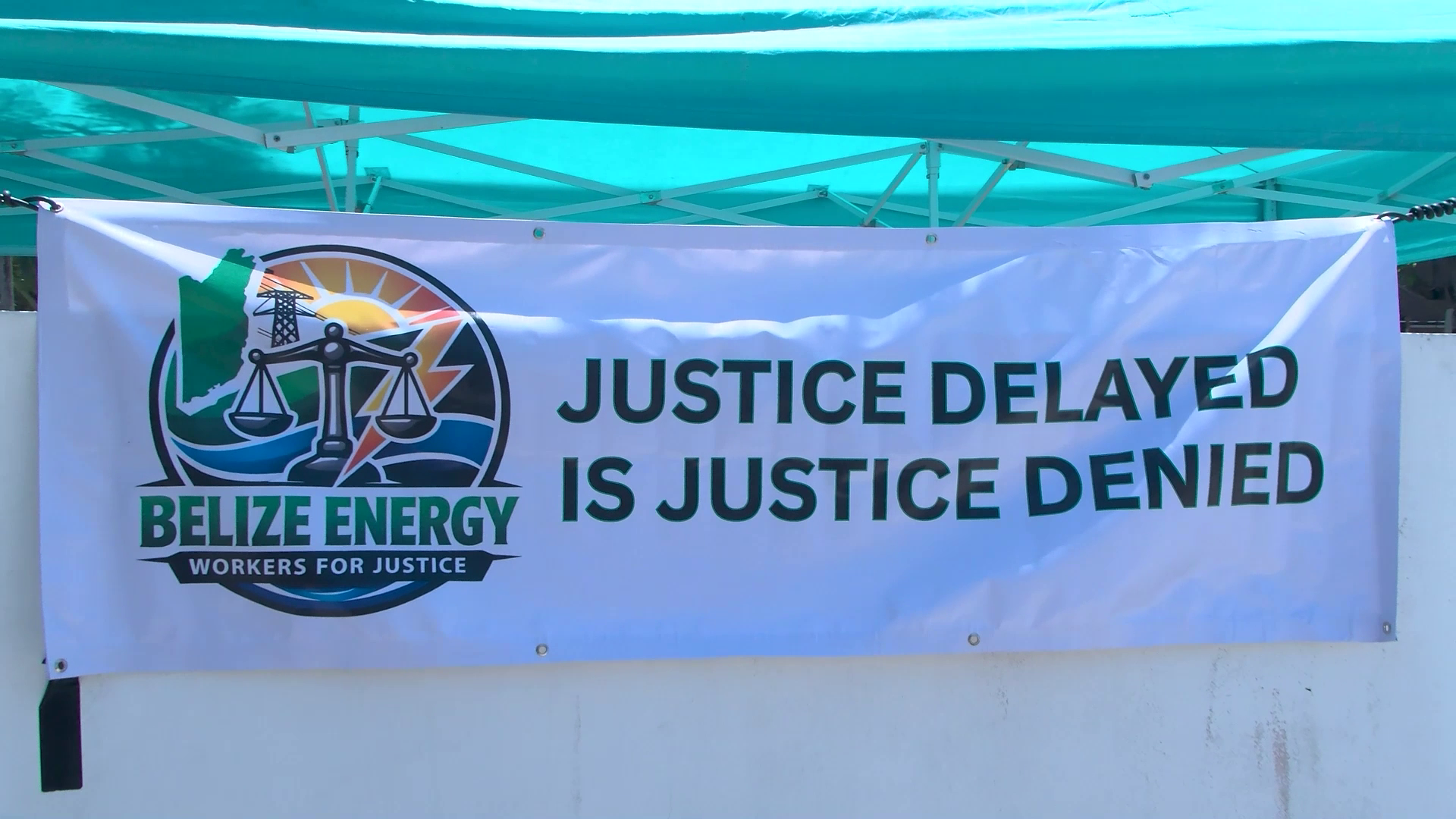
Dated July 24, 2026, a long-running dispute over unpaid severance for former employees of Belize Electricity Limited (BEL) has reached a new flashpoint, as mounting public and governmental pressure pushes the utility to end the months-long stall in legal proceedings that have left vulnerable workers in limbo. For years, hundreds of former BEL workers have waited patiently for the severance compensation they are owed, but their wait has grown increasingly desperate with each passing month. Many of these workers are now advanced in age, while others are fighting serious health conditions that have left them in urgent need of the funds they are owed. What was supposed to be a clear path to resolution through the national court system has ground to a halt, leaving workers with no timeline for closure. The breakdown comes after BEL made a formal commitment to Belize’s Ministry of Labor: during a high-level meeting with Labor Minister Kareem Musa, company representatives agreed they would file the required court documents to seek a formal legal declaration from the Belize High Court within a 30-day window. That commitment was made two months ago, and to date, no court filings have been submitted. Minister Musa has publicly called out BEL for failing to honor its promise, emphasizing the urgent human stakes behind the delay. In a statement reproduced from an evening television newscast transcript, Musa made clear his disappointment with the utility’s inaction: “Hundred percent that is wrong, because they had told me in a meeting that it would only take a month. And that was about two months ago that they were going to file the papers for a declaration in the High Court of Belize in that month. So that has gone way over a month and it should not be the case that we are waiting so long for a judicial matter where we can see that there are a lot of elderly, sick former workers of BEL. So I will press certainly from my end, and from the Ministry’s end for BEL to take the action so we can have a final determination of that.” The Belize Energy Workers Union (BEWJ), which has represented the former workers throughout the dispute, has not relaxed its advocacy for the workers’ demands. Even as some union members grapple with poor health linked to their prolonged uncertainty over unpaid compensation, the union continues to push BEL and the government to move the process forward to a final resolution. This report is a transcribed adaptation of an evening television newscast, with all translated Kriol language statements rendered using a standardized spelling system for accuracy.
作者: admin
-

Belize Eyes Faster Shift to Electric Transportation
In a push to cut fossil fuel dependence and slash carbon emissions from the transportation sector, Belize has committed to accelerating its transition to electric mobility through a cross-regional sustainable transport initiative backed by Taiwan and the Central American Integration System (SICA). The collaborative project, launched in 2026, will center specifically on Belize to assess the practicality of expanding the nation’s electric bus fleet and building out a nationwide network of electric vehicle charging stations, while leveraging insights and expertise from early regional adopters of low-carbon transport.
Dr. Leroy Almendarez, Chief Executive Officer of Belize’s Ministry of Public Utilities, Energy and Logistics, represented the nation in recent working discussions focused on advancing the initiative. He highlighted that the entire Central American region, coordinated through SICA, shares a collective goal of boosting electric vehicle adoption, driven primarily by commitments to cut environmental harm and improve air quality across the bloc.
The project is currently conducting a targeted diagnostic analysis of Belize’s current transportation landscape to map out a realistic transition timeline for phasing out diesel and gasoline-powered public transit vehicles in favor of electric alternatives. According to Almendarez, two SICA member states – Costa Rica and Panama – have already achieved far higher electric vehicle penetration than the rest of the region, with Costa Rica emerging as a clear regional leader in sustainable transport policy and deployment. Belize plans to draw heavily on these countries’ hands-on experience to avoid common pitfalls and streamline its own transition.
A key challenge the initiative will address is the high upfront purchase cost of electric vehicles, a major barrier for private bus and fleet operators in Belize. Almendarez noted that the project will collect and share empirical data to demonstrate the long-term financial benefits of electric mobility to local vehicle owners, who were included in recent working sessions to ensure stakeholder input guides the initiative’s design.
Almendarez pointed out that beyond environmental benefits, electric transport offers significant financial stability for Belize, a nation that is fully reliant on imported fossil fuels with no control over global price volatility. “If you were running from Belize City to Cayo, you’ll find out that it’s much cheaper” to operate an electric vehicle compared to a gasoline or diesel bus, he explained, noting that lower and more stable operating costs offset the higher initial investment over the vehicle’s lifespan.
-

Hoogleraar Moomou: Een gedeelde rivier vraagt om gedeelde verantwoordelijkheid
For centuries, the Marowijne-Lawa-Litanier River that cuts across the border between French Guiana and Suriname has been far more than a cartographic boundary or administrative dividing line. It is a lifeline, a sacred cultural and spiritual touchstone for Indigenous peoples and Maroon communities that have made its banks their home since long before modern nation-states drew their lines across the region.\n\nIndigenous groups including the Kali’na, Arawak, Teko, and Wayana-Apalaï were the first inhabitants of the river basin. Beginning in the 18th century, Maroon communities—descendants of formerly enslaved people who escaped colonial plantations in Suriname—settled along the river’s reaches, including the Aluku-Boni (from 1776), the Pamaka (from 1877), and the Ndyuka (also called Okanisi), who first settled along the Tapanahoni River in 1766 before expanding to the Lawa River banks in the 1880s.\n\nFor these communities, the river border has a meaning fundamentally different from the one imposed by national governments. While citizenship is formally defined by which side of the river a person is born or resides on—French for those on the French Guiana side, Surinamese for those on the Surinamese side—local worldviews do not recognize a rigid dividing line. As André Pakosie, a Maroon writer and community leader born in the region, noted in a 2018 essay: “In my youth, I grew up with the idea that for us Maroons there was no border between Suriname and French Guiana. People on the other side of the Marowijne just spoke a different dialect, same as us. The land on both sides belonged to everyone, not to France or the Netherlands—it was our shared home.”\n\nThat centuries-old fragile balance between communities and the river ecosystem has come under growing threat since the end of the 20th century. Large-scale resource exploitation, unchecked pollution, and inflexible cross-border border management that ignores local traditions and needs have eroded the sustainable stewardship that traditional authorities maintained for generations. Accelerating ecosystem decline, combined with the shrinking influence of traditional governance, has pushed the region to a breaking point, according to Jean Moomou, a professor of history at the University of French Guiana who authored this analysis of the river crisis.\n\nToday, the single greatest threat facing the basin is unregulated, illegal gold mining. The activity has carved up riverbeds, cleared old-growth forests, and eroded river banks across the region. Worse, mercury runoff from mining, mixed with plastic, metal, and battery waste, has poisoned the river’s water. This contamination has put both public health for local communities and the basin’s unique biodiversity at severe risk.\n\nFor local people, the damage is not only environmental but cultural and spiritual. As one traditional healer (obiauman) put it: “All the water spirits have left and hidden themselves.” With the loss of the river’s traditional purity, long-held cultural practices that structure community life are also fading. The arrival of unregulated mining has also brought a surge in violent conflict, most notably the deadly clashes in gold mining areas around Maripasoula in the late 1990s and early 2000s.\n\nThese interconnected challenges are not isolated incidents: they expose a deep structural crisis that demands coordinated action from political leaders, civil society, and scientific experts across both borders. Inaction would put both the long-term and short-term socioeconomic well-being of local communities and the ecological integrity of the transboundary basin at irreversible risk.\n\nMoomou notes that the 2021 protocol for border redefinition jointly proposed by the governments of France and Suriname offers a promising path forward. The updated border framework creates a clearer, more effective regulatory structure to crack down on illegal activities like unregulated gold mining, while opening the door to cooperative management that honors the river’s role as a shared resource for the communities that have depended on it for centuries. The core demand from researchers and community leaders remains clear: the river must be managed as a shared resource, with full respect for both ecological health and the long-standing use rights of the Indigenous and Maroon peoples who call it home.
-
City Hall Touts Transit Progress as Commuters Brave Heat and Rain
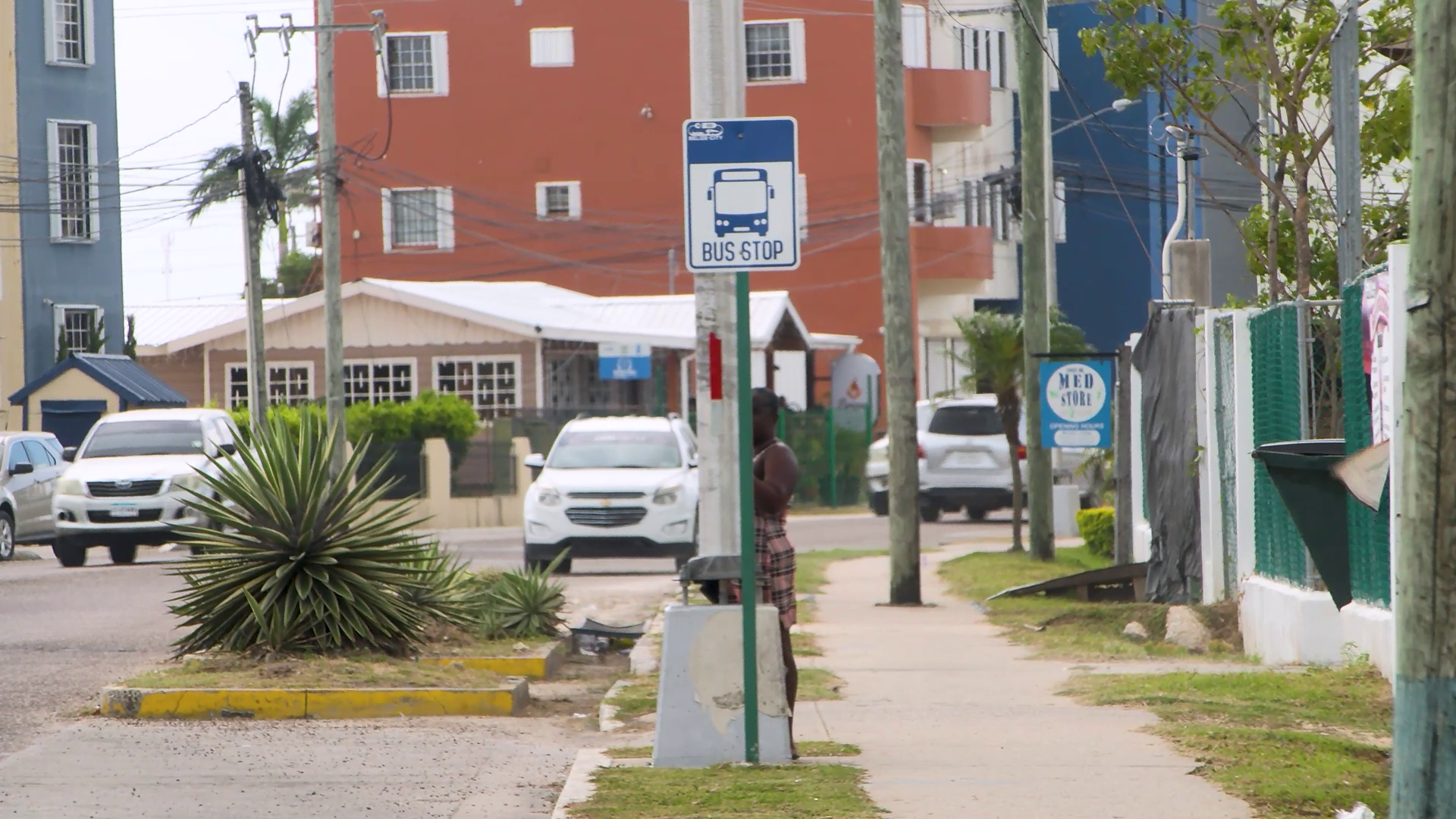
When Belize City launched its electric bus pilot program in July 2024, it marked a bold step toward sustainable public transit for the coastal Central American city. Two years on, city leaders are celebrating a key milestone: the small fleet of two electric buses has already carried nearly 400,000 passengers, proving strong local demand for cleaner, accessible public transportation. But for daily commuters relying on the new service, one critical oversight has turned everyday trips into an uncomfortable gamble: a lack of functional, weather-protected bus stop infrastructure leaves riders waiting in extreme heat or sudden heavy rain, with nowhere to shelter.
Deputy Mayor Eluide Miller recently acknowledged that this gap is a valid, pressing concern for residents, confirming that the city has now finalized plans to address the long-standing issue. The first major improvement will be a state-of-the-art new sheltered bus stop constructed at the high-traffic Battlefield Park location in central downtown Belize City, a project set to break ground in the near term.
Looking beyond the initial pilot phase, Miller outlined a multi-term strategy to overhaul the city’s entire bus stop network. The current council has committed to advancing upgrades through the end of its term, and Miller emphasized that the next incoming city council will need to allocate dedicated ongoing resources to both modernize existing stops and build new facilities to support planned route expansions for the growing electric bus fleet.
Miller explained that the limited scope of the initial pilot program explains why infrastructure upgrades were not prioritized from the start. The initiative was designed as a test bed to evaluate whether electric buses could operate reliably and effectively in Belize’s climate and urban context, with only a small number of vehicles deployed initially. Comprehensive infrastructure upgrades were not baked into the original pilot’s limited scope and budget.
As Belize City pushes forward with its transition to electric public transit, the infrastructure upgrade plan signals a shift from testing the viability of e-mobility to scaling the service into a fully functional, resident-focused public resource, addressing the most immediate pain point for daily users.
-
Church rejects ‘spiritual piracy’ charge over Bob Marley Mass
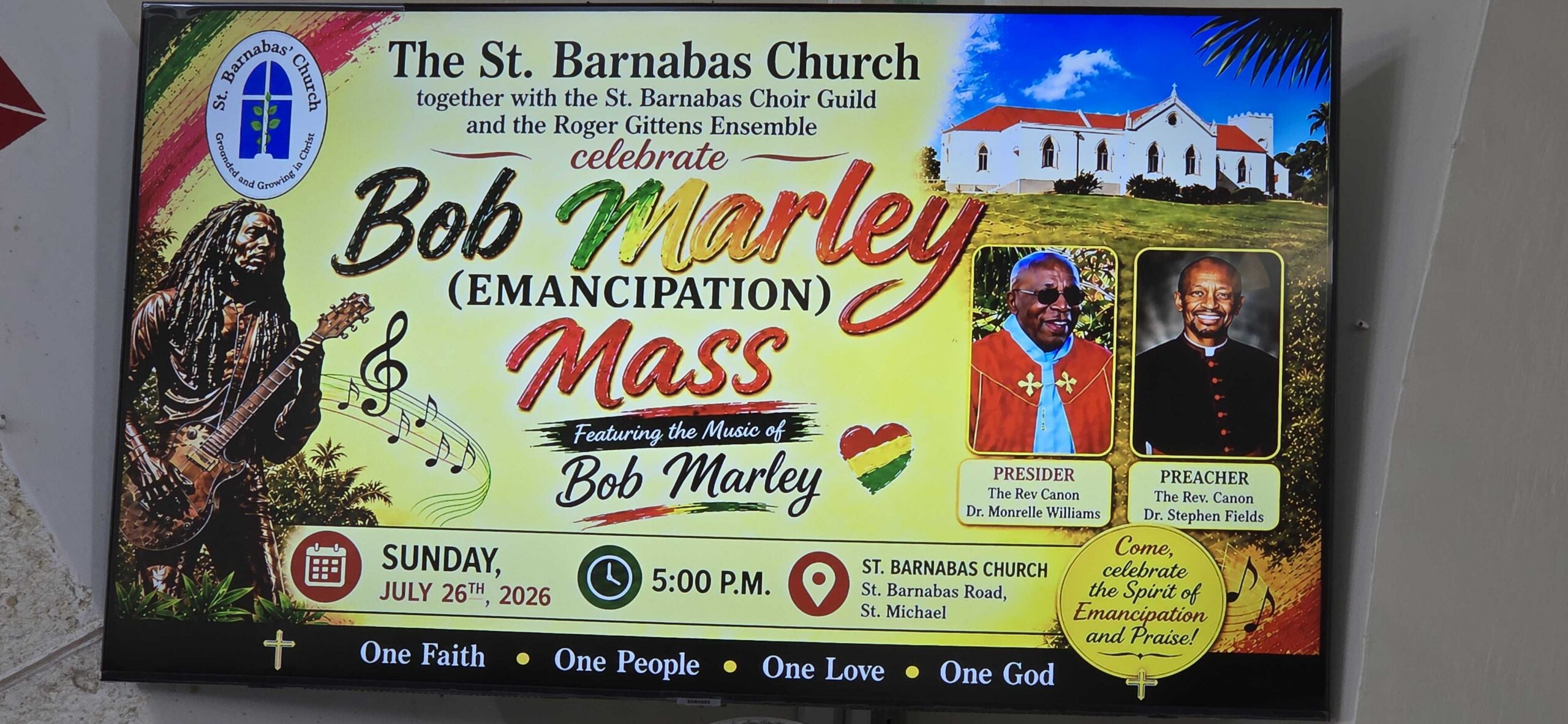
A high-profile religious and cultural conflict has emerged in Barbados, as St Barnabas Anglican Church defends its upcoming “Bob Marley Mass” against fierce condemnation from Rastafari leaders, who have labeled the service an act of spiritual and cultural piracy and demanded its immediate cancellation.
The special Eucharistic service, scheduled to coincide with this weekend’s national commemoration of the 1838 emancipation from chattel slavery, integrates the iconic music of reggae legend Bob Marley into a traditional Anglican liturgical structure. Church leaders frame the event as a thoughtful theological engagement with the consistent themes of justice, liberation, repentance, hope, peace, reconciliation, and human dignity that run through Marley’s discography — themes they say align closely with core Christian scriptural values.
The liturgy for the service was originally crafted in 2025 by Canon Dr Stephen Fields during his tenure as sub-dean of St James Cathedral in Toronto, Canada. It debuted that same year during Black History Month to mark the 80th anniversary of Marley’s birth. Canon Dr Monrelle Williams, priest-in-charge at St Barnabas, later brought the service to Barbados to anchor the island’s Emancipation Day observances. Church officials have also stressed that all musical arrangements used in the service have been properly licensed through Fifty Six Hope Road Music Limited, the official entity that manages Marley’s estate, confirming the event operates within legal copyright frameworks.
Despite the church’s framing, the National Rastafari Registry Secretariat and Trust has launched uncompromising opposition to the service, arguing it misappropriates a central spiritual and cultural figure of the Rastafari faith while erasing the community’s ongoing struggles for equal rights. In a scathing public statement, the group questioned both the timing and underlying intent of the event, pointing to the long-standing silence of the Anglican Church in Barbados on the Rastafari community’s campaign to secure legal recognition for the sacramental use of cannabis, a core tenet of their religious practice.
The statement accuses the church of hypocrisy: “You cannot ignore the living Rastafari community, remain silent while our constitutional rights are stripped away, and then turn around to exploit our Prophet for Emancipation Day marketing. This is not inclusivity; it is spiritual and cultural piracy.” Rastafari leaders add that inserting Marley’s work into an Anglican service fundamentally distorts his core message. They note that Marley was an outspoken critic of European colonial Christian institutions, and that his work centered anti-colonial liberation — a cause that directly pushes back against the historical role of the Anglican Church as an instrument of colonial rule. “Emancipation Day represents liberation from the exact mental and spiritual slavery that the colonial church enforced,” the statement reads. “To host a ‘Bob Marley Mass’ within the walls of the historical oppressor, while continuing to ignore the struggles of living Rastafarians, mocks the very essence of freedom.”
In response, St Barnabas has acknowledged the legitimacy of Rastafari concerns about systemic discrimination and social exclusion, saying these issues carry meaningful weight and deserve urgent national attention. “These concerns should not be dismissed. They present an opportunity for honest reflection and constructive dialogue,” the church’s statement reads. “The Church recognises that reconciliation is achieved not merely through words but through listening, mutual respect, and a shared commitment to justice. The celebration of the Mass may well be the catalyst for a long overdue conversation about the rights of the Rastafari community in our country.”
Church leaders also point to Marley’s own complex spiritual history to contextualize the service: while Marley was a committed Rastafari for most of his adult life, he was baptized into the Ethiopian Orthodox Church shortly before his death in 1981. The service, they insist, does not seek to redefine or co-opt Marley’s legacy, but rather to highlight overlapping values between Christian theology and the themes woven through his music.
Despite the church’s call for dialogue, Rastafari leaders maintain that any meaningful engagement must start with the cancellation of the service, a formal apology, and concrete policy action to address the community’s unmet constitutional rights and long-standing historical grievances.
To contextualize the conflict, Rastafari theology draws significant inspiration from Christian scripture and tradition, but reinterprets these texts through the lens of African liberation, resistance to white colonial oppression, and the lived experience of the Black diaspora. For most Rastafari, mainstream Christian churches are inextricably linked to the colonial project that subjugated African and diasporic communities, creating a deep historical rift that shapes current debates over cultural and religious ownership.
-

CitCo Seeks New Funds for Capital Projects
Eight months out from Belize’s upcoming municipal elections, the Belize City Council has sparked public and political debate with a proposal to issue a $46 million municipal bond, part of which will secure $16 million in fresh financing for critical city-wide infrastructure and capital projects.
Deputy Mayor Eluide Miller has moved quickly to address growing concerns over the timing of the bond initiative, the city’s spending priorities, and its ability to shoulder nearly half a billion Belizean dollars in municipal debt, framing the proposal as a responsible restructuring of existing obligations rather than a reckless new borrowing spree ahead of the election cycle.
Miller, speaking on behalf of the current Bernard Wagner-led administration, emphasized that the council carries a strong fiscal track record that backs its ability to manage the new debt structure. Only $16 million of the total $46 million bond represents new capital for projects, he explained: the remaining $20 million covers existing short-term debt that the council is refinancing into longer-term instruments with maturities of five to ten years, a move designed to ease near-term fiscal pressure and create more flexible repayment terms.
The deputy mayor highlighted that even during two of the most severe shocks to Belize’s economy in recent history—the global COVID-19 pandemic and Hurricane Lisa, which battered the country in 2022—the Belize City Council never missed a single interest or principal payment on its existing outstanding debt. He added that the council has consistently maintained and properly managed required reserve funds, including an interest reserve fund and a sinking fund, to ensure all future debt obligations can be met.
Miller argued that municipal bonds are standard, legitimate financial tools designed explicitly to allow local governments to fund large-scale capital improvements that benefit the public. He also noted that Belize City municipal securities have a long-standing positive reputation in regional financial markets, which currently hold ample liquidity that the council can leverage to advance development in the city. He added that the current administration has also worked to successfully attract both public and private sector investment to Belize City, which he described as one of the most attractive investment offerings in the current market.
Critics and observers, however, have raised questions about the political timing of the bond proposal, which comes just months before voters head to the polls to elect a new municipal council. The timing has led to questions about whether the initiative is aligned with long-term public interests, or if it is a pre-election move designed to fund popular projects ahead of the vote.
This report is adapted from a transcript of a televised evening newscast.
-
Belize Welcomes First Asylum Seeker Under U.S. Deal
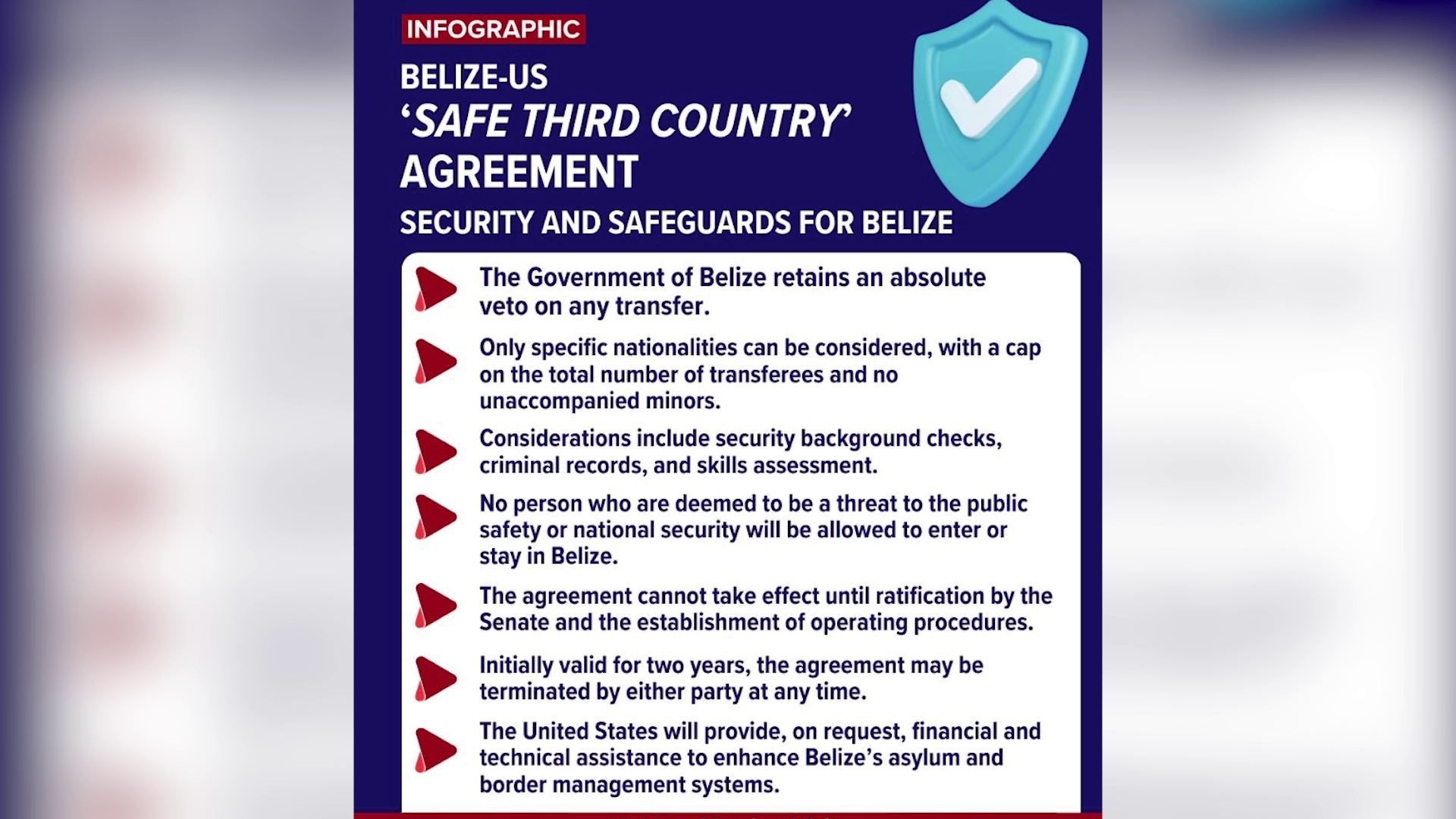
Nearly nine months after formalizing a controversial Third Safe Country agreement with the United States, the Central American nation of Belize has marked a major milestone in the implementation of the policy: it has welcomed its first asylum seeker under the pact. The individual, a Haitian national, arrived in the country several weeks ago and has now begun the multi-step process of integrating into Belizean society, according to senior government officials.
The bilateral agreement, signed by the Belizean and U.S. governments in October 2025, designates Belize as a third safe destination where asylum seekers intercepted while attempting to reach the United States can be relocated to have their claims processed. While the Belizean Ministry of Foreign Affairs holds lead negotiating and coordination responsibility for the agreement, the country’s Ministry of Immigration and the United Nations High Commissioner for Refugees (UNHCR) share on-the-ground duties for supporting arriving asylum seekers.
In a public update on the policy’s first active case, Belize’s Immigration Minister Kareem Musa outlined the critical role his department plays in the process. “Our refugee department, along with the UNHCR, are responsible for integrating those individuals into society, providing shelter for them, providing food for them, helping them to get on their feet with the different process and integrating into the Belizean society,” Musa explained.
Musa also detailed the vetting framework laid out in the official memorandum of understanding (MOU) governing the agreement, which gives Belize full authority to reject any relocated asylum seeker based on national security priorities. Under the terms of the pact, U.S. authorities provide Belize with 72 hours advance notice before any asylum seeker is relocated by flight. During that window, Belizean officials conduct a full background check to screen for potential risks. If authorities identify any concerns about an individual, the government retains the explicit right to deny entry and landing permission to the asylum seeker, Musa confirmed.
-
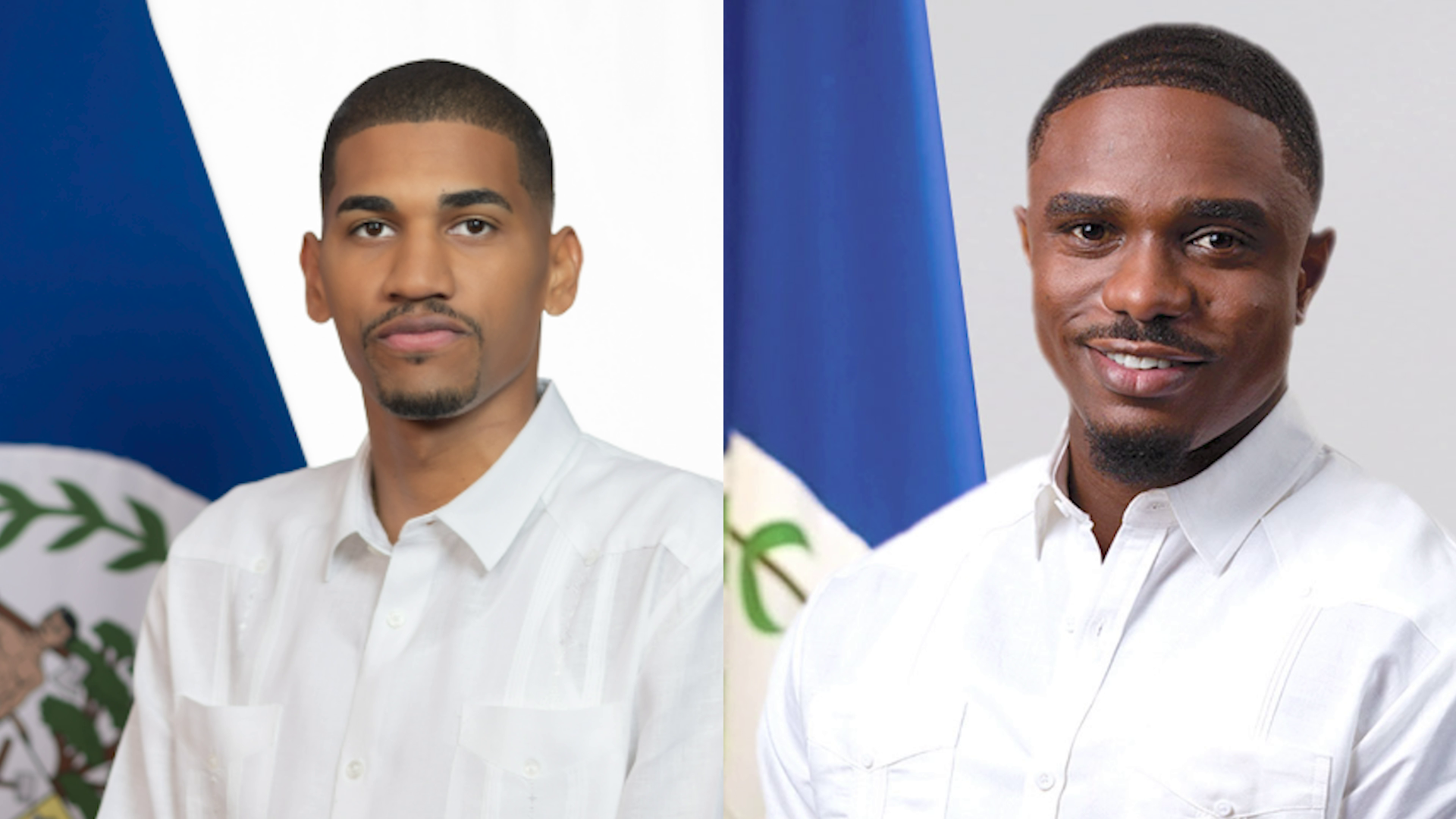
No Endorsement from Musa Ahead of PUP Convention
Ahead of the People’s United Party (PUP) upcoming Belize City municipal convention, Caribbean Shores Area Representative Kareem Musa has announced he will remain neutral in the race for the party’s mayoral nomination, framing his non-endorsement stance as a commitment to upholding the democratic spirit of the internal selection process.
Two contenders, Allan Pollard and Eluide Miller, are currently competing to secure the PUP mayoral candidacy ahead of the nationwide municipal elections scheduled for March 2026. While Musa has already publicly thrown his full support behind Kirkland Smith, a career educator from the Caribbean Shores district running for a different position, he says he will not pressure convention delegates to pick one mayoral candidate over the other.
In comments to reporters, Musa emphasized that delegates deserve the autonomy to cast their votes independently, without influence from sitting elected officials. He acknowledged that both Pollard and Miller represent standout young talent within the PUP, pointing to their existing accomplishments in early political careers as proof of their value to the party.
“We in Caribbean Shores will leave it up to the delegates,” Musa said. “This is a democratic process and I will not impress on the delegates, any of them, on who I think that they should vote for.”
Musa, who considers himself a senior member of the PUP, outlined his two core priorities moving forward regardless of the convention’s outcome. Once a winner is selected, he will commit all his efforts to helping the nominee secure victory in the general municipal election to become Belize City’s next mayor. For the candidate who falls short in the nomination race, Musa says he will work to lift up and encourage them, noting that even unsuccessful contenders have significant contributions to make to the party and Belizean politics long into the future.
This report is adapted from a transcribed broadcast evening newscast, originally published ahead of the 2026 municipal nomination cycle.
-
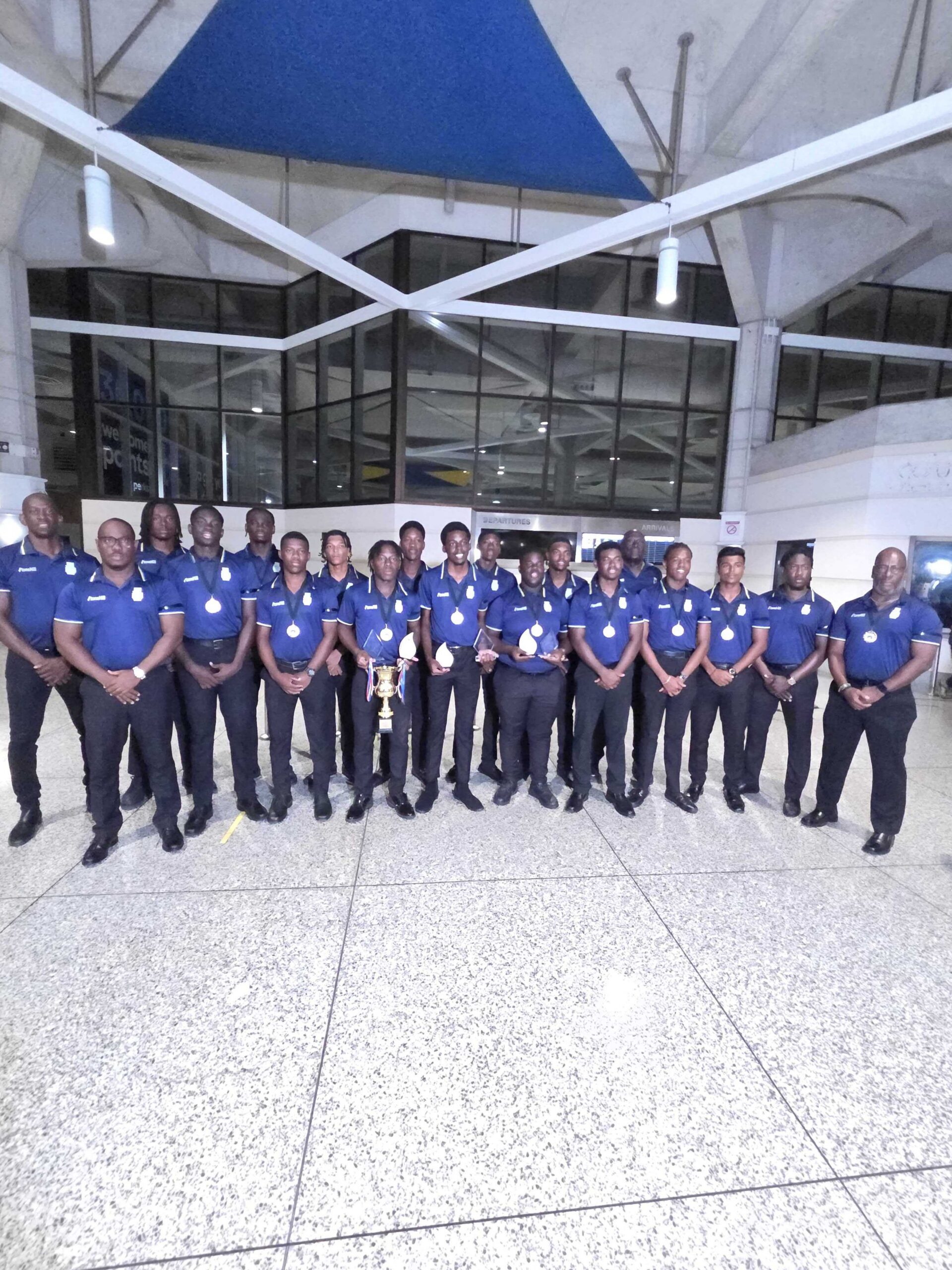
Hard work paid off for U19 cricket champions
After delivering a historic unbeaten performance at the Cricket West Indies Rising Stars Under-19 competition in Antigua, the Barbados national under-19 men’s cricket team returned home to a warm welcome at Grantley Adams International Airport on Thursday night. The young squad topped off a flawless six-game run with a dominant 116-run victory over Jamaica in the tournament final, marking one of the most impressive under-19 regional campaign in recent Caribbean cricket history.
In a post-tournament press briefing, head coach Robin Parris credited the team’s unprecedented success to consistent effort, unwavering commitment and rigorous pre-tournament preparation that stretched back months. Dating back to the initial selection trials held back in April, Parris highlighted that every member of the squad demonstrated extraordinary dedication to their craft. “They turned out to every training session early, put in extra work to refine their skills, and the team dynamic never faltered throughout the entire campaign,” Parris explained. The coaching staff’s game plan focused on hitting the ground running from the opening match, establishing their dominance early, and maintaining focus one match at a time — a strategy that delivered a perfect win record across all six games. “The overall quality of competition across the tournament was really high, so to come away with every single win is a tremendous achievement for these young players,” he added.
Barbados Cricket Association (BCA) President Calvin Hope was on hand at the airport to greet the returning champions, and he urged the young athletes to build on this milestone and carry forward the legacy of Barbados’ greatest cricket icon, Sir Garfield Sobers, who passed away on June 17. Hope noted that Sobers, the legendary former West Indies captain, always followed the progress of emerging Barbadian cricket talent closely, never missing updates on young players’ performances across regional competitions. “A lot of expectations will come with this win, and we look forward to seeing you continue to push yourselves to reach greater heights in the sport,” Hope told the team. “In Sir Garfield’s name, I ask you all to hold him up as your example and carry on the high standards he set for Barbados cricket.”
Beyond the team championship title, the Barbados squad also dominated the tournament’s individual awards, with two players leading multiple statistical categories. All-rounder Justin Parris claimed the Most Valuable Player award after a standout tournament: he scored a total of 196 runs, including a century in the final match, and topped the tournament’s wicket-taking charts with 17 dismissals. Reflecting on his performance, Parris credited his team’s strong cohesion and his prior experience playing with the senior Barbados ‘A’ side for his success. “I’m grateful for how I performed, and I truly believe our team’s close bond was one of the biggest reasons we came out on top,” Parris said. Captain Gadson Bowens also earned a top honor, finishing the tournament as the leading run-scorer across all competing teams with 309 total runs — a total that included a double century. “This is such a proud moment for me and my family,” Bowens said. “My main focus from the start was committing fully to the coach’s game plan, which emphasized that solid batting would be the foundation of our success, and that guided me through every innings.”
In other final-round matches, Trinidad and Tobago claimed the tournament’s third-place position after a seven-wicket win over the Leeward Islands, while Guyana secured fifth place with a 53-run victory over the Windward Islands.
-

National Campaign Pushes Belizeans Toward Healthier Habits
On July 24, 2026, Belize’s Ministry of Health and Wellness joined forces with the Taiwan Embassy in Belize to launch a new public health initiative called “Belize Moves,” a nationwide campaign designed to encourage everyday physical activity and reduce the burden of preventable lifestyle-related illnesses across the Central American nation.
The official launch ceremony took place on a Thursday evening at Sir George Brown Park in Belmopan, the country’s capital, where senior health officials and diplomatic partners outlined the urgent need for the program. Public health data shows non-communicable diseases (NCDs) including heart disease, type 2 diabetes, certain cancers, and hypertension are responsible for roughly 65% of all annual deaths in Belize, placing enormous strain on families, local communities, and the country’s public health system.
Unlike many fitness initiatives that focus on structured gym routines or high-intensity workouts, Belize Moves centers on small, accessible, easy-to-adopt movement changes that people of all ages and ability levels can integrate into their daily lives. “Belize Moves is more than a program. It is a commitment to prevention, a commitment to healthier communities and a commitment to creating opportunities for every Belizean to live a longer, healthier and more active life,” said Kevin Bernard, Belize’s Minister of Health and Wellness, during the launch event.
Bernard emphasized that behind the stark mortality statistic are real people whose lives are upended by entirely preventable conditions. “Non-communicable diseases… continue to place a very heavy burden on our families, communities, and our health system. As highlighted during the Belize Moves workshop this week, NCDs account for approximately sixty-five percent of all deaths in our country. Behind each statistic is a mother, a father, a brother, a sister, a friend or a neighbor whose life has been impacted by preventable illnesses,” he added.
The diplomatic partnership with the Taiwan Embassy in Belize supports the government’s broader goals to strengthen primary healthcare and improve chronic disease prevention and management across the country. “Together, we are strengthening primary healthcare, enhancing the prevention and management of chronic disease, and promoting healthier lifestyles. This partnership reflects our shared commitment to improving public health and achieving the goals of the Belize Moves initiative. As a close friend and a development partner of Belize, Taiwan remains committed to deepening our cooperation and advancing the health and well-being of the Belizean people,” said H.E. Amino Chi, Taiwan’s Ambassador to Belize.
The campaign will roll out structured activities across multiple sectors of Belizean society to drive broad participation. Local primary and secondary schools will integrate the initiative into their health curricula, hosting health fairs, delivering evidence-based nutrition education, and organizing age-appropriate fitness challenges for students. Employers across the public and private sectors will be encouraged to develop tailored workplace wellness programs that support both physical activity and mental well-being for their staff.
Bernard stressed that the long-term success of the initiative depends on widespread public participation, calling on every Belizean to join the movement and encourage those around them to adopt small, healthy changes. “I invite every Belizean to be part of this journey. Take a walk, join a fitness activity, choose healthier foods, get screened, and most importantly, encourage your families and friends, neighbors, and coworkers to do the same,” he said. “Because when one Belizean moves, a family benefits. When a community moves, a nation benefits. When Belize moves, Belize grows stronger, healthier, and more resilient.”
Public health leaders hope Belize Moves will evolve from a targeted campaign into a sustained national movement, helping households, schools, workplaces, and local communities embed long-term healthy habits and reduce preventable illness across the country.