作者: admin

  • Japan Hit by 7.7 Quake, Stronger Aftershock Threat Looms

    Japan Hit by 7.7 Quake, Stronger Aftershock Threat Looms

    On a Monday afternoon local time, at 4:53 p.m. on April 20, 2026, a powerful 7.7-magnitude earthquake jolted the offshore region of Japan’s northeastern coast, sending shockwaves that rippled across hundreds of kilometers and rattled structures all the way to the capital, Tokyo, according to local Japanese media reports.

    Immediately after the tectonic event, Japanese authorities issued a full tsunami warning, forecasting that surges could reach as high as 3 meters and prompting urgent mass evacuation orders for communities along the country’s Pacific coastline. Roughly two hours after the initial quake, monitoring stations recorded maximum tsunami waves of just 80 centimeters, a far smaller impact than initial projections, leading officials to downgrade and ultimately lift the formal tsunami warning.

    Despite the easing of tsunami-related fears, Japan’s Meteorological Agency has stressed that significant danger remains, issuing a stark alert that the region faces a high probability of a major aftershock measuring magnitude 8.0 or higher within the seven-day period following the initial quake. Such a powerful aftershock could trigger renewed structural damage, landslides, and even renewed tsunami activity in vulnerable coastal areas.

    Japanese Prime Minister Sanae Takaichi confirmed that the national government’s crisis management team was activated within minutes of the first tremor, with survey teams currently deployed across affected regions to tally the full scale of damage and confirm any casualties. In an official press briefing shortly after the quake, Takaichi urged ongoing caution for residents in at-risk zones, saying, “For those of you who live in areas for which the warnings have been issued, please evacuate to higher, safer places.”

    Disruptions from the quake have already been documented: high-speed bullet train services across northeastern routes were suspended following the seismic event, and roughly 100 residential properties lost power in affected areas. While low-level tsunami advisories remain in effect for parts of the Japanese archipelago, the most immediate concern for authorities now is preparing for potential large aftershocks.

    This seismic event comes against the backdrop of Japan’s long history of devastating earthquakes. The country’s deadliest recent quake struck in 2011, when a massive offshore tremor triggered a catastrophic tsunami that claimed the lives of more than 18,000 people and caused the meltdown of the Fukushima Daiichi nuclear power plant. Japanese authorities have built one of the world’s most advanced early warning and disaster preparedness systems in the years since that disaster, though the threat of large seismic events remains an ever-present risk for the island nation.

  • Active Fire at the Cook’s Sanitary Landfill

    Active Fire at the Cook’s Sanitary Landfill

    A large fire broke out at Cook’s Sanitary Landfill on the evening of the reported incident, starting around 10:00 p.m. local time, according to updates from Jamaica’s National Solid Waste Management Authority (NSWMA). In the hours since the fire was first detected, NSWMA crews have been working around the clock to fully extinguish the blaze and bring the site back under control.

    The authority has issued a formal apology to nearby residential communities, acknowledging that the ongoing fire has disrupted daily life for local residents and created hazardous air quality conditions across the area. Health officials are advising individuals with pre-existing respiratory conditions to remain indoors whenever possible and to follow all recommended safety precautions to avoid exposure to toxic smoke.

    While the landfill site will remain operational for the time being, NSWMA is urging all visitors and waste haulers to exercise extreme caution when entering the property. The agency says it will issue a follow-up public statement immediately if fire conditions worsen, and will implement site closures if necessary to protect public and worker safety.

    Looking ahead, the NSWMA has reaffirmed its commitment to upgrading safety protocols across all of its managed facilities, pledging to take all possible steps to reduce the frequency of hazardous events like landfill fires in the future.

  • OP-ED: International Day of Women in Industry – Celebrating how Caribbean women are shaping the future of industry

    OP-ED: International Day of Women in Industry – Celebrating how Caribbean women are shaping the future of industry

    On April 21, 2026, the global community will mark a historic milestone: the first-ever official observance of the International Day of Women in Industry (IDWI). This new international commemoration was established to honor the profound, often overlooked contributions women make to industrial progress around the world, while spotlighting how their unique leadership, creative innovation, and unwavering resilience are reshaping modern economies, advancing technological breakthroughs, and accelerating the urgent global transition to green and digital systems.

    The path to IDWI began at the 2025 Global Industry Summit in Riyadh, Saudi Arabia, where the 21st Session of the General Conference of the United Nations Industrial Development Organization (UNIDO) adopted a landmark resolution proclaiming the new international day. For the Caribbean region in particular, the inaugural observance carries outsized significance. Across every Caribbean nation, women are already leading transformative change across a wide spectrum of industrial sectors: from traditional manufacturing and agro-processing to fast-growing renewable energy, digital services, creative industries, and cutting-edge emerging technologies. Despite these far-reaching impacts, women’s contributions to regional industrial growth have long remained underrepresented and undercelebrated. This first IDWI serves as both a tribute to their existing achievements and a platform to amplify the diverse, solution-driven work that women already lead across the region.

    To kick off the first global observance, UNIDO’s Vienna headquarters will center women’s role at the heart of modern industrial transformation, with a focus on three defining global shifts: artificial intelligence integration, the green and digital transition, and the evolving future of work. High-profile gathering will bring together senior policymakers, private sector CEOs, and global development partners to showcase actionable policies, cross-sector partnerships, and innovative approaches that speed up progress toward gender-inclusive industrial development. The event will also shine a light on a critical, underaddressed barrier: gaps in gender-disaggregated data that hide the full scope of women’s industrial contributions. Attendees will explore how targeted data collection and AI-powered analytical insights can create more effective, equitable industrial policy.

    These conversations hold particular weight for Small Island Developing States (SIDS) such as those that make up the Caribbean community. Caribbean economies face a unique set of structural vulnerabilities, from the growing impacts of climate change to limited domestic economies of scale, all of which demand new innovation, enhanced competitiveness, and greater resilience to survive and thrive. Already, women across the region are pioneering context-specific solutions to these challenges, confirming a broader global truth: when women are empowered to lead, industries become more inclusive, more dynamic, and better prepared for future disruptions. That said, persistent systemic barriers continue to hold women back. Women in the region still face unequal access to business financing, lower participation rates in STEM education and careers, stark underrepresentation in senior industrial leadership roles, and deep-rooted social norms that devalue women’s participation in industrial work.

    IDWI was designed to bring these interconnected challenges to the forefront of global, regional, and national agendas. It encourages governments and civil society organizations across the world to host public events, policy dialogues, industry exhibitions, and public awareness campaigns that highlight these gaps and advance actionable solutions. The UNIDO-Barbados Global SIDS Hub for Sustainable Development is at the forefront of supporting these efforts across the Caribbean Community (CARICOM). Through years of work with national governments, local institutions, and private sector stakeholders, UNIDO has proven that when women and girls gain equal access to skills training, critical resources, and economic opportunity, they do not only succeed as individuals – they lift entire industries to new heights. This is why boosting visibility for women’s industrial work is such a critical priority.

    Through global advocacy campaigns, UNIDO will amplify the stories of women transforming industries in every corner of the world. For the Caribbean region, the organization will specifically highlight women working in manufacturing, digital innovation, climate resilience engineering, and industrial entrepreneurship whose work is building a more robust, sustainable regional industrial future.

    Celebration of women’s existing contributions is a critical first step, but the co-authors of this commentary – Stein R. Hansen, Director of the UNIDO-Barbados Global SIDS Hub for Sustainable Development and UNIDO Representative to Barbados and CARICOM, and Simon Springett, United Nations Resident Coordinator for Barbados and the Eastern Caribbean – emphasize that celebration alone is not enough. The inaugural IDWI must serve as a catalyst for concrete, binding commitments from global and national stakeholders: increased targeted investment in women-owned industrial enterprises; expanded, accessible career pathways for girls and women in STEM fields; improved gender-disaggregated data to guide more equitable industrial policy; and supportive workplace and financing ecosystems that enable women to advance to senior leadership roles across every segment of industrial value chains.

    These steps are not just gender equity issues – they are critical to building competitive, sustainable, and inclusive economies across the Caribbean. April 21, 2026, is both a time to honor the women already shaping modern industry and a reminder that the future of industry, both regionally and globally, depends on delivering full and equal participation for women. The Caribbean already has the talent, vision, and drive to build a more equitable industrial future. What is needed now is targeted, sustained commitment from global and national leaders to turn vision into action. IDWI is a clear call to action for all stakeholders – and the time to answer that call is now.

  • CARIFTA Games Grenada 2026 souvenir magazine

    CARIFTA Games Grenada 2026 souvenir magazine

    The Grenada Athletic Association (GAA) has launched a new digital flipbook magazine, hosted publicly on the Heyzine platform at the link https://heyzine.com/flip-book/5c42962ef1.html, making its official content accessible to athletics fans and industry stakeholders across the globe. The publication centers heavily on GAA’s core operations and upcoming key events, with a prominent focus on the CARIFTA Games, a premier regional youth athletics competition that draws competitors from across the Caribbean.

    Tagged topics tied to the magazine include local athletics leadership, represented by Haron Forteau, and the Kirani James Athletics Stadium, Grenada’s flagship athletics venue named after the country’s Olympic and world championship gold medalist. The magazine also references affiliations with the North American, Central American and Caribbean Athletic Association (NACAC), the regional governing body for the sport. A key note from the hosting platform’s local affiliate NOW Grenada clarifies that the organization does not take responsibility for opinions, statements or third-party contributed media published within the magazine, and provides a channel for users to report content that violates platform guidelines in cases of abuse. The design of the digital magazine is highlighted through its aqua design branding, aligning with GAA’s visual identity for public-facing materials.

  • PM Browne Uses Manifesto Launch to Urge Stability, Warns Voters Against ‘Risk’ Ahead of April 30 Election

    PM Browne Uses Manifesto Launch to Urge Stability, Warns Voters Against ‘Risk’ Ahead of April 30 Election

    As the governing Antigua and Barbuda Labour Party (ABLP) enters the final phase of campaigning ahead of the April 30 general election, Prime Minister Gaston Browne used the official unveiling of the party’s 2026 election manifesto to issue a clear, urgent appeal to voters, casting the upcoming ballot as a defining choice between continued steady governance and untested uncertainty amid global turbulence.

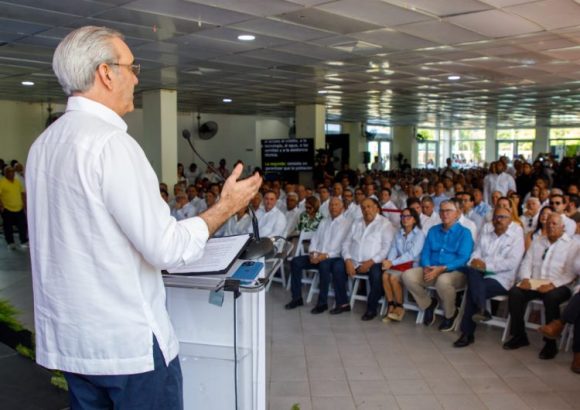
    Speaking to a gathering of party supporters, Browne rooted his campaign message in the harsh realities of today’s unstable global landscape, emphasizing that cross-border chaos is already trickling down to impact daily life for Antigua and Barbuda residents. “My friends, we all feel it when we go to the grocery store,” he told the audience, linking ongoing international conflicts and geopolitical unrest directly to rising consumer prices and growing economic anxiety across the twin-island nation.

    Browne positioned the 2026 election as a critical turning point for the country, challenging voters to evaluate which leadership bloc has the proven capacity to navigate a rapidly shifting global order. “When you step into the voting booth on election day, you have to ask yourselves one question: Which leader and which team is strong enough, steady enough to steer our country through these turbulent times?” he said.

    The core of Browne’s pitch centers on the ABLP’s overarching campaign theme of a national “renaissance” — a framing that casts the administration’s time in office as a period of intentional forward progress, rather than merely post-crisis recovery. “The world is stepping into a completely new era, and Antigua and Barbuda is stepping into that new era right alongside it,” Browne said, noting that his government offers voters a clear path to national renewal amid global change.

    To back up his claims of progress, Browne walked through a lengthy list of the ABLP administration’s economic and social policy achievements, all designed to put more disposable income into household budgets and ease widespread financial strain. Among the accomplishments he highlighted were the full repeal of personal income tax, multiple rounds of increases to the national minimum wage, salary hikes for public sector workers, and upward adjustments to both social security and occupational pensions. “Every one of these measures was designed to put more money directly into your pockets,” he explained.

    He also pointed to expanded social safety net programs that have rolled out under his watch, including an expanded food voucher initiative, the removal of consumption tax on staple food items, and the rollout of subsidized broadband internet access to make connectivity more affordable for ordinary families.

    Beyond social and economic policy, Browne outlined the government’s ongoing infrastructure and development projects, which span multiple key sectors of the national economy. On the tourism front, he noted that several new hotel developments are currently under construction, while critical public infrastructure upgrades are moving forward across every electoral district. “We have expanded our reverse osmosis desalination plants to boost the nation’s water supply and address longstanding access issues,” he said, adding that “extensive roadworks are currently underway in every single constituency across the country.”

    Throughout his speech, Browne repeatedly circled back to the central campaign message of policy continuity, warning voters that switching leadership at a moment of heightened global instability would be a dangerous gamble. He portrayed the incumbment ABLP administration as the only safe, experienced option for voters looking to weather ongoing global headwinds. “On election day, do not take an unnecessary risk on a leader and a team that is simply not prepared to govern,” he cautioned.

    Closing his address at the manifesto launch, Browne issued a direct closing appeal for voter support, urging the electorate to retain the steady leadership he says the country needs to navigate uncertain times. “Let’s keep Antigua and Barbuda in strong, safe hands,” he said.

    The launch of the 2026 manifesto marks a key milestone in the ABLP’s broader re-election push. Party officials have confirmed that their campaign will be built around three core pillars: proven economic performance, expanded public infrastructure, and expanded social support programs for working- and middle-class households.

  • Three Dead, Two Injured in Separate Collisions

    Three Dead, Two Injured in Separate Collisions

    Two devastating road traffic accidents that occurred within hours of each other in northern Belize on Sunday night have left three people dead and two others hospitalized with serious injuries, local authorities confirmed.

    The first incident unfolded just after 10 p.m. along the Thomas Vincent Ramos Highway in the Punta Gorda area, when a northbound motorcycle carrying two people lost control near the roadside and crashed into a standing tree. Emergency responders were dispatched to the scene immediately, and transported passengers Brenton Cofius and Carl Manger to a nearby medical facility for urgent care. Following the crash, law enforcement officers impounded the damaged motorcycle as part of their ongoing investigation into what caused the collision.

    A far deadlier crash unfolded hours later in the Orange Walk District, along the road connecting Trinidad and August Pine Ridge. The violent impact of the head-on collision left three people dead at the scene, leaving local communities in shock. Visual footage captured from the crash site shows a red Ford F-150 pickup truck pushed off the pavement, alongside a fully loaded sugar cane trailer attached to a Freightliner semi-truck that was also involved in the incident.

    Authorities have publicly identified the three victims of the second crash: Selvin Cortez, Bryon Magaña, and Magaña’s partner Sherlyn Henriquez. News of the deaths has already prompted mourning from loved ones across social media. One of Henriquez’s relatives shared a tribute online writing, “Rest in peace, my beautiful niece. Thank you for the beautiful moments we spent together; you will always live in my heart.”

    The Belize Police Department announced that it is continuing to process evidence from both crash sites and is expected to release a full update on the circumstances of each incident, including potential contributing factors such as speeding, weather conditions, or driver impairment, to the public this coming afternoon.

  • READ NOW: ABLP Manifesto 2026

    READ NOW: ABLP Manifesto 2026

    The Antigua Labour Party (ABLP), one of the major political parties in Antigua and Barbuda, has officially launched its 2026 general election manifesto, making the full policy document available for public download. This move marks a key milestone in the lead-up to the upcoming national vote, allowing voters, political analysts, and civil society groups to examine the party’s policy priorities ahead of casting their ballots.

    The release of the manifesto comes as political campaigning gains momentum across the twin-island nation, with parties beginning to outline their visions for the next five-year governing term. By making the document available for digital download, the ABLP has sought to improve accessibility, enabling constituents across both urban and rural areas, as well as voters living overseas, to review the party’s plans at their convenience.

    Political observers note that the early release of the manifesto gives the ABLP additional time to campaign on its policy proposals, engage in public debates with opposing parties, and address voter questions about its plans for economic growth, social development, infrastructure investment, and climate resilience – issues that top the agenda for many constituents in Antigua and Barbuda. The public availability of the full document also aligns with growing demands for greater transparency in political campaigning across the Caribbean region.

  • Young Leaders Must Help Shape Future, Says St. John’s Rural West Candidate Michael Joseph

    Young Leaders Must Help Shape Future, Says St. John’s Rural West Candidate Michael Joseph

    At the official launch of the Antigua and Barbuda Labour Party (ABLP)’s flagship “Renaissance” policy manifesto, held at the American University of Antigua Conference Centre, St. John’s Rural West candidate and sitting Minister of State in the Ministry of Health, Wellness and the Environment Michael Joseph delivered a keynote address centered on three core pillars of the administration’s agenda: intergenerational governance renewal, transformative healthcare reform, and urgent climate action.

    Opening his remarks to a crowd of party supporters, Joseph pushed back against implicit questions over his appointment to public office as a young leader, framing his inclusion in the cabinet as a deliberate, values-driven choice by the ABLP administration. “Why Michael Joseph? Why a young minister? The answer is simple — because our government understands something fundamental: the future cannot be built without the youth of this nation at the table,” he stated. Positioning his tenure as an example of the party’s commitment to balanced leadership, Joseph noted that the ABLP’s approach intentionally blends decades of institutional experience with fresh perspectives and innovative thinking from emerging generations. “We believe in leadership that reflects the people… leadership that combines experience with innovation and tradition with transformation,” he explained. “I stand here as part of a generation that is not waiting for change — we are participating in it.”

    Turning to his portfolio priorities, Joseph outlined a fundamental shift in the island nation’s healthcare strategy, moving beyond a system focused solely on treating existing illness to one that prioritizes preventive care, universal access, and systemic resilience. The administration, he said, is actively strengthening primary care infrastructure to eliminate gaps in access that leave rural and low-income residents behind. “In health, we are not simply managing illness — we are transforming it,” Joseph said. “We are strengthening primary healthcare so that no citizen is left behind because of geography or circumstance.”

    He added that ongoing upgrades to hospital and clinic services are designed to equip the system to handle both routine patient needs and unexpected public health crises, while expanding focus on long-unaddressed priorities including non-communicable disease management and mental health support. Rejecting the framing of healthcare as a limited privilege, Joseph emphasized that the ABLP enshrines universal access to care as a non-negotiable fundamental right for all Antigua and Barbuda citizens. “A healthy nation is not built on hospitals alone. It is built in our homes, in our schools and in our communities,” he said. “This government believes that healthcare is not a privilege for a few, but a right for every citizen.”

    Addressing environmental policy, Joseph framed climate change as an immediate, lived reality for the small island nation, rather than an abstract debate. Antigua and Barbuda already faces growing threats from rising sea levels, shifting rainfall patterns, and increased frequency of extreme weather events that disproportionately endanger low-lying coastal communities. Unlike many global powers that delay action, Joseph said, the ABLP administration has moved forward with a practical, action-oriented climate agenda focused on boosting national climate resilience, protecting the island’s critical marine ecosystems — a core pillar of its tourism and fishing economies — and upgrading national waste management infrastructure. “We do not debate whether climate change is real. We live its reality,” he said. “We are building not just infrastructure, but resilient infrastructure… not just policies, but sustainable progress.” Even as a small island developing state, Joseph emphasized, Antigua and Barbuda is not waiting for global powers to act: the nation is taking proactive steps to cut its own emissions and build resilience, and is leading by example in regional climate advocacy. “We are not waiting on the world — we are doing our part and we are leading where we can,” he said.

    Wrapping up his address, Joseph tied these three policy priorities — youth empowerment, healthcare transformation, and climate action — together into the ABLP’s overarching “Renaissance” vision for sustained national progress. He argued that the three pillars are interconnected: investing in public health reflects a commitment to valuing every citizen’s life, protecting the environment demonstrates responsibility to coming generations, and elevating young leaders ensures long-term continuity, stability, and adaptive renewal for the nation. Joseph urged party supporters to take pride in the progress the country has made under the ABLP, while remaining focused on the work ahead to deliver shared prosperity. Positioning the newly launched manifesto as a clear roadmap for the next term of government, Joseph called on all citizens to move beyond passive observation and play an active role in building the nation’s future. “Do not underestimate what a united people, guided by purpose and driven by vision, can achieve,” he said. “Dreams are not fulfilled by spectators — they are fulfilled by believers, by builders, by those willing to serve. The path forward leads to a new era of progress and prosperity for all Antigua and Barbuda.”

  • U.S. Military Seizes Iranian Ship

    U.S. Military Seizes Iranian Ship

    On a Sunday morning in the Gulf of Oman, a tense six-hour standoff between U.S. naval forces and the crew of an Iranian cargo ship ended with the vessel being seized by U.S. Marines after Navy gunfire disabled its propulsion system, according to statements from U.S. military and political leaders. The incident, which unfolded on April 20, 2026, has already drawn fierce condemnation from Iran, which has pledged immediate retaliation and accused the United States of violating an existing ceasefire and committing open piracy in one of the world’s busiest commercial waterways.

    The operation was carried out by the guided-missile destroyer USS Spruance, operating under the command of U.S. Central Command (CENTCOM). Per CENTCOM’s official account of the incident, the Touska – the 500-foot cargo vessel targeted in the raid – repeatedly ignored multiple radio and visual warnings over six hours to turn back from a U.S.-imposed naval blockade on commercial traffic bound for Iranian ports. After the vessel continued its course toward Iranian territorial waters, military commanders ordered the Touska’s crew to evacuate the engine room before Navy personnel fired several warning rounds into the ship’s engine compartment, disabling all propulsion and steering capabilities. Once the vessel was dead in the water, a team of U.S. Marines boarded the ship and took full control of the vessel and its crew without further resistance.

    Shortly after the seizure was completed, former U.S. President Donald Trump confirmed the operation in a post on his Truth Social platform, framing the action as a decisive enforcement of U.S. sanctions policy. “The Navy stopped them right in their tracks by blowing a hole in the engine room,” Trump wrote in the post, adding that U.S. boarding parties were currently conducting a search of the vessel’s cargo holds to document what the ship was carrying. He further noted that the Touska and its operators were already subject to U.S. Treasury Department sanctions over a documented history of violating international trade restrictions on Iranian goods, justifying the use of force to intercept the vessel.

    Iran’s leadership has rejected the U.S. justification for the raid and issued a harsh formal warning of impending retaliation. In an official statement carried by state-run Islamic Republic of Iran Broadcasting (IRIB), Iran’s military command denounced the operation as “maritime highway robbery” that violates the terms of a recent ceasefire agreement between the two nations. The Iranian statement confirmed the seizure, adding that U.S. forces also damaged critical navigational equipment on the Touska during the forced boarding, endangering the crew and the vessel.

    “We warn that the Armed Forces of the Islamic Republic of Iran will soon respond to and retaliate against this U.S. armed piracy,” the statement concluded, leaving open the scope and timing of any Iranian counteraction.

    The interception of the Touska is not an isolated incident, CENTCOM confirmed in its briefing on the operation. Since the U.S. naval blockade on traffic bound for Iranian ports was implemented, U.S. forces have successfully turned away 25 other commercial vessels that attempted to break through the restriction to reach Iranian ports, marking the first time that U.S. forces have actually seized a vessel rather than forcing it to turn around. The escalation comes at a moment of already heightened tension between Washington and Tehran, raising fears of further escalation in the Persian Gulf region, a critical chokepoint for 20% of the world’s daily oil supplies.

  • Fernandez Says $1.5 Billion in New Tourism Projects Planned for Antigua and Barbuda Over Next Three Years

    Fernandez Says $1.5 Billion in New Tourism Projects Planned for Antigua and Barbuda Over Next Three Years

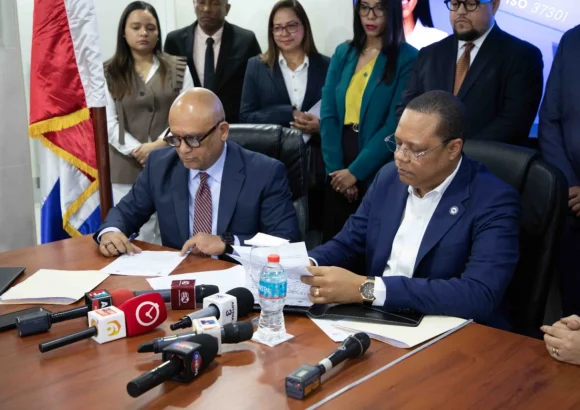
    Antigua and Barbuda is set to receive over $1.5 billion in targeted tourism-focused investments over the next two to three years, a landmark injection that will drive job creation and broad-based economic expansion, according to Tourism Minister Charles “Max” Fernandez. The minister, who is also running as a candidate for the St. John’s Rural North constituency, made the announcement during the official launch of the Antigua and Barbuda Labour Party (ABLP) election manifesto, held at the American University of Antigua Conference Centre. He described the upcoming wave of development as unprecedented in the nation’s modern history, directly tying the pipeline of projects to long-term inclusive economic growth.

    Fernandez detailed that the $1.5 billion portfolio spans luxury hospitality, residential real estate, critical public infrastructure, and commercial development across both islands. Flagship projects leading the pipeline include the $465 million Half Moon Bay development, the $400 million Nikki Beach Residences, and the $40 million Buccaneer Beach resort project. Global hospitality brand Nobu has already committed more than $70 million to local projects, while a new Marriott hotel is planned for Yepton Beach, and the iconic Jolly Beach Resort is undergoing extensive ongoing renovations. Beyond tourism-focused developments, the investment round includes key upgrades to core national infrastructure: a $55 million modernization project for VC Bird International Airport, a $40 million waterfront revitalization initiative, and a new $23 million domestic brewery project.

    New construction activity is already underway across multiple sites, with ground set to break next month on the highly anticipated Eddie Caren Long Bay development, and structural work progressing on several units at the La Mer Estate luxury residential project in Willoughby Bay. Fernandez emphasized that this flood of private and institutional investment did not emerge accidentally, but rather is the outcome of intentional policy leadership, strategic government planning, and a consistent forward-looking vision for the sector. He added that the large volume of committed investment signals strong global confidence in Antigua and Barbuda’s tourism offering and its overall economic trajectory.

    As the primary economic pillar of Antigua and Barbuda, tourism has delivered robust post-pandemic results in recent years, with visitor arrivals climbing steadily to pre-pandemic levels and exceeding growth projections. The current government’s strategy, Fernandez noted, is not focused on managing stagnation or decline, but on proactively building sustained expansion. Rather than merely reacting to global shifts in travel demand, the administration is actively shaping the future of the nation’s tourism sector to meet evolving consumer expectations. A core priority of this strategy is ensuring that the economic gains from the investment boom are not concentrated among a small group of stakeholders, but distributed equitably across all communities across Antigua and Barbuda.