作者: admin

  • Opposition Leader threatens lawsuit against Hot97 FM

    Opposition Leader threatens lawsuit against Hot97 FM

    KINGSTOWN, St. Vincent – Former Prime Minister Ralph Gonsalves has announced his intention to initiate legal proceedings against local radio station Hot 97 and its proprietor Luke Boyea regarding allegations concerning a land transaction involving his youngest son. The controversy emerged during broadcast discussions suggesting Gonsalves’ son, Storm Gonsalves, acquired 95 acres of private land in Spring, Bequia through corrupt practices during his father’s administration.

    Gonsalves, who served as head of government for 25 years before his Unity Labour Party’s electoral defeat in November 2025, vehemently denied any governmental involvement in the transaction. He revealed that while his administration had expressed interest in purchasing the property in 2017 through formal correspondence to the owner’s legal representative Errol Layne, the offer was declined at that time.

    The seasoned attorney clarified that the eventual sale occurred during the COVID-19 pandemic period, completely independent of government affairs. Gonsalves emphasized his complete dissociation from the transaction, stating he was unaware of his son’s purchase until after its completion. He issued a stern warning to the radio station owner, whom he identified as his second cousin, declaring, “You’re barking up the wrong tree… I have rights, you know. And you’re tackling a warrior.”

    Defending his 34-year-old son’s capabilities, Gonsalves described Storm as a risk-taking entrepreneur fully capable of defending his business decisions. Meanwhile, Boyea has publicly expressed confusion regarding the specific defamation claims, indicating he would await formal legal correspondence while maintaining skepticism about Gonsalves’ claimed unawareness of his son’s land acquisition.

  • Sarteneja Students Have Gone Years Without a School Building

    Sarteneja Students Have Gone Years Without a School Building

    In the Corozal District of Belize, Sarteneja Baptist High School represents a stark case of educational infrastructure neglect, having operated without a dedicated school building for more than four consecutive years. The institution’s 84 students receive their education under profoundly challenging circumstances, with some classes conducted in makeshift outdoor sheds constructed from donated materials.

    The school suffers from critical staffing shortages, maintained by just four teachers alongside a principal who performs dual roles as administrator and full-time instructor. The complete absence of specialized facilities—including science laboratories and computer labs—severely limits the educational experience offered to students.

    Darnel Cruz, Secretary of Sarteneja’s Village Council and a local primary school teacher, provided insight into the ongoing struggle. Community leaders identified a potential construction site near the airstrip, but development remains paralyzed by funding deficiencies. Currently, students utilize the community center as a temporary measure, though this solution falls far short of meeting educational requirements.

    With graduation numbers expected to exceed available spaces this June, parental concerns are mounting. Families are increasingly vocal in demanding governmental intervention and a sustainable, long-term resolution. School administration has maintained silence on the matter, while the community continues advocating for the construction of permanent facilities that would allow students to learn in a proper academic environment.

  • Caribbean Archbishop supports Archbishop of Canterbury in response to Project Spire criticism

    Caribbean Archbishop supports Archbishop of Canterbury in response to Project Spire criticism

    In a significant address to international religious leaders, Archbishop Philip Wright of the Church in the Province of the West Indies has championed the Church of England’s controversial Project Spire initiative while challenging the global Anglican community to move beyond symbolic gestures in addressing historical injustices.

    The Archbishop’s remarks came during the “Breaking the Chains of Injustice” International Consultation, convened by UK-based charity USPG (United Society Partners in the Gospel). The gathering brought together 40 Anglican leaders from 31 nations to examine the persistent impacts of colonialism on indigenous cultures, languages, and territories across the Caribbean region.

    Despite the formal abolition of slavery in the British Caribbean in 1834, Archbishop Wright emphasized that the region continues to grapple with profound economic disparities, social inequalities, and environmental degradation directly linked to this historical legacy. He positioned the Anglican Church at a “significant moral crossroads,” noting that while acknowledgment of institutional complicity in the transatlantic slave trade represents a transformative opportunity, empty rhetoric could ultimately prove more damaging than the original offense.

    The Archbishop’s endorsement of Project Spire—a £100 million reparative justice initiative launched by the Church of England in 2023—signals growing momentum within religious institutions to address historical wrongs. This development follows a decade of intensified reparations advocacy, including CARICOM’s 2013 “Ten Point Plan for Reparatory Justice” and the CPWI’s 2015 motion supporting Caribbean reparations claims.

    Archbishop Wright clarified that reparative justice seeks not retribution but recognition of harms caused by centuries of enslavement, requiring “deliberate and intentional redress.” He cited both Project Spire and USPG’s Codrington Project as pioneering efforts in this direction. The latter initiative, launched in 2024, addresses USPG’s historical entanglement with slavery through Christopher Codrington’s 1710 donation of a Barbados plantation. The project aims to transfer plantation ownership to descendants of enslaved individuals and commemorate burial sites of those enslaved.

    USPG General Secretary Duncan Dormor reinforced the moral imperative for action, stating that reparative justice lies “at the heart of Christian mission today.” He emphasized the Church’s deep involvement in “brutal, inhumane, and shameful activities” of the slave trade and called for work toward repair and reconciliation conducted with “openness, humility and constructive critical reflection.”

    When questioned about practical support for Caribbean communities, Archbishop Wright emphasized that meaningful change extends beyond financial compensation. He called for collaborative efforts to build schools and hospitals, enabling Caribbean peoples to “step out of the legacy of this horrendous period of history” while acknowledging the substantial good the Church has accomplished in the region over centuries.

    The gathering received encouraging words from Archbishop of Canterbury Sarah Mullally, who praised USPG’s “commitment to partnership, justice, and the flourishing of local churches” as continuing to bless the Anglican Communion in “profound and enduring ways.”

  • Social : Survey on deported Haitians in figures (2025)

    Social : Survey on deported Haitians in figures (2025)

    Haiti confronts one of its most severe migration emergencies as forced deportations surge dramatically, with over 270,000 individuals repatriated throughout 2025. This represents a staggering 36% increase compared to the previous year’s figures, intensifying the nation’s ongoing humanitarian and socio-economic challenges.

    According to a comprehensive survey conducted by the International Organization for Migration (IOM) in collaboration with the Migrant Protection Working Group, the National Migration Office, and the Support Group for Returnees and Refugees, the Dominican Republic accounted for 98% of all deportations (265,215 people). Other significant sources included the Turks and Caicos Islands (2,935), the United States (1,159), the Bahamas (756), and Jamaica (147).

    The demographic profile of deportees reveals alarming trends. While adult males continue to constitute the majority at 66%, other groups experienced disproportionate increases. Deportations of adult women skyrocketed by 92%, while girls and boys saw increases of 152% and 133% respectively, compared to a 16% rise for adult men.

    Border crossing points witnessed substantial shifts, with Belladère remaining the primary entry point (51% of deportations) followed by Ouanaminthe (27%). Notably, Malpasse recorded a 346% surge in deportations, while Anse-à-Pitres saw a 96% increase.

    The survey of 26,853 adult deportees revealed that 99% were born in Haiti, with primary origins in the Southeast, West, Artibonite, Central, and North departments. Economic desperation drove migration decisions, with 85% citing the search for better opportunities as their primary motivation. Alarmingly, 19% were already displaced in camps before leaving Haiti, and 32% reported possessing no identity documents.

    Educational and employment patterns varied by deportation origin. Those returned from the Dominican Republic demonstrated lower formal education levels but better employment access abroad, primarily in construction, commerce, and agriculture sectors.

    The cyclical nature of migration remains evident, with 60% of 2025 deportees having experienced multiple previous deportations. While only 11% overall planned to leave again within six months, this intention was significantly higher among those deported from the Turks and Caicos Islands (64%) and the United States (59%).

    Immediate needs upon arrival highlighted the precarious situation facing returnees: transportation to places of origin (92%), food assistance (72%), and temporary accommodation (27%) emerged as critical priorities.

  • USA : Internationalization of the UEH

    USA : Internationalization of the UEH

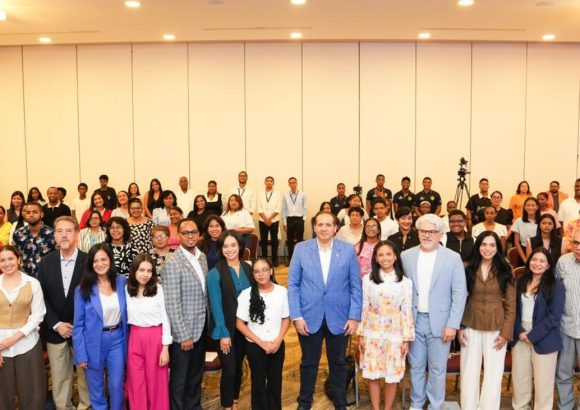
    In a significant stride toward educational advancement, Elms College of Massachusetts and Haiti’s State University (UEH) have formalized a groundbreaking partnership through a memorandum of understanding signed this week. The ceremony, held at Elms College’s Merci Marlène and Jacques Louis Dumay Living-Learning Community and Cultural Center, brought together President Harry Dumay and Rector Dieuseul Prédélus alongside academic leaders, faculty members, and representatives from the Kellogg Program.

    The collaboration establishes an innovative continuing education program specifically designed for the professional development of Haitian educators, with particular focus on the UEH’s École Normale Supérieure (ENS) – Haiti’s historic institution for teacher training. Leveraging Elms College’s specialized expertise through its Division of Education and Center for Equity in Urban Education, the initiative will equip Haitian teachers with contemporary pedagogical approaches tailored to current educational challenges.

    Rector Prédélus characterized the agreement as a “historic moment” that signals the beginning of a strategic collaboration aligned with an ambitious vision: transforming UEH into a modern, competitive institution committed to international academic standards while maintaining deep roots in Haitian realities. He emphasized that “academic excellence cannot be decreed; it is built daily through rigorous work, intellectual openness, and continuous improvement.”

    The partnership represents a complementary alignment of strengths – Elms College contributes its technical expertise in teacher training methodologies, while UEH provides contextual understanding of Haiti’s specific educational needs and challenges. This cooperative model aims to create a multiplier effect where enhanced trainers will subsequently contribute to sustainably elevating Haiti’s entire education system through proven teaching methods and strengthened pedagogical skills.

    This agreement marks a new phase in UEH’s internationalization efforts, initiated under the leadership of its new Executive Council, demonstrating the institution’s commitment to global educational engagement while addressing national development priorities.

  • Vincies urged to resist ‘sea lotto’ temptation as cocaine washes ashore

    Vincies urged to resist ‘sea lotto’ temptation as cocaine washes ashore

    St. Vincent and the Grenadines faces escalating drug trade complications as National Security Minister St. Clair Leacock issued a urgent public warning on Thursday regarding cocaine packages washing ashore. The minister specifically instructed citizens to immediately report any drug parcels found at sea or on beaches to law enforcement authorities, emphasizing that attempting to profit from such discoveries would not be tolerated.

    This development follows courtroom revelations that local police informally refer to maritime cocaine discoveries as “sea lotto”—a term that surfaced during legal proceedings involving two fishermen charged with possession and trafficking of 22.9 pounds of cocaine. Defense attorney Grant Connell disclosed this terminology while representing Sebastian Audain and Alvin Cyrus, whose cases have drawn attention to the wider implications of recent US military operations in the region.

    The situation escalated dramatically with confirmation from SVG Coast Guard Commander Deon Henry that US drone strikes destroyed two vessels within the nation’s Exclusive Economic Zone (EEZ) earlier this week. These military actions, which resulted in multiple casualties including St. Lucian nationals, occurred without prior notification to Vincentian authorities according to Minister Leacock, who expressed diplomatic concern over the breach of sovereign protocols.

    The national security minister articulated disappointment regarding Washington’s failure to consult Kingstown before executing military operations within its jurisdictional waters. While acknowledging the power disparity between the nations, Leacock emphasized commitments to international legal frameworks and sovereign rights through regional alliances including the OECS and CARICOM. He assured citizens that the matter would be pursued through appropriate diplomatic channels while strengthening domestic security measures against narcotics trafficking.

    Law enforcement agencies remain on high alert as the ministry collaborates with police, coast guard, and auxiliary services to manage the increased drug influx. Officials attribute the floating cocaine packages to the destruction of trafficking vessels, which has created unintended opportunities for civilians to encounter drugs at sea—a phenomenon now requiring coordinated public awareness and response strategies.

  • Should Housing Rental Prices Be Regulated?

    Should Housing Rental Prices Be Regulated?

    A pressing housing affordability crisis is emerging in Belize’s tourism-dependent communities, prompting calls for government intervention. Gabriel Zetina, UDP caretaker for Belize Rural South, has advocated for comprehensive rental regulation legislation to address soaring housing costs that threaten workforce stability.

    Speaking at a Tuesday press conference, Zetina highlighted the particular challenges facing working-class families migrating to San Pedro for employment opportunities in the thriving tourism sector. “Many people coming to San Pedro are the working class. They migrate from Belize to here, again tying back to tourism, they come to work here,” Zetina explained, emphasizing how escalating rental prices are creating unsustainable living conditions that could undermine the local economy.

    The proposed solution involves creating formal regulatory frameworks through either a Property Act or Rent Act. “We need to start seeing if we can create a draft or a bill to regulate the rent fees. It has to be done,” Zetina stated with urgency. “If we can somehow create legislation to address this issue, I think that will be the first step for us to regulate it.”

    These calls for intervention coincide with concerning economic indicators from the Statistical Institute of Belize. The December 2025 Consumer Price Index recorded a national inflation rate of 0.3%, with housing, water, electricity, gas, and other fuels representing the primary drivers. Rental prices specifically increased by 0.8% compared to the previous year, compounding financial pressures on island residents.

    Local communities report that these escalating costs are creating severe affordability challenges, potentially destabilizing the essential workforce that sustains San Pedro’s critical tourism industry. The situation represents a growing tension between economic development in tourist destinations and housing accessibility for the workers who support these economies.

  • CWI signs  deal with official jersey sponsor

    CWI signs deal with official jersey sponsor

    Cricket West Indies (CWI) has secured a significant sponsorship agreement with Livpure, a leading water purification and home appliances brand, marking a strategic commercial partnership for the upcoming cricket season. The collaboration positions Livpure as the official jersey sponsor for the West Indies Senior Men’s Team during two major events: the ICC Men’s T20 World Cup 2026 and the team’s white-ball tour of India later this year.

    The announcement arrives during a period of competitive success for the West Indies squad, which has advanced to the Super Eight phase of the ongoing T20 World Cup. The team prepares to face Zimbabwe on February 23rd at 9:30 AM Caribbean Time, seeking to maintain their winning momentum through the knockout stages.

    CWI President Dr. Kishore Shallow welcomed the partnership, stating: ‘This collaboration reflects the enduring global appeal of West Indies cricket and our ability to attract respected international brands. Strategic partnerships such as this are critical to supporting the growth, competitiveness, and long-term sustainability of our game across the region.’

    CEO Chris Dehring emphasized the commercial significance of the agreement, particularly within the crucial Indian market: ‘This partnership reflects the strong commercial opportunities associated with West Indies cricket, particularly in key markets such as India. We look forward to working closely with Livpure to deliver value both on and off the field.’

    Under the agreement, Livpure’s branding will appear on the leading arm of the team’s jersey during the T20 World Cup in compliance with tournament regulations. During the India tour in September-October 2026, which includes three ODIs and three T20Is, the logo will be prominently displayed on the front of the team’s shirt, pending international playing condition approvals.

    Rakesh Kaul, MD & CEO of Livpure, expressed enthusiasm about associating with the iconic cricket team: ‘The passion, flair, and global fan base of West Indies cricket align strongly with our brand values. We look forward to engaging millions of cricket fans through this partnership during the T20 World Cup in India and Sri Lanka.’

    The sponsorship represents CWI’s ongoing initiative to develop sustainable commercial alliances that enhance team competitiveness while expanding the international footprint of West Indies cricket.

  • International healthcare accreditation and other improvements on the docket for Dominica, says DHA chairman

    International healthcare accreditation and other improvements on the docket for Dominica, says DHA chairman

    The Dominica Hospitals Authority (DHA) has announced a comprehensive strategic roadmap aimed at revolutionizing healthcare delivery on the island. Chairman Dr. Donald Peters revealed the multi-faceted plan during a recent press conference, outlining key priorities for the coming year.

    Foremost among these initiatives is the pursuit of international accreditation for Dominica’s medical facilities. Dr. Peters emphasized that this three-year endeavor, conducted in collaboration with Canadian authorities, would enable the hospital to serve international patients and meet global insurance requirements. “Our standards need to meet international standards to achieve this crucial recognition,” he stated.

    The chairman identified financial stabilization as perhaps the most critical challenge, noting that healthcare represents the most significant expenditure for governments worldwide. “Some governments simply cannot afford to make healthcare free due to the enormous costs involved,” Dr. Peters explained, contextualizing the global healthcare financing dilemma.

    A third pillar of the strategy involves enhanced collaboration with the Ministry of Health to address systemic inefficiencies. Dr. Peters revealed a startling statistic: 68% of Accident and Emergency department visitors present with non-urgent conditions like stomach aches or flu viruses. He made a public appeal: “Please go to your health center instead of coming all the way to Goodwill for non-emergencies so that critical cases can receive prompt attention.”

    The most technologically ambitious component involves implementing a nationwide Hospital Management Information System, with $8 million already allocated for the project. This digital transformation will digitize all medical records nationally, accelerating both diagnosis and treatment delivery while improving overall care quality.

    Dr. Peters also addressed the sensitive topic of medical fees, clarifying that the government subsidizes approximately 90% of actual costs. While the cabinet-approved charges appear modest—a $400 bill representing what should be a $4,000 service—he emphasized that these payments remain essential for the hospital’s financial viability.

    The chairman concluded by noting that the Dominican government allocates approximately $28 million daily to healthcare, with a significant portion directed to hospital operations, underscoring the substantial investment required to maintain the nation’s health infrastructure.

  • Cabinet Endorses US $10M Wastewater Project for Caye Caulker

    Cabinet Endorses US $10M Wastewater Project for Caye Caulker

    The Belizean Cabinet has formally endorsed a major infrastructure initiative to address sanitation challenges on the island of Caye Caulker. Government officials will now seek legislative approval from the House of Representatives for a sovereign-guarantee agreement securing a US$10 million loan from the Inter-American Development Bank (IDB) to fund a comprehensive wastewater collection and treatment system.

    According to Ervin Flores, resident consultant engineer at Belize Water Services Limited (BWSL), the picturesque island currently lacks proper sanitation infrastructure despite having potable water access. “One of the major gaps affecting the island is the absence of a centralized wastewater system,” Flores noted, explaining that existing homes and businesses rely on individual septic tanks or small package plants that don’t provide coordinated treatment.

    The ambitious project will employ innovative vacuum pipe technology to transport wastewater from connected properties to a modern treatment facility. Flores emphasized that the system will “collect wastewater and treat it in a manner that exceeds effluent standards, ultimately enhancing environmental protection and public health outcomes for the community.”

    With a total project valuation of US$13 million—combining the IDB loan, BWSL contributions, and supplemental grants—the infrastructure development represents a significant investment in the island’s future. Implementation will commence with a six-month procurement phase to acquire necessary equipment, followed by an estimated three-year construction period involving extensive road trenching and pipe network installation.

    The initial phase will exclusively serve South Caye Caulker, the island’s more developed sector with higher population density and water consumption. North Caye Caulker will be considered for future expansion using potentially different, nature-based solutions due to budgetary constraints and the geographical challenge posed by the Split—a narrow water channel separating the two island sections.

    BWSL officials report successful public consultations and widespread community support from both residents and business operators. Pending government approvals and preparatory work, construction is anticipated to commence in the first quarter of next year, marking a transformative step toward sustainable development for the popular tourist destination.