作者: admin

  • Sandals showcases Vincy culture during ‘Welcome Home Week 2026’

    Sandals showcases Vincy culture during ‘Welcome Home Week 2026’

    Sandals Resorts’ property in Saint Vincent and the Grenadines has successfully closed out its highly anticipated 2026 Welcome Home Week, an annual signature event held this year under the vibrant theme “Caribbean Roots and Rhythm”. The week-long gathering delivered a deeply immersive celebration that centered local Vincentian heritage and fostered genuine connection between returning guests and the island community.

    Welcome Home Week is a resort group-wide tradition hosted every April across all Sandals and Beaches Resorts properties across the Caribbean. The event draws thousands of loyal repeat guests, many of whom have built such deep bonds with the resorts that they have logged 300 or more nights of stays at the properties over the years.

    Every curated experience on the 2026 Saint Vincent and the Grenadines event schedule was crafted to do more than entertain attendees. The core goal was to help returning visitors form meaningful, lasting connections to the unique traditions, bold flavors, and infectious rhythms that define Saint Vincent and the Grenadines, strengthening the resort’s long-standing commitment to authentic, community-centered cultural immersion.

    The standout highlight of this year’s celebration was the Black Sand Beach Day Lyme, hosted at the picturesque Mt Wynne Beach. Stretching along the island’s world-famous volcanic black sand coastline, the event drew more than 150 guests for a day of authentic cultural engagement unlike any standard resort activity.

    Attendees dove fully into local daily traditions, trying their hand at beloved community pastimes including cricket, dominoes, and draughts. Between matches, they sampled a sprawling spread of authentic Vincentian street and home cooking, featuring iconic dishes such as roasted breadfruit paired with fried jackfish, rich callaloo soup loaded with fresh crayfish and coconut dumplings, fragrant curry mutton, and fluffy fried bakes.

    Unlike generic tourist-focused cultural events, this gathering created an open, welcoming space where visitors could interact with local culture firsthand and appreciate the everyday cultural expressions that make the island unique, helping them build a far deeper understanding of the destination beyond its beautiful beaches.

    Beyond the flagship Black Sand Beach Day, the full week of Welcome Home Week programming offered a diverse lineup of additional experiences for guests to enjoy. These included a formal Vincentian island-style dinner, a scenic day cruise to the neighboring island of Bequia, and hands-on creative workshops ranging from a colorful tie-dye extravaganza to an interactive traditional jewellery-making class.

    By weaving authentic local culture into every step of the guest journey, from food and recreation to music and craft, the resort has positioned itself as an active advocate for preserving and sharing Vincentian cultural identity with a global audience of returning travelers. The celebration wrapped up on a high note with a lively Carnival Farewell Beach Party & Fire Show, closing out the week in style and leaving attendees with lasting, warm memories of the island’s unbeatable vibrant spirit.

  • Two Bills to receive first reading in the National Assembly on Thursday, April 30, 2026

    Two Bills to receive first reading in the National Assembly on Thursday, April 30, 2026

    BASSETERRE, Saint Kitts – On April 28, 2026, the St. Kitts and Nevis Information Service (SKNIS) released official notice confirming that a regular sitting of the country’s National Assembly has been scheduled for 10:30 a.m. local time on April 30, 2026. The sitting will take place at the National Assembly Chambers inside Government Headquarters in Basseterre, and the official Order Paper for the meeting has already been finalized and distributed.

    At the upcoming sitting, the legislative body will mark the next step in the current administration’s push for strengthened good governance across the country, with two amendment bills scheduled to receive their first reading. The government has repeatedly framed this legislative agenda as a core commitment to embedding greater transparency, public accountability, and adherence to the rule of law in national governance.

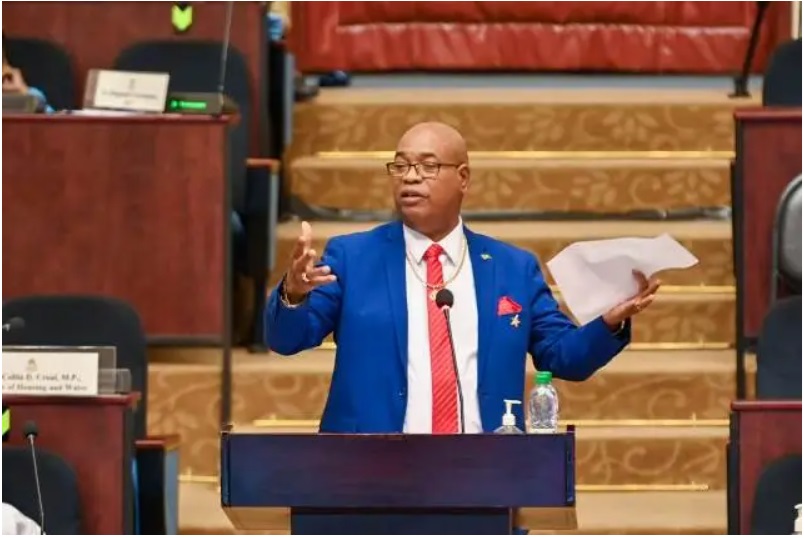
    Leading off the introduction of new legislation, Prime Minister Dr. Terrance Drew – who also holds cabinet portfolios for Finance, National Security, Citizenship and Immigration, Health, and Social Security – will request parliamentary leave to introduce the Banking (Amendment) Bill 2026 for its first reading before the chamber. Following the prime minister’s introduction, Attorney-General Garth Wilkin, the cabinet minister responsible for Justice and Legal Affairs, will move to introduce the Evidence (Amendment) Bill 2026 for its first reading.

    To ensure full public access to the proceedings, multiple broadcast and streaming options have been arranged for residents across St. Kitts and Nevis. The full sitting will be carried live via ZIZ Radio 96 FM and a network of participating local radio stations. Television viewers can watch the session live on Channel 5 in St. Kitts and Channel 98 in Nevis. For digital audiences, the St. Kitts and Nevis Information Service will stream the entire sitting live to its official Facebook and YouTube platforms. Once the text of the two bills is finalized for public distribution, full digital copies will be posted to the SKNIS official website in the dedicated ‘Bills’ content section for public review.

    This announcement comes as part of the administration’s ongoing effort to advance institutional reform through targeted legislative updates, aligned with its stated commitments to open governance.

  • Netanyahu’s rivalen bundelen de krachten; zullen zij het veiligheidsbeleid van Israël veranderen?

    Netanyahu’s rivalen bundelen de krachten; zullen zij het veiligheidsbeleid van Israël veranderen?

    Israeli Prime Minister Benjamin Netanyahu faces a new coordinated challenge ahead of upcoming national elections, as two of his most prominent political rivals have announced a merger to form a new opposition party dedicated to ousting his far-right coalition government.

    The new alliance, led by former right-wing lawmaker Naftali Bennett and centrist opposition leader Yair Lapid, has branded itself “BeYachad” — Hebrew for “Together” — and has centered its early policy messaging on domestic priorities, most notably reforming military conscription requirements to include ultra-Orthodox Jewish communities. On major regional security issues that dominate Israeli political discourse, however, analysts widely expect the new party to maintain a policy stance largely aligned with that of Netanyahu’s administration, the most right-wing government in Israel’s history. If the alliance takes power, that continuity means Israeli foreign and security policy would see little substantive shift across core regional fronts.

    As of yet, BeYachad has not released a full formal policy platform. Below is a breakdown of the party’s known positions on key regional issues, drawn from recent public statements from its leaders and insider sources.

    ### Position on Iran
    Bennett, 54, and Lapid, 62, have issued unwavering public support for Netanyahu’s decision to join the United States in carrying out military strikes against Iran, a stance that aligns with broad public backing for the military campaign across Israeli society. Shortly after Israeli airstrikes on Iran commenced, Lapid described the operation as a “just war against evil” in an interview with Reuters.

    Despite this initial backing, both leaders have since criticized Netanyahu for failing to achieve what they frame as Israel’s core strategic objectives in the campaign — chief among them the overthrow of Iran’s clerical-led government. Even so, neither Bennett nor Lapid has called for a resumption of hostilities after an April 8 ceasefire halted exchanges of fire between Israel, the U.S., and Iran following the joint strikes.

    A source close to the new party, speaking on condition of anonymity, described the two leaders as “hawkish” and “uncompromising on Iran” while also noting they bring pragmatic approach to the issue. “They understand that diplomatic agreements and post-conflict statecraft are just as necessary to achieve long-term strategic goals as military force,” the source added.

    ### Position on Lebanon
    Bennett and Lapid also support Israeli military operations in Lebanon, and both have openly criticized the April 17 ceasefire that was intended to end fighting between the Israel Defense Forces and Iran-backed Hezbollah militant group, arguing the agreement has failed to eliminate the persistent threat Hezbollah poses to northern Israel.

    Shortly before the IDF launched its ground incursion into southern Lebanon in March, Lapid stated Israel must take all necessary measures to protect its civilian population along the northern border. After the ceasefire was announced, Lapid emphasized that the only viable long-term solution is the permanent removal of all Hezbollah threats to northern Israeli territory.

    Bennett has been even more scathing in his assessment of the truce. In an April 17 post to Facebook, he wrote: “We can already count down to the next round of fighting. Hezbollah started rebuilding its presence in southern Lebanon this morning, and it is rearming with more rockets to prepare for the next confrontation.”

    ### Position on Gaza
    On the ongoing conflict in Gaza, where Israeli forces have continued to carry out deadly strikes despite an October ceasefire, both Bennett and Lapid have attacked Netanyahu for failing to fully dismantle Hamas following the group’s October 7, 2023 cross-border attack. The two leaders argue Netanyahu’s approach has left Hamas’ governing and military capacity intact.

    In January, Lapid told audiences that Netanyahu’s government had secured the “worst possible outcome” in Gaza, noting Hamas still retains tens of thousands of active fighters and maintains control over a small stretch of coastal Gaza territory under the terms of the current ceasefire.

    Earlier this month, Bennett echoed that criticism in a Facebook post, arguing that Netanyahu’s policy — which included allowing limited humanitarian aid into Gaza after a three-month total blockade in 2025 — has directly helped Hamas reconsolidate its control. “This is being done with the help of hundreds of aid trucks that Netanyahu’s government delivers to them every single day,” Bennett wrote.

    Netanyahu, for his part, has framed the devastating military campaign in Gaza — which has destroyed most of the enclave’s infrastructure and killed more than 72,000 Palestinians according to local health officials — as a strategic success. He has left open the option of a full resumption of large-scale combat if Hamas refuses to disarm under a U.S.-brokered negotiation process, a requirement Hamas has rejected to date.

    ### Position on Palestinian Statehood
    Public opinion polling shows a majority of Israeli voters oppose the creation of an independent Palestinian state in the occupied West Bank, Gaza, and East Jerusalem, and a BeYachad-led government would be unlikely to enact major policy changes on this issue regardless of its leaders’ past nuanced positions.

    Netanyahu has long been a staunch opponent of Palestinian statehood, and his administration has accelerated Israeli settlement construction in the West Bank, a move cabinet ministers have openly acknowledged is intended to permanently undermine any future prospects for Palestinian independence.

    Lapid, who aligns with many centrist and left-leaning Israeli figures, has previously stated support for a two-state solution as the correct path forward, a position he laid out in 2022. Bennett, by contrast, has rejected the two-state framework. When asked by U.S. broadcaster ABC why he opposed the solution in a 2024 interview, Bennett argued any Palestinian state would inevitably become a base for terrorist violence against Israelis.

    “What we have learned over the past 30 years is that every time we handed the Palestinians a piece of land, they did not build it into a peaceful, prosperous Singapore. They turned it into a terror state, and began killing Israelis,” Bennett said at the time.

    Across the West Bank file, all three political leaders — Netanyahu, Bennett, and Lapid — have publicly condemned violence carried out by Israeli settlers against Palestinian communities. Settler attacks have surged in frequency and severity under Netanyahu’s tenure, and critics accuse the prime minister of tacitly tolerating attacks that see settlers burn Palestinian villages and assault local residents. Netanyahu’s office has repeatedly denied these accusations.

  • Lawanda Lavia to Release “Educate to Build, Grow to Replenish” National Production in 24 Hours

    Lawanda Lavia to Release “Educate to Build, Grow to Replenish” National Production in 24 Hours

    ST. JOHN’S, ANTIGUA & BARBUDA – In just two days, Antigua and Barbuda will welcome a groundbreaking new project from one of the nation’s rising young advocates: criminologist, scholar and social development leader Lawanda Lavia. Her upcoming motivational, nation-focused production *Educate to Build, Grow to Replenish* has stirred growing public excitement ahead of its launch in the next 48 hours.

    The multi-part series is crafted to center on the life-changing impact of core societal values: accessible education, personal discipline, ethical leadership, community cohesion and individual resilience. Its core mission is to empower all citizens, particularly young people, to build purpose-driven lives and contribute meaningfully to the long-term progress of Antigua and Barbuda.

    Lavia, who recently earned a master’s degree with Merit in Criminology and Social Policy from Liverpool John Moores University, has built her public career around advancing justice, lifting up marginalized youth, and expanding support for vulnerable communities across the twin-island nation. This new production is framed as a natural extension of that ongoing commitment to public service.

    Unlike many mainstream digital productions, this project is far more than entertainment: it is structured as a full social empowerment campaign built to cultivate collective hope, national civic pride, and a renewed sense of personal responsibility among citizens. The project’s title intentionally breaks down its core philosophy into four actionable pillars, with explicit acknowledgment of the Antigua and Barbuda government’s ongoing investment in finance and education sectors:
    1. **Educate**: Prioritize continuous knowledge-building and lifelong learning for all residents
    2. **Build**: Strengthen the foundations of strong families, connected communities, and trusted public institutions
    3. **Grow**: Advance holistic development across personal, professional, environmental and spiritual dimensions of life
    4. **Replenish**: Commit to giving back to local communities and lifting up the next generation of leaders

    Featuring cinematic narrative techniques, heartfelt personal messaging, and consistent focus on inclusive national progress, the series will center much of its messaging on young Antiguans and Barbudans. Lavia plans to use the platform to reinforce a simple, empowering lesson: meaningful success is within reach for young people who commit to consistency, intentional education, lawful citizenship and clear long-term vision.

    Those who have followed Lavia’s public advocacy over the years note that her work has always been rooted in service, not recognition. She has previously pushed for stronger child protection policies, expanded family support frameworks, and more youth-centered public policy across Antigua and Barbuda. This upcoming release is widely framed as a constructive, positive contribution to civic life—designed to motivate citizens rather than criticize or divide.

    As the launch countdown continues, public anticipation has grown across the islands. Local residents have been urged to watch, support and share the production once it goes live, at a moment when many Antiguans and Barbudans are actively seeking uplifting local content that reflects national ambition, shared progress, and collective pride.

    In an unofficial statement shared by Lavia’s supporters, the core message of the production boils down to a straightforward truth: “When one citizen rises through education and returns to serve their home, the whole nation reaps the benefits.”

    For many observers, this series represents more than a new media project. It stands as a symbol of what young, educated Antiguans can achieve when they channel their knowledge, creativity and patriotism into building a brighter shared future for the entire nation. In just two days, all of Antigua and Barbuda will be waiting to see what Lavia has created.

  • Antigua & Barbuda Girl Guides Headquarters Acquires Sustainable Bench throughSandals Foundation

    Antigua & Barbuda Girl Guides Headquarters Acquires Sustainable Bench throughSandals Foundation

    A striking new symbol of community-led environmental action has taken root at the Antigua & Barbuda Girl Guides Headquarters: a one-of-a-kind sustainable bench, constructed from more than 20,000 recycled plastic bottle caps, marks the successful wrap-up of the Ocean Love NO Plastic NO Waste youth environmental initiative.

    This unique public installation is the product of a collaborative partnership between the Sandals Foundation and the West Indies Sail Heritage Foundation, designed to turn what would otherwise become ocean pollution or landfill waste into a durable, functional community asset. More than just a place for visitors and members to rest, the bench serves as a constant, visible reminder of the urgent need for collective environmental responsibility across the Caribbean island nation.

    The bench is the end result of a multi-stage educational program developed specifically for members of Girl Guides Chapters 3 and 9. Over the course of the initiative, young participants took part in a full schedule of interactive, hands-on learning activities centered on addressing plastic pollution and advancing community sustainability. Program content focused heavily on teaching the core 4Rs framework – Refuse, Reduce, Reuse, and Recycle – to help young people build durable, eco-friendly daily habits. Participants also joined a community beach cleanup along Falmouth’s coastline, gaining first-hand experience with the scale of local plastic pollution, before diving into interactive upcycling workshops that let them explore the process of transforming waste plastic into new products using specialized processing equipment.

    Beyond learning the technical process of upcycling, the program gave young Girl Guides the chance to design and create their own small goods from recycled plastic waste, deepening their personal understanding of how discarded materials can be repurposed into useful, long-lasting items. The initiative concluded with a formal Ocean Lovers Pledge Ceremony, where every participating Guide made a public commitment to adopt more sustainable daily practices, including cutting back on single-use plastic items and following proper waste disposal protocols.

    Charlotte Hooijdonk, CEO of the West Indies Sail Heritage Foundation, emphasized that the bench carries far more meaning than its recycled construction. “This bench is a reflection of the knowledge, hard work, and commitment of these young women,” Hooijdonk explained. “It stands as a lasting reminder of what we can accomplish when we bring together education, cross-organizational partnership, and community-driven action.”

    For the Sandals Foundation, the new bench is just one part of the organization’s long-term mission to expand access to environmental education for people of all ages across the Caribbean. “Environmental stewardship starts with building knowledge and fostering a real appreciation for the natural resources and ecosystems that sustain all life,” noted Patrice Gilpin, Public Relations Manager at the Sandals Foundation. “Through this bench, our hope is that current and future generations of Girl Guides will remember the power they hold to protect their environment – by making intentional choices to cut down on the waste they create, and prioritize reuse and recycling whenever possible.”

    As Girl Guides begin to use their new gathering space, the installation carries a dual legacy: it meets a practical community need for seating at the headquarters, while standing as a tangible example of what collaborative local action can achieve to advance meaningful, long-lasting sustainable change.

  • DGCINE announces temporary road closures in Samaná for filming

    DGCINE announces temporary road closures in Samaná for filming

    Local film production activities are set to bring short-term traffic disruptions to the popular coastal region of Samaná, after the Dominican Republic’s General Directorate of Cinema (DGCINE) officially announced planned road closures to accommodate on-location shooting.

    Two separate closure windows have been confirmed for the coming days, both aligned to the logistics of the ongoing audiovisual project. The first closure will go into effect on Tuesday, April 28, affecting Avenida de la Marina, commonly known as the Malecón. The restricted stretch will run from the location of Taberna Mediterránea through to Hacienda Samaná, with no through traffic allowed between 4:00 a.m. and 7:00 p.m. that day.

    A second closure is scheduled two days later, on Thursday, April 30, impacting William Johnson Avenue. This segment will be shut down from the junction with Galera Samaná road in the La Aguada sector all the way to the Marina Avenue roundabout, operating during the exact same 15-hour time frame as the first closure.

    In a public statement, DGCINE clarified that these temporary traffic restrictions are a necessary part of coordinating on-location logistics for the audiovisual production currently being filmed across the Samaná area. The agency has issued a formal advisory to all local residents, commuters and visitors planning to travel through the affected zones, urging them to map out alternate routes well in advance of their trips and to exercise additional caution when moving around the perimeter of the closed areas. The agency also noted that all restrictions will be lifted promptly once filming activities wrap up for the day on each scheduled date.

  • Column: Humphrey Schurman, een man van recht, humor en vrijheid

    Column: Humphrey Schurman, een man van recht, humor en vrijheid

    On April 27, 2026, prominent Surinamese lawyer and co-founder of Network Star Suriname – the parent company of local news outlet Starnieuws – Humphrey Schurman passed away at the age of 72, leaving behind a legacy of unwavering commitment to the rule of law, press freedom and principled leadership. In a moving tribute published April 28, Starnieuws editor Nita Ramcharan reflected on the profound loss felt by the outlet’s entire team, describing Schurman as a rare and extraordinary figure whose quiet dignity has left an indelible mark on Suriname’s media and legal landscapes.

    Schurman built his reputation as a respected legal professional and community leader defined by quiet authority rather than performative power. Unlike many public figures who crave the spotlight and push for control, he carried influence through the substance of his arguments, the conviction of his beliefs, and a natural aura of calm, trust and integrity that resonated with all who worked with him. For the Starnieuws team, he was far more than a boardroom leader – he was a steadfast guardian of core journalistic principles that underpin a functional democratic society.

    As a co-founder of Network Star Suriname, Schurman maintained a deliberate and respectful distance from the outlet’s editorial decision-making, a choice that stands out in an era when many media owners view newsrooms as extensions of political or personal power. He never interfered in story selection, headline wording or article publication, never demanded advance access to content, and never pressured editors to soften or remove critical reporting. He read Starnieuws the same way any ordinary citizen did – only after it was published. What many might take for granted was in fact a reflection of Schurman’s deep understanding: that independent journalism is the foundation of credible news, and editorial freedom cannot exist if owners impose external pressure on reporting teams.

    Far from being a distant, uninvolved leader, Schurman was an enthusiastic supporter of journalistic innovation, new ideas and progress for Suriname. He firmly believed the nation could and should become a place where the rule of law is applied equally to all, where public institutions are strong and accountable, and where all citizens feel safe to express their opinions without fear of retribution. He particularly cherished unflinching, honest columns that spoke truth to power directly, not out of a love for conflict, but because he recognized that hard honesty is often required to break through soft, damaging lies that erode public trust.

    When tensions rose and opposing factions found themselves at odds, Schurman rejected the zero-sum approach of seeking a clear winner and loser, instead prioritizing collaborative solutions that addressed the interests of all sides. He understood that lasting compromise grows not from weakness, but from wisdom – a trait that those who knew him say best defines his character. He was unwavering in his core values but flexible in how he engaged with others, committed to his principles without being rigid, and determined in his goals without becoming harsh or unapproachable.

    Ramcharan notes that the tribute would likely have drawn a typical self-effacing response from Schurman: a gentle smile, a wave off of excessive praise, and a quick shift of focus back to the work at hand rather than his own achievements. But Ramcharan argues that taking time to honor Schurman is a necessary act, not because he was perfect, but because his life carried profound meaning – and the impact of his work will long outlive his passing.

    While Schurman’s voice is now silenced, and his clear-headed analyses will be deeply missed, his example will continue to guide everyone who had the privilege of working with him. His legacy lives on in every choice to protect editorial independence, every defense of equal justice under the law, and every effort to build bridges where others choose to build dividing walls.

    On behalf of the entire Starnieuws team, Ramcharan extended heartfelt condolences to Schurman’s family, friends and all those who loved him. “Your loss is profound, and so is ours,” she wrote. “May his soul rest in eternal light, a fate we do not question he deserves. May his legacy continue to remind us all that dignity, freedom and justice never go out of style.”

  • Weather system brings heavy downpours and storms to Dominican Republic

    Weather system brings heavy downpours and storms to Dominican Republic

    Residents of the Dominican Republic are preparing for disruptive severe weather on Tuesday, as the country’s national meteorological agency, the Dominican Institute of Meteorology (Indomet), has issued a series of alerts for widespread heavy rainfall, thunderstorms, and powerful wind gusts driven by overlapping atmospheric systems. According to the official forecast, the unstable conditions stem from two converging weather patterns: an approaching surface trough connected to a frontal system positioned northeast of the island, combined with a separate disturbance in the upper atmosphere. This combination is expected to create favorable conditions for intense precipitation and storm activity across large swathes of the country.

    Early morning cloud cover will kick off the weather event, with scattered to moderate showers forecast to hit more than 10 provinces from the earliest hours of Tuesday. The list of regions expecting early precipitation includes the eastern tourist hubs of La Altagracia, San Pedro de Macorís, and La Romana, as well as inland and central provinces El Seibo, Monte Plata, San Cristóbal, Sánchez Ramírez, Monseñor Nouel, La Vega, and Santiago. Forecasters project that storm activity will build steadily through the day, with a sharp intensification expected during the afternoon and evening hours. As the systems develop, heavier downpours and stronger thunderstorms will expand coverage to reach the North, Northeast, and Southeast regions, the high-elevation Central Mountain Range, and the country’s border regions with neighboring Haiti.

    To prepare residents for potential hazards, Indomet has put in place two tiers of official weather notifications. Active weather alerts are currently in effect for the provinces of Espaillat, Hermanas Mirabal, La Vega, Monseñor Nouel, Santiago Rodríguez, Samaná, Hato Mayor, and Puerto Plata. Higher-level weather warnings, indicating elevated immediate risk, remain in force for Santiago, María Trinidad Sánchez, Duarte, and Sánchez Ramírez. The elevated risk levels stem from forecasts of multiple potential hazards: flash flooding, sudden rises in water levels along rivers and smaller streams, and an increased possibility of soil displacement and landslides in vulnerable hilly and mountainous areas.

    National and local authorities have issued public guidance urging all residents in affected regions to prioritize safety over the coming 24 hours. Officials have reminded communities to monitor official Indomet weather updates closely for any changes to the forecast or risk level, and to follow all public safety guidance issued by the country’s civil protection agency as the weather event unfolds.

  • A peace signature against the blockade

    A peace signature against the blockade

    Across Cuba right now, a quiet but powerful wave of civic action is sweeping the island nation. The growing “My Signature for the Homeland” movement is far more than a symbolic gesture or empty political slogan — it is a deliberate, conscious act of collective resistance against the long-standing international blockade that has shaped daily life for generations of Cubans.

    History has a way of elevating small, intentional acts into defining markers of national identity. A single stroke of ink on a petition sheet carries more moral weight than any weapon of aggression. Today, Cuba is uniting around this movement: millions of hands reach for paper, and every name added becomes a line of defense, a moral bulwark against the collective punishment that has sought to break the Cuban people’s resolve.

    As the movement’s organizers emphasize, this initiative is first and foremost a profound act of civic duty. The siege Cuba endures is not merely a physical barrier that blocks oil tankers from reaching its ports, cutting off critical supply chains. It is a deliberate attempt to erode the nation’s collective soul, to wear down public commitment to Cuban sovereignty through systemic economic and social hardship.

    The U.S.-led blockade operates as a cruel, indiscriminate machinery of punishment that spares no segment of the Cuban population. It does not differentiate between children, elderly people, rural farmers, or urban workers. Its impact is felt in every shortage of staple bread, every gap in access to life-saving medicine, every scarcity of fuel that grinds daily activity to a halt, and every separated family kept from the embrace they have waited years to share. There are few more fundamentally inhumane acts than coercing an entire population to surrender its inherent dignity by inflicting widespread suffering on ordinary families.

    Yet on this island shaped by decades of struggle, the Cuban people have chosen a response far more powerful than resentment: radical national unity. Adding one’s signature to the movement is no passive symbolic act. It is a public message to the entire world: Cubans choose to build cross-border solidarity rather than succumb to fear and division. It is an act of guarding the concept of “the Homeland” — the intangible, shared territory of the national heart that holds the legacy of José Martí, the revered Cuban independence leader, and the quiet sacrifice of thousands of anonymous Cubans who sustained the nation through years of hardship.

    Martí, often called the Apostle of Cuban independence, once taught that “Homeland is humanity.” Today, as every new signature links to the last, forging an unbroken chain of principled resistance, Cubans are defending peace as their first and most foundational line of defense. Cuba has never sought war, but it will not accept the slow, gradual death imposed by the ongoing blockade. Cubans do not crave revenge; they crave the ability to breathe freely, to build their nation without the constant shadow of punitive legislation that punishes them simply for existing as a sovereign people.

    This civic movement carries a unique beauty: it turns a collective act of national resistance into an intimate, personal choice. When a Cuban signs their name, they are not just adding a name to a list — they are standing with the mother waiting for a life-saving shipment of medicine, the engineer waiting for access to critical raw materials to build the nation’s future, and the child who deserves to grow up without the weight of external hatred. Participants do not sign out of bitterness; they sign with the clear certainty that the blockade can only be overcome through the power of truth and active, principled peace.

    Every signature added is a small piece of the Cuban Homeland that refuses to return to colonial status. Every full sheet of signatures is a verse of quiet, unyielding civil resistance. So long as there are Cuban hands willing to write their name and affirm their commitment to national sovereignty, the blockade — this unjust collective punishment — will never hold legal or moral force in the hearts of the Cuban people.

    Because Cuba is not signing a document of surrender. It is signing for life, for peace, and for the inherent dignity of a people that has never accepted existence on its knees. That signature, that commitment, is as deeply, inherently Cuban as the palm trees that line the nation’s coasts.

  • Fidel and unconventional warfare: An early warning about the assault on consciousness

    Fidel and unconventional warfare: An early warning about the assault on consciousness

    Decades before modern phrases like “fake news” and “cognitive warfare” entered everyday public discourse, Fidel Castro Ruz, the iconic founding leader of the Cuban Revolution, had already mapped out the hidden mechanisms of power that major world powers would unleash through digital information and communication technologies.

    Crucially, Castro’s perspective was never rooted in opposition to technological progress itself. A close look at his legacy reveals a consistent commitment to expanding digital access and technical expertise across Cuba: he championed the development of the island’s first domestic computer, established the country’s preeminent University of Information Sciences, and launched the nationwide Joven Club de Computación (Youth Computer Club) initiative to bring digital literacy to generations of young Cubans.

    Instead, his words represented a prescient, far-sighted warning: he accurately foresaw that cyberspace would evolve into the central battlefield of a quiet, unconventional war designed to colonize the minds of people across the Global South. Castro framed the internet as inherently contested terrain. He never rejected its transformative potential for marginalized nations, noting in a 2012 address at the launch of the book *Guerrillero del Tiempo*: “The internet is a revolutionary tool that allows us to receive and transmit ideas in both directions—something we must know how to use.”

    Yet as early as 2006, when the U.S. government formally announced the creation of its Air Force Cyberspace Special Command, Castro sounded an urgent alarm that rings even louder in today’s hyper-connected world. “The internet can be used with the worst intentions in the world, as envisioned by the CIA and the Pentagon,” he warned at the time. This core duality defined his entire framework on digital power: the network itself is not the enemy; the danger lies in how U.S. imperialism and its allied powers would weaponize it for geopolitical gain.

    At the heart of Castro’s analysis was a sharp critique of mass psychological manipulation. In a landmark November 2005 address delivered at the University of Havana’s Aula Magna, he laid out a critical distinction that explains the effectiveness of 21st century unconventional conflict. “When they first emerged, the mass media took hold of people’s minds and ruled not only on the basis of lies, but also of conditioned reflexes,” he explained. “A lie is not the same as a conditioned reflex. A lie affects knowledge; a conditioned reflex affects the ability to think.”

    This core thesis exposes that the goal of this digital warfare is not merely to spread false information—it is to erase a population’s capacity for critical thought. Through endless repetition of ideological slogans that seep into the collective subconscious, adversaries can reshape public opinion without overt military intervention. Castro illustrated this dynamic with a stark, direct example: “Because they have already created reflexes in you: ‘This is bad, this is bad; socialism is bad, socialism is bad,’ and all the ignorant, all the poor, and all the exploited saying: ‘Socialism is bad.’ ‘Communism is bad,’ and all the poor, all the exploited, and all the illiterate repeating: ‘Communism is bad.’”

    Today, that dynamic has been amplified exponentially by algorithmic curation and viral social media platforms, turning this repetitive messaging into a constant, pervasive assault on independent consciousness.

    Castro’s analysis expanded further to connect digital psychological warfare to the global military-industrial complex. In an August 2009 reflection titled *The Empire and the Robots*, he denounced the stark global inequality that drives weapons development: while more than one billion people across the planet faced chronic hunger, the United States accounted for 42% of total global military spending, pouring vast resources into developing “technologies for killing.”

    The question he posed nearly 20 years ago remains as urgent as ever: “If robots in the hands of transnational corporations can replace imperial soldiers in wars of conquest, who will stop the transnational corporations in their search for markets for their devices?” This shift toward the dehumanization of war—replacing on-the-ground soldiers with drones, algorithms, and autonomous weapons—works hand in hand with psychological warfare: it turns mass destruction into a distant, abstract spectacle, making it far easier to manipulate public perception to justify military aggression. Recent examples, such as Project Maven, the partnership between the Pentagon, tech firms Palantir, Anthropic and its AI Claude, in strikes targeting Venezuela and Iran, confirm Castro’s early insight.

    All of Castro’s interconnected warnings about unconventional warfare coalesce into a overarching diagnosis he labeled “knowledge imperialism.” Repeatedly across his speeches, he framed this as the “main battlefront of the imperialist war,” with an ultimate goal of breaking the sovereign will of independent nations without firing a single shot. Instead of overt military invasion, imperial powers rely on cultural subversion and systematic information manipulation to achieve their geopolitical aims.

    In 2017, Cuban President Raúl Castro Ruz formally reaffirmed this framework before the country’s National Assembly, emphasizing that massive U.S. investments in digital and cultural tools were designed to “refine the tools of the so-called ‘unconventional war’” to provoke political destabilization and restore capitalist rule on the island.

    In the decades since Fidel Castro first issued these warnings, his early analysis has become a core part of Cuban state doctrine, and an essential lens for interpreting 21st century geopolitical conflict. In an era where social media amplifies manufactured conditioned reflexes, algorithms target and segment users to spread tailored misinformation, and autonomous weapons replace frontline soldiers, Castro’s words carry the weight of a fulfilled prophecy—one that is ultimately a call to defend popular sovereignty through critical knowledge and commitment to truth.