作者: admin

  • Crime victim Nakhid wants tighter security

    Crime victim Nakhid wants tighter security

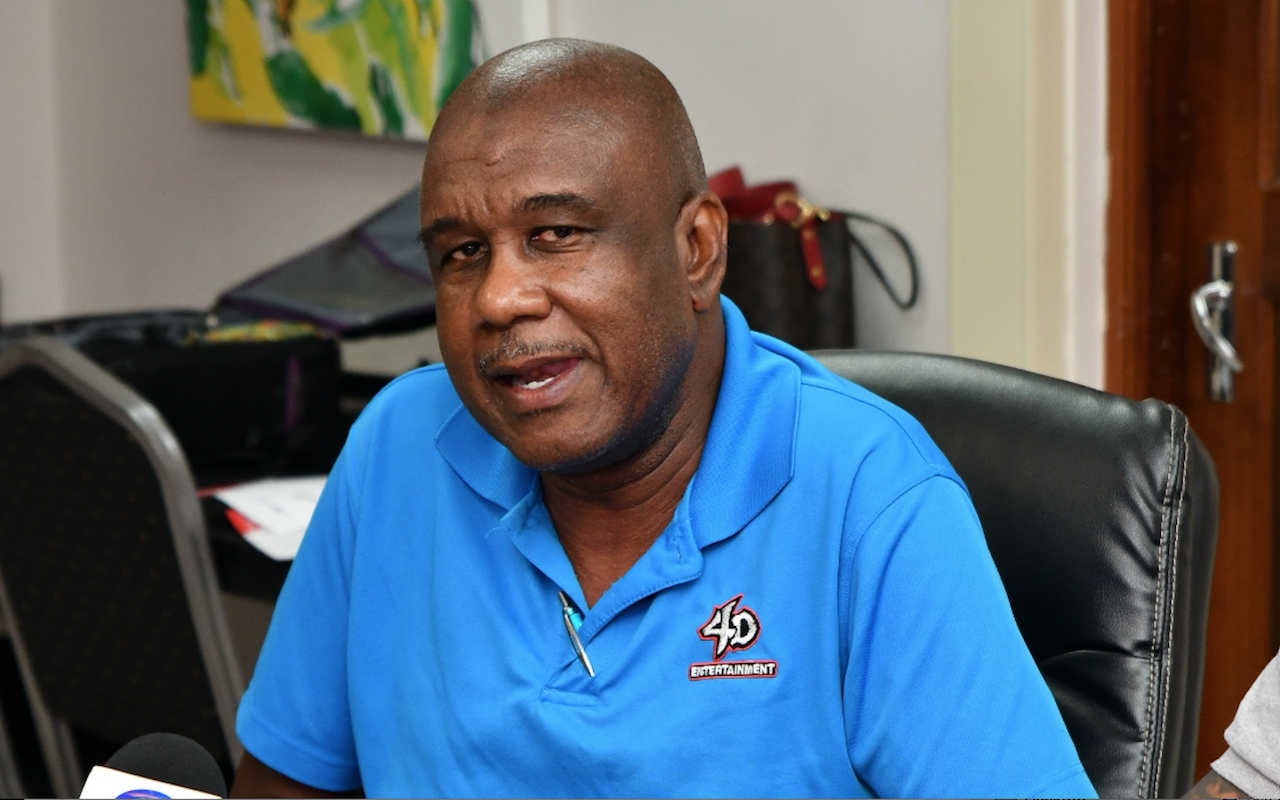
    A high-profile incident of vehicle theft has sparked renewed calls for stronger public safety measures across Trinidad and Tobago, after United National Congress Senator David Nakhid fell victim to a targeted car break-in that stole thousands of dollars earmarked for local charitable work. The brazen two-minute theft unfolded on Monday afternoon, following what Nakhid says was a deliberate跟踪 from a commercial bank branch in Maraval.

    According to official police timelines, the senator parked and locked his black Mercedes-Benz in the lot of Simple Choice Mart, a Cascade supermarket, at approximately 4:15 p.m. after leaving the Maraval bank. He entered the store to pick up a small number of items, and just two minutes later, when he exited the building at 4:17 p.m., he discovered the glass on his vehicle’s rear right door had been smashed by the perpetrator.

    A quick inventory of the car revealed significant losses: $10,000 in cash was missing, along with two designer perfumes – a Christian Dior fragrance valued at $2,600 and a second bottle worth $800. Additional personal items including bank cards and official identification documents were also taken by the thief. Nakhid quickly filed an official report with officers at the Belmont Police Station, who have remained in regular contact with him throughout the investigation.

    Speaking to reporters Tuesday outside the country’s Parliament building in Port of Spain, Nakhid said he has no doubt he was followed from the bank by criminals targeting customers who have just completed withdrawals. He argued that this incident is not an isolated one, but part of a growing, troubling pattern of criminal gangs staking out bank customers to rob them after they leave the bank’s secure premises.

    The senator pushed back against any attempts to frame the incident through a political lens, emphasizing that regardless of his public position, this was first and foremost a criminal act that highlighted a broader public safety crisis. He revealed that the entire sum of stolen cash was set aside for his monthly charitable outreach across communities along the East-West Corridor, where he regularly distributes food hampers and covers utility bills for low-income residents.

    “I’ve always said I’m willing to give the shirt off my back in charity…but I don’t accept to be violated by anybody,” Nakhid told reporters, describing the theft as a personal violation while expressing confidence that law enforcement would identify and apprehend the culprits. He noted that existing closed-circuit television footage from the area, paired with a witness statement, should give investigators solid leads to work with.

    Nakhid’s core demand is for commercial banks across the country to expand their security protocols beyond their immediate branch walls, to cover adjacent parking areas where customers are often most vulnerable immediately after completing transactions. He proposed concrete changes, including having armed security personnel conduct regular patrols of surrounding parking lots and actively monitor for any suspicious behavior that signals pre-robbery surveillance.

    Despite the frightening experience, Nakhid said he does not feel unsafe going about his public and personal work, but stressed that his case serves as an important cautionary tale for all local residents. He commended Belmont Police officers for their professional, prompt response to his report, but made clear that his top priority remains the swift arrest and prosecution of those responsible for the theft.

    “This is something circumstantial. It happened,” he said. “But I want to see these people caught.”

  • Anger over Delcy’s brooch

    Anger over Delcy’s brooch

    A seemingly small accessory has ignited a major diplomatic row across the Caribbean Community (Caricom), just days before a landmark international court hearing on one of the Western Hemisphere’s longest-running territorial disputes. The source of the tension is a deliberately worn brooch, shaped as a map of Venezuela that claims the resource-rich Essequibo region as Venezuelan territory, sported by Venezuela’s acting President Delcy Rodriguez during back-to-back official visits to two Caricom member states in late April 2026.

    Rodriguez’s visit schedule saw her meet Grenada Prime Minister Dickon Mitchell on April 9, before traveling to Bridgetown on April 27 to hold talks with Barbados Prime Minister Mia Mottley. Her choice of accessory did not go unnoticed by Guyanese leadership, which has formally protested the act to Caricom chairman Dr. Terrance Drew in an official letter dated April 28, 2026.

    For decades, the 159,000-square-kilometer Essequibo region — which makes up nearly two-thirds of Guyana’s current territory and holds vast untapped oil, mineral and forestry reserves — has been at the center of a sovereignty dispute between the two neighboring South American nations. The root of the conflict dates back to the 1899 Arbitral Award, which set the current border when Guyana was still a British colony. In 2018, Guyana launched formal proceedings at the International Court of Justice (ICJ) in The Hague to secure a binding ruling affirming the 1899 award’s legal validity and Guyana’s full sovereignty over the region. Oral hearings in the landmark case are scheduled to open on May 4, 2026.

    Venezuela has consistently rejected the 1899 award as legally flawed, and has refused to recognize the ICJ’s jurisdiction over the dispute, instead pushing for negotiations under the 1966 Geneva Agreement framework. Despite Venezuela’s jurisdictional challenge, the ICJ ruled in 2023 that it holds authority to adjudicate the case, and issued binding provisional measures ordering both parties to maintain the status quo, avoid any actions that would escalate the dispute, and allow Guyana to continue administering the region. Upcoming oral hearings mark a major step toward a final binding resolution.

    The current context of Venezuelan politics adds a new layer of urgency to the dispute: earlier in 2026, on January 3, a United States military operation removed long-time Venezuelan President Nicolás Maduro from power, taking him into custody to face criminal charges in New York. Rodriguez, a close ally of Maduro, was installed as acting president following Maduro’s ouster, and is preparing to contest upcoming national elections in Venezuela. Political analysts view her deliberate display of the disputed map as a move to galvanize nationalist support among Venezuelan voters ahead of the ballot.

    In his formal letter to Caricom’s leadership, Guyanese President Dr. Irfaan Ali described Rodriguez’s brooch as a calculated and provocative escalation of Venezuela’s territorial claim, directly violating the ICJ’s provisional measures and the 2023 Argyle Declaration. That agreement, brokered by Caricom in St. Vincent and the Grenadines in December 2023, saw then-President Maduro and President Ali commit to avoid the use or threat of force, refrain from escalation, and respect the ongoing ICJ process while the case is pending.

    Ali stressed that displaying a map claiming Essequibo as Venezuelan territory during official Caricom-hosted engagements risks being interpreted as regional acquiescence to Venezuela’s unlawful claim. “Venezuela cannot, while the case is before the Court, seek to normalise by symbols, maps, legislation, appointments or official display what it has failed to establish in law,” Ali wrote in the letter. He added that such provocative actions undermine Venezuela’s stated commitment to peaceful dispute resolution, international law, and good neighborly relations, noting that repeated symbolic and administrative moves to assert claim over Essequibo directly contradict the ICJ’s 2023 order requiring maintenance of the status quo.

    The Guyanese president reaffirmed his country’s unwavering commitment to a peaceful, lawful resolution through the ICJ, noting that Guyana continues to place full confidence in the court’s process and upcoming ruling. He called on all nations, including Venezuela, to abide by United Nations Charter principles, refrain from provocative acts, and respect the ongoing judicial process. Ali also urged Caricom to uphold its long-standing stated support for Guyana’s sovereignty and territorial integrity in both official declarations and the conduct of official regional engagements, calling for continued vigilance to safeguard the bloc’s principled position on the dispute.

    Reaction across Caricom has been mixed so far. Trinidad and Tobago Prime Minister Kamla Persad-Bissessar stated she remains unfazed by Rodriguez’s meetings with regional leaders, noting that Trinidad and Tobago maintains open diplomatic channels with Venezuela’s interim government. She also pointed out that Rodriguez, who was previously sanctioned by the United States, had only recently regained the ability to travel internationally for official engagements. In addition to her meetings with the Grenadian and Barbadian prime ministers, Rodriguez also held a previously unannounced meeting with former Trinidadian Prime Minister Stuart Young, who now serves as energy minister. Young publicly disclosed the meeting by posting a photo of himself and Rodriguez to social media.

    Prior to Maduro’s ouster, Guyana and international partners had repeatedly accused Venezuela of violating both the Argyle Declaration and ICJ provisional measures through a series of escalatory moves, including formally declaring Essequibo a new Venezuelan state, moving to award oil exploration concessions in the disputed region, and conducting maritime incursions near Guyana’s existing offshore oil operations. International bodies including the Commonwealth have repeatedly stated that these actions run counter to the spirit of the Argyle agreement, and have called on Venezuela to adhere to the ICJ’s binding provisional orders.

  • Republic Bank announces  fee increases from Friday

    Republic Bank announces fee increases from Friday

    Starting this Friday, customers of Republic Bank Ltd, the largest commercial banking institution in Trinidad and Tobago, will face broad-based increases to fees across nearly all everyday banking services, a change that will raise costs for everything from routine withdrawals to penalty charges for account mismanagement.

    The revised fee structure touches nearly every part of retail and small business banking: routine debit transactions on multiple account types that previously included a capped number of free withdrawals will now carry per-transaction costs. Penalty fees have seen even steeper jumps: non-sufficient funds (NSF) fees will climb from $34.50 to $57.50, matching the new $57.50 rate for overdraft fees that previously sat at $30. Late payment penalties on some loan products have even doubled, reaching a maximum of $100 per infraction.

    The fee increases come as no surprise to many industry observers, who have warned of cost pass-through to consumers since Trinidad and Tobago’s Finance Minister Davendranath Tancoo introduced a 0.25% asset levy on commercial banks and insurance companies in the 2024 national budget. When announcing the policy, Tancoo justified the levy by pointing to the strong financial performance of the country’s large financial institutions, noting that major banks and insurers have delivered consistent earnings, maintained healthy liquidity ratios, and grown their asset bases steadily thanks to conservative lending strategies and supportive monetary conditions.

    “Despite this, the average citizen continues to be subjected to unreasonably high fees and near-zero returns on their savings and investments,” Tancoo stated at the time, arguing that the 0.25% levy was a fair measure to generate additional public revenue. Officials projected the policy would add $575 million annually to the national government’s income.

    Ironically, the new levy has prompted the very fee hikes Tancoo criticized, with Republic Bank moving to pass its new tax burden directly to consumers. The bank’s latest financial disclosures, released in early 2026, confirm the institution’s strong profitability that the finance minister referenced: for the full year ending September 30, 2025, Republic Financial Holdings Ltd, the parent company of Republic Bank, posted a net profit of $2.2 billion attributable to equity holders. That marks a 9.8% year-over-year increase, or $196 million, from the $2 billion profit recorded in 2024.

    Profit growth has remained strong into the final quarter of 2025 as well: between October and December 2025, the group reported a $595.7 million profit, an 8.9% rise from the $547 million earned in the same quarter the previous year. By the end of December 2025, the group’s total assets hit $131.1 billion, a 6% increase of $7.5 billion compared to December 2024. Fees and commissions already make up 15.4% of the group’s total annual revenue, according to its most recent annual report.

  • Police: Bank card used after disappearance

    Police: Bank card used after disappearance

    For decades, Bernard Mahabir, 71, and Kenneth Gill, 67, shared a close bond as friends who regularly gathered socially. What began as an ordinary day of casual meeting would end in a senseless tragedy that has left their small community reeling in shock.

    Investigative details from local law enforcement outline the sequence of events that led to their deaths. On Sunday morning around 11 a.m., Gill left his residence in Cazabon Gardens, Trincity, and picked up his lifelong friend Mahabir from his home in Pasea, Tunapuna. The pair first drove to a Lopinot community center, where Gill parked his white Nissan Tiida, before Gill’s son transported them to a social gathering in La Pastora, Lopinot. By 5 p.m., the two men were dropped back at the community center, and from there they walked to a nearby neighborhood bar for an additional hour of casual time together.

    Investigators now believe that this stop at the bar would ultimately seal their fates. After observing Gill making payments with his bank card during their time at the bar, attackers targeted the pair, seeing two older retirees as vulnerable, easy targets for a violent robbery. The two men were last seen alive by relatives at approximately 6 p.m., when they drove out of the Lopinot area in Gill’s car.

    By 9:40 a.m. the following Monday, concerned wives of both men had filed official missing person reports at the Arouca Police Station. Law enforcement immediately launched an investigation and called in the volunteer Hunters Search and Rescue Team, led by Shamshudeen Ayube, to assist in the search. Before their remains were located, Gill’s stolen bank card was used by the attackers to make multiple unauthorized withdrawals: $3,000 was pulled from ATMs in Sangre Grande in two separate transactions, and an additional $1,500 was withdrawn from an ATM in Arima.

    Roughly five and a half hours after the missing reports were filed, at 3:15 p.m. Monday, police received a tip that led them to Tapana Road, a side route off Valencia Old Road in Valencia. There, they discovered the charred remains of Gill’s Nissan Tiida, with the burnt bodies of the two friends locked inside the vehicle’s trunk. The following morning, the remains were transported to the Forensic Science Centre in Federation Park, where family members formally identified the victims.

    The tight-knit community where the men lived has remembered the pair as beloved, upstanding members. One neighbor of Gill told local reporters that Gill was an exceptionally kind neighbor who had lived in the Trincity neighborhood with his family for 30 years. Relatives of Mahabir shared that the two men had grown up together on the same street in Pasea, Tunapuna, and their decades-long friendship was so close that each man’s children considered the other a surrogate uncle. Mahabir, a retired married father of two, had left his position with the Tunapuna Piarco Regional Corporation roughly a decade prior; outside of his public service, he was known as a skilled tailor and an enthusiastic beekeeper.

    As of Monday night, this double murder brings the national homicide toll for the current year to 117. For comparison, the homicide count on the same date last year was 126, marking a modest year-over-year decrease in total killings despite this high-profile violent crime.

  • Dominican farmers call for limits on rice and chicken imports

    Dominican farmers call for limits on rice and chicken imports

    SANTO DOMINGO — The Dominican Republic’s leading agricultural industry body is sounding the alarm over potential expansions to agricultural imports, urging the national government to reject broader market access for foreign rice and chicken to protect decades of progress toward domestic food sovereignty.

    The National Confederation of Agricultural Producers (Confenagro), which represents thousands of farming and livestock operations across the country, issued the formal warning this week, outlining that a sudden expansion of imported rice and chicken would undercut local producers and erode hard-won gains in national food self-sufficiency. Even amid widespread global volatility that has pushed up input costs for agricultural sectors worldwide, the organization noted that Dominican domestic producers have managed to sustain consistent output levels — even as they grapple with steep price hikes for critical imported supplies such as chemical fertilizers.

    Confenagro emphasized that rice and poultry production are two of the Dominican Republic’s most strategic agricultural sectors. Over recent years, the country has built up robust domestic capacity that meets nearly all of national demand for these staple foods, a milestone that reduces reliance on volatile global commodity markets. The group cautioned that opening the border to large-scale additional imports during the current period of global economic uncertainty would deliver lasting harm to local smallholder and commercial farmers alike. Once damaged, the confederation added, domestic production capacity would be slow and difficult to rebuild, leaving the country more vulnerable to future global food shocks.

    The latest warning follows a controversial decision earlier this year, when Dominican authorities authorized new chicken imports to address temporary domestic shortages and cool soaring retail prices for the staple protein. That move already sparked sharp political pushback and widespread concern across the domestic agricultural community, with many producers warning that temporary market access could become permanent.

    To address the current challenges of high input costs and consumer price pressures without damaging local production, Confenagro has put forward a package of alternative policy proposals. Key among these is expanding incentives for increased adoption of organic fertilizer production and use across the sector, a shift that would cut Dominican agriculture’s dependence on costly imported chemical inputs and bring down overall production costs for local producers. The association confirmed that it remains in active, constructive dialogue with national government authorities, working to find coordinated policy solutions that safeguard both the livelihoods of domestic agricultural producers and the long-term food security of all Dominican consumers.

  • Bagga man, 70, nabbed at AIA trying to take ganja to Holland

    Bagga man, 70, nabbed at AIA trying to take ganja to Holland

    A 70-year-old Vincentian musician who has resided in the Netherlands for a number of years has been handed total fines of EC$770 after being caught with nearly 2 kilograms of cannabis at St. Vincent’s Argyle International Airport, as he waited to board an international flight bound for the United Kingdom.

    The man, Kelroy Edwards, a native of the coastal town of Barrouallie in St. Vincent, pleaded guilty this week at the territory’s Serious Offences Court to three related charges. The charges stem from an April 26 incident where airport law enforcement found the 1,986 grams (4.4 pounds) of cannabis in his checked luggage ahead of his Virgin Atlantic flight to the UK. Edwards admitted that a friend gave him the cannabis, and claimed he mistakenly believed transporting the drug was legal, as he was set to deliver it to contacts waiting for him in Amsterdam.

    Prosecutor Renrick Cato, an Inspector with the local police, laid out the full facts of the case for the court: the cannabis was discovered in six individually plastic-wrapped and taped packages hidden inside a black duffel bag that Edwards had checked in for his outbound flight. When questioned by on-duty police officer PC1021 Thomas after the seizure, Edwards repeated his claim that he did not know crossing international borders with the drug was against St. Vincent’s law. Edwards told investigators he believed carrying cannabis was permitted because the substance is allowed for personal and medicinal use in Amsterdam, where he currently lives.

    In mitigation arguments to the court, Edwards’ defense attorney Grant Connell noted that his client had expressed clear remorse for his mistake, fully cooperated with police investigators throughout the process, and had no prior criminal convictions on his record.

    Chief Magistrate Colin John handed down the sentence on Monday: Edwards received an EC$270 fine for the attempted exportation charge, and an additional EC$500 fine for possession of cannabis with intent to traffic. The magistrate ordered that both fines be paid immediately, with a default three-month prison sentence for non-payment. The charge of possession with intent to supply the drug was dismissed, with Edwards reprimanded and discharged on that count. The court also ordered the entire seized cannabis shipment to be destroyed.

  • TDC Home and Building Depot (Nevis) partners with Eyes First to offer Free Eye Screening Sessions

    TDC Home and Building Depot (Nevis) partners with Eyes First to offer Free Eye Screening Sessions

    In a targeted expansion of its ongoing community outreach commitments, TDC Home and Building Depot (Nevis) has partnered with local optometry provider Eyes First to deliver a day of no-cost eye health screenings that have already benefited more than 50 Nevis residents. Held on Friday, April 24, 2026, from 9 a.m. to 3 p.m. at the retailer’s Pinney’s Industrial Estate location, the event welcomed participants of all ages, including TDC’s own in-store staff, giving attendees access to professional vision testing, early screening for prevalent eye conditions, and personalized guidance on sustaining long-term eye health.

    The screenings were led by a team of fully certified, professionally trained optometry specialists from Eyes First. Beyond basic vision checks, the event prioritized public education on the critical role of early detection in preventing vision loss and managing chronic eye conditions, filling a gap in accessible preventive care for local residents.

    Colin Freeman, store manager at TDC Home and Building Depot (Nevis), highlighted that the initiative aligns with the company’s core mission to improve community quality of life beyond its core retail operations. “We are thrilled to partner with Eyes First to bring affordable, accessible eye care directly to the people of Nevis,” Freeman explained. “This project takes our work beyond the four walls of our store. Good vision is foundational to every part of daily life, so we wanted to give our patrons more than just building and home goods—we wanted to connect them to services that support long-term, healthy lifestyles.”

    Sharleen Pariall, office manager at Eyes First, echoed Freeman’s remarks, noting that many common sight-threatening eye conditions have no obvious early symptoms, making routine screening a critical public health priority. “By working together, we reinforced just how impactful regular eye exams are for long-term vision health,” Pariall said. “When eye conditions are caught early, they are far easier to manage effectively. This event gave TDC’s loyal customers and members of the general public a low-barrier chance to prioritize their eye health.”

    This screening marks the second iteration of the partnership’s community eye health initiative. The first event was held in February 2026 at TDC’s St. Kitts branch, as a core component of the brand’s annual company-wide Health and Wellness campaign, held this year under the overarching theme “The Heart of Every Home” with the secondary focus “Healthy Heart Happy Home.” Organizers have indicated that future screenings across other TDC locations in the region are under consideration, as the brand continues to expand its preventive health outreach to local communities.

  • Small plane crashes at Air Force Base in Dajabón

    Small plane crashes at Air Force Base in Dajabón

    On Wednesday, a small civilian aircraft registered N577TU crashed at an Air Force base located in the Dominican Republic’s northern border province of Dajabón, launching an official safety investigation by the country’s top civil aviation and accident probe bodies.

    Initial accounts from on-scene authorities confirm that the crash unfolded as the plane was in the final stages of preparation for takeoff from the Dajabón airfield. Immediately after the incident, local aviation officials activated pre-planned aviation safety response protocols to coordinate emergency and investigative actions.

    First responder teams and security personnel were among the first to arrive at the crash site, working quickly to secure the perimeter and preserve physical evidence critical to the upcoming probe. The only person on board, the pilot, was evacuated from the site and transferred to a nearby private medical facility for urgent care. As of the latest update, Dominican aviation officials have not publicly disclosed any detailed information about the pilot’s current medical condition, leaving local communities waiting for further updates.

    Two lead Dominican agencies—the Aviation Accident Investigation Commission and the Dominican Institute of Civil Aviation—have confirmed that specialized technical evaluation teams were deployed to the crash site within hours of the incident. These teams are tasked with conducting on-site inspections, reviewing flight data, and interviewing first responders to pinpoint the root cause of the crash. Authorities have emphasized that the investigation is still in its early active phase, and no conclusive findings have been reached to date. A formal public announcement with full details of the probe’s results will be released once investigators have completed their comprehensive analysis.

  • ESFN Hosts Water Conservation Workshop For Youths at Mill Academy

    ESFN Hosts Water Conservation Workshop For Youths at Mill Academy

    In a proactive push to embed environmental stewardship in younger generations, the EcoShores Sustainable Futures Network (ESFN) brought its innovative Water Conservation Creative Workshop to Mill Academy this April, turning learning about resource protection into an interactive, engaging experience for participating students.

    Designed to connect everyday personal choices to global water security, the workshop opened a space for young participants to brainstorm practical, accessible changes that cut down on unnecessary water waste. From the first activity, the room buzzed with palpable excitement: students leaned into discussions, sharing straightforward yet impactful habits they could adopt at home, such as shutting off taps mid-tooth-brush, harvesting rainwater for gardening, and cutting out routine overuse of water in daily chores. These thoughtful, grounded suggestions did more than showcase student engagement — they reinforced a core truth of environmental action: meaningful conservation grows from early education and consistent, small-scale choices made by individuals across communities.

    Unlike traditional classroom lessons on sustainability, the ESFN event blended educational content with hands-on creative expression, aligned with global observances for World Water Day. Students first completed guided worksheets that mapped out how local and global communities rely on clean freshwater systems, then translated their new understanding into visual art, using color and drawing to bring their water-saving ideas to life. The vivid, diverse artworks not only sparked deeper conversations about collective water protection but also highlighted values of diversity and inclusion through the creative process, tying individual expression to a shared global mission.

    Beyond the workshop activities, participating students added their perspectives to ESFN’s ongoing World Water Day community initiative, first launched during a creative expression event held March 21, 2026. Each student’s drawing and personal message about water conservation became a new contribution to a growing public record of youth-led environmental thought, weaving young voices into a larger narrative of innovation and stewardship. The workshop itself wrapped up by reaffirming two core priorities: the urgent importance of protecting global water resources, and the critical role of education in empowering coming generations to lead climate and conservation action. By centering youth voice and combining discussion with hands-on creative work, ESFN has continued its track record of nurturing both a sense of responsibility and imaginative problem-solving among young people — ensuring the call for water protection is carried forward with renewed energy and optimism.

    As a registered non-profit organization, ESFN focuses its work on advancing sustainability, environmental conservation, and community power across Small Island Developing States (SIDS) and the Southern United States. The organization targets a range of pressing interconnected challenges, from climate justice and biodiversity loss to youth development, technological innovation for sustainability, and environmental education. Through a portfolio of public initiatives including the ESFN Volunteer Explorer Program, World Wetlands Day Awareness campaigns, the Build Your Future youth development program, Community Swim Program, and the Endeavour Publication, ESFN cultivates creative, community-led solutions to protect marine and coastal ecosystems, with the end goal of building a more resilient, sustainable future for all groups. A core commitment of the organization is amplifying creative media and cultural expression from vulnerable communities, with a consistent focus on centering youth leadership and engagement in all its work.

  • Controversiële Venezolaanse pin veroorzaakt diplomatieke storm met Guyana

    Controversiële Venezolaanse pin veroorzaakt diplomatieke storm met Guyana

    A long-simmering territorial dispute between Guyana and Venezuela has reignited diplomatic tensions this week, after Guyana formally raised grave concerns to the Caribbean Community (CARICOM) over a provocative symbolic gesture from Venezuela’s acting president Delcy Rodríguez. During a series of recent official international visits, Rodríguez wore a custom lapel pin shaped after a map that depicts the resource-rich Essequibo region as part of Venezuelan territory – a claim Venezuela has asserted for more than a century that Guyana rejects as unlawful.

    The Essequibo region makes up nearly two-thirds of Guyana’s entire sovereign territory, holding vast untapped reserves of oil, minerals, and other natural resources that have become a core point of friction between the neighboring South American nations. The long-running border dispute has seen a marked escalation in symbolic displays of Venezuelan claims since the high-profile January arrest of Venezuelan leader Nicolás Maduro by United States authorities; the Essequibo-shaped pin is now commonly worn by Venezuelan government officials, state media personalities, ruling party legislators and cabinet members, according to diplomatic accounts.

    In a formal letter addressed to Terrance Drew, Prime Minister of St. Kitts and Nevis and current chair of CARICOM, Guyana’s President Irfaan Ali underscored that Rodríguez’s choice to wear the pin during official engagements amounts to an explicit reaffirmation of Venezuela’s illegal claim to Guyanese territory. Ali further warned that allowing such displays during official visits hosted by third countries could be misinterpreted as quiet acceptance or tolerance of Venezuela’s territorial demands by the receiving nations, undermining Guyana’s position in ongoing international legal proceedings.

    “CARICOM’s principled support for Guyana must be reflected not just in words, but in the protocols and conduct observed during official meetings,” Ali added in the letter.

    The origins of the dispute stretch back to an 1899 border arbitration ruling reached during the British colonial era, which Venezuela has long argued unfairly deprived it of the Essequibo region. Today, the competing territorial claims are being adjudicated by the International Court of Justice (ICJ) based in The Hague, Netherlands, with the case still pending a final ruling.

    For her part, Rodríguez defended her decision to wear the disputed pin, claiming the map that includes Essequibo as Venezuelan territory is “the only map of Venezuela I recognize.” She reaffirmed Venezuela’s long-standing claim to the entire region and expressed confidence the ICJ will ultimately uphold the country’s historic territorial position.

    Ali used his letter to remind CARICOM of the bloc’s long-standing unwavering commitment to upholding Guyana’s sovereignty and territorial integrity. He argued that Venezuelan officials should not be permitted to display territorial symbols and maps asserting claims to Essequibo in official international forums, noting that such actions could prejudice the ongoing legal process at the ICJ. Ali also separately condemned the inclusion of Essequibo as Venezuelan territory on official Venezuelan state maps, calling it a calculated, deliberate provocation that Guyana will continue to reject in full.

    By Tuesday evening, CARICOM issued an official response to Guyana’s complaint, acknowledging receipt of Ali’s letter and affirming that official regional platforms and gatherings should not be used to advance or legitimize territorial claims that are currently the subject of pending international legal proceedings. The bloc reaffirmed its “long-standing and unwavering support for the sovereignty and territorial integrity of Guyana, and for a peaceful negotiated resolution to the dispute through proper international legal channels.”

    In recent years, tensions over the region have spilled beyond diplomatic rhetoric. Venezuela has deployed armed patrols to offshore oil blocks licensed by Guyana and currently operated by United States energy firms, repeatedly issuing demands that oil production activities in the area halt. To date, those threats have been ignored by the energy companies operating the offshore platforms, and production has continued uninterrupted.