作者: admin

  • Oudejaarsdag in Commewijne: afscheid van kinderen Aroma

    Oudejaarsdag in Commewijne: afscheid van kinderen Aroma

    Suriname enters the new year under a cloud of profound grief as the nation mourns the devastating loss of five lives in a tragic incident that has shocked the community of Commewijne. On what should be a day of celebration and renewal, the country instead observes a solemn day of reflection following the death of Dennis Aroma (43) and his four children.

    The sequence of events began on Monday, December 29th, when Aroma was detained at approximately 1:30 AM and placed in a supervised observation cell at the Keizerstraat detention facility. The cell remained unlit throughout his confinement. During a routine check at 6:10 AM, guards discovered Aroma had died by suicide using an improvised ligature.

    According to official autopsy reports, Aroma’s death resulted from cerebral hypoxia caused by compression of neck vessels through hanging. Investigation reveals he repurposed bandaging material from a splint on his right lower leg, fashioning multiple loops attached to the cell’s bar structure positioned 180 centimeters above floor level. The bars themselves stood at approximately 150 centimeters in height, with only a green emergency blanket present in the spartan cell.

    Disturbing details emerged that rigor mortis had already set upon discovery, indicating significant time had elapsed since death occurred. Two staff members present during the incident have been questioned as part of an ongoing investigation into apparent supervisory failures.

    In response to the tragedy, the Surinamese government has announced it will cover all funeral expenses for the victims while providing ongoing support and counseling for bereaved family members. January 2nd has been officially designated a national day of mourning, allowing the nation to collectively process this profound loss.

    This incident has sparked serious questions about detention facility protocols and inmate welfare monitoring systems, particularly regarding vulnerable individuals in custody. As Suriname traditionally prepares for renewal and hope, the community now faces deep introspection about institutional responsibilities and preventive measures to avoid future tragedies.


  • New policy ‘would safeguard livelihoods, cover cost gaps’

    New policy ‘would safeguard livelihoods, cover cost gaps’

    Barbados’s fishing industry faces a critical insurance crisis as commercial operators navigate costly coverage gaps that leave vessels and livelihoods unprotected. Moonesh Dharampaul, leader of the Black Fin Fleet association formed after Hurricane Beryl, is urgently advocating for a national commercial fishing policy to establish proper insurance frameworks and vessel protections.

    Dharampaul revealed that despite negotiations with the General Insurance Association of Barbados achieving a 3% comprehensive rate arrangement, current insurance products remain fundamentally inadequate for commercial fishing operations. “The insurance sector in Barbados is not fit for purpose,” he stated. “Their policies do not cover commercial fishing activities, creating unacceptable risks for our fishers.”

    The coverage deficiencies are substantial: fishing gear worth thousands of dollars remains unprotected during operations, and vessels traveling beyond Barbados’s 200-mile economic zone into international waters lose all insurance protection. Approximately four insurance companies offer marine policies locally, but none at a commercially viable level for professional fishers.

    Dharampaul emphasized that developing proper insurance mechanisms represents essential evolution for the industry. Fisherfolk have presented their case to the World Bank, insurance representatives, and government officials, highlighting how a tailored commercial policy would account for seasonal variability and climate change impacts – critical considerations as fishermen increasingly experience entire seasons without catch income.

    Trust deficits complicate negotiations, with apprehension on both sides. Dharampaul expressed concern that without collective action, fishermen risk becoming “victims” of poorly implemented regulations. He appealed for reasonable implementation timelines alongside infrastructure improvements, noting that promised haul-out facilities and slipways should materialize by next May or March, coinciding with breakwater completion at fishing complexes.

    The push for specialized commercial fishing insurance reflects Barbados’s broader transition to republic status, which Dharampaul characterized as “new territory” requiring collaborative solutions between industry and insurers to ensure adequate coverage for those risking their livelihoods at sea.

  • China vuurt raketten af tijdens grootschalige militaire oefeningen rond Taiwan

    China vuurt raketten af tijdens grootschalige militaire oefeningen rond Taiwan

    China has escalated its military presence around Taiwan with large-scale exercises dubbed “Justice Mission 2025,” launching multiple missiles and simulating a full blockade of the self-governed island during the second day of operations. The drills involve live-fire exercises, naval and aerial patrols, precision strike simulations, and anti-submarine maneuvers across five designated maritime and air zones surrounding Taiwan.

    According to Taiwan’s Ministry of Defense, several artillery exercises occurred within Taiwan’s territorial waters, within 12 nautical miles (approximately 22 kilometers) of its coastline. The Taiwanese Coast Guard confirmed that seven missiles were fired within the first two exercise zones established by China.

    The exercises have significantly disrupted regional aviation, resulting in the cancellation of over 80 domestic flights—primarily serving Taiwan’s outlying islands—and potential delays for more than 300 international flights due to redirected air traffic routes, as reported by Taiwan’s Civil Aviation Authority.

    These maneuvers come in direct response to the United States’ announcement of its largest-ever arms deal with Taiwan, valued at $11.1 billion. Chinese Foreign Ministry spokesperson Lin Jian characterized the exercises as “punitive and deterrent actions against separatist forces seeking Taiwan independence through military buildup,” emphasizing the necessity of protecting China’s national sovereignty and territorial integrity.

    This marks the sixth instance of major Chinese military exercises around Taiwan since former U.S. House Speaker Nancy Pelosi’s 2022 visit. Analysts note that a primary objective is enhancing China’s “anti-access/area denial” capabilities, aimed at preventing Taiwan from receiving external support from allies like Japan and the U.S. during potential conflicts.

    The drills include simulated blockades of Taiwan’s key northern (Keelung) and southern (Kaohsiung) ports, along with control exercises over critical waterways such as the Bashi Channel and Miyako Strait, through which Taiwan imports substantial energy resources.

    China’s Eastern Theater Command released a poster titled ‘Hammer of Justice: Seal the Ports, Cut the Lines,’ depicting symbolic metal hammers striking Taiwan’s major ports. Taiwanese authorities reported monitoring 130 Chinese aircraft operations, 14 naval vessels, and eight official ships within a 24-hour period during the exercises.

    Observers warn that the escalating tensions increase the risk of open conflict between China and Taiwan.

  • Fisherfolk report slow recovery despite post-Beryl support

    Fisherfolk report slow recovery despite post-Beryl support

    Six months following Hurricane Beryl’s devastating impact on Barbados, the island’s fishing community continues to face significant operational challenges despite government support and ongoing reconstruction efforts. Fisherfolk report persistent obstacles including inadequate boat repairs, critical shortages of ice and bait supplies, and slow restoration of key market infrastructure that collectively hinder a full return to normal operations.

    Moonesh Dharampaul, leader of the newly formed Black Fin Fleet organization, acknowledged positive government engagement in addressing sector concerns. “We have maintained productive dialogue with ministry officials and received tangible support,” Dharampaul stated. “There’s a committed partnership developing as we progress into the new year.”

    However, multiple systemic challenges persist beyond hurricane recovery. The fishing community contends with geopolitical tensions restricting access to traditional fishing grounds near Trinidad due to ongoing disputes involving the United States and Venezuela. “We’ve had to identify alternative fishing routes to maintain operations,” Dharampaul explained.

    In response to safety concerns following an electrical fire at the fish market, authorities have committed to implementing enhanced safety protocols including fire extinguishers and first aid stations at docking facilities.

    Technology adoption has emerged as a positive development, with fishermen increasingly utilizing WhatsApp for constant communication between vessels and shore. Plans are underway to install Starlink satellite systems on boats to maintain uninterrupted contact during fishing expeditions.

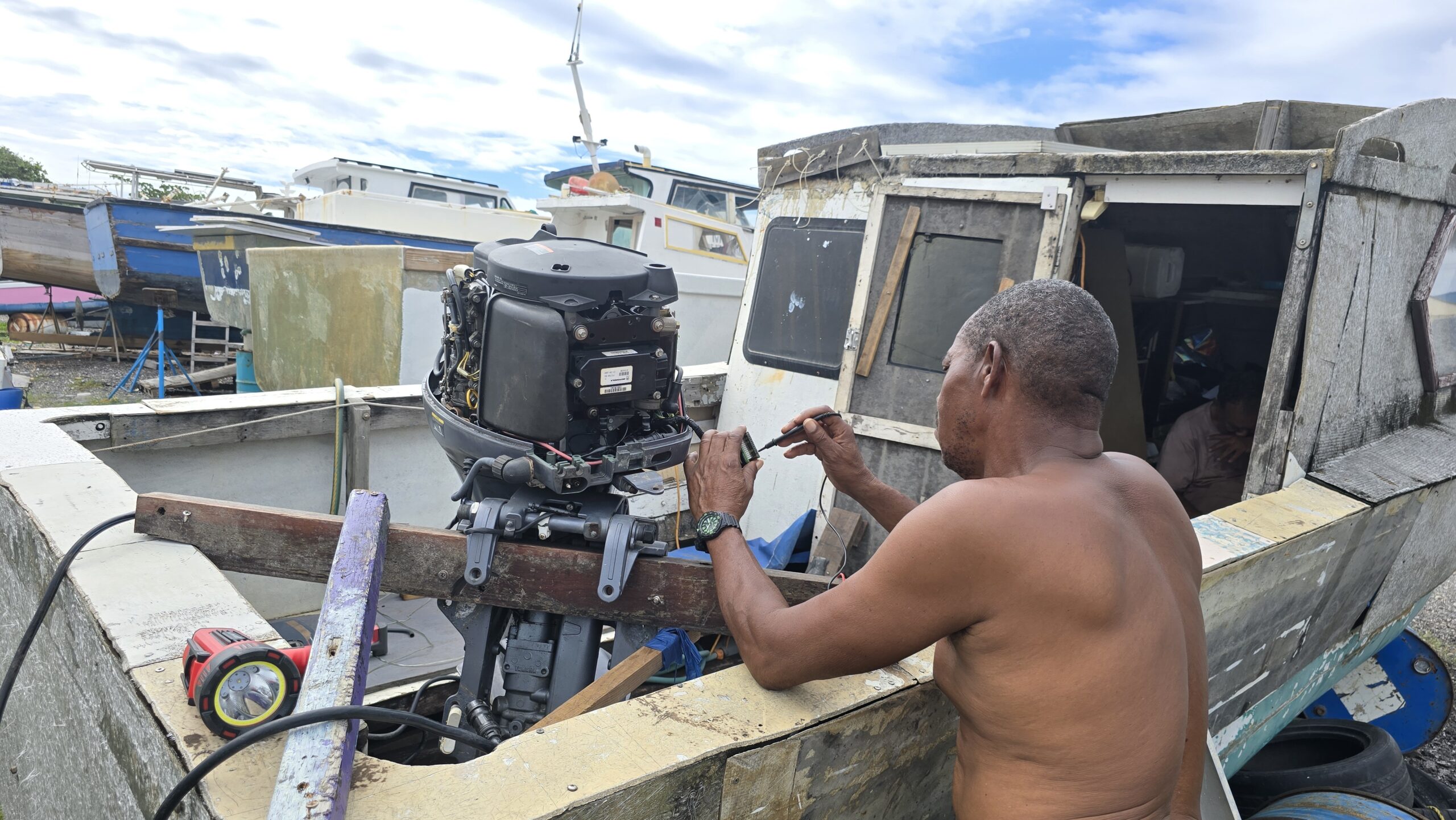
    At the Harbour Road boat yard, one fisherman revealed the $12,000 government grant received for repairs proved insufficient, requiring an additional $15,000-$20,000 to complete restoration work—a process expected to take four more months. At Sand Pit, other fishermen reported having repaired vessels but facing severe ice and bait shortages that limit fishing frequency.

    Fisherman Wayne Rose described the current situation: “Fishing remains slow with limited ice distribution—only about two boats daily receive adequate supplies. Catch volumes remain low while market prices have increased significantly.”

    Environmental factors compound these challenges, as Hendy Davis noted changing sea temperatures and tides have altered fish migration patterns: “Historical fishing yields have diminished considerably. Species like flying fish have become scarce, forcing adaptation to different catch types.”

    Despite these multifaceted obstacles, the formation of Black Fin Fleet has provided collective advocacy that fishermen acknowledge is gradually improving support systems and operational conditions within the industry.

  • FLASH : Haitian Consul in Santiago dismissed, victim of political reprisals ?

    FLASH : Haitian Consul in Santiago dismissed, victim of political reprisals ?

    In a controversial diplomatic development, Stephen Junior Cherenfant has been abruptly removed from his position as Acting Head of Mission at Haiti’s Consulate General in Santiago, Dominican Republic. The dismissal occurred merely three months after his appointment on September 26, 2025, sparking allegations of political retaliation.

    The core dispute centers on Cherenfant’s refusal to authorize consular funds for covering personal expenses of Emmanuel Vertilaire’s family during their stay in the Dominican Republic. Vertilaire, representing the radical political party ‘Pitit Desalin,’ allegedly pressured the consul to use official budgets for hotel accommodations and personal needs of his wife and children.

    Cherenfant defended his position by citing public accounting regulations and principles of good governance, maintaining that state resources should not finance private expenditures of government officials’ relatives.

    The Haitian government has maintained administrative silence regarding the dismissal. Neither the Presidential Transitional Council (CPT) nor the Ministry of Foreign Affairs has provided substantive explanations, merely referencing ‘operational reasons’ and ‘restructuring of Haitian diplomacy’ as justification. Notably, Vertilaire has not denied the allegations raised against him.

    The absence of official transparency has drawn sharp criticism from anti-corruption organizations and diaspora associations, who interpret the silence as implicit acknowledgment of wrongdoing. Many observers view the timing and circumstances of the dismissal as reinforcing theories of political retaliation rather than legitimate personnel evaluation.

  • Christmas Eve Letter Leaves Ombudsman Surprised

    Christmas Eve Letter Leaves Ombudsman Surprised

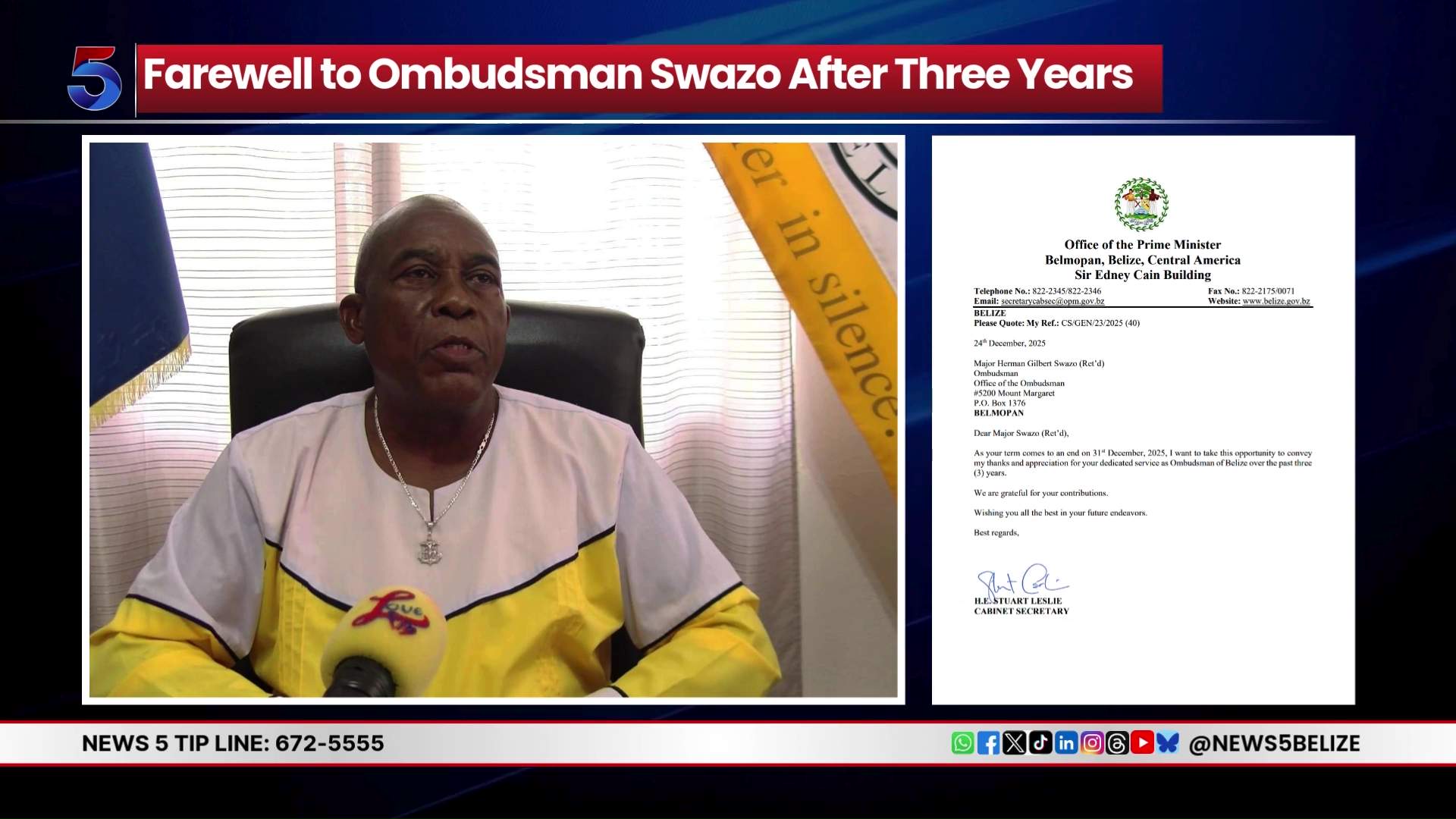
    In a development raising questions about governmental transparency, Ombudsman Gilbert Swazo has revealed his unexpected receipt of a termination notice on Christmas Eve from Cabinet Secretary Stuart Leslie. The correspondence, which arrived mere days before Swazo’s official contract expiration on December 31st, 2025, expressed gratitude for his service while conspicuously omitting any discussion of contract renewal.

    The timing of this communication coincides with ongoing legal tensions between Swazo’s office and the administration regarding a significant Freedom of Information appeal. Earlier this year, social activist Jeremy Enriquez sought disclosure regarding legal expenditures in the government’s redistricting litigation. When the Attorney General denied this request, Ombudsman Swazo ruled that partial transparency was legally mandated under FOI statutes—a decision the government is currently challenging in court.

    Cabinet Secretary Leslie maintains the letter represented standard procedural notification regarding contract conclusion, emphasizing that no definitive decision regarding reappointment has been finalized. However, Swazo interprets the correspondence as indicating the National Assembly’s prerogative to discontinue his tenure.

    When questioned about potential chilling effects on future oversight officials, Swazo emphasized the constitutional imperative of maintaining the Ombudsman’s independence. “The institution must operate based on the constitution, the law, and the rule of law,” he stated, adding that he maintains no regrets about his adherence to legal principles during his tenure.

    The conversation also addressed potential ethnic dimensions, as both Swazo and Enriquez belong to Belize’s Garifuna community. While acknowledging the perception, Swazo declined to attribute the non-renewal directly to ethnicity, instead reaffirming his commitment to constitutional governance and expressing confidence that historical accountability would ultimately prevail.

  • Placencia Faces Serious Garbage Woes, Seeks Solutions

    Placencia Faces Serious Garbage Woes, Seeks Solutions

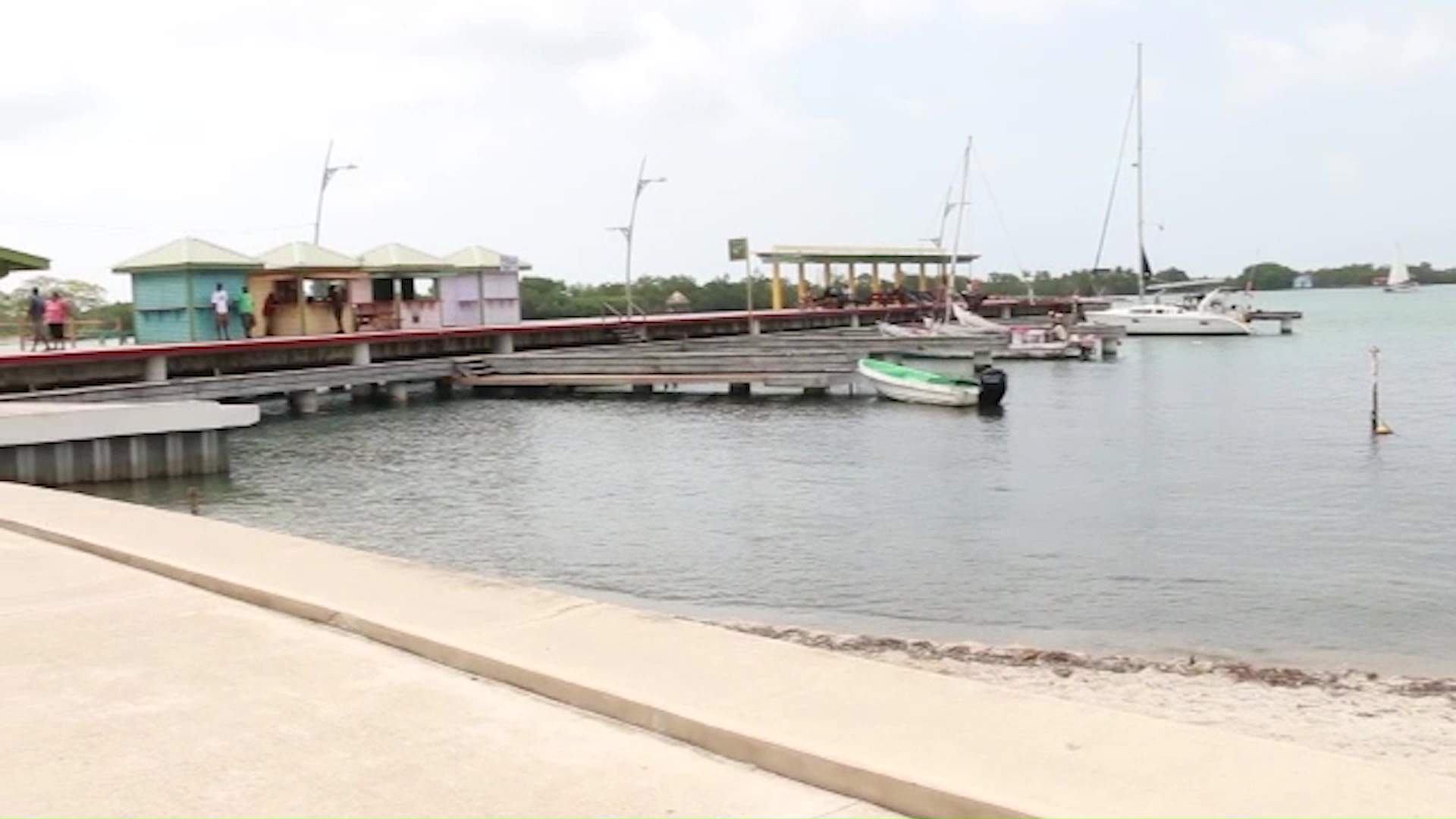
    The idyllic coastal village of Placencia, renowned for its pristine beaches and thriving tourism industry, is confronting a severe environmental and infrastructural challenge as its waste management system reaches a critical breaking point. Local authorities have been compelled to implement extreme measures, including dumping refuse at the entrance to the official landfill site, due to a combination of impassable access roads and critically insufficient funding.

    At the heart of the crisis lies a severely deteriorated roadway leading to the community’s designated dumpsite, rendering it virtually inaccessible for waste collection vehicles. Brice Dial, Vice Chair of the Placencia Village Council, revealed the operational nightmare facing sanitation crews, describing recent incidents where trucks became bogged down in mud, requiring expensive heavy equipment extraction operations that consumed hours of valuable time. This logistical catastrophe is particularly damaging during peak tourist season, when waste generation increases substantially while collection capabilities diminish.

    The financial underpinnings of the crisis trace back to systemic funding shortages and problematic revenue collection mechanisms. Historically, the council managed garbage fees through water bill attachments, but since Belize Water Services assumed control of water management, garbage fee collections have plummeted by approximately fifty percent. This financial stranglehold prevents the council from independently addressing the estimated $30,000 road repair requirement.

    Area Representative Rodwell Ferguson acknowledges the gravity of the situation, confirming ongoing communications with the Ministry of Infrastructure Development and Housing. While the ministry has committed to providing gravel supplies to address the road conditions, Ferguson notes that unprecedented rainfall and overwhelming demand from across the district have hampered response times. He emphasizes Placencia’s special status as a tourist destination in prioritization requests.

    Complicating the landscape further is the existence of a transfer station constructed by the Belize Solid Waste Management Authority that remains non-operational. Ferguson indicates that operationalization commitments have been made, potentially offering longer-term relief by transporting waste to centralized facilities outside the peninsula.

    Facing mounting garbage accumulation at households and resorts, with associated risks to public health and tourism experience, the council made the controversial but calculated decision to concentrate waste at the landfill entrance rather than allow scattered accumulation across the peninsula. This containment approach aims to minimize wildlife interference and environmental contamination while awaiting comprehensive solutions.

    The situation underscores broader challenges facing municipal services in tourist-dependent communities, where infrastructure maintenance costs outpace revenue generation capabilities, creating dependency on central government support that often proves inadequate or delayed.

  • Placencia Village Council Faces Financial Crunch After Trade License Delay

    Placencia Village Council Faces Financial Crunch After Trade License Delay

    The Placencia Village Council, representing one of Belize’s premier tourism destinations, has declared a severe financial emergency following the Briceño administration’s decision to postpone implementation of the Trade License Act. This unexpected policy reversal has created immediate budgetary shortfalls for community development initiatives that were contingent on anticipated revenue streams.

    Vice Chair Brice Dial revealed the council had strategically planned multiple public works projects based on government assurances that trade license fees would commence distribution by early 2026. Among these was the ‘Placencia Proud Project’ – a comprehensive village cleanliness initiative deployed ahead of peak tourist season to address complaints about sanitation standards from both residents and visitors.

    The financial architecture of Placencia’s municipal operations now faces fundamental challenges. Beyond the now-jeopardized trade license revenues, the council receives only minimal funding through liquor license kickbacks (which experience significant disbursement delays) and its annual Lobster Festival fundraiser. This precarious fiscal situation exists despite Placencia ranking among the nation’s highest per-capita tax generators through tourism revenues.

    Dial emphasized the paradoxical nature of the crisis: ‘Communities like Placencia, Hopkins, San Pedro, Caye Caulker, and San Ignacio constitute the economic backbone of Belize through tourism-generated taxes. Yet we witness minimal fiscal redistribution toward local infrastructure and maintenance needs.’

    The vice chair acknowledged recent government investments including road upgrades and coastal erosion studies, but stressed that operational funding gaps created by the trade license delay require immediate intervention. The situation highlights broader questions about resource allocation between national revenue collection and local community reinvestment in tourism-dependent economies.

  • New U.S. Remittance Tax to Hit Belizean Families Starting Friday

    New U.S. Remittance Tax to Hit Belizean Families Starting Friday

    A significant shift in U.S. fiscal policy is poised to directly impact thousands of Belizean families beginning January 1st, 2026. The controversial provision embedded within President Trump’s comprehensive legislative package, colloquially termed the ‘One Big Beautiful Bill,’ mandates a uniform 1% taxation on specific international money transfers originating from the United States.

    This regulatory change will apply to prevalent remittance channels including wire services like Western Union and traditional money orders. While the tax levy occurs at the source within U.S. jurisdiction, the economic repercussions will resonate profoundly within Belize, where remittances constitute an essential economic backbone for numerous households.

    Financial analysts project that the seemingly modest one percent deduction will accumulate substantially given the volume of transactions. These funds traditionally cover critical living expenses such as nutritional needs, housing costs, educational expenditures, and healthcare services for recipients.

    The macroeconomic implications extend beyond individual families, potentially affecting national economic stability. Current data from the Inter-American Development Bank reveals that Belize received approximately $173 million in remittances through November 2025, with an overwhelming 84% originating from U.S. sources. Transaction volumes typically surge during the holiday season, amplifying the potential aggregate impact of the new tax implementation.

    This policy transformation raises important questions about the intersection of domestic fiscal strategy and international economic relationships, particularly for nations like Belize where diaspora support mechanisms play a crucial role in socioeconomic sustainability.

  • Still No Charges in Brutal Dangriga Machete Killing

    Still No Charges in Brutal Dangriga Machete Killing

    One week after the brutal machete killing of 41-year-old Linden Kelly in Dangriga Town, Belize, no formal charges have been brought against the detained suspects. The attack occurred on December 19th in the Rivas Estate area following an alleged confrontation between Kelly and two assailants.

    Kelly’s family has issued an emotional appeal to the Belize Police Department, expressing profound concern over the stalled investigation and the potential danger to community safety. Austin Williams, brother of the deceased, revealed the family’s escalating distress as they prepare for Kelly’s funeral this Sunday.

    “We are looking at people who just killed a man and they’re walking around like killing in Dangriga is legal,” Williams stated during a phone interview. He described the devastating impact on the family, particularly their mother who feels unsafe while mourning her son’s death.

    Williams acknowledged Kelly’s past legal troubles but emphasized his recent efforts to establish a legitimate business venture. “He was trying to find a way to get it done the right way,” Williams noted, expressing hope that someone might continue Kelly’s entrepreneurial legacy.

    The family’s frustration centers on what they perceive as institutional failure within the justice system. Williams reported receiving vague explanations from police blaming the Department of Public Prosecutions (DPP) for the delay, leaving the family uncertain about where to direct their concerns.

    In their appeal to government officials and police authorities, the family demands improved law enforcement standards in Dangriga, stating: “We’re asking for them to amp up their game. You can’t just have criminals out there on the street.” The case highlights ongoing concerns about criminal justice effectiveness in the region.